Cannabis Edible Label Accuracy: Why Milligrams Can Miss
A 10 mg edible is a tested estimate, not a perfect promise. Learn how serving math, homogeneity, sampling, and lab uncertainty shape the label.

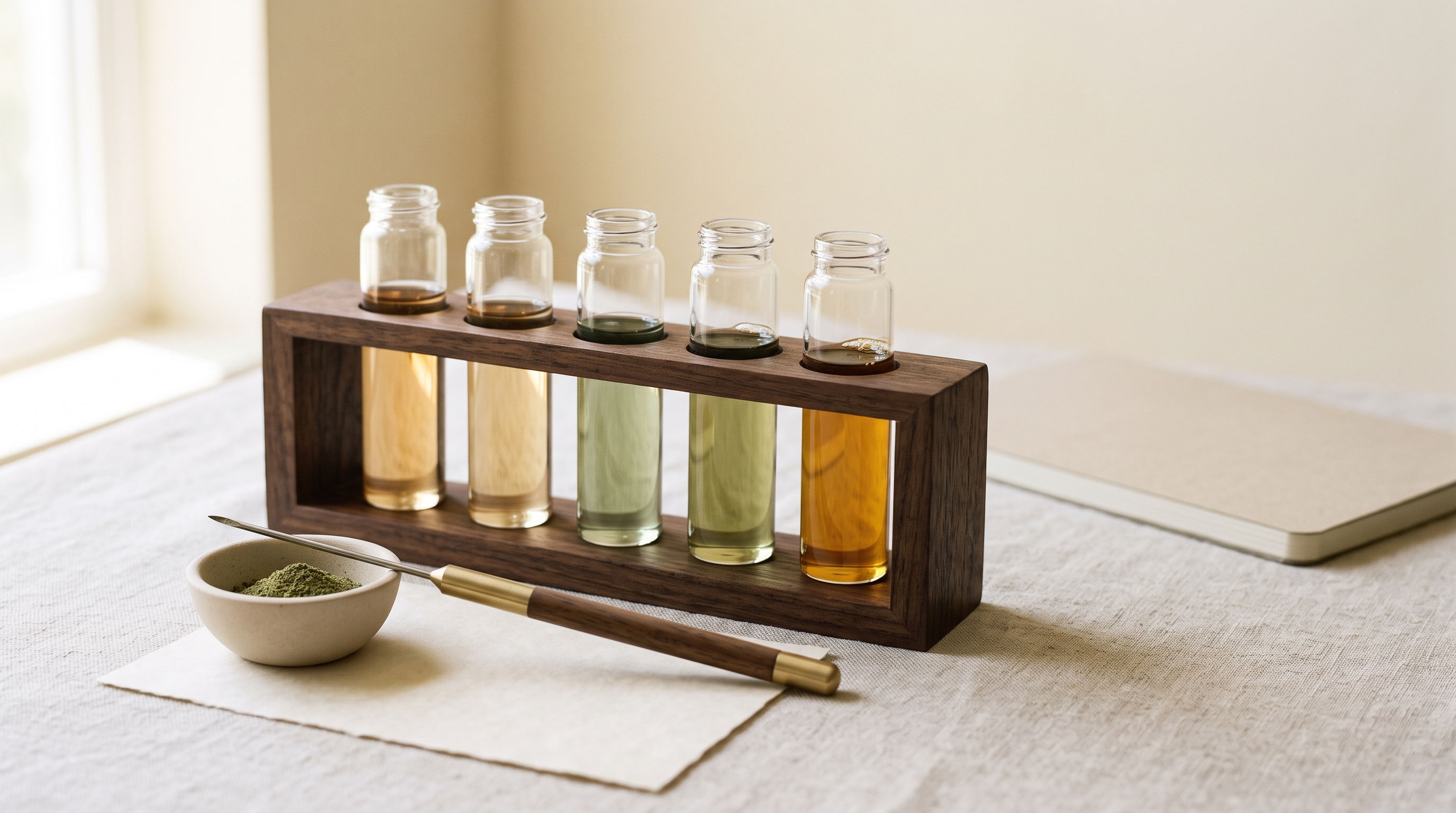
The package says 10 mg THC per gummy. It does not say “exactly 10.000 mg in this specific gummy, guaranteed.”
That is not a confession. It is how food manufacturing and laboratory measurement work. A legal-market label is a batch-based claim built from a recipe, quality controls, a sample, a test method, state rules, and often a rounding step. Each layer can add a little variation.
The more useful question is not, “Can I trust any number?” It is, “What does this number actually describe, and how should I use it?”
Here is the Professor High answer: treat edible milligrams as a strong dosing guide, not a precision instrument. A licensed, tested product gives you far more information than an unknown brownie. But the label still cannot promise that every bite is identical or predict how your body will respond.
The short answer: five different numbers hide behind “10 mg”
| Number | What it means | What it does not prove |
|---|---|---|
| Recipe target. | The amount the maker planned to add. | That the final batch hit the target. |
| Package claim. | The declared THC in the whole container. | That each unit is equal. |
| Serving claim. | The package amount divided into labeled servings. | That your eyeballed portion is one serving. |
| Laboratory result. | The amount measured in a sample from the batch. | That every unit was tested. |
| Dose your body receives. | The amount in the portion you eat. | How intense the experience will feel. |
The last distinction matters most. Label accuracy is about product content. Your experience also depends on digestion, timing, food, tolerance, and metabolism. That is why two accurately labeled products can still feel different, as our guides to 11-hydroxy-THC and edible duration explain.
What the label-accuracy studies actually found
The most quoted edible study is also easy to misuse.
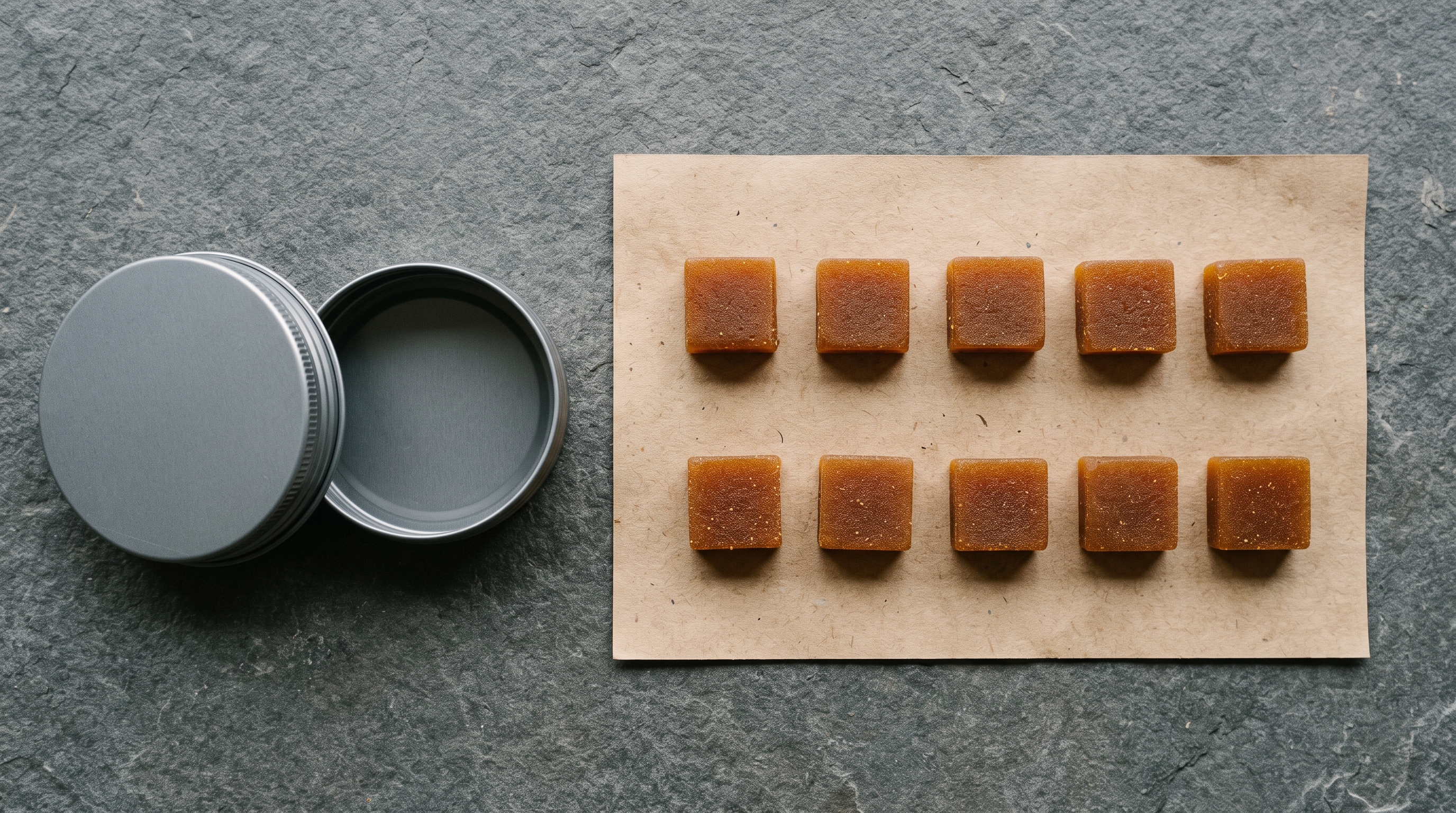
In 2015, researchers bought 75 medical cannabis edibles from 47 brands in Los Angeles, San Francisco, and Seattle. They called a product accurate when measured THC was within 10% of the label. Only 17% met that definition. Sixty percent contained less THC than stated, while 23% contained more [Vandrey et al., 2015].
Those findings mattered. They do not prove that 83% of today’s regulated edibles are mislabeled. The products came from three medical markets more than a decade ago, before many current manufacturing and testing rules. The study was a snapshot, not a permanent national failure rate.
A later systematic review found label-accuracy rates from 17% to 86% across five studies of cannabinoid products. The authors stressed that the evidence was sparse and highly varied [Oldfield et al., 2021]. Different products, markets, test methods, and definitions of “accurate” make a single universal percentage misleading.
Newer licensed-market evidence is more measured. A 2026 study independently tested 74 Colorado dispensary products, including 29 edibles. For the edibles, the median label claim was 10 mg and the median measured amount was 9.3 mg. The median gap was 1.22 mg, with labels higher than tests. Yet the edible results, as a group, were not significantly outside Colorado’s then-applicable 15% allowed variation [Limbacher et al., 2026].
That study also has limits. Participants volunteered products from a larger research project, usually one gummy, so it was not a random audit of Colorado shelves. The fair conclusion is modest: edible labels can miss, but the size and direction of the miss depend on the market, product, and study.
Why an edible’s milligrams can miss
1. Serving math can be correct and still be misunderstood
Start with the whole package.
If a package contains 100 mg THC and lists 10 servings, the declared amount is:
100 mg per package ÷ 10 servings = 10 mg per serving
But a serving may be one gummy, half a gummy, two mints, or 5 mL of liquid. “10 pieces” does not always mean “10 servings.” Read all three fields:
- Milligrams per package.
- Milligrams per serving.
- Pieces or milliliters per serving.
Washington’s current rules, for example, require solid and liquid edible labels to display serving size, product amount per serving, and servings per package. California requires THC and CBD in milligrams per serving and per package for edibles with serving designations.
Packaging design affects whether people do the math correctly. In an experiment with 26,894 people in the United States and Canada, 50.6% correctly identified a serving from a multi-serving brownie. Correct responses rose to 55.3% when the edible appeared as single-serving pieces and 54.3% with separately wrapped doses [Goodman and Hammond, 2020].
A larger 2022 experiment found that only 14.6% of edible consumers said they knew the standard THC serving used in the study. The authors concluded that clearly marking THC on each serving may aid understanding, especially among non-consumers [Goodman and Hammond, 2022]. Neither study tested whether the pictured food contained the stated THC; they tested whether people understood the package.
2. Homogeneity decides whether the math reaches each piece
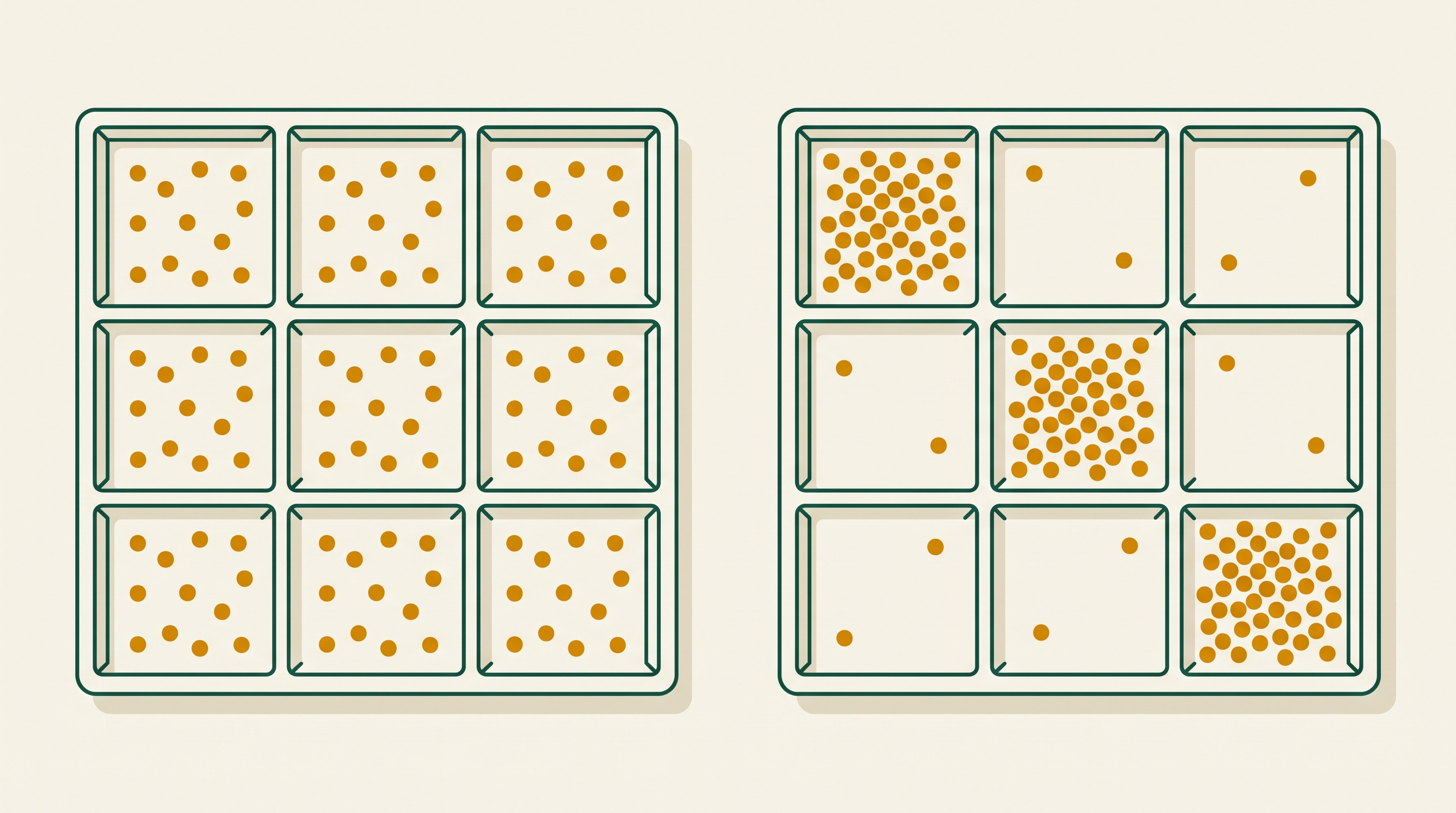
Homogeneity means the cannabinoids are spread evenly enough through the product. Imagine mixing a spoonful of dye into cake batter. If you stop too soon, one corner can hold more color than another even when the pan contains the right total amount.
Edible makers face a harder version of that problem. Cannabinoids are oil-loving compounds. Gummies, chocolate, baked goods, beverages, and coated candies have different fats, sugars, water levels, and production steps. The infusion must be mixed into the product and remain distributed while the batch is portioned.
California law gives the idea real weight. Solid multi-serving edibles must be scored into standard servings, and edible products must be homogenized for uniform cannabinoid distribution. A score line helps you divide the food. Homogeneity helps make that division meaningful. One does not guarantee the other.
3. Compliance testing samples a batch, not every bite
Laboratories do not test every gummy in a production run. They analyze a representative sample and apply that result to the batch. This makes legal-market testing practical, but it creates an inference:
The tested portion represents the untested units only if sampling and manufacturing were sound.
That is why the lot or batch number matters. A beautiful certificate of analysis from another run says nothing about your package. Use our guide to match a COA to its package, then learn how to read the result panels.
A passing batch result is valuable evidence. It is not a unit-by-unit scan. If a regulator later finds a problem, check the exact identifier with our batch and lot recall guide.
4. Brownies, gummies, and drinks are different lab problems
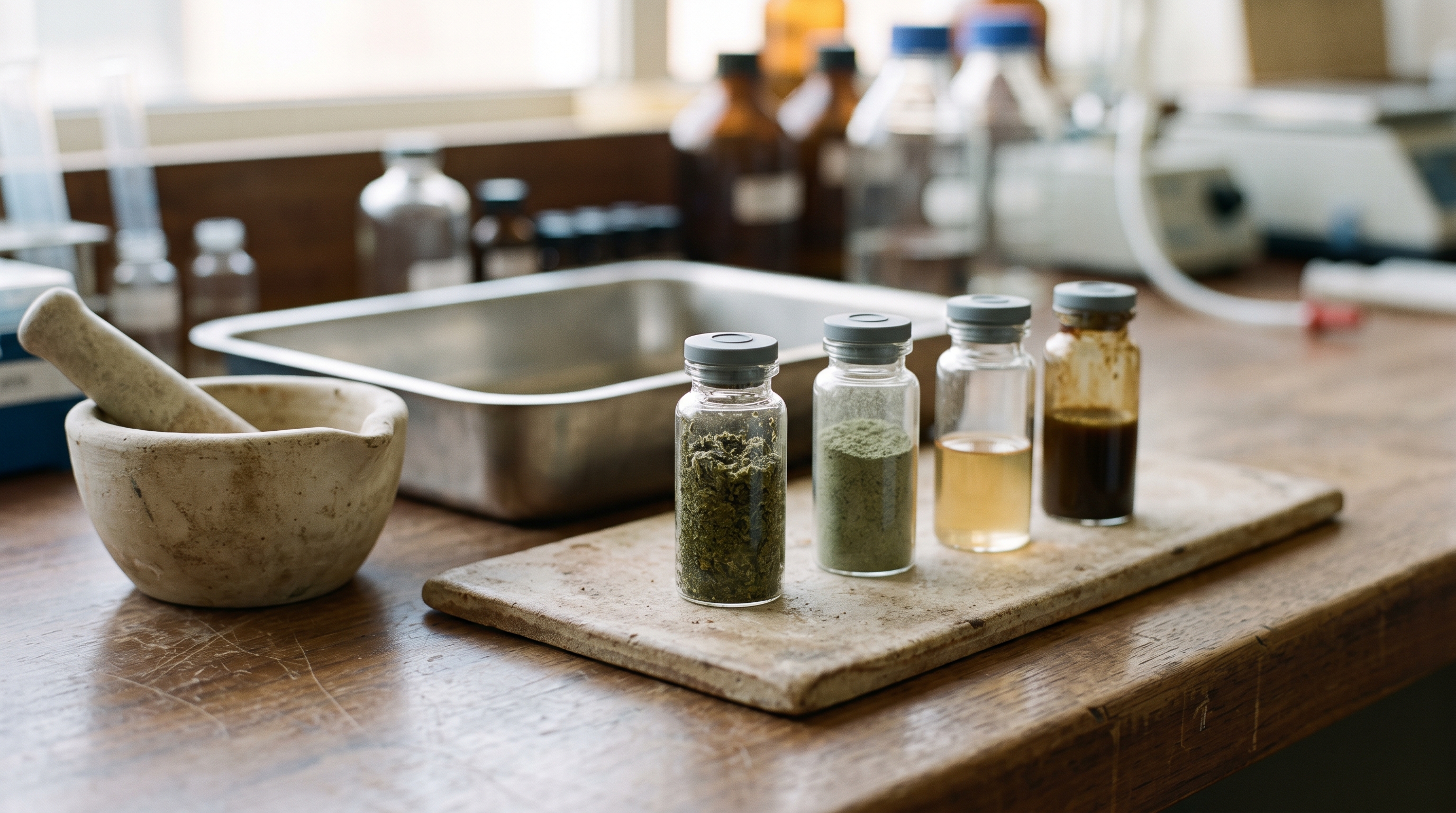
The laboratory must pull cannabinoids out of the food before measuring them. Chocolate fat, gummy gelatin, brownie crumbs, sugar, color, and emulsifiers can change how well that extraction works. Chemists call this the matrix: everything in the sample besides the compound being measured.
An NIJ-funded project developed separate matrix-matched controls and sample-preparation techniques for brownies, chocolate, and gummies. That alone tells you why “put food in machine, receive perfect number” is the wrong mental model.
A 2022 method study tested THC added to six food types. Recovery ranged from 95.2% to 113.5%. At the lower concentration tested, day-to-day precision was 16.6%; at the higher level it was 4.4%. When three laboratories analyzed portions of one homogenized brownie, their mean results were 0.33, 0.43, and 0.48 mg per gram [Tachi et al., 2022].
That was a forensic method-development study in Japan, not an audit of U.S. dispensary labels. Its value is narrower: food type, concentration, preparation, and lab procedure can all contribute to measurement spread.
5. Rounding and legal tolerance are not the same as deception
No measurement is infinitely exact. Labs have limits of detection, limits of quantitation, calibration error, recovery ranges, and repeatability. Regulators account for this in different ways.
California’s labeling checklist says a cannabinoid amount from the COA may be rounded to the nearest whole number, as long as the label does not exceed the legal content limit. The 2026 Colorado study evaluated products against the state’s allowed variation instead of demanding an impossible exact match [Limbacher et al., 2026].
This matters when interpreting a small gap. A measured 9.3 mg result and a 10 mg label are not the same number, but they tell a very different story from a product labeled 10 mg that contains several times that amount. Accuracy is a range defined by a method and a rule—not a moral verdict triggered by the first decimal place.
What edible labels can and cannot tell you
| A good label can help you… | A label cannot tell you… |
|---|---|
| Compare the intended dose across products. | Exactly how hard the edible will hit you. |
| Divide the package into stated servings. | Whether an eyeballed bite is half. |
| Match the package to its batch COA. | The content of every untested piece. |
| Track a repeat purchase by product and lot. | Whether your digestion will match last time. |
Oral THC response can vary even when product content does not. Food timing, metabolism, tolerance, and formulation all matter. Read why edibles sometimes do not work and how fast-acting edibles differ before blaming every surprising session on the label.
A practical way to use edible milligrams
- Buy from a licensed source. State-regulated products provide batch records and testing that unknown-market products may not.
- Read package and serving totals. Confirm how many pieces or milliliters make one serving.
- Do the math yourself. Package milligrams divided by labeled servings should equal milligrams per serving, allowing for stated rounding.
- Use the marked portion. Do not assume half a random bite equals half the dose, especially with an unscored product.
- Match the lot to the COA. A QR code is useful only when the report belongs to your batch.
- Start conservatively and wait. Our beginner edible dosing guide explains the two-hour rule, while common edible mistakes shows why early redosing causes trouble.
- Track the product, lot, amount, food, and timing. Use a cannabis journal or save the session in High IQ. Patterns are more useful than one dramatic night.
If a product feels far stronger than expected, do not take more. Preserve the package and receipt. If symptoms are severe or rapidly worsening, seek urgent medical help. For a merely uncomfortable experience, our science-backed calming guide offers general harm-reduction steps.
Use the This Is Why I’m High label scanner to capture the serving and package fields, but verify every digit against the package. A scan can organize a label. It cannot test the gummy.
FAQs
Is a 10 mg edible exactly 10 mg?
Not necessarily. Ten milligrams is the labeled amount under that market’s testing and rounding rules. A well-made regulated product should be close enough to meet its jurisdiction’s standards, but the number is not an infinite-precision guarantee.
Does cutting a 10 mg gummy in half make two 5 mg doses?
It makes two equal-looking pieces, not automatically two chemically identical doses. A scored, properly homogenized product makes the estimate more reasonable. If precise low dosing matters, choose a product sold in smaller unit doses rather than cutting by eye.
Which number matters more: per serving or per package?
You need both. The package total helps catch math errors. The per-serving amount guides portioning. Also check how many pieces or milliliters count as one serving.
Can a COA prove that every gummy has the same amount?
No. A COA reports results for a representative sample from a batch. It supports the batch claim, but it does not show that every retail unit was tested.
Why did the same brand feel different the second time?
Possible reasons include a different lot, normal allowed product variation, portion size, food timing, formulation, tolerance, or metabolism. Compare the batch numbers and log the context before deciding the label was wrong.
Are homemade edible milligrams accurate?
Home recipes usually estimate potency from ingredient strength, weight, and transfer assumptions. They lack the sampling and validated laboratory testing used for regulated products. Our home edible potency guide explains what you can estimate and what you cannot.
Key takeaways
- A label describes a batch-based amount, not a guaranteed experience.
- Package math, homogeneity, sampling, lab method, tolerance, and rounding are separate layers.
- Historical studies found serious label problems, but their rates should not be pasted onto every current legal market.
- Small measured differences and major mislabeling are not the same problem.
- Use milligrams consistently, match the batch, start conservatively, and track your own response.
The milligram still matters. Just ask it to do the job it was built for: guide a repeatable dose. Do not ask it to predict biology—or pretend a laboratory estimate has no uncertainty.
Sources
- Vandrey, R., Raber, J. C., Raber, M. E., Douglass, B., Miller, C., & Bonn-Miller, M. O. (2015). Cannabinoid Dose and Label Accuracy in Edible Medical Cannabis Products. JAMA, 313(24), 2491–2493. DOI
- Oldfield, K., Ryan, J., Doppen, M., Kung, S., Braithwaite, I., & Newton-Howes, G. (2021). A systematic review of the label accuracy of cannabinoid-based products in regulated markets: is what’s on the label what’s in the product? Australasian Psychiatry, 29(1), 88–96. DOI
- Limbacher, S. A., Godbole, S., Wrobel, J., Mackie, D. I., Goldman, S., & Brooks-Russell, A. (2026). Commercial cannabis product testing: Fidelity to labels and regulations. PLOS ONE, 21(4), e0321832. DOI
- Goodman, S., & Hammond, D. (2020). Does Unit-Dose Packaging Influence Understanding of Serving Size Information for Cannabis Edibles? Journal of Studies on Alcohol and Drugs, 81(2), 173–179. DOI
- Goodman, S., & Hammond, D. (2022). THC labeling on cannabis products: an experimental study of approaches for labeling THC servings on cannabis edibles. Journal of Cannabis Research, 4(1), 17. DOI
- Tachi, K., Ieuji, K., Kurakami, D., & Tsumura, Y. (2022). Development of quantitative method for Δ9-THC in cannabis infused foods using GC-FID and QuEChERS. Japanese Journal of Forensic Science and Technology, 27(1), 15–26. DOI
- California Department of Cannabis Control. Labeling requirements: Manufactured cannabis products in final form.
- California Legislative Information. Business and Professions Code § 26130.
- Washington State Legislature. WAC 314-55-105: Cannabis product packaging and labeling.
- National Institute of Justice. Development of Matrix Matched Quality Control Materials and Sample Preparation Techniques for the Analysis of Marijuana Infused Products and their Application to Edible Testing.

