Flushing Cannabis Before Harvest: What the Science Says
Growers swear flushing before harvest improves taste and ash. Controlled studies say it does almost nothing. Here is what the evidence actually shows.

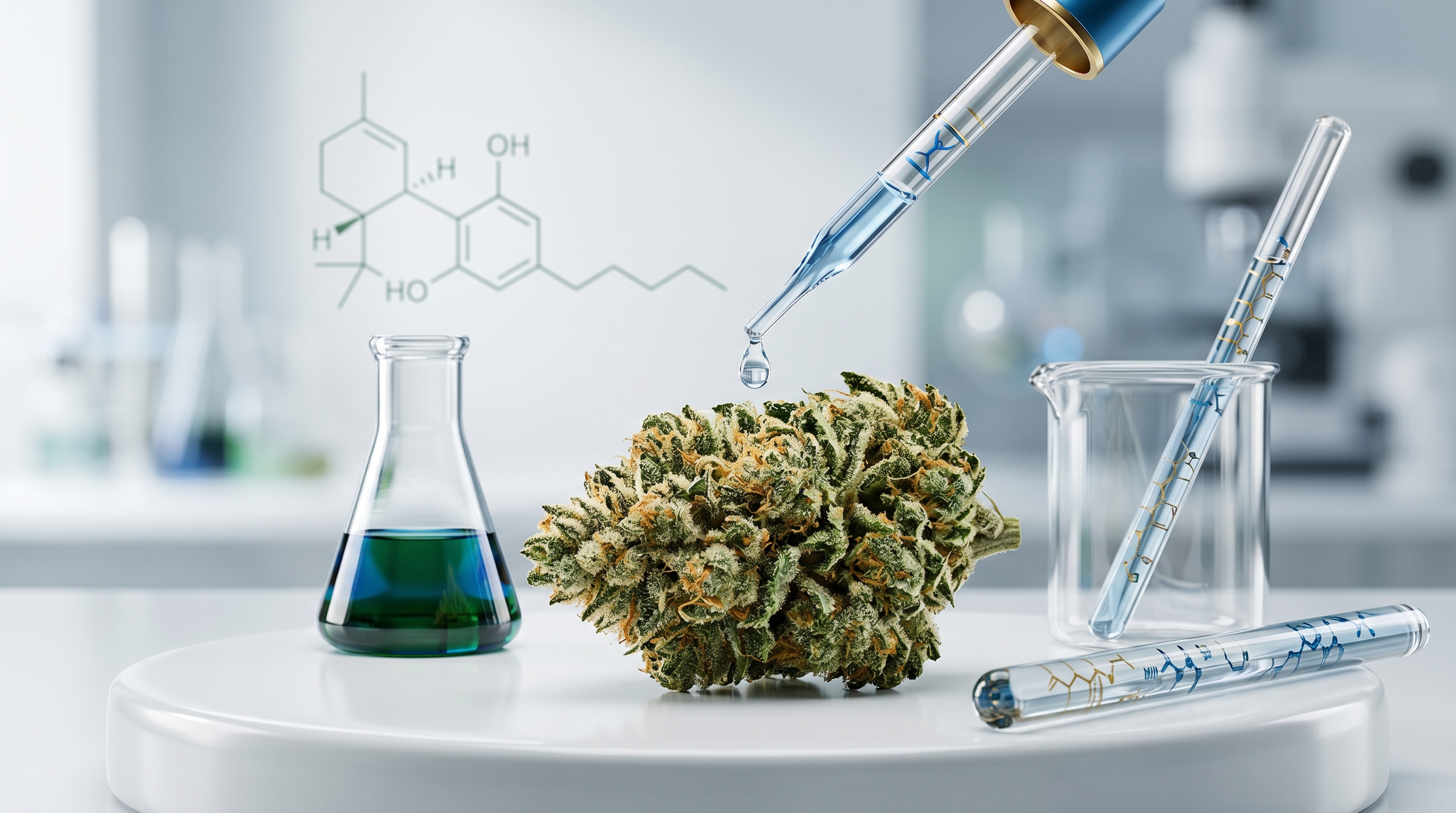
Ask ten cannabis growers about flushing and you will get ten confident answers, most of them identical. Stop feeding nutrients one to two weeks before harvest. Run plain water. The plant “uses up” its stored nutrients, the buds burn cleaner, the smoke gets smoother, and the ash turns a satisfying white. Skip it, the lore warns, and you will taste harsh chemicals and chlorophyll in every puff.
It is one of the most universal rituals in the grow calendar. It got passed down through grow forums, mentor to apprentice, since the legacy market days. It is also one of the most argued-about. When researchers finally tested flushing under controlled conditions, the results did not match the lore.
This is the kind of question we love at This Is Why I’m High: a deeply held belief, repeated everywhere, that almost nobody has actually tested. So let us separate the ritual from the evidence. We will look at both sides — what flushing really does, where it might still matter, and where that smoothness you chase actually comes from.
What Flushing Actually Is
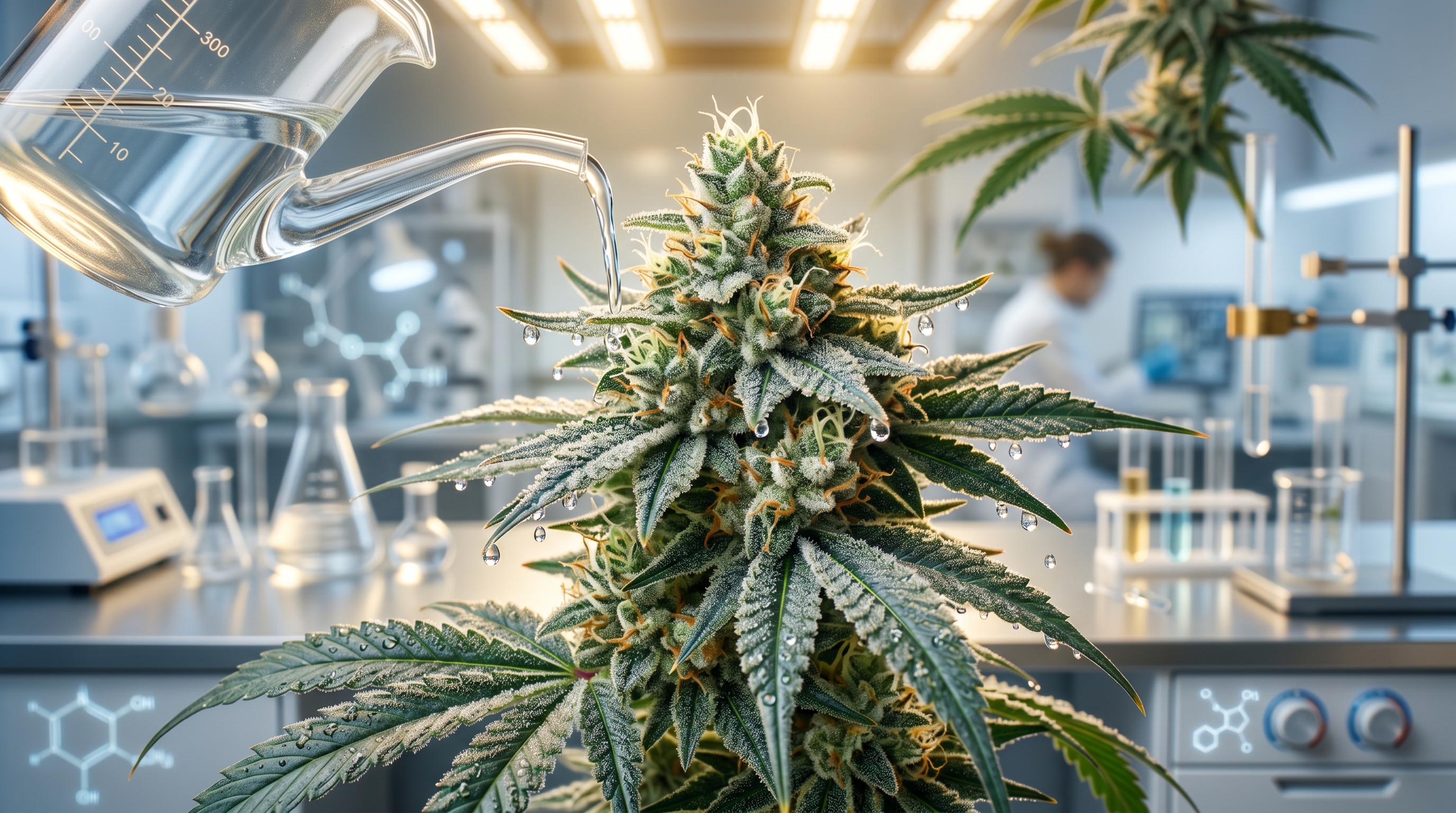
Flushing, in the pre-harvest sense, means withholding fertilizer for the final stretch of flowering — usually the last 7 to 14 days. You give the plant only plain, pH-balanced water. In hydro and coco setups, growers often run a lot of water through the root zone to rinse out built-up nutrient salts. They watch the runoff until the electrical conductivity — a measure of dissolved minerals — drops near zero.
The reasoning sounds intuitive. Cannabis is fed a steady diet of mineral salts — nitrogen, phosphorus, potassium, plus micronutrients — throughout its life. The theory holds that if you keep feeding right up to the chop, leftover salts and nitrates stay locked in the flower. When you light it up, those minerals do not combust cleanly. The result, growers say, is a harsh, chemical, peppery smoke and dark ash that will not stay lit.
So you starve the plant. The idea is that a hungry plant will scavenge its own stored nutrients to finish maturing — cannibalizing its fan leaves (which is why they yellow and fade during a flush) and drawing down the mineral content of the buds themselves. Cleaner buds, cleaner smoke. That is the promise. The question is whether the chemistry behind it holds up.
If you are new to feeding schedules and what those salts actually do, our cannabis nutrients guide covers the macro- and micronutrients in play, and our beginner’s guide to growing cannabis at home puts flushing in the context of the full grow.
What the Science Actually Found
For decades, flushing rested entirely on grower testimony. Then it got tested.
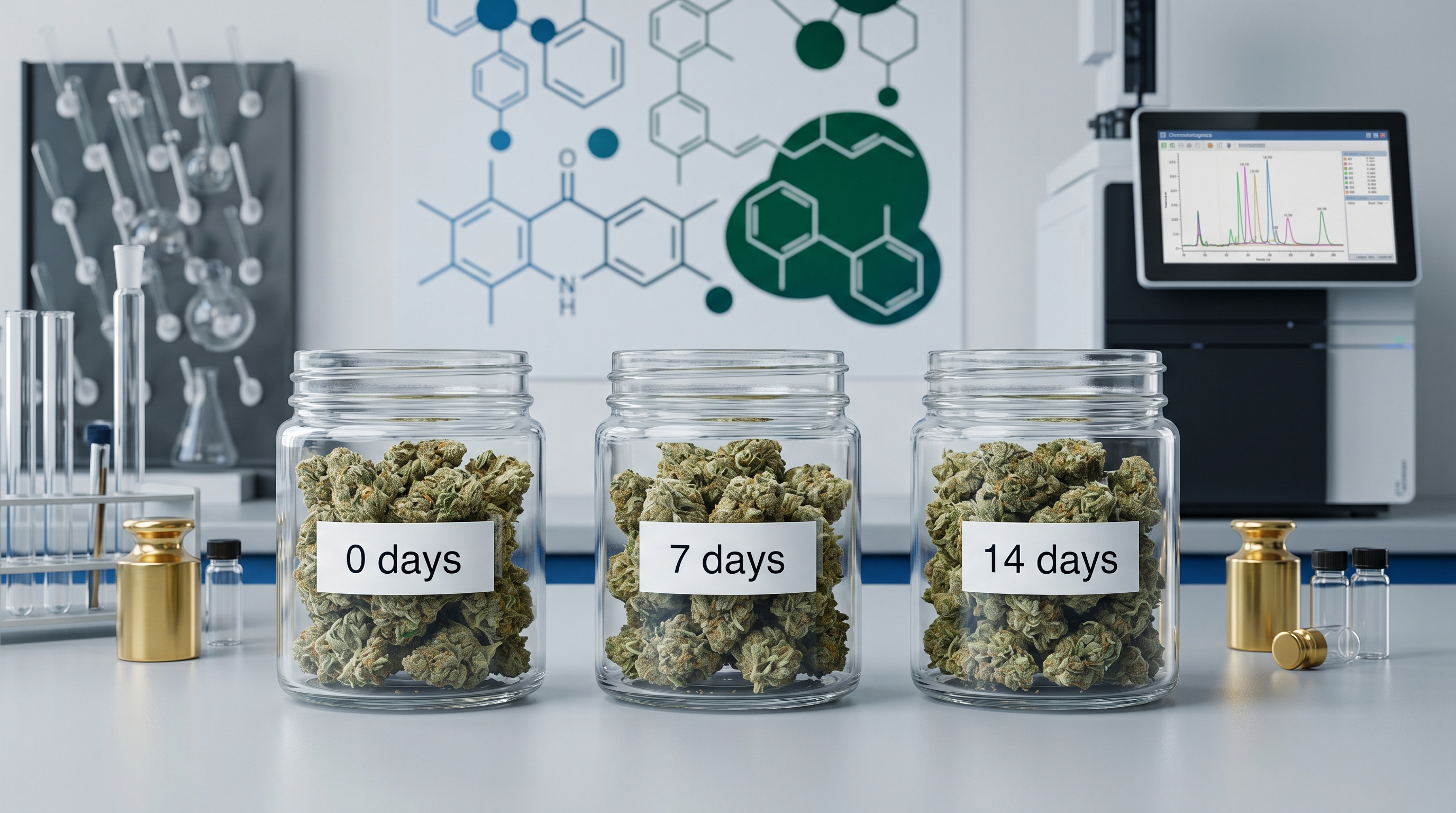
The most-cited controlled study came from Rx Green Technologies [Wedryk, 2023] (the trial widely circulated through 2023). Researchers grew Cherry Diesel plants in coco coir under a standard nutrient program, then split them into four treatment groups flushed for 14, 10, 7, and 0 days before harvest. Twelve plants per treatment, four replications spread across the flowering tables. They then measured nearly everything a grower cares about: flower yield, THC potency, terpene content, the mineral content of flower and leaves, and a full blind sensory panel rating flavor, smoke smoothness, and ash color.
The headline finding was blunt. There were no significant differences between treatments for flower weight, THC, or terpene content. The blind taste panel found no statistically significant differences in flavor or smoke quality across any flush duration. And the one trend that did emerge ran backwards: panelists tended to prefer the flower flushed for zero days. Thirty-six percent rated the non-flushed smoke as smooth, versus just 19.4% for the 14-day flush.
A more recent peer-reviewed study reached a compatible conclusion. In HortScience (2025), Alden and Faust published “Exploring the Legacy Practice of Flushing in Controlled-environment Production of High-CBD Cannabis” [Alden, 2025] (DOI: 10.21273/HORTSCI18752-25). Working with two high-CBD cultivars in a peat-based substrate, they flushed for 0 to 4 weeks. THC concentration was unaffected. More striking, the data suggested inflorescence dry mass tended to decline as flush duration increased — meaning longer flushes may actively cost yield. The authors stated plainly that “improvements in inflorescence smoking quality via flushing are unsubstantiated in the literature.” An earlier thesis [Stemeroff, 2017] reached a similar place, finding that flushing two weeks or less before harvest did not affect elemental nutrient or cannabinoid concentrations in dried flower.
Put those together and the controlled evidence points one direction: in soilless and inert media, flushing does not measurably improve potency, terpenes, flavor, or smoothness — and overdone, it can shrink your harvest. This lines up with the broader theme we keep returning to in our look at crowd-sourced cannabis wisdom — repetition is not the same as evidence.
The Nuance: Why the Medium Matters
Here is where an honest article has to slow down, because “flushing does nothing” is too clean a verdict. The studies above were run in coco coir and peat — inert or near-inert media where the only nutrients present are the ones you add. That detail matters more than almost anything else in this debate.
Consider the three main growing environments:
-
Hydroponics and coco. The root zone holds essentially no nutrient buffer of its own. Whatever salts are present came from your reservoir, and the plant has constant access to them. A “flush” here mostly rinses the medium, not the plant. Once a mineral is built into bud tissue, plain water cannot pull it back out — leaves and stems do not work in reverse. This is precisely the scenario the studies tested, and the scenario where flushing shows the least benefit.
-
Living and amended soil. A rich organic soil is a slow-release system. Nutrients are bound up in organic matter and released gradually by soil microbes, not delivered as free salts. There is far less “excess” to flush in the first place — and flooding a living soil with plain water can disrupt the microbial life doing the feeding. Many organic growers argue you simply do not need to flush a well-built soil, and the chemistry supports that.
-
Heavy synthetic-salt feeding. The strongest case for flushing is a grow that has been pushed hard with concentrated mineral salts right up to the end. If a plant shows nutrient burn — clawed, crispy, dark-tipped leaves — there is a genuine surplus in the system. Several researchers reframed the whole debate around this point: as one put it, “flushing is an extension of the fact that most people are over-feeding their plants.” The fix is not a dramatic two-week starvation at the end. It is feeding lighter and tapering nutrients sensibly as the plant finishes — what growers call dialing in your feed.
So the medium-aware verdict is this: flushing is least useful in the inert media where it is most ritualized, and the “benefit” growers sometimes see is usually a correction for overfeeding that better scheduling would have prevented. If you are battling salt buildup or deficiency symptoms, our guide to common cannabis growing problems will help you read the plant before you reach for a flush.
Where Smoothness and “White Ash” Really Come From
If flushing is not what makes good flower smooth, what is? This is the part of the conversation the lore almost always skips — and it is the part that actually changes your results.
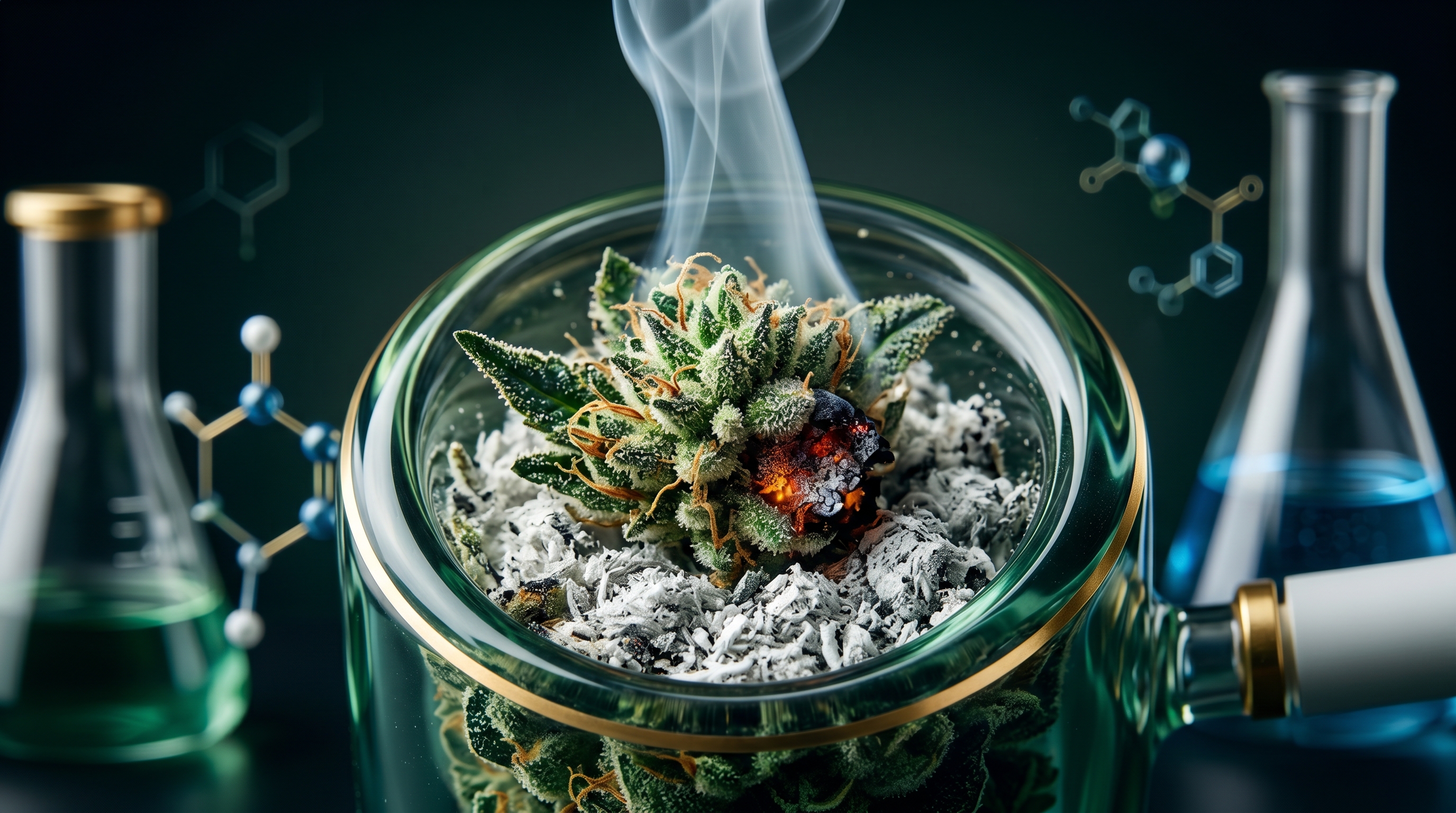
White ash is a combustion story, not a flushing story. Ash turns white when plant material burns completely. Organic compounds fully oxidize and leave behind only pale inorganic residue. Ash stays grey or black when combustion is incomplete and leaves unburned carbon behind. The biggest driver of complete combustion is moisture content. Properly dried and cured flower burns hot and even. Flower that is too wet smolders, burns cool, and leaves dark ash. That is why the white-ash-means-flushed theory falls apart on its own logic. Minerals cannot evaporate out through the leaves, so flushing barely touches the bud’s mineral content. And as we saw, blind trials found people often preferred non-flushed flower.
The real levers on smoothness and clean burn are post-harvest, not pre-harvest:
- Drying slowly, in a cool, dark, humidity-controlled room, so the flower dries from the outside in without locking moisture in the core. Our grow-room humidity and temperature guide covers the environmental targets that make or break this stage.
- Curing in sealed jars over two to eight weeks, “burping” them to release moisture, which lets chlorophyll and other harsh-tasting compounds break down. This is where smoothness is genuinely manufactured. Our complete drying and curing guide walks through it step by step.
- Harvest timing, read off the trichomes rather than the calendar, so you capture peak cannabinoid and terpene content. See when and how to harvest and our hands-on guide to reading trichomes with a loupe or microscope.
In other words: the smoothness growers credit to flushing is overwhelmingly the work of a patient cure. Chlorophyll degradation — the actual source of that grassy, harsh “uncured” taste — happens in the jar over weeks, not in the root zone over days. If you want a complete map of the whole post-harvest sequence, our trichomes and harvest-timing guide connects the dots between when you chop and how it ends up tasting.
The Honest Verdict
So, should you flush? Here is the evidence-led answer, with the caveats intact.
The lore overpromises. Controlled studies in coco and peat consistently show no significant improvement in potency, terpenes, flavor, or smoothness from flushing — and at least one found that long flushes reduced yield. If you grow in inert media and feed reasonably, a dramatic two-week starvation flush is, at best, doing nothing, and at worst costing you weight. The white-ash myth, in particular, does not survive contact with combustion science.
But the verdict is medium-dependent. If you have been pushing heavy synthetic salts and your plant is showing nutrient burn, easing off the feed at the end is sensible — not because flushing is magic, but because you over-fed and need to correct it. In living soil, you likely never needed to flush at all. The genuinely productive move is upstream: feed lighter, taper nutrients as the plant finishes, and let the plant tell you what it needs. Our seed-to-harvest timeline shows where that tapering fits in the full cycle.
And the smoothness you actually want? Earn it in the dry tent and the curing jar — and verify it, if you have access, by reading a cannabis lab result (COA) rather than judging by ash color. As with so much in cannabis, the ritual everyone performs turns out to matter less than the boring, patient steps almost nobody talks about.
Key Takeaways
- Controlled studies in coco and peat found no significant difference in THC, terpenes, flavor, or smoothness between flushed and non-flushed flower — and blind panels sometimes preferred non-flushed.
- Long flushes may cost yield without buying you quality, especially in inert media.
- The growing medium matters. Flushing is least useful in hydro/coco, often unnecessary in living soil, and at most a corrective for overfeeding with synthetic salts.
- White ash and smoothness come from the cure, not the flush. Complete combustion (driven by proper drying and moisture content) makes ash white; a patient cure breaks down the harsh compounds.
- The smartest move is upstream: feed lighter, taper nutrients, and put your energy into drying and curing.
Frequently Asked Questions
Does flushing increase THC or terpenes? No. In controlled trials across coco and peat media, flushing produced no significant difference in THC potency or terpene content compared to not flushing at all. If you want richer terpenes, focus on genetics, environment, harvest timing, and curing — not a pre-harvest flush. See our look at how outdoor light builds terpene complexity.
Does flushing make smoke smoother or ash whiter? The evidence says no, or even the opposite — blind panels have tended to prefer non-flushed flower. White ash is driven by complete combustion, which depends mainly on proper drying and curing. Smoothness comes from a slow cure, not a flush.
Do I ever need to flush? The clearest case is a grow that has been heavily fed with synthetic mineral salts and is showing nutrient burn. Easing off the feed at the end can help — but the better long-term fix is feeding lighter throughout. In well-built living soil, flushing is often unnecessary. Check our growing-problems guide if you are unsure.
Why do so many growers swear flushing works? Several reasons: most people who flush also cure properly, so the cure gets credited to the flush; flushing fixes the symptoms of overfeeding, so it appears to “work” for heavy feeders; and the practice is so universal that confirmation bias keeps it alive. It is a textbook case of a ritual surviving on repetition rather than evidence — like much of the advice in crowd-sourced strain reviews.
Does flushing hurt my yield? It may. The 2025 HortScience study found inflorescence dry mass tended to decline as flush duration increased, likely because a starved plant slows biomass building in its final, often most productive, days. Read more on timing in our harvest guide.
Sources
- [Wedryk, 2023] Rx Green Technologies. Cannabis Flushing Trial — effect of 0, 7, 10, and 14-day flush durations on yield, THC, terpenes, mineral content, and blind sensory evaluation in coco-grown Cherry Diesel. Widely reported 2023. rxgreentechnologies.com
- [Alden, 2025] Alden, M. J., & Faust, J. E. (2025). Exploring the Legacy Practice of Flushing in Controlled-environment Production of High-CBD Cannabis (Cannabis sativa). HortScience, 60(10), 1818. DOI: 10.21273/HORTSCI18752-25. journals.ashs.org
- [Stemeroff, 2017] Stemeroff, J. N. (2017). Evaluation of the effects of flushing on cannabinoid and elemental nutrient concentrations in dried Cannabis flower (M.S. thesis), as cited in Alden & Faust (2025).
- High Times. New Research Shows Flushing Plants Before Harvest May Be Unnecessary. Coverage of the Rx Green Technologies trial, including expert commentary on overfeeding. hightimes.com
- Dutch Passion. Cannabis White Ash: A Flushing Theory Debunked. On combustion, moisture, and why mineral content drives white vs. grey ash. dutch-passion.com
Written by Professor High for This Is Why I’m High Learn. Educational content only — always follow your local laws and consult a professional for medical guidance. Cannabis affects everyone differently; track what works for you.


