How to Read Trichomes: Finding Your Perfect Harvest Window
Learn to read cannabis trichomes with a loupe or microscope. Decode clear, cloudy, and amber to time your harvest for the exact high you want.


Here is a truth that catches almost every first-time grower off guard: the difference between a sleepy, couch-locking harvest and a bright, cerebral one can come down to a single week. Not a different strain. Not a different feeding schedule. Just when you reached for the scissors.
The plant tells you when it is ready. The catch is that the message is written in structures roughly the width of a human hair, in a code of three colors. Learn to read those colors and you stop guessing. You start harvesting on purpose.
This is the practical, hands-on companion to my deeper complete guide to cannabis trichomes. There I cover the biology of what trichomes are. Here I cover the only thing that matters at harvest time: how to look at them, what their color is telling you, and how to choose the window that matches the high you actually want.
Why trichomes time your harvest
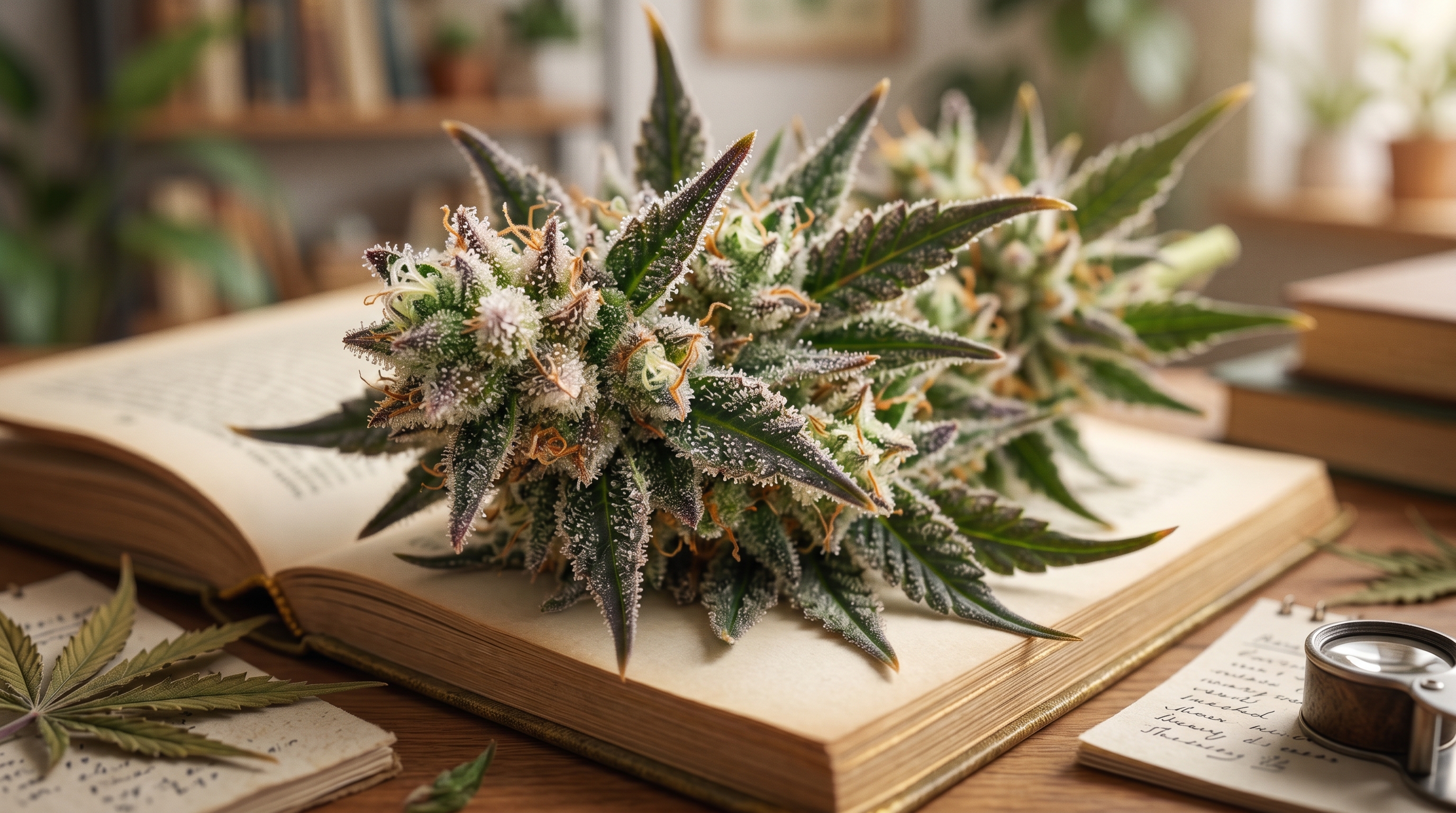
Trichomes are the tiny, frosty, mushroom-shaped glands that coat mature cannabis flowers. The ones that matter for harvest are called capitate-stalked trichomes: a round head sitting on top of a slender stalk. Inside that head is where the plant manufactures and stores its cannabinoids and terpenes — the THC, CBD, and terpenes that decide how your flower feels and smells.
Here is why they are the gold standard for harvest timing: those resin heads change color as the chemistry inside them matures and then degrades. You are essentially watching the cannabinoids ripen in real time. Pistils (the orange hairs) and bud appearance can fool you, but the trichome heads do not lie. Read them and you can dial in your harvest to within a few days of your target. This is true whether you are growing indoors or outdoors — the colors mean the same thing under any sun.
If you are still early in your grow and want the full timeline, my cannabis growing stages guide walks through everything from seedling to the late-flower stretch where trichome watching begins.
The tools: loupe, scope, or phone
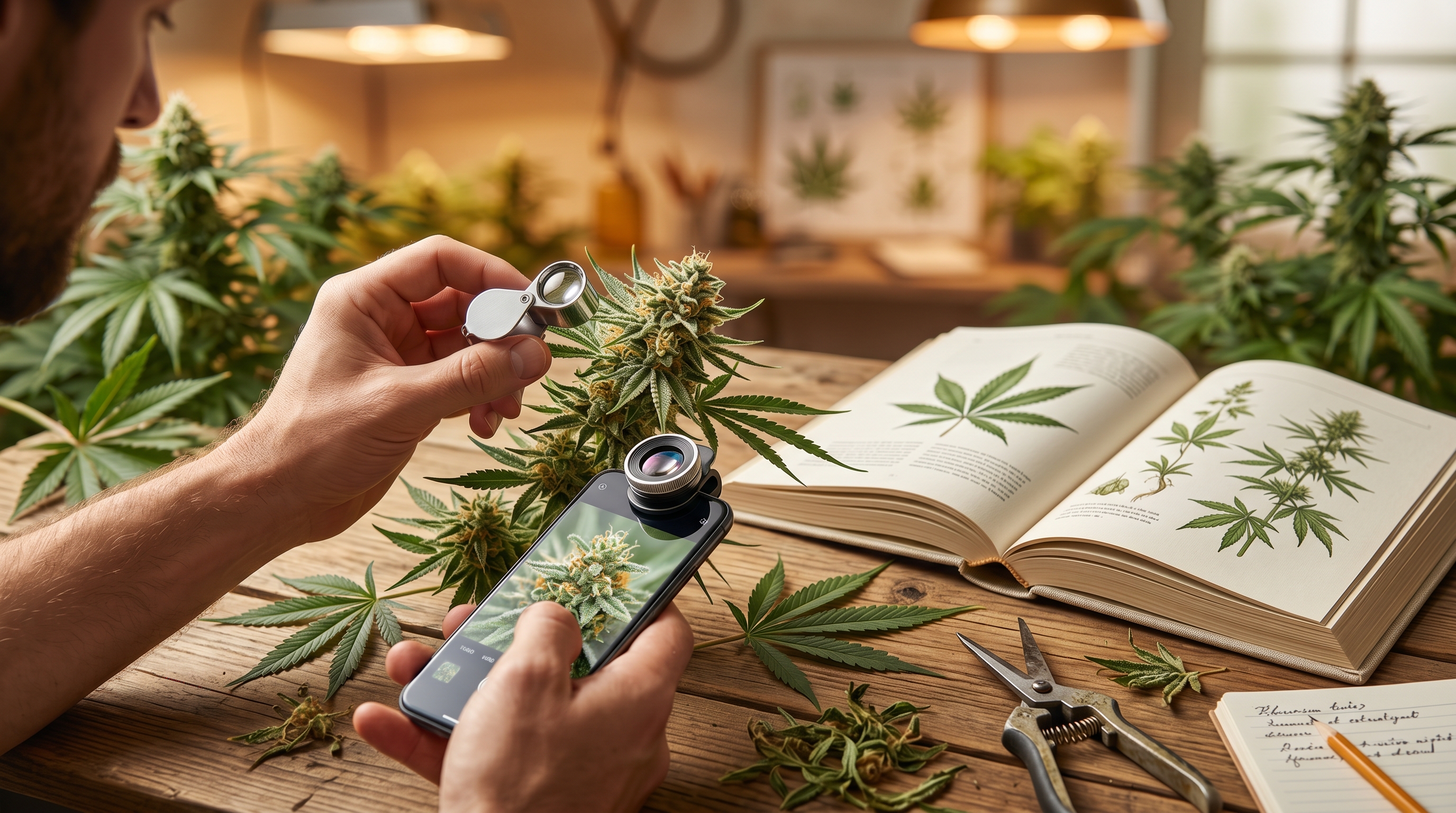
You cannot judge a trichome with the naked eye. The heads are far too small. You need magnification, and you have three realistic options.
Jeweler’s loupe (10x–30x)
The classic, cheap, indestructible choice. A 10x to 30x loupe costs a few dollars, fits in a pocket, and never needs charging. Hold it close to a bud in good light and you can clearly see whether heads are clear, cloudy, or amber. The honest tradeoff: above about 10x, loupes lose depth of field, so a 30x loupe can actually be harder to use than a 10x. For most growers, a quality 10x loupe is all you ever need.
Handheld digital microscope (40x–200x)
This is the upgrade. A digital microscope — many clip onto your phone or plug into a laptop — gives you 40x to 200x magnification with built-in LED lighting, which makes color reading dramatically easier. The 40x–100x range is the sweet spot for trichome assessment. You get a big, bright, steady image you can zoom into and even photograph for week-over-week comparisons. If you are serious about hitting a precise window, this is the tool I recommend.
Phone macro lens
Modern phones with a macro mode or a clip-on macro lens can get you surprisingly close — enough to call the general clear/cloudy/amber ratio. They top out around 5x–10x of useful optical detail, so they are better for a quick gut-check than a precise count. Still, a phone is the tool you always have on you, and a clip-on macro lens for a few dollars closes a lot of the gap.
A loupe is the gear most growers start with, but it is not the only kit worth owning — see my broader notes on grow-room essentials in the grow tent setup guide.
The clear, cloudy, amber guide
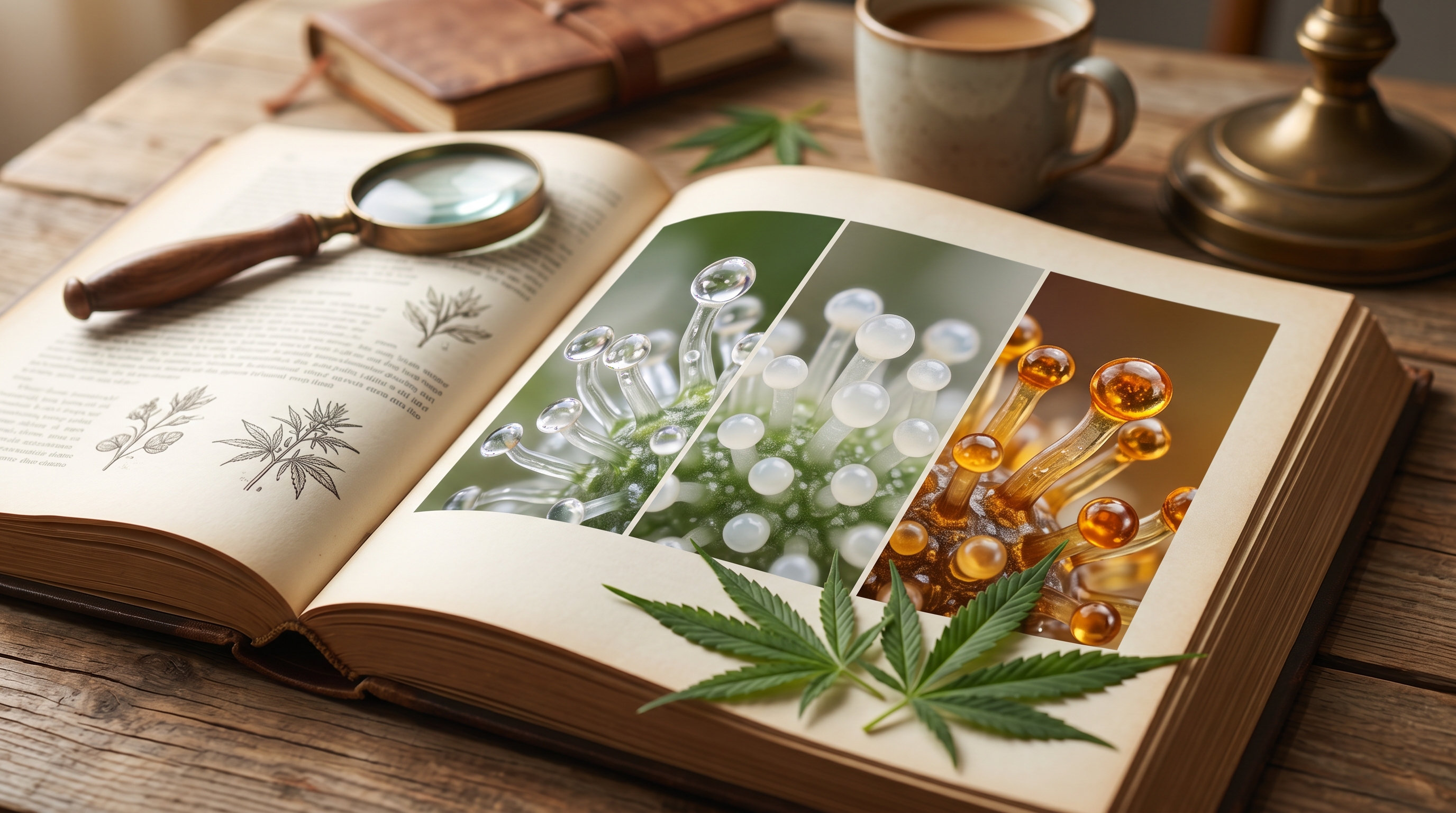
Every harvest decision comes down to three colors. Here is what each one means.
Clear. Early in flowering, trichome heads look transparent — like tiny glass beads. Clear heads mean the gland is still filling and cannabinoid levels are low. A bud harvested mostly clear is harvested too early: weak potency, thin flavor, disappointing yield. Patience pays here.
Cloudy (milky). As the resin matures, the heads turn cloudy or milky white. This is peak THC. Cloudy heads signal the highest concentration of psychoactive cannabinoids, and the high tends to be more energetic, cerebral, and uplifting — the daytime end of the spectrum. Most growers want their flower mostly cloudy at harvest.
Amber. Eventually heads shift to a golden or amber color. Amber means THC is beginning to degrade — converting toward CBN, the sleepy cannabinoid. The effect turns heavier, more relaxing, more sedative and body-focused. A little amber adds a pleasant mellow edge; a lot of amber pushes you toward couch-lock.
| Trichome color | Maturity stage | What it means | Likely effect |
|---|---|---|---|
| Clear | Early flower | Cannabinoids still building | Weak, not ready — too early |
| Cloudy / milky | Peak ripeness | Highest THC | Uplifting, cerebral, energetic |
| Amber | Past peak | THC degrading to CBN | Relaxing, sedative, body-heavy |
For the deeper chemistry of how THC ages into CBN, my CBN explainer goes further than I can here. And if you grow your own from seed, the same color code applies whether you are running a home grow for beginners or breeding new genetics.
Choosing your window by desired effect
There is no single “correct” harvest moment — there is the moment that is correct for the effect you want. This is the whole point of learning to read trichomes. Here is how I think about the windows.
- Energetic, clear-headed high: harvest when heads are nearly all cloudy with little to no amber. You catch peak THC before any meaningful degradation. Great for daytime, focus, and social flower.
- Balanced, all-purpose harvest (the classic sweet spot): aim for roughly 70–85% cloudy with 15–30% amber. This is where most growers land: full potency with a gentle relaxing rounding-out. If you only remember one target, remember this one.
- Deeply relaxing, sleepy harvest: let amber climb to 40–50%. More THC has converted toward CBN, giving you that heavy, sedative, nighttime body high.
This is also where blog-meets-app: the harvest window is just the front end of how a strain will feel. How a given terpene and cannabinoid profile actually lands in your body is personal. If you track what you grow and consume in the High IQ app, you start to see whether you are genuinely a “more amber” person or whether you have been chasing sedation you do not actually enjoy.
Where and how to check
Two growers can look at the same plant and reach opposite conclusions — usually because they were looking in the wrong place.
Check the calyxes, not the sugar leaves. Trichomes on the small sugar leaves around your buds mature and turn amber faster than the trichomes on the calyxes (the little teardrop-shaped flower parts that make up the bud itself). If you judge ripeness off the sugar leaves, you will harvest too early every time. Always read the calyx trichomes — that is the flower you are actually smoking.
Check multiple spots. Buds at the top of the canopy, closest to the light, ripen ahead of lower buds. Sample a few colas and a few heights so you get a true average rather than one cherry-picked frosty spot.
Get the lighting right. Color reading is everything here, and bad light ruins it. Use bright, neutral white light — the LED on a digital scope is ideal — and avoid your purple-tinted grow lights, which make milky and amber nearly impossible to tell apart. Steady the bud (a digital scope on a small stand helps) so the image is not shaking while you try to count.
If your plants are showing stress that is muddying your read — discoloration, weird leaf curl, or uneven ripening — sort that out first using common growing problems and how to fix them. And if you are growing under LEDs, dialing them in matters; see the LED grow lights buyer’s guide.
Timing the flush
Reading trichomes is not just an on-the-day decision — it should drive your flush schedule too. Flushing (running plain water to clear out built-up nutrients before harvest) typically starts 1 to 2 weeks before you cut. That means you need to anticipate your window, not wait for it.
The practical move: once your calyx trichomes hit mostly cloudy with the first hints of amber, you are roughly one to two weeks from your balanced harvest target. That is your cue to begin the flush. By the time the amber climbs into your chosen range, the plant is clean and ready. If you wait until trichomes are already perfect to start flushing, you have to choose between a rushed flush or letting the buds slide past your window. Outdoor growers have less control over this timing — my outdoor growing season starter guide covers how weather and daylight push the window around.
For the full cut-dry-cure sequence after this point, lean on my when and how to harvest guide and the drying and curing complete guide — because a perfectly timed harvest can still be ruined by a sloppy dry.
Common mistakes
A few errors show up again and again, and almost all of them push growers toward harvesting too early:
- Harvesting too early. The number-one mistake. Impatience (or inadequate magnification) leads to cutting while heads are still clear or barely cloudy, costing you potency, aroma, and flavor. When in doubt, wait.
- Reading sugar leaves instead of calyxes. Sugar-leaf trichomes amber early and lie to you. Read the calyxes.
- Judging by pistils alone. “Wait until the hairs turn orange” is folk wisdom that varies wildly by strain. Pistils are a loose hint; trichomes are the verdict.
- Bad lighting. Calling amber under purple grow light is a coin flip. Use neutral white light.
- Checking one spot. The top cola is not the whole plant. Sample several buds and heights.
- Over-magnifying. A shaky, depth-of-field-starved 30x loupe image is worse than a clean, steady 10x one. More zoom is not always better.
FAQ
How long does it take for trichomes to go from clear to amber? It varies by strain and environment, but the cloudy-to-amber transition often unfolds over one to two weeks. That is exactly why you start watching daily once heads turn cloudy — the window can move fast in the final stretch.
Do I really need a microscope, or is a loupe enough? A 10x jeweler’s loupe is genuinely enough to call clear, cloudy, and amber for most growers. A digital microscope (40x–100x) just makes it easier, brighter, and more precise — worth it if you want to hit a tight target or photograph your progress.
Can I just use my phone? For a general read, yes — a macro mode or a cheap clip-on macro lens gets you close enough to gauge the overall ratio. For counting a precise cloudy-to-amber percentage, a loupe or scope is more reliable.
My sugar leaves are amber but my calyxes are still cloudy — what do I do? Trust the calyxes. Sugar-leaf trichomes always run ahead. If the calyxes are mostly cloudy with little amber, you are not there yet for a balanced harvest.
What if I want both energetic and sedative flower from one plant? Harvest in stages. Take the ripe top colas first while they are mostly cloudy, then let the lower, less-mature buds keep going until they pick up more amber. One plant, two distinct effect profiles.
Key Takeaways
- Trichomes — specifically the capitate-stalked resin heads on the calyxes — are the most reliable harvest signal, not pistils or bud look.
- Three colors decode the high: clear = too early, cloudy = peak THC and uplifting, amber = THC degrading toward CBN and sedative.
- The classic balanced sweet spot is 70–85% cloudy with 15–30% amber; push amber to 40–50% for a sleepy harvest, or stay nearly all cloudy for an energetic one.
- A 10x jeweler’s loupe is enough; a 40x–100x digital microscope makes it easier and more precise. Read in neutral white light, never purple grow light.
- Begin your flush 1–2 weeks before your target window, and check multiple buds at several canopy heights.
Sources
- Spider Farmer — “What Trichomes Reveal: Signs Your Plants Are Ready for Harvest.” https://www.spider-farmer.com/blog/trichome-when-to-harvest/
- Multiverse Beans — “When to Harvest Cannabis Plants Using a Digital Microscope.” https://multiversebeans.com/educational/when-to-harvest-cannabis-plants-using-a-digital-microscope/
- Royal Queen Seeds — Grow guides on harvest timing and trichome maturity. https://www.royalqueenseeds.com/us/blog-cannabis-cultivation
Professor High’s bottom line: clear is patience, cloudy is your peak, and amber is your dimmer switch toward sleep. Pick up a loupe, read the calyxes in good light, and harvest the high you actually want — then track it so next season you know exactly which window is yours.


