HHC: What Is Hexahydrocannabinol and Is It Safe?
What does science say about HHC? Learn how hexahydrocannabinol works, its safety profile, epimer ratios, drug test risks, and 2026 legal status.

A Cannabinoid You Didn’t Learn About in Chemistry Class
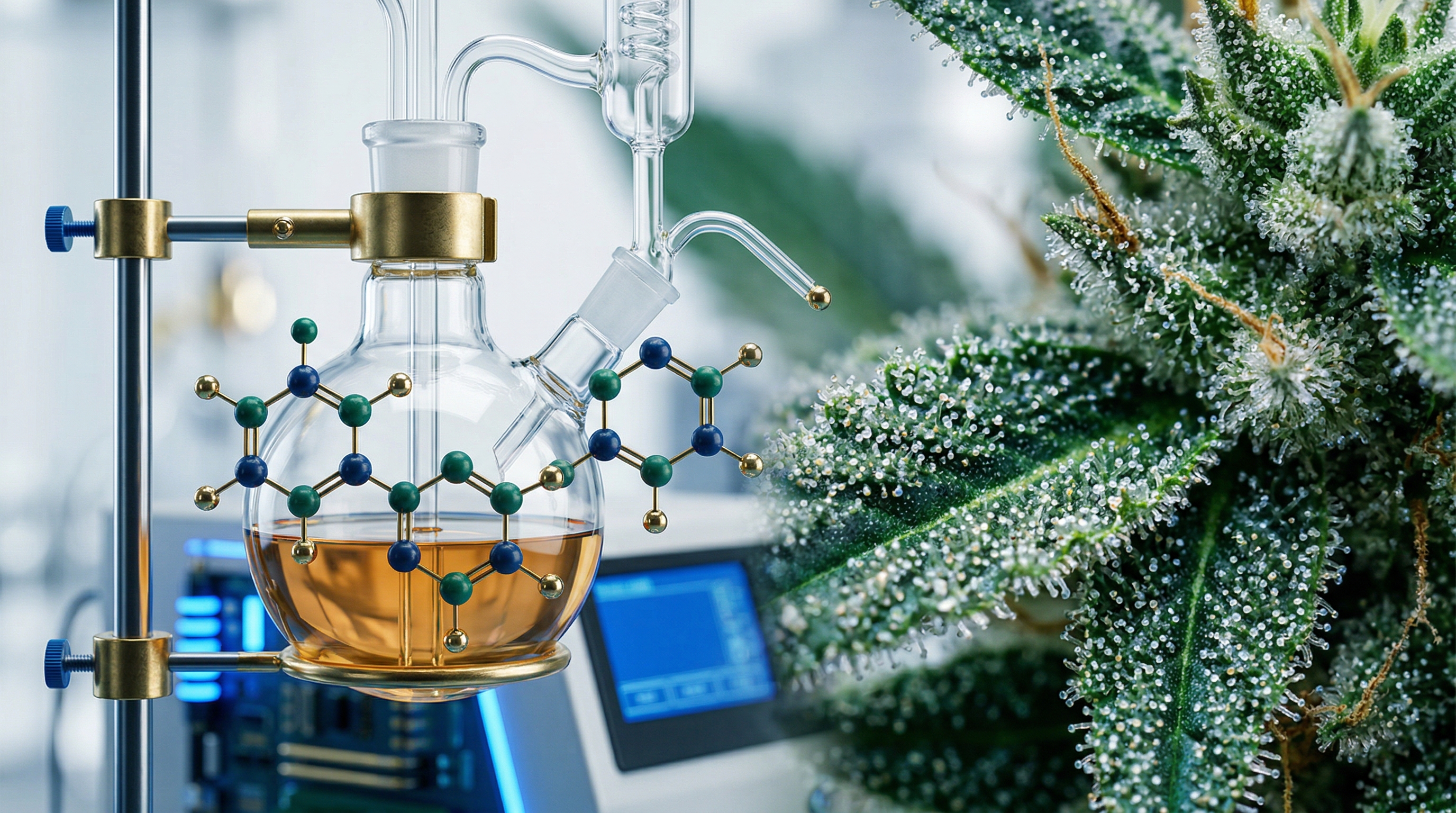
HHC (hexahydrocannabinol) has been around since 1944—long before most people had heard the word “cannabinoid.” American chemist Roger Adams made it by adding hydrogen atoms to THC. That process is called hydrogenation [Adams, 1944]. It’s the same reaction used to turn vegetable oil into margarine.
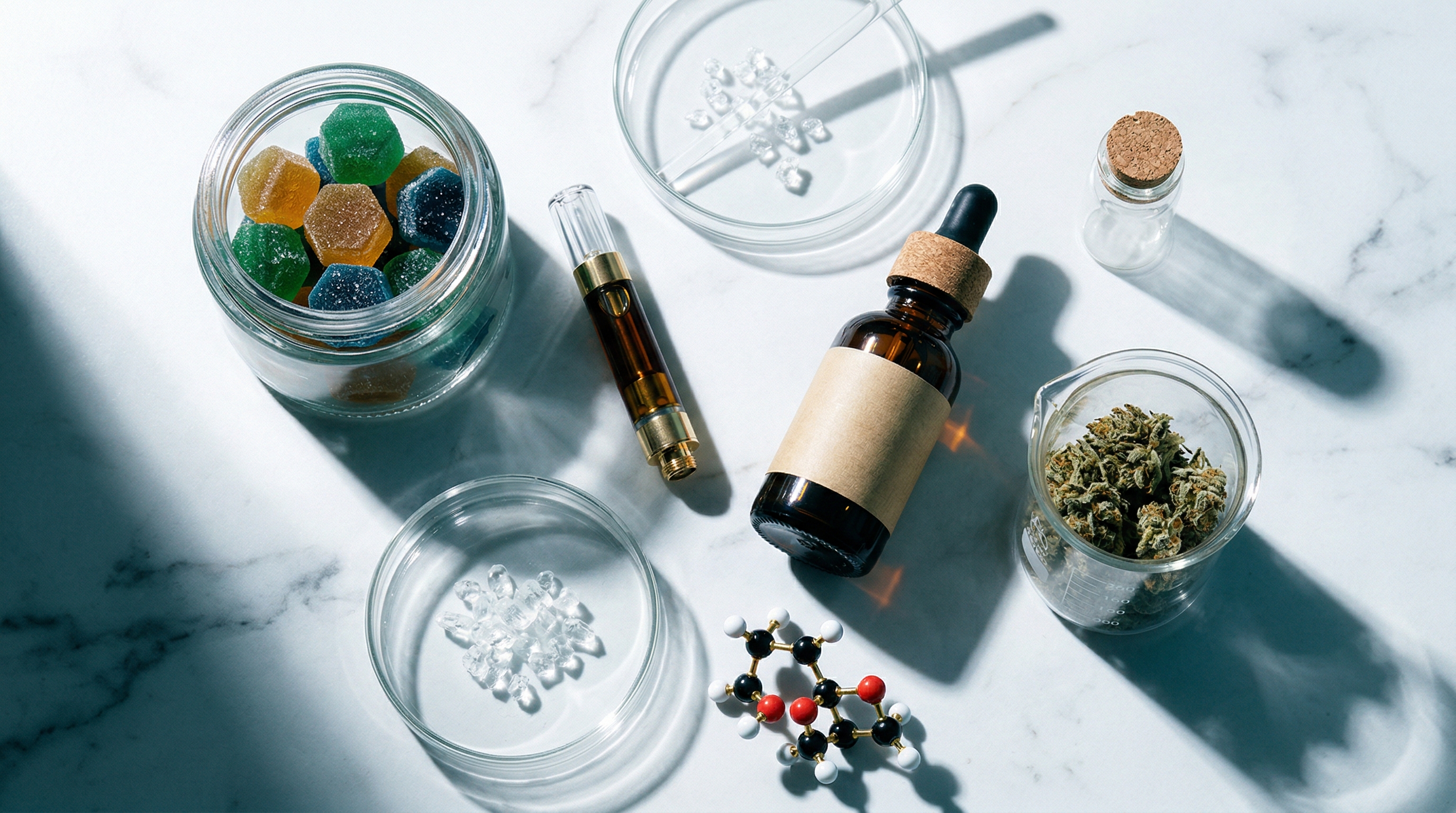
Today, HHC is everywhere. Gummies, vapes, tinctures—sold at gas stations, smoke shops, and online stores, often labeled a “legal alternative” to THC. But the products arrived long before the science did.
So what exactly is HHC? And is it safe? This article answers both questions using real evidence. You’ll learn how HHC is made, how it works in your body’s endocannabinoid system, what the research actually shows about safety, and what to watch for if you choose to try it.
Important note: HHC products exist in a legal gray area and are not subject to the same testing and regulation as cannabis products in licensed dispensaries. This article is for educational purposes and is not medical advice.

The Science Explained
How HHC Is Made: Hydrogenation from CBD
Start with the molecule you already know: delta-9 THC. Its chemical structure contains a double bond in its cyclohexyl ring. Think of it as a kink in a chain. During hydrogenation, hydrogen atoms are added to that double bond under high pressure, using a metal catalyst like palladium or nickel. The double bond disappears. The ring fills with hydrogen. The result is hexahydrocannabinol [Bloom et al., 1997].
The name tells you exactly what happened: “hexahydro” means six added hydrogen atoms. That change has real effects on the molecule:
- More stable: HHC resists heat, UV light, and oxidation better than THC. It has a longer shelf life [Russo & Marcu, 2017].
- Less potent: Most reports suggest HHC is roughly 50–80% as strong as delta-9 THC—but this varies a lot by product.
- Semi-synthetic: Trace amounts of HHC exist naturally in old cannabis pollen and seeds [Hanuš & Hod, 2020], but far too little to sell. All commercial HHC is made from hemp-derived CBD, which is where the legal gray area begins (more on that below).
The Epimer Problem: 9R-HHC vs 9S-HHC
This is where HHC gets interesting—and where consumer confusion starts.
Hydrogenation creates two versions of HHC at once: 9R-HHC and 9S-HHC. These are called epimers—molecules with the same atoms, but with one hydrogen facing a different direction in 3D space. That tiny difference changes everything about potency.
Research shows 9R-HHC binds strongly to CB1 receptors—close to delta-9 THC in strength. 9S-HHC is about 10–12 times weaker at the same receptor [Mechoulam et al., 1980]. More 9R in a product means a stronger high. More 9S means weaker effects.
The problem: brands don’t have to tell you the ratio. Two products both labeled “25mg HHC” can feel completely different depending on how much of each epimer they contain. This explains why users report such inconsistent experiences with HHC—it’s often the same product name, but very different chemistry inside.
How HHC Interacts with Your Endocannabinoid System
Like THC, HHC acts as a partial agonist at both CB1 receptors (concentrated in the brain and central nervous system, responsible for psychoactive effects) and CB2 receptors (found in the immune system and peripheral tissues). This means HHC activates the same fundamental signaling pathways as THC—just with different binding characteristics depending on which epimer is doing the work.
A 2024 study published in Scientific Reports found that HHC and delta-9 THC produce biased intracellular signaling at CB1R—meaning they each trigger slightly different downstream cellular responses, even though they bind the same receptor. This helps explain why HHC’s subjective effects aren’t simply a “weaker version of THC” but may feel qualitatively different to some users.
For a deeper understanding of the receptor system both compounds work through, see our complete guide to the endocannabinoid system.
Safety: What the Research Actually Shows
Let’s be direct: peer-reviewed research on HHC in humans is extremely limited. Most available evidence comes from preclinical studies, structural comparisons with THC, and a growing body of case reports and toxicology analyses. Here’s where the evidence stands as of 2026.
Reported Adverse Effects
Consumer surveys and clinical case reports have documented a range of adverse effects from HHC use:
- Anxiety, palpitations, and chest tightness (consistent with high-dose cannabinoid exposure)
- Tachycardia (elevated heart rate) and mydriasis (pupil dilation)
- Nausea, vomiting, and gastrointestinal distress
- Dissociative symptoms, confusion, and dysarthria (slurred speech)
- In more serious cases: hallucinations, acute psychosis, and seizures
A 2025 case report in the Journal of Medical Toxicology described a 32-year-old man who developed confirmed dissociative-like neurotoxicity after ingesting a single HHC gummy sold as a THC product. Serum analysis confirmed 9R-HHC and 9S-HHC; no other substances were detected. Symptoms resolved within eight hours with supportive care—but the case underscores that mislabeling and unexpected potency are genuine risks [Springborn et al., 2025].
Meanwhile, Ireland’s Health Research Board reported in 2025 that 169 young people had sought treatment for HHC-related problems since 2024, with clinicians noting psychiatric presentations including psychosis and symptoms resembling schizophrenia in some cases.
Drug Interactions and Medication Safety
HHC is metabolized by the liver’s cytochrome P450 enzyme system—the same pathway that processes many prescription medications. This creates a risk of drug interactions that most HHC users don’t consider.
Cannabinoids are known to inhibit CYP enzymes, which can raise blood levels of medications like warfarin (a blood thinner), certain antiepileptics, immunosuppressants, and statins to potentially dangerous levels. Because HHC has not been specifically studied for drug interactions, there is no clinical data on which medications it affects or by how much.
If you take any prescription medications, talk to your doctor before using HHC. This is not a hypothetical concern—it’s a practical pharmacology issue that applies to any cannabinoid metabolized through the liver.
The Manufacturing Risk
For most users, the molecule itself isn’t the biggest safety concern—the bigger risk is what else might be in the product. Semi-synthetic production requires chemical solvents, metal catalysts, and multiple processing steps. Without consistent third-party testing, finished HHC products may contain:
- Residual reaction solvents
- Heavy metals (palladium, nickel) from catalysts
- Unknown chemical byproducts from imperfect synthesis
- Inaccurately labeled concentrations
This is qualitatively different from the risks associated with regulated cannabis products, which undergo standardized testing for all of the above in legal markets.
Drug Testing Concerns
If you’re subject to drug testing, assume HHC will cause a positive result. Early marketing for HHC products claimed the compound wouldn’t trigger standard immunoassay tests (the most common urine drug screens). This claim has not held up.
A 2025 forensic toxicology study identified HHC-COOH (11-nor-9-carboxy-hexahydrocannabinol) as a urinary metabolite of HHC exposure—and notably found that this same metabolite can also result from conventional delta-9 THC metabolism. Standard drug tests screen for THC-COOH, which shares structural similarity with HHC-COOH. The practical implication: HHC use is likely to cross-react with standard immunoassay panels and trigger a positive result.
For everything you need to know about how cannabinoids clear your system, see our detailed guide on cannabis and drug testing.
The Legal Landscape in 2026
HHC’s market position has always depended on a specific reading of the 2018 Farm Bill: because HHC can be manufactured from hemp-derived CBD (which is legal), and because the finished product contains no delta-9 THC above 0.3%, some manufacturers argued it was federally legal.
That argument was always on shaky legal ground, and the ground has shifted significantly in 2026. The Continuing Appropriations Act signed in November 2025 explicitly excludes cannabinoids produced through chemical synthesis or conversion from the definition of hemp. Under this language, HHC—manufactured by chemically converting CBD—would be classified outside the hemp definition and subject to federal prohibition. Full enforcement is expected to take effect in November 2026.
State law is even more variable. Multiple states have enacted specific bans or restrictions on HHC independent of federal law. Several countries (including Germany as of June 2024) have classified HHC as a controlled substance under new psychoactive substance legislation.
For the complete picture of how federal hemp law is changing, see our explainer on the confusing 2026 regulatory landscape for hemp and cannabis.
HHC is not the same situation as delta-8 vs delta-9 THC—but the same regulatory pressures that led to scrutiny of delta-8 are now closing around HHC even more decisively.
Practical Guidance for Consumers
If You’re Considering HHC
Demand third-party certificates of analysis (COAs). Any reputable HHC brand should provide batch-specific lab reports from an accredited third-party laboratory. Verify the COA matches the batch number on your product, and check for testing of potency, pesticides, heavy metals, and residual solvents—not just total cannabinoid content.
Ask about the epimer ratio. A quality manufacturer will disclose the 9R-HHC to 9S-HHC ratio. Higher 9R content means stronger psychoactive effects; higher 9S content means a weaker experience. If a brand can’t tell you the ratio, they may not have tested for it.
Start very low. Because of the epimer variability across brands, a 25mg HHC gummy from one manufacturer may feel completely different from another. The classic “start low, go slow” principle applies with extra urgency here.
Know your legal situation. Check your state’s specific laws before purchasing. And if you’re subject to workplace drug testing, avoid HHC—the risk of a positive result is real regardless of what product marketing claims.
Consider Regulated Alternatives
If what you’re seeking is a moderately euphoric, relaxing experience with a profile lighter than traditional delta-9 THC, you have regulated options. The delta-8 vs THC comparison covers another hemp-derived cannabinoid in the same potency tier. And if you’re interested in how non-psychoactive cannabinoids interact with the same system, THCA is worth understanding.
In legal cannabis markets, products come with standardized potency testing and consistent manufacturing practices—advantages worth weighing against any appeal of novelty.
Key Takeaways
- HHC is a hydrogenated form of THC, first synthesized in 1944. It’s more chemically stable than THC but produces similar psychoactive effects at roughly 50–80% the potency, depending on its epimer ratio.
- Two epimers, wildly different potencies: 9R-HHC is the active form with strong CB1 binding; 9S-HHC is significantly weaker. The ratio in any given product directly determines how strong it feels—and most brands don’t disclose this.
- Human safety research is extremely limited. Available evidence includes case reports of serious adverse effects, growing treatment-seeking in Ireland, and a 2025 toxicology case documenting dissociative neurotoxicity.
- The biggest safety risk is manufacturing quality, not the molecule itself. Without mandatory testing standards, contamination from solvents, heavy metals, and byproducts is a real concern.
- Assume HHC will trigger a positive drug test. The metabolite HHC-COOH is detected in urine and is structurally similar to the THC metabolite standard tests target.
- The legal window for HHC is closing. 2026 federal hemp regulations explicitly exclude synthetically derived cannabinoids, and many states have already enacted bans.
FAQs
Will HHC show up on a drug test?
Most likely, yes. HHC metabolizes into HHC-COOH, which cross-reacts with standard immunoassay urine tests designed to detect THC-COOH. Early marketing claims that HHC was “undetectable” have not been supported by forensic evidence. Assume a positive result and plan accordingly [Strehmel et al., 2025].
Is HHC stronger than delta-8 THC?
Most user reports and preliminary analyses suggest HHC is slightly more potent than delta-8 THC but less potent than delta-9 THC—but this depends heavily on the 9R-to-9S-HHC ratio in a given product. A high-9R product could feel closer to delta-9; a high-9S product might feel weaker than delta-8.
Is HHC natural or synthetic?
It’s semi-synthetic. HHC occurs in trace amounts in cannabis pollen and seeds, but in quantities far too small for commercial use. All HHC products on the market are manufactured by chemically hydrogenating hemp-derived CBD. This matters because semi-synthetic production introduces contamination risks absent from whole-plant cannabis products.
Is HHC legal in 2026?
The U.S. federal status is changing rapidly. Under the 2025 budget legislation taking effect in November 2026, cannabinoids produced via chemical synthesis or conversion are explicitly excluded from the hemp definition—which would cover HHC. State laws vary widely, with several states having already enacted specific bans. Internationally, countries including Germany and Ireland have classified HHC as a controlled substance. Check your jurisdiction before purchasing.
Sources
- Adams, R. (1944). “Marihuana: Harvey Lecture, February 19, 1942.” Bulletin of the New York Academy of Medicine, 18(11), 705–730.
- Bloom, A.S., Dewey, W.L., Harris, L.S., & Brosius, K.K. (1997). “9-Nor-9β-hydroxyhexahydrocannabinol, a cannabinoid with potent antinociceptive activity: comparisons with morphine.” Journal of Pharmacology and Experimental Therapeutics, 200(2), 263–270.
- Grafinger, K.E., Stahl, K., & Weinmann, W. (2023). “Hexahydrocannabinol (HHC) and related substances — analytical and toxicological considerations.” Drug Testing and Analysis, 15(11–12), 1244–1257.
- Hanuš, L.O., & Hod, Y. (2020). “Terphenyl cannabinoids and other phytocannabinoids.” Handbook of Cannabis and Related Pathologies. Academic Press.
- Mechoulam, R., McCallum, N.K., & Burstein, S. (1980). “Recent advances in the chemistry and biochemistry of cannabis.” Chemical Reviews, 76(1), 75–112.
- Russo, E.B., & Marcu, J. (2017). “Cannabis Pharmacology: The Usual Suspects and a Few Promising Leads.” Advances in Pharmacology, 80, 67–134.
- Springborn, M., et al. (2025). “Dissociative-like Neurotoxicity Following Analytically Confirmed Exposure to Hexahydrocannabinol (HHC).” Journal of Medical Toxicology, 21(2).
- Strehmel, N., et al. (2025). “Detection of 11-nor-9-carboxy-hexahydrocannabinol (HHC-COOH) as metabolite of both HHC and Δ9-THC in routine forensic samples.” Journal of Chromatography B, 1285.
- Ujváry, I. (2024). “Hexahydrocannabinol and closely related semi-synthetic cannabinoids: A comprehensive review.” Drug Testing and Analysis, 16(2), 127–142.
- Varga, A., et al. (2024). “Hexahydrocannabinol (HHC) and Δ9-THC driven activation of cannabinoid receptor 1 results in biased intracellular signaling.” Scientific Reports, 14, 9345.


