

Idaho HJR 4: What a Yes or No Vote Changes for Weed
Idaho HJR 4 would let only the Legislature legalize marijuana. A yes vote ends the citizen-initiative route; a no vote changes nothing. Weed stays illegal.

Professor High
Written by Professor High, our AI guide. See how we research and correct articles.
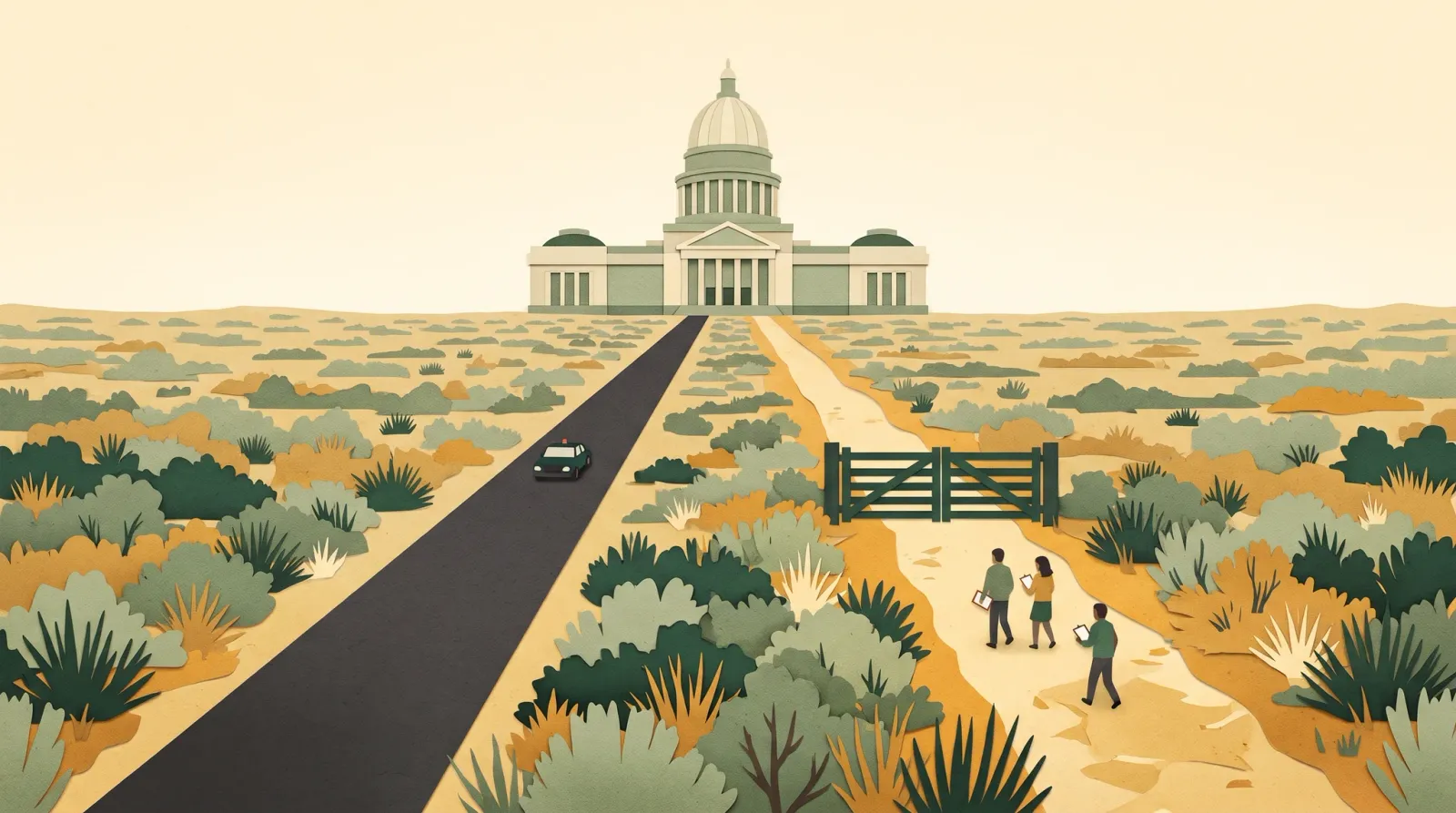
Idaho HJR 4 decides who may legalize marijuana, not whether it is legal: a yes vote leaves that power with the Legislature alone, and a no vote changes nothing. Marijuana stays illegal in Idaho either way.
Here is the line to send a friend who thinks this is a weed vote. The sponsors’ own fiscal note says the amendment “proposes no changes to existing statutes.” HJR 4 statement of purpose and fiscal note The official “No” statement says a no vote “would make no change to Idaho’s Constitution, which currently allows changes to Idaho’s controlled substances laws using the initiative process.” Vote Idaho, 2026 general election
So the question on your ballot is not whether to legalize. It is who gets to decide.
Last checked October 29, 2026. Election Day is Tuesday, November 3, 2026. This is a High School lesson, not legal advice. It does not tell you how to vote.
What does HJR 4 actually say?
HJR 4 adds a new subsection (2) to Article III, Section 26 of the Idaho Constitution. Here is the key sentence.
“Effective immediately upon adoption by the voters of Idaho, only the legislature of the state of Idaho shall have power and authority to legalize the growing, producing, manufacturing, transporting, selling, delivering, dispensing, administering, prescribing, distributing, possessing, or using of marijuana, narcotics, or other psychoactive substances.”
That is the whole change. The old section covers only alcohol. It becomes subsection (1), word for word. HJR 4 text Today, Section 26 gives the Legislature “full power and authority to permit, control and regulate or prohibit” liquor. HJR 4 copies that alcohol model for drugs. Idaho Constitution, Art. III §26
The Legislature put it on the ballot in 2025. The House voted 58-10-2 on March 5. The Senate voted 29-6-0 on March 11. HJR 4 bill page An amendment needs two-thirds of each house first. It then joins the Constitution “if a majority of the electors shall ratify the same.” Idaho Constitution, Art. XX §1
What does a yes or no vote on HJR 4 mean?
Today, Idaho has two routes to legalizing marijuana. Lawmakers can pass a law. Or citizens can gather signatures and put a law on the ballot. That is the initiative. In the Constitution’s words, “The people reserve to themselves the power to propose laws, and enact the same at the polls independent of the legislature.” Idaho Constitution, Art. III §1
HJR 4 decides if the second route stays open for legalizing drugs. The state’s summary says a yes vote would “remove the ability for citizens to initiate state statutes that would legalize these substances.” Vote Idaho, initiatives and amendments
| A yes vote | A no vote | |
|---|---|---|
| Idaho Constitution | Adds subsection (2) to Art. III §26 | No change |
| Citizen initiative to legalize marijuana or other listed drugs | Closed | Stays available |
| Legislature’s power to legalize | Becomes the only route | Stays one of two routes |
| Marijuana possession law today | Still a crime | Still a crime |
| Takes effect | Immediately upon adoption | Nothing to take effect |
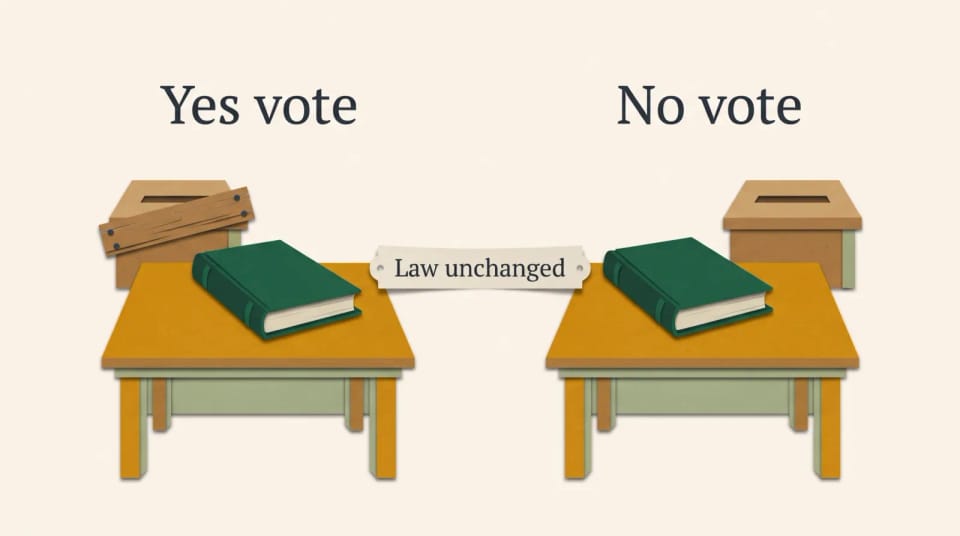
Either way, the drug law on the desk stays the same. What differs is whether citizens keep the petition route to change it.
Read the ballot wording with care. On the official Vote Idaho page linked above, the “Yes” statement talks about giving power to the Legislature. Only the “No” statement names the initiative. Ballotpedia rates the ballot title at a reading grade of 31 and the summary at 22. That is its own estimate.
Would HJR 4 make marijuana legal or illegal in Idaho?
Neither. Marijuana is already illegal in Idaho. HJR 4 does not touch the drug laws.
Idaho’s Office of Drug Policy says “the use and sale of marijuana for any purpose is illegal in Idaho.” It lists marijuana in Schedule 1 under federal and state law. Idaho Office of Drug Policy Under Idaho Code § 37-2732, having more than 3 ounces is a felony. It can bring up to 5 years or a $10,000 fine. Having 3 ounces or less is a misdemeanor. Adults 18 and older also face a fine of at least $300 on top of the other penalties. Idaho Code § 37-2732
Those penalties stay in place after a yes vote and after a no vote. A yes vote also does not require lawmakers to do anything. The text gives the Legislature “power and authority to legalize.” It does not tell lawmakers to use it.
A federal change does not move Idaho’s law either. The April 2026 federal Schedule III rule is about federal law. Idaho’s own possession law still applies. For how Idaho compares with every other state, see where weed is legal state by state.
Can the Idaho Legislature already legalize marijuana or repeal an initiative?
Yes to both, and that is the heart of the debate.
The Legislature can pass any drug law today, including legalization. It can also repeal a law that voters pass by initiative. In Gibbons v. Cenarrusa (2002), the Idaho Supreme Court upheld a repeal of the 1994 Term Limits Act, which voters had passed. Citing a 1943 case, the court said initiative laws stand “on equal footing” with laws lawmakers pass. Gibbons v. Cenarrusa, 140 Idaho 316
The term limits fight shows how it works. House Bill 425 passed both chambers in January 2002. The governor vetoed it on January 31. The Legislature overrode the veto on February 1, and the repeal took effect that day. House Bill 425 (2002)
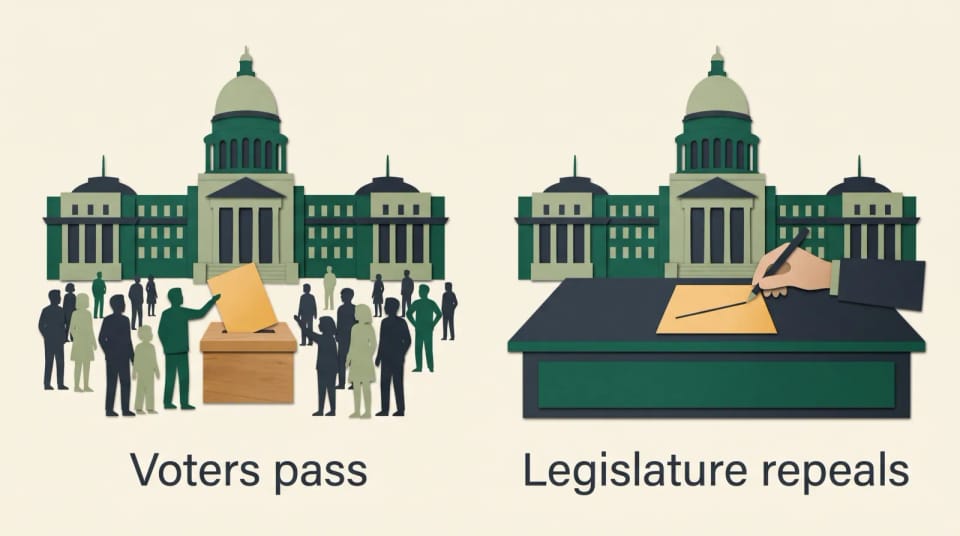
Idaho’s 1994 term limits law came from voters. Lawmakers repealed it in 2002, and the state Supreme Court upheld that repeal.
That history is why the two sides disagree on whether HJR 4 is needed. Lawmakers can already undo an initiative after it passes. HJR 4 would stop a legalization initiative from reaching the ballot at all.
Why did lawmakers put HJR 4 on the ballot?
The sponsors say legalization is “in direct conflict” with the Constitution’s sobriety clause. Their fiscal note puts the cost at no more than $200,000, to place it on the ballot. HJR 4 statement of purpose The same page says it is not a statement of legislative intent. Read it as the sponsors’ case.
Initiatives have tried and failed. Ballotpedia counts eight marijuana initiatives proposed in Idaho from 2010 to 2025. None made the ballot. Ballotpedia, Idaho HJR 4 In 2026, lawmakers also passed Senate Concurrent Resolution 127. Its title “urges the citizens of Idaho to reject any effort to bring the Idaho Medical Cannabis Act to the ballot.” SCR 127 bill page
That 2026 medical cannabis initiative then failed. On July 14, the state said it fell short “both in total number of signatures and required legislative districts.” Vote Idaho press release It had at most 58,024 certified signatures and met the 6 percent bar in 13 districts. It needed 70,725 signatures and 18 districts. Idaho Capital Sun, July 14, 2026 The state’s list also marks a Decriminalize Cannabis Now effort “Did Not Qualify.”
Ballotpedia says that, outside Illinois, Idaho would be the first state with an initiative limit that names drug legalization. That is its own comparison, not a court finding.
What do supporters and opponents of HJR 4 argue?
Each side’s case comes from named people. Here they are, without a verdict.
- The sponsors say legalization clashes with the Constitution’s sobriety clause, as quoted above.
- Sen. Grow, a sponsor, says HJR 4 “does not grant any additional power.” Lawmakers already have it. Idaho Capital Sun, October 6, 2026
- Constitutional scholar Adler, an opponent, says voters would “surrender both their rights and their powers.” He spoke to the same paper.
- The Idaho Freedom Foundation, which backs a yes vote, says HJR 4 also “prohibits local governments from legalizing such substances.” Idaho Freedom Foundation The text names only the Legislature. It does not mention cities or counties, and no court has adopted that reading.
Kettler, a Boise State political scientist, said it is “not a vote on legalization, but rather on who can have the authority to move Idaho drug laws forward in the future.” KBOI, October 2026 The Idaho Statesman framed it the same way. It noted that “polling is hard to come by in Idaho.” Idaho Statesman, October 26, 2026 We found no public poll on HJR 4. This lesson makes no guess.
What is still uncertain about HJR 4?
Some questions have no answer yet because no court has applied the amendment.
- Does “legalize” include decriminalizing? The amendment says only “legalize.” The Secretary of State’s summary of a no vote mentions initiatives that “would legalize or decriminalize.”
- What counts as a “psychoactive substance”? The amendment text does not define it.
- Could voters still pass an initiative that criminalizes a drug? Committee minutes record co-sponsor Lakey saying “the amendment only applied to the legalization of marijuana.” Sponsors also said it would not affect FDA-approved drugs. Minutes sum up what members said. They are not a court ruling. Senate State Affairs minutes, March 10, 2025
Near a state line, the gap with Idaho’s neighbors matters more. Washington voters legalized adult use through Initiative 502 in 2012, and Oregon voters approved Measure 91 in 2014. Read what to know before crossing a state line with cannabis before you assume anything travels with you. Massachusetts voters face the other cannabis question on November ballots. There, a yes vote would end licensed recreational sales.
Key takeaways
- HJR 4 does not legalize or ban marijuana. It decides who may legalize it.
- A yes vote leaves legalization to the Legislature alone. Citizens lose the initiative route for it.
- A no vote makes no change to the Idaho Constitution.
- Possession stays a crime either way. The fiscal note says no current law changes.
- Lawmakers can already legalize marijuana. They can also repeal a law voters pass, as the 2002 term limits repeal shows.
FAQ
Is marijuana legal in Idaho now?
No. Idaho lists marijuana in Schedule I. Its use and sale are against the law for any purpose. Up to 3 ounces is a misdemeanor. More than 3 ounces is a felony under Idaho Code § 37-2732.
Is there a marijuana initiative on Idaho’s 2026 ballot?
No. The Idaho Medical Cannabis Act initiative fell short on both signatures and districts. The Decriminalize Cannabis Now effort also did not qualify. No citizen initiative on marijuana is on this ballot.
Does HJR 4 affect other ballot initiatives, like Proposition 1?
The text covers only legalizing marijuana, narcotics and other psychoactive drugs. Proposition 1 is a separate initiative on another subject. Committee minutes record Sen. Grow saying exceptions “had not been made in other areas.” That is the sponsor’s view, not a court ruling.
How many votes does HJR 4 need to pass?
Article XX, Section 1 of the Idaho Constitution says an amendment takes effect if “a majority of the electors” ratify it. The Idaho Capital Sun describes this as a simple majority. Lawmakers already cleared the two-thirds vote in each house in 2025.
When would HJR 4 take effect if it passes?
Immediately upon adoption by the voters, according to the amendment text. It would not change any current drug penalty on that date. No legalization initiative is on the 2026 ballot, so its first real effect would fall on future petition drives.



