Cannabis Laws in Oregon 2026: Most Permissive in the West?
Oregon cannabis laws in 2026: 2 oz possession, 4-plant home grow, the low 17% tax, oversupply prices, and why there are still no lounges.


Oregon has a reputation, and it’s mostly earned. Among the states that legalized cannabis, it sits at the permissive end. You can grow a few plants in your backyard. You’ll pay one of the lowest tax rates in the country. And the flower on the shelf is famously cheap, because the state grows far more than it can sell. Walk into a dispensary in Portland or Eugene and the prices can shock someone arriving from California or Washington.
But “permissive” doesn’t mean “anything goes.” Oregon still has firm possession limits, a hard age rule, a strict ban on public use, and — surprisingly for such a relaxed state — no legal cannabis lounges at all. This is your plain-language guide to what’s actually legal in Oregon in 2026: how much you can carry, how many plants you can grow, why your receipt is so much smaller than your neighbors’, and where you can (and can’t) light up.
One note before we start. I’m Professor High, not a lawyer, and this is education, not legal advice. Laws change, local rules differ, and your situation is your own. For anything with real stakes, talk to a licensed Oregon attorney.
The quick answer
If you’re 21 or older in Oregon in 2026, here’s the short version:
| Rule | The limit |
|---|---|
| Minimum age | 21+ with valid ID |
| Possession in public (flower) | 2 ounces of usable cannabis |
| Possession at home (flower) | 8 ounces of usable cannabis |
| Possession (solid edibles) | 16 ounces |
| Possession (liquid edibles) | 72 fluid ounces |
| Possession (extracts/concentrate) | 1 ounce |
| Home grow | 4 plants per household |
| Where to buy | OLCC-licensed retail stores only |
| Tax | 17% state + up to 3% local (one of the lowest) |
| Public consumption | Illegal — and no licensed lounges |
Now the details — including the surprising thing this otherwise relaxed state still hasn’t legalized.

How it started: Measure 91
In November 2014, Oregon voters approved Ballot Measure 91 with about 56% of the vote, legalizing recreational cannabis for adults 21 and over. Oregon wasn’t first — that honor went to Colorado and Washington two years earlier — but it joined the early wave alongside Alaska on the same 2014 ballot.
Oregon had a head start the others lacked. It had decriminalized cannabis back in 1973 — the first state in the nation to do so — and had run a medical program since 1998. So when Measure 91 passed, there was already an industry, a patient base, and a culture of cultivation in place. Legal recreational sales began in October 2015, initially through existing medical dispensaries, before dedicated recreational storefronts opened.
If you want the bigger picture, our state-by-state cannabis laws guide and the national legalization overview put Oregon in context with the rest of the country.
Possession: 2 ounces out, 8 ounces at home
Oregon makes an important distinction that trips up newcomers: your legal limit depends on where you are.
In public, an adult 21 or older can possess up to:
- 2 ounces of usable cannabis (flower),
- 16 ounces of cannabis-infused product in solid form (edibles),
- 72 fluid ounces of cannabis-infused product in liquid form,
- 1 ounce of cannabis extract or concentrate, and
- 10 seeds or 4 immature plants.
At your private residence, the flower limit jumps to 8 ounces of usable cannabis. That’s a meaningful gap. The two ounces is what you can carry around town; the eight ounces is what you can keep at home, which makes room for both your harvest and your shopping.
These are separate categories, not a single combined cap, and the per-transaction purchase limits at a store roughly mirror them. Go over the limits and the penalties escalate — small overages are violations or misdemeanors, while larger amounts and any unlicensed sale move into felony territory. Know the numbers before you stock up.
The backyard plant: home grow is legal
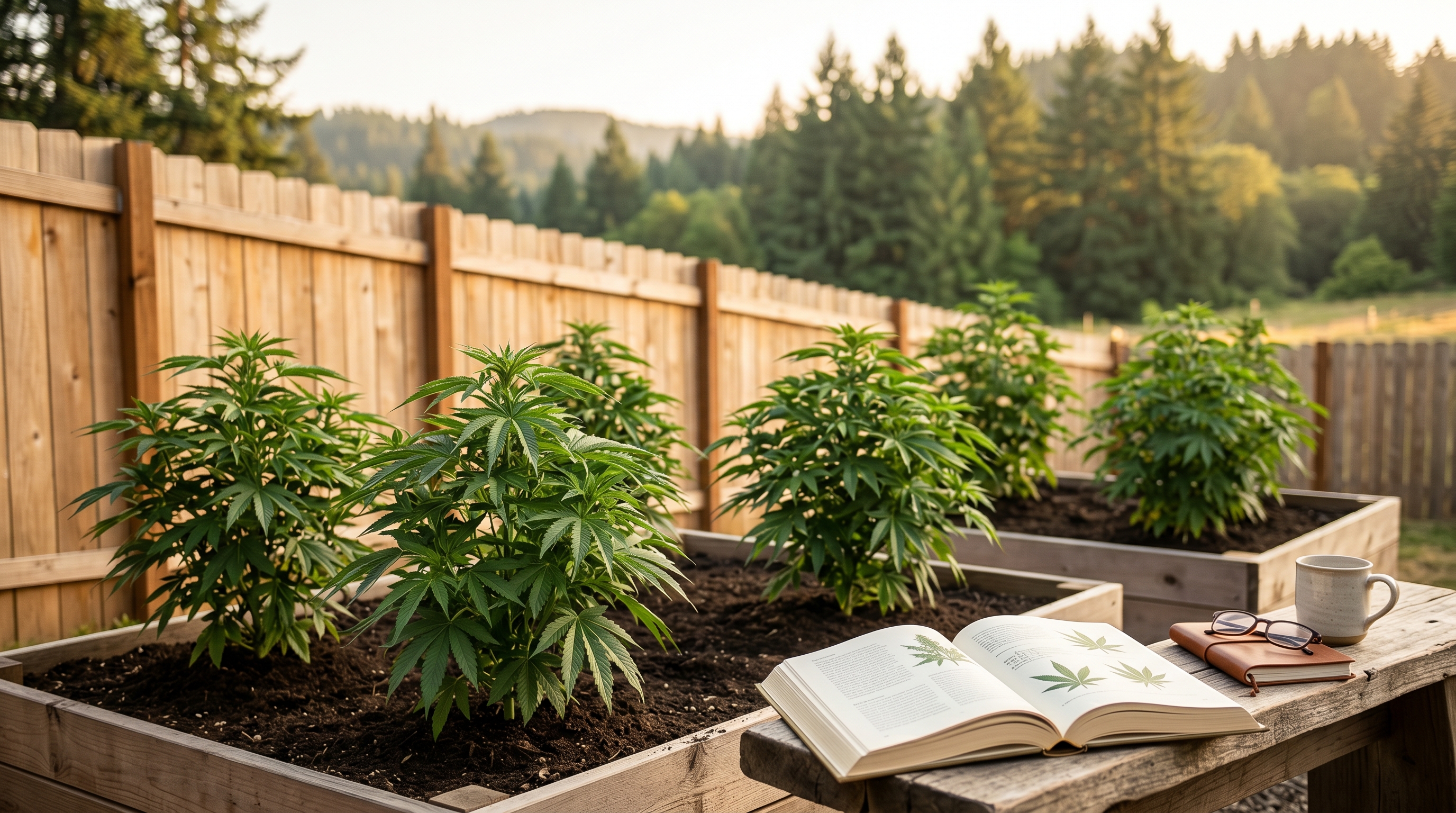
Here’s where Oregon’s permissive reputation is real. Adults 21 and over can grow up to 4 cannabis plants per household — not per person, per household. Two roommates don’t get eight plants between them; the cap is four for the whole address. The plants must be out of public view, which usually means a fenced yard, a greenhouse, or indoors.
This puts Oregon in a small club. Next-door Washington still bans recreational home growing. Colorado allows it, like Oregon does. And Oregon’s mild climate and long season make outdoor growing practical in a way it isn’t everywhere.
Medical patients get more: under the Oregon Medical Marijuana Program, a patient may grow 6 mature plants plus 12 immature plants, with growing often handled by a designated grower.
If you’re curious about cultivation, our beginner’s guide to growing at home and the seed-to-harvest timeline walk through the basics — and in Oregon, a small home garden is a legal hobby rather than a crime.
Where to buy — and why your receipt is so small
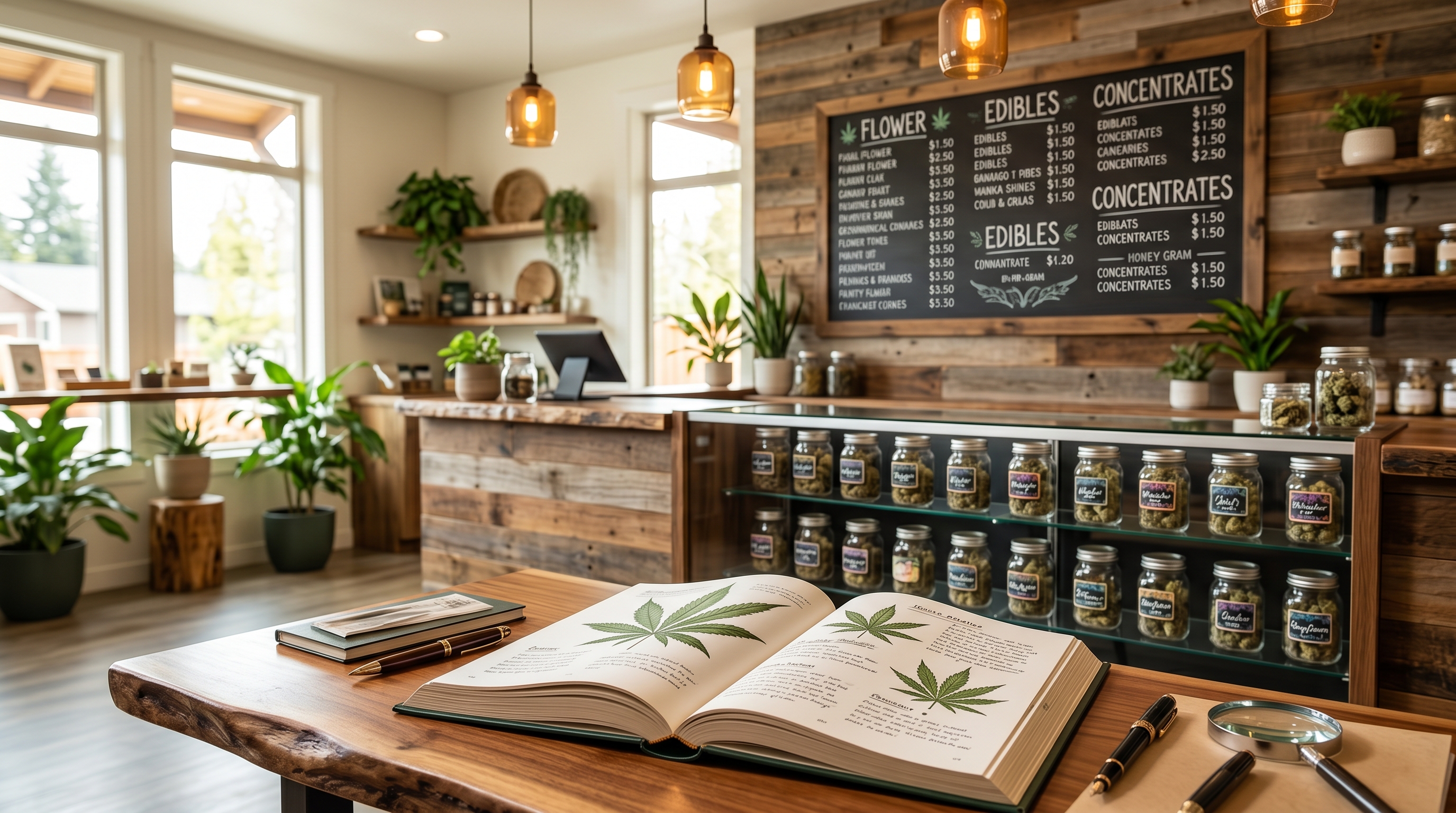
You buy from an OLCC-licensed retail store, with valid ID proving you’re 21 or older. Oregon runs a regulated market overseen by the Oregon Liquor and Cannabis Commission (OLCC), with seed-to-sale tracking, lab testing, and childproof, labeled packaging.
Then comes the part that delights everyone: the price. Oregon charges a 17% state cannabis tax, and cities and counties may add up to 3% on top, for a total that tops out around 20%. Most localities take the full 3%, so you’ll commonly see something close to that 20% ceiling. Crucially, Oregon has no general state sales tax, so there’s no extra layer stacked on. Compare that to Washington, where the 37% excise plus sales taxes can push the total near 50%. Oregon’s tax is among the lowest in the legal-cannabis world.
The low tax is only half the story. The other half is oversupply. Oregon’s growers produce far more cannabis than Oregonians buy. By some OLCC estimates, the state harvests roughly double what the market consumes in a year. That glut has pushed retail flower prices to historic lows. The median price now hovers near $4 a gram — among the cheapest legal cannabis anywhere in the United States. For consumers, it’s a bargain. For growers, it’s a brutal reality that has reshaped the industry and driven calls for reform.
Where you can actually consume
This is the surprise in an otherwise relaxed state. Public consumption is illegal in Oregon, and there are no licensed cannabis lounges. It doesn’t matter whether you’re smoking, vaping, or eating an edible — using cannabis in a public place is prohibited.
“Public” is broader than people expect. It covers sidewalks, parks, beaches, trails, sporting venues, bars, restaurants, and businesses. It also reaches the common areas of apartment and condo buildings — shared hallways, lobbies, and courtyards.
So where can you legally consume?
- Private property, with the owner’s permission. Landlords can ban cannabis in rentals, so read your lease — our guide on whether your landlord can ban cannabis breaks down tenant rights. Many hotels prohibit smoking and vaping too.
- That’s essentially it. No cafés, no lounges, no on-site consumption at the dispensary.
This gap matters for visitors. You can buy cheaply and easily. But you still need a private, permission-granted place to use what you bought. The push to change that is ongoing. A 2026 ballot initiative to authorize licensed cannabis lounges advanced through Oregon’s ballot-title and signature-gathering process. The proposed model would let adults 21+ consume on-site at OLCC-regulated venues — bring-your-own, no on-site sales, no alcohol or tobacco, and an early-morning closing time. An earlier café effort stalled, so this remains a “watch this space” issue rather than current law.
If social use interests you, see our pieces on cannabis social clubs and the European model and the rise of cannabis tourism. And if you’re visiting, our Portland city guide covers where to go in the state’s biggest cannabis hub.
Driving: impairment, not a number
Oregon does not use a per se blood-THC threshold the way Washington does with its 5-nanogram rule. Instead, a cannabis DUII (driving under the influence of intoxicants) is based on observed impairment. That means an officer’s observations, field sobriety tests, and chemical testing. There’s no magic number that makes you automatically guilty or innocent.
That sounds more lenient, but it cuts both ways. There’s no “safe” blood level to point to. And impaired driving is still impaired driving. Because THC clears the body so differently from alcohol, there’s no reliable “wait X hours” rule. We dug into the science in cannabis and driving: how long to wait after consuming, and it helps to understand how long THC stays in your system. Never mix cannabis and alcohol before driving — the combination raises impairment well below either substance’s individual threshold.
Medical cannabis and the OMMP
Oregon’s medical program — the Oregon Medical Marijuana Program (OMMP), run by the Oregon Health Authority — predates legalization by 16 years, having launched in 1998. With recreational access now easy and cheap, medical enrollment has fallen sharply, but the program still offers real advantages for qualifying patients:
- Much higher possession limits (up to 24 ounces for patients),
- larger home grows (6 mature plus 12 immature plants),
- tax-free purchases at participating dispensaries, and
- access for patients under 21 with appropriate authorization.
The trade-off is cost and paperwork: Oregon’s annual patient registration fee is among the highest in the nation, though reduced fees apply for veterans and those on SNAP or SSI. If you’re weighing that route, our state-by-state guide to getting a medical card walks through the general process.
A quick word on psilocybin
Oregon made national news in 2020 by passing Measure 109, the first law in the country to create a regulated framework for supervised, therapeutic psilocybin services. It’s a separate program from cannabis — different substance, different rules, and not a recreational free-for-all. Psilocybin services are only legal at licensed service centers with a trained facilitator, and there’s no retail psilocybin market. We mention it only because people often lump it in with Oregon’s cannabis reputation; the two are governed entirely differently.
A few more lines you don’t want to cross
- Federal land is federal law. National forests, Crater Lake National Park, and other federal property are off-limits — your state rights stop at the boundary.
- Don’t cross state lines. Taking cannabis out of Oregon is a federal crime, even into another legal state like Washington or California. See interstate cannabis commerce and our state-by-state travel guide for why this still catches people.
- Federal status still matters. Even with state legalization, cannabis remains restricted under federal law. That touches everything from gun ownership to banking. The proposed Schedule III reclassification and the SAFER Banking Act could change parts of this picture.
Shopping smart when the weed is this cheap
Here’s the upside of Oregon’s glut: cheap prices mean you can experiment without much financial risk. The trap is shopping by category — grabbing whatever’s labeled “indica” for sleep or “sativa” for energy. That model is unreliable. What really drives how a strain lands is its terpene profile, working alongside its cannabinoids.
That’s the lens behind our High Families system. A strain rich in myrcene tends toward the Relax family and deeper body relaxation. Limonene leans bright and mood-lifting, toward the Uplift family. Caryophyllene anchors the Relief family for physical comfort. And terpinolene powers the Energy family for focus and creativity.
In practice, classic strains on Oregon shelves map onto these patterns. A myrcene-heavy Granddaddy Purple or Northern Lights leans relaxing and sleepy. A bright, citrusy Super Lemon Haze or Jack Herer — a longtime Oregon favorite — leans uplifted and energetic. A balanced crowd-pleaser like Blue Dream or Wedding Cake explains why both stay so popular. And GG4 (Original Glue) brings the heavy, couch-locking Relief profile many reach for to ease pain.
Frequently asked questions
Can I grow cannabis at home in Oregon? Yes. Adults 21+ may grow up to 4 plants per household (not per person), kept out of public view. Medical patients may grow more.
How much cannabis can I legally possess? In public: 2 ounces of flower, 16 ounces of solid edibles, 72 fluid ounces of liquid edibles, and 1 ounce of extract. At home, the flower limit rises to 8 ounces.
Why is cannabis so cheap in Oregon? A low 17% tax (with no state sales tax) combined with a major supply glut — Oregon grows far more than it sells — has pushed retail prices to among the lowest in the country, near $4 a gram.
Are there cannabis lounges or cafés in Oregon? No. Public consumption is illegal and there are no licensed lounges. A 2026 ballot initiative to authorize on-site consumption venues is in progress but is not yet law.
Can visitors buy cannabis in Oregon? Yes. Any adult 21+ with valid ID can buy from a licensed store, subject to the same limits as residents — but you’ll need private, permission-granted space to consume.
Can I get a DUII for cannabis? Yes. Oregon uses an impairment standard rather than a fixed blood-THC number, so it’s based on an officer’s observations and testing, not a single threshold.
Key takeaways
- Possession: 2 oz flower in public / 8 oz at home / 16 oz solid edible / 72 oz liquid edible / 1 oz extract, if you’re 21+.
- Home grow: legal — 4 plants per household, out of public view.
- Buying: OLCC-licensed stores only, with valid 21+ ID.
- Taxes: 17% state plus up to 3% local (~20% max), with no state sales tax — among the lowest anywhere.
- Prices: historically low thanks to oversupply, often near $4/gram.
- Where to use: private property with permission only. No public use, no lounges.
- Driving: impairment-based DUII, no per se THC limit.
The bottom line
Is Oregon the most permissive cannabis state in the West? On the things consumers feel most — a legal backyard garden, the lowest taxes, and the cheapest flower — it’s hard to argue otherwise. But the picture isn’t all green lights. There’s still no legal place to consume outside your home, the supply glut has been hard on the people who grow the plant, and federal law looms over all of it.
For everyday consumers, the practical advice is the same as anywhere: stay under the possession limits, buy from licensed stores, keep your home grow private, use only on private property, and never drive impaired. And when the flower is this cheap, the smartest move is figuring out what actually works for you rather than chasing labels. The strain matters far less than how your body responds to its terpene profile — which is exactly what we built the High IQ app to help you track. Log what you try, note how it lands, and let your own data guide your next trip to the dispensary.
Sources
- Oregon Liquor and Cannabis Commission — Recreational Marijuana Laws and Rules (https://www.oregon.gov/olcc/marijuana/pages/recreational-marijuana-laws-and-rules.aspx)
- Oregon Revised Statutes — Chapter 475C (Cannabis Regulation) (https://www.oregonlegislature.gov/bills_laws/ors/ors475c.html)
- Oregon Health Authority — Oregon Medical Marijuana Program (https://www.oregon.gov/oha/ph/diseasesconditions/chronicdisease/medicalmarijuanaprogram/pages/legal.aspx)
- Marijuana Policy Project — Oregon (https://www.mpp.org/states/oregon/)
- OPB — “Demand for cannabis remains steady in Oregon as production hits record, driving prices lower” (Jan 2026) (https://www.opb.org/article/2026/01/06/cannabis-demand-remains-steady-production-hits-record-lowering-prices/)
- Axios Portland — “There’s too much weed in Oregon: How the state is facing oversupply and low demand” (Feb 2025) (https://www.axios.com/local/portland/2025/02/03/oregon-cannabis-market-supply-demand)
- Harris Sliwoski Canna Law Blog — “Oregon Cannabis 2026: Legislative Forecast and Report” (https://harris-sliwoski.com/cannalawblog/oregon-cannabis-2026-legislative-forecast-and-report/)
- Green Health Eugene — “The 2026 Guide to Oregon Cannabis Limits” (https://www.greenhealtheugene.com/blog/olcc-purchasing-limits)
This article is for educational purposes only and is not legal advice. Cannabis laws change frequently and vary by city and county. Consult a licensed Oregon attorney for guidance on your specific situation.


