Cannabis Laws in Washington State 2026: I-502 a Decade Later
Washington cannabis laws in 2026: 1 oz possession, no home grow, the 37% tax, where to buy, and the 5 ng DUI rule, a decade after I-502.

Washington didn’t just legalize cannabis. It helped invent the modern legal market. On the same November night in 2012 that Colorado said yes, Washington voters passed Initiative 502. The two states became the first places in the world to legalize recreational cannabis for adults. More than a decade later, the experiment has grown up. Today it’s a heavily taxed, tightly regulated system — and, in one big way, a surprisingly strict one.
This is your plain-language guide to what’s actually legal in Washington in 2026. How much you can carry. Why you still can’t grow your own. Where you can buy it. Why your receipt is one of the most expensive in the country. Where you can (and can’t) consume. And the driving rule that lands more people in trouble than anything else.
One note before we start. I’m Professor High, not a lawyer, and this is education, not legal advice. Laws change, local rules differ, and your situation is your own. For anything with real stakes, talk to a licensed Washington attorney.
The quick answer
If you’re 21 or older in Washington in 2026, here’s the short version:
| Rule | The limit |
|---|---|
| Minimum age | 21+ with valid ID |
| Possession (flower) | 1 ounce of usable cannabis |
| Possession (concentrate) | 7 grams |
| Possession (solid edible) | 16 ounces |
| Possession (liquid edible) | 72 ounces |
| Home grow (recreational) | Not allowed — still a felony |
| Where to buy | WSLCB-licensed retail stores only |
| Excise tax | 37% (highest in the U.S.), plus sales tax |
| Public consumption | Illegal — no lounges |
| Driving | 5 ng/mL active THC = per se DUI |
Now the details — including the rule that genuinely surprises people who move here from other legal states.
How it started: Initiative 502
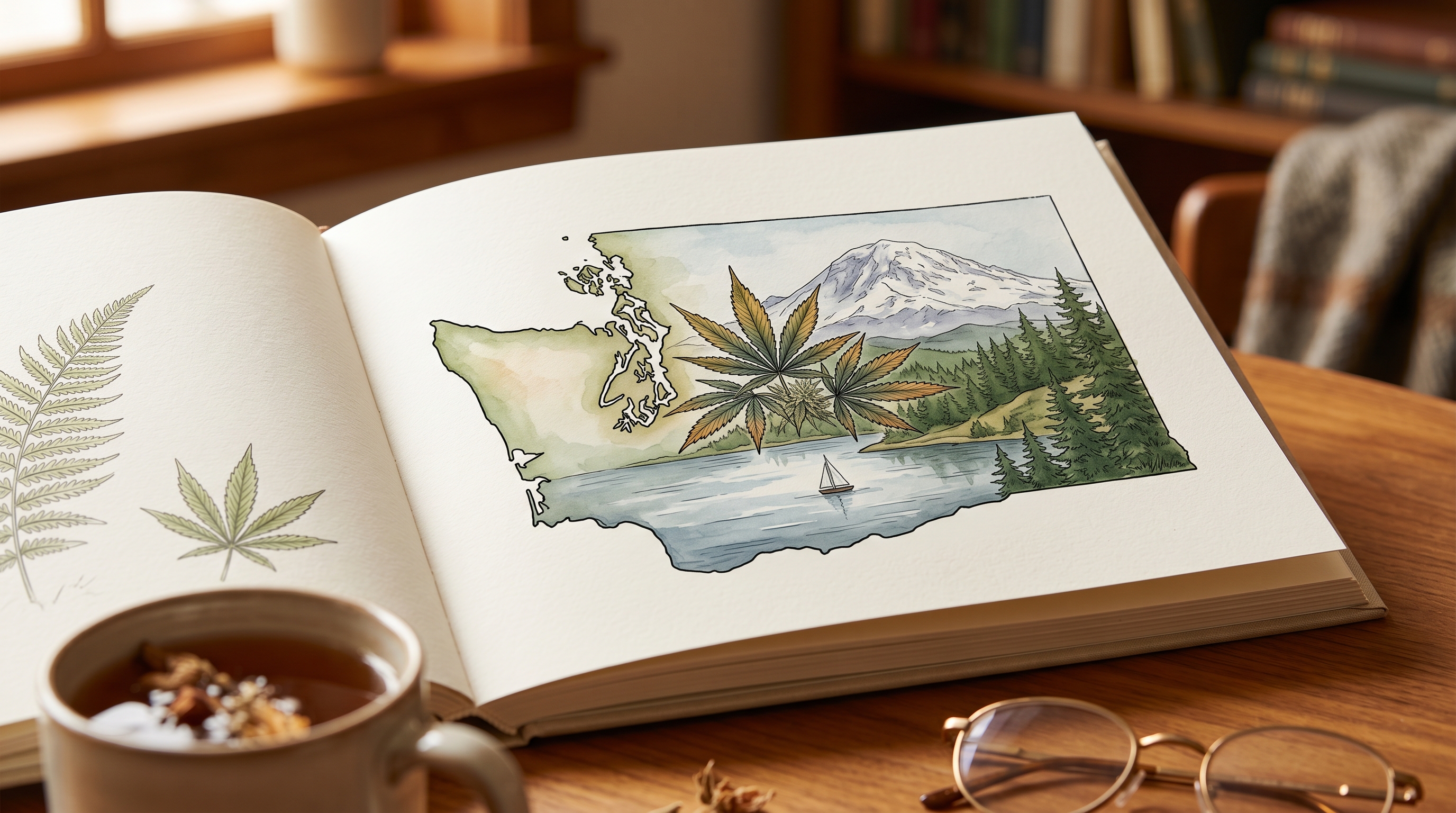
In November 2012, Washington voters approved Initiative 502 with about 56% of the vote [Washington, 2012]. It legalized small amounts of cannabis for adults 21 and over. It set up a licensing and tax framework. And it handed regulation to what was then the Liquor Control Board — now the Washington State Liquor and Cannabis Board (WSLCB) [WSLCB, 2026].
The first legal stores opened in July 2014. Washington and Colorado ran the same experiment at the same time, and the rest of the country watched both closely. If you want to see how that parallel track played out elsewhere, our Colorado cannabis laws guide covers the state that legalized on the very same day, and California at 10 shows how the biggest market matured. For the whole map, our state-by-state cannabis laws guide and the national legalization overview put Washington in context.
What made I-502 distinctive wasn’t just that it passed early. It’s what it left out — and that omission still shapes daily life for Washington consumers.
Possession: the 1-ounce rule (and the part people miss)
An adult 21 or older can possess up to:
- 1 ounce of usable cannabis (flower),
- 7 grams of cannabis concentrate,
- 16 ounces of cannabis-infused product in solid form (think edibles), or
- 72 ounces of cannabis-infused product in liquid form.
These are separate categories, not a single combined cap. The catch most people miss is where that cannabis can come from: a licensed store. Washington never built a legal path for adults to give each other cannabis the way some states allow “gifting.” Sharing is a legal gray zone at best, and selling without a license is a felony, full stop.
Go over the possession limits and it escalates quickly into misdemeanor and then felony territory, so it pays to know the numbers before you stock up.
The big surprise: no home grow
Here’s the rule that stuns people who move to Washington from almost any other legal state. Recreational home cultivation is illegal. I-502 simply never legalized it, and more than a decade later that’s still true.
This isn’t a minor technicality. Growing cannabis without a medical authorization is a Class C felony in Washington — punishable by up to five years in prison and fines up to $10,000 [Washington State Standard, 2026]. Other early states went the other way. In Colorado, and in Oregon next door, a small home garden is legal. Washington stands out as the rare early-legalization state that still treats a backyard plant as a serious crime.
Medical patients are the exception. Registered patients (more on the registry below) can grow a limited number of plants for personal medical use. But for the recreational consumer, the home garden remains off-limits.
That may be changing. In the 2026 session, Senate Bill 6204 would have let adults 21+ grow up to 6 plants per person, capped at 15 per household [Axios, 2026]. It set small fines for plants visible from the street or smelled by a neighbor. The bill cleared a key Senate committee on February 3, 2026 — further than past tries. But its House version stalled. Like the home-grow bills before it, going back to 2021, it failed to become law. If you live here, this is the cannabis fight worth watching in future sessions.
For now, if you’re curious about cultivation, our beginner’s guide to growing at home and the seed-to-harvest timeline are educational reads — just know that doing it in Washington without a medical authorization is currently a felony, not a hobby.
Where to buy — and why your receipt hurts
You can only buy from a WSLCB-licensed retail store. Bring valid ID proving you’re 21 or older. Washington runs a strict three-tier system. Producers grow it, processors make products, and retailers sell it. As a rule, no single company can own across all three tiers. Every product is tracked, lab-tested, and sold in childproof, labeled packaging.
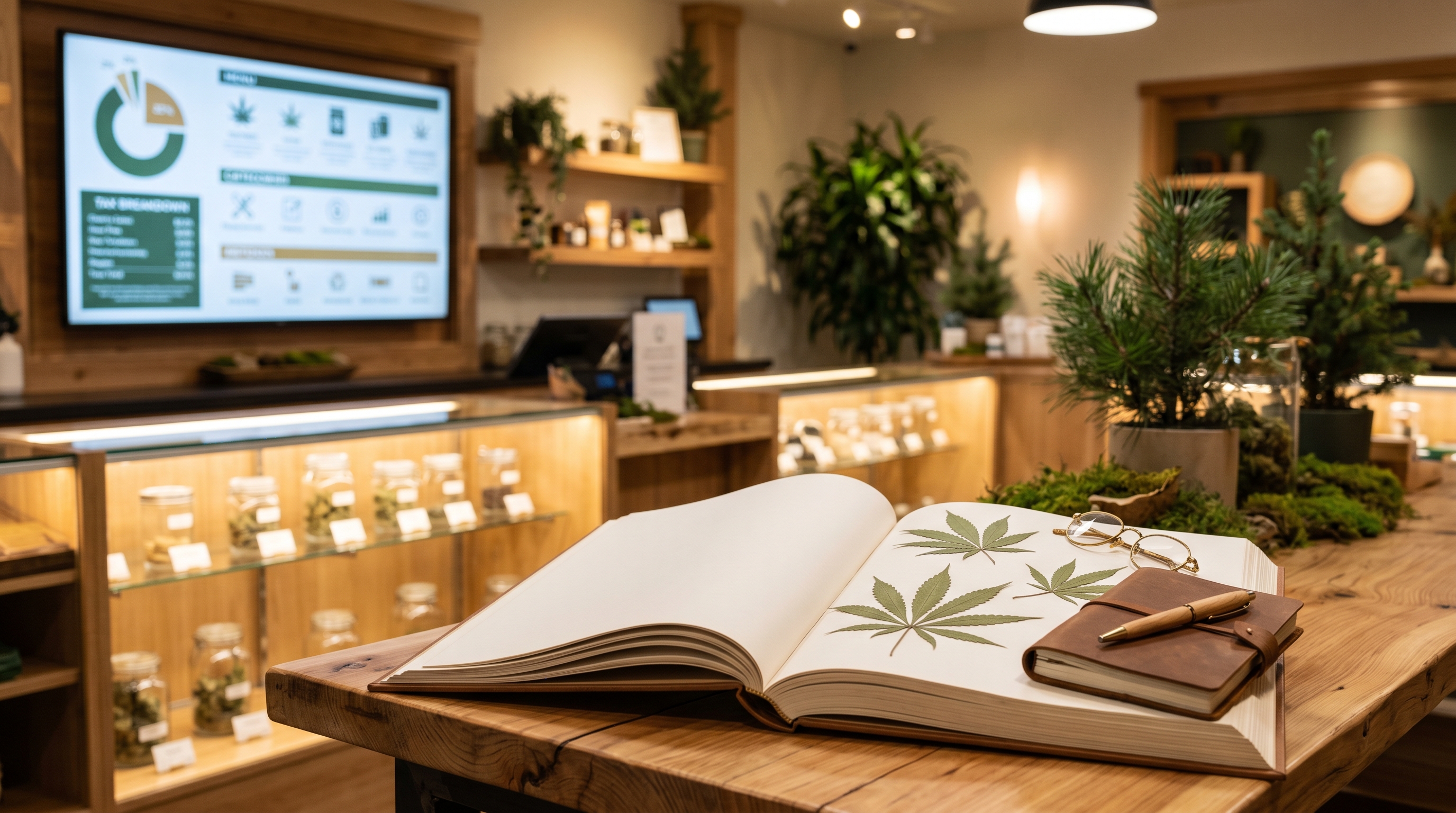
Then there’s the price tag. Washington has the highest cannabis excise tax in the United States: 37% [WSLCB, 2026]. On top of that sits the state sales tax of 6.5%, plus local sales taxes of about 3–4%. Add it all up and the total tax often lands in the 47% to 50% range. That $50 eighth on the menu can ring up closer to $73.
It’s a useful reminder that the sticker price isn’t the real price. If you’re trying to make a purchase count, knowing your own preferences — which terpene profiles actually work for you — matters more than chasing the cheapest jar. We’ll come back to that.
Where you can actually consume
This trips up locals and visitors alike. Public consumption is illegal in Washington — and there are no consumption lounges. It doesn’t matter whether you’re smoking, vaping, or eating an edible. Using cannabis in view of the public is a civil infraction.
“Public” is broader than most people assume. It covers sidewalks, parks, beaches, sporting venues, businesses, bars, and restaurants. It also covers the common areas of apartment buildings and condos — your shared hallway, lobby, or courtyard. And Washington has no licensed lounges, unlike Colorado’s hospitality venues. So there’s no legal place of business to light up away from home.
So where can you legally consume?
- Private property, with the owner’s permission. Landlords can ban cannabis in rentals, so read your lease — our guide on whether your landlord can ban cannabis breaks down tenant rights. Many hotels prohibit it too.
- That’s essentially it. No lounges, no cafés, no on-site consumption at the store.
This gap is exactly why advocates keep pushing for social-use venues. If the idea interests you, see our pieces on cannabis social clubs and the European model and the rise of cannabis tourism. Visiting Washington for the scenery? You may have more luck finding things to do than places to legally consume — though a road trip down to Portland, covered in our Portland city guide, shows how a neighboring state handles it.
Driving: the 5-nanogram rule everyone gets wrong
Here’s the one that lands people in real trouble. In Washington, a driver can be charged with DUI for 5 nanograms or more of active THC per milliliter of blood, measured within two hours of driving [WSLCB, 2026]. This is a per se rule. That means the state does not have to prove you were impaired — the number alone is enough. For drivers under 21, it’s zero tolerance: any detectable active THC is a violation.
Two things people get wrong:
- You can be charged below 5 ng. If an officer observes and documents impairment, you can be arrested even at a lower blood level.
- THC is not like alcohol. It doesn’t clear your blood on a tidy, predictable schedule. Regular consumers can test above the line long after the high has faded, and the 5 ng threshold is a legal trigger, not a “you’re sober now” signal.
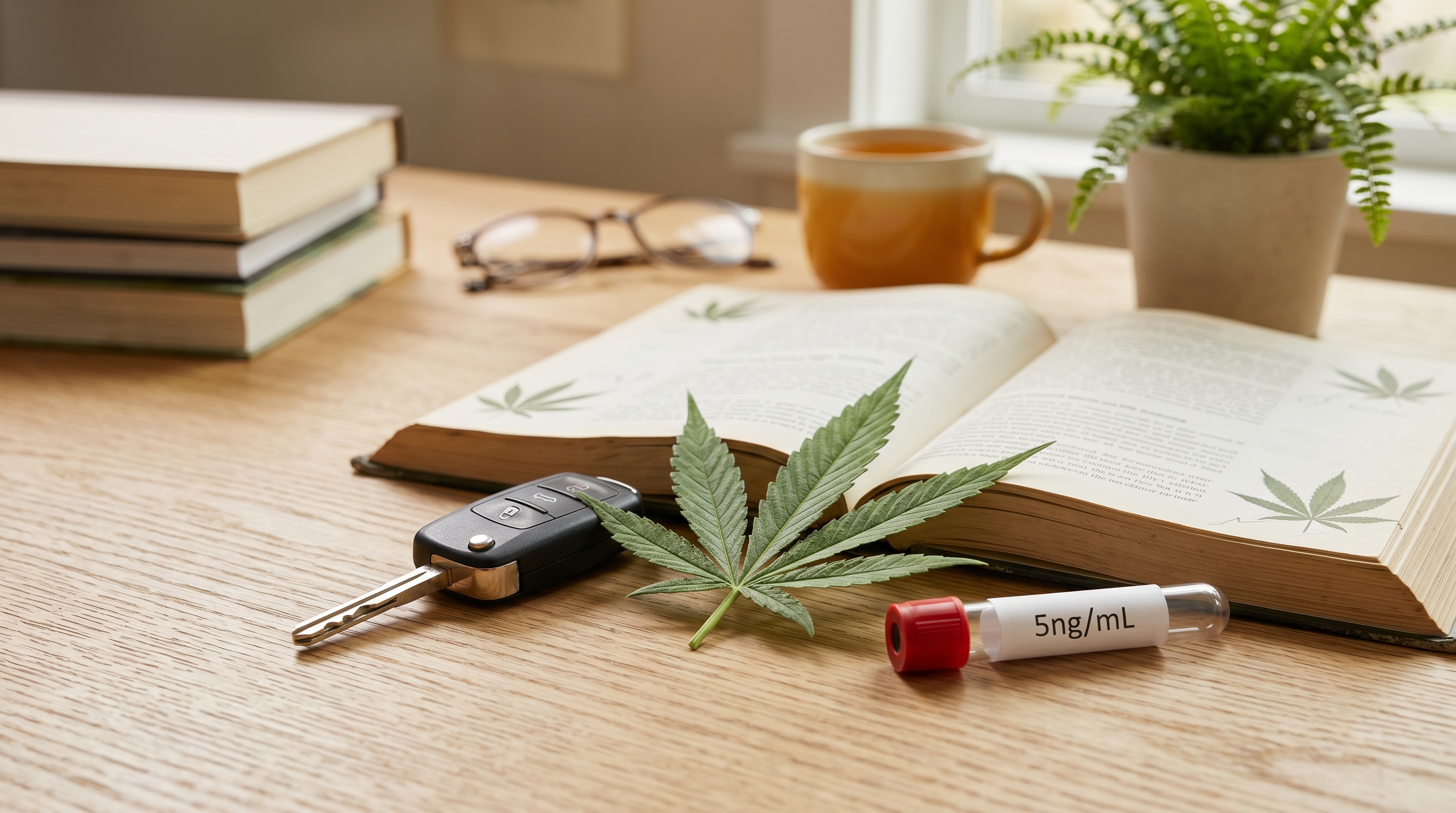
Because THC clears so differently in each person, there’s no single “wait X hours” answer. We dug into the science in cannabis and driving: how long to wait after consuming, and it helps to understand how long THC stays in your system. Never mix cannabis and alcohol before driving — the combination raises impairment well below either substance’s individual limit.
Medical cannabis and the patient registry
Washington folded medical cannabis into the recreational system back in 2015, under the Cannabis Patient Protection Act. Both now sit under WSLCB oversight. There’s no separate medical dispensary network anymore. Qualifying patients shop at the same licensed stores. But signing up for the voluntary medical patient database unlocks real perks:
- Higher possession limits than recreational consumers,
- a sales-tax exemption on qualifying medical products (the 37% excise still applies in most cases, but the retail sales tax is waived), and
- the legal ability to grow a limited number of plants at home — the one cultivation path Washington actually permits.
To register, patients work with an authorizing healthcare provider and a medically endorsed store. If you’re weighing that route, our state-by-state guide to getting a medical card walks through the general process.
Social equity: trying to repair the past
Washington, like several legal states, has tried to address two questions. Who got harmed by prohibition? And who gets to profit from legalization? The Cannabis Social Equity Program is its answer [WSLCB, 2026]. Lawmakers created it in 2020 (E2SHB 2870) and expanded it in 2023 (SB 5080). It reserves a pool of licenses — retail, and now some producer and processor — for applicants hit hardest by the war on drugs.
To qualify, an applicant generally needs one of a few things. A cannabis arrest or conviction, for them or a close family member. Or time spent living in a heavily policed area. Or a below-median household income. The latest sign-up window closed July 1, 2025, and decision letters went out through late 2025. Rules effective January 1, 2026 gave some equity licensees more freedom to relocate their planned stores. It’s an imperfect, slow effort. But it’s an explicit nod to a hard truth: legalization’s benefits haven’t been shared evenly.
A few more lines you don’t want to cross
- Federal land is federal law. National parks like Mount Rainier and Olympic, national forests, and military bases are all off-limits — your state rights stop at the boundary.
- Don’t cross state lines. Taking cannabis out of Washington is a federal crime, even into another legal state like Oregon. See interstate cannabis commerce and our state-by-state travel guide for why this still catches people.
- Federal status still matters. Even with state legalization, cannabis is still restricted under federal law. That affects everything from gun ownership to banking. The proposed Schedule III reclassification and the SAFER Banking Act could change parts of this picture.
Shopping smart in a high-tax state
When nearly half your purchase is tax, getting it right matters more than in most states. The trap is shopping by category. People grab whatever’s labeled “indica” for sleep or “sativa” for energy. That model is unreliable. What really drives how a strain lands is its terpene profile, working alongside its cannabinoids.
That’s the lens behind our High Families system. A strain rich in myrcene tends toward the Relax family and deeper body relaxation. It’s what a lot of folks reach for after a long Seattle workday. Limonene leans bright and mood-lifting, toward the Uplift family. Caryophyllene anchors the Relief family for physical comfort. And terpinolene powers the Energy family for focus and creativity.
In practice, classic strains on Washington shelves map onto these patterns. A myrcene-heavy Granddaddy Purple or Northern Lights leans relaxing and sleepy. A bright, citrusy Super Lemon Haze or Jack Herer leans uplifted and energetic. A balanced crowd-pleaser like Blue Dream or Wedding Cake is why both stay so popular. And GG4 (Original Glue) brings the heavy, couch-locking Relief profile many use for pain.
Frequently asked questions
Can I grow cannabis at home in Washington? Not for recreational use — it’s a Class C felony. Only registered medical patients may grow a limited number of plants. A 2026 bill (SB 6204) to legalize adult home grow advanced in the Senate but did not become law.
Can visitors buy cannabis in Washington? Yes. Any adult 21+ with valid ID can buy from a licensed store, subject to the same limits as residents. But plan where you’ll consume — public use is illegal and there are no lounges.
How much can I legally possess? Up to 1 ounce of flower, 7 grams of concentrate, 16 ounces of solid edibles, or 72 ounces of liquid edibles.
Why is cannabis so expensive in Washington? The 37% excise tax — the nation’s highest — plus state and local sales taxes can push the total tax burden close to 50% of the purchase price.
Can I get a DUI for cannabis? Yes. 5 nanograms of active THC per milliliter of blood is a per se DUI, and drivers under 21 face zero tolerance. You can also be charged below 5 ng if an officer documents impairment.
Can my employer fire me for legal off-duty use? Potentially, yes. Washington employers can maintain drug-free workplace policies, and legal state use does not override an employer’s testing rules.
Key takeaways
- Possession: 1 oz flower / 7 g concentrate / 16 oz solid edible / 72 oz liquid edible, if you’re 21+.
- Home grow: still illegal for recreational users (a felony); only medical patients may grow.
- Buying: WSLCB-licensed stores only, via a strict three-tier system.
- Taxes: 37% excise (highest in the U.S.) plus sales tax — often ~47–50% total.
- Where to use: private property with permission only. No public use, no lounges.
- Driving: 5 ng of active THC is a per se DUI; zero tolerance under 21.
- Federal lines: no federal land, no crossing state borders.
The bottom line
Washington in 2026 is one of the oldest and most heavily regulated legal cannabis markets in the world. It’s also one of the strictest for everyday consumers, thanks to no home grow and the highest excise tax in the country. Stay on the legal side: keep under the possession limits, buy from licensed stores, never grow recreationally, use only on private property, and never drive impaired.
In a state where nearly half your purchase goes to tax, the smartest move is buying what actually works for you — not what a label promises. The strain itself matters far less than how your body responds to its terpene profile. That’s exactly what we built the High IQ app to help you track. Log what you try, note how it lands, and let your own data guide your next trip to the dispensary.
Sources
- Washington State Liquor and Cannabis Board — Know the Law: Cannabis (https://lcb.wa.gov/education/know-the-law-cannabis)
- Washington State Liquor and Cannabis Board — Driving and Traveling (https://lcb.wa.gov/education/driving_and_traveling)
- Washington State Liquor and Cannabis Board — Cannabis Social Equity (https://lcb.wa.gov/se/cannabis-social-equity)
- RCW 69.50 — Uniform Controlled Substances Act / Initiative 502 (https://app.leg.wa.gov/RCW/default.aspx?cite=69.50)
- Marijuana Policy Project — Washington’s I-502 (https://www.mpp.org/states/washington/washingtons-i-502/)
- Washington State Standard — “The latest attempt to legalize homegrown marijuana in Washington” (Jan 2026) (https://washingtonstatestandard.com/2026/01/28/the-latest-attempt-to-legalize-homegrown-marijuana-in-washington/)
- Axios — “Washington state lawmakers weigh legalizing home cannabis grows” (Feb 2026) (https://www.axios.com/2026/02/12/washington-state-home-cannabis-grow-olympia-bill-6204-recreational-marijuana)
- Washington State Legislature — Senate Bill 6204 Report (2025-26) (https://lawfilesext.leg.wa.gov/biennium/2025-26/Pdf/Bill%20Reports/Senate/6204%20SBR%20LC%20OC%2026.pdf)
This article is for educational purposes only and is not legal advice. Cannabis laws change frequently and vary by city and county. Consult a licensed Washington attorney for guidance on your specific situation.


