Indica-Dominant vs Sativa-Dominant Hybrid Effects
Indica-dominant and sativa-dominant hybrids feel different, but terpenes and cannabinoids drive effects more than the label. Here is the science.

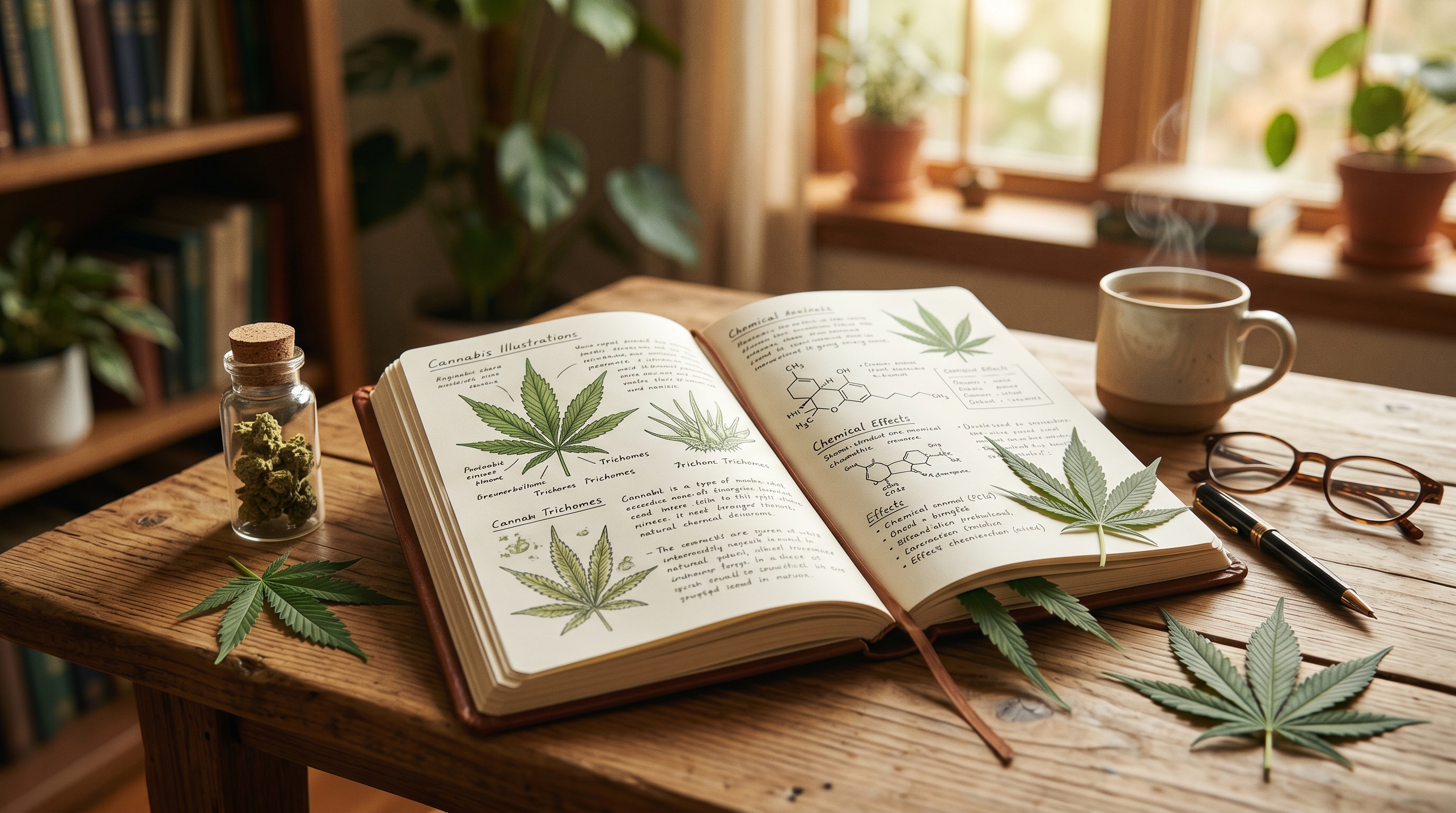
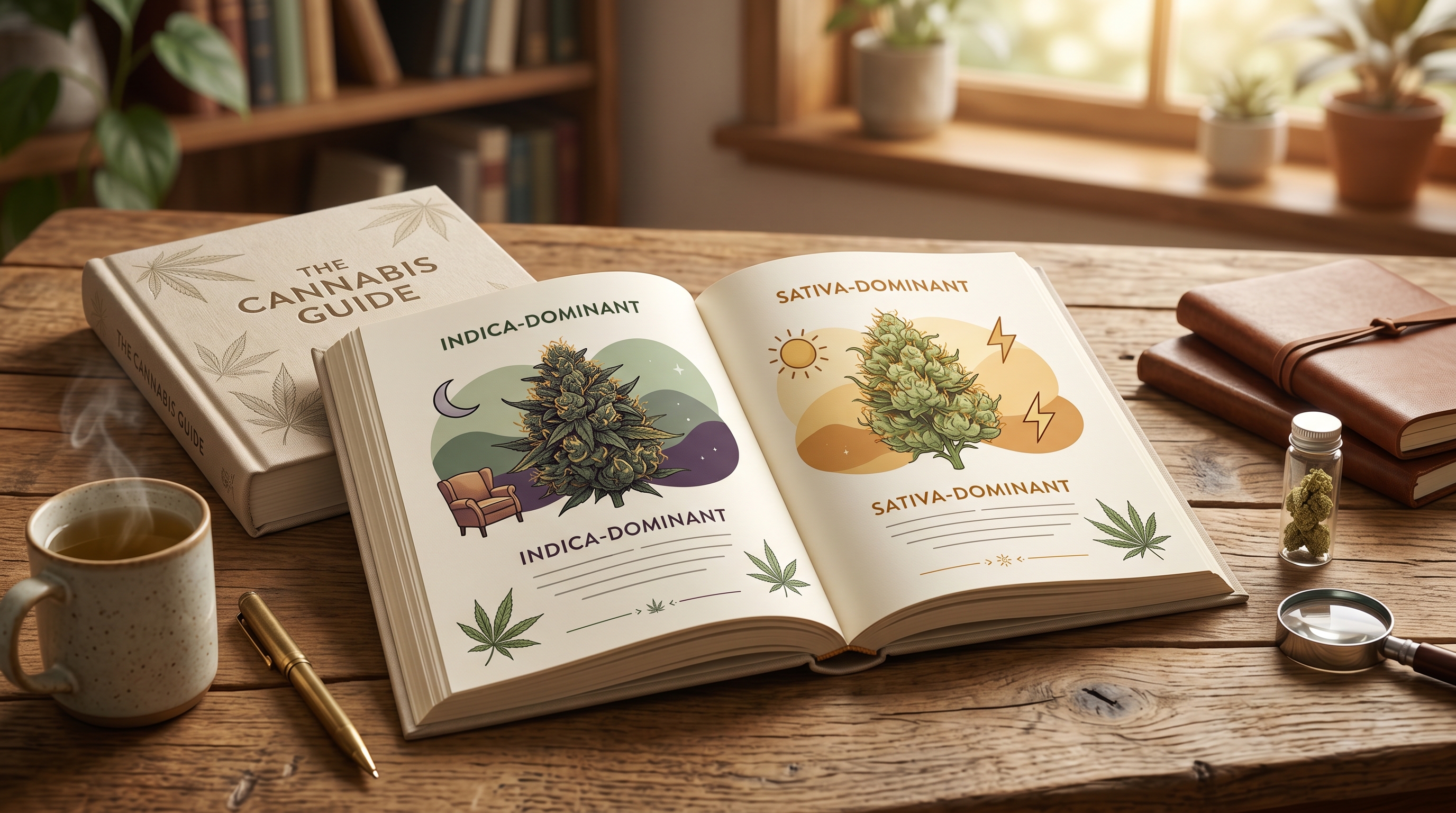
Walk into almost any dispensary and you will see the same three words sorting the menu: indica, sativa, hybrid. Nearly every modern cultivar is a cross. So the “hybrid” shelf has quietly become the biggest shelf of all. It usually gets split again into indica-dominant and sativa-dominant. The promise is simple. Indica-leaning hybrids relax you. Sativa-leaning hybrids energize you. The percentage tells you how far each way you will tip.
But say you bought a “70% indica” hybrid expecting couch-lock and ended up wired instead. The system failed you — not the other way around. The label is a marketing convention, not a chemical prediction. Let me walk you through what really separates these two categories. I will show you where the difference is real, and where it falls apart.

What “indica-dominant” and “sativa-dominant” are supposed to mean
The shorthand most budtenders use goes like this:
- Indica-dominant hybrid: mostly relaxing, body-heavy, sedating, “in da couch.” Pitched for evenings, sleep, and pain.
- Sativa-dominant hybrid: mostly uplifting, cerebral, energizing, social. Pitched for daytime, focus, and creativity.
The “dominant” percentage (say, 60/40 or 80/20) is meant to estimate how much the cross leans toward one ancestral lineage. On paper it is a tidy spectrum. In practice, the percentage usually traces back to a breeder’s best guess. It is not a lab test of the flower you are holding.
This matters because the words indica and sativa first described how the plants grow, not how they feel. Indica-type plants are short and bushy with broad leaves. Sativa-type plants are tall and lanky with narrow leaves. Those are descriptions of the plant’s shape. Over decades of breeding and dispensary culture, they got reused as a promise about your high. As I covered in the indica vs sativa myth, that is where the trouble starts.
The science: labels barely track the genetics
Here is the finding that reframes the conversation. In a 2021 study in Nature Plants [Watts et al., 2021], researchers at Dalhousie University analyzed 297 cannabis samples for their chemistry. They also genotyped 137 of them across 116,296 genetic markers. They were looking for a clean genetic line between indica-labeled and sativa-labeled flower.
They did not find one. The data showed “no clear clustering according to sample labels.” The genome-wide structure explained only about 37% of how products were labeled. Strains with the same name were often as different from each other as strains with completely different names. Here is one striking example. A strain called “AK-47” won a Sativa Cup in 1999. Four years later it won an Indica Cup. Same name, opposite category.
So if indica-dominant and sativa-dominant are not reliable genetic categories, what is the small signal the study found? Aroma chemistry. The label lined up weakly with a handful of terpenes:
- Indica-labeled flower trended toward higher myrcene (which alone explained roughly 21% of labeling variance) plus earthy sesquiterpenes like guaiol and the eudesmols.
- Sativa-labeled flower trended toward sweet, herbal, fruity terpenes like farnesene and bergamotene.
In other words, when “indica” and “sativa” predict anything at all, they are quietly predicting smell. And smell maps to terpenes, not to a clean species line. That is the thread worth pulling. A 2023 study in Cannabis and Cannabinoid Research reached a similar place [Okey et al., 2023]: the indica/sativa label was a weak predictor of how smoked cannabis actually felt.

What actually steers the effect difference
Say you reliably feel a difference between two hybrids. You are most likely feeling differences in cannabinoids and terpenes — the plant’s real chemistry — not its lineage label. Let me break down the three big levers.
1. Cannabinoid content (the chemovar)
Modern researchers increasingly sort cannabis by chemovar (chemical variety) rather than indica/sativa:
- Type I — THC-dominant
- Type II — balanced THC:CBD
- Type III — CBD-dominant
Two “indica-dominant” hybrids can be a Type I powerhouse and a mellow Type II. They will feel nothing alike. The ratio of THC to CBD shapes intensity far more than the shelf they sat on. Minor cannabinoids like CBN matter too. CBN is a breakdown product of THC, and some people blame it for “couch-lock,” especially alongside myrcene. Dig deeper in our guide to cannabinoids.
2. Terpenes (the aroma-to-effect bridge)
Terpenes are the aromatic compounds that give each cultivar its scent. A growing body of work suggests they may nudge how the high feels. At the same THC level, a myrcene-heavy flower tends to feel more sedating than a limonene-heavy one. Roughly:
- “Indica-leaning” aromas: myrcene (sedation), linalool (calm), caryophyllene (physical comfort).
- “Sativa-leaning” aromas: limonene (mood lift), pinene (alertness), terpinolene (energy).
This is why our terpene guide suggests aroma may be a more honest signal. Your nose may be reading chemistry the label is hiding. As the terpene smell test explores, that instinct may be more reliable than the sticker.
3. The entourage effect
Cannabinoids and terpenes do not act alone. The entourage effect describes how these compounds may shape each other. The same THC can land very differently depending on the terpene company it keeps. A 70/30 indica-dominant hybrid loaded with limonene may feel surprisingly bright. A 60/40 sativa-dominant hybrid drenched in myrcene may quietly flatten you. The science of terpene synergy is why two products with identical THC can be opposite experiences.
Indica-dominant vs sativa-dominant: a side-by-side
Here is the conventional framing — useful as a starting heuristic, with the honest caveat in the last row.
| Attribute | Indica-Dominant Hybrid | Sativa-Dominant Hybrid |
|---|---|---|
| Marketed feel | Relaxed, body-heavy, sedating | Uplifting, cerebral, energetic |
| Typical pitch | Evening, sleep, pain, decompression | Daytime, focus, social, creativity |
| Aroma terpenes (weak trend) | Myrcene, linalool, earthy notes | Limonene, terpinolene, citrus/herbal |
| Often steers toward | Relax / Relief profiles | Energy / Uplift profiles |
| Common goals | Deep relaxation, sleep | Focus, creativity |
| How reliable is the label? | Low — chemistry varies batch to batch | Low — chemistry varies batch to batch |
Notice the table works until the last row. The categories describe a real tendency in how products are marketed and bred. But they are a poor predictor of the specific jar in front of you.
A better way to choose: think in High Families
This is where I stop telling you the old system is broken and hand you a working one. We do not force every plant into two boxes. Instead, we sort cannabis by its main terpene-and-cannabinoid signature into High Families. These are effect profiles that actually track chemistry:
- Relax — myrcene-forward, the genuine “couch” experience many people want from indica.
- Relief — caryophyllene-forward, physical comfort.
- Energy — terpinolene and ocimene, focused creativity.
- Uplift — limonene-forward mood elevation.
- Balance — low terpene diversity, beginner-friendly and even.
- Entourage — full-spectrum, multi-terpene complexity.
When you shop by family, “indica-dominant vs sativa-dominant” matters far less. A Relax-family flower tends to lean sedating whether the label says 80% indica or 55% sativa. You are now choosing by the chemistry that may create the effect. Our German chemovar study breakdown shows why this holds up better than the binary. It is also why the myrcene 0.5% rule deserves a closer, more skeptical look than the dispensary gives it.
So is the indica/sativa hybrid split useless?
Not useless — just overpromised. As a first filter, “I want something sativa-dominant for daytime” will, on average, point you toward brighter, more limonene-forward flower. That is a reasonable place to start. The mistake is treating the label as a guarantee. The research is blunt about this. The authors of the Nature Plants study say consumers would be better served by labels that list the quantities of key compounds, not the words sativa and indica at all [Watts et al., 2021].
Until dispensary labels catch up, look past the category to the chemistry. Check the terpene list. Check the THC:CBD ratio. Trust your nose. Reading indica vs sativa vs hybrid through 2026 science is a good next step if you want the fuller picture.
How to choose your next hybrid
A practical checklist that beats the label every time:
- Name your goal first — wind down, get focused, ease discomfort, get social.
- Match it to a High Family, not a category — Relax for sleep, Energy for focus, and so on.
- Read the terpene panel if the dispensary provides one. Myrcene at the top? Expect heavier. Limonene or terpinolene up top? Expect brighter.
- Check the chemovar — Type I, II, or III tells you about intensity and CBD balance.
- Then, and only then, glance at the indica/sativa percentage as a loose tiebreaker.
The strain matters less than how you respond to its terpene profile. Two people can smoke the same indica-dominant hybrid and have opposite nights. Your body, tolerance, and setting all weigh in. That is why tracking your own results beats trusting any label.
Track what actually works for you
Here is the honest truth. The only reliable predictor of how a hybrid affects you is your own pattern over time. The High IQ app lets you log what you try and what it does. You stop guessing from a dispensary sticker and start seeing your real responses — by terpene, by family, by chemovar. After a handful of sessions, the “indica-dominant vs sativa-dominant” question turns into something more useful: which chemistry consistently delivers what I am after.
Key Takeaways
- The label is a tendency, not a guarantee. Indica-dominant and sativa-dominant describe how flower is marketed and bred. They do not reliably predict the jar in front of you.
- Genetics do not split cleanly. Indica- and sativa-labeled samples overlap heavily on a genome-wide scale [Watts et al., 2021].
- Aroma is the real signal. When the label predicts anything, it is predicting terpenes — myrcene on the “indica” side, lighter citrus and herbal notes on the “sativa” side.
- Chemovar and terpenes drive the high. THC:CBD ratio, terpenes, and the entourage effect shape effects far more than lineage.
- Shop by High Family. Pick Relax, Energy, Uplift, or Relief by chemistry, then treat the percentage as a footnote.
- Track your own results. Your logged patterns beat any sticker every time.
Professor High’s takeaway: Indica-dominant and sativa-dominant hybrids do describe a real tendency. But the words sit downstream of aroma chemistry. The chemistry, not the category, is what you actually feel. Shop terpenes and families, treat the percentage as a footnote, and let your own tracked patterns be the final word.
Sources
- Watts, S., McElroy, M., Migicovsky, Z., et al. (2021). Cannabis labelling is associated with genetic variation in terpene synthase genes. Nature Plants. PMC8516649
- Okey, S. A., Waddell, J. T., Shah, R. V., et al. (2023). An Ecological Examination of Indica Versus Sativa and Primary Terpenes on the Subjective Effects of Smoked Cannabis. Cannabis and Cannabinoid Research. Sage Journals
- Watts, S. (2022). Indica and sativa labels are largely meaningless when it comes to cannabis complexities. The Conversation. Article
- Dalhousie University News (2022). Indica and sativa labels are largely meaningless. Dal News
- National Geographic (2021). Indica vs. sativa: Science suggests there’s not actually a difference. National Geographic


