Nano-Emulsified THC: Why It Absorbs Faster Than Edibles
How nano-emulsification shrinks THC into nanoparticles for 5x better absorption, 15-min onset, and more predictable dosing than traditional edibles.

Professor High
Your friendly cannabis educator, bringing science-backed knowledge to the community.
Why Does That Gummy Hit So Fast?
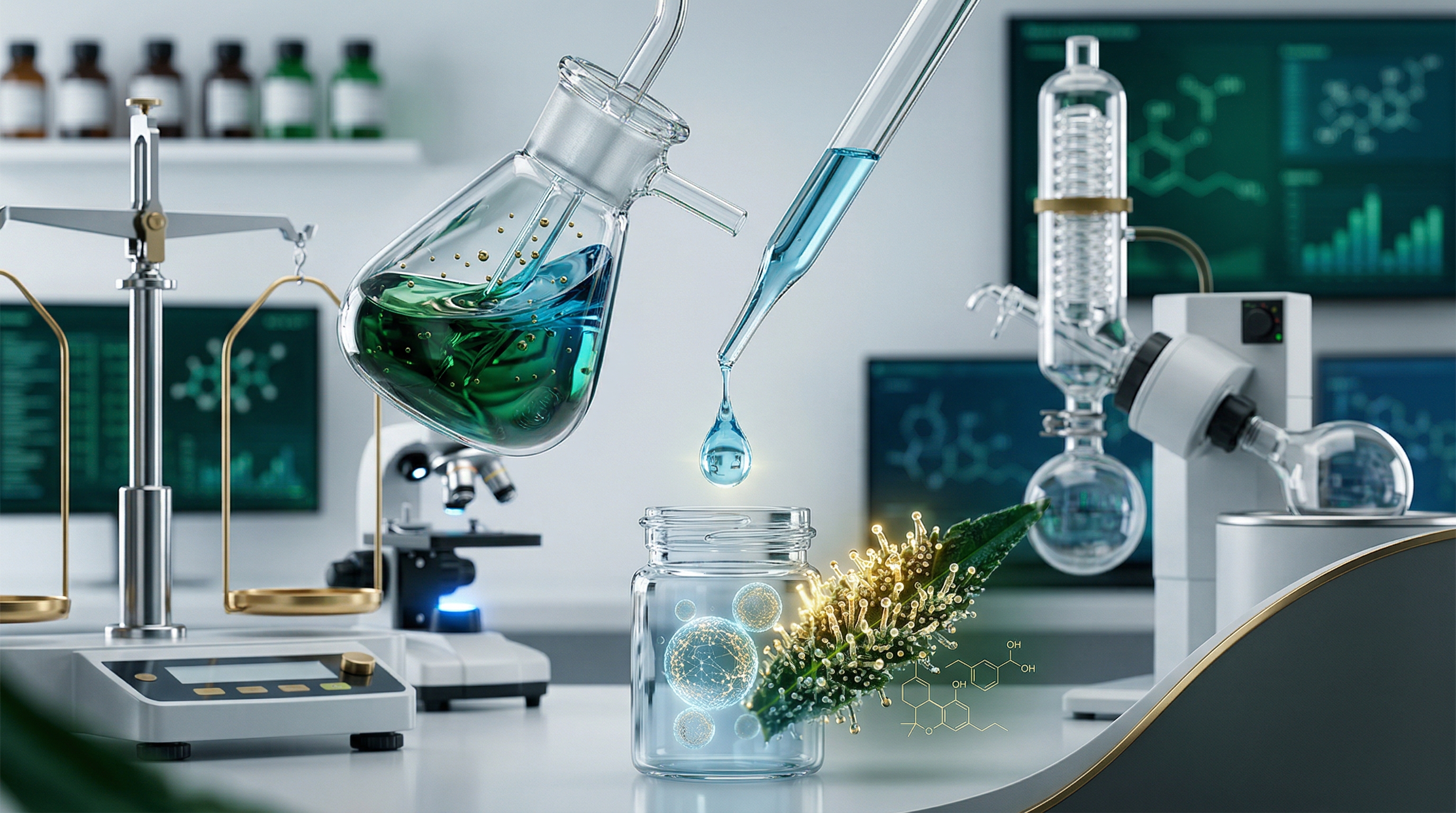
Here’s a question that might sound familiar: you eat a cannabis gummy, wait the standard hour or two for it to kick in, and nothing happens on schedule. Then three hours later, it hits you like a freight train. Traditional edibles are notoriously unpredictable — and there’s a clear scientific reason for that.
THC is hydrophobic, meaning it repels water. Your body, on the other hand, is roughly 60% water. When you swallow a standard edible, your digestive system has to work overtime to break down and absorb an oil-soluble compound through a water-based environment. It’s like trying to mix olive oil into a glass of water — the oil just doesn’t want to cooperate.
Enter nano-emulsified THC, a technology borrowed from the pharmaceutical industry that’s quietly transforming how edibles work. By shrinking THC oil droplets down to nanoscale particles and wrapping them in water-compatible coatings, manufacturers have found a way to dramatically speed up absorption and make dosing more consistent.
If you’ve ever tried a fast-acting cannabis beverage or a “rapid onset” gummy and noticed it kicked in within 15 to 20 minutes instead of the usual 60 to 90, you’ve already experienced nano-emulsification in action. But how does it actually work at the molecular level, and does the science back up the marketing claims? Let’s break it down.
🔬 The Science of Nano-Emulsification
How the Process Works
To understand nano-emulsification, start with a concept you already know: emulsions. Salad dressing is an emulsion — you shake oil and vinegar together, and for a brief moment, tiny oil droplets are suspended throughout the liquid. Leave it on the counter, and the oil separates back to the top.
A nano-emulsion takes this same idea and pushes it to the extreme. Using high-energy processes like ultrasonication (high-frequency sound waves) or high-pressure homogenization, manufacturers break THC oil droplets down to incredibly small sizes — typically between 20 and 200 nanometers in diameter. A human hair is roughly 80,000 nanometers wide. These particles are so small that they remain stably suspended in water without ever separating.
Each tiny droplet is coated with a surfactant — an emulsifying agent with both water-loving and oil-loving ends. Think of it as a microscopic life jacket that keeps each THC particle floating comfortably in a water-based environment. Common surfactants used in cannabis nano-emulsions include polysorbates, lecithin, and quillaja extract.
The result? THC that behaves like a water-soluble compound, even though it technically isn’t one. This is often marketed as “water-soluble THC,” which is a slight oversimplification — it’s more precisely described as water-compatible or water-dispersible.
The Bioavailability Boost
The central advantage of nano-emulsification is dramatically increased bioavailability — the percentage of THC that actually reaches your bloodstream. Standard edibles have notoriously low bioavailability, estimated at just 6% to 20%, depending on the individual, the food matrix, and your metabolism [Huestis, 2007]. Much of the THC is lost during digestion and first-pass liver processing.
Nano-emulsified formulations change this picture significantly. Research and product data show bioavailability rates of 40% to 90% for properly formulated nanoemulsions, compared to that 6–20% baseline for oil-based edibles [Cherniakov et al., 2017]. That’s a roughly five-fold increase in absorption efficiency — meaning the same labeled dose in a nano-emulsified product may deliver substantially more active THC to your bloodstream than a conventional gummy.
| Formulation | Bioavailability | Onset Time | Peak Duration |
|---|---|---|---|
| Traditional edible (oil-based) | 6–20% | 60–120 min | 4–8 hours |
| Nano-emulsified edible | 40–90% | 15–30 min | 2–4 hours |
| Sublingual tincture | 20–35% | 15–45 min | 2–4 hours |
| Smoked/vaped | 25–35% | 1–10 min | 1–3 hours |
Why Particles Absorb So Much Faster
The physics here are intuitive once you see them. Reducing particle size to the nanoscale massively increases the surface area available for absorption in the gastrointestinal tract [McClements, 2015]. Imagine the difference between dropping a sugar cube into water versus sprinkling fine powdered sugar — the powder dissolves almost instantly because far more surface area is exposed to the liquid at once.
At 20–100 nanometers, THC droplets are also small enough to begin absorbing through the oral mucosa (the lining of your mouth, throat, and esophagus) before the compound even reaches your stomach. This partial sublingual-like pathway explains why some users report feeling effects in as little as 10 to 15 minutes [Izgelov et al., 2020].
⚗️ The First-Pass Effect: Why It Still Matters
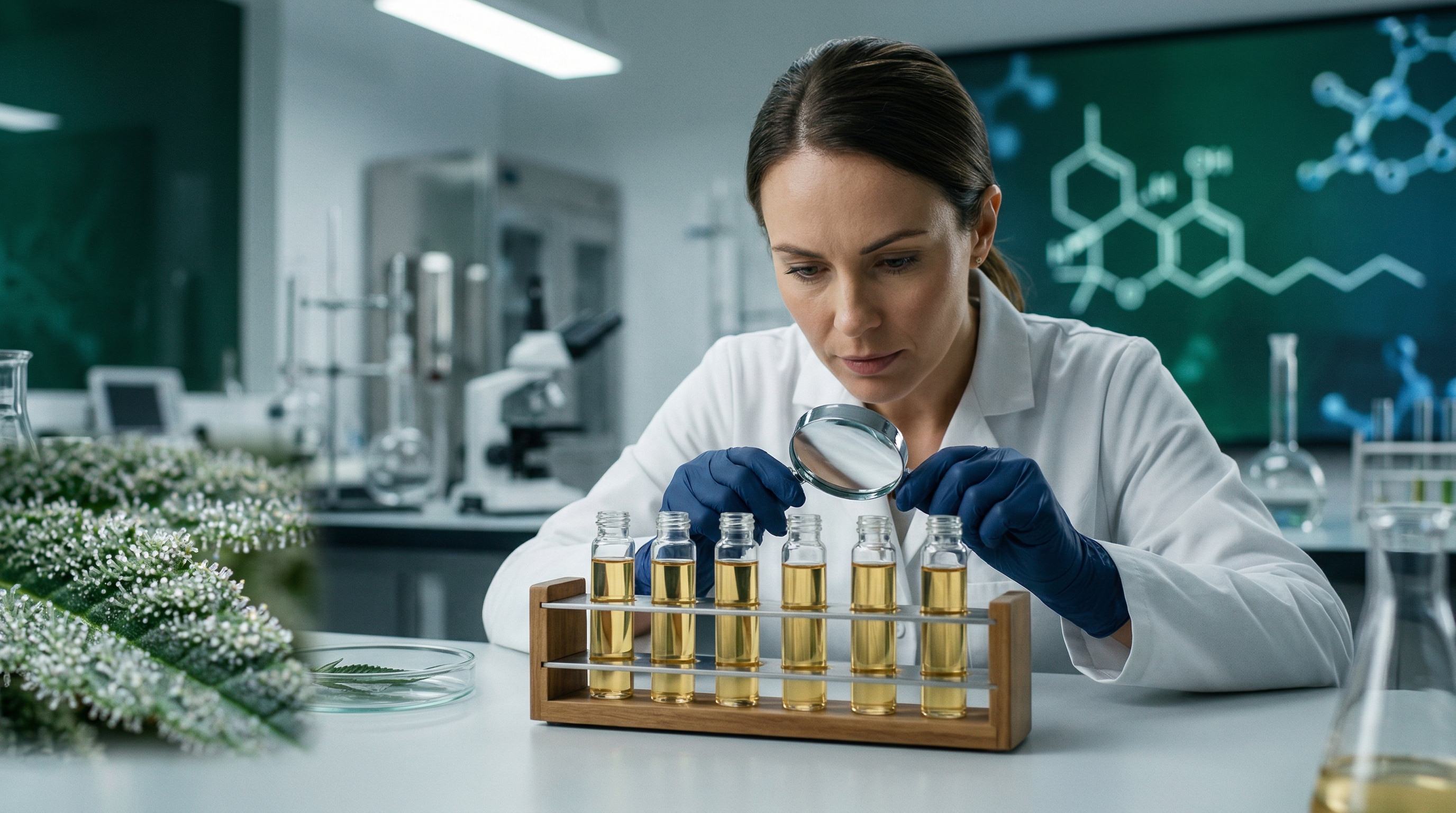
Even with nano-emulsification, some THC will still pass through the liver — and that’s worth understanding. When THC reaches your liver via the digestive system, it’s converted into 11-hydroxy-THC (11-OH-THC), a metabolite that is more potent and longer-lasting than delta-9-THC itself. This conversion is a big reason traditional edibles feel so intense and unpredictable.
Nano-emulsified products reduce (but don’t eliminate) this first-pass effect by enabling faster and more direct absorption. Because more THC enters circulation before reaching the liver, less 11-OH-THC is produced relative to the total dose. This is part of why nano-emulsified edibles often feel “cleaner” or more similar to vaping than conventional edibles, even at equivalent doses.
A 2025 randomized crossover pharmacokinetic study compared a self-nanoemulsifying powder (SNEDDS) to a standard oil-based formulation in 14 healthy volunteers. The results were striking:
- THC peak plasma concentration (Cmax): 32.79 ng/mL (SNEDDS) vs. 10.17 ng/mL (oil) — more than 3x higher
- Time to peak 11-OH-THC (Tmax): 0.86 hours (SNEDDS) vs. 4.54 hours (oil) — over 5x faster
- Relative bioavailability: more than doubled with the nano-emulsifying formulation [Nahler et al., 2025]
These aren’t small improvements. The difference in onset and absorption is genuinely significant, and it has real implications for how you should approach dosing with these products.
🌿 What This Means for Your Experience
Fast Onset Changes the Math on Dosing
One of the biggest hazards with traditional edibles is the temptation to take more before the first dose has a chance to work. When nothing happens after an hour, it’s natural to assume the dose was too small — but that’s often the moment it’s about to kick in. Doubling up is how sessions go sideways.
With nano-emulsified products hitting in 15 to 30 minutes, you get feedback much faster. This makes finding your personal sweet spot significantly easier and safer. If you feel nothing after 30 to 40 minutes, you have much clearer information to work with than if you’re still waiting two hours into an oil-based edible.
Your Effective Dose is Lower
Higher bioavailability means a labeled 5 mg nano-emulsified gummy may feel meaningfully stronger than a traditional 5 mg edible. If you’re switching from conventional edibles to nano-emulsified formats, start with a lower dose than you think you need — often 2.5 to 3 mg is a good starting point for those with normal tolerance.
This is especially relevant if you’re new to edibles or building your baseline. The “standard” 10 mg recommended starting dose assumes traditional edible bioavailability. With nano-emulsification, that same label number delivers considerably more to your bloodstream.
Effects May Not Last as Long
The faster you absorb a compound, the faster your body processes it. Nano-emulsified products typically peak faster and taper off in 2 to 4 hours, compared to the 4 to 8 hours common with oil-based edibles. For some people, this is a genuine advantage — a more manageable window that fits into an evening rather than bleeding into the next morning. For those using cannabis for extended sleep support or sustained pain relief, the shorter duration may be a drawback to weigh.
Terpene Profiles Still Drive the Character of Your Experience
Nano-emulsification changes how quickly cannabinoids reach your system — but the type of experience is still determined by the full chemical profile of the product. A nano-emulsified product rich in limonene and linalool will still guide you toward an uplifting, mood-forward experience, while one featuring myrcene and caryophyllene will likely lean toward deep physical relaxation. The delivery method is the vehicle; the cannabinoids and terpenes are still doing the driving.
If you want to match your product to a specific mood or outcome, explore High Families — the framework that categorizes cannabis experiences by their effect profile rather than arbitrary indica/sativa labels.
📊 Nano-Emulsified vs. Sublingual: A Closer Look
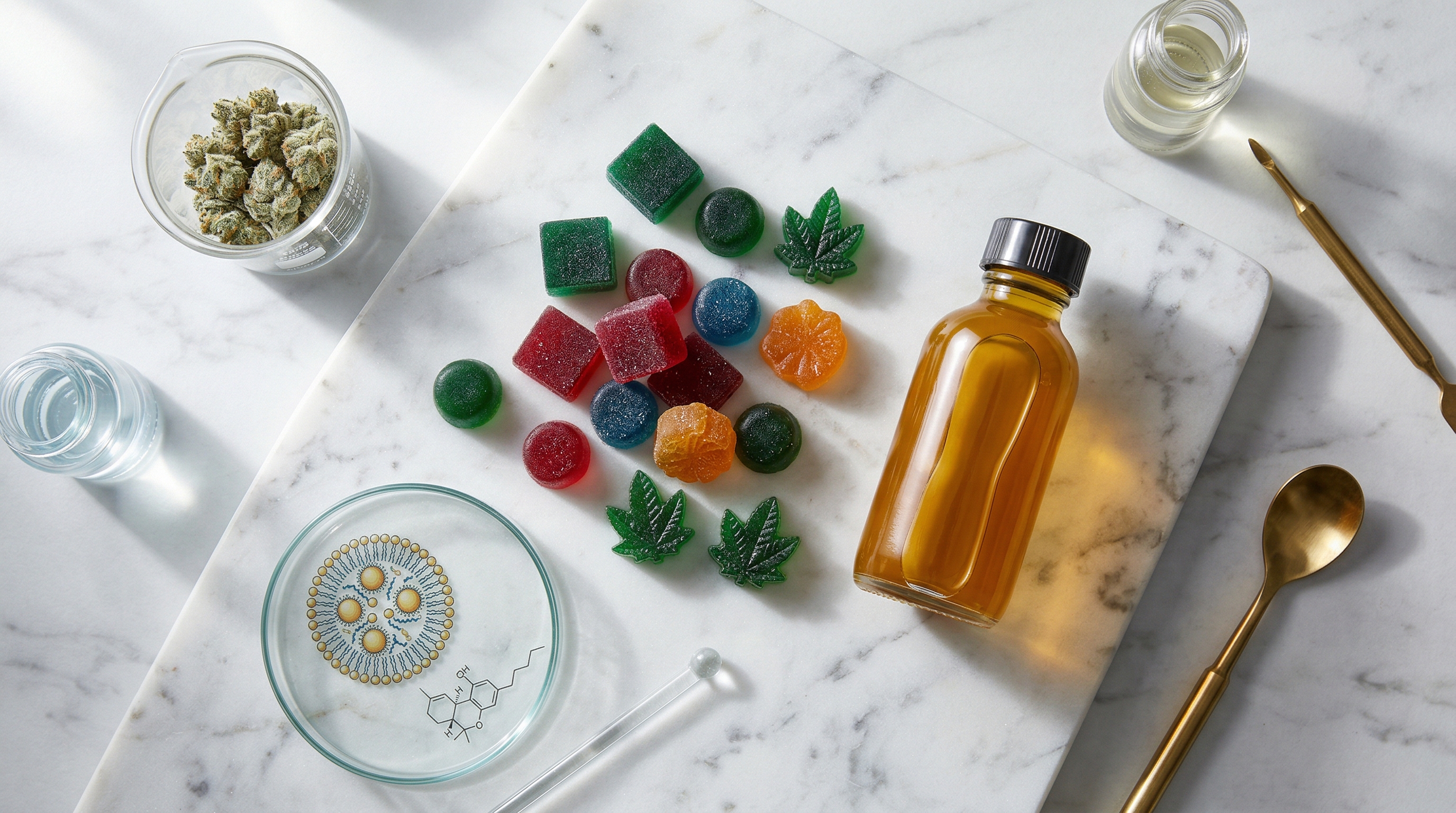
You might be wondering how nano-emulsified products compare to sublingual tinctures, which are also known for faster onset than traditional edibles. The short answer: they’re more similar than different, with a few key distinctions.
Sublingual tinctures work by absorbing through the blood vessels under your tongue. They typically kick in within 15 to 45 minutes and offer bioavailability in the 20% to 35% range — better than traditional edibles, but lower than the best nano-emulsified formulations. Tinctures also require you to hold the oil under your tongue for 60 to 90 seconds, which takes intention and consistency.
Nano-emulsified products, especially beverages, require no special technique. You drink them like any other liquid. The nano-particles absorb through mucosal tissue throughout the entire mouth, throat, and stomach lining — not just the one spot under your tongue. This passive, natural absorption pathway is part of why the format is gaining such rapid market share alongside the broader growth of cannabis beverages.
🏷️ What to Look for on Product Labels
Not all products marketed as “fast-acting” or “nano-emulsified” are created equal. Here’s what separates quality formulations from marketing spin:
Particle size matters. True nano-emulsions have particle sizes of 20 to 200 nm. Products with larger droplets (sometimes called “micro-emulsions”) may still offer improved absorption over traditional oil, but the onset and bioavailability advantages are less dramatic. Look for brands that disclose their particle size range — transparency here is a quality signal.
Stability testing tells you whether the product will perform consistently. A well-formed nanoemulsion holds its particle size over time at normal storage temperatures [Yukuyama et al., 2016]. Emulsions that separate or cream in the bottle have likely lost their nano-scale structure — and with it, most of the onset and bioavailability benefits.
Surfactant choice matters. Food-grade surfactants like sunflower lecithin and quillaja saponins are generally preferred over synthetic options. Some cheaper formulations use higher concentrations of polysorbate 80, which can cause digestive discomfort in sensitive individuals.
Third-party testing is essential. Nano-emulsification doesn’t change the importance of verifiable cannabinoid content. Accurate dosing depends on accurate labeling, and that requires independent lab verification — especially with high-bioavailability products where getting the dose right matters more.
Professor High’s rule: With nano-emulsified products, the same principles apply — start low, go slow — but “slow” now means 30 minutes, not 2 hours. Give yourself a full window before reconsidering your dose.
Key Takeaways
- Nano-emulsification shrinks THC oil into particles 20–200 nm in size — roughly 400–4,000 times smaller than a human hair — making them water-compatible and far easier for your body to absorb.
- Onset is typically 15–30 minutes instead of the 60–120 minutes common with oil-based edibles, thanks to increased surface area and partial oral mucosal absorption.
- Bioavailability jumps from 6–20% to 40–90% — meaning you may need a lower dose to achieve the same effects as with traditional edibles.
- Less 11-OH-THC is produced because more THC enters circulation before reaching the liver, resulting in an experience that often feels different in character from conventional edibles.
- Duration is shorter — typically 2–4 hours versus 4–8 hours — which may be an advantage or limitation depending on your goals.
- Product quality varies significantly: look for disclosed particle sizes, food-grade surfactants, and third-party lab testing before buying.
FAQs
Is nano-emulsified THC safer than regular edibles?
The nano-emulsification process itself doesn’t make THC safer or more dangerous. The primary safety advantage is more predictable dosing — faster feedback reduces the risk of accidentally redosing too soon. Always start with a conservative dose regardless of format.
Does nano-emulsification change the type of high?
Not directly. The technology changes how fast and how efficiently THC enters your bloodstream, but the character of the experience is still shaped by the cannabinoid and terpene profile of the product. Explore High Families to match products to your desired effect.
Why do some nano-emulsified products taste slightly different?
The surfactants and emulsifiers used in the process can introduce a mildly bitter or soapy undertone. Many manufacturers mask this with flavoring. A subtle taste difference is normal and doesn’t signal a quality problem.
Are nano-emulsified products more expensive?
Generally yes — the technology requires specialized equipment and additional processing. However, because bioavailability is higher, you may need fewer milligrams to achieve your desired effect, which can offset the higher per-unit cost over time.
Can I make nano-emulsified edibles at home?
Not effectively. Producing a true nano-emulsion with stable 20–200 nm particle sizes requires industrial ultrasonic processors or high-pressure homogenizers that aren’t available to home cooks. Home-made “water-soluble” cannabis typically produces much larger, unstable droplets with inconsistent absorption.
Sources
- Huestis, M.A. (2007). “Human cannabinoid pharmacokinetics.” Chemistry & Biodiversity, 4(8), 1770–1804. PMID: 17712819
- Cherniakov, I., Izgelov, D., Barasch, D., Davidson, E., Domb, A.J., & Hoffman, A. (2017). “Piperine-pro-nanolipospheres as a novel oral delivery system of cannabinoids.” Journal of Controlled Release, 260, 46–56. DOI: 10.1016/j.jconrel.2017.05.027
- McClements, D.J. (2015). “Nanoscale nutrient delivery systems for food applications.” Biotechnology Advances, 33(5), 877–890. DOI: 10.1016/j.biotechadv.2015.02.007
- Izgelov, D., Shmoeli, E., Domb, A.J., & Hoffman, A. (2020). “The effect of medium chain and long chain triglycerides incorporated in self-nano emulsifying drug delivery systems on oral absorption of cannabinoids in rats.” International Journal of Pharmaceutics, 580, 119201. DOI: 10.1016/j.ijpharm.2020.119201
- Nahler, G., Grotenhermen, F., Zuardi, A.W., & Crippa, J.A. (2025). “Enhancing cannabinoid bioavailability: a crossover study comparing a novel self-nanoemulsifying drug delivery system and a commercial oil-based formulation.” Journal of Cannabis Research. PMC12166629.
- Yukuyama, M.N., Ghisleni, D.D., Pinto, T.J., & Bou-Chacra, N. (2016). “Nanoemulsion: Process Selection and Application in Cosmetics.” Ageing Research Reviews, 29, 1–20. DOI: 10.2147/IJN.S89664


