Nerolidol: The Rare Terpene with Surprising Properties
Nerolidol is cannabis's most underrated terpene—sedating, antifungal, antiparasitic, and a proven skin penetration enhancer. Here's what science says.

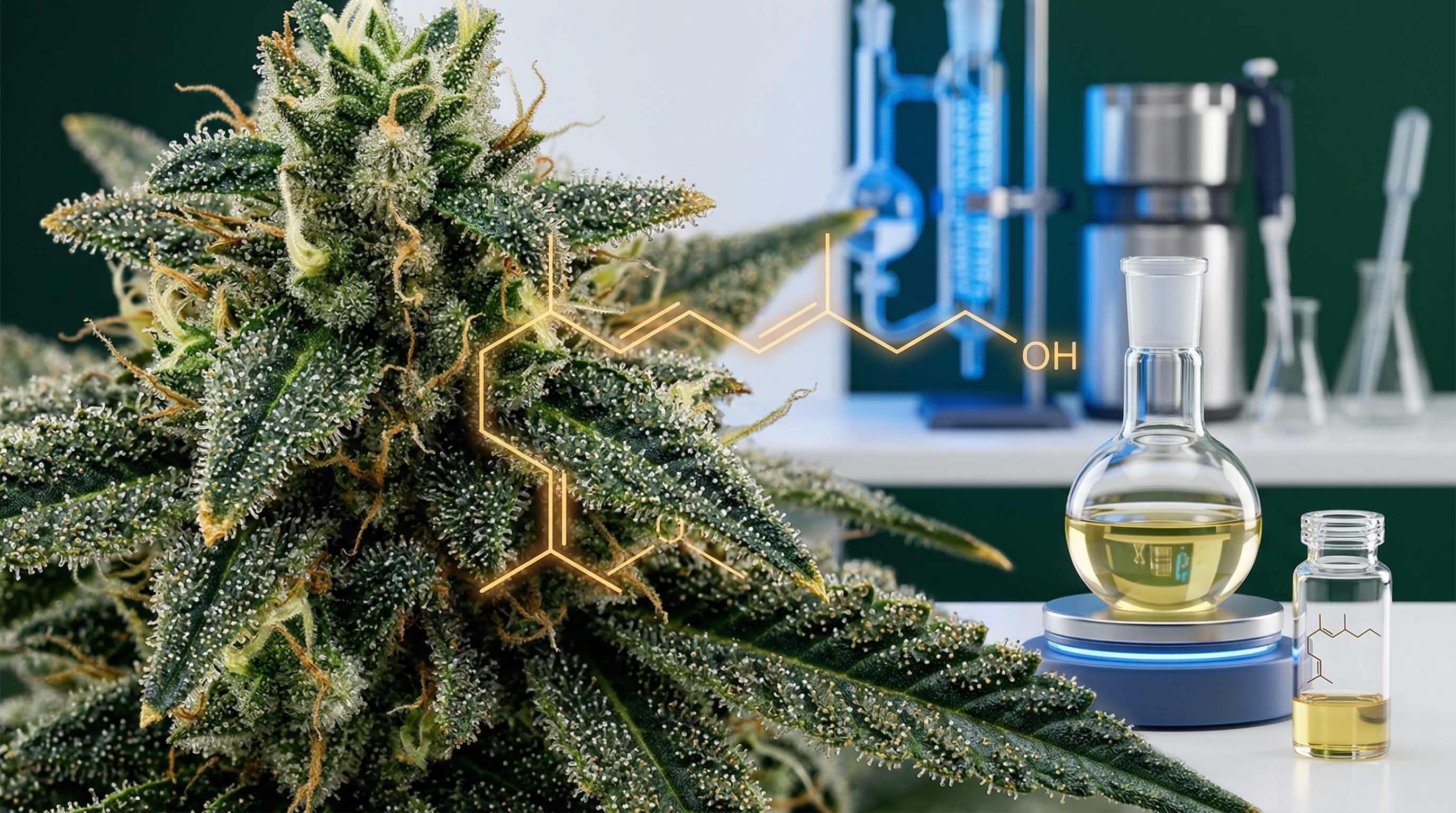
Nerolidol is a rare cannabis terpene with an unusually long list of scientifically documented effects: sedation, antifungal activity, antiparasitic properties, and the ability to help other compounds absorb through skin. Most people have never heard of it—but if you’ve ever enjoyed a deeply relaxing strain with a woody, floral finish, you’ve likely already felt it.
The Terpene You’ve Never Heard Of—But Are Definitely Feeling
Ask a cannabis consumer to name a terpene and they’ll say myrcene, limonene, or caryophyllene. Ask them about nerolidol and you’ll get a blank look. Yet if you’ve ever enjoyed a deeply sedating strain with a faintly floral, woody finish—something with more complexity than a standard earthy kush—you’ve likely already encountered this compound.
Nerolidol is one of cannabis’s most underappreciated terpenes. It appears in modest concentrations across a range of strains, rarely headlining a terpene profile but consistently shaping one. It’s the kind of molecule that doesn’t announce itself loudly and instead does quiet, important work in the background.
What makes nerolidol scientifically fascinating isn’t just its sedating effects—though those are real and well-documented. It’s the breadth of its pharmacological activity. According to a landmark review published in Molecules [Chan et al., 2016], nerolidol has demonstrated antimicrobial, anti-biofilm, antiparasitic, antifungal, antioxidant, anti-inflammatory, anti-nociceptive, anti-ulcer, and skin-penetration-enhancing properties across preclinical studies.
That’s an unusually long list for a single terpene. In this deep dive, we’ll break down what nerolidol actually is, how it works, what the research says, and how to find it in cannabis strains.
The Science Explained
What Is Nerolidol?
Nerolidol—also known as peruviol or penetrol—is a sesquiterpene alcohol with the molecular formula C₁₅H₂₆O. The “sesqui” prefix means it’s built from three isoprene units. That makes it heavier and more complex than lighter terpenes like limonene or linalool.
The compound exists in two forms: cis-nerolidol and trans-nerolidol. Both share the same molecular formula but have slightly different atomic arrangements. Trans-nerolidol is the form most studied in research and most often found in cannabis lab reports.
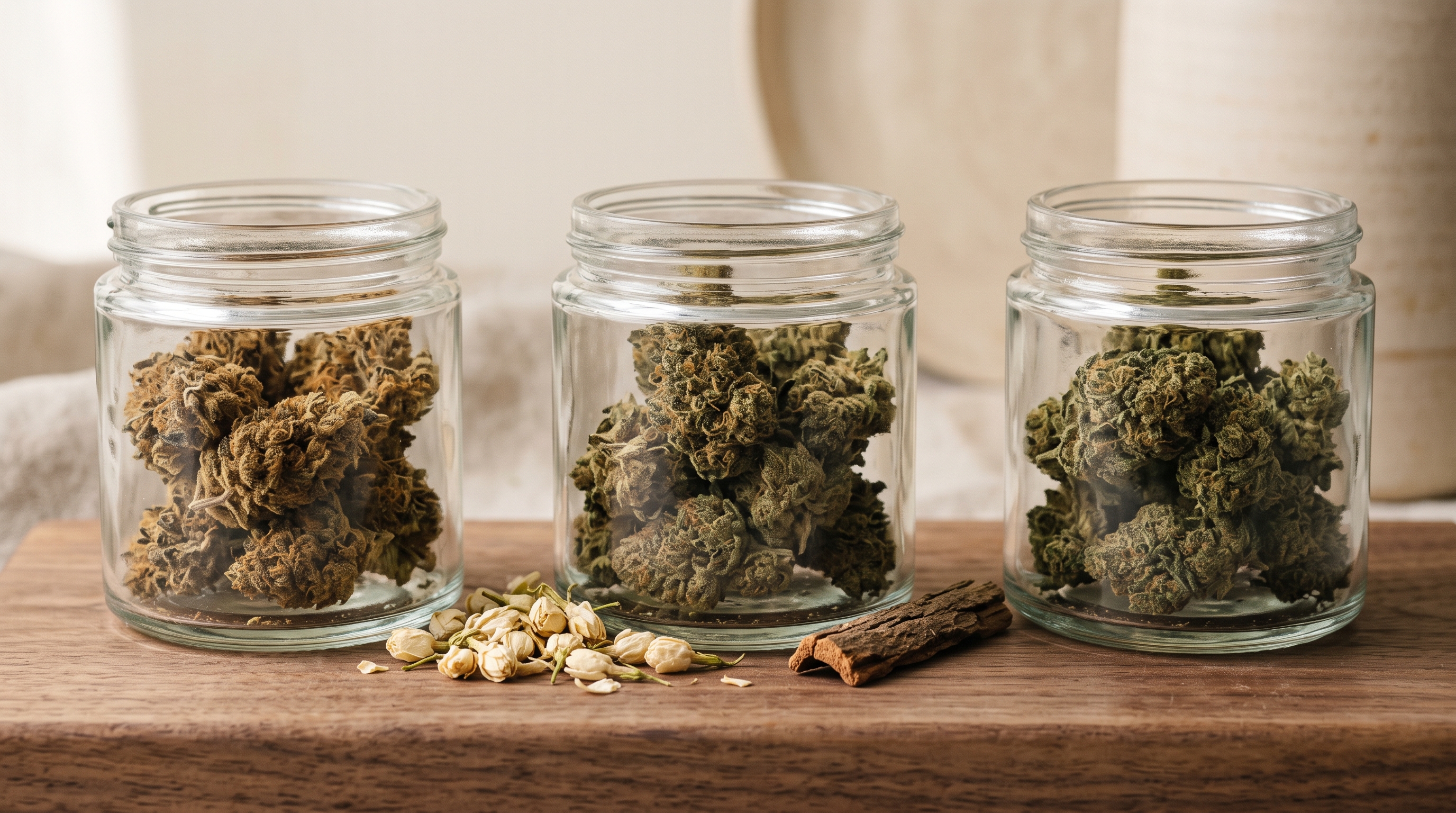
Beyond cannabis, nerolidol occurs naturally in jasmine, tea tree, lemongrass, ginger, lavender, and ginger. It’s widely used by the fragrance industry for its distinctive scent—simultaneously woody, floral, and faintly citrusy, like a walk through a forest that borders a jasmine garden. The U.S. Food and Drug Administration has approved it as a safe food flavoring agent.
As a sesquiterpene, nerolidol is heavier and less volatile than the monoterpenes that dominate many cannabis profiles. This means it evaporates more slowly, lingers longer during the curing process, and tends to survive certain extraction methods better than lighter terpenes. For growers focused on terpene retention, nerolidol’s stability is a genuine advantage.

The Sedative Mechanism: GABA and Beyond
Nerolidol’s sedating properties aren’t folklore—they have documented mechanistic support. Animal studies show it promotes relaxation, reduces anxiety, and extends sleep duration. The key question is how.
The GABAergic pathway: A 2016 study published in Fundamental & Clinical Pharmacology [Fonsêca et al., 2016] found that nerolidol exhibited significant anti-nociceptive and anti-inflammatory activity in rodent models. Critically, the study identified involvement of the GABAergic system—the same inhibitory network that sedatives like benzodiazepines target—as a primary mechanism. Nerolidol appeared to enhance GABA-mediated inhibition, producing calming effects without impairing motor function.
This is significant because motor-sparing sedation is rare among natural compounds. Many sedating substances either produce unconsciousness or significantly reduce coordination. Nerolidol’s GABA involvement produces relaxation while the subject remains functional—an important distinction for cannabis consumers who want to unwind without full cognitive impairment.
Interaction with opioid and TRPV1 pathways: The same research suggested that nerolidol’s pain relief worked through opioid-insensitive mechanisms, meaning it does not activate the opioid receptors associated with addiction risk. Weak TRPV1 activation was also observed—the same receptor pathway that myrcene engages for muscle relaxation.
The 2013 sedation study: An earlier mouse study demonstrated that nerolidol produced significant sedative effects, measurably extending sleep duration and reducing activity in locomotion assays [Cannakeys database, citing 2013 research]. Unlike many sedating compounds, the effect appeared dose-dependent without the sharp threshold behavior that makes some substances unpredictable.
Neuroprotective potential: A 2024 review in Current Pharmaceutical Biotechnology [Varshney et al., 2024] identified nerolidol as having potential therapeutic applications for neurological disorders via its antioxidative properties. The compound appears to reduce oxidative stress in neural tissue, which is mechanistically relevant to both its sedative properties and its emerging research profile in conditions like Parkinson’s disease—where a 2016 study found neuroprotective effects mediated through anti-inflammatory and antioxidant activities.
The Skin Penetration Story: Cannabis Topicals Reimagined
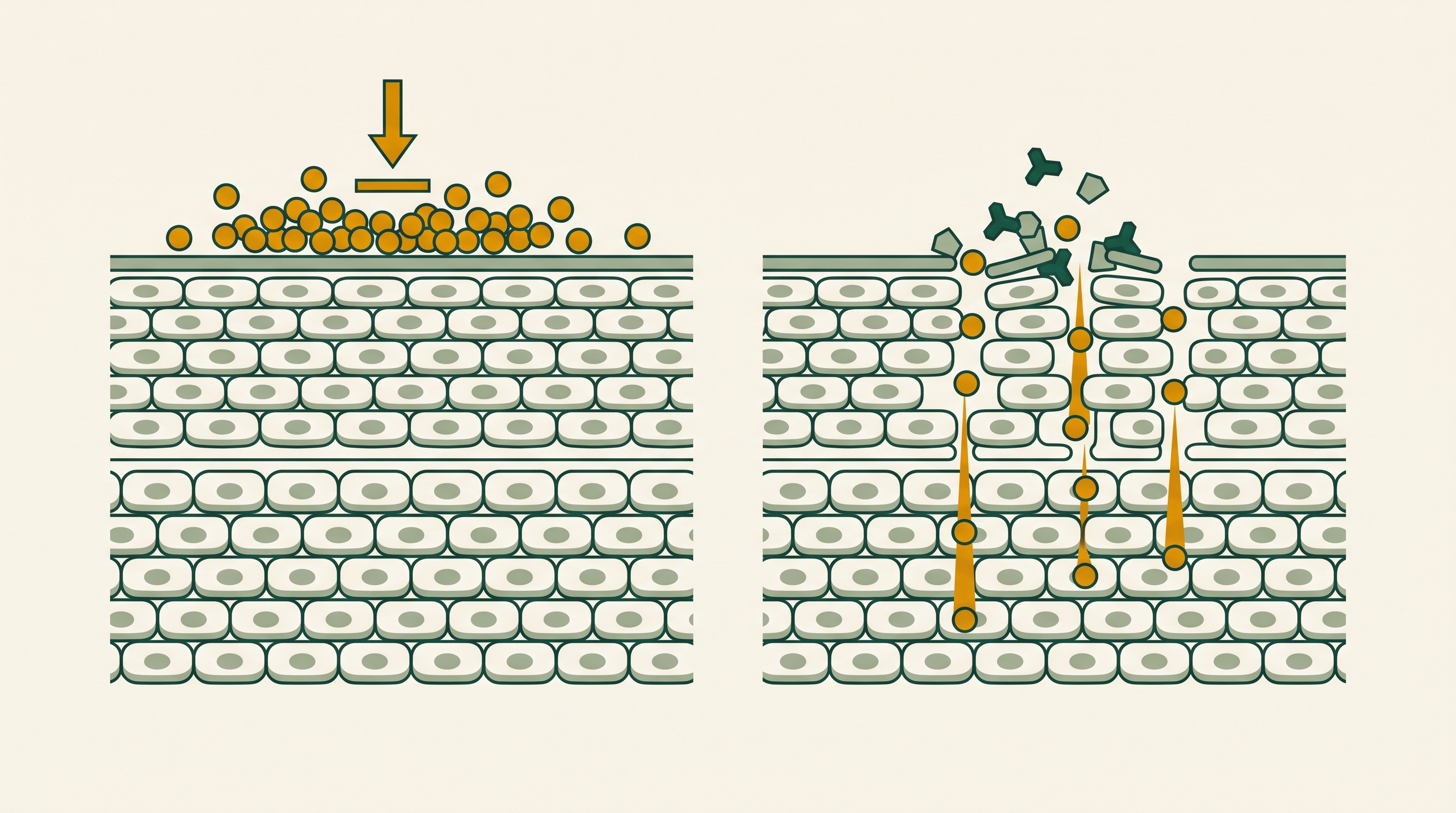
Here is where nerolidol gets genuinely surprising. Among all its pharmacological properties, its role as a skin penetration enhancer may have the most practical implications for cannabis consumers—particularly those using topical products.
Skin penetration enhancers temporarily make the outer skin layer more permeable. This lets drugs and other active molecules pass through more easily. It’s a major challenge in dermatology: many beneficial compounds simply can’t get through skin in useful amounts on their own.
Nerolidol solves this problem. Research found that trans-nerolidol significantly enhanced drug delivery through skin by disrupting the lipid bilayer—essentially creating temporary gaps that let larger molecules pass through [Chan et al., 2016]. The effect is temporary and reversible, not permanent damage.
The implications for cannabis topicals are real. If nerolidol is present in a topical formulation alongside cannabinoids like CBD or THC, it may meaningfully increase how much of those cannabinoids actually penetrates into the target tissue. A topical that contains nerolidol may deliver its active ingredients more effectively than an identical formulation without it.
This is also why nerolidol appears in pharmaceutical research unrelated to cannabis—as a carrier enhancer for antifungal medications, antimicrobial treatments, and even some anti-parasitic drug formulations applied to skin.
Anti-Parasitic Properties: The Most Surprising Finding
Of all nerolidol’s documented activities, its antiparasitic effects are the most unexpected—and among the most well-documented.
Brazilian researchers found that nerolidol works against Plasmodium falciparum—the parasite behind the deadliest form of malaria [Lopes et al., 1999]. It blocks a chemical pathway the parasite needs to survive, but humans don’t have that pathway. That makes nerolidol selectively toxic to the parasite without harming human cells.
Subsequent research extended these findings. A study published in PLOS ONE found nerolidol effective against Leishmania amazonensis, and separate work identified activity against Schistosoma mansoni—a parasitic worm responsible for schistosomiasis, a disease affecting hundreds of millions of people globally [Silva et al., 2014].
This antiparasitic profile isn’t medically relevant to typical cannabis consumers in the way that sedation or anti-inflammatory effects are. But it illustrates something important: nerolidol is biologically active in ways that go far beyond aromatherapy. It is a pharmacologically serious compound with a mechanism of action researchers are actively studying.
For cannabis’s role in this story, the connection is more indirect—nerolidol’s presence in a strain doesn’t confer malaria protection to the consumer. But it does contribute to the plant’s own defense against certain insects and pathogens, which is thought to be its evolutionary function in the plant kingdom.
Antifungal Activity
Nerolidol’s antifungal properties are documented across multiple studies and represent one of its most consistent activities. Research has shown it disrupts fungal cell membranes, inhibiting the growth and reproduction of Candida species, Trichophyton species (which cause athlete’s foot and ringworm), and other common pathogenic fungi [Chan et al., 2016].
The mechanism is similar to its skin penetration enhancement: nerolidol’s lipophilic (fat-loving) nature allows it to integrate into and destabilize membrane structures. For fungi, this disruption is lethal. For human cells, the temporary membrane interaction that enhances drug delivery is reversible.
This antifungal activity has practical relevance in two domains. For cannabis growers, the presence of terpenes like nerolidol may contribute to plants’ natural resistance to mold and fungal infections—a meaningful benefit in humid growing environments. For consumers using cannabis topically, nerolidol’s antifungal properties may complement formulations targeting skin conditions with a fungal component.
What This Means for the Entourage Effect
Nerolidol’s diverse activity profile makes it a compelling contributor to the entourage effect—the concept that cannabis compounds work synergistically, with the combined effect exceeding what any single compound produces alone [Russo, 2011].
With myrcene: Both terpenes engage GABAergic sedation pathways. Strains carrying meaningful amounts of both compounds are likely to be among the most genuinely sedating, with effects that compound rather than simply add. The Relax High family frequently features this pairing.
With linalool: Nerolidol and linalool share a floral aromatic character and both promote relaxation through overlapping but distinct neurochemical pathways. Their combination produces a calming effect with more complexity—the kind of layered experience that distinguishes a carefully cultivated strain from a one-note sedative.
With CBD in topicals: Nerolidol’s skin penetration enhancement properties may make it particularly synergistic with CBD in topical applications. By increasing dermal permeability, it could improve the effective dose of CBD reaching target tissue—a practical example of the entourage effect operating at a pharmaceutical level rather than a subjective experiential one.
With THC: The sedative potentiation effect—where nerolidol’s GABA-enhancing activity compounds THC’s own relaxation properties—may explain why some high-nerolidol strains feel notably heavier and more body-focused than their THC percentage alone would predict.
Practical Guide: Finding and Using Nerolidol
Cannabis Strains with Notable Nerolidol Content
Nerolidol is rarely the dominant terpene in a cannabis strain—it typically appears as a secondary or tertiary compound in strains where myrcene or caryophyllene leads. That said, several strains are consistently identified as nerolidol-rich in laboratory analyses:
- Skywalker OG — A potent indica-dominant hybrid where nerolidol contributes to its characteristically deep body sedation, complementing high myrcene levels
- Jack Herer — A notable example of a sativa-leaning strain with measurable nerolidol; here the terpene acts as a balancing element to the otherwise energizing profile
- Blackberry Kush — Indica-dominant with a sweet, fruity aroma underscored by nerolidol’s woody depth; consistently cited in terpene analyses
- Girl Scout Cookies (GSC) — The complex, multi-terpene profile of GSC includes nerolidol as part of what gives it such a distinctive, hard-to-categorize aroma
- Sour Diesel — An unexpected entry; some phenotypes show meaningful nerolidol alongside the dominant fuel notes
- Ghost Train Haze — High-potency with nerolidol contributing to what users describe as a particularly “complete” effect profile
- OG Kush — A foundational strain where nerolidol is part of the complex terpene signature that made the OG lineage famous
The Entourage High family, which features multi-terpene complexity, is where you’re most likely to find strains with meaningful nerolidol contributions. The Relax High family is the other natural home, given nerolidol’s sedating properties.
How to Identify Nerolidol Without Lab Results
Because nerolidol is a secondary terpene in most strains, identifying it by aroma alone requires some practice. Look for:
- A woody, earthy base with unusual floral lift—more complex than pure myrcene earthiness
- Hints of jasmine or rose underneath the primary aroma profile
- A warm, slightly sweet finish that lingers after the initial impact of more volatile terpenes
- Strains described as having a “forest floor after rain” or “woody floral” character
When lab results are available, look for nerolidol in the 0.05%–0.3% range of total flower weight. Concentrations above 0.1% are noteworthy. As with all secondary terpenes, concentration matters: the 0.1% threshold is often cited as the level at which a terpene begins to meaningfully influence the experiential profile of a strain.
Best Use Cases
Nerolidol-rich strains may be ideal for:
- Evening and nighttime use when deep relaxation is the goal
- Sleep support, particularly in combination with myrcene-dominant strains
- Stress and anxiety reduction in low-stimulation environments
- Cannabis topicals where skin penetration is therapeutically relevant
- Complex, layered experiences for consumers who find single-note strains unsatisfying
Consider lower-nerolidol strains when:
- Daytime productivity is required
- You want an energetic, social experience
- Cognitive clarity is a priority
- You’re using cannabis before physical activity
A Note on Topical Applications
If you use cannabis topicals for localized relief, nerolidol’s skin penetration enhancing properties are worth actively seeking. When shopping for topicals, look for full-spectrum or broad-spectrum formulations that preserve the natural terpene profile of the source material—these are more likely to retain nerolidol than isolate-based products with added synthetic terpenes.
Some premium topical formulations now list nerolidol explicitly on their ingredient panels, precisely because formulators understand its penetration-enhancing function. If you see it listed, that’s a sign the manufacturer is paying attention to the science.
Key Takeaways
Nerolidol is legitimately sedating. Its effects on the GABAergic system—the same network targeted by pharmaceutical sedatives—are documented in animal models. The sedation is motor-sparing, meaning you relax without becoming fully incapacitated.
Its pharmacological range is exceptional. Antifungal, antiparasitic, antimicrobial, antioxidant, anti-inflammatory, anti-nociceptive—nerolidol has demonstrated activity across an unusually wide spectrum of biological targets. It’s one of the most pharmacologically diverse terpenes in cannabis.
The skin penetration enhancement is real and practically significant. For cannabis topical users, nerolidol’s ability to improve transdermal delivery of other compounds is a documented, mechanism-supported benefit—not marketing language.
It’s a secondary terpene that does primary work. You won’t often see nerolidol leading a strain’s terpene profile, but its contributions to the entourage effect—deepening sedation, adding aromatic complexity, enhancing topical delivery—make it a meaningful presence even at lower concentrations.
The best strains to find it in are the most complex ones. Skywalker OG, GSC, Jack Herer, and OG Kush lineages are your best starting points. When you encounter a strain with a particularly woody, floral depth that doesn’t quite fit any single terpene description, nerolidol is likely part of the answer.
Sources
-
Chan, W.K., Tan, L.T., Chan, K.G., Lee, L.H., & Goh, B.H. (2016). Nerolidol: A sesquiterpene alcohol with multi-faceted pharmacological and biological activities. Molecules, 21(5), 529. [PMC6272852]
-
Fonsêca, D.V., Salgado, P.R., de Carvalho, F.L., Salvadori, M.G., Penha, A.R., Leite, F.C., … & Almeida, R.N. (2016). Nerolidol exhibits antinociceptive and anti-inflammatory activity: involvement of the GABAergic system and proinflammatory cytokines. Fundamental & Clinical Pharmacology, 30(1), 14–22.
-
Varshney, V., Varshney, P., Kumar, A., Goyal, A., & Garabadu, D. (2024). Nerolidol: Potential therapeutic agent for various neurological disorders via its antioxidative property. Current Pharmaceutical Biotechnology. [Epub ahead of print, Sep 2024]
-
Russo, E.B. (2011). Taming THC: Potential cannabis synergy and phytocannabinoid-terpenoid entourage effects. British Journal of Pharmacology, 163(7), 1344–1364.
-
Silva, M.P., de Oliveira, R.N., Mengarda, A.C., Roquini, D.B., Allegretti, S.M., Salvadori, M.C., … & Pinto, P.L. (2014). Antiparasitic activity of nerolidol in a mouse model of schistosomiasis. PLOS ONE.
-
Lopes, N.P., Kato, M.J., de Andrade Neto, M., Mors, W.B., Yoshida, M., Oliva, G., & Araújo, P.S. (1999). Antimalarial use of volatile oils from leaves of Virola surinamensis (Rol.) Warb. by Waiãpi Amazon Indians. Journal of Ethnopharmacology, 67(3), 313–319.
-
Mohammadi, A., et al. (2024). A review of the anticancer effects of sesquiterpene nerolidol on different malignant conditions. Journal of Medicinal Plants, 23(89), 1–16.


