Silicone vs Glass vs Wood Pipes: Which Material Is Best?
Glass, silicone, wood, and metal pipes compared on flavor, durability, cleaning, heat safety, and price so you can pick the right material for how you smoke.


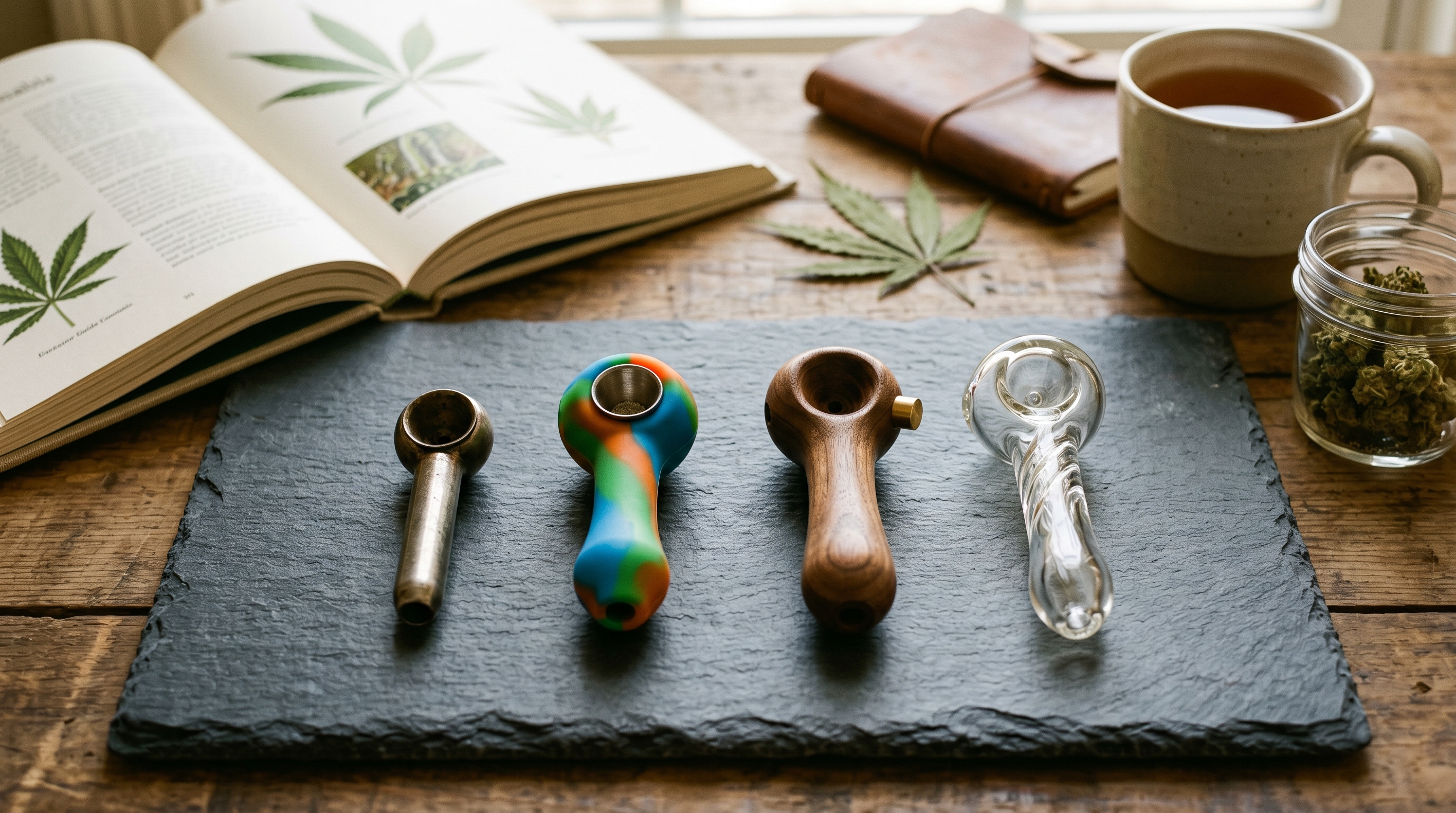
Walk into any smoke shop and the wall of pipes can feel like a paint-chip aisle. There’s glass, rubbery silicone, warm-grained wood, and the odd metal piece in a corner. They all do the same basic job: hold flower and deliver smoke. So why does the material matter? Because the material is the one thing your smoke actually touches. It shapes how clean your hit tastes, whether your piece survives a drop, how much scrubbing cleaning takes, and how safe it is when a flame gets close.
There’s no single “best” pipe material. There’s a best material for you. Finding it means weighing five things honestly: flavor purity, durability, cleaning, heat safety, and price. Let’s break each material down on those terms. Then we’ll put them head-to-head so you can buy once and buy right.
The five criteria that actually matter
Before we judge any single material, here’s the rubric. Keep these in mind as you read:
- Flavor purity — Does the material stay out of the way, or does it add a taste of its own? This comes down to whether a surface is porous (absorbs residue and odor) or non-porous and chemically inert.
- Durability — Will it survive being dropped, packed in a bag, or handed around a circle?
- Cleaning — How easily does resin come off, and can the material handle the cleaning method you’d actually use?
- Heat safety — How does the material behave near a lighter flame, and is anything questionable released when it warms up?
- Price — What’s the entry cost, and what’s the replacement cost when life happens?
If you want the bigger picture on how a pipe fits alongside the rest of your kit, our cannabis gear guide and our walkthrough on how to build the perfect cannabis toolkit both put materials in context. A good grinder and the right pipe are the two purchases that change a beginner’s experience most — and if you’re brand new, our first-time user’s guide covers what to expect before you ever pack a bowl.
Glass: the flavor purist’s gold standard
Glass — specifically borosilicate glass, the same heat-resistant material used in lab beakers and oven-safe cookware — is what most experienced smokers reach for when flavor is the priority.
Flavor. Glass is completely inert and non-porous. It doesn’t absorb residue, it doesn’t hold odors, and it adds nothing to your smoke. Every hit tastes like the flower you packed, not like the pipe. If you’re chasing the full terpene profile of a strain, glass is the cleanest canvas you can buy. (New to all this? Our science-backed beginner’s guide explains why flavor and effect are linked in the first place.)
Durability. This is glass’s weak spot. Borosilicate handles thermal shock far better than ordinary glass and resists cracking when a flame hits it, but it still shatters when it meets a tile floor. A glass piece can last years with care — or one careless evening.
Cleaning. Easy and satisfying. Because glass is non-porous, resin lifts right off with isopropyl alcohol and coarse salt, and the transparency lets you see when it’s actually clean. That visibility is a quiet advantage: you always know how grimy your piece really is.
Heat safety. Borosilicate is built for direct flame and won’t release anything when you spark a bowl. It’s the safety benchmark the other materials get measured against.
Price. A simple glass spoon is inexpensive, but artistic and “heady” glass climbs fast — handmade pieces can run into the hundreds. You’re partly paying for craft.
Silicone: the indestructible traveler
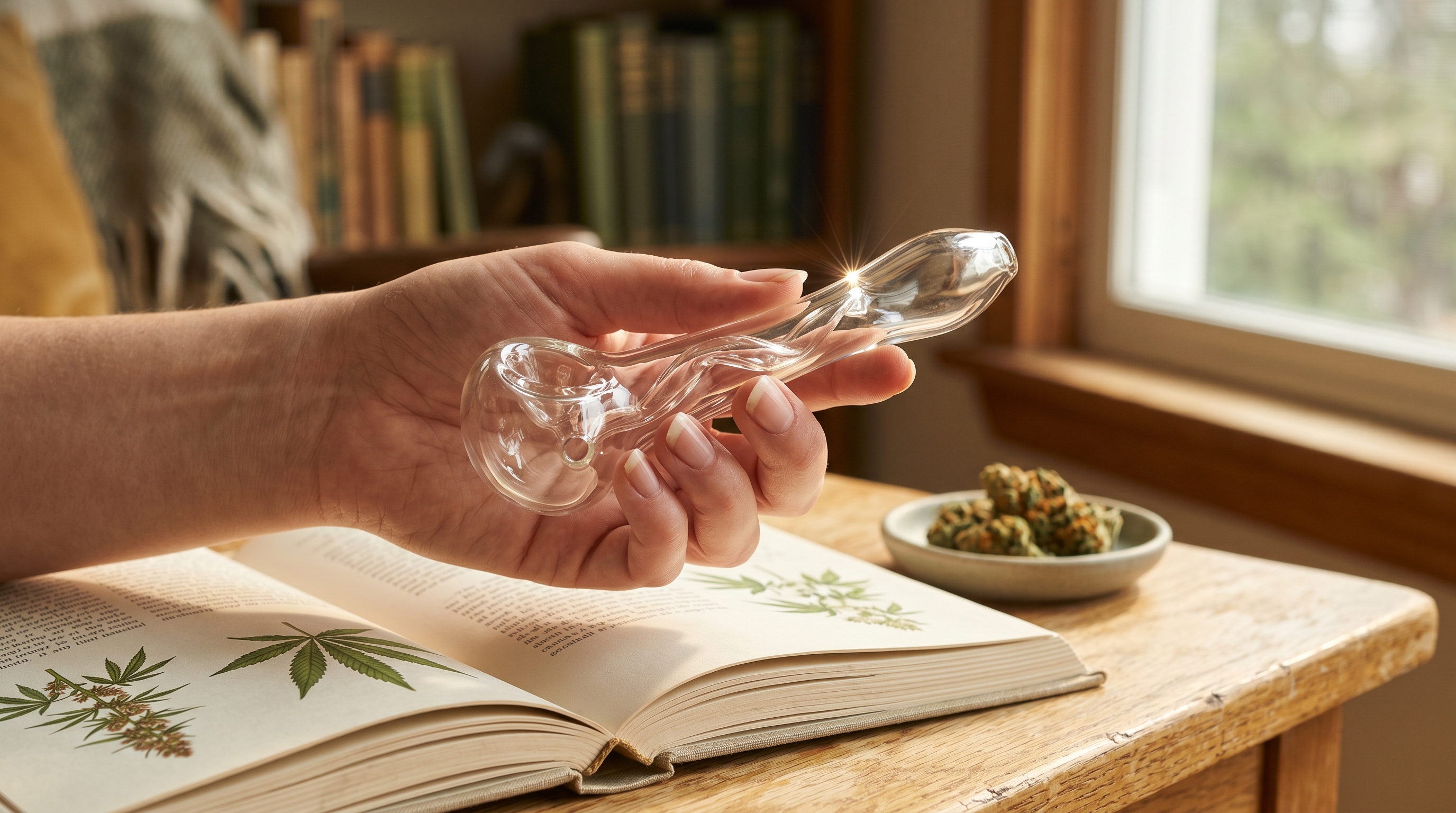
Silicone pipes are the newcomers that changed the conversation. The material is a heat-resistant synthetic rubber (chains of silicon-and-oxygen units called siloxanes) that started life as an industrial insulator before showing up in cookware, baby bottles, and now smoking gear.
Flavor. Here’s the nuance most people get wrong. Food-grade silicone itself is fairly neutral — it doesn’t add taste to your smoke on day one. The “rubbery aftertaste” complaint comes from silicone being slightly porous: over time it absorbs odors and resin, and that’s what tints later sessions. Clean it regularly and flavor stays acceptable; neglect it and it bonds in permanently. Glass still wins on pure flavor, but a well-maintained silicone piece is closer than its reputation suggests.
Durability. Unmatched. You can drop it, step on it, fold it, and bury it in a backpack — it bounces. This is the reason to choose silicone for travel, festivals, camping, hiking, or shaky hands.
Cleaning. Mixed. Resin doesn’t bond to silicone as hard as it does to glass, and many pieces are top-rack dishwasher-safe (keep the water below ~160°F and skip the high-heat sanitize cycle). But because it’s porous, deep odor can resist even a thorough scrub. A few tips. Isopropyl alcohol can cause temporary swelling that tends to reverse as the piece dries, so most guides suggest you don’t soak it longer than about 20 minutes. Enzymatic cleaners made for resin tend to work well. And cleaning within a day or two of use is what keeps smell from setting in for good.
Heat safety. This is where quality matters most. Look for platinum-cured (medical-grade) silicone. It tolerates continuous temperatures around 500°F. Cheaper peroxide-cured silicone tops out closer to 400°F. The material itself stays stable up to roughly 572°F. A lighter flame burns far hotter than that — around 1,800°F at its tip. But it only touches one spot for a second, so the bulk of the piece never gets close. The practical rule: don’t put a flame directly and repeatedly on silicone. That’s exactly why most quality silicone pipes and bongs use a glass bowl where the flame lands. Buy from a brand that states “food-grade,” “BPA-free,” and “platinum-cured,” and you’ve removed the main safety question.
Price. The cheapest of the bunch. Silicone is an easy first piece or a no-stress backup.
Wood and metal: the classic and the tank
These two share the “everything else” category, and they’re worth a real look even though most modern buyers land on glass or silicone.
Wood — earthy character, high maintenance
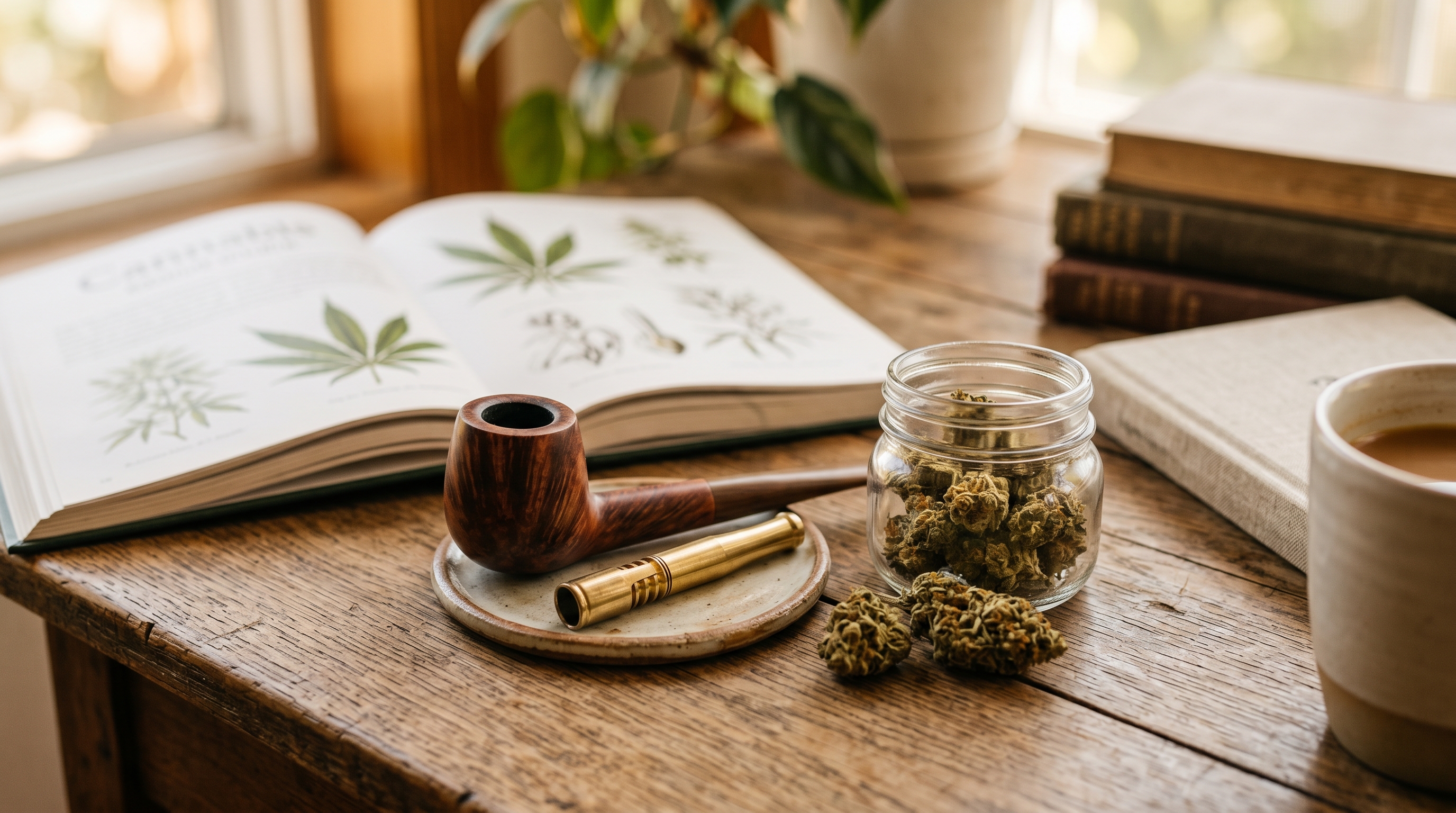
Wooden pipes carry a timeless, old-school feel, and the grain makes each one unique. Some smokers genuinely enjoy the subtle earthy note wood can lend a hit — it’s the only material on this list that’s meant to add a little flavor.
The trade-offs are real, though. Wood is porous, so it absorbs resin and odor more than anything else here. You also can’t soak it in cleaning solution without damaging it. That means a careful hand-brushing job, and the smell builds over time. Wood can also char or scorch if a flame sits in the bowl too long. For that reason, many wooden pipes use a metal screen or bowl insert to protect the wood and your lungs. Treat a wood pipe as a piece you’ll baby and eventually retire, not a forever tool.
Metal — the near-indestructible budget pick
Metal pipes are the tanks: drop them, toss them in a bag, basically impossible to break, dirt cheap, and easy to clean. For a pocketable, replaceable, who-cares piece, they’re hard to beat.
The catch is two-fold. Metal can add a faint metallic taste that masks the delicate notes of your flower. Metal also conducts heat, so the body warms up fast and can get uncomfortably hot during a longer session. One firm safety note: never improvise a pipe out of aluminum foil or random hardware. Commercial metal pipes are made for the job. DIY metal is not. If you want the unbreakable-and-cheap angle done better for solo hits, a one-hitter or dugout — often metal — is a smarter buy.
Side-by-side: the material scorecard
| Criterion | Glass (borosilicate) | Silicone (platinum-cured) | Wood | Metal |
|---|---|---|---|---|
| Flavor purity | Best — inert, adds nothing | Good if cleaned often; can absorb odor | Adds an earthy note; absorbs over time | Can add a metallic taste |
| Durability | Fragile — shatters when dropped | Excellent — practically indestructible | Moderate — won’t shatter but can char | Excellent — basically a tank |
| Cleaning | Easy; IPA + salt; you can see it’s clean | Easy day-to-day; deep odor can linger | Hardest — can’t soak, hand-brush only | Easy to wipe and rinse |
| Heat safety | Built for direct flame | Stable to ~500°F+; use a glass bowl | Can scorch; often needs a screen | Conducts heat; gets hot to hold |
| Price | Low to very high (heady glass) | Lowest | Low to moderate | Lowest |
Which material is right for you?
- You’re a flavor purist who smokes at home. Get glass. Nothing else delivers the same clean, true-to-the-strain taste, and you can keep it spotless. Just give it a respectful spot on the shelf.
- You travel, hike, festival, or drop things. Get silicone (platinum-cured, with a glass bowl). It survives everything, costs the least, and tastes fine if you stay on top of cleaning.
- You want the best of both. Many smokers keep a glass piece for home and a silicone piece for the road — the two-pipe solution is cheaper than one premium heady piece and covers every situation.
- You love ritual and aesthetics. A wood pipe is a beautiful object and a pleasant earthy smoke, as long as you accept the cleaning chore and limited lifespan.
- You want cheap, durable, and don’t fuss over flavor. A metal pipe or metal one-hitter is the no-nonsense budget answer.
Whatever you pick, the material only stays good if you maintain it — and a clean piece tastes dramatically better than a neglected one of any material. Our complete guide to cleaning and maintaining your bong covers techniques that carry straight over to pipes. And if you’re weighing a dry pipe against a water piece in the first place, the science of water filtration is worth a read before you spend — as is the surprising effect that bong water temperature has on your hit.
The verdict
If we had to crown one all-arounder, borosilicate glass takes flavor and cleaning, silicone takes durability and price, and the honest answer is that the “best” material is the one that matches how and where you actually smoke. A heady glass collector and a backpacking festival-goer should not own the same pipe — and neither is wrong.
Here’s the reframe worth keeping. A pipe’s material shapes your experience of a strain, but it doesn’t change the strain. The terpenes, the cannabinoids, and how your body responds to them are doing the heavy lifting. The cleanest glass in the world won’t make a strain that doesn’t suit you feel good. It’ll just let you taste it accurately. That’s exactly why your ideal high isn’t a strain name — and why tracking what works for you matters more than chasing gear. Keeping a simple cannabis journal is the lowest-effort way to start. With High IQ, you can log each session — strain, method, and how it actually felt — and start seeing the patterns that no smoke-shop wall can tell you.
Professor High’s take: Buy glass to taste your flower, buy silicone to survive your life, and clean whatever you buy. The fanciest pipe in the world can’t out-perform a dirty one. Match the material to the mission, keep it clean, and let the strain — not the gear — be the star.
Key takeaways
- Glass wins on flavor and is easy to clean, but it shatters. Best for home use.
- Silicone is nearly unbreakable and cheap. Buy platinum-cured, food-grade pieces with a glass bowl, and clean them often so they don’t pick up odor.
- Wood adds a pleasant earthy note and looks great, but it’s the hardest to clean and won’t last forever.
- Metal is tough and cheap, but it can add a metallic taste and gets hot to hold.
- The “best” material is the one that fits how and where you smoke. Many people keep glass for home and silicone for the road.
- The pipe shapes how you taste a strain. It does not change the strain. Track what works for you to learn more than any material can teach.
Frequently asked questions
Is silicone safe to smoke out of? Food-grade, platinum-cured (medical-grade) silicone is widely considered safe for the heat of normal smoking — it stays stable to roughly 500°F or higher, and a lighter flame only contacts one spot briefly. The safety caveats are to buy from a reputable brand that states “food-grade” and “platinum-cured,” avoid putting a flame directly and repeatedly on the silicone (use the included glass bowl), and clean it regularly. As always, smoking anything carries health risks — see our harm-reduction guidance for the broader picture.
Does glass really taste better than silicone? For pure flavor, yes — glass is inert and non-porous, so it adds nothing. The gap is smaller than purists claim if the silicone is food-grade and kept clean, because silicone’s off-tastes come from absorbed odor, not the fresh material. Let a silicone piece go dirty, though, and glass wins by a mile.
Why is my silicone pipe starting to smell or taste rubbery? That’s odor absorption, not the silicone breaking down. Silicone is slightly porous, so resin and smell seep in over time and bond permanently if left for days. Clean every three to five uses with dish soap or an enzymatic resin cleaner, and clean within a day or two of heavy use to keep the smell from setting in.
Can I clean a silicone pipe in the dishwasher? Often yes — top-rack, with the water temperature below about 160°F. Skip the high-heat “sanitize” cycle, which can exceed safe temperatures, and never pour boiling water directly on silicone, since rapid temperature swings stress the material.
Are wooden or metal pipes worth it? They serve niches. Wood is a beautiful, ritual-forward choice with a faint earthy flavor but demands careful cleaning and won’t last forever. Metal is the cheap, near-indestructible travel pick, with the trade-off of a possible metallic taste and a body that heats up. Neither matches glass for flavor purity or beats silicone for worry-free durability, but both have their fans.
Sources
- Mood — “Silicone vs Glass Bongs: Which Material Wins for Your Needs” (food-grade vs medical/platinum-cured silicone, temperature tolerances, cleaning science): https://mood.com/blog/silicone-vs-glass-bongs
- Smoke Cartel — “Silicone Smoking Accessories: Pros, Cons & Safety” (heat resistance to 572°F, durability, flavor neutrality, glass-bowl recommendation): https://www.smokecartel.com/blogs/guides/silicone-smoking-accessories-pros-cons-safety
- 42 Degrees — “Glass Pipe vs. Silicone: Which One is Better” (borosilicate durability, porosity and flavor, cleaning comparison): https://42degrees.com/glass-pipe-vs-silicone-which-one-is-better/
- Thick Ass Glass — “Silicone Bong Vs Glass | Which Is Better?” (non-porous flavor purity, odor retention in silicone): https://www.thickassglass.com/blogs/enlightenment/silicone-vs-glass-bong
- T-Vape & related material guides — wood and metal pipe characteristics (earthy flavor, charring, metallic taste, cleaning difficulty): https://tvape.com/blog/glass-pipes-wood-pipes-and-metal-pipes-whats-the-difference/


