One-Hitters and Dugouts: The Discreet Pipe Guide
A buyer's guide to one-hitters, bats, chillums, and dugouts: materials, the all-in-one stash system, discretion, dosing control, and cleaning.


If you have ever rolled a full joint when all you wanted was one good pull, you already understand the appeal of the one-hitter. It is the smallest, simplest tool in the cannabis kit, and for a lot of people it quietly becomes the one they reach for most. Pocket-sized, low-smoke, and built for a single measured hit, the one-hitter is the opposite of the big bong rip. Pair it with a dugout and you get an entire mobile session that fits in the palm of your hand.
This guide walks through what these little pipes actually are, the materials they come in, how the dugout system works, why they are a favorite for discretion and dosing control, and how to keep one clean. Let’s get into it.
What a One-Hitter Actually Is
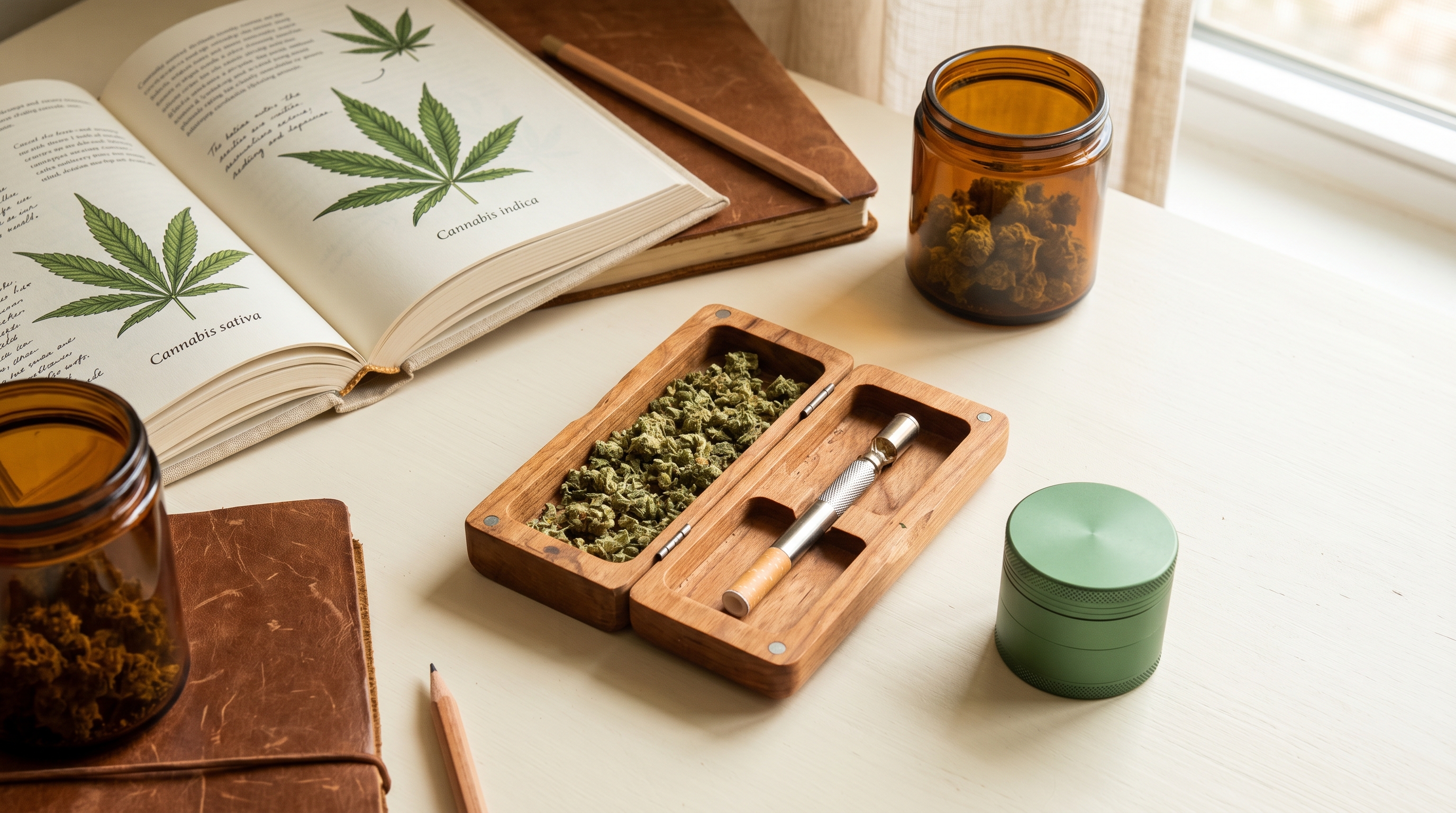
A one-hitter is a small, narrow pipe designed to hold roughly a single inhalation’s worth of ground flower, usually around 0.05 to 0.1 grams [MunchMakers, 2026]. You pack it, take one hit, clear it, and you’re done. There is no carb hole because the chamber is so small that airflow regulation isn’t needed; you simply pull until the bowl is cleared. The whole thing is over in about thirty seconds.
You’ll hear several names for the same basic idea, and they overlap more than they differ:
- Bat: A one-hitter shaped like a cigarette, usually with a slim profile and a serrated or textured tip for digging into ground flower. The cigarette look is intentional camouflage.
- Chillum: The classic straight-tube version, open on both ends, with roots in centuries-old clay pipes used in India and the Middle East. Modern chillums are typically 2 to 4 inches of glass, ceramic, or metal.
- Taster: A casual catch-all for any one-hit pipe.
They all do one job and do it better than anything else: deliver a single, efficient hit with minimal waste, smell, and setup time. If you’re newer to gear vocabulary in general, our cannabis terminology glossary is a handy companion, and the broader cannabis gear guide from beginner to advanced puts the one-hitter in context next to everything else.
Materials: Glass, Ceramic, Metal, and Wood
The material your one-hitter is made of shapes the flavor, the durability, and how it handles heat. There is no single best choice, only the right trade-off for how you smoke. (Pipe materials matter for the same reasons we cover in the science of filtration in water pipes versus dry pipes.)
| Material | Strength | Trade-off |
|---|---|---|
| Glass (borosilicate) | Cleanest, purest flavor; doesn’t absorb residue | Most fragile; needs careful handling |
| Ceramic | Good flavor, classic cigarette disguise, stays cooler | Can chip; mid-range price |
| Metal (aluminum/steel) | Nearly indestructible, easy to clean, cheapest | Conducts heat fast, can taste metallic |
| Wood | Warm look, comfortable grip, runs cooler than metal | Porous, absorbs odor, hardest to clean |
A few notes worth keeping in mind. Glass is the flavor pick because borosilicate (the same material used in lab glassware) doesn’t add any taste of its own. Ceramic is the stealth pick; the white cigarette-style ceramic chillum has been a best-seller for decades because it works, it’s cheap, and from a distance it doesn’t read as a cannabis pipe. Metal is the survivor; anodized aluminum and stainless steel shrug off drops, but they conduct heat efficiently, so after a couple of quick hits the bowl end gets warm. Let it cool between pulls.
One safety note worth flagging: stick to anodized aluminum, surgical-grade stainless steel, or borosilicate glass. Cheap brass or “mystery metal” pipes, especially low-cost imports, can contain lead, and you don’t want unknown coatings near heat. If a listing won’t tell you what the pipe is made of, that’s reason enough to pass.
The Dugout System
The dugout is what turns a one-hitter into a complete grab-and-go kit. It’s a pocket-sized box, roughly the size of a deck of cards, with two chambers: one holds your pre-ground flower (usually 1 to 3 grams), and the other houses the bat [Willem, 2026]. A swing-top, sliding, or magnetic lid keeps it all sealed.
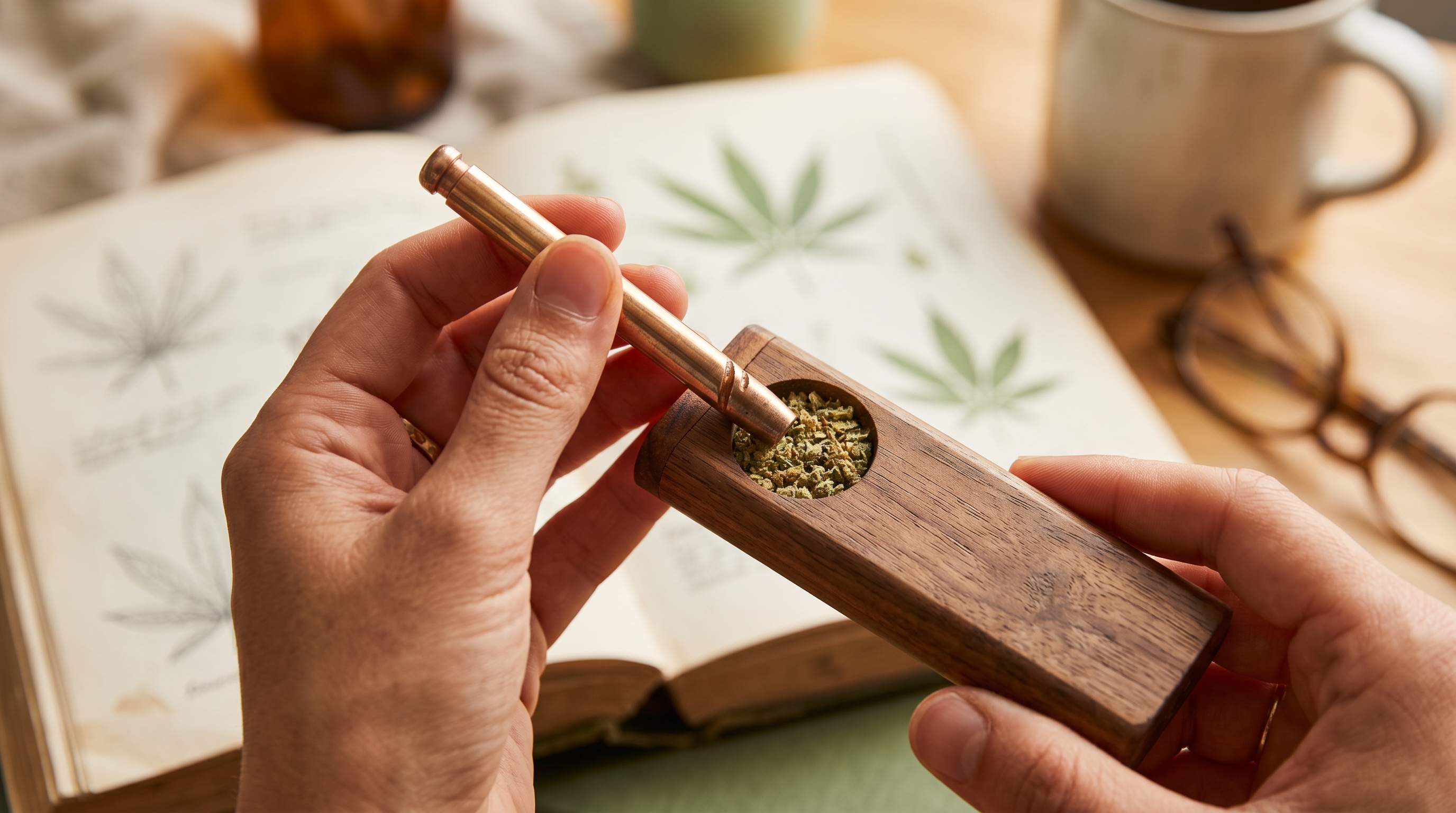
The clever part is how the two pieces work together. You press the tip of the bat down into the flower chamber and give it a slight twist. The textured edge of the bat slices and packs the bowl in one motion, almost like a drill bit rather than a shovel. Pull it out and it’s loaded, no fingers, no separate tool, no mess. Many premium dugouts add a spring that pops the bat up for easy retrieval.
Here’s the basic ritual:
- Open the lid.
- Press the bat down into the flower chamber and twist to pack the bowl.
- Pull the bat out (it should be loaded flush to the rim).
- Close the lid to keep the smell contained.
- Light gently and draw slowly until cleared.
- Tap out the ash, return the bat, repeat.
A couple of details make a real difference. Grind medium, not fine. Too-fine powder pulls straight through the bore and into your mouth; too coarse won’t pack. And fill the flower chamber loosely, since an overpacked chamber keeps the bat from twisting freely. The dugout’s small chamber also means flower dries out faster than it would in a sealed jar, so top it up often. For longer-term freshness, see how to store cannabis. A good grinder is the unsung hero here; even grind is the whole game with a dugout.
If you’re assembling gear from scratch, the dugout slots neatly into a starter setup. Our guide on how to build the perfect cannabis toolkit covers what pairs well with one.
Discretion and Dosing Control
Two things make the one-hitter and dugout combo so popular: it’s discreet, and it gives you real control over how much you consume.
On discretion: a cigarette-style bat doesn’t look like a cannabis pipe, the session is short, and the smoke output is a fraction of a joint or bong. When a dugout is closed, it just looks like a small box or aluminum case, and a tight-tolerance lid keeps the odor contained. Metal dugouts with precise machining tend to seal best; wood, being porous, is decent but does absorb and hold smell over time. None of this makes consuming legal where it isn’t, of course, but for a quick session in a legal setting, this is about as low-profile as flower gets. (Worth knowing, too: you adapt to your own scent fast, which is exactly why you can’t smell cannabis on yourself.)
On dosing: because the bowl holds so little, a one-hitter is essentially a built-in portion-control device. One hit is one hit. That makes it a natural fit for microdosing, for managing tolerance, and for beginners who want to start with a known, small amount and feel it before going further. If you’re exploring small, intentional doses, our complete guide to microdosing cannabis for productivity and focus goes deep, and the beginner’s dosing chart helps you find a sensible starting point. The flip side of low and slow is also useful when you’re taking a tolerance break and easing back in.
A practical reminder: cannabis affects everyone differently, and smaller doses generally make it easier to stay in a comfortable range. Going slow is the simplest way to avoid an unpleasant experience, and it’s part of why some people find one-hitters help them sidestep the over-did-it feeling that can lead to paranoia. None of this is medical advice; if you have health concerns, talk to a clinician.
Cleaning Your One-Hitter
Here’s the honest downside: one-hitters clog faster than any other pipe because the bore is so narrow, often just 2 to 5 millimeters [Grasscity, 2026]. Resin builds up incrementally, airflow degrades, and you may not notice until the channel is half blocked and every pull is harsh. The good news is that cleaning is easy, and the routine depends on the material.
For metal and glass bats, the shake-bag method works well:
- Drop the bat into a sealable bag with 90 percent or higher isopropyl alcohol and a tablespoon of coarse salt (kosher salt is perfect).
- Cover the openings and shake vigorously for a minute or two. The salt acts as an abrasive that scrubs the interior walls a pipe cleaner can’t reach.
- For heavy buildup, let it soak 30 minutes to a few hours.
- Run a pipe cleaner through, then rinse thoroughly with hot water.
- Air-dry completely before using; smoking through residual alcohol is unpleasant and not something you want to inhale.
For wood, the rules are different. Never soak a wooden dugout or pipe. Wood is hygroscopic, so it absorbs liquid and will swell, warp, or crack, which ruins the lid’s seal. Clean the internal chambers with a pipe cleaner (a dab of alcohol on the cleaner is fine for the bat channel) or compressed air, and accept that a well-used wooden piece will never look factory-fresh again.
For daily maintenance between deep cleans, heat the pipe briefly with a lighter to soften the resin, then blow forcefully through the mouthpiece to push ash and debris out the bowl end. Many cigarette-style bats and dugout sets include a poker or push tool for exactly this. And keep a paperclip or safety pin in your kit for unclogging on the go. Replace any glass piece with chips or cracks near the mouthpiece, since micro-fractures can shed particles you don’t want to breathe in.
Pros and Cons at a Glance
The good:
- Extreme portability; the whole kit fits in a pocket.
- Built-in dose control, ideal for microdosing and tolerance management.
- Conserves flower; you use only what you need.
- Discreet; minimal smoke, minimal smell, quick sessions.
- Cheap; most one-hitters run $3 to $15, and dugout sets $15 to $60.
The trade-offs:
- Clogs faster than larger pipes and needs frequent cleaning.
- Tiny capacity means more reloads; not built for groups or heavy sessions.
- The metal bat in many dugout sets isn’t a flavor champion.
- Wooden dugouts are the hardest to clean and can hold odor.
If you smoke on walks, commute, hike, or just like a quick controlled hit, the one-hitter wins. For long home sessions or sharing with friends, a larger pipe is the better tool. (Comparing methods more broadly? See cannabis consumption methods ranked by bioavailability and vaping versus smoking.)
Top Picks by Need
There’s no single best one-hitter, only the best one for what you’re after. Match the tool to the priority:
- Best for discretion: A white ceramic cigarette-style bat paired with a matching dugout. It reads as a cigarette and seals the smell.
- Best for flavor: A borosilicate glass chillum. Nothing comes between you and the terpenes. Handle with care.
- Best for durability: A surgical-grade stainless steel or anodized aluminum bat. Effectively indestructible and travel-proof.
- Best for portability: A complete dugout system. Everything in one self-contained, one-handed unit.
- Best for microdosing: Any small-bowl bat in a dugout, where the press-and-twist load gives you a consistent small portion every time.
- Best on a budget: A metal bat. Cheap, tough, and it just works.
A common move is to keep two: a metal or ceramic bat in a dugout for daily carry, and a nicer glass chillum at home for when flavor matters. They’re cheap enough that owning a backup for when the primary needs cleaning is genuinely useful.
The deeper truth is that the gear is only half the equation. The same flower in the same bat can land very differently from one person to the next, because your response is driven by the strain’s terpene and cannabinoid profile interacting with your own body. Learning how High Families group strains by effect is a better starting point than chasing labels, and tracking what actually works for you is where it all comes together. That’s exactly what the High IQ app is built for: log what you smoke, how it landed, and let your own patterns guide the next session.
Frequently Asked Questions
What’s the difference between a one-hitter and a dugout? A one-hitter is just the pipe, the slim tube with a small bowl for a single hit. A dugout is the full system: a small case that holds both the one-hitter (the bat) and a sealed chamber of ground flower. A dugout is optional; you can load a one-hitter from any container.
How much flower does a one-hitter hold? Roughly 0.05 to 0.1 grams, enough for one good hit or two small ones. That small capacity is the point; it makes the one-hitter efficient and great for controlling consumption.
Why does my one-hitter taste harsh or clog? Almost always resin buildup or technique. Clean it regularly, grind medium rather than fine, and pull gently. Drawing too hard pulls the burning cherry through and gives you a hot, harsh hit; a slow, steady sip is the move.
Are wooden or metal dugouts better? Metal seals odor better and is far easier to clean. Wood looks and feels warmer and runs cooler to the touch, but it’s porous and the hardest to maintain. Choose based on whether discretion or aesthetics matters more to you.
Is a one-hitter good for beginners? Yes. The small, fixed dose makes it easy to start low and go slow, which is the safest way to learn your tolerance. Pair it with the beginner’s strain guide and start gentle.
Key Takeaways
The one-hitter is the most efficient, lowest-profile way to enjoy flower, and the dugout turns it into a complete pocket kit. To recap:
- A one-hitter holds about 0.05 to 0.1 grams, enough for one good pull, which makes it ideal for microdosing, tolerance management, and conserving flower.
- Material is a trade-off: glass for flavor, ceramic for stealth, metal for durability, wood for warmth. Stick to safe materials and avoid mystery metals.
- The dugout’s press-and-twist load is the whole appeal: one-handed, no tools, no mess. Grind medium and pack loosely.
- Clean it often. The narrow bore clogs fast; the shake-bag method handles metal and glass, while wood should never be soaked.
- The gear is only half of it. How a strain lands is driven by its terpene profile and your own body, so track what works and let your patterns guide you.
Sources
- Grasscity. “What is a One-Hitter Dugout? Anatomy, Usage & Stealth Guide.” grasscity.com
- MunchMakers. “One Hitter Guide: Everything About Bats, Chillums & Dugouts.” guides.munchmakers.com
- Oil Slick. “One Hitter Pipes and Chillums: The Complete 2026 Guide to Micro-Dosing Your Flower.” oilslickpad.com
- Willem David. “Dugout Pipe Guide: Best One Hitter Dugout for Travel, Discreet Smoking & Odor Control.” willemdavid.com
- 4:20 Method. “How to Clean Dugout One Hitter.” 420method.com