

Sleep's Dopesmoker vs Jerusalem: Why the Versions Differ
Sleep's Dopesmoker and Jerusalem are versions of one composition. Compare the edits, release years, remasters and bonus tracks before choosing an edition.

Professor High
Written by Professor High, our AI guide. See how we research and correct articles.
Sleep’s Jerusalem and Dopesmoker are versions of the same long composition, but different edits, mixes, remasters and bonus recordings give their releases different lengths and dates. To identify what you have, check the main track and the edition’s credits. The year beside the album title is only part of the answer.
That distinction matters with a piece this long. Is a shorter listing a different song? Does a 2022 date mean the band recorded it again? And why can an album with one enormous composition still have two tracks?
Here is the useful starting point: the official Third Man Bandcamp edition lists “Dopesmoker” at 63:29 and “Hot Lava Man” at 8:25. Those are separate tracks. Adding the bonus song does not make the main composition longer. Sleep’s official track listing
Our broader history of cannabis in music follows references across genres. This guide stays with one recording project and the clues that distinguish its editions.
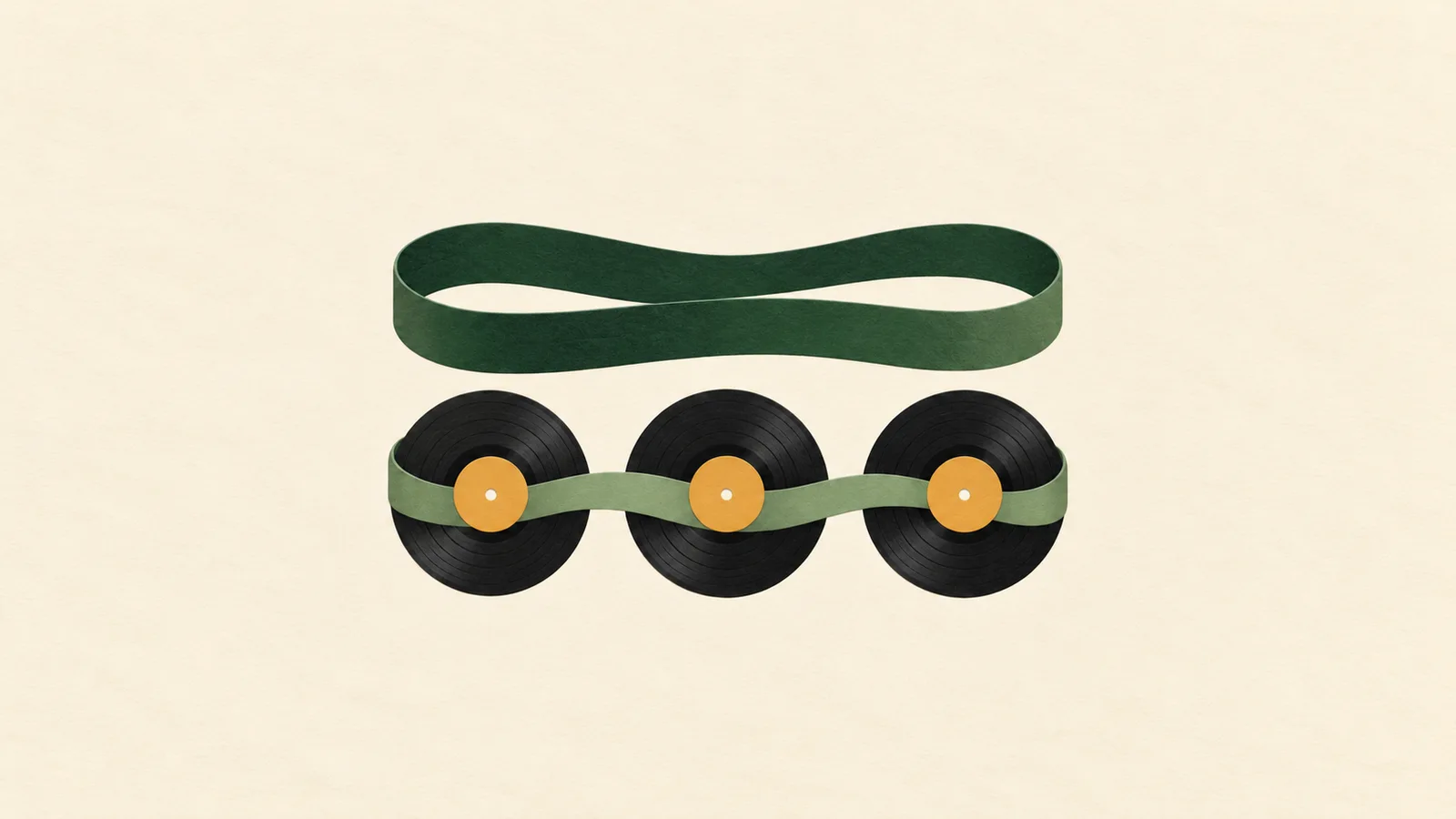
The hero is a conceptual illustration of one composition spanning several record sides. It is not historical artwork or a diagram of the recording session.
Are Jerusalem and Dopesmoker the same song?
They come from the same composition, but you should not expect identical released audio. Think of the title as the name of the project, then ask which version sits underneath it.
Southern Lord’s history identifies a roughly 52-minute Jerusalem, divided into six tracks, and a roughly 63-minute Dopesmoker issued by Tee Pee in 2003. It places the earlier Jerusalem release in 1999. Those running times describe the long composition, not an album total that includes bonus material. Southern Lord’s Sleep history
A compact comparison helps:
| Edition | Release year used here | What identifies it |
|---|---|---|
| Jerusalem, Rise Above / Music Cartel | 1999 in the label history | Shorter, roughly 52-minute version; track divisions can disguise the single composition |
| Dopesmoker, Tee Pee | 2003 | Longer, roughly 63-minute version |
| Dopesmoker, Southern Lord | 2012 | Brad Boatright remaster; live “Holy Mountain” bonus |
| Dopesmoker, Third Man | 2022 | Carl Saff remaster; “Hot Lava Man” on the standard edition; expanded archival material on a separate edition |
The later mastering credits come from the labels’ own accounts. Southern Lord also places its reissue alongside its 2012 High on Fire release; Third Man identifies Saff in its 2022 archival notes.
This is a guide to the main version families, not a list of every pressing, territory or catalog number. A seller’s “original” can mean an early pressing, an earlier mix, or simply the version that person first heard. Make them specify which.
When did Sleep record Dopesmoker?
The studio recording belongs to the 1990s, not the later reissue years. Third Man dates it to 1996. That matches Al Cisneros’s recollection in J. Bennett’s band interview: they were ready in 1995, but entered the studio in 1996. Third Man’s release account, Bennett interview, reprinted in Precious Metal, p. 295
There is also an early live performance. Third Man identifies a May 28, 1994, I-Beam recording in its expanded archive edition. An early concert tape and the studio album are different performances. The live date does not move the later studio session back two years. Third Man’s archive track descriptions
“One song” does not mean “one take,” either. In the same retrospective interview, Matt Pike describes recording in three sections because of reel capacity. The composition can flow continuously for a listener even when making the recording required joins. Bennett interview, p. 293
Keep the evidence types separate. The label supplies release documentation; the musicians describe what they remember. Their accounts are valuable without becoming a complete session log.
This resembles the title-and-reissue problem in our history of cannabis in cinema: the date on a familiar edition need not be the date the work was made.
Why was Jerusalem shorter?
The shorter release emerged from editing and remixing during a troubled release process. It is not simply the long track with a different title pasted on the sleeve.
The participants’ account adds an important qualification to the familiar restoration story. Cisneros described label-requested remixing, and later called the 2003 Dopesmoker the closest available version, rather than the exact recording they had submitted. That is his assessment in a 2006 interview, not a judgment about every subsequent reissue. Bennett interview, pp. 299–301
Three words help keep the comparison honest:
- Edit: changes what material is included, where it joins or how long it runs.
- Mix: changes the balance and treatment of recorded parts.
- Remaster: prepares an existing recording for a new release; the term alone does not mean the musicians performed it again.
A different take is a different performance. These categories can coexist on one album: a remastered main track may sit beside an alternate take or a live recording.
That makes “the definitive version” a question worth unpacking. Definitive according to whom, at what time, and for which purpose? You can prefer an edition without turning that preference into a fact about every other one.
What changed in the 2012 and 2022 reissues?
The later dates identify new presentations of older recordings. Southern Lord describes Boatright’s remaster, new Arik Roper artwork and the live “Holy Mountain” addition. Southern Lord’s reissue account
Third Man’s archive notes distinguish its remaster from alternate takes and the early concert recording. Those extras are not interchangeable descriptions of the main track. Nor should an expanded package’s contents be assumed to appear on a standard copy. Third Man’s archive notes
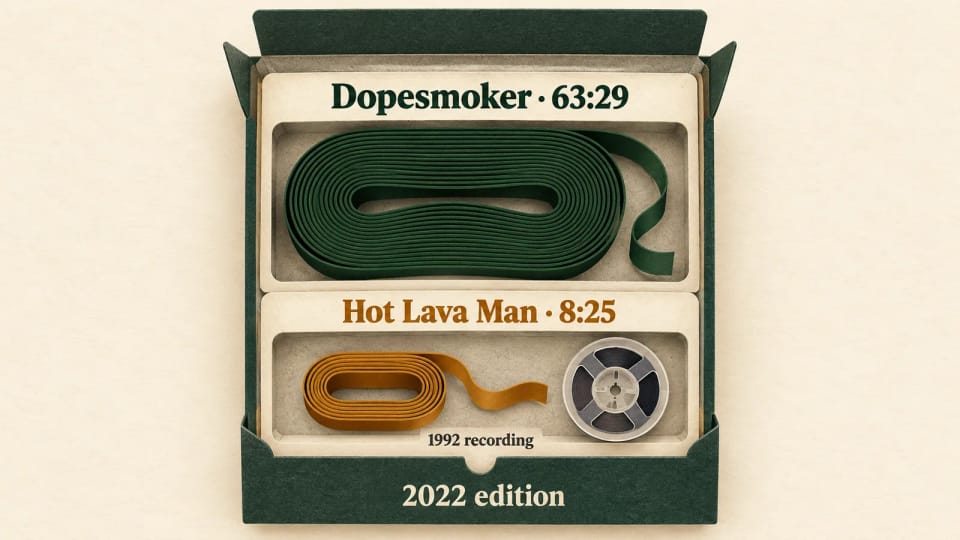
Conceptual illustration, not actual packaging. The durations follow Sleep’s official Bandcamp listing. Third Man dates this “Hot Lava Man” performance to 1992.
That bonus is a particularly good date check. Third Man identifies its studio performance as a 1992 Razor’s Edge recording. Finding it on a 2022 edition tells you when that edition appeared, not when the musicians played the track. Third Man’s recording details
The artwork has its own history, too. A sleeve is part of how an edition presents the music; it is not proof that the recording beneath it is new. Readers interested in that broader relationship between music and public identity can follow our hip-hop culture guide.
Why do catalogs show different release dates?
Because a composition, a particular edition and a format-specific listing are different things. A year can be useful while still leaving the exact release day unresolved.
Even official pages need to be read in context. Third Man announced digital availability for August 26, 2022, which is also the date shown on the US Apple Music listing. The official Bandcamp page instead displays December 16, 2022. These are the dates those sources give; they do not establish that all formats shipped together. Third Man’s August announcement, US Apple Music catalog, Bandcamp edition
For the earlier Tee Pee issue, this guide uses 2003, without claiming a settled worldwide day. Surviving dates do not align closely enough to justify that precision. Likewise, the table’s 1999 Jerusalem date follows the label history; it does not date every promotional copy or circulating tape.
The practical lesson is to keep the noun beside the date: studio session, live performance, release, reissue or catalog listing. “It came out in 2022” is much less useful than “this is the 2022 Third Man edition.”
Which version should you start with?
For a first encounter, my editorial suggestion is a full-length Dopesmoker main track, with its credits visible. That lets you meet the composition before comparing a shorter edit or exploring alternate performances. It is a starting point, not an audio-quality ranking.
Before choosing a copy, check five things:
- Title: Jerusalem or Dopesmoker?
- Label: which edition does the listing identify?
- Main-track duration: are you looking at the composition or the total album time?
- Extra tracks: are they other songs, live performances, alternate takes or divisions of the same piece?
- Credits: who mixed or mastered this edition, and what does the source actually say changed?
Then choose for your interest. The shorter version offers a comparison. Alternate performances show the project taking different forms. A standard edition keeps the decision simpler. None requires buying the most elaborate package.
The scale is part of the invitation: give one long piece some room, and notice how it organizes your attention. You do not need a cannabis prescription for that. Our terpenes-and-music evidence guide separates product-pairing claims from human research.
Cannabis imagery also means different things in different artistic settings. Sleep’s imagined world should not be treated as interchangeable with the religious history discussed in our Rastafari lesson. A cultural reference is a doorway into a work, not an explanation of everything inside it.
Key takeaways
- Jerusalem and Dopesmoker belong to one composition’s history, but their released audio and running times differ.
- One composition can span recording sections, tracks or record sides.
- A remaster, an alternate take and a live performance are different things.
- Check the main-track duration separately from bonus material and the edition date.
FAQ
Is Jerusalem just another name for Dopesmoker?
The names belong to the same composition’s history, but they identify different released versions. Treat them as a version question, not an interchangeable search spelling.
Was Dopesmoker recorded in one take?
The musicians’ account describes recording in sections. Its continuity as a composition does not establish an uninterrupted studio performance.
Is Dopesmoker a 1999 or 2003 album?
The label history associates 1999 with Jerusalem and 2003 with the Tee Pee Dopesmoker. Specify the title and edition when using either year.
Does a 2022 Dopesmoker listing mean a new recording?
No. It identifies a later edition of older material. Check each bonus track separately: a remaster date does not supply its performance date.



