Cannabis in Rastafari: Sacrament, Resistance, and Culture
How ganja became a sacred herb in Rastafari: the 1930s Jamaican roots, biblical reasoning, persecution, Bob Marley, and the fight for religious freedom.

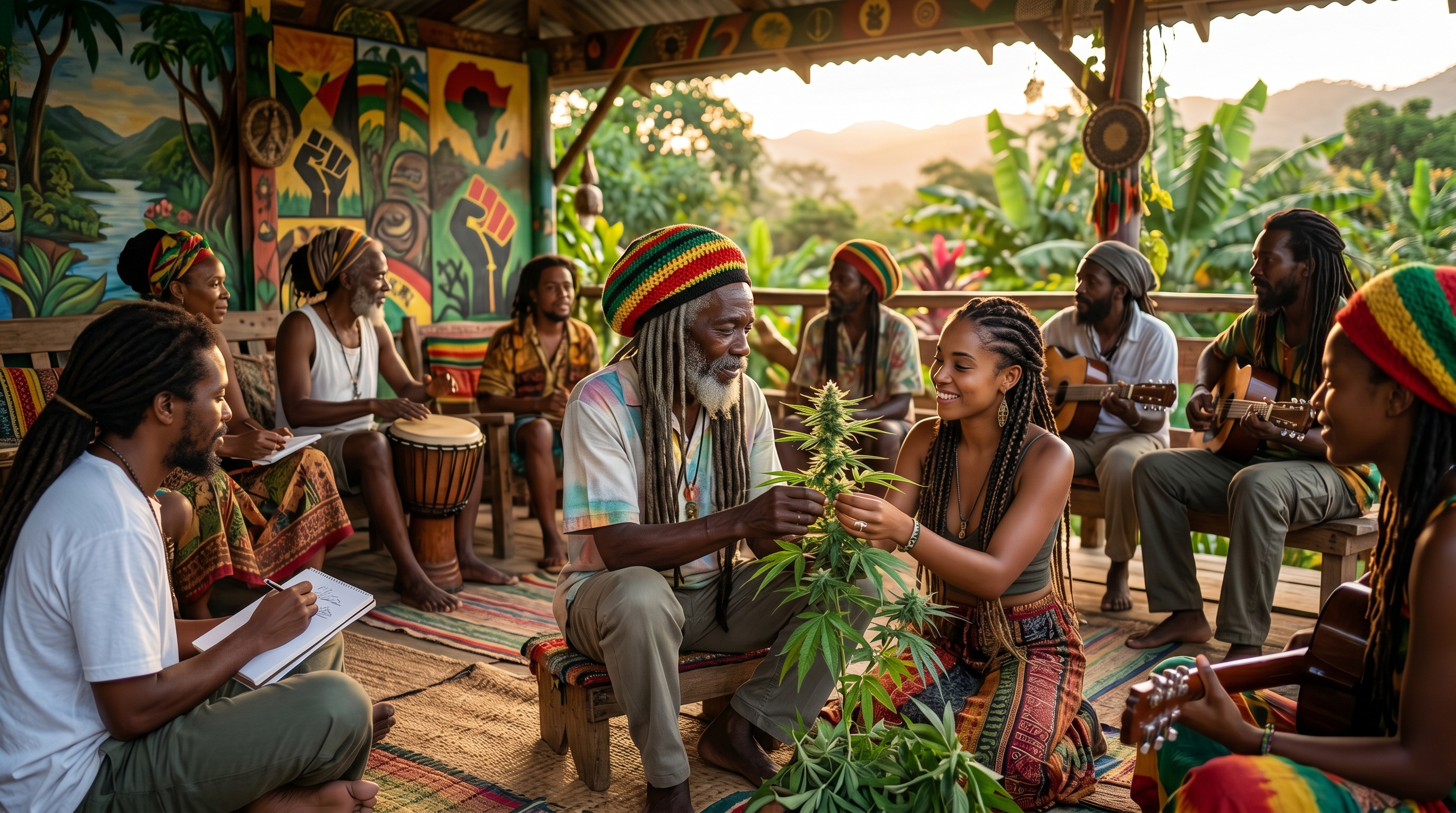
To most of the world, cannabis is a product. You buy it, you consume it, you move on. But for the followers of Rastafari, the plant they call ganja is something closer to a prayer. It is not recreation. It is sacrament. And understanding that distinction is the difference between respecting a faith and reducing it to a poster on a dorm-room wall.
I want to be careful here. This topic deserves care. Rastafari is a living religion. It has millions of followers, a rich theology, and a hard history shaped by colonialism, poverty, music, and resilience. The herb sits at the center of that story. But it is not the whole story. So let’s walk through it slowly. Where did Rastafari come from? Why is ganja treated as holy? What did it cost believers to hold that belief? And how did a movement born in the hills of Jamaica end up echoing across the planet?
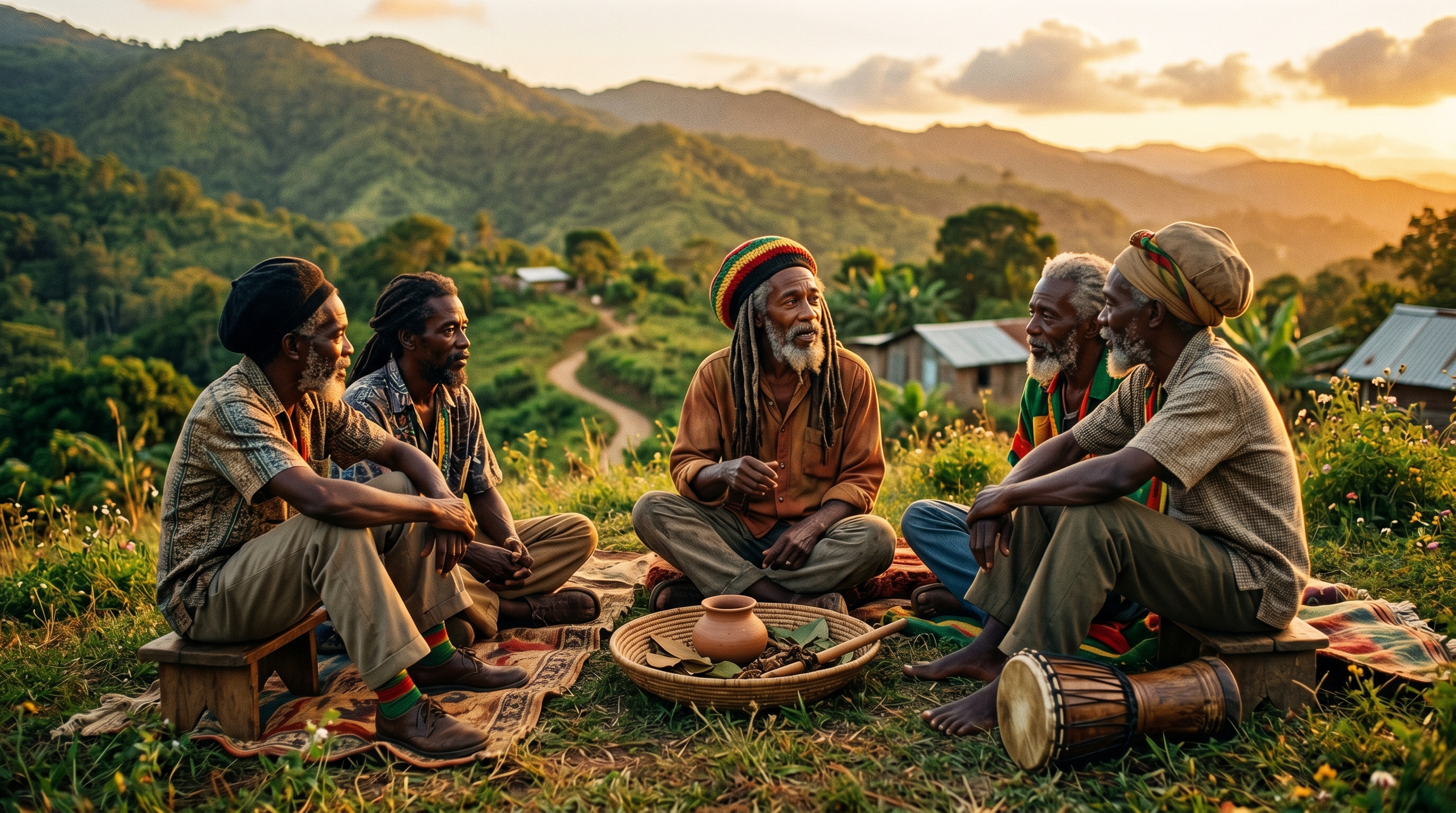
Where Rastafari Began: 1930s Jamaica
Rastafari emerged in the early 1930s. Its first followers were poor, working-class Afro-Jamaicans living under British colonial rule. It grew out of a wider current called Ethiopianism. That tradition read the Bible through the lens of African dignity and looked to Ethiopia as a spiritual homeland. The movement was also shaped by Marcus Garvey, the great Pan-African leader. His message of Black pride and “Africa for the Africans” gave Rastafari its backbone [Edmonds, 2012].
Garvey is often credited with a prophecy: “Look to Africa, where a black king shall be crowned.” He may not have said those exact words. But the idea landed. So on November 2, 1930, Ras Tafari Makonnen was crowned Emperor of Ethiopia and took the name Haile Selassie I. Many in Jamaica saw it as scripture coming true. Early preachers, above all Leonard Howell, proclaimed that this African king was a divine figure, even the returned Messiah.
The name itself tells the story. “Ras” is an Ethiopian title meaning roughly “head” or “prince.” “Tafari” was the emperor’s name before he was crowned. Followers of “Ras Tafari” became Rastafari. Howell’s 1935 book The Promised Key helped shape the early theology. A community he founded, called Pinnacle, became one of the movement’s first gathering places.
There is a quiet irony at the heart of the faith. Haile Selassie was a devout Ethiopian Orthodox Christian. He never accepted the claim that he was God. The movement’s devotion to him was not something he sought. That tension between the man and the symbol has shaped Rastafari scholarship ever since. If you enjoy this kind of origin-tracing, our piece on the history of cannabis from ancient medicine to modern science covers the plant’s much longer journey, and how cannabis culture differs around the world shows how locally specific these traditions really are.
Ganja as Sacrament: The Wisdom Weed
Cannabis arrived in Jamaica in the mid-1800s with indentured laborers from India. The word ganja is Indian in origin. By the time Rastafari was taking shape, the herb was already part of rural Jamaican life. What Rastafari did was raise it from a folk plant to a holy sacrament [Hamid, 2002].
To a Rasta, ganja is the “wisdom weed” or the “holy herb.” It is not used to get high in the casual sense. It is used to open the mind, quiet the ego, and draw closer to Jah (God). The smoke is treated almost like incense. It is a tool for meditation, not entertainment. This is the one thing an outsider most needs to understand. The intent is devotional.
Believers ground this in scripture. Several passages are commonly cited:
- Genesis 1:29 — “I have given you every herb bearing seed… to you it shall be for meat.”
- Psalm 104:14 — “He causeth the grass to grow for the cattle, and herb for the service of man.”
- Revelation 22:2 — the leaves of the tree “were for the healing of the nations.”
From these verses, Rastafari draws a theology of the herb as a divine gift, even identifying it with the biblical Tree of Life. Whether one shares that interpretation or not, it is a coherent and sincerely held religious reading, not a convenient excuse.
Groundings, Reasoning, and the Chalice
Ganja is most sacred in community. Rastafari gather for groundings, also called grounations. These are shared sessions of music, prayer, and talk. At their center are reasonings. These are long, thoughtful conversations about scripture, the news, and the state of the world, held while the herb is passed [Chevannes, 1994].
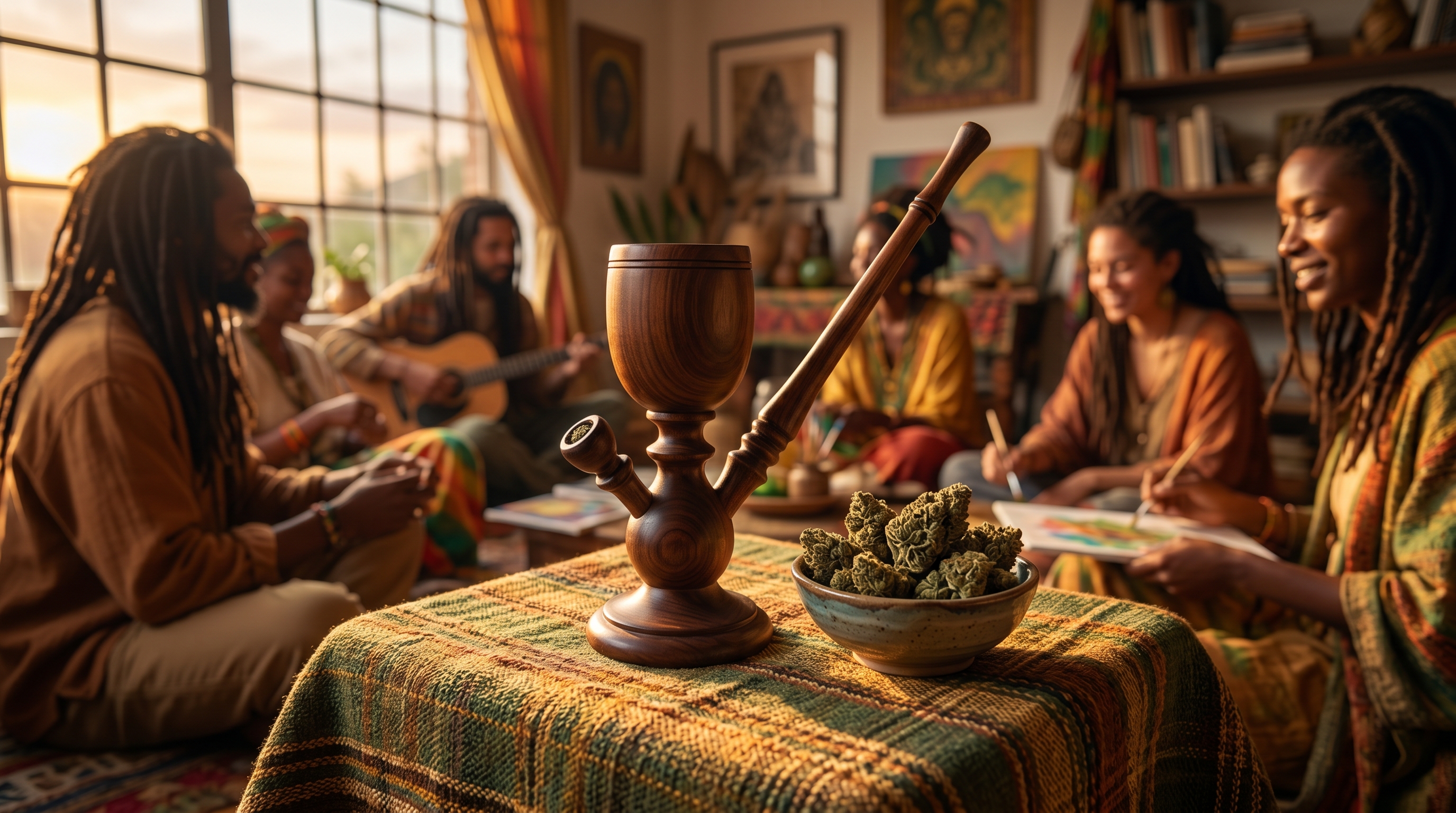
The herb is often smoked through a chalice, a long-stemmed water pipe. Before the first draw, it is common to say a prayer and dedicate the smoke to Haile Selassie I. The act is careful and deliberate. This communal, intentional use has more in common with a mindful meditation practice than with a party. It is a world away from how crowd-sourced strain culture frames cannabis today. The Ethiopian Zion Coptic Church, a later group shaped by Rastafari, went even further. It called cannabis its sacrament outright, much like the eucharist.
Spiritual Use vs. Recreational Use
This is where respect really matters. When a Rasta smokes the herb during a reasoning, the goal is insight, unity, and communion with Jah. It is not about getting high for its own sake. Many Rastafari live by Ital principles, a way of life built on natural, unprocessed living. Ganja fits that worldview. It is a plant grown from the earth, untouched by industry.
That idea should reshape how we talk about the plant in general. The modern wellness world is, in its own secular way, rediscovering the value of intentional use. Our guides on intentional cannabis connoisseurship and finding your ideal high rather than chasing a strain name echo a principle Rastafari has held for nearly a century. Why you consume matters as much as what you consume.
Cannabis chemistry plays a role too. The aromatic compounds called terpenes and the synergy known as the entourage effect shape the experience. That is why intentional traditions tend to favor whole-plant flower. Our High Families framework is a modern way to describe those effect profiles. The landrace genetics that early Jamaican growers cultivated are part of that lineage. Whatever your reasons for using cannabis, treating it with intention is a habit worth borrowing.
Persecution and Resistance
Holding these beliefs was dangerous. Cannabis was outlawed in Jamaica under the 1913 Ganja Law. It banned “Indian hemp” with the backing of colonial elites and evangelical churches. Penalties grew harsher in 1941 and again in 1961. These crackdowns often came when authorities feared unrest among the poor.
Rastafari were a prime target. Their faith was illegal in practice. Their gatherings were raided. The herb at the center of their worship was contraband. The 1950s brought repeated, sometimes violent clashes with police [Barrett, 1997]. Leonard Howell’s Pinnacle community was raided more than once and finally torn down. For decades, to be openly Rasta was to risk arrest, beatings, and the forced cutting of one’s dreadlocks.
This persecution cannot be split from the broader history of cannabis prohibition, which was so often aimed at marginalized groups. The same pattern appears in the U.S. story we cover in the 1937 Marihuana Tax Act and the later Reagan-era War on Drugs. Rastafari endured. Out of that endurance came resistance, voiced most powerfully through music. The link between cannabis and protest music runs deep. Our look at the 1960s and 1970s counterculture and cannabis in music from jazz clubs to hip-hop explores it further.
Bob Marley and the Global Spread
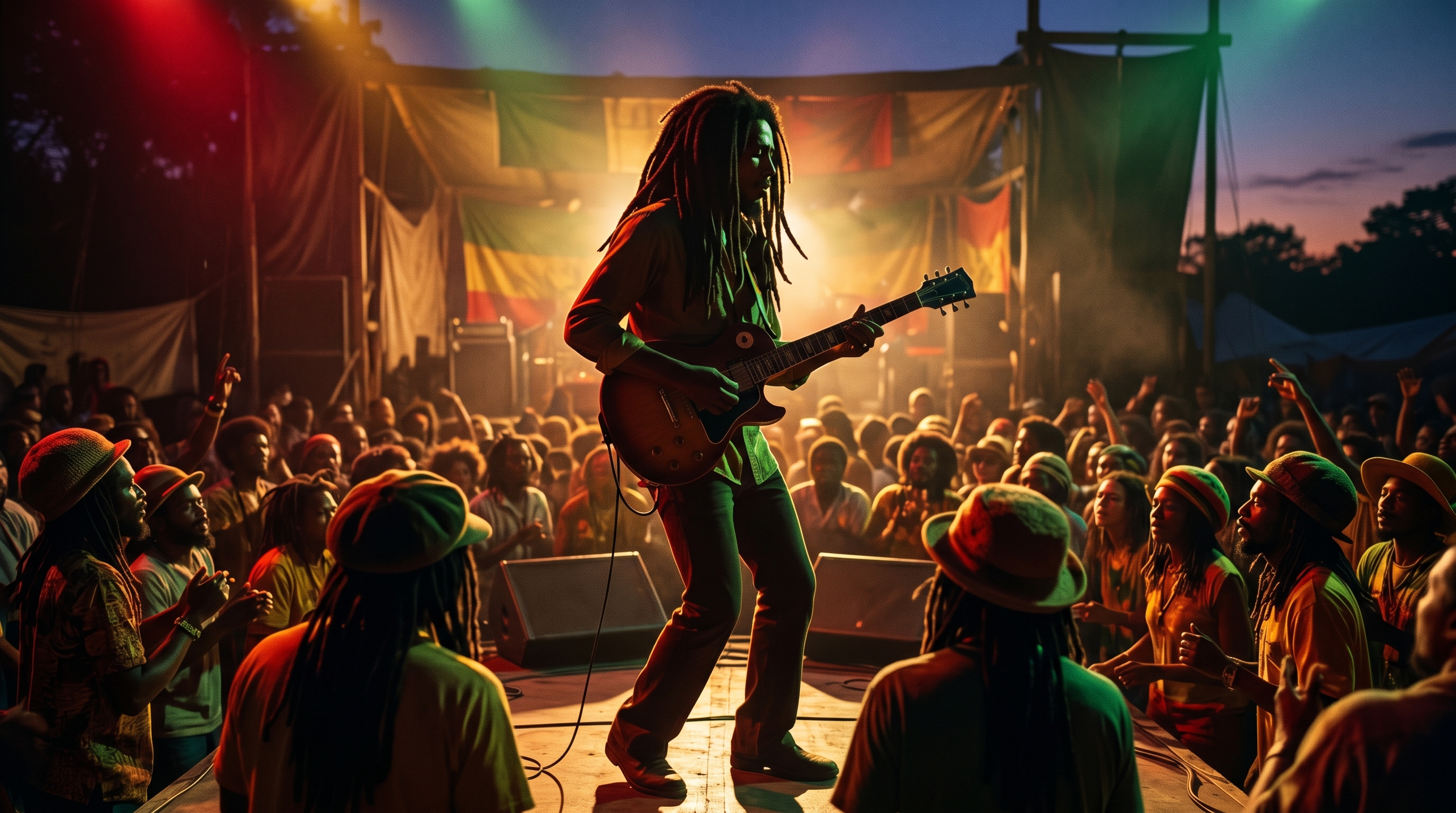
No single person did more to carry Rastafari to the world than Bob Marley. He converted to the faith in 1966. From that point on, he treated the herb as vital to spiritual growth. He described it as something that helped him meditate and understand himself.
Through reggae, Marley turned a Jamaican religious movement into a global force. His breakthrough came in the mid-1970s. The live version of “No Woman, No Cry” landed in 1975. Rastaman Vibration followed in 1976. Then came Exodus in 1977, which stayed on the British charts for 56 straight weeks. By the time he died in 1981, he had brought Rastafari imagery, language, and the sacred herb to people who had never set foot in the Caribbean.
That global reach is a double-edged sword, and we’ll come back to it. The way music carries cannabis culture is a theme we return to often. If it interests you, see how cannabis fuels musical creativity and the broader story of how weed went mainstream in fashion and pop culture. For the screen version, there’s from Reefer Madness to The Dude.
The Fight for Religious Freedom
As Rastafari spread, so did the legal question. If cannabis is a sincere sacrament, does religious freedom protect it? The answers have been messy, and they differ by country.
Jamaica took a major step in February 2015. Its legislature amended the Dangerous Drugs Act. The reform decriminalized possession of up to two ounces (about 57 grams). It allowed home growing of up to five plants. And, crucially, it added a clear rule: practitioners of the Rastafari faith may use cannabis for religious purposes. For a faith long criminalized in its own homeland, this was historic. (For the wider picture, see our guide to global cannabis legalization and country profiles like South Africa and Portugal.)
In the United States, the path has been rockier. The key case is Employment Division v. Smith (1990). There the Supreme Court held that neutral laws of general application can burden religious practice. In that case, it denied benefits to Native American Church members who used peyote. Congress pushed back with the Religious Freedom Restoration Act (RFRA) in 1993. RFRA restored a stricter test. The government must now show a “compelling interest” pursued through the “least restrictive means.”
RFRA has produced very different outcomes for different faiths. In Gonzales v. O Centro (2006), the Supreme Court unanimously allowed a small church to use a DMT-containing sacramental tea. It found the government had not met RFRA’s burden. Rastafari cannabis claims, by contrast, have mostly not won in U.S. courts. Judges tend to accept that the belief is sincere. But they still rule that the government’s interest in controlling cannabis justifies the burden. They also point to how hard it is to tell sacramental use from recreational use. The result is an uneven landscape that keeps shifting as broader cannabis rescheduling debates evolve.
Respect vs. Appropriation
Here is the hard part. Rastafari symbols have been absorbed into global pop culture, often stripped of meaning. Dreadlocks. The red, gold, and green. The lion. The words “irie” and “Jah.” And, above all, the image of the smoking Rasta. A faith forged in poverty and persecution gets flattened into a vibe.
So how do you engage respectfully?
- Recognize it as a religion. Rastafari is a faith with theology, ethics, and history, not a lifestyle aesthetic or a stoner stereotype. Our piece debunking stoner stereotypes with data is a useful corrective here.
- Don’t claim the sacrament. For most non-Rastafari consumers, cannabis is not a religious sacrament, and pretending otherwise trivializes those for whom it genuinely is.
- Credit the source. Reggae, the ceremonial use of the herb, and much of the global “cannabis is natural and healing” narrative owe a real debt to Rastafari. Acknowledging that is the least we can do. The same respect applies to communities visited through cannabis tourism.
- Mind your manners. Whatever your reasons for consuming, the unwritten rules of cannabis etiquette start with treating the plant, and the people around you, with respect.
There is something quietly profound in how Rastafari approached cannabis: with reverence, intention, and community. You don’t have to share the faith to learn from that posture. In fact, the trend toward intentional consumption that we write about constantly, like the 420 tradition’s deeper roots, is in some ways a secular echo of a sacred idea.
Key Takeaways
Rastafari is a religion, first and last. Ganja is its sacrament, not its punchline. Here is the short version:
- Rastafari began in 1930s Jamaica, sparked by the 1930 coronation of Haile Selassie I and shaped by Marcus Garvey [Edmonds, 2012].
- The herb is sacred. It is used to aid prayer, meditation, and communion with Jah, grounded in biblical verses [Chevannes, 1994].
- Spiritual use is not the same as recreation. Intent is the whole point.
- Believers were persecuted for decades, and music, above all Bob Marley, carried the faith worldwide [Barrett, 1997].
- Jamaica’s 2015 reform recognized Rastafari religious use; U.S. courts mostly have not [Hamid, 2002].
- Respect means crediting the source and not flattening a faith into a vibe.
Frequently Asked Questions
Is cannabis actually part of the Rastafari religion? Yes. For most Rastafari, ganja is a sacrament used to aid meditation, prayer, and communion with Jah. It is treated as a holy herb, not a recreational product, and its use is grounded in biblical scripture.
What scriptures do Rastafari cite for using ganja? Commonly cited verses include Genesis 1:29, Psalm 104:14, and Revelation 22:2, the last referring to leaves “for the healing of the nations.” Many also identify the herb with the biblical Tree of Life.
Who was Haile Selassie and why does he matter? Haile Selassie I was crowned Emperor of Ethiopia on November 2, 1930. Many Rastafari regard him as a divine figure, though he was himself a devout Ethiopian Orthodox Christian who never claimed divinity. The movement’s name comes from his pre-coronation title, Ras Tafari.
Did Bob Marley start Rastafari? No. Rastafari predates him by roughly three decades, emerging in the 1930s. Marley converted in 1966 and, through reggae, became the faith’s most influential global ambassador in the 1970s.
Is sacramental cannabis use legal anywhere? Jamaica’s 2015 reform explicitly permits Rastafari religious use. In the United States, religious-freedom defenses under RFRA have generally not succeeded for cannabis, even though similar claims have succeeded for other substances like sacramental ayahuasca.
Is it appropriation for non-Rastafari to use cannabis? Using cannabis isn’t appropriation. The concern is treating Rastafari’s sacred symbols and the sacrament itself as a casual aesthetic while ignoring the faith, history, and persecution behind them.
Sources
- [Chevannes, 1994] Barry Chevannes, Rastafari: Roots and Ideology — origins, groundings, reasoning, ganja as sacrament.
- [Barrett, 1997] Leonard E. Barrett, The Rastafarians — Haile Selassie, Leonard Howell, Bob Marley, global spread.
- [Edmonds, 2012] Ennis B. Edmonds, Rastafari: A Very Short Introduction — Marcus Garvey’s influence, 1930 coronation, theology.
- [Hamid, 2002] Ansley Hamid, The Ganja Complex — cannabis in Jamaican social and religious life, prohibition history.
- Wikipedia, “Cannabis in Jamaica” — 1913 Ganja Law, 1941/1961 tightening, February 2015 Dangerous Drugs Act amendment and the Rastafari religious-use provision.
- Wikipedia, “Religious Freedom Restoration Act” — Employment Division v. Smith (1990), RFRA (1993), Gonzales v. O Centro (2006).
Cannabis laws vary by jurisdiction and change frequently. This article is educational and historical, not legal advice. Always consult current local law.


