
Strain experience guide
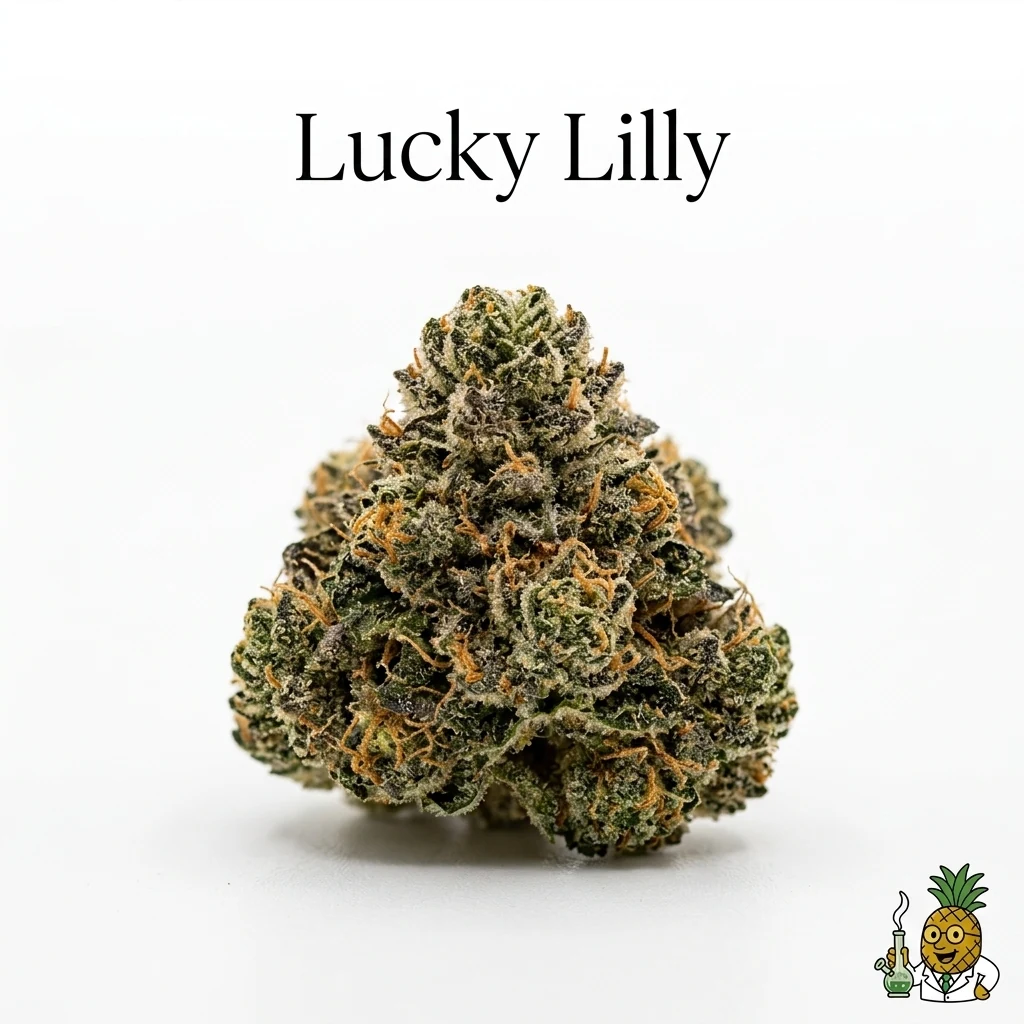
Lucky Lilly Strain
Lucky Lilly is an indica-dominant hybrid from Vireo, crossing Grape God Bud with Chem de la Chem. It delivers sweet grape and pineapple flavors with earthy, spicy undertones, and a relaxed, happy, gently uplifted high with a light body tingle. Read more Show less
- Type
- Indica-Dominant Hybrid
- Typical THC
- about 17% reported 14–19.6% Batches vary — check the label
- Top effects
- relaxed, happy, tingly
- Lead terpene
- Caryophyllene
- Flavors
- Pineapple, Fruity, Floral
Quick Hits
What kind of high is Lucky Lilly?
An indica-dominant hybrid reported as relaxed, happy and tingly. Picked for evening wind down and sleep & bedtime in the evening. The profile features fruity pineapple flavor, sweet grape aroma and caryophyllene as the lead terpene.
Terpenes are natural compounds that give cannabis its smell. Compare citrus, pine, and earthy notes to find what you like. They are clues, not a promise of how it feels.
Terpene percentages belong to the jar, not the strain. They move with harvest timing, drying, cure and shelf age — the lighter ones literally evaporate. What holds steady is which terpenes lead, so that is what we rank.
Research associations
- Anti inflammatory
- Pain relief
- Anti anxiety
General terpene associations, not effects confirmed for this strain. Evidence varies.
Listed as reported — no measured order on file for this strain.
Activities people report choosing this strain for.
See the full list →The smell people describe for this strain.
See the full profile →- Earthy
- Floral
The reported taste, first to last. The batch and how you consume it can change it.
See the full profile →- Floral
- Earthy
- Best Time Evening
- Era —
- Rarity Uncommon
Genetics Indica-Dominant Hybrid Lineage is a guide, not a reliable predictor of the high.
Potency Check the label, not the strain Varies by batch, grower and harvest — check the label on the product you are buying. Scan your label → Reported ranges →
Heads up Reported: dry mouth and dry eyes. Responses vary. Review safety →
In short
Lucky Lilly quick answers
What are the effects of Lucky Lilly?
Lucky Lilly is a hybrid strain known for relaxed, happy and tingly effects. It is best enjoyed during the evening.
What does Lucky Lilly taste and smell like?
Lucky Lilly has aromas of grape, sweet, earthy and floral and flavors of pineapple, fruity and floral. Its dominant terpene is Caryophyllene.
Is Lucky Lilly indica or sativa?
Lucky Lilly is a hybrid (70% Indica / 30% Sativa) cannabis strain, classified as a Relieving High strain. It is a cross between Grape God Bud and Chem de la Chem, bred by Vireo.
How strong is Lucky Lilly?
Lucky Lilly is usually 14–19.6% THC. THC levels vary with growing conditions and the phenotype.
What terpenes are in Lucky Lilly?
The dominant terpene in Lucky Lilly is Caryophyllene. Other notable terpenes include Myrcene, Limonene.
When is the best time to use Lucky Lilly?
Lucky Lilly is best enjoyed during the evening. People often choose it for winding down.
Worth knowing
Lucky Lilly effects and experience
The memorable details
- Indica-dominant hybrid crossing Grape God Bud with Chem de la Chem
- Relaxed, happy and uplifted effects with a light body tingle
- Caryophyllene-led terpene profile backed by myrcene and limonene
- Grape and pineapple flavors with an earthy, spicy finish
Explore the full profile Complete experience record
Mind, body, and energy
Activities people choose it for
Reported uses
Medical Effect Sources
2 verified sources
Medical Disclaimer: This information comes from AI research on available studies and user reports, provided for educational purposes only, and is not intended as medical advice. Cannabis affects everyone differently. Consult with a qualified healthcare professional before using cannabis for medical purposes. Do not use cannabis if pregnant, nursing, or have a medical condition without consulting your doctor.
Mental Effects
- •Anxiety Relief
Eases anxious feelings and promotes calm
- •Stress Relief
Reduces chronic stress and promotes relaxation
- •Depression Relief
Uplifts mood and encourages feelings of happiness
- •PTSD Support
May help manage PTSD-related symptoms
- •Insomnia Relief
Evening use may help promote sleep

Professor High visualization
Body Effects
- •Chronic Pain Management
Helps reduce ongoing chronic pain
- •Headache Relief
May ease headaches
- •Migraine Relief
May help alleviate migraine symptoms
Lucky Lilly side effects and safer use
Keep listening Music neighborhood
Sound neighborhood
Follow Lucky Lilly into Relieving High music.
This Is Why I'm High classifies this strain within the Relieving High chemistry pattern. Separately, our editorial music map associates the same family with these sounds. It is a creative bridge—not a prediction or artist endorsement.



Open the jar
Lucky Lilly aroma, flavor, and terpenes
Look closer Full sensory specimen
Aroma and flavor
Lucky Lilly terpene profile
Appearance
Batch context Complete cannabinoid record

03 · AI interpretation
Professor High on Lucky Lilly
Okay, a few minutes in and here is what I notice: a warm, unhurried calm settles in first, like someone turning down the dimmer switch on a busy day. The thoughts don't shut off, they just slow to a pleasant pace. Then comes a gentle lift in mood, a quiet happiness that feels earned rather than manic. That lines up with the terpene trio reported here: caryophyllene for the body comfort, myrcene for the loosening, and limonene for the bright mental edge. There is a faint tingle moving through my shoulders and arms, and the grape-pineapple flavor lingers in a way that makes me want to keep savoring it. My focus is soft, so I am happy to settle in with a movie and let the evening unfold. It is a cozy, mellow-but-cheerful high, perfect for decompressing.
Read this as an interpretation of the profile—not clinical advice, a product rating, or a guarantee.
Learn more with AI
Open your assistant with a ready-made prompt about Lucky Lilly.
- Ask ChatGPT Opens with the prompt filled in
- Ask Claude Opens with the prompt filled in
- Ask Gemini Copies the prompt to paste in
- Ask Grok Opens with the prompt filled in
- Ask Perplexity Opens with the prompt filled in
We copy the prompt to your clipboard as you go, so you can paste it if the assistant opens with an empty box. Answers come from the assistant, not from us — always double-check them against this page.
Go deeper
The story of Lucky Lilly
Practical guide How people use it
Where it comes from Origins and lineage
Watch Reviews and videos
Strain reviews and videos
Finding strain review videos...
Keep exploring Similar strains


Related profiles
Popular profiles near Lucky Lilly, with strain type and chemistry context.


More hybrid profiles
Other hybrid profiles to compare with Lucky Lilly.
Terpene neighbors
Other profiles led by Caryophyllene.


Compare Lucky Lilly with…
See chemistry, reported effects and terpenes side by side.


Follow us on social media
New strain profiles and terpene breakdowns as they publish.
Evidence and limits
Lucky Lilly research and sources
This profile assembles public facts in original language, links its supporting sources, and keeps gaps or disagreements visible. It is research provenance—not product or lab certification.
- Linked sources
- 2
- Sourced sections
- 8
- Claims under review
- 36
- Profile updated
- Oct 10, 2026
Research Edition Current profile edition
Updated October 10, 2026 · 8 profile areas with section-level sourcing Researched profile
This edition records This Is Why I'm High’s synthesis of published information about Lucky Lilly. It describes source-supported patterns and uncertainty; it does not certify genetics, potency, safety, or any product batch.
- Profile sources
- 3
- Research evidence confidence
- 60%
- Edition date
- October 10, 2026
Evidence confidence summarizes source coverage and consistency for this profile synthesis. It is not a product rating, potency score, or guarantee about any batch.
Source coverage in this edition
- Classification 3 sources
- Lineage 3 sources
- Cannabinoids 2 sources
- Terpenes 2 sources
- Reported effects 2 sources
- Aromas 3 sources
- Flavors 3 sources
- Reported medical uses 2 sources
History tracking is active
Material changes are recorded as new editions using factual categories and source metadata. Source article prose and reviews are not copied into the history.
Research context What published research says
Power-user detail Open sources and methodology
Research Methodology
How we compiled this strain profile
This strain profile was compiled from 3 published sources covering 'Lucky Lilly'. Our research pipeline cross-references these sources and reports how strongly they agree — see the confidence breakdown below.
Data Quality by Section
View all 3 sources
- visitgreengoods.com (opens in new tab)
https://visitgreengoods.com/cannabis-strain-library/lucky-lilly/
- highartminnesota.com
- allbud.com (opens in new tab)
https://www.allbud.com/marijuana-strains/indica-dominant-hybrid/lucky-lilly
Suggest a Factual Correction
Flag a name, lineage, source, image, or chemistry issue for private editorial review.
Suggest a Factual Correction
Flag a name, lineage, source, image, or chemistry issue for private editorial review.