Bud Rot (Botrytis): How to Spot, Stop, and Prevent It
Bud rot (Botrytis cinerea) destroys cannabis from inside dense colas. Learn early signs, how to remove it safely, and proven prevention.


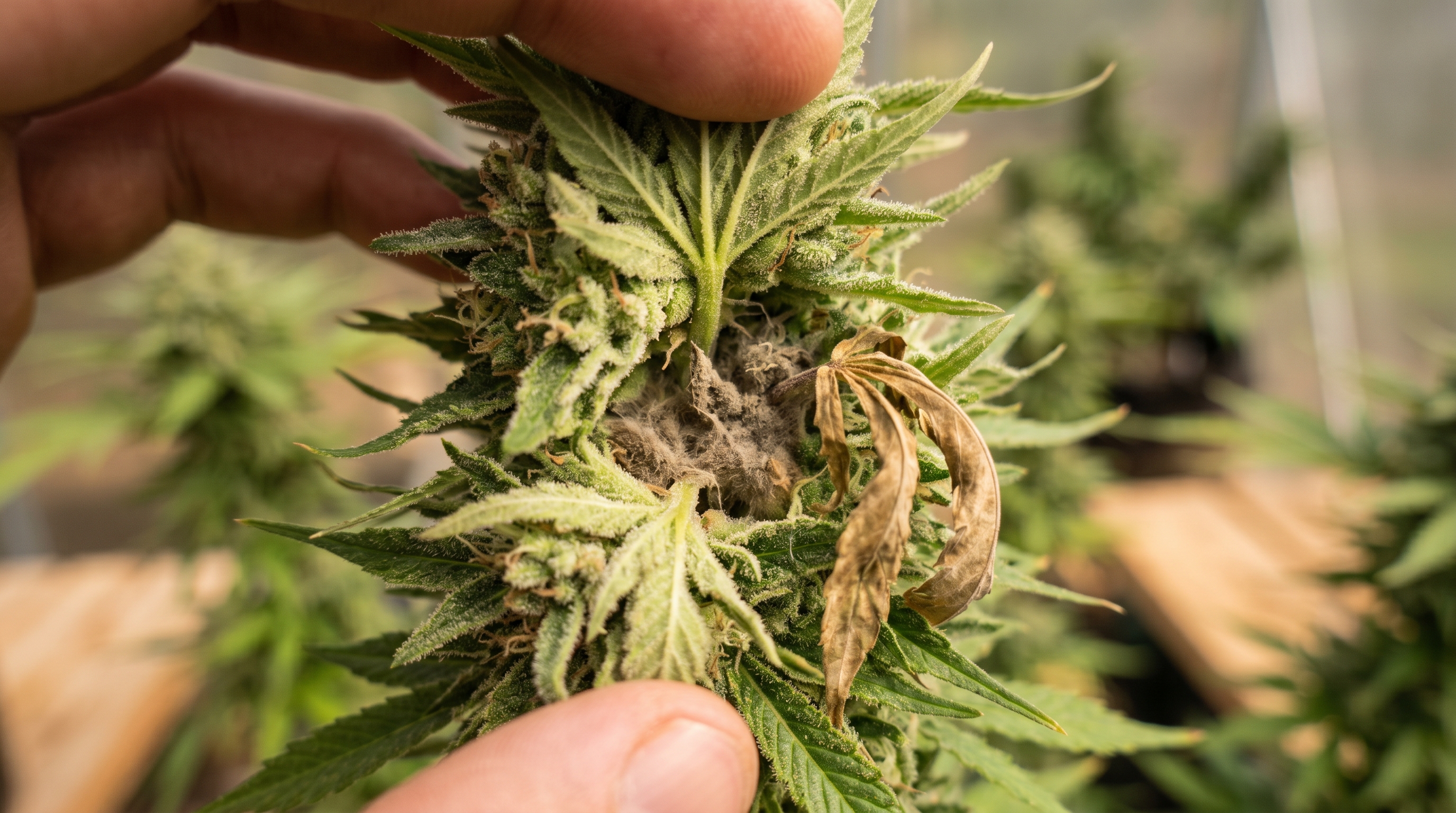
You walk out to your favorite plant, the one with the fattest cola you have ever grown, and you give it a gentle squeeze. Instead of the springy resistance you expected, your fingers sink into something soft. You part the flower and your stomach drops: a smear of gray, dusty fuzz, a wisp of brown sugar leaf, a cottony web spun through the heart of the bud. That, my friend, is bud rot. And by the time you can see it, the fungus has usually been at work for days.
Bud rot, also called gray mold or Botrytis blight, is caused by a fungus named Botrytis cinerea. It is the single most heartbreaking problem a flowering cannabis grower can face, because it attacks the part of the plant you have spent months coaxing to perfection, and it does its dirtiest work where you cannot see it: from the inside out. This guide will teach you how to spot it early, how to stop it from spreading the moment you find it, how to prevent it in the first place, and, most importantly, why you should never, ever smoke or eat a bud you suspect is infected.
What Botrytis Actually Is
Botrytis cinerea is what plant pathologists call a necrotrophic fungus, which is a fancy way of saying it kills living tissue and then feeds on the dead matter it leaves behind. It is staggeringly common. The same organism is responsible for the gray mold on strawberries you forgot in the fridge, and, in a controlled form on wine grapes, the “noble rot” that makes certain dessert wines. On cannabis, there is nothing noble about it.
The fungus spreads almost entirely through microscopic airborne spores. These spores are everywhere, drifting in through open windows, riding in on your sleeve, lying dormant in your grow space. They are not a problem on their own. The problem starts when a spore lands in a damp, sheltered spot and the conditions let it germinate. Research generally finds that spores need very high local humidity, above roughly 90 percent, to germinate, and the dense interior of a fat cola in late flower is exactly the kind of humid, stagnant microclimate where that happens. The fungus often gets its foothold through a tiny wound: a spot crushed by training wire, a hole left by a caterpillar, a snapped trichome stalk.
Because it starts deep inside the bud, you do not see the early infection. You see the consequence of it, usually a sugar leaf or a small section of flower that suddenly looks wrong while everything around it is still green.
The Spot-It Checklist
Train your eyes and your nose. During the back half of flowering, walk your canopy daily and check for these signs. The earlier you catch it, the more of your harvest you save.
- A single wilting or yellowing sugar leaf. One little leaf poking out of an otherwise healthy cola that has gone limp, yellow, or rust-brown for no obvious reason is the classic first red flag. Pull on it gently; if it slides out with no resistance, look closer.
- Discolored, water-soaked patches. Translucent, slightly darkened spots on bracts or the stem where the cola meets the branch.
- Gray, brown, or white fuzz inside the bud. Break a suspicious cola apart. Healthy flower is dense and bright; rotten flower reveals dusty gray powder, woolly white strands, or brown mushy tissue at its core.
- A mushy or stringy stem. Squeeze the main stem inside the cola. If it is soft, hollow, or stringy instead of firm, the rot has reached it.
- A musty, “off” smell. A damp, basement-like, or faintly ammonia odor rising from a bud is a warning even before you see anything.
- Buds that feel soft when they should feel firm. Late-flower colas should have a satisfying density. Sponginess is suspicious.
If you find even one of these, do not panic, but do not wait either. Act today.
Stop It Now: How to Remove Infected Buds Safely
The instinct when you find rot is to gently tease the bad bit out with your fingers. Resist that instinct. A mature Botrytis lesion is loaded with spores, and the slightest disturbance releases an invisible cloud of them onto every healthy bud nearby. You would be planting next week’s outbreak with your own hands.
Here is the careful way to do it:
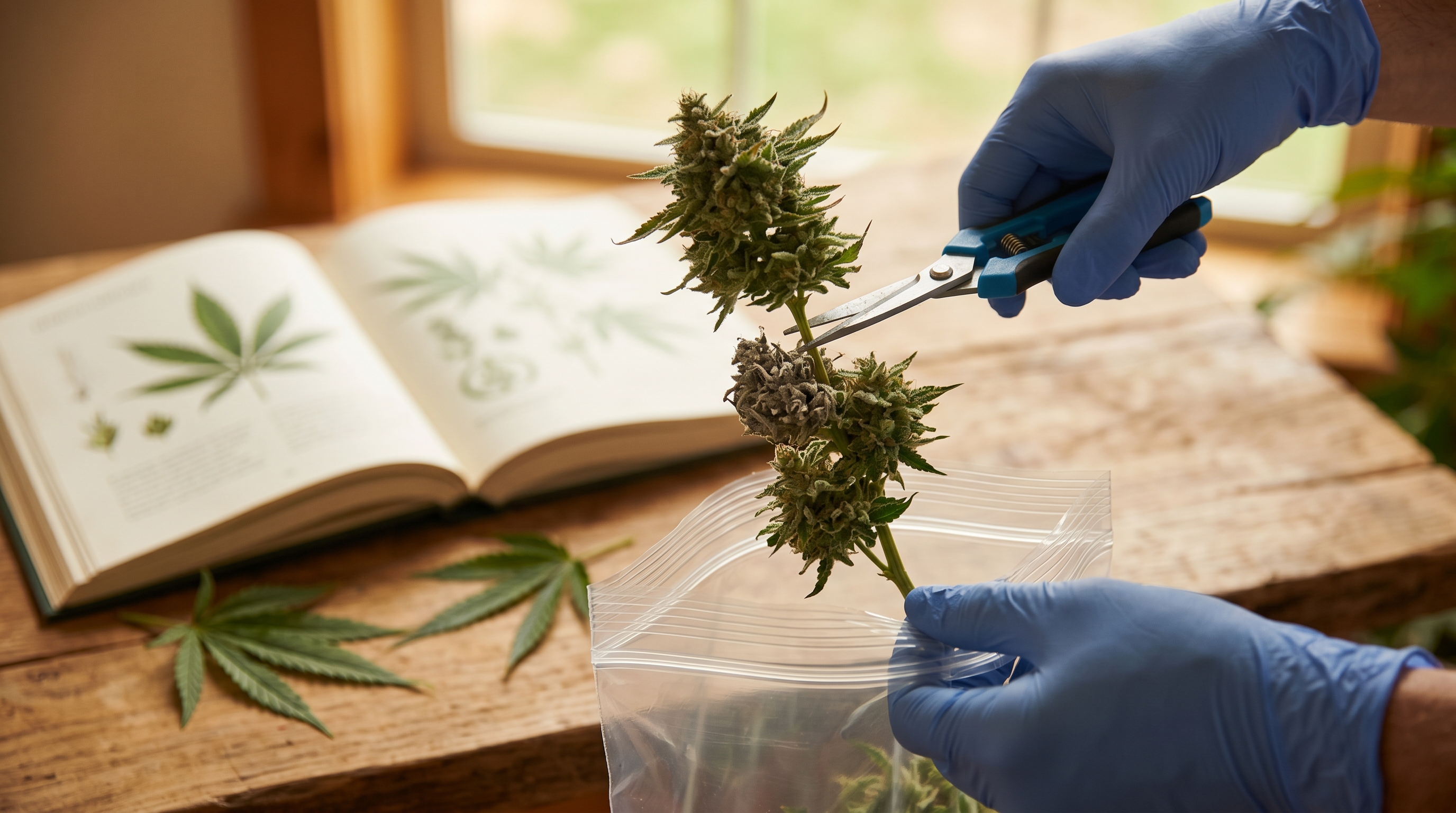
- Sanitize first. Wipe your scissors or pruners with isopropyl alcohol before you make a single cut, and re-sanitize between every infected site so you are not carrying spores from plant to plant.
- Have a bag ready. Bring a sealable plastic bag right up to the infected cola before you cut, so the bud goes straight into containment.
- Cut wide, not close. Make your cut one to two inches into clearly healthy tissue below the visible rot. Spores spread further than the part you can see, so leave a generous margin. Losing a little good flower is far cheaper than losing the plant.
- Do not shake, squeeze, or crumble. Move slowly. Lower the cut bud directly into the bag and seal it. Carry it out of the grow space and throw it away outdoors, never in your compost.
- Inspect every neighbor. Once a cola has rotted, check the surrounding buds and the rest of the plant meticulously. If a plant is riddled with it, the hard truth is that the whole plant may need to come down.
- Fix the conditions immediately. Removal buys you time; it does not cure the cause. Drop the humidity, boost airflow, and consider an early harvest of the remaining mature buds (see our harvest-timing guide) before the rot reappears.
One more rule that cannot be overstated: do not try to salvage and smoke the rotten bud. We will get to exactly why in a moment.
Why It Happens: The Conditions Botrytis Loves
Botrytis is an opportunist. It does not attack strong, dry, well-ventilated plants; it exploits the damp, still, crowded ones. Almost every outbreak traces back to a combination of these factors:
- High humidity in late flower. This is the big one. When relative humidity in the canopy climbs above roughly 55 to 60 percent during flowering, you are in the danger zone. The denser your buds, the lower you want to keep it.
- Cool nights and big temperature swings. When warm, humid daytime air cools at night, moisture condenses onto and inside the buds. That little bit of liquid water is all a spore needs.
- Poor airflow. Stagnant pockets of moist air sitting in the middle of a thick canopy are a Botrytis nursery. Moving air dries surfaces and disrupts germination.
- Dense, chunky cola structure. Big, tightly packed indica-style colas trap moisture in their cores and have almost no internal airflow. Airy, open buds breathe and dry out far faster.
- Wounds and pests. Caterpillars, broken stems, and training damage all create entry points. This is one reason staying on top of pests like fungus gnats and spider mites matters for mold prevention too.
- Outdoor rain and dew. Outdoor growers in humid or rainy climates fight this constantly, especially during a wet autumn.
If you understand those conditions, prevention becomes obvious: you make your grow space the opposite of what the fungus wants.
Prevention: The Table That Saves Your Harvest
Prevention is overwhelmingly about environment and structure. There is no spray that reliably saves a bud once the rot is established inside it, so your entire strategy should be aimed at never letting it start.
| Lever | What to Do | Why It Works |
|---|---|---|
| Humidity | Keep relative humidity around 40 to 50 percent during late flower; never let it sit above 55 to 60 percent | Spores need high moisture to germinate; dry air stops them cold |
| Dehumidifier | Run one sized to your space, especially at night | Removes the condensation that forms when temps drop after lights-out |
| Airflow | Oscillating fans moving air through and under the canopy, plus good exhaust | Dries surfaces and eliminates the stagnant, humid pockets rot loves |
| VPD targeting | Manage temperature and humidity together rather than in isolation | A correct vapor pressure deficit keeps leaf surfaces drying without stressing the plant |
| Defoliation and training | Remove inner fan leaves; use techniques that open the canopy | More light and air reach the bud sites, so nothing stays damp |
| Genetics | Choose airy, open-structured, mold-resistant strains | Loose buds dry fast and never form the humid core Botrytis needs |
| Harvest timing | Harvest on time; do not let dense colas hang too long in humid weather | Every extra day of ripeness in damp air is another roll of the dice |
| Sanitation | Clean tools, clean space, remove plant debris | Fewer spores and fewer entry wounds in the first place |
| Spacing | Do not crowd plants | Air has to move freely between and through them |
A quick word on environment control, because it is the heart of all this: managing humidity and temperature together is more powerful than chasing either one alone. Our deep dives on grow room humidity, temperature, and CO2 and on vapor pressure deficit walk through exactly how to dial this in. And if you are still mapping out your grow, knowing where bud rot sits in the seed-to-harvest timeline helps you anticipate the high-risk window before it arrives.
Genetics and Structure Matter
You cannot out-engineer bad genetics in a humid environment. Strains that finish with tight, fist-sized colas are inherently more vulnerable than those with looser, more open flower. This is one of the underappreciated advantages of airier, often more sativa-leaning structures. Lanky, open-budded classics that many growers reach for in damp climates include Durban Poison, Sour Diesel, Jack Herer, and the famously resilient Blue Dream. Dense, chunky cultivars like Northern Lights, Granddaddy Purple, OG Kush, and Bubba Kush reward extra airflow vigilance because their packed cores trap the most moisture.
If you grow in a humid climate, prioritizing mold resistance and open bud architecture is one of the smartest decisions you can make before a single seed goes in the soil. The same airy structure that resists rot also tends to fall into our brighter, more uplifting effect categories, so you can browse profiles by High Family, from the bright Uplift and Energy families to the mellow Relax family, to find genetics that fit both your climate and your desired experience. Aromatic terpenes also vary with structure: airy sativa types often lean on terpinolene and limonene, while denser indica colas trend toward myrcene and caryophyllene. Curious how a given cultivar tends to make people feel, from energetic to relaxed? Our strain library breaks down terpene and effect profiles plant by plant.
The Part Nobody Should Skip: Health Risks
Here is the section to take most seriously. Cannabis is expensive and hard-won, and the temptation to “just cut out the bad part and smoke the rest” is real. Please do not.
When mold establishes itself in a bud, the visible rot is only the part you can see. Fungal growth and spores can extend well beyond the obvious lesion, which means a bud that looks fine an inch away may already be contaminated. And combustion is not a sanitizer. Heating or burning the flower does not reliably destroy mold spores or the toxic compounds (mycotoxins) some molds produce, so you may inhale them along with the smoke.
The health picture, based on the available research, looks like this:
- For most healthy people, smoking moldy cannabis tends to cause respiratory irritation: coughing, a burning throat, chest tightness, and allergic-type reactions like sneezing, watery eyes, or asthma flare-ups. Botrytis sensitivity in particular has been linked to lung inflammation, sometimes nicknamed “winemaker’s lung” after the grape harvesters who breathe in the same fungus.
- For people with weakened immune systems (those undergoing chemotherapy, living with HIV/AIDS, or who have had organ transplants) the danger escalates sharply. The mold most associated with the worst outcomes here is Aspergillus, which often travels alongside or behind Botrytis on poorly handled cannabis. Inhaled Aspergillus can cause a serious lung infection called aspergillosis.
- Documented case reports in the medical literature describe chronic pulmonary aspergillosis in cannabis smokers, including patients with already-damaged lungs [Cescon, 2008]. Some of these cases were severe or fatal. A broad review of fungal and mycotoxin contaminants in cannabis flowers [Punja, 2023] noted that susceptible users may be substantially more likely to develop a fungal infection than non-users, with Aspergillus the predominant agent.
I want to be careful and honest here: the research on exactly how much risk smoking moldy cannabis poses to an otherwise healthy person is still developing, and not every exposure causes serious harm. But the downside, especially for anyone immunocompromised or with lung disease, is potentially life-threatening, and the upside of smoking a moldy bud is nothing at all. When in doubt, throw it out. This is not medical advice, and if you have a compromised immune system or a chronic lung condition, talk to a healthcare professional about your specific risk before consuming any cannabis whose quality you are unsure of. For more on reducing avoidable harms, see our broader drying and curing guide, since improper post-harvest moisture is a leading cause of mold in otherwise clean flower.
Bud Rot Versus Its Look-Alikes
It is worth knowing what bud rot is not, so you respond correctly:
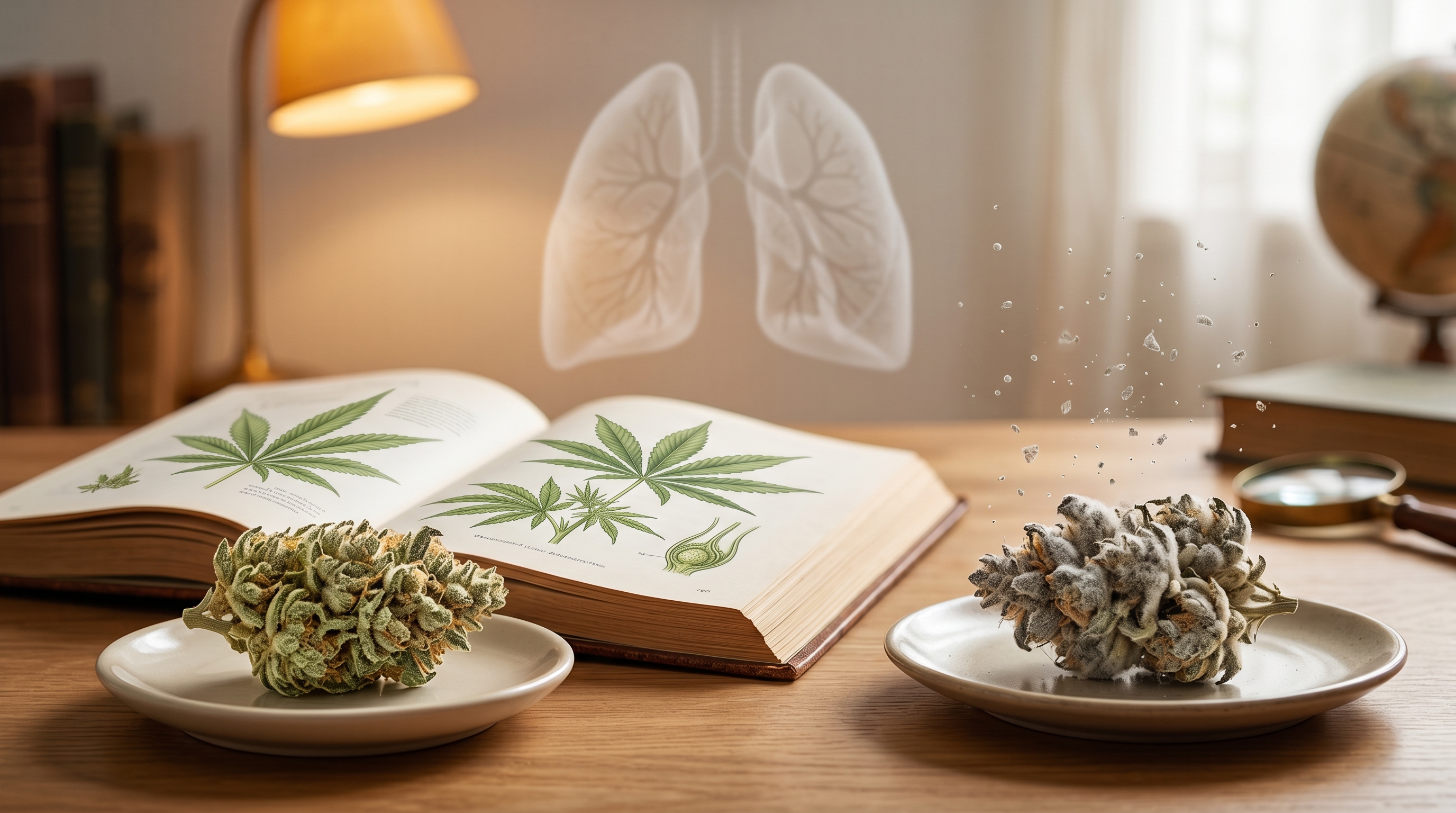
- Powdery mildew sits on the surface of leaves and buds as a white, talcum-powder dusting, rather than rotting the core. It is a different fungus with different prevention, covered in detail in our powdery mildew guide. The two can both thrive in humid, low-airflow spaces, so fixing your environment helps with both.
- Healthy trichomes and pistils are sometimes mistaken for early mold by nervous new growers. Frosty white trichomes are good. If you are unsure, a jeweler’s loupe or microscope settles it fast; our guide on reading trichomes for harvest shows what healthy resin actually looks like up close.
- Normal sugar-leaf senescence late in flower can yellow a few leaves naturally. Bud rot wilt is localized, mushy, and accompanied by that telltale fuzz when you look inside.
When in doubt, break the bud open and look at its core. Healthy flower is dense, bright, and clean inside. Rotten flower tells on itself immediately.
Track Your Grow, Learn Your Patterns
Bud rot is, at its heart, an information problem. The growers who beat it are the ones who know their high-risk window, monitor their environment relentlessly, and act the instant they spot trouble. Once you have a healthy, mold-free harvest in hand, the next frontier is learning how you respond to it, which terpene profiles and effect families actually suit your body and your goals. That is exactly what the High IQ app is built for: tracking what you grow and consume so your choices get smarter over time. Whether you are dialing in your canopy or your personal sweet spot, the principle is the same: pay attention, write it down, and let the patterns guide you.
Stay vigilant, keep the air moving, and keep your humidity honest. Your colas, and your lungs, will thank you. — Professor High
Key Takeaways
- Botrytis works from the inside out. The first visible sign is usually a single wilted, discolored sugar leaf, not obvious mold. Walk your canopy daily in late flower.
- When you find it, cut wide and bag it. Sanitize tools, cut one to two inches into healthy tissue, and never shake or crumble an infected cola, since that scatters spores.
- Prevention is environmental. Keep late-flower humidity around 40 to 50 percent, keep air moving, manage VPD, and favor airy, mold-resistant genetics.
- Never smoke or eat suspect flower. Combustion does not destroy spores or mycotoxins, and the research suggests the risk is serious for immunocompromised people. When in doubt, throw it out.
Sources
- Medicinal Genomics — Mold Infections in Cannabis: Botrytis cinerea. https://medicinalgenomics.com/botrytis-cinerea/
- Medicinal Genomics — Aspergillus: The Most Dangerous Cannabis Pathogen. https://medicinalgenomics.com/aspergillus-dangerous-cannabis-pathogen/
- Cescon DW, et al. (2008) — “Invasive pulmonary aspergillosis associated with marijuana use.” https://pmc.ncbi.nlm.nih.gov/articles/PMC3103256/
- Punja ZK, et al. (2023) — Frontiers in Microbiology, “Fungal and mycotoxin contaminants in cannabis and hemp flowers.” https://pmc.ncbi.nlm.nih.gov/articles/PMC10620813/
- International Highlife — Smoking Moldy Weed? What Every Cannabis User Should Know About Bud Rot. https://internationalhighlife.com/botrytis-cannabis-bud-rot-health-risks/
- SeedSupreme — Bud Rot: How to Identify, Treat and Prevent It. https://seedsupreme.com/blog/bud-rot
- Weed Seeds Express — Bud Rot Guide: Identify, Cure and Prevent Botrytis. https://weedseedsexpress.com/us/blog/identifying-and-curing-bud-rot
This article is for educational purposes only and is not medical advice. If you have a weakened immune system or a chronic respiratory condition, consult a healthcare professional before consuming cannabis of uncertain quality.


