Spider Mites on Cannabis: Identify, Treat, and Prevent
Spider mites can wreck a cannabis crop in days. Learn how to spot stippling and webbing early, treat with neem and predators, and stop them for good.


Here is the hard truth every grower learns. By the time you can see spider mites with your naked eye, you already have a serious problem. These pests are smaller than a grain of salt. They breed faster than almost anything else that lands on a cannabis plant. And they hide exactly where you are least likely to look. A garden that looked perfect on Monday can be draped in webbing by the weekend.
The good news? Spider mites are beatable. They are not an unstoppable plague. They are a fast-moving pest, and they reward growers who scout early, act fast, and never make the rookie mistake of spraying chemicals on flowering buds. This guide covers the whole arc. How to spot them before they explode. What actually kills them. And the habits that keep them out of your room for good.

How to Identify Spider Mites
Spider mites are not insects. They are tiny arachnids, more closely related to spiders than to aphids or gnats. The most common one in cannabis gardens is the two-spotted spider mite (Tetranychus urticae). It is a pale, yellow, or reddish speck about 0.4 to 0.5mm across, often with two dark spots on its back. At that size, the mites are nearly invisible. So you will almost always spot the damage before you spot the bug.
Stippling: the first warning sign
Spider mites feed by piercing single plant cells and draining the contents. Each puncture kills one cell and leaves a tiny pale dot. Multiply that by thousands of feedings and you get stippling. It looks like a fine scatter of white or yellow pinpricks across the top of your fan leaves, almost as if someone dusted them with pollen. Early on it looks like a nutrient quirk, which is exactly why it gets missed. If you are already chasing odd leaf symptoms, our guide to common cannabis growing problems and how to fix them helps you tell mite stippling apart from deficiencies and light burn.
Check the undersides — always
Here is the rule that saves crops. Flip the leaves over. Mites live, feed, and lay eggs on the undersides, where they hide from light and from a quick glance. Grab a 10x to 60x jeweler’s loupe — the same one you use to read trichomes at harvest — and look closely. You are hunting for slow-moving dots and clusters of tiny round eggs. There is also a fast field test. Wipe a leaf underside with a white tissue. A rusty or greenish smear means you just crushed a colony.
Webbing means you are already late
Fine silk webbing is the unmistakable late-stage sign. It strings between leaves and shoots, and eventually across the buds themselves. By the time webbing shows up, the population is in the thousands. The plant is struggling to photosynthesize through the damage. Webbing is not the start of the problem. It is the alarm telling you the problem already got away from you.
Why Infestations Explode So Fast
The reason a few mites become a disaster in a week comes down to brutal math. In warm conditions a single female lays 5 to 20 eggs per day, and hundreds over her short life. Those eggs hatch fast. The offspring can breed in as little as five days. The full egg-to-adult cycle can finish in just five to nine days when conditions are right.
What counts as “right”? Spider mites love it hot and dry. That means temperatures above roughly 27 to 30°C (80 to 86°F) and relative humidity below 50%. Those are exactly the conditions that build up in a sealed grow tent running hot lights with weak airflow. Stressed plants make it worse. A struggling plant fights back less, so the mites pile on.
Stack it all together. You get overlapping generations, runaway egg-laying, and a heat-loving life cycle. That is why mites feel like they appear overnight. They do not, really. They were there all along, doubling quietly on the undersides while you watered the tops. Dialing in your grow room humidity, temperature, and CO2 and tracking vapor pressure deficit (VPD) removes the hot-dry sweet spot they need. A well-ventilated grow tent with proper lights and filtration is your first line of defense, not an afterthought.

Treatment Options That Actually Work
The instant you confirm mites, isolate the affected plants. Move them away from the rest of your garden. Then wash your hands and change clothes after handling them, because mites hitchhike on skin and fabric. Containment is half the battle.
From there, you have a toolkit. The smart move is to combine methods and rotate them. Mites famously build resistance to anything you lean on too hard.
Neem oil
Neem oil and its active compound, azadirachtin, is the classic organic first response. It does not kill on contact. Instead it disrupts the mites’ ability to feed, molt, and reproduce, so it works as a population suppressor. Apply it to both sides of the leaves, focusing on the undersides, every 3 to 4 days. That timing catches newly hatched mites before they breed. Spray in the evening or with lights low, since oil plus intense light can scorch leaves.
Insecticidal soap
Potassium-based insecticidal soaps are contact killers. They break down the mite’s protective coating and dry it out. They only kill what they directly touch and leave no lasting residue, so you need thorough coverage and repeat sprays every 2 to 3 days. Soaps pair well with neem in a rotation, since they hit the colony two different ways.
Predatory mites
This is the grower’s secret weapon, especially in flower. Beneficial predatory mites hunt and eat spider mites and their eggs, then die off once the food runs out. The heavy hitters:
- Phytoseiulus persimilis — the specialist assassin, devastating against two-spotted mites in warm, humid rooms.
- Neoseiulus californicus — tougher in heat and low humidity, a good generalist insurance policy.
- Amblyseius / Neoseiulus species — generalist predators that set up a standing patrol.
Predators leave zero residue and never trigger resistance. That makes them the cleanest option for plants deep into bloom. Many growers report knocking out an infestation within a few weeks of release.
Spinosad
Spinosad is a compound made through fermentation. Many growers treat it as a strong middle ground. It is more aggressive than soap, gentler than synthetic miticides, and allowed in many organic programs. It works best in vegetative growth. Like everything else, rotate it rather than relying on it alone.
Rotate to dodge resistance
Spider mites are notorious for building resistance to a product you use over and over. Never lean on one treatment. A sane rotation might run neem oil, then insecticidal soap, then predatory mites, then spinosad. Cycle every few days so no single method gives the survivors a chance to adapt. The same rotation thinking that keeps a healthy organic soil and feeding program resilient applies to pest control too.
The Late-Flower Caution: Do Not Spray Your Buds
This is the rule that separates a saved harvest from a ruined one. Once your plants are well into flowering, stop spraying anything on the buds.
Oils, soaps, sulfur, and any chemical miticide do not simply rinse away. Neem and other oil-based products cling to sticky resin and wreck the flavor and aroma of your finished flower. That beautiful terpene profile turns into a harsh, chemical-tasting mess. Sulfur products should never touch flowering plants. And synthetic insecticides can linger in plant tissue long enough to end up in what you eventually smoke or vaporize. Cannabis you grow to consume is not the place to gamble on residue.
So what do you do if mites show up mid-bloom? Lean on the flower-safe options:
- Release predatory mites — your single best tool in flower, zero residue.
- Remove the worst leaves — physically prune heavily infested fan leaves and discard them far from the garden.
- Crash the environment — drop temperatures below 25°C (77°F) and bump humidity; the hot-dry conditions mites crave become hostile, slowing their breeding.
If an infestation is severe and very late in flower, the right call is sometimes to harvest a few days early rather than spray. Use the trichome and timing tips in our complete harvest guide and the seed-to-harvest timeline to make that call. Then move straight into a clean drying and curing routine.
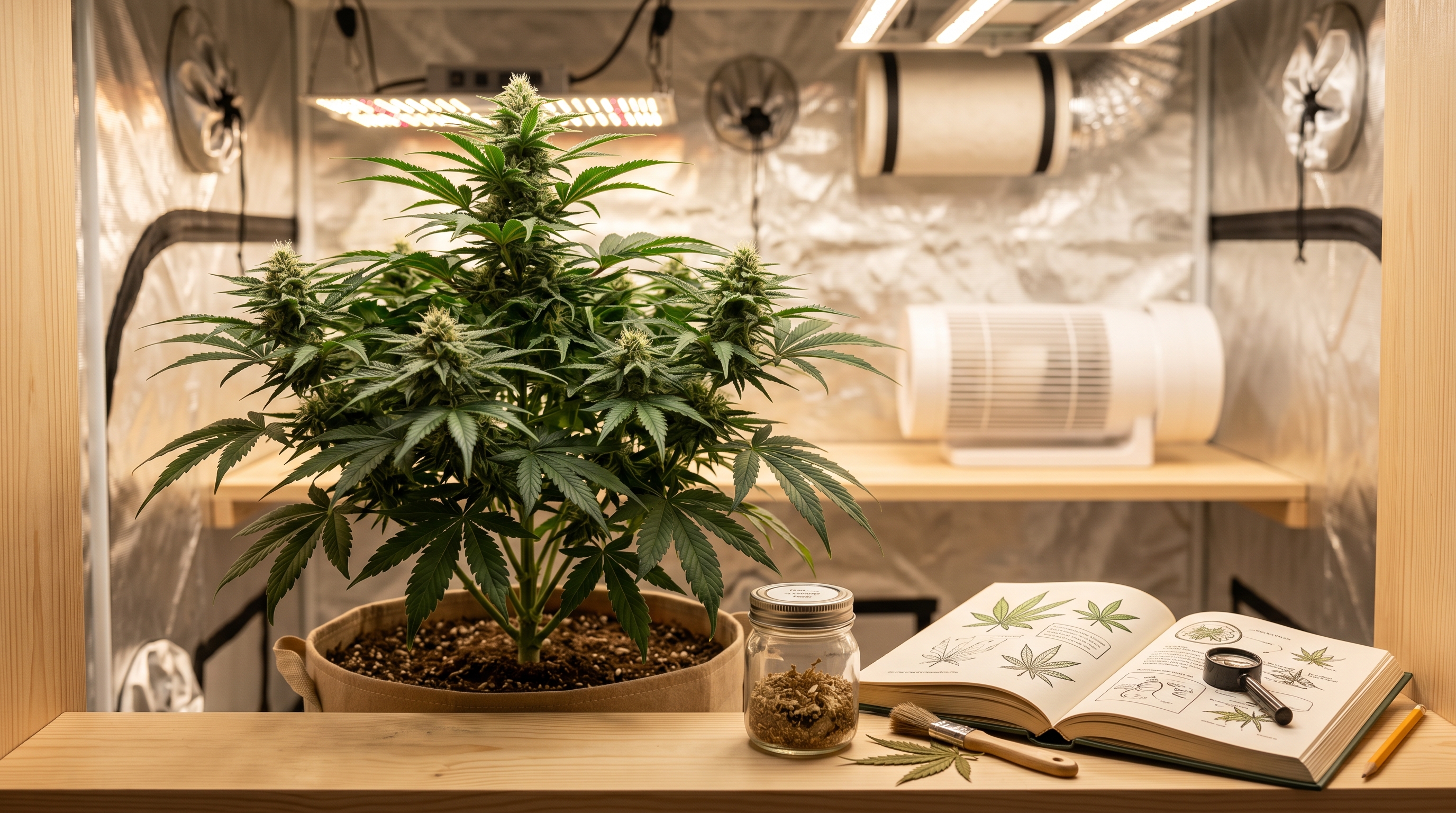
Prevention: Stop Them Before They Start
Experienced growers all say the same thing. Beating mites once teaches you to never let them in again. Prevention is cheaper, easier, and tastier than any treatment.
Quarantine every new clone
Clones are the number one way mites enter a clean room. Someone hands you a “free” cutting, and you hand your garden a pest problem. Quarantine any new plant, clone or otherwise, away from your main garden for at least two weeks. Inspect the undersides daily with a loupe before it ever joins the rest. Of all the habits here, this single one tends to prevent the most infestations.
Control your environment
Mites want it hot and dry, so deny them. Keep vegetative rooms around 20 to 26°C (68 to 78°F) with relative humidity in the 50 to 65% range. Never let temperatures spike into the 30s with bone-dry air. Steady airflow and good spacing between plants make the whole room less welcoming. If you grow outdoors, your environment is harder to control. Weigh the tradeoffs in our indoor vs outdoor growing comparison and our outdoor season starter guide.
Keep it clean
Mites hide and overwinter in plant debris, old growing media, and clutter. Practice strict hygiene between cycles. Clear out dead leaves, sterilize surfaces and tools, and start each run with a genuinely clean space. A no-till living-soil garden built on a healthy super soil recipe and topped with organic amendments like castings and compost tea tends to grow tougher, more pest-resistant plants. But even living soil needs a clean room around it.
Inspect relentlessly
Scout your garden weekly with a loupe, and always check leaf undersides. Some growers go further and use companion plants that attract beneficial predators and repel pests as a standing defense. The earlier you catch stippling, the smaller the battle. New to all of this? Start with our beginner’s complete guide to growing cannabis at home, which builds these habits in from day one.
Key Takeaways
Spider mites are fast, but they are not unbeatable. Here is the whole guide in a nutshell:
- Scout early, scout the undersides. Stippling on the tops and webbing are warning signs. Flip leaves and use a loupe weekly.
- Isolate the moment you confirm them. Containment can help stop a local outbreak from becoming a room-wide one.
- Combine and rotate treatments. Neem, insecticidal soap, predatory mites, and spinosad each work differently. Rotating them keeps mites from building resistance.
- Never spray buds in late flower. Use predatory mites, prune the worst leaves, and crash the environment cooler and more humid instead.
- Prevention wins. Quarantine every clone, keep the room cool and clean, and inspect relentlessly.
Beat them once and you will never grow the same way again — and your terpenes will thank you.
Frequently Asked Questions
Can I save a plant that already has webbing? Often, yes — but act fast and commit. Isolate it, prune the worst-webbed growth, release predatory mites or apply a soap/neem rotation (if not in late flower), and crash the environment cooler and more humid. Heavily webbed buds rarely recover cleanly, so a badly infested late-flower plant may be better harvested early.
Are spider mites harmful to smoke? The mites themselves are not a known health hazard, but webbing-coated, residue-laden buds taste terrible and may carry whatever you sprayed on them. The real risk is chemical residue from improper treatment — which is exactly why you never spray miticides on flowering buds.
How do I tell spider mites apart from other pests? Spider mites cause fine stippling and silk webbing and hide on leaf undersides. Aphids are visibly larger and cluster on stems and new growth. Fungus gnats fly around the soil surface. The webbing and the tissue-wipe test are your clearest spider-mite confirmations.
Will neem oil ruin my harvest? Only if you use it too late. Neem is fine in vegetative growth and the first couple weeks of flower, but it clings to resin and degrades flavor if applied to maturing buds. Switch to predatory mites once you are deep into bloom.
How often should I scout for mites? At minimum weekly, with a loupe, checking leaf undersides. During hot, dry stretches or after introducing any new plant, check more often. Early detection is the entire game.
Sources
- [Ripper, 2024] Ripper Seeds — Spider Mites in Cannabis Cultivation (life cycle, egg counts, optimal temperature/humidity, resistance rotation, flowering cautions): ripperseeds.com/en/blog/spider-mites-cannabis
- [Advanced, 2023] Advanced Nutrients — How to Get Rid of Spider Mites on Cannabis (two-spotted mite, predatory species, hot-dry conditions, resistance, clean-room prevention): advancednutrients.com/articles/get-rid-spider-mites-cannabis
- [Weedseeds, 2024] WeedSeedsExpress — Spider Mites On Cannabis: Fast & Safe Fix (identification, loupe inspection, tissue-wipe test, neem/soap intervals, clone quarantine, flowering oil warning): weedseedsexpress.com/blog/identify-and-get-rid-of-spider-mites


