Cannabis and Dementia: What Does the Research Actually Say?
An honest, balanced look at the science on cannabis and dementia: agitation and appetite trials, neuroprotection research, and real cognition concerns.

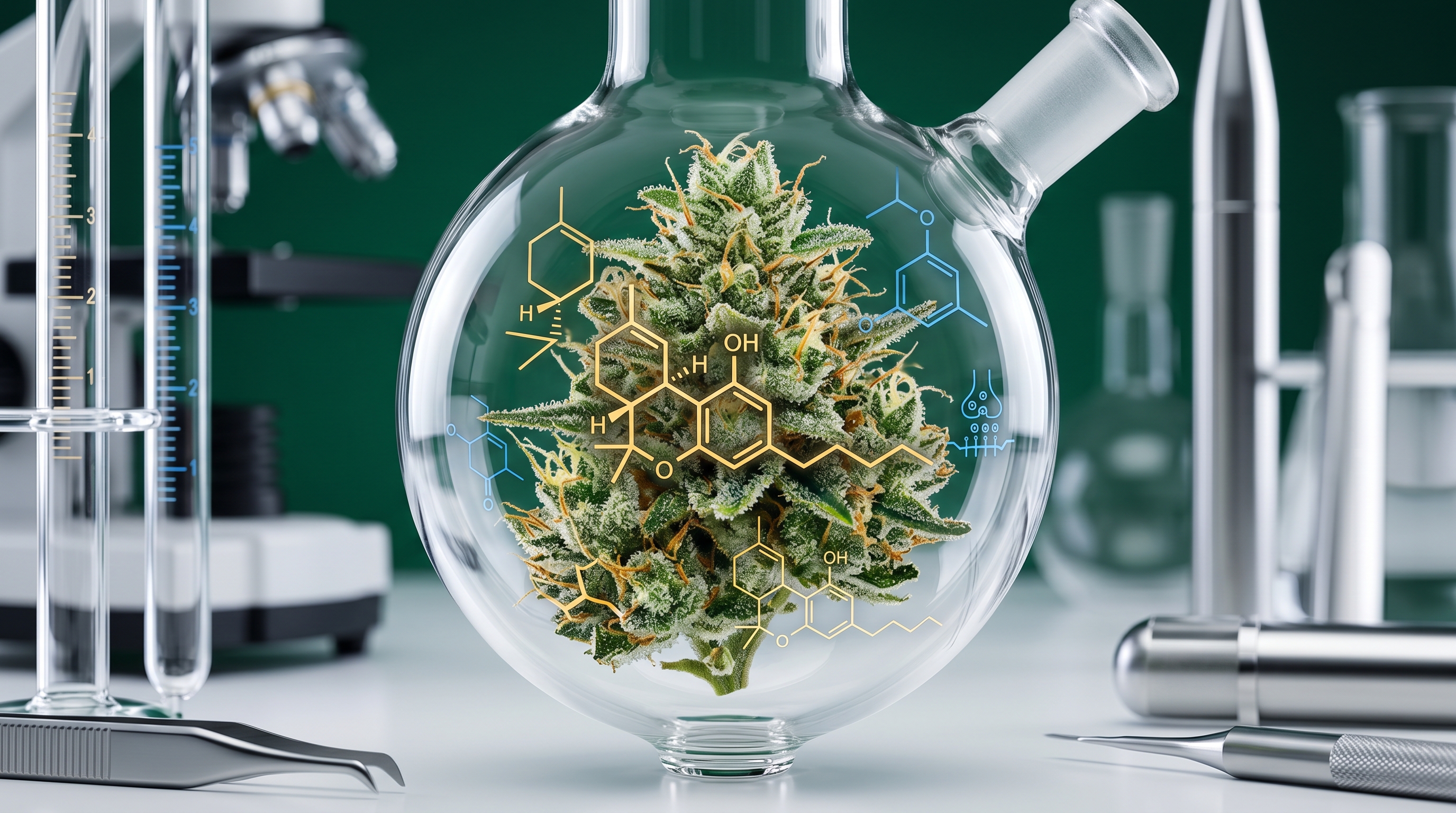
If you have a parent or grandparent living with dementia, you have probably wondered — quietly, maybe a little guiltily — whether cannabis could help. Maybe a friend swears it calmed their agitated mom. Maybe you saw a headline claiming THC “clears Alzheimer’s plaques.” Maybe you saw a different headline warning that weed “raises dementia risk by 50%.”
Both of those headlines exist. Both are technically based on real studies. And both, on their own, are misleading.
So let’s do something the internet rarely does with this topic: slow down and look at the actual research, honestly, with all its messy contradictions intact.
This is not medical advice. Dementia is a serious medical condition, and the people affected are often frail, on multiple medications, and especially sensitive to side effects. Nothing here is a recommendation to start, stop, or change any treatment. If you are caring for someone with dementia, talk to their doctor before considering cannabis. This article is education, not a prescription.
First, what is dementia?
“Dementia” is not one disease. It is an umbrella term for a decline in memory, thinking, and reasoning severe enough to interfere with daily life. Alzheimer’s disease is the most common cause, accounting for an estimated 60–70% of cases, but vascular dementia, Lewy body dementia, and others also fall under the term.
In Alzheimer’s, the brain builds up two hallmark features. One is sticky clumps of beta-amyloid protein (plaques) between neurons. The other is tangled threads of tau protein inside them. There is also chronic neuroinflammation — the brain’s immune cells stay switched on for too long. Over years, neurons die and the brain shrinks.
Here is the sobering part: there is no cure. The newest amyloid-clearing drugs modestly slow decline in early disease but do not stop it. So when researchers and families look at cannabis, they are usually asking one of two very different questions:
- Can cannabinoids ease the day-to-day symptoms — the agitation, the lost appetite, the broken sleep — that make dementia so brutal to live with and to care for?
- Could cannabinoids actually protect the brain or slow the disease itself?
These are not the same question, and the evidence for each is in a completely different place. Let’s take them one at a time.
Angle 1: Cannabinoids for the behavioral symptoms of dementia
This is where the most promising human evidence lives — and it is still early.
One of the most distressing parts of mid-to-late dementia is agitation: restlessness, aggression, pacing, calling out, resisting care. It is exhausting for caregivers and a leading reason families turn to nursing homes. The standard medications (antipsychotics) carry serious risks, including an increased risk of death in this population. So there is real motivation to find something gentler.
The nabilone trial
A notable study here is a double-blind, placebo-controlled crossover trial of nabilone (a synthetic THC-like drug) in 39 patients with moderate-to-severe Alzheimer’s [Herrmann et al., 2019]. Each patient took nabilone for six weeks and placebo for six weeks. On the agitation scale, nabilone modestly outperformed placebo (a difference of about 4 points on the Cohen-Mansfield Agitation Inventory, p = 0.003), and caregiver distress improved too.
But read the fine print. Nabilone caused more sedation (45% of patients vs. 16% on placebo). And on one cognitive measure (the Severe Impairment Battery), results actually favored placebo — a hint that the calming may come partly at a cognitive cost. The trial was also tiny.
The THC (dronabinol) trial
More recently, a 2024 randomized controlled trial known as THC-AD [Rosenberg et al., 2024] tested dronabinol (pharmaceutical THC) in 75 Alzheimer’s patients with agitation over three weeks. Dronabinol reduced agitation more than placebo on one of its two primary measures (effect size around 0.5), with the main side effect being drowsiness — and notably, no increase in measured “intoxication.” The authors concluded that adjunctive dronabinol was “safe and effective” in this setting, while still calling it preliminary.
Appetite and sleep
Beyond agitation, cannabinoids may help with two other common dementia problems: appetite loss and disrupted sleep. THC is a well-known appetite stimulant (it’s FDA-approved as dronabinol for AIDS-related wasting), and small case series of dronabinol in dementia patients reported improved food intake and longer sleep duration alongside calmer behavior.
What the reviews say
Systematic reviews have tried to pool this scattered evidence. Reviews by Tampi and colleagues [Tampi et al., 2018] and Bahji and colleagues [Bahji et al., 2019] found that cannabinoids improved neuropsychiatric symptoms — agitation, aggression, nighttime restlessness, poor sleep — in most of the small studies they examined, and were generally well tolerated. A 2025 meta-analysis of CBD specifically found a borderline-significant benefit for behavioral symptoms (p = 0.05) but stressed that the human data is still too thin to call it proven.
The honest summary of Angle 1: there are real, encouraging signals that low-dose, carefully supervised cannabinoids may ease agitation, appetite, and sleep in some dementia patients — possibly with a better safety profile than antipsychotics. But every trial is small, short, and supervised by clinicians. This is “promising and worth studying further,” not “established treatment.” Sedation is the consistent trade-off, and that matters a lot in someone already frail.

Angle 2: The neuroprotection research (and why it’s mostly mice)
This is the angle that generates the most exciting headlines — and demands the most caution.
In the lab, cannabinoids do genuinely interesting things to Alzheimer’s biology. Across many studies in cell cultures and genetically engineered (“transgenic”) mice, researchers have reported that THC and CBD can:
- Reduce beta-amyloid accumulation. Low doses of THC have been shown to inhibit amyloid aggregation and even block an enzyme (acetylcholinesterase) involved in plaque formation. Some mouse studies found amyloid reductions at strikingly low THC doses.
- Dial down tau phosphorylation, the process that builds those internal tangles, partly by reducing the activity of an enzyme called GSK-3β.
- Calm neuroinflammation. A 2025 systematic review and meta-analysis found CBD consistently reduced markers of inflammation and reactive gliosis (GFAP, IL-6, iNOS) in animal AD models — though other inflammatory markers were inconsistent.
- Support synaptic health and neurogenesis in some models, with associated improvements in learning and memory tests.
A 2026 review in Frontiers in Behavioral Neuroscience [Komedera et al., 2026] and a sweeping 2024 review in the International Journal of Molecular Sciences both concluded that the biological plausibility is real: the endocannabinoid system is genuinely involved in the processes that go wrong in Alzheimer’s, and cannabinoids can modulate them.
So why am I waving a caution flag? Because almost none of this is in humans. A compound that clears amyloid in a petri dish or a 5xFAD mouse has cleared a very low bar. The history of Alzheimer’s research is a graveyard of treatments that looked spectacular in mice and did nothing — or harmed — in people. Doses in these studies (milligrams per kilogram, sometimes delivered directly into the brain) often don’t translate to anything a person could realistically or safely consume. And several studies directly contradict each other on whether CBD reduces amyloid at all.
If you want to go deeper on these mechanisms, we cover the underlying biology in how cannabinoids may protect against neuroinflammation, the complete molecular science of cannabis and inflammation, and how cannabinoids shape brain connections.
The honest summary of Angle 2: there is a genuinely intriguing preclinical case that cannabinoids touch the core machinery of Alzheimer’s. But “intriguing in mice” is the beginning of a research story. It is not human proof of any benefit, and research suggests we are nowhere near showing cannabis helps with dementia in people. Anyone selling you CBD as an Alzheimer’s preventative is way out ahead of the science.
The other side of the ledger: cognition and risk
Now for the part that responsible coverage cannot skip. Cannabis is not a clean neuroprotective wonder-drug, and there are real reasons for concern — especially around the very thing dementia attacks: cognition.
We know that THC acutely impairs short-term memory and attention. That’s not controversial; it’s basic pharmacology, and we cover it in detail in how cannabis affects your memory. In someone whose memory is already failing, adding a drug that further clouds short-term recall is a meaningful trade-off. Heavy, prolonged use is also associated with structural brain changes and slower processing in some studies.
Then there’s the alarming epidemiology. A large 2025 study in JAMA Neurology [Myran et al., 2025] followed roughly 6 million Canadians aged 45+ and found that people who needed emergency or hospital care due to cannabis had a 1.5-fold higher risk of a dementia diagnosis within five years compared to others needing acute care — and 3.9-fold higher than the general population. That sounds terrifying.
But notice what that study actually measured: people sick enough from cannabis to land in a hospital. That is a very different population from a senior taking a measured low dose for sleep. And critically, the same study found cannabis-related acute care carried lower dementia risk than alcohol-related acute care. It also can’t prove cause and effect — people headed toward dementia may use cannabis differently, or share other risk factors.
And then the data flips
Here is where it gets genuinely confusing, and why honesty matters. A 2026 study in BMJ Mental Health [Ishrat et al., 2026] ran the largest analysis to date — combining the UK Biobank and the US Million Veteran Program, tens of thousands of people — and used a clever genetic technique (Mendelian randomization) to test for causation. Their finding? Cannabis use was not linked to faster cognitive decline or higher dementia risk. Cannabis users even scored slightly better on some baseline cognitive tests (though the authors attribute that to confounding, not a real benefit). The genetic analysis found no causal link in either direction.
So we have one big study screaming “danger” and another big study saying “no clear effect.” How can both be real?
Why the evidence is so limited and so conflicting
This is the heart of it. A few reasons the science is such a tangle:
- “Cannabis use” means wildly different things. Picture three people: a 75-year-old taking a 2.5 mg THC capsule for sleep, a college kid dabbing high-potency concentrate, and someone hospitalized for a cannabis use disorder. Observational data often lumps them together. They are not the same exposure.
- Observational studies can’t prove cause. People who use cannabis differ from those who don’t in countless ways (other substance use, mental health, lifestyle). Reverse causation is also possible — early, undiagnosed dementia might change someone’s substance use.
- The human trials are tiny and short. The agitation studies have dozens of patients over weeks, not thousands over years.
- The mechanism research is mostly animal and cellular, with doses and delivery methods that don’t map onto human use.
- Dose, ratio, and form matter enormously. THC and CBD do different — sometimes opposite — things, and effects can be biphasic (helpful at low doses, harmful at high ones). Most data doesn’t capture this nuance.
So what is the fair read? Put it all together and three things stand out. First, there is no strong evidence that ordinary cannabis use causes dementia. Second, there is some promising but unproven evidence that specific cannabinoids may ease dementia symptoms under medical care. Third, the lab evidence on protecting the brain is interesting but very early. Heavy use and cognition still remain a real concern, especially for vulnerable brains.
For caregivers: a few grounded thoughts
If you are caring for someone with dementia and wondering about cannabis, here is the gentlest, most honest guidance I can offer:
- Start with the doctor, not the dispensary. A geriatrician or the prescribing physician needs to be in the loop — full stop.
- Watch the medication list. CBD in particular can interfere with how the body processes other drugs, which matters a lot for someone on a complex regimen. We unpack this in cannabis and medication interactions.
- Respect frailty. Sedation, dizziness, and falls are real risks in older adults. The trials that worked used low doses, titrated slowly, under supervision.
- Be skeptical of cure claims. No cannabis product has been shown to cure, prevent, or reverse Alzheimer’s, and research suggests we are far from it. Anyone saying otherwise is selling something.
- Mind the whole picture. For broader context on cannabis in later life, see our complete guide to cannabis for seniors and whether cannabis kills brain cells.
And if cannabis ever does become part of a care plan, the single most useful thing you can do is track what actually happens — dose, time, behavior, sleep, side effects — so you and the doctor can see real patterns instead of guessing. That’s exactly the kind of careful observation the High IQ app is built for.
A note on the science we draw from
Curious about the wider neuroscience? We have deep-dives on your body’s natural THC, anandamide, how endocannabinoids like 2-AG steer the brain, the endocannabinoid system explained, which compounds cross the blood-brain barrier, how THC affects deep sleep and REM, caryophyllene, the terpene that acts like a cannabinoid, whether CBD calms or stimulates at low doses, and the broader THC vs. CBD differences.
Frequently asked questions
Can cannabis cure or reverse Alzheimer’s? No. Based on current research, there is no human evidence that cannabis or any cannabinoid cures, reverses, or prevents Alzheimer’s disease, and studies indicate the exciting plaque-clearing findings are only from cells and mice, not people.
Does cannabis cause dementia? The evidence is mixed and far from settled. One large 2025 study found higher dementia risk in people hospitalized due to cannabis, while a large 2026 study using genetic methods found no causal link. Heavy, prolonged use and high-potency products raise the most concern; occasional or low-dose medical use does not appear strongly linked in current data. Either way, this isn’t proven cause and effect.
Could cannabis help my parent’s agitation or appetite? Small clinical trials of synthetic THC (nabilone, dronabinol) suggest it may ease agitation and improve appetite and sleep in some dementia patients, with sedation as the main downside. But it must be doctor-supervised at low doses — it is not a do-it-yourself solution.
Is CBD safer than THC for someone with dementia? CBD is non-intoxicating and has the most studied anti-inflammatory profile, but it can interact with other medications by affecting liver enzymes — a serious issue for someone on multiple drugs. “Safer” still requires medical oversight.
Why do studies contradict each other so much? Because “cannabis use” covers everything from a tiny medical dose to severe addiction, observational studies can’t prove cause, human trials are small, and most mechanism research is in animals. The exposure being measured is rarely the same from study to study.
Key takeaways
Cannabis and dementia is a topic that punishes certainty. The truthful answer is layered: cannabinoids show real but preliminary promise for easing the agitation, appetite loss, and sleep problems of dementia under medical care; they do fascinating things in the lab that are nowhere near proven in humans; and heavy use remains a legitimate cognitive concern even as the population-level dementia-risk data refuses to point cleanly in one direction.
If there’s one thing to carry away, it’s this: be as skeptical of the miracle headlines as you are of the scare headlines. And if someone you love is living with dementia, the path forward runs through their doctor — not a comment section, and not this article.
Sources
- Herrmann N, et al. (2019). Randomized Placebo-Controlled Trial of Nabilone for Agitation in Alzheimer’s Disease. The American Journal of Geriatric Psychiatry. doi:10.1016/j.jagp.2019.05.002 — PubMed
- Rosenberg PB, et al. (2024). A Randomized Controlled Trial of the Safety and Efficacy of Dronabinol for Agitation in Alzheimer’s Disease (THC-AD). — PubMed (ClinicalTrials.gov NCT02792257)
- Outen JD, et al. (2021). Cannabinoids for Agitation in Alzheimer’s Disease. The American Journal of Geriatric Psychiatry, 29(12):1253–1263. doi:10.1016/j.jagp.2021.01.015 — PMC8313629
- Komedera M, et al. (2026). Cannabinoids in Alzheimer’s disease: animal–human evidence and clinical pharmacology challenges. Frontiers in Behavioral Neuroscience, 20:1833021. doi:10.3389/fnbeh.2026.1833021
- A Comprehensive Exploration of the Multifaceted Neuroprotective Role of Cannabinoids in Alzheimer’s Disease across a Decade of Research (2024). International Journal of Molecular Sciences, 25(16):8630. doi:10.3390/ijms25168630
- Therapeutic Potential for Cannabidiol on Alzheimer’s Disease-Related Neuroinflammation: A Systematic Review and Meta-Analysis (2025). International Journal of Molecular Sciences. doi:10.3390/ijms262411963
- Ishrat S, et al. (2026). Cannabis use, cognitive function and dementia risk in older adults: observational and genetic analyses. BMJ Mental Health, 29:e302290. doi:10.1136/bmjment-2025-302290 — PubMed
- Risk of Dementia in Individuals With Emergency Department Visits or Hospitalizations Due to Cannabis (2025). JAMA Neurology. doi:10.1001/jamaneurol.2025.0530
- Tampi RR, et al. (2018) and Bahji A, et al. (2019). Systematic reviews of cannabinoids for neuropsychiatric symptoms of dementia (as summarized in Source 3).


