Cannabis and Neuroplasticity: How Cannabinoids Shape Brain Connections
How does cannabis affect your brain's ability to rewire itself? Deep-dive into the science of cannabinoids, synaptic plasticity, neurogenesis, and BDNF.

Your Brain Is Rewiring Itself Right Now
Here’s something worth pausing on: as you read this sentence, your brain is physically changing. Neurons are strengthening some connections, pruning others, and building entirely new pathways based on what you’re learning. This process — neuroplasticity — is your brain’s remarkable ability to reorganize itself throughout your entire life. It’s how you learn a new language, recover from injury, form memories, and adapt to new experiences.
Now here’s where it gets genuinely fascinating for anyone who uses cannabis: the endocannabinoid system (ECS) — the same biological network that THC and CBD interact with — plays a fundamental role in governing neuroplasticity. The system in your body that responds to cannabis is deeply intertwined with how your brain learns, adapts, and rewires itself.
This isn’t fringe speculation. Over the past two decades, a growing body of peer-reviewed research has revealed that endocannabinoids act as key regulators of synaptic plasticity, influencing everything from how memories form to how the brain responds to stress and injury [Castillo et al., 2012]. A comprehensive 2024 review published in Cell Biochemistry and Function [Azarfarin et al., 2024] examined the full landscape of cannabinoid-plasticity interactions, confirming that the relationship spans multiple receptor types, brain regions, and mechanisms that remain active areas of investigation.
Understanding this relationship doesn’t just satisfy scientific curiosity — it has real implications for how you think about your cannabis experience, from the strains you choose to the dosing strategies you use. Whether you’re curious about tolerance builds and how to reset them, wondering how long THC stays in your system, or exploring how your genetics shape your high, the neuroplasticity angle ties it all together.
Let’s get into the science.
The Science of Neuroplasticity
How Your Brain Rewires Itself
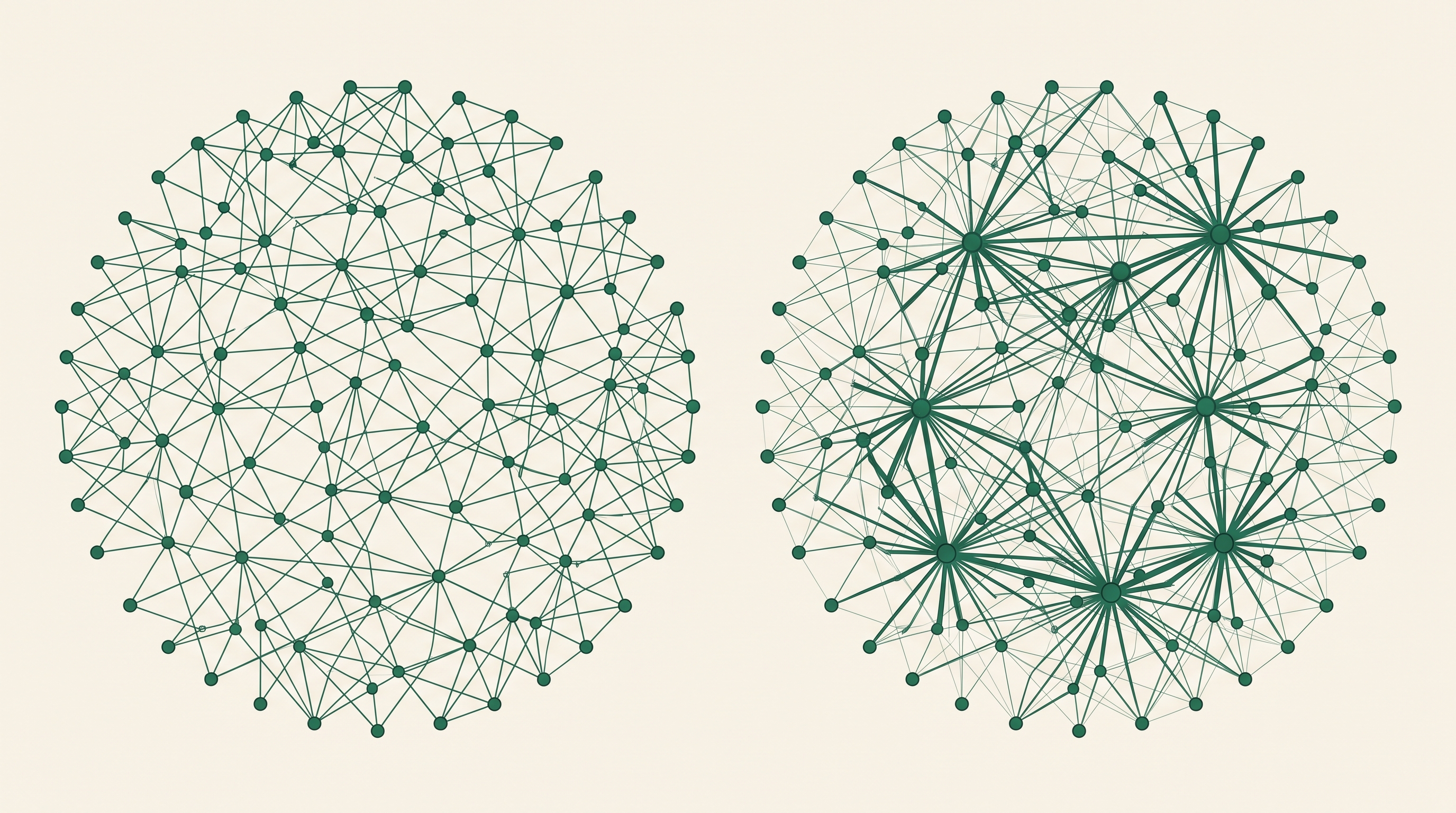
Think of your brain as a vast city with billions of roads connecting different neighborhoods. Neuroplasticity is the city’s ability to build new roads, widen busy ones, and let unused ones fall into disrepair. At the cellular level, this means neurons — your brain’s communication cells — can strengthen or weaken their connections (called synapses) based on how frequently they’re used.
There are two core mechanisms to understand:
- Long-term potentiation (LTP): When two neurons fire together repeatedly, the connection between them gets stronger. This is the cellular basis of learning and memory. Neuroscientists summarize it as “neurons that fire together, wire together” [Bliss & Collingridge, 1993].
- Long-term depression (LTD): The opposite process. When connections are underused, they weaken over time. This is how your brain prunes unnecessary information and stays efficient.
Both processes are essential. Without LTP, you couldn’t form new memories. Without LTD, your brain would become overwhelmed and unable to prioritize important signals.
Here’s where the endocannabinoid system enters the picture.
The Endocannabinoid System: Your Brain’s Plasticity Regulator
Your body produces its own cannabinoids — called endocannabinoids — that act as critical traffic controllers for synaptic plasticity. If you’re new to how this system works, our complete endocannabinoid system guide covers the fundamentals. The two primary endocannabinoids are:
- Anandamide (AEA): Often called the “bliss molecule,” it binds primarily to CB1 receptors concentrated throughout the brain.
- 2-Arachidonoylglycerol (2-AG): The most abundant endocannabinoid in the brain, also acting primarily at CB1 receptors with a broader activation profile.
What makes endocannabinoids unique is that they work backwards. Most neurotransmitters travel from the sending neuron (presynaptic) to the receiving neuron (postsynaptic). Endocannabinoids do the reverse — they’re produced by the receiving neuron and travel back to the sender, a process called retrograde signaling [Wilson & Nicoll, 2001]. This allows the receiving neuron to fine-tune the signal it’s getting in real time.
This mechanism is directly involved in well-documented forms of synaptic plasticity:
- Depolarization-induced suppression of inhibition (DSI) and excitation (DSE): Short-term forms of plasticity where endocannabinoids temporarily suppress neurotransmitter release [Kreitzer & Regehr, 2001].
- Endocannabinoid-mediated LTD (eCB-LTD): A longer-lasting form of plasticity found in the hippocampus (memory), striatum (movement and reward), amygdala (emotional processing), and prefrontal cortex (executive function) [Chevaleyre et al., 2006].
Your endocannabinoid system isn’t just some quirky feature that happens to interact with cannabis. It’s a fundamental regulatory infrastructure for how your brain learns, adapts, and reorganizes itself.
BDNF: The Neurotrophic Factor Connecting Cannabinoids to Neurogenesis
One of the most exciting threads in recent research involves brain-derived neurotrophic factor (BDNF) — a protein that acts like fertilizer for neurons, supporting their growth, differentiation, and survival.
Research from Xapelli et al. (Frontiers in Cellular Neuroscience, 2018) demonstrated that endogenous BDNF is crucial for cannabinoid-mediated neurogenesis to occur. CB1 and CB2 receptors both interact with BDNF signaling pathways:
- CB1R activation can enhance TrkB signaling (the BDNF receptor) partly by activating MAP kinase/ERK pathways
- CB2R appears to play a particularly important role in BDNF-mediated postnatal neurogenesis in the hippocampus
- Δ9-THC has been shown to promote upregulation of BDNF expression in preclinical studies, though the relationship is dose- and context-dependent
A 2024 study published in Translational Psychiatry [Xapelli et al., 2024] found that CB2 receptor inhibition combined with physical exercise significantly increased hippocampal BDNF levels in chronically stressed animals, driving increases in neurogenesis rates and overall reduction in neuroinflammation. This suggests the ECS and BDNF are not parallel systems — they’re deeply intertwined regulators of the same plasticity machinery.
What Happens When You Introduce Phytocannabinoids
So your endocannabinoid system is already orchestrating neuroplasticity. What happens when you introduce phytocannabinoids — plant-derived compounds like THC and CBD — into this finely tuned system?
The answer is complex, and it depends heavily on which cannabinoid, how much, how often, and the age of the brain in question.
THC and Synaptic Plasticity
THC (Δ9-tetrahydrocannabinol) is a partial agonist at CB1 receptors, meaning it activates the same receptors as your endocannabinoids — but not in exactly the same way. While endocannabinoids are produced on-demand and quickly broken down (localized, precise bursts), THC floods the system more broadly and lingers longer.
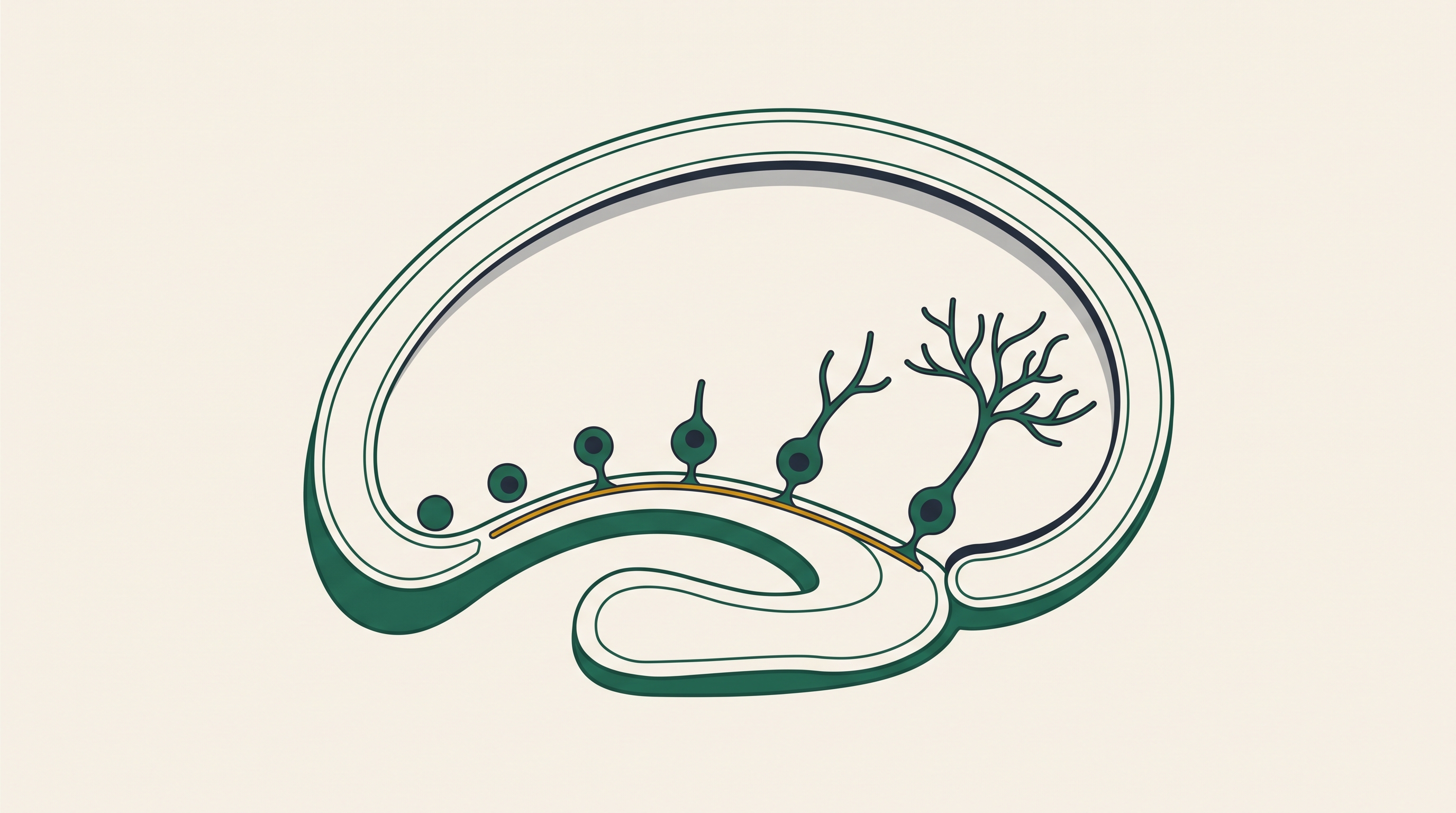
Research shows that acute THC exposure can temporarily disrupt LTP in the hippocampus, which explains the short-term memory impairment many users experience [Stella et al., 1997]. This effect is dose-dependent and reversible in adults, with studies showing normalization after cessation [Hoffman et al., 2007].
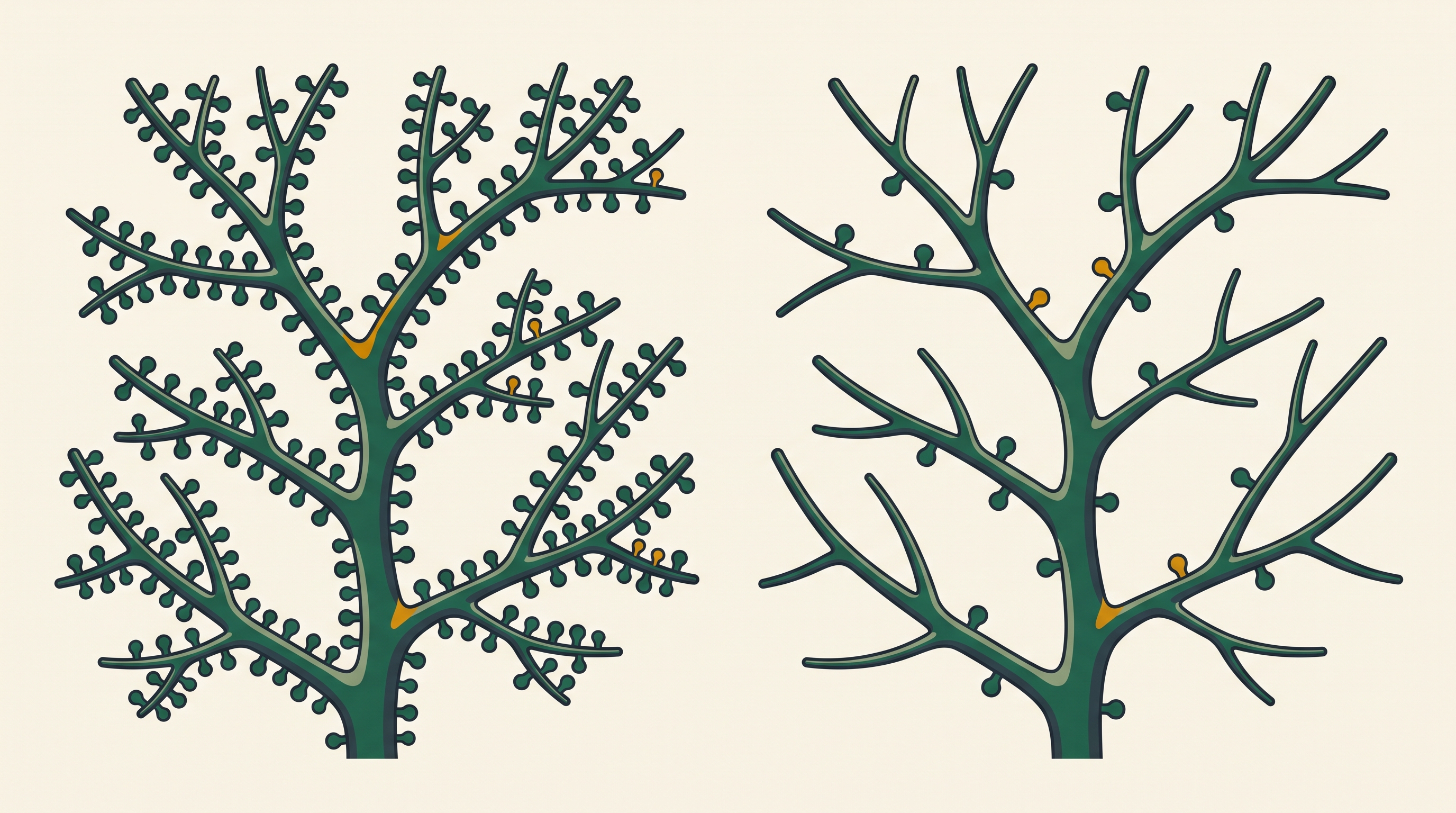
Chronic, heavy THC exposure tells a more nuanced story. Prolonged high-dose use may lead to downregulation of CB1 receptors — the brain reduces available receptors in response to constant stimulation [Hirvonen et al., 2012]. This is the biological basis of tolerance. The encouraging finding: imaging studies suggest this downregulation begins to reverse within approximately two to four weeks of abstinence [D’Souza et al., 2016]. This is why tolerance breaks actually work — they’re not just anecdote. They’re your brain’s plasticity resetting.
Key nuance: The developing brain (under ~25 years old) appears significantly more vulnerable to THC-related changes in plasticity than the adult brain. Multiple studies suggest adolescent exposure may have more lasting effects on prefrontal cortex development and working memory [Rubino & Parolaro, 2016]. This is one of the strongest evidence-based arguments for age-gated cannabis use.
The Biphasic Dose Effect
Research consistently shows that THC’s effects on plasticity are biphasic — low doses and high doses can have opposite outcomes. A landmark study by Bilkei-Gorzo et al. (2017) found that low-dose THC administered to aged mice actually improved cognitive performance and synaptic plasticity markers that had declined with aging. High doses produced the opposite effect.
This maps directly onto practical wisdom that experienced users often discover by trial and error: more THC is not always better. It also supports the “start low, go slow” principle from a neurobiological standpoint.
CBD: Neuroprotective and Pro-Neurogenic
CBD (cannabidiol) interacts with the brain very differently than THC. It has low affinity for CB1 receptors and instead modulates the endocannabinoid system indirectly — primarily by inhibiting FAAH, the enzyme that breaks down anandamide, effectively boosting your natural endocannabinoid tone [Bisogno et al., 2001].
A 2024 study published in Neuropharmacology [Barreto Domingosa et al., 2024] provided some of the clearest evidence yet that repeated CBD treatment affects neuroplasticity markers in the prefrontal cortex. In a validated genetic model of depression (FSL rats), CBD:
- Increased ERK1, mGluR5, and synaptophysin (a key synaptic plasticity marker) in synaptosomal fractions
- Modulated ERK2 and mGluR5 expression in the cytosolic fraction
- Produced antidepressant-like effects without altering endocannabinoid levels — suggesting its plasticity effects operate through a distinct, non-endocannabinoid-level pathway
Earlier research had already indicated CBD may support neurogenesis (the birth of new neurons) in the hippocampus under conditions of stress and neuroinflammation [Campos et al., 2013], and may facilitate fear extinction — the plasticity process by which the brain learns a previously threatening stimulus is no longer dangerous [Das et al., 2013]. This has direct implications for anxiety and PTSD research.
If you’re interested in CBD’s role in mental health conditions, our articles on cannabis and PTSD and cannabis and anxiety cover the clinical research in more depth.
How THC Affects REM Sleep — and Why That Matters for Plasticity
One often-overlooked connection: THC suppresses REM sleep, the sleep stage most closely associated with memory consolidation and emotional processing. Since sleep is itself a major driver of synaptic plasticity (the brain consolidates learning from the day during REM), heavy THC use may indirectly affect plasticity through this pathway — separate from direct CB1 effects. This is an underappreciated dimension of the cannabis-neuroplasticity story that researchers are beginning to examine more closely.
The Entourage Effect and Plasticity
For whole-plant cannabis consumers, the entourage effect — the synergistic interaction of cannabinoids, terpenes, and other plant compounds [Russo, 2011] — may have real implications for neuroplasticity.
Myrcene, a dominant terpene in many relaxing cultivars, has preclinical anti-inflammatory and sedative properties that could influence the neuroinflammatory environment in which plasticity occurs. Caryophyllene is unique among terpenes because it directly activates CB2 receptors [Gertsch et al., 2008] — the same receptors now understood to play a meaningful role in hippocampal neurogenesis and BDNF signaling. This gives terpene-cannabinoid interactions a potentially direct pathway into plasticity biology.
Novel cannabinoids may also matter here. THCV, CBN, and CBG each have distinct receptor interaction profiles that are just beginning to be mapped against neuroplasticity outcomes.
Practical Implications: What This Means for Your Cannabis Experience
Understanding the relationship between cannabinoids and neuroplasticity isn’t just academic — it can inform smarter, more intentional use.
1. Tolerance Breaks Have a Biological Basis
CB1 receptor downregulation explains why tolerance builds and why tolerance breaks work. Two to four weeks of abstinence appears sufficient for meaningful receptor density recovery in most adult users. That’s your brain’s plasticity resetting in real time.
2. Dose Matters More Than Most People Realize
The biphasic dose effect is real and well-documented. Lower doses of THC may support or be neutral for plasticity in adults; high doses can impair it. This is a neurobiological argument for mindful dosing — and for understanding how to find your ideal THC:CBD ratio.
3. CBD Is Not Just a “Chill” Compound
The 2024 research reinforces that CBD’s effects on synaptic plasticity markers (ERK1/2, mGluR5, synaptophysin) represent a distinct biological action beyond simple anxiolysis. Products and strains with meaningful CBD content offer more than a gentler high — they may actively support plasticity-related mechanisms.
4. The Developing Brain Deserves Respect
The evidence around adolescent THC exposure is among the most consistent in cannabis research. The developing brain’s heightened plasticity makes it more susceptible to disruption. This isn’t fear-mongering — it’s neuroscience supporting evidence-based age restrictions.
5. Sleep Is Part of the Equation
Because REM sleep drives memory consolidation and synaptic plasticity, how cannabis affects your sleep architecture directly interacts with its neuroplasticity effects. Heavy nightly THC use could create a double-impact: direct CB1 modulation of synaptic plasticity and indirect impairment through REM suppression.
6. Think Beyond THC Percentage
The outdated indica/sativa classification tells you almost nothing about how a strain will interact with your brain’s plasticity mechanisms. What matters is the full cannabinoid and terpene profile — the kind of information the High Families system is built to surface. Understanding High Families is the practical guide to applying this science to your strain selection.
Key Takeaways
- Your endocannabinoid system is a master regulator of neuroplasticity, controlling how your brain strengthens, weakens, and reorganizes neural connections through retrograde signaling.
- BDNF is a critical bridge between cannabinoid receptor signaling and neurogenesis — CB1 and CB2 receptors both interact with BDNF pathways to modulate the birth and survival of new neurons.
- THC temporarily modulates synaptic plasticity in dose-dependent, biphasic ways — low doses and high doses can have opposing effects, and most changes in adult brains appear reversible with abstinence.
- CBD demonstrated measurable effects on synaptic plasticity markers (ERK1/2, mGluR5, synaptophysin) in the prefrontal cortex in 2024 research, operating through pathways distinct from simple endocannabinoid level changes.
- The developing brain (under ~25) is significantly more vulnerable to lasting cannabinoid-related changes in plasticity, supporting evidence-based age restrictions.
- Terpenes, the entourage effect, and sleep architecture all interact with neuroplasticity — making whole-plant chemistry and consumption patterns more important than THC percentage alone.
FAQs
Does cannabis kill brain cells?
This is one of the most persistent myths in cannabis discourse. Current research does not support the claim that cannabis “kills” brain cells in adult users. What the evidence shows is that cannabinoids modulate how neurons communicate and can temporarily alter synaptic plasticity. Heavy, chronic use may lead to reversible changes in receptor density, but this is adaptation — not cell death. Our dedicated article on whether cannabis kills brain cells covers this in detail.
Can cannabis help with brain recovery after injury?
This is an active area of research. Some preclinical studies suggest that certain cannabinoids — particularly CBD and the endocannabinoid 2-AG — may have neuroprotective properties that could support recovery after traumatic brain injury by reducing inflammation and excitotoxicity [Fernández-Ruiz et al., 2013]. However, clinical evidence in humans is still limited. Always consult a healthcare provider — cannabis should complement, not replace, medical treatment.
Does cannabis make it harder to learn new things?
Acute THC intoxication can temporarily impair the formation of new memories by disrupting LTP in the hippocampus [Stella et al., 1997]. However, this effect is short-term and dose-dependent. There’s no strong evidence that moderate adult cannabis use causes permanent learning deficits. If you’re studying or learning a new skill, you’ll perform better sober. Then perhaps celebrate afterward.
What does the 2024 research add that’s new?
Two particularly important 2024 findings stand out. The Azarfarin et al. review (Cell Biochemistry and Function) provided a comprehensive updated synthesis of how cannabinoids interact with LTP/LTD through multiple receptor systems. The Barreto Domingosa et al. study (Neuropharmacology) demonstrated for the first time that repeated CBD treatment affects specific synaptic plasticity proteins — ERK1, ERK2, mGluR5, and synaptophysin — in the prefrontal cortex via a mechanism that doesn’t require changing endocannabinoid levels, opening new hypotheses about how CBD works at a molecular level.
How do I apply this knowledge practically?
Start with understanding your endocannabinoid system. Consider how your genetics affect your receptor density and endocannabinoid tone. Choose strains based on full cannabinoid and terpene profiles rather than just THC percentage. Take tolerance breaks seriously. And pay attention to how cannabis affects your sleep — because sleep is where a lot of the plasticity work actually happens.
The science of cannabis and neuroplasticity is evolving rapidly. This article reflects published research as of early 2026. As with all cannabis science, findings from animal models may not translate directly to humans, and individual responses vary significantly based on genetics, dose, frequency of use, and age.


