Cannabis and Pets: What Veterinary CBD Research Shows
What does the science actually say about CBD for dogs and cats? A deep dive into veterinary research, THC toxicity risks, and evidence-based dosing guidance.


The $200 Million Question About Your Pet’s Wellness
Here’s a number that will put the conversation in perspective: the U.S. pet CBD market exceeded $200 million in annual sales by the early 2020s and has continued climbing steeply as cannabis legalization expands across the country. Walk into any pet supply store and you’ll find CBD-infused chews, tinctures, topicals, and treats lining entire shelves—all positioned to address everything from arthritis and anxiety to general longevity.
The people buying these products aren’t naive. Most are thoughtful, devoted pet owners who’ve watched their dogs pace and pant through thunderstorms, or seen their cats withdraw into themselves as they age. They’re people who care deeply and are looking for solutions that work. And they’ve heard—from friends, from online communities, from the occasional vet—that CBD might help.
But here’s the uncomfortable reality: the science has been racing to catch up with the market. For years, veterinarians were legally and professionally constrained from even discussing cannabis products with clients. Federal and state regulations created a research desert precisely when pet owners needed guidance most. That landscape is changing, and the data we do have is genuinely interesting—but it demands careful interpretation.
This article is a thorough, honest look at what veterinary CBD research actually shows: the promising findings, the important limitations, the critical distinctions between CBD and THC (which are not interchangeable—not even close), and what it all means if you’re a pet owner trying to make an informed decision.
Before we begin: This article is educational, not veterinary advice. Any decision about giving your pet CBD or any cannabis-derived product should involve a conversation with a licensed veterinarian. THC is genuinely dangerous for pets. We will cover this clearly and emphatically.

Why Pets Have an Endocannabinoid System (And Why It Matters)
Before you can evaluate any cannabis research in animals, you need to understand the biological system these compounds interact with. The endocannabinoid system (ECS) isn’t unique to humans. It’s present in all mammals—and more broadly, across most vertebrate species. Dogs, cats, horses, rabbits, and even fish have this system.
The ECS is a network of receptors (primarily CB1 and CB2), naturally occurring cannabinoids your body produces (called endocannabinoids, most notably anandamide and 2-AG), and enzymes that create and break down those compounds. If you’re new to how the ECS works in humans, our guide to THC vs. CBD covers the fundamentals well. Its job is homeostasis: keeping body systems in balance. It plays roles in pain signaling, immune response, mood regulation, appetite, inflammation, and sleep.
When plant-derived cannabinoids like CBD (cannabidiol) or THC (tetrahydrocannabinol) enter the body, they interact with this pre-existing system. CBD primarily works by inhibiting the enzyme FAAH—which normally breaks down anandamide—effectively allowing your pet’s own endocannabinoid levels to stay elevated longer. It also interacts with multiple non-CB1/CB2 receptor targets including serotonin (5-HT1A) and TRPV1 (a pain and temperature receptor).
THC, by contrast, binds directly and powerfully to CB1 receptors. And this is where the critical divergence between species becomes a matter of safety.
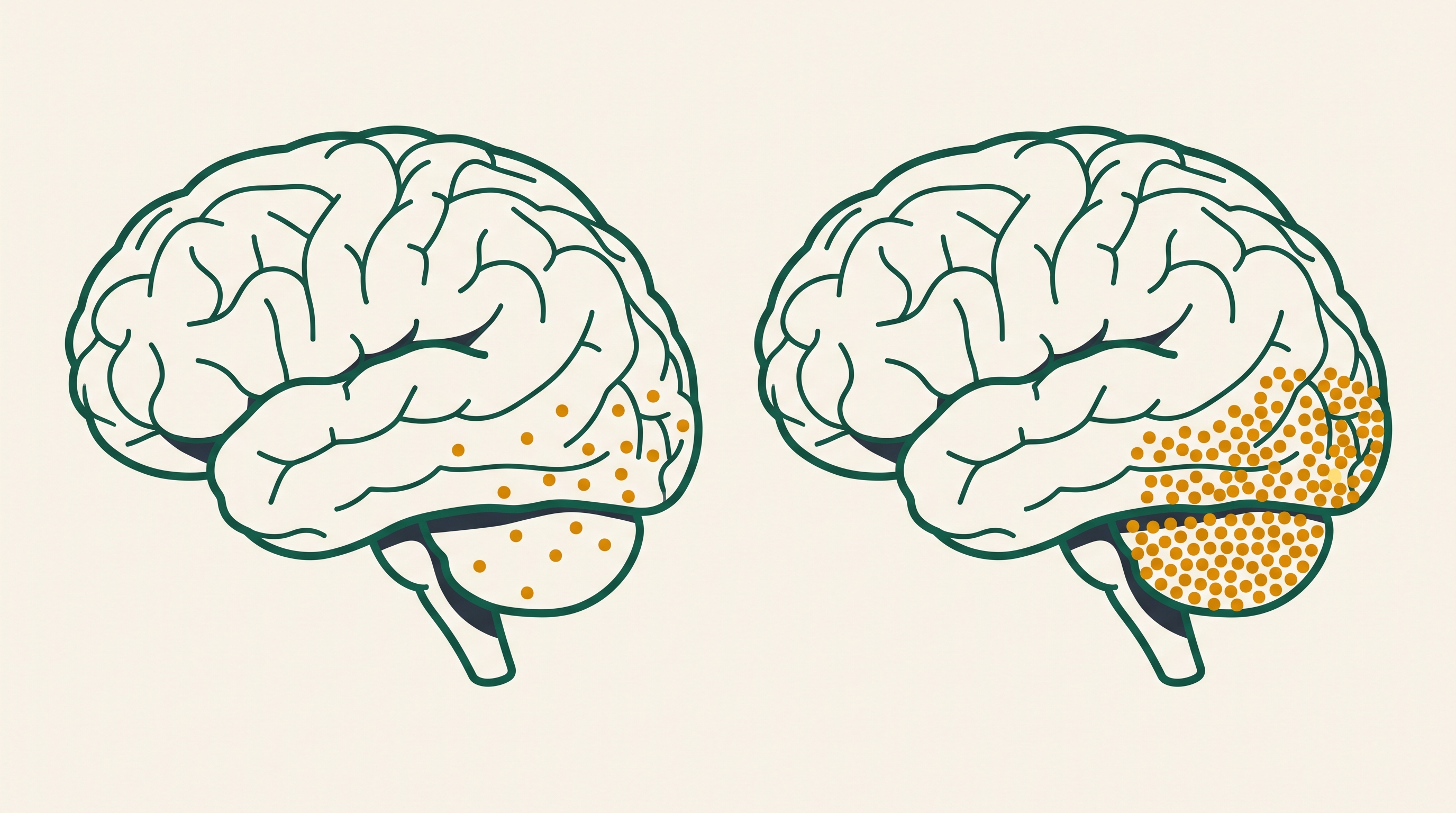
Dogs have a significantly higher density of CB1 receptors in their brains than humans—particularly concentrated in the cerebellum and brainstem, regions that govern balance, coordination, and basic life functions [Merck Veterinary Manual; Fitzgerald et al., 2013]. This is why dogs experience the effects of THC far more intensely than humans do for the same dose relative to body weight. A THC exposure that might mildly sedate a person can cause severe neurological impairment in a dog. Cats have a similar vulnerability.
The CBD Research: What Clinical Studies Have Found
Let’s look at the actual science. Veterinary CBD research is still relatively young—most peer-reviewed clinical trials have only been published since 2018—but the data is accumulating and several findings are strong enough to take seriously.
Osteoarthritis and Pain: The Most Robust Evidence
The best-supported area of veterinary CBD research is pain management in dogs, particularly osteoarthritis. Multiple controlled trials have now examined this, and the results are consistently encouraging.
A landmark 2018 Cornell University study (Gamble et al.) used a randomized, double-blind, placebo-controlled crossover design—the gold standard—to test CBD oil at 2 mg/kg twice daily in dogs with osteoarthritis. The findings were significant: CBD-treated dogs showed a meaningful decrease in pain scores and increased mobility based on veterinary assessments, with no reported adverse effects beyond mild increases in alkaline phosphatase (a liver enzyme) at the higher dose tested [Gamble et al., Frontiers in Veterinary Science, 2018].
A 2024 Frontiers in Veterinary Science study used full-spectrum hemp oil at 2 mg/kg twice daily for 8 weeks in 37 dogs living with chronic pain. Owner-reported pain scores and mobility assessments showed sustained improvement across the study period, with good tolerability reported throughout [Rathinasabapathy et al., 2024].
These aren’t small pilot studies with weak methodology. They’re properly controlled trials with meaningful outcomes. The consistency of the pain and mobility findings across multiple independent research groups adds real confidence to the signal.
Anxiety and Seizures: Promising but More Complex
Anxiety in dogs is the most common reason pet owners report using CBD, and some research supports this application—though the effect sizes are more variable.
A 2021 study published in Frontiers in Veterinary Science found that dogs receiving CBD showed reduced anxiety-related behaviors during standard anxiety assessments compared to placebo, though the effect was modest and not uniform across all dogs tested. A 2022 study found CBD was helpful for noise-induced fear in some dogs, with improvements in behavioral signs of anxiety during fireworks and thunderstorms.
Epilepsy is another area with clinical data—and it’s where some of the most dramatic human cannabinoid research has also focused; see our deep dive on cannabis for epilepsy for context. A 2019 Colorado State University study (McGrath et al.) found that 89% of dogs receiving CBD showed a reduction in seizure frequency compared to 34% in the placebo group—a statistically significant difference. The study used 2.5 mg/kg twice daily of CBD added to existing anti-epileptic medications. Notably, the FDA-approved human CBD drug Epidiolex (for rare pediatric epilepsies) has helped advance our mechanistic understanding here: CBD appears to reduce neuronal excitability through multiple pathways distinct from traditional anti-epileptics.
For cats, the evidence base is substantially thinner. Fewer clinical trials have been conducted, partly because cats present unique pharmacological challenges: they are less efficient at metabolizing certain compounds due to reduced glucuronidation capacity. A 2022 study in Frontiers in Veterinary Science examined CBD/CBDA hemp paste in cats and found measurable cannabinoid serum levels with no acute adverse effects at tested doses, but long-term safety data remains limited.
Safety Profile: What the Research Shows
The emerging safety picture for CBD specifically in dogs at studied doses is reasonably reassuring, with important caveats.
Consistent findings across multiple studies include:
- Elevated alkaline phosphatase (ALP): This liver enzyme marker rises in many dogs given CBD. The clinical significance is unclear—no dogs in studies have shown liver damage—but it’s a reason veterinary monitoring is important during long-term use.
- Sedation and lethargy: Reported at higher doses in some studies, particularly above 5 mg/kg.
- GI effects: Loose stools and vomiting are reported occasionally, especially at higher doses or when initiating treatment.
- Drug interactions: CBD is metabolized by the liver’s cytochrome P450 enzyme system—the same system that processes many veterinary medications. This creates a real potential for interactions with drugs like phenobarbital, prednisolone, and NSAIDs.
For cats specifically, a 2019 pharmacokinetic study (Deabold et al.) found that cats metabolized CBD differently than dogs and showed more consistent increases in ALP, suggesting closer monitoring may be warranted.
Crucially, no studies of pure CBD in dogs or cats have documented life-threatening toxicity. The safety profile at clinically studied doses is meaningfully different from THC.
The THC Danger: A Non-Negotiable Safety Section
This section deserves its own clear emphasis because the stakes are real.
THC is toxic to dogs and cats. Full stop. This is not a matter of debate—it is well-established veterinary toxicology. The Pet Poison Helpline has reported a 448% increase in cannabis toxicity cases in recent years, directly correlated with expanded legalization and the proliferation of edibles and concentrates in homes [Premier Vets; Pet Poison Helpline data].
Dogs can show clinical signs of THC toxicity at doses as low as 0.3–0.5 mg/kg—a threshold that can easily be crossed by a medium-sized dog eating a single cannabis gummy or a small portion of an edible [Merck Veterinary Manual; Hommerding, DVM].
Signs of THC toxicity in dogs and cats include:
- Ataxia (difficulty walking, loss of coordination—reported in up to 88% of cases)
- Hyperesthesia (extreme sensitivity to sound and touch—up to 75%)
- Lethargy and depression (up to 63%)
- Urinary incontinence (up to 46%)
- Vomiting (up to 26%)
- Dilated pupils, dazed expression, head bobbing
- In severe cases: tremors, bradycardia, hypotension, hypothermia, and rarely coma
Signs can appear within 30 minutes to several hours after ingestion and may persist for up to 72 hours, because THC is highly lipid-soluble and redistributes slowly from fatty tissue [Cornell University Riney Canine Health Center, 2025].
The mortality rate from THC toxicity is low—but “low” is not “zero,” and deaths have been documented following ingestion of high-concentration medical-grade THC products and concentrates. The risk is significantly elevated when edibles also contain chocolate or xylitol (a sugar substitute), both of which are independently toxic to dogs and commonly found in cannabis-infused baked goods.
What to do if your pet ingests THC:
- Contact your veterinarian or an emergency animal hospital immediately
- Call the ASPCA Poison Control Center: (888) 426-4435 (fee may apply)
- Call the Pet Poison Helpline: (855) 764-7661
- Be honest about what your pet ingested—veterinarians are not obligated to report this, and incomplete history makes treatment harder and potentially more dangerous
There is no antidote for THC toxicity. Treatment is supportive: IV fluids, thermoregulation, anti-nausea medications, and close monitoring. Most dogs and cats recover fully with appropriate care.
The practical takeaway for pet owners who use cannabis themselves: store all cannabis products—including edibles, flower, oils, and concentrates—securely out of reach of pets and children. For more on how cannabis concentrates differ from flower in potency and risk, see our guide to cannabis concentrates. Treat them with the same caution you would any prescription medication.
CBD Dosing: What Research and Veterinarians Suggest
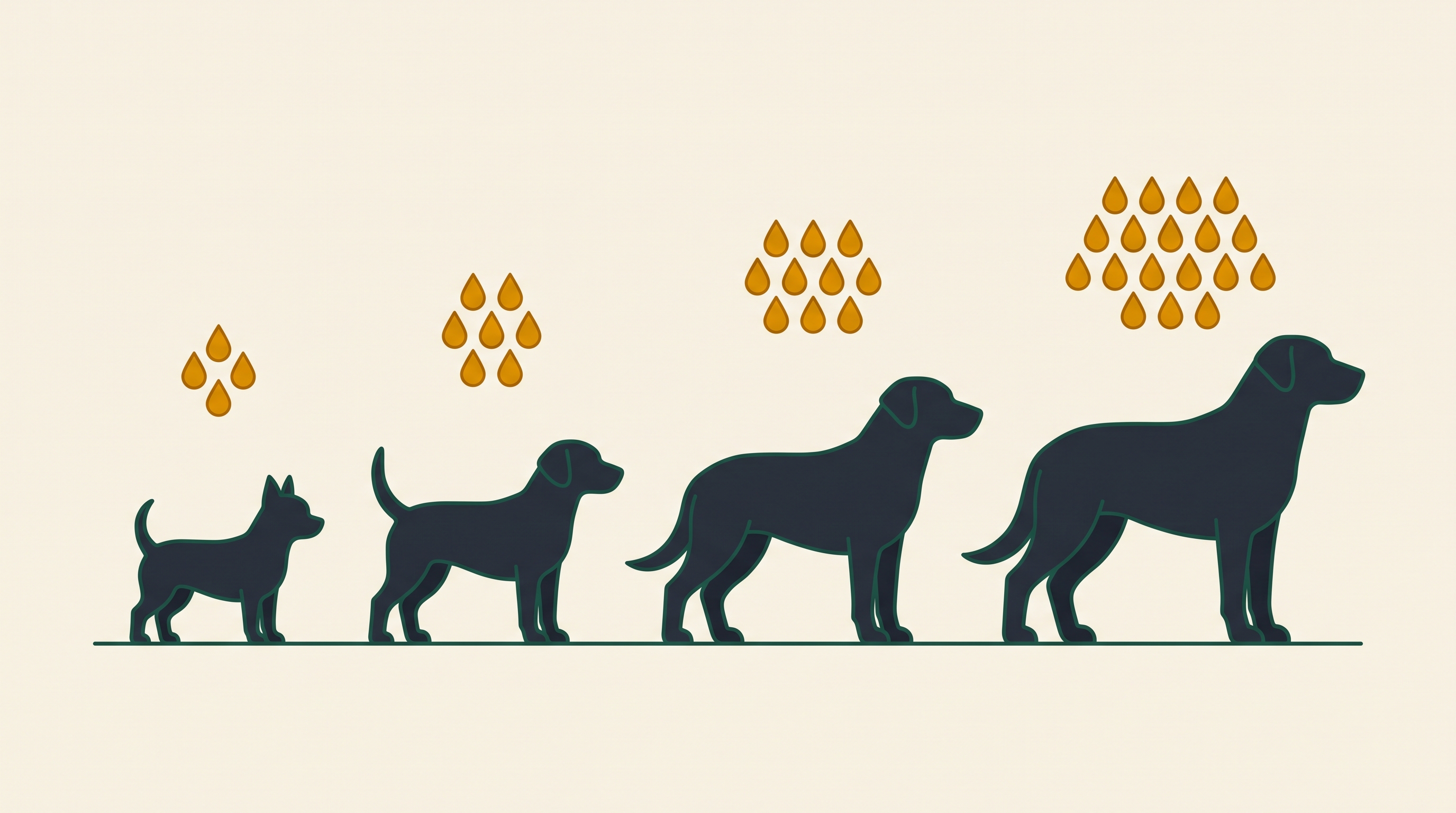
It’s important to state clearly: there are no FDA-approved CBD dosing guidelines for pets. The research that exists uses varying doses, products, and formulations, which makes direct comparison difficult. That said, several patterns have emerged from the clinical literature.
For dogs, the most commonly studied dose range is:
- Pain/osteoarthritis: 2 mg/kg twice daily (oral) — used in the Cornell and 2024 Frontiers studies
- Epilepsy: 2.5 mg/kg twice daily (oral) — used in the Colorado State study
- General anxiety: 1–2 mg/kg once or twice daily — based on smaller studies
For cats, the data is much thinner. Dosing guidance typically starts lower—around 0.5–1 mg/kg once daily—given differences in metabolism, but this should be treated as a starting point for veterinary discussion, not a prescription. Our overview of how to find your ideal THC-to-CBD ratio explains why cannabinoid ratios matter—principles that apply in veterinary contexts too.
Product Quality: The Elephant in the Room
One critical complication in all veterinary CBD research is product variability. The CBD market—for both humans and pets—is poorly regulated. A 2017 study published in JAMA found that nearly 70% of CBD products tested were mislabeled, with many containing either significantly more or less CBD than claimed, and some containing detectable THC levels even when labeled as THC-free.
This matters enormously for pets because a “CBD” product that actually contains 0.5% THC could deliver a meaningful THC dose to a small dog even at typical serving sizes.
When evaluating pet CBD products, look for:
- Third-party Certificate of Analysis (COA): An independent lab report confirming cannabinoid content and the absence of pesticides, heavy metals, and residual solvents
- Hemp-derived, not marijuana-derived: Hemp is legally defined as containing less than 0.3% THC—but verify this with the COA
- Broad-spectrum or CBD isolate: Products formulated to minimize THC content; full-spectrum products may contain trace THC but within legal limits
- Consistent dosing format: Oils/tinctures allow for more precise dosing than chews, whose CBD content can vary
The Veterinary Conversation
Until very recently, many veterinarians felt legally constrained from recommending CBD products to clients—in some states, doing so risked their veterinary license. This has changed significantly as state laws have evolved. California passed a law in 2022 explicitly allowing veterinarians to discuss cannabis products with pet owners, and other states have followed or are following.
This means you can—and should—have this conversation openly with your vet. A knowledgeable veterinarian can help you:
- Evaluate whether CBD is appropriate for your pet’s specific condition
- Identify potential drug interactions with current medications
- Monitor liver enzyme levels during use
- Distinguish between credible products and marketing-driven ones
- Adjust dosing based on your pet’s response
What the Research Doesn’t Yet Show
Intellectual honesty requires acknowledging the significant gaps that remain in veterinary CBD science.
Long-term safety data is thin. Most studies have run 4–12 weeks. We don’t have robust data on what chronic daily CBD supplementation does to dogs’ or cats’ livers, endocrine systems, or overall health over years. The ALP elevation finding across multiple studies is a flashing light that deserves further investigation.
Cats are understudied. The vast majority of veterinary CBD research has been conducted in dogs. Cats are physiologically distinct—particularly in their drug metabolism—and findings from dog studies cannot be straightforwardly extrapolated.
Mechanism clarity is limited. We know CBD helps with pain and may help with seizures in dogs, but the precise mechanisms in veterinary species are not fully mapped. This matters because mechanism knowledge helps predict which conditions might respond and at what doses.
Most approved veterinary products don’t yet exist. As of the time of writing, there are no FDA-approved CBD products for veterinary use in the way Epidiolex is approved for human pediatric epilepsy. This means product quality control, dosing standardization, and safety monitoring remain in the hands of individual consumers and their veterinarians.
Practical Guidance for Pet Owners
If you’re considering CBD for your pet, here’s a framework grounded in what the research actually shows:
Strongest evidence supports use for:
- Osteoarthritis and chronic joint pain in dogs (multiple controlled trials)
- Seizure frequency reduction in dogs with epilepsy (significant clinical trial data)
Moderate evidence, warranting discussion with a vet:
- Anxiety and noise phobias in dogs
- General anti-inflammatory support
Insufficient evidence for confident recommendation:
- Most cat applications (limited research)
- Cancer-adjacent applications (preclinical only)
- Skin conditions (topical use, minimal data)
Start low, go slow, and monitor. This isn’t a cliché—it’s pharmacologically sound. Begin at the lower end of the studied dose range, observe your pet for 2–4 weeks, and have a follow-up veterinary appointment to check liver enzymes if continuing long-term.
Keep a simple log. Note what product you’re using (with lot number and COA link), the dose given, the time of day, and what you observe in your pet’s behavior, mobility, appetite, and comfort. This transforms your personal experience into data you and your vet can actually use.
Key Takeaways
- Dogs and cats have an endocannabinoid system, and plant-derived cannabinoids interact with it—providing a solid biological rationale for CBD’s observed effects in animals.
- CBD has the strongest veterinary research support for pain/osteoarthritis and epilepsy in dogs (the same joint pain mechanisms explored in our cannabis for arthritis guide), based on multiple controlled trials showing meaningful, statistically significant outcomes [Gamble et al., 2018; McGrath et al., 2019; Rathinasabapathy et al., 2024].
- CBD’s safety profile at studied doses is reasonably reassuring but includes consistent liver enzyme (ALP) elevation that warrants veterinary monitoring, especially with long-term use.
- THC is genuinely dangerous for pets. Dogs are far more sensitive to THC than humans due to higher CB1 receptor density. Even small amounts can cause serious neurological effects requiring emergency care [Merck Veterinary Manual; Cornell RCHC, 2025].
- Product quality is a critical variable. Always demand third-party COA documentation. Mislabeled products are common and can inadvertently expose pets to THC.
- This conversation belongs in your vet’s office. Laws in many states now allow veterinarians to discuss cannabis openly. Take advantage of that—especially if your pet is on other medications.
FAQs
Is CBD safe for dogs?
At doses studied in clinical trials (typically 2–2.5 mg/kg twice daily), CBD appears reasonably safe for dogs with appropriate veterinary oversight. The most consistent finding is a rise in the liver enzyme alkaline phosphatase (ALP), which has not been associated with clinical liver disease in studies to date but warrants monitoring. Drug interactions are a real concern, particularly if your dog takes phenobarbital or other medications processed by the liver.
Can I give my cat CBD?
Cat-specific research is limited compared to dogs, and cats metabolize compounds differently—making it harder to extrapolate dog studies. Some pharmacokinetic work suggests cats can handle CBD at low doses, but less is known about long-term safety. Talk to a feline-savvy veterinarian before starting any CBD regimen for your cat.
What happens if my pet eats cannabis or an edible?
Call your veterinarian or an animal poison control hotline immediately: ASPCA (888) 426-4435 or Pet Poison Helpline (855) 764-7661. Don’t wait for symptoms. THC toxicity signs can be delayed up to several hours, and earlier intervention—if decontamination is possible—leads to better outcomes. Be fully honest about what your pet ingested; veterinarians do not report this to law enforcement.
How is CBD different from medical marijuana for pets?
The critical distinction is THC content. Legal CBD products derived from hemp must contain less than 0.3% THC. “Medical marijuana” typically contains meaningful concentrations of THC (often 10–30% or higher). CBD at low-THC formulations is the focus of all reputable veterinary research. THC-containing products are not appropriate for pets and carry real toxicity risk.
Do vets recommend CBD for pets?
Increasingly, yes—particularly for osteoarthritis and anxiety in dogs, and in states where veterinarians are legally permitted to discuss it. The American Veterinary Medical Association (AVMA) has acknowledged the need for more research and supports the ability of veterinarians to counsel clients. Find a vet who is knowledgeable about the current research rather than one who dismisses the topic without engagement or promotes products without evidence.
Sources
- Gamble, L.J., et al. (2018). “Pharmacokinetics, Safety, and Clinical Efficacy of Cannabidiol Treatment in Osteoarthritic Dogs.” Frontiers in Veterinary Science, 5, 165.
- McGrath, S., et al. (2019). “Randomized blinded controlled clinical trial to assess the effect of oral cannabidiol administration in addition to conventional antiepileptic treatment on seizure frequency in dogs with intractable idiopathic epilepsy.” Journal of the American Veterinary Medical Association, 254(11), 1301-1308.
- Rathinasabapathy, T., et al. (2024). “Efficacy and tolerability of full spectrum hemp oil in dogs living with pain in common household settings.” Frontiers in Veterinary Science, 11.
- Deabold, K.A., et al. (2019). “Single-Dose Pharmacokinetics and Preliminary Safety Assessment with Use of CBD-Rich Hemp Nutraceutical in Healthy Dogs and Cats.” Animals, 9(10), 832.
- Hommerding, H., DVM, DABT. “Toxicosis in Dogs and Cats From Tetrahydrocannabinol (THC).” Merck Veterinary Manual.
- Fitzgerald, K.T., Bronstein, A.C., & Newquist, K.L. (2013). “Marijuana poisoning.” Topics in Companion Animal Medicine, 28(1), 8-12.
- Cornell University Riney Canine Health Center. (2025). “Cannabis (THC) Intoxication in Dogs.” Cornell University College of Veterinary Medicine.
- Delamarter, M. (2024). “Marijuana Intoxication in Cats and Dogs.” Today’s Veterinary Practice.
- Wang, T., et al. (2022). “Serum cannabinoid 24h and 1 week steady state pharmacokinetic assessment in cats using a CBD/CBDA rich hemp paste.” Frontiers in Veterinary Science, 9, 895.


