Batch Variance: Why the Same Strain Produces Different Lab Results
Why does the same strain test 19% THC once and 24% the next? Batches, plants, samples and labs all vary. How to compare two lab results without being misled.

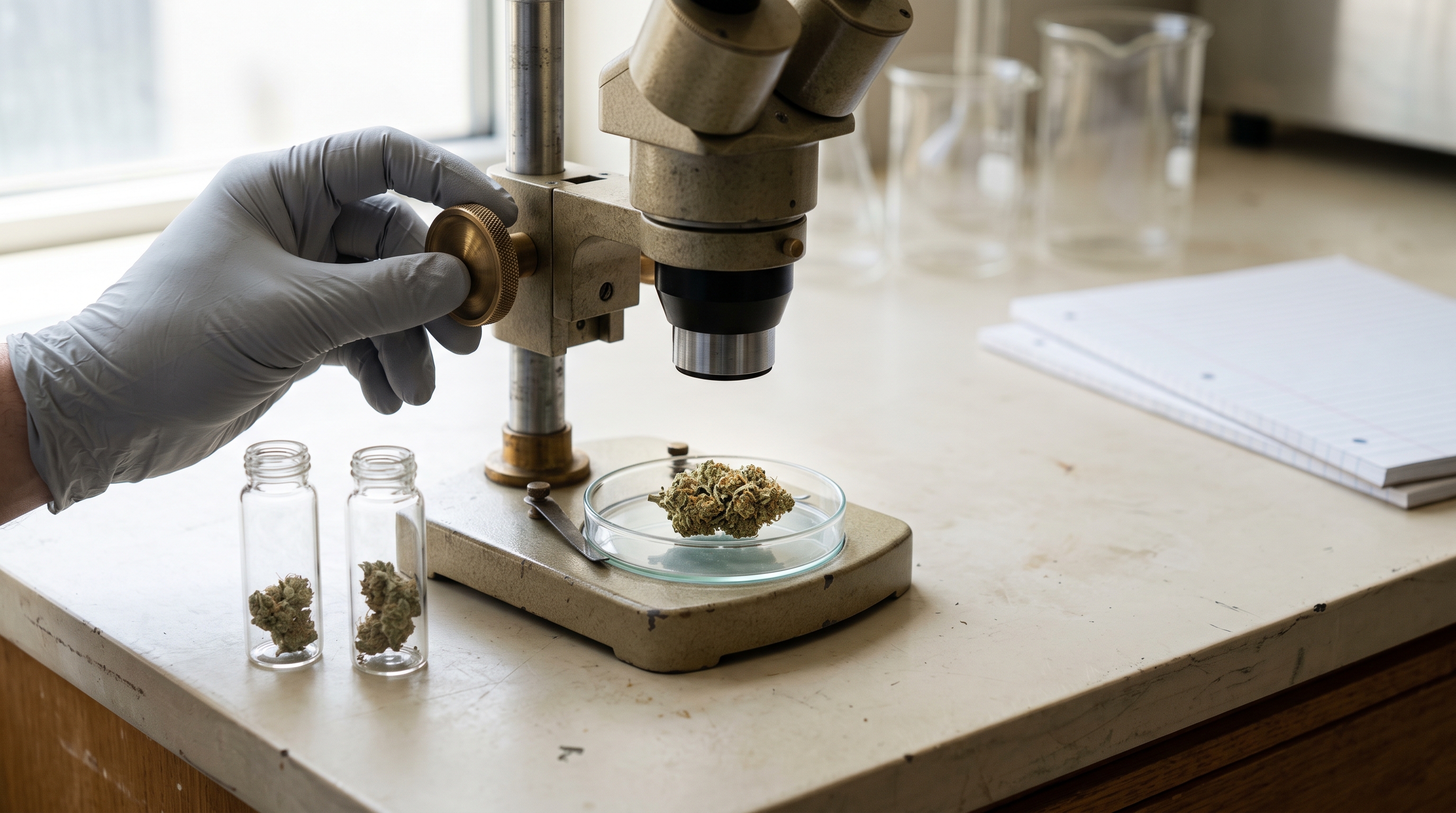
The Name Stayed the Same. The Material Did Not.
You buy Blue Dream twice. The first package says 19% total THC with myrcene on top. The next says 24% with limonene leading. One feels loose and easy; the other feels sharp. Did one laboratory fail?
Maybe. But different numbers alone do not prove bad testing.
Cannabis lab results sit at the end of a long chain: identity, biology, sampling, preparation, and measurement. Variation can enter at every link. A strain name is not a pharmaceutical formula, a harvest batch is not perfectly uniform, a laboratory tests only a small sample, and analytical methods have uncertainty.
That makes the certificate of analysis, or COA, useful—but narrower than people often assume. It describes the tested sample from a particular batch under a particular method. It does not certify every flower ever sold under that strain name.
Keep three questions separate:
- Is this actually the same genetic cultivar?
- Did plants with similar genetics produce the same chemistry?
- Would another sample or laboratory measure the same values?
Then “conflicting” results become clues rather than chaos.
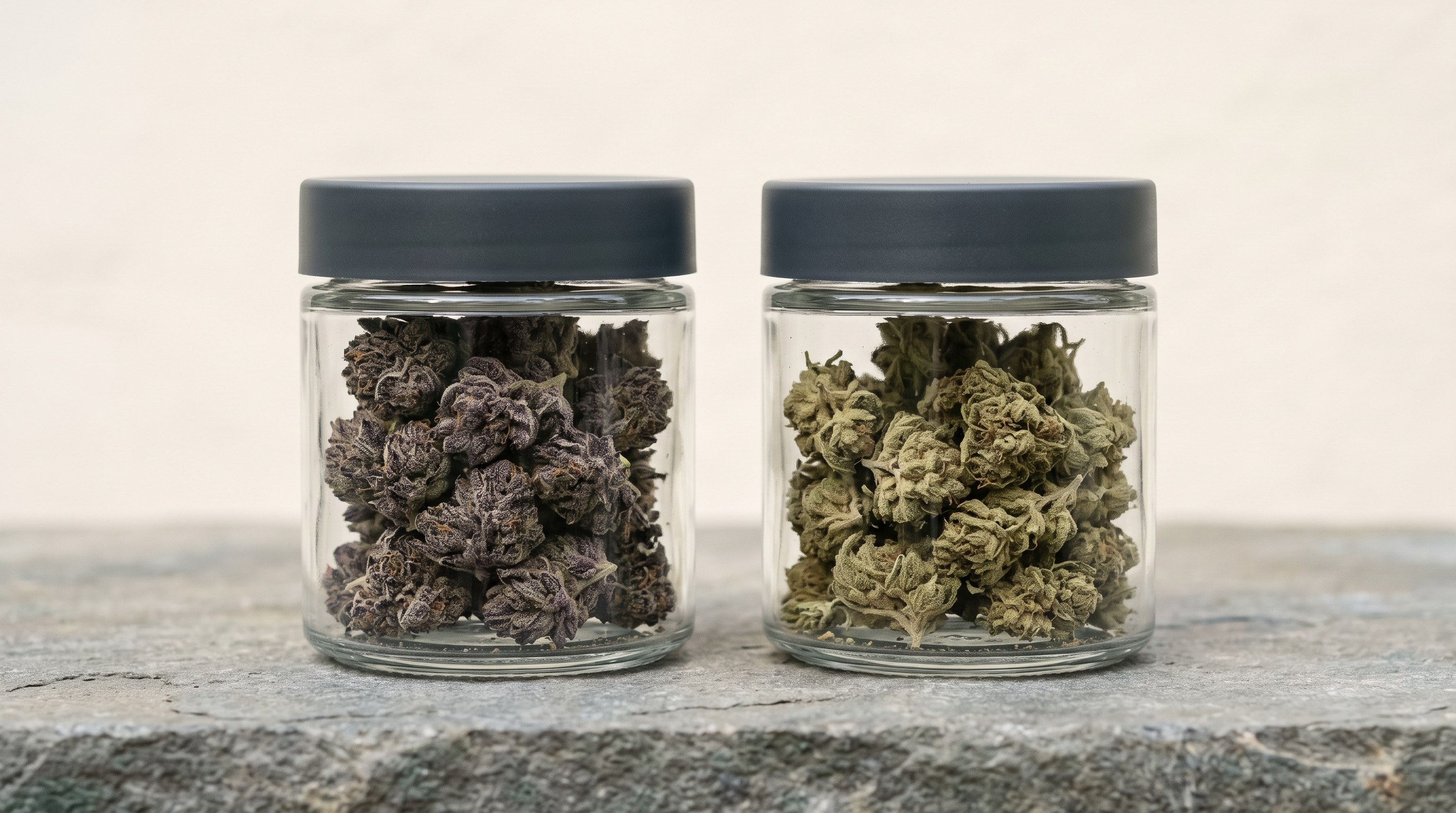
Layer One: A Strain Name Is Not an Identity Standard
In ordinary conversation, “same strain” sounds precise. In the commercial market, it often means “sold under the same name.” Those are not equivalent.
Schwabe and McGlaughlin examined 30 named strains purchased in three states with genetic markers. The broad genetic groups did not match the familiar sativa, indica, and hybrid categories, and most named strains contained at least one genetic outlier [Schwabe & McGlaughlin, 2019]. In plain English: products sharing a name were not always close genetic matches.
A later Nature Plants analysis paired chemical measurements from 297 drug-type cannabis samples with more than 116,000 genetic markers in 137 of them. Samples carrying identical cultivar names, including OG Kush, could be as genetically and chemically distant as samples with different names [Watts et al., 2021]. That does not mean every OG Kush is unrelated. It means the name alone cannot prove identity.
A chemical mapping study analyzed 89,923 commercial flower samples from six U.S. states. It found repeatable chemotypes, but commercial labels did not consistently map onto that chemistry [Smith et al., 2022]. A jar labeled Blue Dream is a starting hypothesis, not a guaranteed formula.
This is also the core lesson behind our guides to what strain names really mean and why indica versus sativa is a weak effects model. Genetics can stabilize a cultivar. Names without verified provenance cannot.
Cultivar, chemovar, and batch are different things
- Cultivar refers to a cultivated plant variety, ideally with traceable genetics.
- Chemovar groups material by measured chemical composition rather than the sales name [Hazekamp & Fischedick, 2012].
- Batch or lot refers to a defined quantity harvested or processed together under a producer’s system.
- Sample is the smaller portion pulled from that batch and sent for testing.
Those levels should not be collapsed. Two packages can share a cultivar name but come from different producers, harvests, or genetic selections. Two flowers from one batch can also differ without being mislabeled.
Layer Two: A Living Plant Does Not Manufacture Perfect Copies
Suppose the genetics really are the same. Chemistry can still move with plant development, environment, stress, harvest timing, drying, curing, and storage. Clones reduce one source of variation; they do not turn flowers into identical tablets.
The cleanest recent demonstration comes from Cleary and colleagues. Using one analytical method, they sampled 12 batches representing eight commercially relevant THC-dominant cultivars. Within a single plant stratum, total THC varied by 3.1% to 6.7% of actual content across nine batches. The top-to-bottom difference across three batches was 4.7% to 6.1%, and average total THC differed by 2.8% between plants of one cultivar [Cleary et al., 2025].
That matters because a harvest batch may contain flower from many branches and plants. If the sample pulls disproportionately from resin-rich upper flowers, its result may not represent every package equally well. ASTM’s cannabis flower sampling standard exists for exactly this reason: representative sampling is necessary when material varies within and across plants.
Volatile terpenes such as myrcene, limonene, caryophyllene, and terpinolene can differ with cultivation and change after harvest. Heat, oxygen, light, time, and packaging shift what remains. Our article on why the same strain can feel different covers the consumer side. The laboratory can only measure the submitted material when it was tested.

Layer Three: Sampling and Measurement Add Their Own Uncertainty
Now imagine two labs receive genuinely comparable material. They can still report different results.
Jikomes and Zoorob analyzed Washington State seed-to-sale data containing hundreds of thousands of measurements. Among high-THC flower, median total THC ranged from 17.7% at one high-volume laboratory to 23.2% at another. The differences persisted after the researchers controlled for plausible product-related confounders [Jikomes & Zoorob, 2018]. The study could identify systematic reporting differences; it could not assign every difference to fraud or a single technical cause.
Several ordinary analytical choices can move a result:
- how the batch sample was selected;
- how thoroughly plant material was ground and homogenized;
- whether results are reported on an as-received or dry-weight basis;
- extraction solvent, time, temperature, and dilution;
- liquid versus gas chromatography;
- calibration standards and instrument performance;
- how peaks, co-eluting compounds, and results near reporting limits are handled.
AOAC’s cannabinoid method-performance requirements explicitly call for homogeneous sample preparation, documented dry-weight procedures, check standards, recovery targets, and repeatability and reproducibility limits. NIST’s Cannabis Laboratory Quality Assurance Program similarly uses shared materials and interlaboratory comparisons so labs can assess measurements against a community and accepted value. These systems exist because a number is not trustworthy merely because an instrument printed it.
Total THC is already a calculation
Most flower COAs show separate values for delta-9 THC and THCA, then calculate potential total THC:
Total THC = delta-9 THC + (THCA × 0.877)
The 0.877 factor adjusts for the mass lost when THCA converts to THC during decarboxylation. It estimates chemical potential; it is not a promise that smoking or vaporizing will deliver every milligram to your bloodstream. For the full label walkthrough, see how to read cannabis lab results.
Also watch the units. Moving from 22% to 25% THC is an increase of 3 percentage points, but about 13.6% relative to 22%. Those phrases are not interchangeable. And even a real three-point difference does not tell you, by itself, how different the experience will feel. THC percentage is a poor single-variable shopping strategy.
What a COA Can—and Cannot—Tell You
A useful COA should let you connect the report to the package in your hand. Look for:
- producer and product name;
- batch or lot identifier that matches the package;
- sample received and test dates;
- laboratory name and accreditation information;
- matrix, such as flower, concentrate, or edible;
- cannabinoids with units and reporting limits;
- terpene panel, if one was actually measured;
- contaminant panels required by the local jurisdiction;
- a QR code or report identifier that resolves to the laboratory record.
A COA can support: “The tested sample from lot 24A contained this profile.” It cannot support: “Every package called Sour Diesel everywhere has this profile.” Compare a current lot of Sour Diesel with its catalog page, but do not mistake an average for that batch’s result.
Red flags include a mismatched lot, a report predating harvest, missing units, cropped screenshots, no laboratory identity, or a QR code that opens only a brand homepage. A valid old COA says nothing about the current batch.
A Better Way to Compare Cannabis Results
Here is the Professor High rule: compare like with like before calling a difference suspicious.
- Confirm identity. Match producer, product, batch, and package identifiers—not only the strain name.
- Confirm the matrix. Flower, infused flower, and concentrate results are not comparable.
- Check dates. Harvest, sample, test, and package dates reveal whether reports describe the same production event.
- Align units and basis. Do not compare mg/g with percent, or dry-weight with as-received values, without converting.
- Compare the whole panel. THC, CBD, minor cannabinoids, and measured terpenes provide more context than the largest number.
- Record the laboratory. A repeat difference that tracks the lab is a different signal from a one-off batch swing.
- Track your response separately. Chemistry describes the product; your dose, route, tolerance, and context shape the experience.
You can place two strain records side by side with the This Is Why I’m High comparison tool, use the scanner to capture a package, and save the exact product and your response in High IQ. The most useful personal record includes the batch ID, COA link, labeled cannabinoids, measured terpenes, dose, route, and outcome—not just the strain name.

Where High Families Fit—and Where They Do Not
High Families organize cannabis around chemical patterns rather than the indica-sativa sales binary. That is scientifically more defensible when the batch has a measured terpene profile. A myrcene-forward batch may support a Relax High hypothesis; a limonene-forward profile may support an Uplift High hypothesis.
But a family assignment derived from a strain’s typical profile is still a prediction. It should not overwrite a contradictory batch COA, and neither the COA nor the family can guarantee a subjective effect. Chemistry narrows the search. Your carefully logged response completes the loop.
Key Takeaways
- A shared strain name does not guarantee shared genetics or chemistry.
- Even one cultivar and one harvest batch contain natural plant-to-plant and flower-to-flower variation.
- A laboratory result represents a sample, so representative sampling and homogenization matter.
- Different methods and laboratories can add systematic measurement differences.
- Compare batch IDs, dates, units, matrices, labs, and full chemical panels before comparing headline THC.
- Use High Families only as chemistry-informed guidance, and track the actual batch and your actual response.
FAQs
Can two lab reports for the same batch both be valid?
Yes. If the batch is heterogeneous, two independently collected samples can differ. Preparation and measurement uncertainty can add more separation. Large or repeated discrepancies still deserve investigation, especially when they consistently track one laboratory or cannot be reconciled by units, moisture basis, or sampling.
Does a higher THC result mean the flower will feel stronger?
Not necessarily. THC exposure depends on dose, route, technique, and bioavailability, while the experience also reflects other compounds and your physiology. A higher result can indicate more potential THC in the tested sample without guaranteeing a proportionally stronger experience.
Is a terpene COA more useful than a strain name?
For describing a specific tested batch, yes—provided the terpene panel belongs to the package’s lot and comes from a credible laboratory. It still samples a variable batch and does not directly predict how you will feel.
Should I avoid a product when a new batch tests differently?
Not solely because it changed. First verify the lot, dates, units, laboratory, and full profile. Treat the new batch as a new data point: start conservatively, especially after a tolerance break or when the cannabinoid profile moved substantially, and log the result.
Sources
- Smith, C. J., Vergara, D., Keegan, B., & Jikomes, N. (2022). The phytochemical diversity of commercial Cannabis in the United States. PLOS ONE, 17(5), e0267498. DOI
- Schwabe, A. L., & McGlaughlin, M. E. (2019). Genetic tools weed out misconceptions of strain reliability in Cannabis sativa: implications for a budding industry. Journal of Cannabis Research, 1, 3. DOI
- Watts, S., McElroy, M., Migicovsky, Z., Maassen, H., van Velzen, R., & Myles, S. (2021). Cannabis labelling is associated with genetic variation in terpene synthase genes. Nature Plants, 7, 1330–1334. DOI
- Hazekamp, A., & Fischedick, J. T. (2012). Cannabis ‐ from cultivar to chemovar. Drug Testing and Analysis, 4(7–8), 660–667. DOI
- Cleary, B., Maloney, K., Toor, A., & Vandermeirsch, G. (2025). Variability of total THC in greenhouse cultivated dried Cannabis. Scientific Reports, 15, 25285. DOI
- Jikomes, N., & Zoorob, M. (2018). The Cannabinoid Content of Legal Cannabis in Washington State Varies Systematically Across Testing Facilities and Popular Consumer Products. Scientific Reports, 8, 4519. DOI
- Phillips, M. M., & Wilson, W. B. (2024). Cannabis laboratory quality assurance program: exercise 2 cannabinoid final report. NIST Interagency/Internal Report 8519. DOI

