

Cannabis in Comics and Graphic Novels: Four Very Different Stories
Cannabis graphic novels and comics tell four stories: 1950s warning tales, the Freak Brothers, Doonesbury's Zonker and Box Brown's 2019 prohibition history.

Professor High
Written by Professor High, our AI guide. See how we research and correct articles.
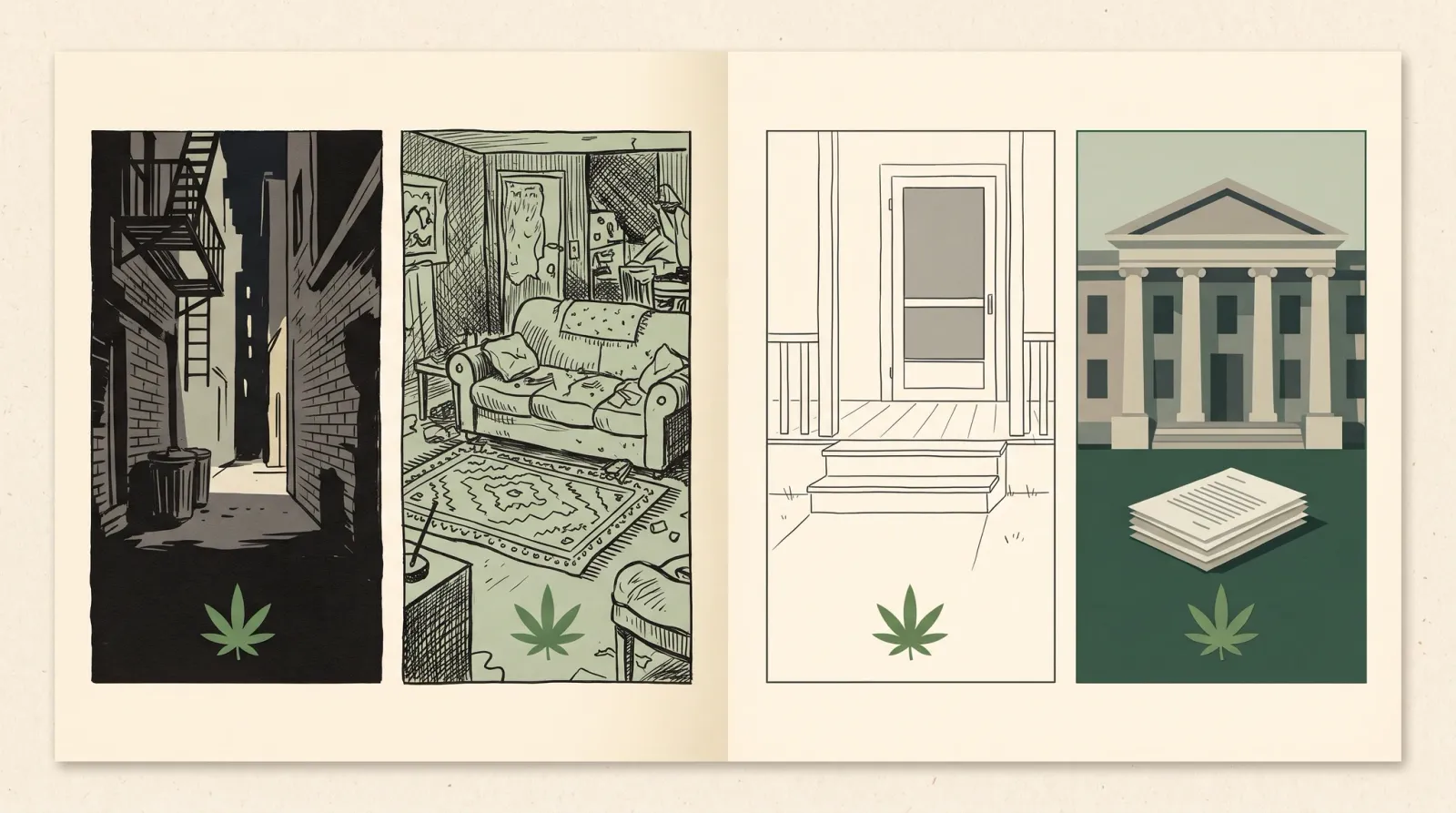
Cannabis shows up in comics as four very different stories: 1950s warning comics, the Freak Brothers’ underground comedy from 1968, Doonesbury’s Zonker in the daily newspaper from 1971, and Box Brown’s 2019 graphic history of prohibition. The superhero shelf almost never told one. In a 2006 study of 52 mainstream comic books and graphic novels, marijuana appeared in exactly one: a 1980s Swamp Thing story. Stoddart, 2006
That one fact explains the whole map. To find a cannabis comic, leave the capes behind. Look at old warning comics, head-shop comix, the funny pages and the nonfiction shelf. Here in High School, we sort them by the story each one tells, not by how “good” they are.
Sources checked October 29, 2026. This is a culture lesson for adult readers, not a reading list for kids.
Which cannabis comics are worth knowing?
Four books and series cover the four stories. Each note says what the book shows, so you can pick by interest.
| Story | Example | Era and form | What cannabis means in it |
|---|---|---|---|
| Warning tale | “Trapped!” and the stories collected in Reefer Madness Comics | 1930s to 1950s, short educational and pulp comics | The first step toward heroin and crime |
| Underground comedy | Gilbert Shelton’s The Fabulous Furry Freak Brothers | Created 1968, sold through underground comix | The center of a slacker comedy |
| Newspaper strip | Garry Trudeau’s Doonesbury, with Zonker Harris | From 1970, daily syndicated strip | A character trait, and later a legal problem |
| Nonfiction history | Box Brown’s Cannabis: The Illegalization of Weed in America | 2019, book-length graphic history | The subject of a prohibition argument |
The sections below explain each one, then why mainstream comics stayed quiet.
When did cannabis first appear in comic books?
The earliest cannabis comics most readers can find today were warnings. Comics historian Craig Yoe collected twenty-one old marijuana stories in Reefer Madness Comics for Dark Horse Books. He told PRINT Magazine that they share one plot. A friend offers weed. The habit leads to harder drugs. The user ends up in crime. Vaughan, 2018
The best-known example is “Trapped!” from 1951, published with Columbia University Press and Harvey Comics. It follows a young man named Bill Jones from reefer to heroin. Yoe thinks these stories were so lurid that they may have drawn kids in instead of scaring them off. That is an editor’s opinion, not a measured result.
These comics grew up in the same decades as the warning films. Our lesson on cannabis in cinema from Reefer Madness to The Dude shows the same move on screen. The legal backdrop was the 1937 Marihuana Tax Act, which made cannabis a federal enforcement target.
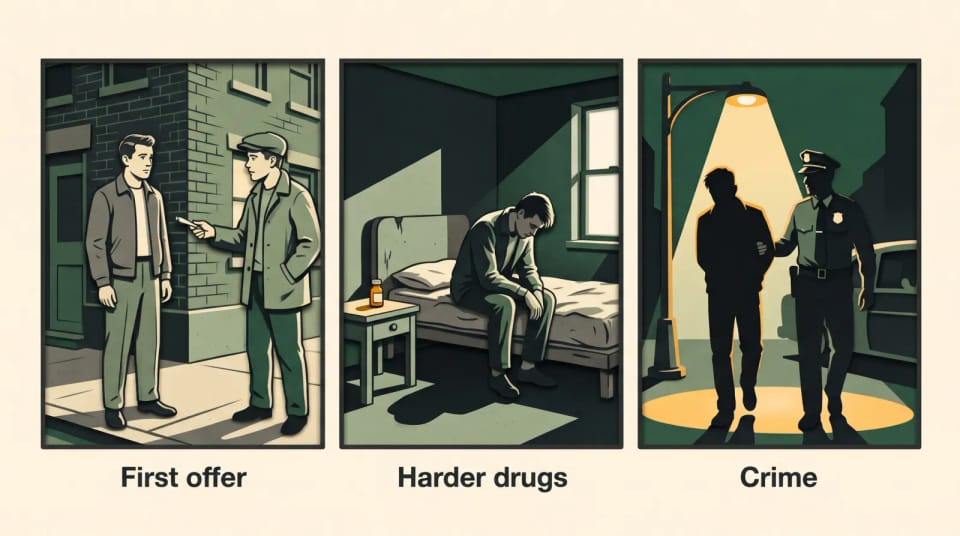
The warning-comic formula, as described by anthology editor Craig Yoe. It is a story template, not evidence of how cannabis use actually progresses.
What are the Fabulous Furry Freak Brothers?
The Fabulous Furry Freak Brothers are three hippie roommates created by cartoonist Gilbert Shelton in 1968. The comic ran until 1997. The Lambiek comics encyclopedia calls it “arguably the first ‘stoner comedy’ in history” and notes that it was banned in some countries and states. Lambiek Comiclopedia Treat “first” as a fair description, not a settled fact.
The Freak Brothers came out of the underground comix scene that started with Robert Crumb’s Zap Comix in 1967. University of Missouri Libraries Underground books did not carry the Comics Code seal. They sold in head shops, through publishers such as Rip Off Press, Kitchen Sink and Print Mint. The St. James Encyclopedia of Popular Culture lists the Freak Brothers among the popular “pro-drug comics” of the scene. Encyclopedia.com
What the book shows: cannabis as a comedy engine. The brothers chase it, lose it and outwit the police over it. The joke flips the fear of the warning comics. For the wider scene these books came from, see the counterculture these comics grew out of.
The slacker-hero image stuck. Whether it matches real cannabis users is a separate question, and our lesson on what the data says about the stoner stereotype takes that one on.
Is Doonesbury’s Zonker a pot smoker?
Yes. In the strip’s early years, cannabis was part of his character. Doonesbury began in 1970. It grew out of Garry Trudeau’s Bull Tales strip in the Yale Daily News. Britannica describes Zonker Harris as “an archetypal slacker” and Uncle Duke as “perpetually stoned”. Trudeau won the 1975 Pulitzer Prize for editorial cartooning, the first comic strip artist to do so. Britannica
The cannabis details come from a close reading of the dated strips by comics writer Paul Hebert. According to Hebert, the first Doonesbury pot strip ran on 12 April 1971. The early gags were soft, in the Freak Brothers style. In a summer 1973 arc, Zonker is arrested with three cannabis seeds and faces a long sentence. He goes free when an illegal police bug comes to light. Hebert, 2019 The strip archive itself is behind a paywall, so we have not checked those strips directly.
What the strip shows: cannabis moving from the head shop into the family newspaper. A reader could meet a pot joke, then a drug-law plot, over breakfast. That arc came just after the 1970 Controlled Substances Act set cannabis in Schedule I.
What is the best graphic novel about the history of cannabis?
Box Brown’s Cannabis: The Illegalization of Weed in America is the book most searchers find. It is the clearest full history in comics form. First Second published it on 2 April 2019. Pyontek, 2019 It runs 244 pages. Open Library
The book argues that US prohibition grew out of racism and moral panic, with Harry Anslinger at the center. The Comics Journal’s review says Brown starts with a mythic first smoker, travels through India and Mexico, then follows the US story. The reviewer calls it “a great introduction” with “a solid bibliography”, but also flags some “reductive” sentences. The book ends at California’s 1996 medical marijuana law, and its closing pages avoid current laws and policy. The Comics Journal
What the book shows: cannabis as a policy story, not a character. Brown has said he was arrested for possession at 16. So read it as a well-sourced argument from a writer with a stake in the subject. For what came next, our lesson on how drug enforcement grew in the Reagan era picks up the thread.
Are there superhero comics about weed?
Almost none in the mainstream record. Stoddart studied 52 comic books and graphic novels in 2006. He found that comics mostly tell negative stories about heroin and cocaine. He called marijuana “one particularly notable silence”. It appeared once, as a likeable hippie dealer in 1980s Swamp Thing. Stoddart, 2006
Two limits matter. Stoddart’s sample left out the underground comix on purpose, and it ends in 2006. So the finding is “almost absent from that mainstream sample”, not “absent from all comics”. A separate, early review of 35 comic books and 9 graphic novels about addiction reached a similar view. Cannabis is rare in those plots. It shows up instead in counterculture comics and graphic nonfiction. White, 2020
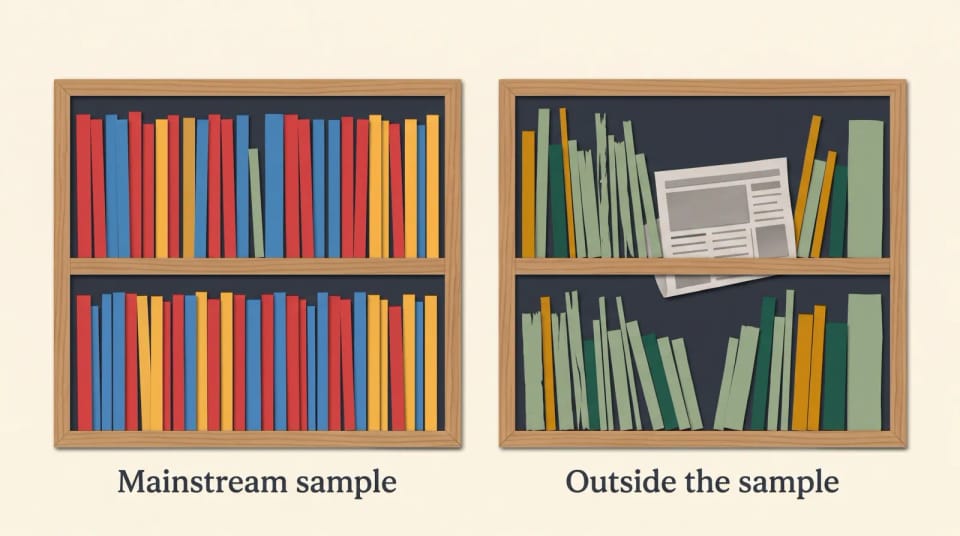
In a 52-title mainstream sample, marijuana appeared once. The underground comix, newspaper strips and graphic nonfiction were outside that sample, and that is where cannabis stories live.
Wasn’t the famous Spider-Man drug issue about weed?
No. In 1971, Amazing Spider-Man #96 to #98 ran without the Comics Code seal. Stan Lee wrote the anti-drug story at the request of the US Department of Health, Education, and Welfare. The drug subplot shows Harry Osborn “popping pills”. Sergi, 2012 It changed comics history, but it is not a cannabis story.
Did the Comics Code ban drug stories?
The sources disagree on what the 1954 Code said. The CBLDF essay says the word “drugs” was not in the Code. It says the Code Authority rejected the Spider-Man issues under a general good-taste rule. A 2020 review and the PRINT feature both say the Code banned drug references. We have not seen the 1954 text, so we will not pick a side.
The 1971 revision is clear. It let drug addiction appear “only… as a vicious habit” and barred any story that implied “a casual attitude toward the taking of narcotics or drugs”. CBLDF, Comics Code Revision of 1971 It never names cannabis. Either way, a Freak Brothers comedy could not carry the seal. That is one reason those books lived outside the newsstand.
How do you read these comics today?
Read each one for the story it tells about its moment.
- Warning comics show what officials and publishers wanted young readers to fear.
- Freak Brothers shows a counterculture laughing back.
- Doonesbury shows cannabis reaching ordinary newspaper readers, then the law catching up with a beloved character.
- Box Brown shows a modern argument about why the law happened at all.
None of these books is a guide to how cannabis affects a person. Want something light to read while high? That is a different question, and our ranking of easy reads when your attention drifts handles it. For the same cultural story in another art form, see how music told its cannabis stories.
Key takeaways
- Cannabis comics fall into four distinct stories: warning tale, underground comedy, newspaper strip and nonfiction history.
- In a 2006 study of 52 mainstream comics, marijuana appeared once. Cannabis stories live outside the superhero shelf.
- The Freak Brothers date to 1968 and helped define the stoner comedy.
- Doonesbury brought pot jokes, and a 1973 drug-bust arc, into daily newspapers.
- Box Brown’s 2019 book Cannabis is the most complete graphic history of US prohibition, ending at 1996.
- The 1971 Spider-Man drug issues were about pills, not cannabis.
FAQ
What is the best graphic novel about the history of cannabis?
Box Brown’s Cannabis: The Illegalization of Weed in America (First Second, 2019) is the most complete option. It traces cannabis from ancient use to US prohibition and ends at California’s 1996 medical law. Reviewers praise its bibliography but note that it argues a position and skips current policy.
When did cannabis first appear in comic books?
The oldest cannabis comics most readers can find are warning stories from the 1930s to the 1950s, many collected in Reefer Madness Comics. A well-known example is “Trapped!” from 1951. Searches for this lesson did not settle which story came first, so treat any “first ever” claim with care.
Are there superhero comics about weed?
Very few. A 2006 study of 52 mainstream comics found marijuana in only one, a 1980s Swamp Thing story. That sample excluded underground comix, where cannabis stories are common.
Is Zonker from Doonesbury a stoner?
He is written as an archetypal slacker, and the early strips tied him to cannabis. According to a close reading of the strips, the first Doonesbury pot strip ran in April 1971, and Zonker faced a cannabis-seed bust in a 1973 storyline.
Did the Comics Code ban drug stories?
The sources disagree about the original 1954 Code. The 1971 revision allowed addiction only as “a vicious habit” and barred any casual attitude toward drugs. Underground comix ignored the Code and sold outside newsstands, in head shops.
Sources
- Stoddart, M. C. J., 2006. “They say it’ll kill me…but they won’t say when!” Drug narratives in comic books. Journal of Criminal Justice and Popular Culture, 13(2), 66-95. PDF
- Vaughan, D., 2018. When weed was wack! PRINT Magazine. printmag.com
- Lambiek Comiclopedia. Gilbert Shelton. lambiek.net
- University of Missouri Libraries Special Collections. Superheroes, censorship, and underground comics. library.missouri.edu
- Goldweber, D. Underground comics. St. James Encyclopedia of Popular Culture. encyclopedia.com
- Britannica Editors, 2024. Doonesbury. Encyclopaedia Britannica. britannica.com
- Hebert, P., 2019. “It sure is against the law.” Marijuana, part one: Zonker’s bust and Box Brown’s Cannabis. Reading Doonesbury. readingdoonesbury.com
- Pyontek, K., 2019. Graphic novel explores the history and criminalization of cannabis. South Seattle Emerald. southseattleemerald.org
- Open Library. Cannabis: The Illegalization of Weed in America, ISBN 9781250154088. openlibrary.org
- The Comics Journal, 2019. Cannabis (review). tcj.com
- White, A., and White, W. L., 2020. The portrayal of drug use and addiction in American comic books and graphic novels. Chestnut Health Systems. chestnut.org
- Sergi, J., 2012. Tales from the Code: Spidey fights drugs and the Comics Code Authority. Comic Book Legal Defense Fund. cbldf.org
- Comic Book Legal Defense Fund. Comics Code revision of 1971. cbldf.org



