Is Weed Legal in California? 2026 Cannabis Laws Explained
Is weed legal in California? Adults 21+ may hold 28.5 g of flower or 8 g of concentrate. See the 2026 rules for buying, growing, driving, and work.

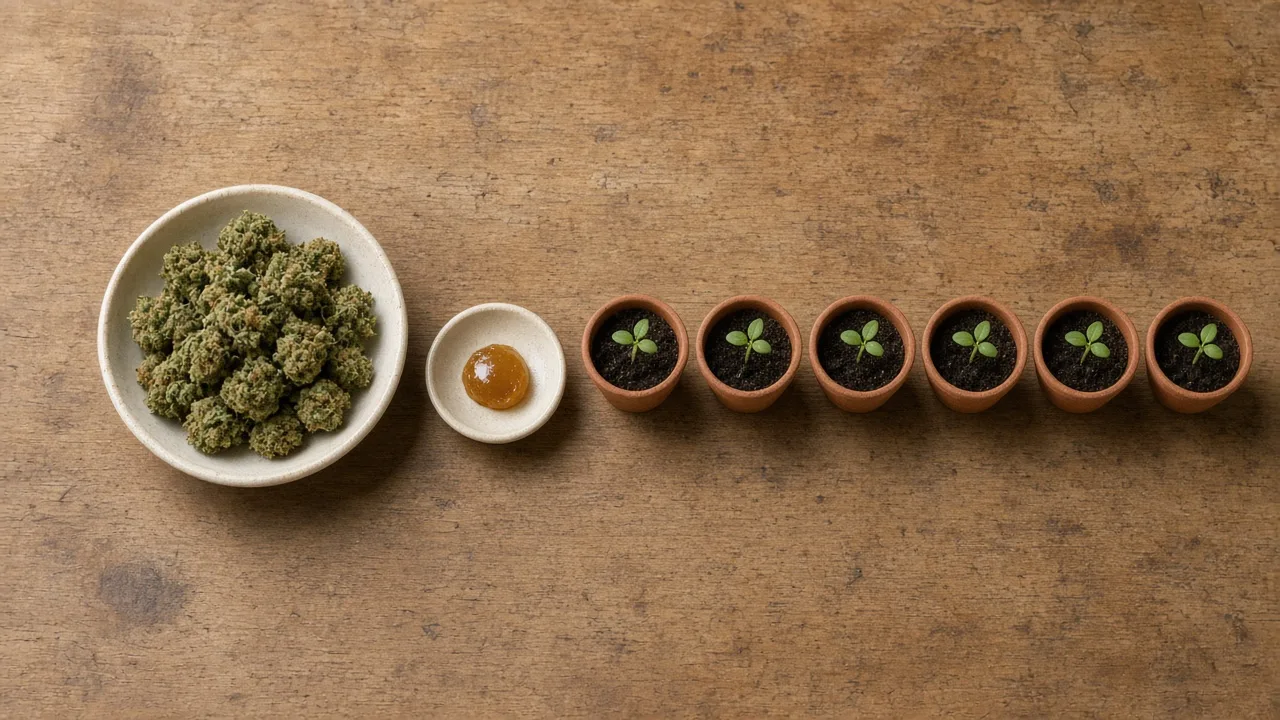
Yes. Weed is legal in California for adults 21 and older, who may possess up to 28.5 grams of cannabis flower or up to 8 grams of cannabis concentrate, and who may grow up to six living plants.
The question “is weed legal in California” gets that yes, with a ceiling. Those are the adult-use limits in Health and Safety Code section 11362.1. Buying from a shop is a separate daily cap with the same numbers. A city can still ban a store. A job can still ban use at work.
Last checked: October 13, 2026, for the excise-tax table and the hemp FAQ. The statutes below were opened on October 8, 2026.
I am Professor High. This High School guide is the law now. It is education. It is not legal advice. Statutes, tax rates, and city rules change. For a case, a job, or a ticket, talk with a California lawyer.
One workplace rule is easy to miss. California Government Code section 12954, enacted by AB 2188 and amended by SB 700, makes it unlawful for an employer to penalize a person because a drug test found nonpsychoactive cannabis metabolites in their hair, blood, urine, or other bodily fluid. The exceptions sit in the work section below. On-the-job use is still outside that protection.
This page is the law now. What Proposition 64 actually changed is the history of how the state got here. It does not replace these ceilings. For the map of every state, use where cannabis is legal in 2026.
What are California’s cannabis rules in short?
| Topic | The 2026 rule |
|---|---|
| Legal age | 21 or older for adult use. A medicinal patient 18 or older may buy with a physician’s recommendation. |
| Flower you may carry | Not more than 28.5 grams of cannabis that is not concentrate. Health and Safety Code section 11362.1(a)(1). |
| Concentrate you may carry | Not more than 8 grams, including concentrate inside products. Section 11362.1(a)(2). |
| Plants | Not more than six living plants per private residence. Sections 11362.1(a)(3) and 11362.2(a)(3). |
| Adult-use buy, per day | 28.5 grams of non-concentrated cannabis, 8 grams of concentrate, and 6 immature plants. California Code of Regulations, title 4, section 15409(a). |
| Where you may use it | Private property, with the owner’s rules. Public use, tobacco-banned places, and the school-distance rule are in section 11362.3. |
| Excise tax | 15 percent of the retailer’s gross receipts on this check date. It was 19 percent only from July 1 through September 30, 2025. |
| Driving | No THC number in Vehicle Code section 23152. Impaired driving is illegal. An open container in the passenger area is a separate offense. |
| Work | Most employers may not punish a test that only found nonpsychoactive cannabis metabolites. Government Code section 12954. Exceptions apply. |
| Regulator | The Department of Cannabis Control licenses shops and publishes the consumer rules. |
The photo above is the adult-use picture in one glance. The flower dish is the larger allowance. The concentrate dab is much smaller. The six pots are the plant cap, and that cap is per home, not per adult.
How much weed can you carry in California?
Section 11362.1(a) lets a person 21 or older possess, process, transport, purchase, obtain, or give away, without compensation:
- not more than 28.5 grams of cannabis that is not concentrated cannabis, and
- not more than 8 grams of concentrated cannabis, including the concentrate contained in cannabis products.
“Give away, without compensation” is the gift rule. You may share within those amounts with another adult. You may not sell it. Selling cannabis requires a state license. The Department of Cannabis Control says to buy only from a licensed retailer, and to look for the license in the window.
Going over the amount is a different crime. Under Health and Safety Code section 11357(b)(2), a person 18 or older who possesses more than 28.5 grams, or more than 8 grams of concentrate, faces up to six months in county jail, a fine of up to $500, or both.
Age still matters under the limit. Section 11357(a)(2) makes possession of not more than those amounts, by someone 18 or older but under 21, an infraction with a fine of not more than $100. People under 18 are routed to drug education and community service under section 11357(a)(1), not to the adult fine.
Lawful conduct under section 11362.1 is not, by itself, a basis for detention, search, or arrest. That sentence does not cover conduct the later sections take back, such as public smoking, an open container in a car, or sales.
If an older case is still on your record, start with how to expunge a cannabis conviction. Eligibility depends on the case. This page does not decide it.
Can you grow weed in California?
Yes, within a tight box. Section 11362.1(a)(3) allows a person 21 or older to possess, plant, cultivate, harvest, dry, or process not more than six living cannabis plants, and to possess the cannabis those plants produce.
Section 11362.2(a)(3) then says the living-plant limit is six plants per single private residence. Two adults in one home do not get twelve plants. The harvest rule is separate from the carry rule. Plants, and any cannabis produced by them in excess of 28.5 grams, must stay inside that private residence or on its grounds. The space must be locked. The plants must not be visible by normal unaided vision from a public place. Section 11362.2(a)(2).
A city or county may regulate personal cultivation. It may not completely prohibit indoor personal cultivation inside a private residence, or inside a fully enclosed and secure accessory structure. It may completely prohibit outdoor cultivation on the grounds of a private residence. Section 11362.2(b). That outdoor-ban power ends only if the Attorney General determines that adult use is lawful under federal law. That determination is not the state of the law on this check date.
Breaking the section 11362.2(a) grow rules is an infraction. The fine is not more than $250. Section 11362.4(e).
Making concentrate with a volatile solvent, such as butane, is not part of home grow. Section 11362.3(a)(6) leaves that to licensed manufacturers, and section 11362.4(d) points the penalty to section 11379.6. Do not run a blast in a kitchen.
Renters have a second lock. Health and Safety Code section 11362.45 leaves private property owners free to prohibit cannabis activity on their property. A lease can forbid a tent even when the state allows six plants. Read whether a landlord can ban cannabis before you buy a light. Where a grow is legal, the practical steps live in how to grow cannabis at home.
Where can you buy cannabis in California, and what tax do you pay?
Buy from a retailer licensed by the Department of Cannabis Control. Delivery, pickup, and in-store sales are allowed at licensed shops. Some storefronts look official and are not. The department tells shoppers to check the license, including the QR code in the window, and to use the state’s license search.
The adult-use daily purchase limit is in title 4, section 15409(a) of the California Code of Regulations, as compiled in the department’s January 1, 2026 regulations:
- 28.5 grams of non-concentrated cannabis,
- 8 grams of cannabis concentrate, including concentrate contained in cannabis products, and
- 6 immature cannabis plants.
That daily cap is not the same statute as the possession cap, even though the flower and concentrate numbers match. You can hold the possession amount and still be over the shop’s daily sale limit if you try to buy it twice in one day. Adult-use and medicinal purchase limits may not be combined to exceed any limit. Section 15409(d).
Package strength is capped too. Title 4, section 17304 says an edible may not contain more than 10 milligrams of THC per serving or 100 milligrams of THC per package. A topical or a concentrate may not contain more than 1,000 milligrams of THC per package. Higher package totals exist only for products labeled for medical use and sold only to a medicinal patient.
Menus still carry California cultivar names. OG Kush and Girl Scout Cookies are two you will see. Those pages describe the cultivars. A High Families page such as Relax High groups products by the brand’s classification. It does not predict how a jar will feel, and it is not a medical claim.
What shows up on the receipt
The cannabis excise tax is 15 percent of the gross receipts of a retail sale. Revenue and Taxation Code section 34011.2 set that 15 percent rate for sales on and after January 1, 2023. From July 1, 2025, through September 30, 2025, the rate was 19 percent. Assembly Bill 564, chapter 127 of the Statutes of 2025, put the rate back to 15 percent for sales on and after October 1, 2025, and delayed the next adjustment until the 2028–29 fiscal year. On October 13, 2026, the Department of Tax and Fee Administration’s rate table still shows 15 percent. The next rate is not set. Do not budget a later date as if the 15 percent rate had already been given an end day. One retailer page has used “through June 30, 2029,” and that end date does not match the adjustment timing in the statute. The table is the rate in force.
Sales and use tax generally applies on top, unless a specific exemption applies. The statewide base rate is 7.25 percent, and district taxes make the total higher in many cities. The excise tax is part of the amount subject to sales tax, and the receipt must list the excise tax on its own line. There is no single statewide “you pay this percent” total.
Some cities and counties add their own cannabis business tax. The tax agency does not administer those local cannabis taxes. If the shop adds one to the receipt, it can change both the excise base and the sales-tax base. The separate weight-based cultivation tax is no longer the tax shoppers see. The tax on the receipt is the retail excise tax. Shelf prices by state are in what weed costs in 2026. That price guide is about cost. This section is about which taxes the law stacks.
Where can you use cannabis in California?
Section 11362.1 allows smoking or ingesting, and then section 11362.3 lists the places that permission does not cover. You may not:
- smoke or ingest cannabis in a public place, except where Business and Professions Code section 26200 allows a local on-site exception,
- smoke cannabis where smoking tobacco is prohibited,
- smoke within 1,000 feet of a school, a day care center, or a youth center while children are present, except on the grounds of a private residence if the smoke is not detectable by others on the grounds of that school, day care, or youth center,
- possess, smoke, or ingest cannabis on the grounds of a school, day care center, or youth center while children are present,
- smoke or ingest while driving or operating a vehicle, boat, vessel, or aircraft, or
- smoke or ingest while riding as a passenger, except on a vehicle that section 26200 allows for on-site consumption, and only if nobody under 21 is present.
“Smoke” includes vapor and aerosol. A vape pen counts.
For an adult, public smoking or ingesting is an infraction with a fine of not more than $100. Section 11362.4(a). The tobacco-place rule, the 1,000-foot rule, and the open-container rule are infractions with a fine of not more than $250. Section 11362.4(b). People under 18 follow the education and community-service path in that section instead of those adult fines.
An adult who possesses not more than the legal amount on the grounds of a school that provides kindergarten through grade 12, while the school is open for classes or school programs, commits a misdemeanor. The first offense is a fine of not more than $250. A later offense is a fine of not more than $500, up to 10 days in jail, or both. Section 11357(c).
The Department of Cannabis Control’s consumer page says to use cannabis on private property, not in a public place such as a restaurant or bar, and that most hotels do not allow in-room use. A property owner may forbid it. Section 11362.45 preserves that private-property power.
California does not run a statewide consumption-lounge program. Section 26200(g) lets a city or county allow smoking, vaporizing, and ingesting on the premises of a licensed retailer or microbusiness, if access is limited to people 21 or older and the statutory conditions are met. That is local permission. Nevada’s cannabis rules describe a different system, with licensed lounges. Do not assume a California city has one.
Can you drive after using cannabis in California?
No. Do not drive after you use cannabis. A legal amount in the trunk does not make an impaired driver legal.
Vehicle Code section 23152(f) makes it unlawful to drive under the influence of any drug. Section 23152(g) covers the combined influence of alcohol and any drug. The statute does not set a nanograms-per-milliliter THC limit. Health and Safety Code section 11362.45(a) says the adult-use law does not amend the ban on driving while smoking, ingesting, or impaired by cannabis.
There is also no safe wait time in the statute. A planned research pilot would test whether an in-vehicle system can detect THC impairment. [Deuber et al., 2026] published the protocol only. It reports no results, so it does not show that any device works. Our separate review of the wait-time research is how long to wait after cannabis before driving. That article does not create a legal green light.
Open cannabis in the car is its own offense, even if you are sober. Section 11362.3(a)(4) bars an open container or open package of cannabis or a cannabis product while driving, operating, or riding in the passenger compartment of a motor vehicle, boat, vessel, aircraft, or other vehicle. Vehicle Code section 23222(b) adds a driver-specific infraction: a receptacle with a broken seal, or loose flower not in a container, on the driver’s person while driving. The fine is not more than $100. The trunk exception is explicit. The department’s consumer page says cannabis in a vehicle must be in a sealed container or in the trunk.
Can your job punish you for legal cannabis in California?
A positive metabolite test is not the same thing as proof that you were impaired at work. Section 12954 draws that line, and it draws it with exceptions.
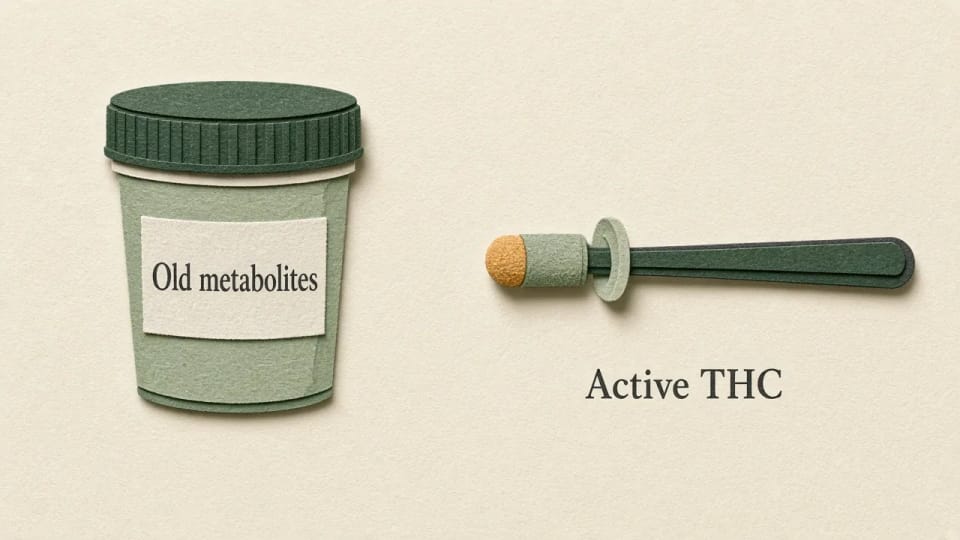
The cup and the swab are different questions. A metabolite result can linger after the effect has ended. A test aimed at active THC is a different method. Neither picture proves impairment by itself. How long THC stays in a drug test explains the windows. It is not a promise about your employer’s policy.
Section 12954(a)(1), operative January 1, 2024, makes it unlawful for an employer to discriminate in hiring, termination, or any term or condition of employment, or otherwise to penalize a person, based on either of these:
- cannabis use off the job and away from the workplace, or
- an employer-required drug screen that found nonpsychoactive cannabis metabolites in hair, blood, urine, or other bodily fluids.
The off-duty paragraph has a second sentence. It does not stop an employer from using a scientifically valid preemployment screen that does not look for nonpsychoactive cannabis metabolites. A test built to find active THC can still be used at hiring, within that sentence.
Subdivision (b), added by SB 700, makes it unlawful to request information from an applicant about prior cannabis use, with a criminal-history caveat in subdivision (c).
These are the main exceptions:
- Employees in the building and construction trades are outside subdivision (a). Section 12954(a)(2).
- The section does not apply to a job that requires a federal background investigation or a security clearance under Department of Defense regulations, or the equivalent rules of another federal agency. Section 12954(f).
- The section does not override a state or federal law that requires drug testing as a condition of employment, federal funding, a federal licensing benefit, or a federal contract. Section 12954(e).
- Nothing in the section permits an employee to possess, be impaired by, or use cannabis on the job. Employers keep their drug-free workplace rights under section 11362.45. Section 12954(d).
“Employer,” for this part of the Fair Employment and Housing Act, includes a person regularly employing five or more persons, and also includes the state and its political subdivisions. Government Code section 12926(d). A religious association that is not organized for private profit is carved out of that definition.
The state-by-state employment map, including this California row, is can you be fired for legal cannabis.
What are the medical cannabis rules?
Medicinal cannabis is a second track, not a larger adult-use allowance you can stack.
The Department of Cannabis Control says a person 18 or older with a physician’s recommendation may buy medicinal cannabis. Health and Safety Code section 11362.77 is the possession guideline for a qualified patient or a primary caregiver: not more than eight ounces of dried cannabis per qualified patient, and not more than six mature or twelve immature plants per qualified patient. If the physician’s recommendation says that amount does not meet the patient’s medical needs, the patient may possess an amount consistent with those needs. Cities and counties may set higher medicinal guidelines. Only the dried mature processed flowers of the female plant count toward the dried-ounce amount.
The daily shop limit for a medicinal patient or primary caregiver is in section 15409(b): eight ounces of dried mature flowers, or the plant conversion in section 11362.77, and twelve immature plants. If the recommendation documents a different amount, section 15409(c) lets the patient purchase an amount consistent with that documented need. Section 15409(d) says you do not add the adult-use daily limit on top.
The Compassionate Use Act remains in place. Section 11362.45(i) says the adult-use law does not amend it. This guide does not restate patient-specific rules for people under 18. Those turn on the recommendation and on the medical statute, not on the 21-and-over possession section.
Are hemp THC products legal in California?
Hemp drinks and gas-station gummies are not a side door around the dispensary rules.
Assembly Bill 8, chapter 248 of the Statutes of 2025, was signed on October 2, 2025. Most of it took effect on January 1, 2026. Some licensing changes wait until January 1, 2028. Those later pieces are enacted and not yet operative. They are not a pending idea.
The State Department of Public Health’s AB 8 FAQ, checked on October 13, 2026, states the practical bans:
- Industrial hemp extract used to make food, a food additive, a beverage, a dietary supplement, or processed pet food may not contain THC or any synthetic cannabinoid.
- A certificate of analysis for that extract must show that CBD or CBN exceeds 99 percent of the total integrated chromatographic peaks.
- Intoxicating hemp products are treated as cannabis. Illegal manufacture or sale can draw the same civil and criminal penalties as illegal cannabis.
- Hemp flower, pre-rolls that contain hemp flower or hemp-derived cannabinoids, and inhalable products that contain hemp-derived THC may not be sold, offered, or provided in California as of January 1, 2026.
- Hemp extract in a cosmetic may not contain THC, except that a topically applied cosmetic may contain total THC not exceeding 0.3 percent on a dry-weight basis, with the department’s industrial-hemp authorization and a cosmetic manufacturing registration.
- Beginning January 1, 2028, extracting cannabinoids from industrial hemp will require a Department of Cannabis Control license.
The same FAQ says the department’s 2024 emergency regulations align with AB 8 and require hemp foods, beverages, and dietary supplements to have no detectable total THC, a minimum purchase age of 21, and no more than five servings per package. An older rulemaking page described an expiry path for parts of those emergency rules. The current FAQ still describes the limits. This guide follows the FAQ’s description and does not treat a guessed expiry date as the law.
Manufacturing an inhalable hemp product solely for sale in another state is a separate manufacturing sentence on the FAQ. It is not permission to bring that product back into California, and it is not permission to drive it across a state line.
Can a city ban cannabis?
Yes for stores. No for a total ban on indoor personal cultivation.
Business and Professions Code section 26200(a)(1) says the state licensing law does not supersede local power over licensed businesses. A city or county may regulate them, and it may completely prohibit one or more types of licensed businesses, except as the medicinal delivery statute provides.
That exception is section 26322, enforced under section 26323 since January 1, 2024. A local government may not adopt or enforce a rule that prohibits, or effectively prohibits, delivery retail sale of medicinal cannabis to patients or primary caregivers by licensed medicinal businesses, in a timely and accessible way, and in types and quantities sufficient for local patient demand. The city may still set reasonable rules on zoning, security, health, licensing, and tax. The section does not force every city to allow an adult-use storefront.
So a dry county can still lack a recreational shop. It still cannot flatly ban indoor personal cultivation inside a private residence. Section 11362.2(b)(2). And it still cannot wall off medicinal delivery. Section 26322.
Can you travel with cannabis in California?
You may transport a lawful amount inside California. Section 11362.1 includes transport in the adult-use permission, subject to the open-container rules above. Keep it sealed, or put it in the trunk.
You may not take it across a state line. You may not possess it on federal land, including a national park. The Department of Cannabis Control’s consumer page still says both of those things, as of October 8, 2026. A federal medicinal registration rule announced on April 28, 2026, does not change those two practical bans. It does not make a California purchase legal in a national park, and it does not authorize a drive into Nevada or Oregon with that purchase.
Oregon’s cannabis rules and the Nevada guide are for conduct inside those states. They are not a corridor. Massachusetts cannabis laws answer a different state’s current rules. They are not a way to carry California cannabis out of the state. The fuller travel map, including airports and other states, is how to travel with cannabis. Do not put cannabis in a suitcase for a flight. Federal law still applies in the airport and on the plane.
Key takeaways
- Adults 21 and older may carry up to 28.5 grams of flower or 8 grams of concentrate, and may grow up to six living plants per private residence.
- The shop’s adult-use daily cap uses those same flower and concentrate numbers, plus six immature plants, under title 4, section 15409.
- Indoor personal cultivation cannot be fully banned. Outdoor grows and recreational storefronts can be.
- The excise tax on this check date is 15 percent of retail gross receipts, plus sales tax and any local cannabis business tax.
- There is no THC number for driving. Do not drive after you use cannabis. Keep any lawful amount sealed or in the trunk.
- Most employers may not punish a metabolite-only test. Construction jobs, federal clearance jobs, required federal tests, and any on-the-job use sit outside that rule.
- Hemp THC foods, hemp flower, and inhalable hemp THC products are not a legal workaround as of January 1, 2026.
- Do not cross a state line with cannabis, and do not take it onto federal land.
FAQ
Do I need a medical card if I am already 21?
No. Adult use at 21 does not require a physician’s recommendation. A recommendation matters if you are 18, 19, or 20 and buying medicinal cannabis, or if you need the medicinal possession and purchase amounts in section 11362.77 and title 4, section 15409. It does not let you add those amounts on top of the adult-use daily cap.
Can a tourist buy cannabis in California?
Yes, if the tourist is 21 or older and buys from a licensed retailer, within the adult-use daily limit. The Department of Cannabis Control does not add a California residency rule on its consumer page. The purchase still cannot go home across a state line, onto federal land, or onto a plane.
Does California set a THC number for driving?
No. Vehicle Code section 23152 uses impairment, not a THC blood number. An open container in the passenger compartment is illegal even when the driver is sober. Leave the car with a sober driver, or stay where you are.
Can I take California cannabis to Nevada or Oregon?
No. Do not drive it across the state line. Each neighbor has its own rules for cannabis bought inside that state. California’s Department of Cannabis Control still tells consumers that state-line travel with cannabis is illegal.
Can my landlord still ban cannabis?
Yes. Section 11362.45 leaves a private property owner free to prohibit cannabis on that property. A hotel, a lease, or a house rule can be stricter than the state possession limit. The state cap is a ceiling on what the criminal law allows. It is not a right to use cannabis in someone else’s building.
Sources
The tax rate table, the cannabis retailer page, and the State Department of Public Health AB 8 FAQ were checked on October 13, 2026. The other official pages and the study protocol below were checked on October 8, 2026.
- Health and Safety Code section 11362.1, adult possession, gifting without pay, and six plants. Official text.
- Health and Safety Code section 11362.2, residence plant cap, lock and visibility rules, and local indoor and outdoor power. Official text.
- Health and Safety Code section 11362.3, public use, schools, open containers, and volatile solvents. Official text.
- Health and Safety Code section 11362.4, infraction fines for public use and related conduct. Official text.
- Health and Safety Code section 11357, under-21 possession and amounts over the adult limit. Official text.
- Health and Safety Code section 11362.45, driving, employers, private property, and the Compassionate Use Act. Official text.
- Health and Safety Code section 11362.77, medicinal possession guideline. Official text.
- Government Code section 12954, off-duty cannabis and nonpsychoactive metabolite tests. Official text.
- Government Code section 12926, Fair Employment and Housing Act employer definition. Official text.
- Vehicle Code section 23152, driving under the influence of a drug. Official text.
- Vehicle Code section 23222, open cannabis receptacle while driving. Official text.
- Business and Professions Code section 26200, local business bans and optional on-site consumption. Official text.
- Business and Professions Code section 26322, medicinal delivery access. Official text.
- Title 4, California Code of Regulations, sections 15409 and 17304, daily purchase limits and THC package limits, in the Department of Cannabis Control regulations compilation dated January 1, 2026. PDF.
- Department of Cannabis Control, “What’s legal.” Consumer page.
- Department of Tax and Fee Administration, cannabis excise tax rates, including the October 1, 2025 return to 15 percent. Rate table.
- Revenue and Taxation Code section 34011.2, cannabis excise tax on retail gross receipts. CDTFA law guide.
- Department of Tax and Fee Administration, cannabis retailer guidance on excise tax and sales tax. Retailers.
- State Department of Public Health, Assembly Bill 8 FAQ on hemp foods, flower, and inhalable products. FAQ.
- Deuber R and colleagues. Protocol for a pilot of in-vehicle THC detection. The paper reports no study results. PLoS One. PubMed 42821661.