Can You Be Fired for Legal Cannabis? Employment Protections by State
In most states, buying weed legally will not save your job. Here is what federal law, the ADA, and nine state statutes actually protect.

Professor High

You walked into a licensed store. You showed ID. You paid state excise tax on a product with a batch number and a lab report. Everything about the transaction was legal.
On Monday, your employer can still fire you for it. In most states, that is not a loophole or an oversight. It is the default.
This is the single most-asked practical question in cannabis, and the honest answer surprises almost everyone: legalisation for consumers did not create employment protection. Those are two different laws doing two different jobs. The first one stops the state from arresting you. The second one — the one that stops your boss — only exists in a handful of places, and even there it comes riddled with exceptions.
Here is how the pieces actually fit together, what changed in April 2026, and what you can realistically do about it.
This is general information, not legal advice. Employment law is state-specific, fact-specific, and changing fast. Nothing here creates an attorney-client relationship. If your job is genuinely on the line, talk to an employment lawyer licensed in your state before you rely on anything in this article — including this article.
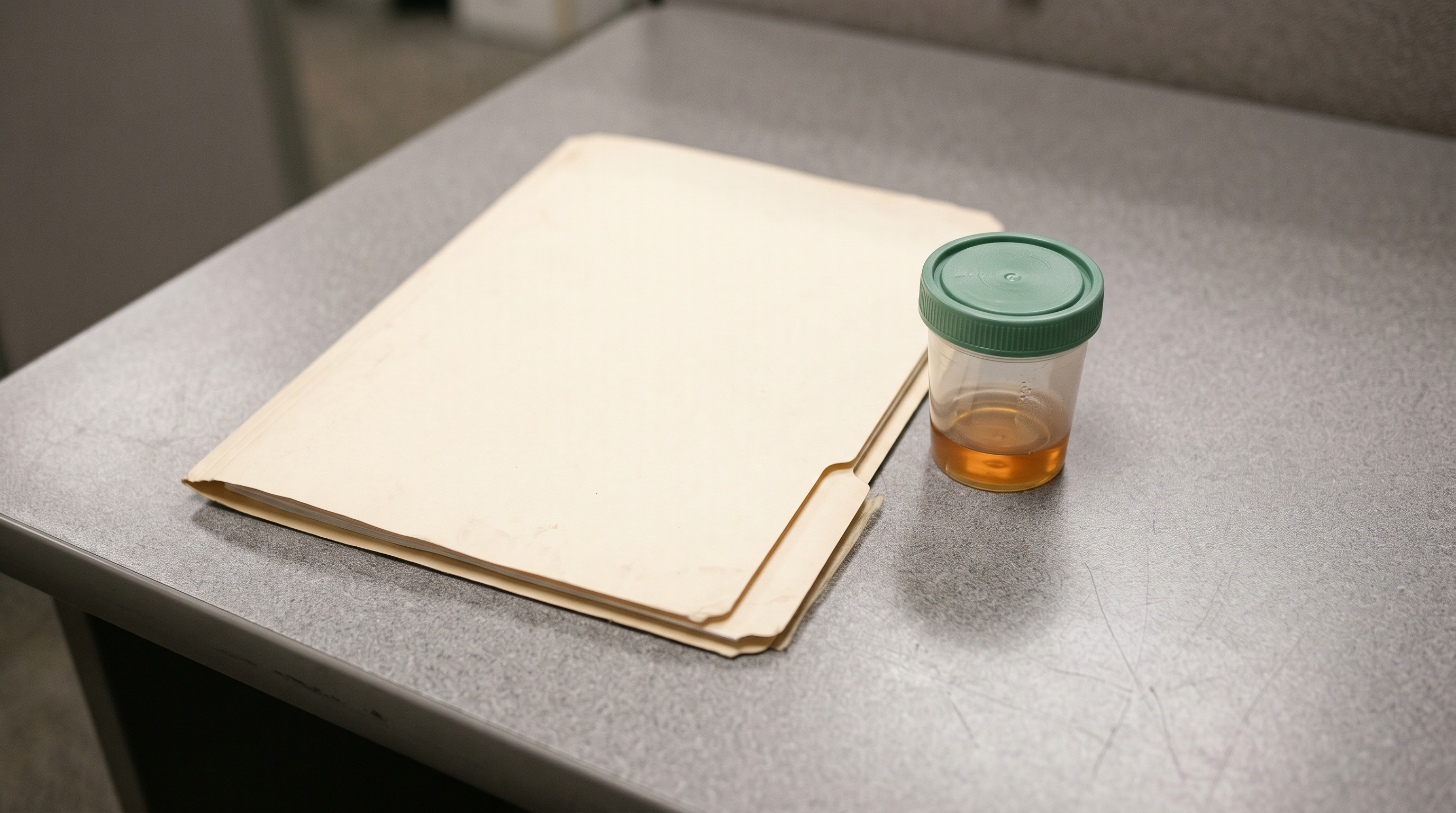
Why legal weed and job security are unrelated
Three rules stack, and each has to break your way before you are protected.
1. At-will employment. In every US state except Montana, private employment is presumed at-will. Your employer can fire you for a good reason, a bad reason, or no reason at all — just not an illegal reason. That is a short, closed list: race, sex, religion, disability, age, a handful of others. Legal off-duty conduct is not on it unless a statute puts it there.
2. Federal illegality. Cannabis has been federally controlled since the 1970 Controlled Substances Act, and courts have leaned on that status to gut state protections that looked like they covered cannabis. More below, because it changed — partly — in 2026.
3. State legalisation statutes are usually silent on employment. Read almost any adult-use initiative and you will find a line saying nothing in the act requires an employer to permit or accommodate cannabis. The voters legalised possession; they did not legalise your Monday.
So the question is never “is weed legal here?” It is: does my state have a separate statute barring my employer from acting on off-duty use or a positive test? Usually the answer is no.
What the April 2026 rescheduling changed — and what it didn’t
This is the part most coverage gets wrong, so it is worth being precise.
On 22 April 2026, the Acting Attorney General issued a final order moving two narrow categories of marijuana from Schedule I to Schedule III, effective 28 April 2026:
- Marijuana contained in an FDA-approved drug product, and
- Marijuana produced and dispensed under a state medical marijuana licence.
Everything else — adult-use cannabis, bulk marijuana, anything outside those two channels — remains Schedule I. A separate DEA hearing on whether to reschedule marijuana as a whole ran from 29 June to 15 July 2026. As of early August 2026 the administrative law judge has not issued a recommendation, and a final rule on broader rescheduling is not expected before late 2026 at the earliest. We covered the mechanics in what Schedule III actually means for you.
For employment, the short version is this. Rescheduling is not legalisation. It does not preempt state employment law, it does not create a federal right to use cannabis, and — critically — it does not make state-dispensed cannabis a federally prescribable medicine, because it is still not FDA-approved. That last point is doing enormous work, as you will see in the next two sections.
The ADA problem for medical patients
Patients reasonably assume that a doctor-certified medicine gets disability protection. Federally, it does not, and the reason is one sentence in the statute.
The Americans with Disabilities Act says at 42 U.S.C. § 12114(a) that a “qualified individual with a disability shall not include any employee or applicant who is currently engaging in the illegal use of drugs, when the covered entity acts on the basis of such use.”
And § 12111(6)(A) defines “illegal use of drugs” as “the use of drugs, the possession or distribution of which is unlawful under the Controlled Substances Act,” while carving out “the use of a drug taken under supervision by a licensed health care professional, or other uses authorized by the Controlled Substances Act or other provisions of Federal law.”
For thirty-plus years that combination has been fatal to ADA claims from cannabis patients. Doctors do not prescribe state medical cannabis — they certify or recommend it, because writing a federal prescription for a non-FDA-approved Schedule I substance was not legally possible.
Does the April 2026 order change this? It is a genuinely live question and employment-law commentators expect a wave of accommodation requests to test it. The argument for change is that state-licensed medical cannabis is no longer categorically a drug without accepted medical use. The argument against is that mere possession of a Schedule III substance without a valid prescription is still unlawful under federal law, and state cannabis still cannot be validly prescribed because the FDA has not approved it.
No court has squarely resolved it yet. Until one does, the safe assumption is that the federal ADA exclusion still applies to you.
State disability law is the route that actually works
Where patients have won, they have usually won under state handicap and disability statutes, not the ADA. The landmark is Barbuto v. Advantage Sales and Marketing, LLC, decided by the Massachusetts Supreme Judicial Court on 17 July 2017. Cristina Barbuto, who used medical cannabis for Crohn’s disease, was fired after one day for a positive test. The SJC held she could bring a handicap discrimination claim under Massachusetts law, that off-site medical cannabis use is not a facially unreasonable accommodation, and that an employer with a zero-tolerance policy must still engage in an interactive process to look for equally effective alternatives before terminating.
Similar patient-side outcomes have come from state courts and state statutes in a number of other jurisdictions. If you hold a card, your state’s disability law is usually a better place to look than the ADA. If you do not yet hold one and are considering it, our state-by-state medical card guide covers what certification actually involves.
The nine states with adult-use employment protections
As of August 2026, roughly nine of the two dozen adult-use states have enacted statutes that protect recreational off-duty use or restrict cannabis testing. They are not interchangeable. Some ban pre-employment testing, some ban acting on a metabolite result, some are general lawful-products statutes that happen to reach cannabis.
| State | Statute | What it actually does | Notable exceptions |
|---|---|---|---|
| California | Gov. Code § 12954 | Bars discrimination for off-duty, off-site use and for a screen positive only for non-psychoactive metabolites (operative 1 Jan 2024) | Building and construction trades; roles needing a federal background investigation or clearance; federal testing mandates. Applies to employers with 5+ employees |
| Connecticut | Conn. Gen. Stat. § 21a-422p | Restricts pre-employment and off-hours use discrimination | Long exempt-industry list including mining, construction, utilities, manufacturing, education, healthcare, public safety, national security; federal funding conflicts |
| Minnesota | Minn. Stat. §§ 181.951–952 | Restricts pre-employment and random cannabis testing | Safety-sensitive roles, CDL holders, federal grant work, childcare and vulnerable-population positions |
| Montana | Mont. Code Ann. § 39-2-313 | Lawful-products statute reaching off-duty use | Bona fide substance-abuse policies, professional contracts, collective bargaining agreements |
| Nevada | NRS 613.132 | Bars refusing to hire on a pre-employment cannabis screen; lets an employee tested in the first 30 days submit a rebuttal test at their own expense | Positions requiring a motor vehicle operator subject to state or federal testing, or that the employer determines could adversely affect the safety of others; federal law and federally funded posts; conflicting CBAs |
| New Jersey | N.J.S.A. 24:6I-52 | Bars adverse action on a positive test alone; requires a physical impairment evaluation alongside the test | On-duty use and impairment; federal contractor obligations |
| New York | Labor Law § 201-d | Treats cannabis as a lawful off-duty, off-premises consumable activity | Federal mandates and loss of federal funding |
| Rhode Island | R.I.G.L. § 21-28.11-29 | Protects private, off-premises use | Collective bargaining terms, federal requirements, safety-sensitive roles subject to a pre-shift abstention window |
| Washington | RCW 49.44.240 | Bars hiring discrimination based on lawful off-duty use or an applicant screen positive for non-psychoactive metabolites | Corrections, first responders, aerospace, safety-sensitive roles, federal clearance and background-check positions |
Two things to notice.
First, most of these protect the hiring stage more strongly than the employment stage. Nevada’s statute is a pre-employment rule. Washington’s metabolite provision is written for applicants. A protection that stops a pre-hire screen may do nothing about a random test in year three.
Second, the New Jersey situation is a cautionary tale about statutes that outrun their own machinery. CREAMMA conditions adverse action on a physical evaluation by a certified Workplace Impairment Recognition Expert — and the state has not issued WIRE certification standards, so no one is certified to perform one. Employers are operating under a rule that points at a credential that does not exist. If you are in New Jersey, read our New Jersey cannabis law guide and then talk to a lawyer, because the practical answer here is genuinely unsettled.
The states with their own guides on this site: Nevada, New York, Connecticut, Minnesota, Montana and Washington. Washington DC also enacted employment protections, and a few cities — New York City and Philadelphia among them — separately restrict pre-employment testing.
Medical-patient protections are broader but thinner
Counting medical-only protections gets you a much longer list. The National Conference of State Legislatures counts more than twenty states and territories with statutory or constitutional anti-discrimination provisions for medical patients, and notes that Massachusetts, New Hampshire and Vermont reached similar places through supreme court rulings rather than legislation.
But “anti-discrimination provision” covers an enormous range, from a real cause of action to a sentence with no remedy attached. And these laws move. In June 2026 Maine enacted LD 2110, amending its employer substance-testing rules so an enrolled medical patient who tests positive is treated as having a legitimate medical explanation — the way a patient on any other prescription would be.
If your state is not in the table above, do not assume you have nothing, and do not assume you have something. Look up your current statute, or ask someone who can.
States that have expressly said no
Some states have looked directly at this question and ruled against the employee.
The clearest is Coats v. Dish Network, LLC, decided by the Colorado Supreme Court on 15 June 2015. Brandon Coats was a quadriplegic, state-registered medical patient and a telephone customer service representative. He used cannabis at home, off the clock, and was fired for a positive test. Colorado has a lawful-activities statute that looks like it should have covered him.
The court held it did not. “The term ‘lawful’ as it is used in section 24-34-402.5 is not restricted in any way, and we decline to engraft a state law limitation onto the term. Therefore, an activity such as medical marijuana use that is unlawful under federal law is not a ‘lawful’ activity.”
That reasoning — federal illegality drains the word “lawful” of state meaning — is why several states with lawful-off-duty-conduct statutes on the books offer cannabis users no protection at all. It is also why the partial 2026 rescheduling matters more than it first appears: it narrows, without eliminating, the premise those rulings rest on. Michigan’s adult-use act is explicit that employers need not accommodate. Illinois protects lawful products but its cannabis act preserves reasonable zero-tolerance policies. Check Colorado, Michigan and Illinois for the current state of each.
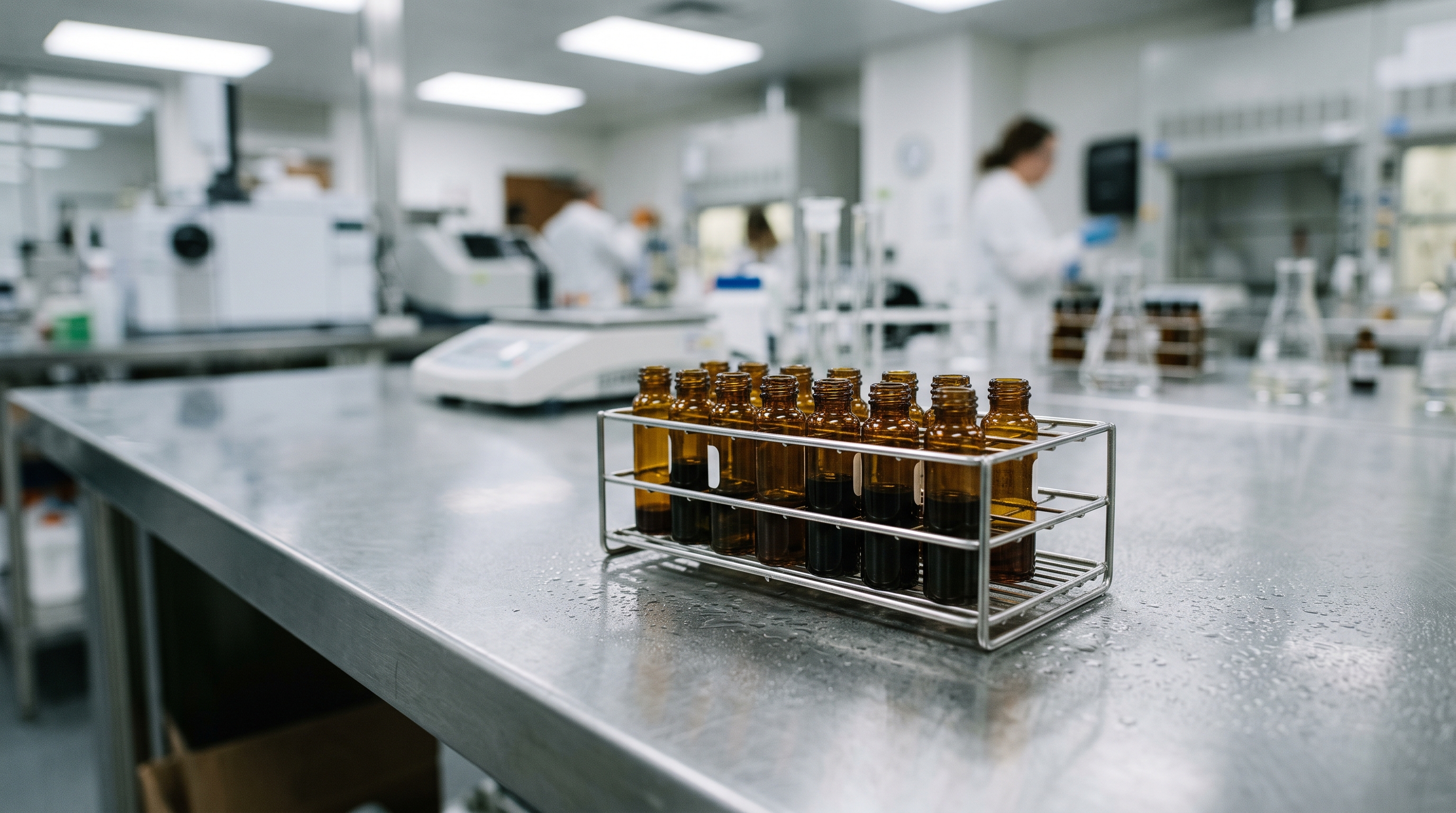
The test at the centre of it all measures the wrong thing
Here is the part that turns a legal problem into a scientific one.
A standard workplace urine screen does not look for THC. It looks for 11-nor-9-carboxy-Δ9-THC (THC-COOH) — an inactive metabolite your liver makes after THC has already done its work. THC-COOH does not get anyone high. It is fat-soluble, it accumulates in adipose tissue with repeated use, and it leaves slowly.
Under the federal cutoffs used across regulated testing, an initial immunoassay screen flags at 50 ng/mL and confirmatory GC-MS or LC-MS/MS testing confirms at 15 ng/mL.
How long does that stay detectable? Goodwin and colleagues put 60 cannabis users through continuously monitored abstinence for up to 30 days and sorted them by starting creatinine-corrected concentration. The heaviest group averaged 4.7 days to a first negative and 15.4 days to a last positive. Lighter users cleared in a few days. Individual variation was large.
So a positive result tells an employer, with reasonable confidence, that you consumed cannabis at some point in a window that may be days or may be weeks wide. It tells them nothing whatsoever about whether you were impaired at 9am on Tuesday. This is the same reason detection windows are so hard to predict for any one person — we go deep on that in how long THC stays in your system and on the underlying biology in cannabis pharmacokinetics. If you are weighing your options ahead of a screen, read our sober assessment of what actually works and what doesn’t — the honest answer is mostly time.
A few practical consequences follow. Frequent consumers carry a much longer tail than occasional ones, which is one of several reasons people take tolerance breaks. Hemp-derived products are not a safe harbour: full-spectrum CBD oil legally contains trace THC, and delta-8 and THCA flower metabolise into things a screen can flag. Even topicals, which mostly do not reach the bloodstream, are not a guarantee at the margins.
Impairment is the real question, and nobody can test for it yet
Everyone in this argument — employers, unions, legislators — actually agrees about the underlying goal: no one should be impaired at work in a job where that matters. The fight is entirely about measurement.
We do have a decent handle on duration. McCartney and colleagues pooled 1,534 outcomes from 80 publications and estimated that after inhaling 20 mg of THC most driving-related cognitive skills recover within about five hours, and almost all within roughly seven. Oral THC takes longer to subside. Their recommendation was a minimum five-hour wait before safety-sensitive tasks after inhaled use. We translated that into practical terms in how long to wait after consuming.
What we do not have is a concentration that maps onto impairment. Marcotte and colleagues ran a randomised trial published in JAMA Psychiatry in 2022 and found that composite driving scores did not differ by the THC content of the cannabis smoked, or by use intensity, despite heavier users showing higher post-smoking blood THC. Worse, 68.6% of participants said they were ready to drive at 90 minutes even though their performance had not improved from immediately after smoking — what the authors called a possible false sense of driving safety.
Together those findings are the whole policy problem: impairment is real and time-limited, concentration does not track it, and self-assessment fails in exactly the direction that causes harm. That is why performance-based impairment testing keeps coming up in legislatures, why California and Washington wrote metabolite language into their statutes rather than banning testing outright, and why roadside THC breathalysers remain stubbornly unfinished technology.

Where no state protection reaches you
Four categories sit outside all of this. If you are in one, the state-law table above is essentially irrelevant to you.
DOT-regulated safety-sensitive roles. Commercial drivers, pilots, rail and transit workers, pipeline and maritime crews are covered by 49 CFR Part 40. DOT’s Office of Drug and Alcohol Policy and Compliance has said for years that a state medical marijuana authorisation is not a legitimate medical explanation for a positive result. After the April 2026 rescheduling, ODAPC issued fresh guidance in May 2026 reiterating the point: state-dispensed marijuana is not FDA-approved, so even under Schedule III it cannot be legally prescribed under federal law, and a Medical Review Officer cannot verify a confirmed positive as negative on the strength of a card, a physician certification, or a dispensary receipt. Nothing about rescheduling changed DOT testing.
Safety-sensitive roles generally. Every state statute in the table carves these out. The definitions differ — Connecticut lists whole industries, Nevada leaves a determination to the employer, Rhode Island imposes a pre-shift abstention window — but the carve-out is universal.
Federal employees. Executive Order 12564 established the drug-free federal workplace in 1986 and it has not been rescinded. OPM has told agencies since 2021 not to treat past use as automatically disqualifying for suitability purposes, which is a real softening, but current use remains prohibited conduct.
Security clearance holders and applicants. Adjudicative Guideline H, SEAD-4, and the December 2021 ODNI clarifying guidance are all unchanged as of August 2026. Clearance adjudicators weigh judgement, reliability and willingness to comply with federal law — and continued use of a substance that remains federally controlled speaks directly to the third. Rescheduling was not a green light here. The same federal-illegality logic drives the firearms question we cover in can cannabis users own a gun.
One widely believed myth worth killing: the Drug-Free Workplace Act of 1988 does not require federal contractors or grantees to drug test anyone. It requires a written policy prohibiting controlled substances in the workplace and stating consequences. Many contractors test anyway, out of caution — but if your employer tells you “we have to test you, it’s federal law,” that is usually overcompliance rather than a legal requirement.
What to actually do
Before you test.
- Find out whether your state is on the list above, and whether the protection covers hiring, ongoing employment, or both. They are not the same.
- Read your own employee handbook. A written zero-tolerance policy is the document that will be quoted back at you.
- Ask whether the role is classified safety-sensitive or DOT-covered. If it is, no state statute helps.
- If you hold a medical card, find out whether your state protects patients — and understand that disclosing a card may or may not help depending on where you are. That is a question for a lawyer, not a forum.
- Give yourself time. Given the Goodwin data, a frequent consumer facing a scheduled screen should be thinking in weeks, not days.
If you test positive.
- Do not assume the result is the end. In protection states, a positive alone is often not a lawful basis for adverse action.
- Ask for the confirmatory result, not just the screen. A 50 ng/mL immunoassay flag is not the same as a 15 ng/mL confirmed result.
- Write down the sequence of events — dates, who said what, what policy was cited — while it is fresh.
- Contact an employment lawyer in your state promptly. Many of these claims carry short filing deadlines.
If you are crossing state lines, remember that your protections do not travel with you any more than your product does. See travelling with cannabis and why weed can’t legally cross state lines. The broader map is in our state-by-state legal guide and 2026 legalisation overview, and the adjacent coverage question is in cannabis and insurance.
The part nobody legislates
Every rule above treats “cannabis” as one thing with one effect on one worker. It isn’t. A 2 mg edible and a dab are not the same event. Two jars carrying the same strain name can differ substantially in chemistry, which is one reason THC percentage is a poor way to choose anything and why the ratio of THC to CBD often matters more than the headline number. Someone using a CBD-forward cultivar like ACDC, Harlequin or Cannatonic for daytime symptom control is having a completely different pharmacological experience from someone consuming Wedding Cake at 11pm — and a urine screen cannot tell them apart.
Strain names are unreliable proxies. Chemistry and your individual response are what matter. If you use cannabis and hold a job where timing matters, build an honest personal record of what you took, when, and how long it actually affected you — five hours is a population average, and you are not a population. That is what the High IQ app is for.
FAQ
Can I be fired for legal cannabis in a legal state?
In most legal states, yes. Legalisation removed the criminal penalty; it did not create employment protection. As of August 2026, roughly nine adult-use states have statutes limiting what employers may do about off-duty use or cannabis testing. Everywhere else, at-will employment plus a zero-tolerance policy is generally enough.
Does a medical card protect my job?
Sometimes, and it depends heavily on the state. The federal ADA has historically excluded cannabis patients through its “current illegal use of drugs” provision. Where patients have won, it has usually been under state disability or anti-discrimination law — Massachusetts’ Barbuto ruling is the leading example. More than twenty states have some patient anti-discrimination language, but the strength varies enormously.
Did Schedule III rescheduling change any of this?
Not much yet. The April 2026 order moved only FDA-approved marijuana drug products and state-licensed medical marijuana to Schedule III; adult-use cannabis remains Schedule I, and broader rescheduling is still pending after the June–July 2026 hearing. It does not preempt state employment law, and DOT confirmed in May 2026 that its testing rules are unchanged.
Why does a drug test flag me weeks after I consumed?
Because it is not testing for THC. It detects THC-COOH, an inactive fat-soluble metabolite that accumulates with repeated use and clears slowly. In monitored abstinence research, the heaviest-use group averaged 15.4 days to their last positive result. The test measures past use, not present impairment.
Is there a workplace test that measures actual impairment?
Not a validated chemical one. Research consistently finds that THC concentration does not track driving or cognitive performance well, particularly in regular users. Performance-based and behavioural assessments are the live policy direction, which is exactly why New Jersey’s statute requires a physical evaluation — and why it has stalled while the state works out who is qualified to perform one.
What if I work in a safety-sensitive or federal job?
Assume no state protection applies. DOT-regulated roles, federal employees under Executive Order 12564, and security clearance holders under Guideline H and SEAD-4 all sit outside state cannabis employment statutes, and every state statute in the table carves safety-sensitive work out explicitly.
Again, and it matters: this is general information, not legal advice. These laws changed in 2026 and will change again. Verify your own state’s current statute, and get advice from a licensed employment lawyer in your jurisdiction before acting on anything here.
Sources
Statutes, regulations and orders
- Americans with Disabilities Act, 42 U.S.C. § 12114(a) and § 12111(6)(A) — Cornell LII
- Schedules of Controlled Substances: Rescheduling of Marijuana, final order effective 28 April 2026 — Federal Register
- DEA, Marijuana Rescheduling Regulatory Actions — dea.gov
- 49 CFR Part 40 (DOT drug and alcohol testing); DOT ODAPC guidance on marijuana positives — transportation.gov/odapc
- Cal. Gov. Code § 12954; Conn. Gen. Stat. § 21a-422p; Minn. Stat. §§ 181.951–952; Mont. Code Ann. § 39-2-313; NRS 613.132; N.J.S.A. 24:6I-52; N.Y. Labor Law § 201-d; R.I.G.L. § 21-28.11-29; RCW 49.44.240 — compiled by the Marijuana Policy Project
- NCSL, Cannabis and Employment: Medical and Recreational Policies in the States — ncsl.org
Cases
- Coats v. Dish Network, LLC, 2015 CO 44, 350 P.3d 849 (Colo. 2015) — Justia
- Barbuto v. Advantage Sales and Marketing, LLC, 477 Mass. 456 (2017) — Justia
Peer-reviewed research
- Goodwin RS, Darwin WD, Chiang CN, Shih M, Li SH, Huestis MA. “Urinary Elimination of 11-Nor-9-Carboxy-Δ9-tetrahydrocannnabinol in Cannabis Users During Continuously Monitored Abstinence.” Journal of Analytical Toxicology, 2008;32(8):562–569. doi:10.1093/jat/32.8.562
- Huestis MA. “Human Cannabinoid Pharmacokinetics.” Chemistry & Biodiversity, 2007;4(8):1770–1804. doi:10.1002/cbdv.200790152
- McCartney D, Arkell TR, Irwin C, McGregor IS. “Determining the magnitude and duration of acute Δ9-tetrahydrocannabinol (Δ9-THC)-induced driving and cognitive impairment: A systematic and meta-analytic review.” Neuroscience & Biobehavioral Reviews, 2021;126:175–193. doi:10.1016/j.neubiorev.2021.01.003
- Marcotte TD, Umlauf A, Grelotti DJ, Sones EG, et al. “Driving Performance and Cannabis Users’ Perception of Safety: A Randomized Clinical Trial.” JAMA Psychiatry, 2022;79(3):201–209. doi:10.1001/jamapsychiatry.2021.4037
