Cannabis Laws in Maryland 2026: Question 4 Breakdown
Maryland cannabis laws in 2026, explained: Question 4, possession limits, home grow, where to buy, taxes, expungement, and public use rules.

Ever stood in a Maryland parking lot, unsure if that pre-roll in your glovebox is even legal? You are not alone. Maryland went from “medical only” to “adults can shop legally” in a short window. The rulebook moved fast. Let me walk you through where things stand in 2026, what voters approved with Question 4, and the lines you do not want to cross.
Grab a notebook. This is the kind of stuff worth getting right.
Quick Answer: Maryland Cannabis Law in 2026
For the impatient among you, here is the short version:
- Adults 21 and older can legally possess, use, and buy cannabis from licensed dispensaries.
- The personal use amount is up to 1.5 ounces of flower, 12 grams of concentrate, or 750 mg of THC in products like edibles.
- You can grow up to 2 plants per household, out of public view.
- Cannabis carries a 9% sales tax at the register.
- Public use is still illegal, and so is driving under the influence.
- Many old low-level possession convictions are being expunged.
That is the headline. Now let me show you how Maryland got here and what the fine print actually says, because the details are where people get tripped up.
What Question 4 Actually Did
On the November 2022 ballot, Maryland voters faced Question 4, a proposed amendment to the state constitution. The question was simple: should adults 21 and older be allowed to use cannabis starting July 1, 2023? Voters said yes by a wide margin, roughly 67% in favor, according to state election results.
Here is the part people miss. Question 4 was the constitutional green light. It did not by itself build the legal marketplace. The actual machinery came from the legislature. During the 2023 session, the General Assembly passed the Cannabis Reform Act (House Bill 556 / Senate Bill 516), which Governor Wes Moore signed on May 3, 2023 [Maryland, 2023]. That law set up the licensing system, the tax structure, the social equity programs, and the switch of existing medical dispensaries into adult-use sellers.
So the timeline looks like this: voters approved the concept in 2022, lawmakers built the framework in spring 2023, and legal sales began July 1, 2023. Maryland is one of a growing list of states that took this voter-then-legislature path. If you want the bigger picture, our cannabis legalization in the United States 2026 overview maps how each state got there.
Possession Limits: Personal Use vs. Civil Use
This is the single most important section, so read it twice. Maryland law draws a sharp line between two thresholds.
The “personal use amount” (fully legal)
If you are 21 or older, you may possess up to:
- 1.5 ounces of cannabis flower
- 12 grams of concentrated cannabis (vapes, wax, shatter, resin)
- 750 milligrams of THC in cannabis products (edibles, gummies, beverages, tinctures)
Stay at or below those numbers and you are operating completely within the law.
The “civil use amount” (a fine, not a crime)
Go over the personal use amount but stay under a higher ceiling, and you have a civil offense, not a criminal one. The civil use amount is:
- More than 1.5 ounces but not more than 2.5 ounces of flower
- More than 12 grams but not more than 20 grams of concentrate
- More than 750 mg but not more than 1,250 mg of THC
Possessing a civil use amount is punishable by a fine of up to $250. No handcuffs, no criminal record for the offense itself.
Above 2.5 ounces
Cross 2.5 ounces of flower (or the equivalent for other forms) and you are back in criminal territory. Possession of cannabis as a misdemeanor can carry up to 6 months in jail or a $1,000 fine [Maryland, 2022]. Larger quantities with evidence of intent to distribute carry much steeper penalties.
One more nice touch in the law: adult sharing. Maryland explicitly allows adults 21 and older to give each other up to the personal use amount without payment. Sharing a joint with a friend is not a crime. Selling it without a license still is.
Home Grow: Two Plants, Out of Sight
Maryland lets adults cultivate at home, but the rules are tighter than many people assume.
- Adults 21+ may grow up to 2 plants for personal use.
- The limit is 2 plants per household total, no matter how many adults live there. Three roommates does not mean six plants.
- Plants must be kept out of public view and secured so anyone under 21 cannot access them, for example in a locked or enclosed space.
- Registered medical patients may grow up to 4 plants, but the household cap of 4 still applies.
- Landlords and property owners can ban growing on their property, so renters should check the lease.
A small but useful detail: you may also make your own concentrates or products at home for personal use, as long as you do not use a volatile solvent (no butane extraction in your kitchen, please). If you are new to cultivation, our beginner’s guide to growing cannabis at home covers the basics, and the seed-to-harvest timeline shows what two well-tended plants can actually produce.
Where to Buy and How Much
Legal cannabis in Maryland comes from licensed dispensaries only. Here is what that looks like in practice.
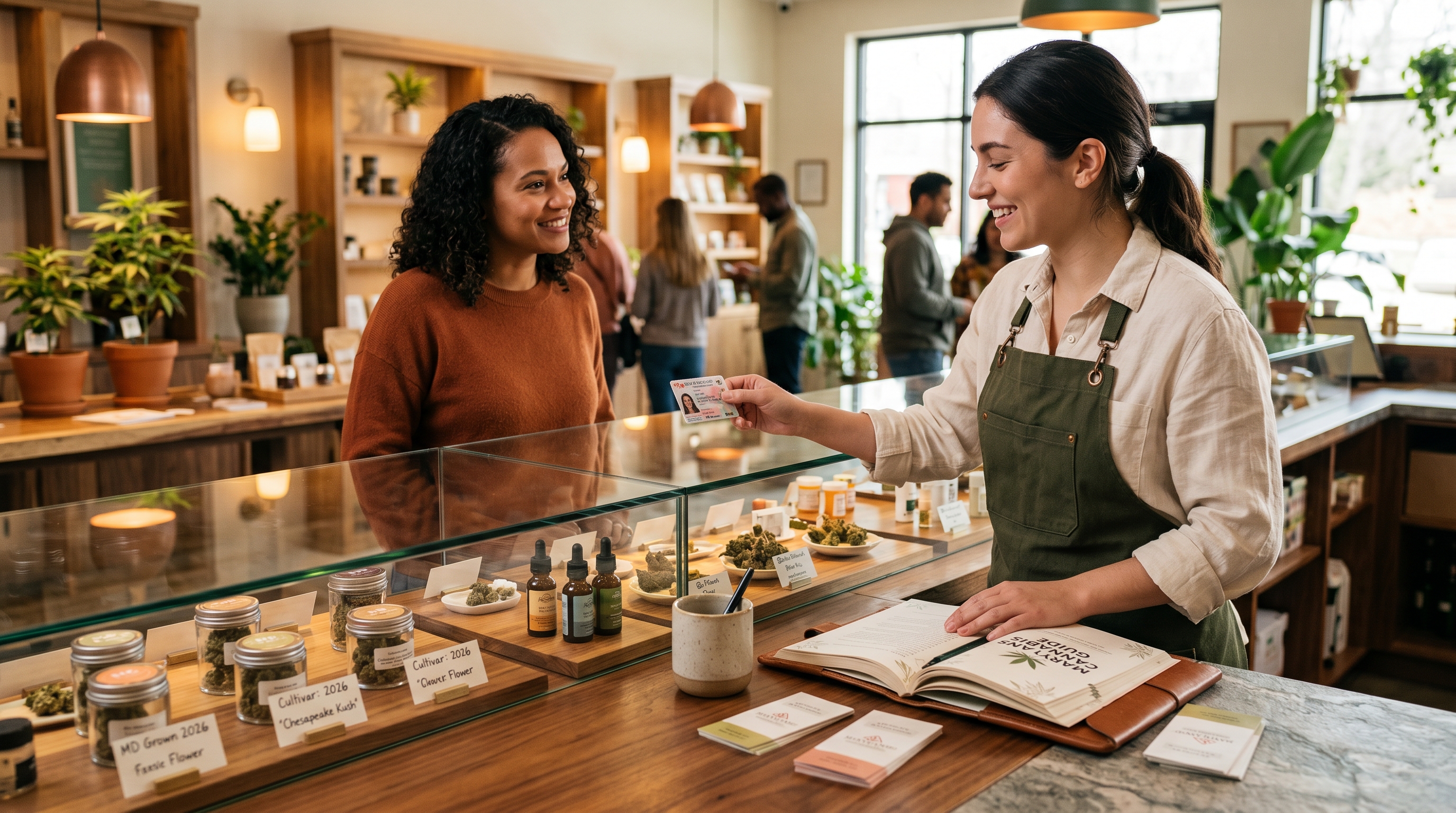
- You must be 21 or older and show a government-issued photo ID (driver’s license, state ID, passport, military ID, or tribal card).
- Out-of-state visitors 21 and older can buy adult-use cannabis with valid ID. You do not need to be a Maryland resident.
- Single-purchase limits track the personal use amount: up to 1.5 oz flower, 12 g concentrate, or 750 mg THC products per transaction.
- Concentrate products sold to adult-use buyers are generally limited to 1 gram or less per package.
Choosing a good shop matters more than people think, since product quality and staff knowledge vary widely. Our guide on how to choose the right dispensary walks through what to look for, and how to read cannabis lab results helps you decode the label once you are at the counter.
Social Equity Licensing
Here Maryland tried something different from earlier legalization states. The Cannabis Reform Act built equity into the licensing system from day one. It was not an afterthought.
The law created an Office of Social Equity. It ran the first round of licenses just for social equity applicants, awarded by lottery. To qualify, a business generally needs at least 65% ownership and control by people who lived in or attended school in a disproportionately impacted area, or who were affected by cannabis prohibition.
The state also added support meant to lower the barrier to entry:
- Grants and no-interest loans through a business assistance fund
- New, lower-capital license categories like micro licenses, incubator space, and on-site consumption
- Removal of non-violent cannabis convictions as a barrier to industry employment
The funding piece is notable: roughly 30% of adult-use cannabis sales tax revenue (after the Cannabis Administration’s operating costs) flows into a Community Reinvestment and Repair Fund that directs money back to communities most harmed by prohibition. Whether the equity rollout is working as intended is an ongoing debate, but the structural intent is unusually explicit.
Public Use and Driving
Legal to possess does not mean legal to consume anywhere. Maryland is strict here.
- Smoking cannabis in public is prohibited, including parks, streets, sidewalks, bars, restaurants, public transportation, and indoor workplaces. Public smoking is a civil offense with its own fine.
- You may use cannabis on private property, but landlords, hotels, and rental hosts can ban it. Read the lease and ask before you assume.
- Driving under the influence is illegal, for drivers and passengers alike. Officers can make a cannabis DUI arrest based on observed impairment and field sobriety testing.
There is no simple “wait this many hours” rule for driving, because impairment depends on the person, the product, and the dose. Our piece on how long to wait before driving after cannabis breaks down what the science actually supports. And if you are heading out of state, how to travel with cannabis is essential reading, because crossing state lines remains a federal problem regardless of Maryland’s rules.
Expungement and Taxes
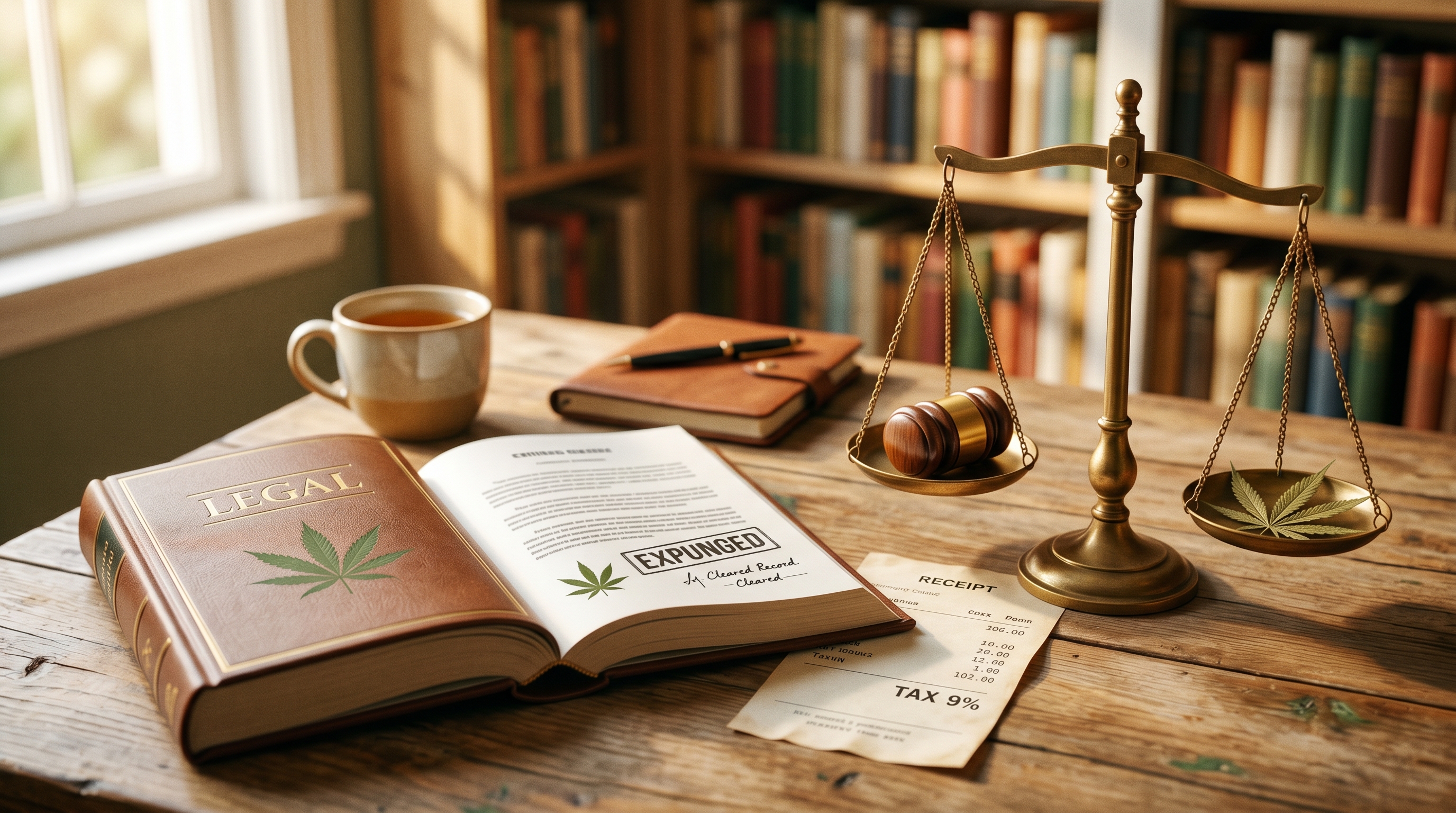
Two of the most consumer-relevant pieces of legalization are looking backward and looking at your receipt.
Expungement
Maryland paired legalization with relief for past convictions. The law set up a process to expunge cases where possession of less than 10 grams of cannabis was the only charge. More expungement provisions were layered on top. For many people, this means an old low-level cannabis charge is being cleared from the record. That matters for jobs, housing, and licensing. If you think you may qualify, check with the Maryland Judiciary or a legal aid group about your case.
Taxes
At the register, adult-use cannabis carries a 9% state sales and use tax, the same rate Maryland applies to alcoholic beverages. That is layered on top of the shelf price, so budget for it. Medical cannabis purchased by registered patients is not subject to this tax, which is one of several reasons some heavy or medical users keep their medical card. For the bigger policy picture on how cannabis is treated federally, see our explainer on cannabis rescheduling to Schedule III and the 280E tax burden that still squeezes the industry.
A Note on Medical Cannabis
Maryland still runs a medical cannabis program alongside adult-use, and it is not just a relic. Registered patients can be as young as 18 (with appropriate authorization for minors), can grow 4 plants instead of 2, skip the 9% tax, and access products and quantities not always available to recreational buyers. If a medical card might fit your situation, our state-by-state guide to getting a medical card is a good starting point, and medical vs. recreational cannabis digs into why the distinction is fuzzier than it looks.
Frequently Asked Questions
Is recreational cannabis legal in Maryland in 2026? Yes. Adults 21 and older can legally possess, use, buy, and grow cannabis under limits set by Question 4 and the 2023 Cannabis Reform Act. Legal sales began July 1, 2023.
How much cannabis can I legally carry? Up to the personal use amount: 1.5 ounces of flower, 12 grams of concentrate, or 750 mg of THC in products. Between that and 2.5 ounces is a civil fine; above 2.5 ounces is criminal.
Can I grow cannabis at home in Maryland? Yes, up to 2 plants per household for adults 21+, kept out of public view and secured from anyone under 21. Medical patients may grow up to 4.
Can out-of-state visitors buy cannabis in Maryland? Yes. Anyone 21 or older with a valid government-issued photo ID can purchase adult-use cannabis. You cannot legally take it across state lines, though.
Can I smoke cannabis in public? No. Public smoking is prohibited and carries a fine. Use is limited to private property where the owner permits it.
Will my old cannabis conviction be cleared? Maryland created an expungement process for cases where possession of less than 10 grams of cannabis was the only charge, plus additional relief provisions. Check with the courts about your specific record.
Final Thoughts
Maryland built a thoughtful, equity-minded legal cannabis system in a short time. The rules that matter most for everyday consumers are simple to remember: stay at or under 1.5 ounces, keep your two plants out of sight, never use in public or behind the wheel, and budget for the 9% tax. Get those right and you are on the safe side of the line.
As always, the smartest move is to learn how your body responds to different products rather than chasing labels. That is the whole reason we built High IQ, so you can track what actually works for you. For neighboring frameworks, compare Maryland with New Jersey, Pennsylvania, Virginia, and Ohio, or zoom out with our state-by-state cannabis laws map.
Stay curious, stay legal, and know exactly why you are high.
Sources
- Maryland Cannabis Administration, Adult-Use Cannabis FAQs
- Comptroller of Maryland, Adult Use Cannabis Information (9% sales tax)
- Maryland General Assembly, House Bill 556 / Cannabis Reform Act, 2023 (Ch. 254)
- Maryland General Assembly, House Bill 837, 2022 (Ch. 26) — possession thresholds and expungement
- Maryland Code, Criminal Law § 5-601 — possession and penalties
- University of Maryland Carey School of Law, Maryland Cannabis 101 Fact Sheet
This article is for educational purposes only and is not legal advice. Cannabis laws change frequently and enforcement varies by jurisdiction. Cannabis remains illegal under federal law. Consult the Maryland Cannabis Administration or a licensed attorney for guidance on your specific situation.


