Cannabis Laws in Ohio 2026: Issue 2 One Year In
Ohio's adult-use cannabis rules in 2026: possession limits, home grow, dispensaries, tax, public use, and how Senate Bill 56 rewrote Issue 2.


Ohioans voted to legalize adult-use cannabis in November 2023. By the time recreational sales actually started, the celebration was already complicated — and in early 2026, the legislature rewrote large parts of what voters approved. If you live in Ohio, shop at a dispensary, or grow a few plants in a spare closet, the rules you followed last year may not be the rules today.
Let me walk you through where Ohio cannabis law actually stands in 2026, what changed, and how to stay on the right side of it.

The quick answer
If you’re 21 or older in Ohio in 2026, here’s the short version:
- Possession: Up to 2.5 ounces of plant material plus 15 grams of extract.
- Buying: Legal at state-licensed dual-use dispensaries; 10% excise tax on top of regular sales tax.
- Home grow: Up to 6 plants per adult, 12 per household, behind a locked door and out of public view.
- Public use: Banned. Consume on private property only.
- Out-of-state weed: Now illegal to possess in Ohio, even if you bought it legally in Michigan.
- Driving: Operating a vehicle under the influence is illegal, full stop.
The biggest 2026 story is Senate Bill 56 (SB 56), signed in December 2025 and effective March 20, 2026. It merged Ohio’s medical and adult-use programs and tightened several rules. We’ll get to the details — but first, the foundation.
How Ohio got here: Issue 2
On November 7, 2023, Ohio voters approved Issue 2 — the Act to Control and Regulate Adult Use Cannabis — by a margin of about 57% to 43%, making Ohio the 24th state to legalize recreational cannabis. The law took effect just 30 days later, on December 7, 2023.
Here’s the catch that shaped everything since: Issue 2 was a citizen-initiated statute, not a constitutional amendment. That route was faster and needed fewer signatures, but it left the law fully editable by the Ohio General Assembly. Lawmakers could rewrite it with a simple majority — and eventually, they did.
Legal possession began immediately in December 2023, but you had nowhere to legally buy. Dispensary sales didn’t launch until August 6, 2024, when 127 existing medical dispensaries converted to “dual-use” licenses and opened their doors to anyone 21 and up.
If you’re curious how Ohio stacks up against its neighbors, our state-by-state cannabis guide and our overview of U.S. legalization in 2026 put it in national context. Border-state shoppers may also want our Pennsylvania 2026 guide — Pennsylvania still has no adult-use program — to understand why crossing lines is risky.
Possession and purchase limits
For adults 21 and over, the possession limits are:
- 2.5 ounces (about 70 grams) of plant material — flower and similar forms
- 15 grams of extract (concentrates, oils, distillate)
Go over those amounts and you can be charged with wrongful possession of a controlled substance, so it pays to know your numbers.
The daily purchase limit at a dispensary is the same 2.5 ounces of plant material, plus other cannabis products totaling no more than 15,000 milligrams (15 grams) of THC. As of June 2025, the Division of Cannabis Control simplified how dispensaries track this — non-medical buyers are no longer counted in clunky “whole day units,” just the straightforward daily totals.
One important note: possession limits do not count seeds, clones, or live plants you’re legally growing at home. Those fall under the home-grow rules instead.
If you’re new to all this, percentage on the label isn’t the whole story — here’s why THC percentage is a terrible way to choose cannabis and a better way to think about effects using High Families.
Growing at home
Yes, Ohio lets adults grow. The home-grow rules are:
- 6 plants per adult-use consumer
- 12 plants maximum per household (when two or more adults 21+ live there)
- Plants must be in a secured, enclosed area — a closet, locked room, or greenhouse — that prevents access by anyone under 21
- Plants must not be visible from a public space with the naked eye
A few more limits to know. You can process your own harvest by manual or mechanical means, but hydrocarbon-based extraction (think butane hash oil) is prohibited at home for safety reasons. You can’t grow at a childcare home, certain community-residential facilities, or a rental where the lease forbids it — so check your lease before you start. And under SB 56, you cannot grow on behalf of someone else.
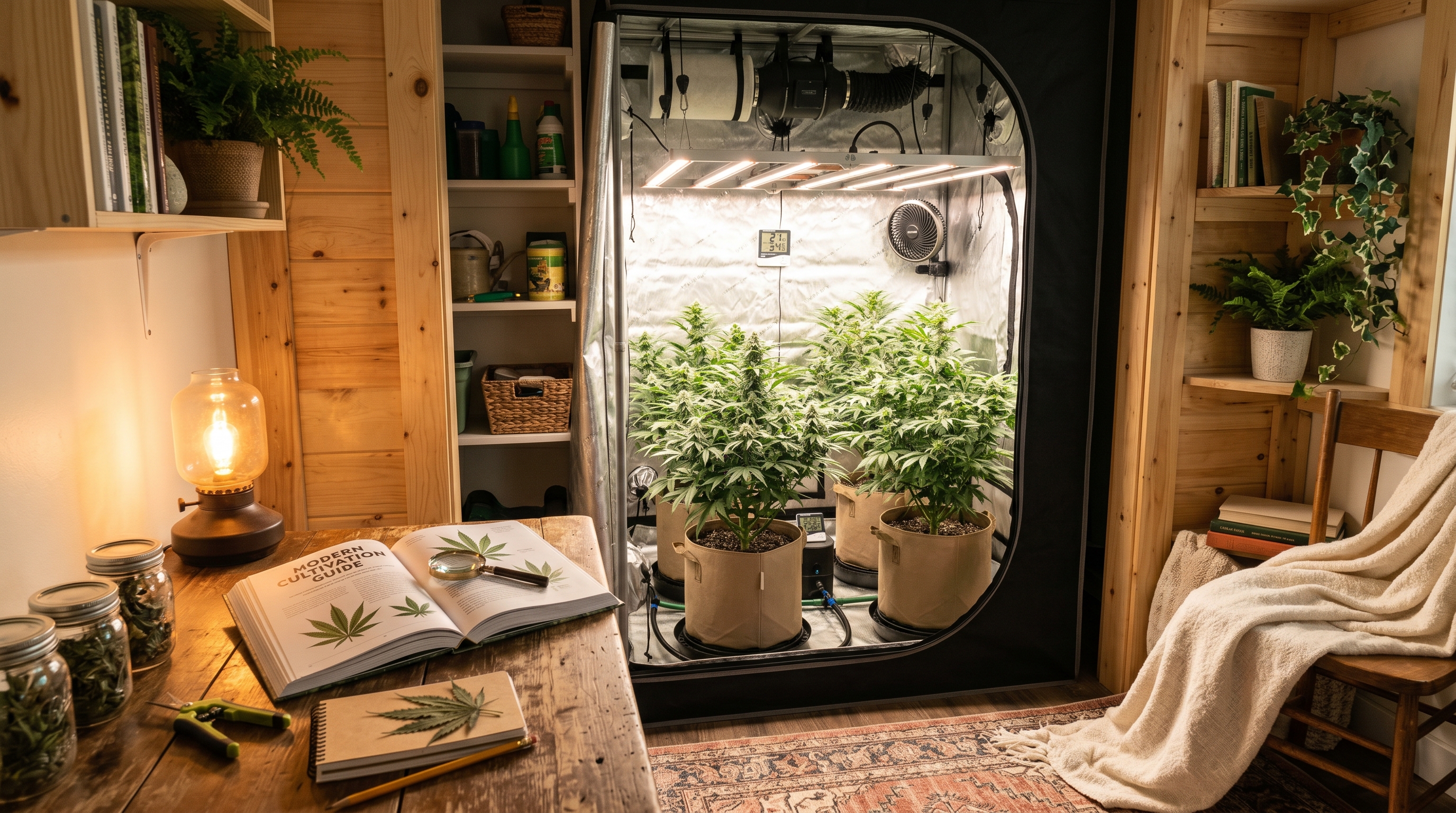
Thinking about starting your own grow? Our beginner’s guide to growing cannabis at home covers the basics, and our grow tent setup guide walks through lights, ventilation, and filters — useful for meeting that “secured and not visible” requirement.
Where to buy — and what you’ll pay
Ohio sells adult-use cannabis through dual-use dispensaries: licensed medical dispensaries that converted to also serve recreational customers. You don’t need a medical card to shop the adult-use side — just a valid ID showing you’re 21 or older.
On the tax front, expect to pay:
- A 10% state excise tax on adult-use purchases
- Plus regular state sales tax (about 5.75%) and local sales tax (0% to roughly 2.25%)
All in, that’s a total tax burden of roughly 15% to 18%, depending on where you shop. Medical patients, by contrast, pay only regular sales tax with no excise tax — one of the few remaining perks of keeping a medical card.
Where does the excise money go? Originally, Issue 2 split it across social equity programs, host communities, addiction treatment, and regulation. SB 56 kept the 10% rate but redirected most revenue to the state’s general fund, preserving only a temporary slice for communities that host dispensaries.
Note that home delivery is not available for adult-use buyers. SB 56 opened the door to delivery for medical patients only, with the Division of Cannabis Control set to write those rules.
Public use and driving
This is where people get tripped up. Public consumption is illegal in Ohio. You can use cannabis on private property — your home, or someone else’s home with permission — but not in parks, sidewalks, vehicles, bars, or other public spaces. Smoking, vaping, or combusting cannabis in public is a minor misdemeanor under SB 56.
Landlords and property owners can also prohibit use on their premises, and a rental lease can ban it outright.
On the road, the rules are simple and strict: you cannot operate a vehicle — or a boat, aircraft, or streetcar — while under the influence of marijuana. Ohio’s existing OVI (operating a vehicle impaired) laws apply to cannabis just as they do to alcohol. Because THC lingers in the body long after the high fades, this is a genuinely tricky area; our explainer on how long THC stays in your system is worth a read before you assume you’re clear.
Planning a road trip? Don’t carry your stash across state lines. See how to travel with cannabis and our look at interstate cannabis commerce for why that matters. (Neighboring New Jersey’s 2026 rules differ again — another reason your home state’s law doesn’t travel with you.)
Employer rights: don’t expect job protection
Here’s a hard truth for Ohio workers: legalization did not give you workplace protection. Employers can maintain drug-free workplace policies, test for cannabis, and fire or refuse to hire someone for a positive test — even if that person used legally and off the clock.
SB 56 made this explicit, clarifying that drug-free workplaces are not violating Ohio Civil Rights Law by acting on cannabis use. Employers can also deny workers’ compensation claims tied to a positive test. If your job tests, legal cannabis use can still cost you your livelihood. Know your employer’s policy before you partake.
What SB 56 changed: the 2026 rewrite
Two years after voters approved Issue 2, the legislature exercised its power over the citizen-initiated statute. SB 56 was signed by Governor DeWine on December 19, 2025, and took effect March 20, 2026. The headline changes:
- Out-of-state cannabis is now illegal to possess in Ohio. Even a legal Michigan purchase becomes contraband once you cross the border. All cannabis must come from an Ohio dispensary or your own home grow.
- No more sharing or gifting of homegrown cannabis by unlicensed people — with or without payment. Issue 2 let you gift up to 2.5 ounces or six plants to another adult; SB 56 prohibits those transfers entirely. Only licensed dispensaries may transfer cannabis.
- THC potency caps: 35% for plant material and 70% for extracts, though the Division can adjust these.
- Edible limits: packaging restrictions, including caps on per-package THC, and a ban on products shaped like realistic or fictional humans, animals, or fruit.
- Dispensary cap: a statewide ceiling on the number of dispensaries (set in the 350–400 range).
- Social equity gutted: the Level III “social equity” cultivator licenses Issue 2 created were eliminated.
- Intoxicating hemp redefined: products like delta-8 that skirted regulation are pulled under the marijuana definition, meaning they can generally only be sold through licensed dispensaries. (For background on those products, see delta-8 vs delta-9 THC.)
- Agencies merged: the medical and adult-use regulators were consolidated into a single Division of Cannabis Control.
A competing measure, House Bill 160, proposed some less restrictive tweaks — like keeping the 12-plant household cap and allowing in-household sharing — but SB 56 is what became law.

Legislative outlook
The big question for 2026 and beyond is stability. Because Issue 2 was a statute rather than a constitutional amendment, lawmakers can keep adjusting it. SB 56 proved that. Advocates worry about further restrictions; the industry has pushed back on the dispensary cap and the loss of social equity provisions.
There’s also a federal wildcard. Cannabis rescheduling efforts at the national level could reshape research, banking, and taxation — though they wouldn’t override Ohio’s state rules. We unpack that in cannabis rescheduled to Schedule III: what it means for you. For now, expect Ohio’s framework to keep evolving, and check official sources before assuming last year’s rule still applies.
Frequently asked questions
Can I buy cannabis in Ohio without a medical card? Yes. Any adult 21 or older can buy at a dual-use dispensary with a valid ID. A medical card mainly saves you the 10% excise tax and allows bulk purchases.
How much can I legally possess? Up to 2.5 ounces of plant material and 15 grams of extract. Plants you’re legally growing at home don’t count toward that limit.
Can I bring cannabis from Michigan into Ohio? No. As of March 2026, possessing out-of-state cannabis in Ohio is illegal, even if it was legal where you bought it.
Can I grow my own? Yes — up to 6 plants per adult and 12 per household, kept secured, out of public view, and not at a rental that prohibits it.
Can I get fired for using legal cannabis? Unfortunately, yes. Ohio employers can enforce drug-free workplace policies and act on positive tests, even for legal off-duty use.
Where can I consume? Private property only. Public consumption is banned.
Track what works for you
Knowing the law is step one. Step two is figuring out which products actually suit you — and that’s where most people get lost, because a dispensary menu of unfamiliar strains and percentages tells you almost nothing about how you’ll feel. The strain matters far less than how your body responds to its terpene and cannabinoid profile.
That’s exactly what the High IQ app is built for: log what you buy, note how it makes you feel, and let your own patterns guide your next purchase. If you’re just getting started, our beginner’s dosing chart, science-backed strains for beginners, and the two-hour rule for edibles are good companions. And if you’re traveling to a legal-recreation state instead, our cannabis tourism guide covers the best destinations.
Professor High says: Ohio’s law is a moving target — Issue 2 set the baseline, SB 56 tightened it, and more changes may come. The smartest move is to buy from licensed Ohio dispensaries, keep your grow legal and out of sight, never carry across state lines, and never drive impaired. Stay informed, stay legal, and track what works for you.
Sources and disclaimer
- Ohio Division of Cannabis Control — Ohio Cannabis FAQ: https://com.ohio.gov/divisions-and-programs/cannabis-control/licensee-resources/what-we-do/Ohio-Cannabis-FAQ
- Ohio Division of Cannabis Control — Non-Medical Sales Limits guidance (June 2025): https://dam.assets.ohio.gov/image/upload/com.ohio.gov/DCC/Non-Medical_Sales_Limits.pdf
- Ohio Revised Code Section 3796.04 (Home grow, effective March 20, 2026): https://codes.ohio.gov/ohio-revised-code/section-3796.04
- Ohio Senate — Senate Bill 56, 136th General Assembly: https://ohiosenate.gov/legislation/136/sb56
- Ohio State University Extension / Moritz College of Law — Adult-Use Marijuana in Ohio: What You Need to Know: https://go.osu.edu/cannabis-crossroads
- Moritz College of Law, Drug Enforcement and Policy Center — Comparison of Issue 2 and SB 56 / HB 160: https://moritzlaw.osu.edu/sites/default/files/2025-03/Ohio%20reforms%20-%20comparison%20table%20-%20SB56%20and%20HB160.pdf
- WOSU Public Media — Ohio Senate passes SB 56 (Feb 2025): https://www.wosu.org/2025-02-26/ohio-senate-again-passes-bill-making-big-changes-to-cannabis-program
- Tyack Law Firm — Senate Bill 56: Changes to Ohio’s Recreational Marijuana Laws: https://tyacklaw.com/senate-bill-56-changes-to-ohios-recreational-marijuana-laws/
This article is for educational purposes only and is not legal advice. Cannabis laws change frequently and remain subject to federal prohibition. Always verify current rules with the Ohio Division of Cannabis Control or a qualified attorney before acting.


