Cannabis Laws in Pennsylvania 2026: Medical Only—For Now
Pennsylvania cannabis in 2026: medical-only, 24 qualifying conditions, no home grow, a decrim patchwork, and a stalled adult-use push explained.

If you live in Pennsylvania and you’re confused about whether cannabis is legal, you are not alone—and honestly, the confusion is understandable. Medical marijuana is fully legal. A handful of cities have all but stopped prosecuting small amounts. The governor keeps putting legalization in his budget. Four of the five states bordering Pennsylvania sell recreational weed.
And yet, in 2026, you can still be charged with a crime for holding cannabis without a medical card almost anywhere in the state. It’s one of the most contradictory cannabis landscapes in America. Let me untangle it for you.
The Quick Answer
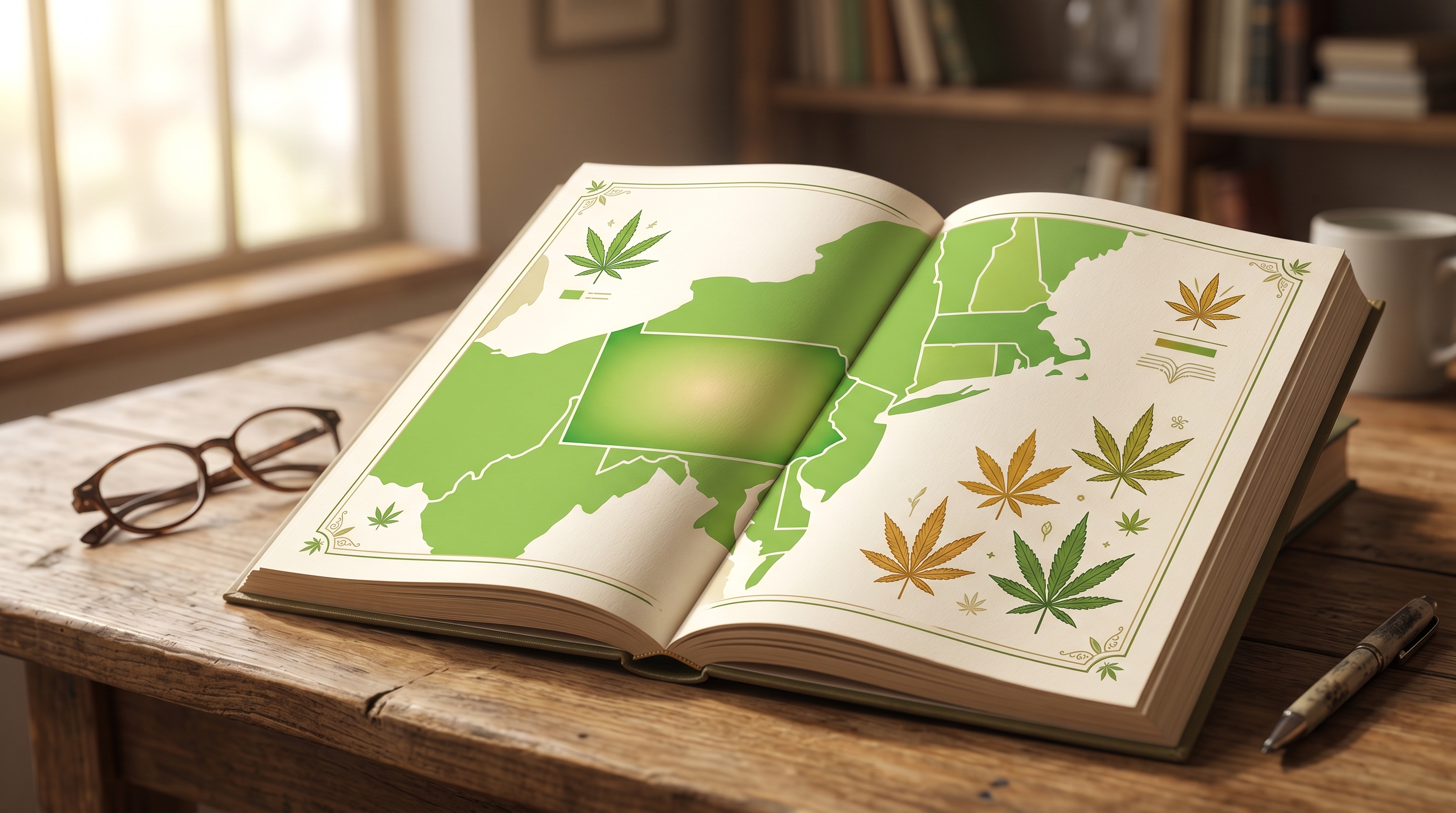
Here’s the whole situation in one breath:
- Medical marijuana: legal. Pennsylvania residents with one of 24 qualifying conditions and a state-issued card can buy cannabis at licensed dispensaries.
- Recreational marijuana: illegal. Possessing cannabis without a medical card is a criminal offense under state law.
- Home growing: illegal. Even medical patients cannot grow their own. Every legal gram comes from a dispensary.
- Smoking flower: not permitted under the medical program—but vaporizing dry leaf is allowed.
- Decriminalization: local only. Cities like Philadelphia and Pittsburgh have reduced penalties, but those ordinances don’t override state law.
- Adult-use legalization: stalled. The House passed a bill in 2025; the Senate killed it. As of mid-2026, nothing has crossed the finish line.
Want the national picture? Our state-by-state cannabis laws guide and our overview of U.S. legalization in 2026 both put Pennsylvania in context. For now, let’s zoom in on the Keystone State.
The Medical Program: Who Qualifies and How It Works
Pennsylvania became the 24th state to legalize medical marijuana. Then-Governor Tom Wolf signed the Medical Marijuana Act (Act 16) on April 17, 2016. The first dispensaries opened in February 2018. Today it is one of the largest medical-only programs in the country. It has more than 440,000 active patients and over 185 licensed dispensaries. The Pennsylvania Department of Health runs it.
The 24 Qualifying Conditions
Pennsylvania uses a strict, state-defined list. A doctor cannot certify you for a condition that is not on it. The 24 qualifying serious medical conditions are:
- ALS (amyotrophic lateral sclerosis)
- Anxiety disorders
- Autism
- Cancer (including remission therapy)
- Chronic Hepatitis C
- Crohn’s disease
- Central nervous system damage with intractable spasticity
- Dyskinetic and spastic movement disorders
- Epilepsy
- Glaucoma
- HIV/AIDS
- Huntington’s disease
- Inflammatory bowel disease
- Intractable seizures
- Multiple sclerosis
- Neurodegenerative diseases
- Neuropathies
- Opioid use disorder (under specific conditions)
- Parkinson’s disease
- Post-traumatic stress disorder (PTSD)
- Severe chronic or intractable pain
- Sickle cell anemia
- Terminal illness
- Tourette syndrome
That list is broad. Anxiety, PTSD, and chronic pain alone cover a huge slice of the population.
How to Get a Card
The process is simpler than most people expect. You can usually do it from home in under a week:
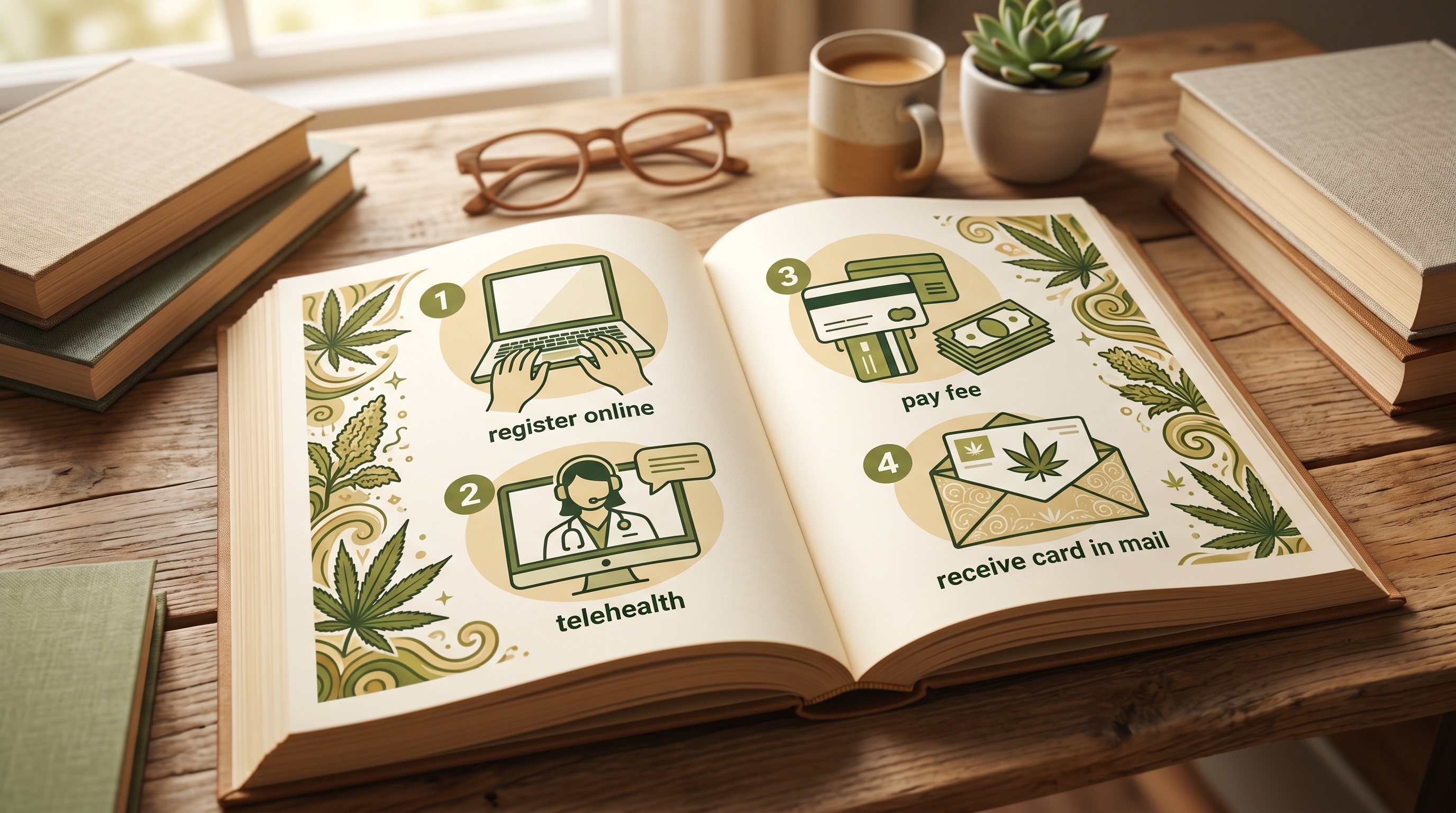
- Register online at the state’s Patient and Caregiver Registry. You’ll need a Pennsylvania driver’s license or state ID.
- Get certified by a doctor who is registered with the program. This is often a 10 to 15 minute telehealth visit. You usually pay for it out of pocket, since insurance does not cover it.
- Pay the $50 annual card fee. Fee waivers are available if you receive Medicaid, PACE/PACENET, CHIP, SNAP, or WIC.
- Receive your card. A digital card usually arrives within a few business days. The physical card comes by mail in one to two weeks.
Cards last up to one year. To renew, you need an updated certification. Minors and homebound patients use a designated caregiver, who carries the card for them.
What Dispensaries Actually Sell
Here’s a quirk that trips up newcomers. Pennsylvania’s program does not permit smoking cannabis. When dispensaries first opened, only processed forms were allowed. That meant oils, tinctures, capsules, topicals, and vape products. In 2018, the state approved dry leaf (flower). But it is sold strictly for vaporizing, not for burning.
So you can buy flower. The legal way to use it is in a vaporizer. Every dispensary also has a pharmacist on-site to help you pick products and dose them. New to all this? Our guides on how to choose a dispensary, reading lab results, and vaping versus smoking are worth a read first.
One thing the program can’t tell you is which products will work for your body. That’s where terpenes and High Families matter far more than a strain name on a label. Tracking your own responses—as we argue in why tracking matters—beats trusting dispensary labels that are often wrong.
The Decriminalization Patchwork
Now for the part that really confuses people. More than a dozen Pennsylvania cities have passed local rules. These rules turn small-amount possession from a crime into a civil fine. Think of it like a parking ticket.
Philadelphia went first, in 2014. It set a small fine—often cited around $25—for 30 grams or less. Pittsburgh followed in 2015. Since then, the same kind of rule has spread to Harrisburg, York, Erie, Lancaster, Allentown, Bethlehem, State College, Norristown, Phoenixville, Reading, and several towns near Philadelphia.
But here is the catch: a local rule does not override state law. A police officer or state trooper can still charge you under the statewide drug law, even inside one of these cities. The local rule lowers the odds of a criminal charge. It does not erase the state crime.
What does that mean in real life? Pittsburgh defense attorney and longtime NORML advocate Patrick Nightingale says more than 10,000 Pennsylvanians are still charged with possession every year. People hear “medical marijuana exists” and “some cities reduced penalties.” They assume the law changed statewide. It did not.
Possession Penalties Outside the Medical Program
No medical card, and outside a decriminalized town? Here’s what state law says:
- 30 grams or less: Misdemeanor—up to 30 days in jail and a $500 fine.
- More than 30 grams: Misdemeanor—6 to 12 months in jail and up to a $5,000 fine.
- Giving away 30 grams or less (no money): Misdemeanor—up to 30 days and a $500 fine.
- Selling more than 30 grams: Felony—2.5 to 5 years and a $15,000 fine for a first offense.
- Growing any number of plants: Felony—2.5 to 5 years and up to a $15,000 fine, even with no intent to sell.
There’s also a DUI trap worth flagging for medical patients. Pennsylvania uses a “zero tolerance” rule for THC. A patient who medicated days or even weeks earlier can still face a DUI charge during a routine stop. All it takes is any trace of THC in the bloodwork—no proof of actual impairment required. Bills to fix this gap (most recently HB 878) keep getting introduced. None had passed as of mid-2026. If you drive, read our breakdown of how long to wait after consuming and how THC stays in your system. And if you’re tempted to bring product home from neighboring New Jersey, please read how to travel with cannabis first. That’s a federal headache waiting to happen.
Adult-Use Legalization: So Close, So Stuck
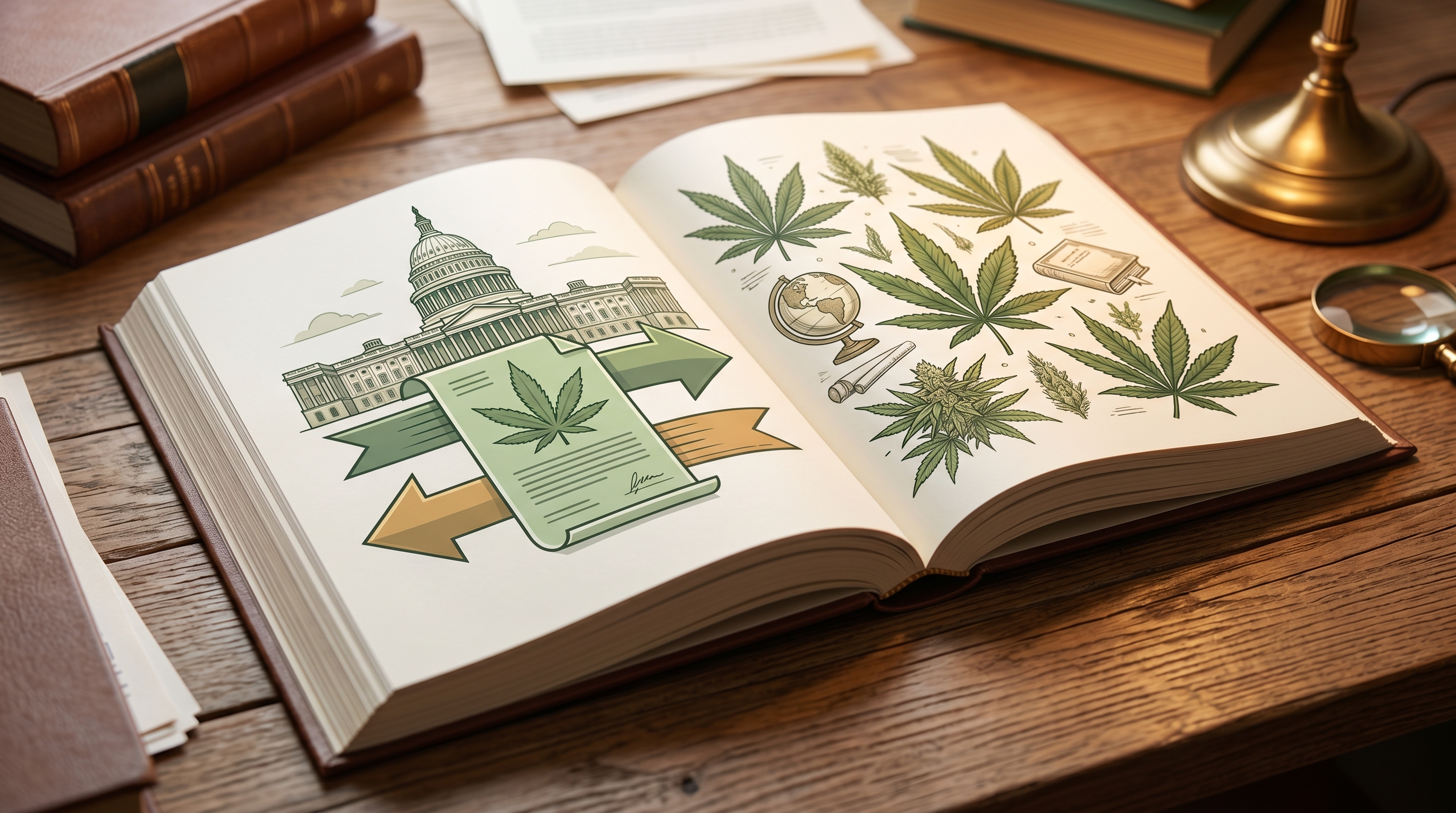
Pennsylvania has come closer to legalizing recreational cannabis than most residents realize. Then it stalled out. More than once.
In May 2025, the state House passed House Bill 1200 by a razor-thin 102–101 vote. It was the first time a legalization bill cleared either chamber. HB 1200 would have legalized adult use. But it would have sold cannabis through state-run stores, much like how Pennsylvania sells wine and liquor. Less than a week later, on May 13, 2025, the Senate Law and Justice Committee voted 3–7 against moving it forward. The bill has been stuck in that committee ever since, with no hearing scheduled.
Here’s the irony. Committee Chair Dan Laughlin—a Republican from Erie—personally supports legalization. He blocked the bill not over cannabis itself, but because he opposed the state-store model. Laughlin and Democratic Senator Sharif Street prefer a privately licensed market instead. That’s the model behind the Senate’s own bills. Laughlin’s plan is for the House to pass his preferred language first, to prove the votes exist before he moves it through his committee.
Meanwhile, Governor Josh Shapiro keeps putting legalization in his budget. In April 2026, the House passed a $53.2 billion budget that counts on future cannabis revenue—money from a market that doesn’t legally exist yet. Shapiro says legalization could bring in $1.3 billion over five years. The state’s Independent Fiscal Office projects nearly half a billion dollars a year by the end of the decade.
The pressure is real. Polls show roughly 69% of Pennsylvania voters support adult-use legalization. That support crosses Democrats, Republicans, and independents. Pennsylvania now has four legal neighbors: New York, New Jersey, Ohio, and Maryland. It watches its residents—and their tax dollars—cross state lines every day. President Trump’s late-2025 executive order to speed up federal rescheduling added one more “maybe this is the year” to the mix.
So why is it stuck? In a word: the Senate. The Republican-controlled chamber is still divided. Some members worry about public safety, the clash with federal law, and the state-store plan. Until the House and Senate agree on a model—not just the idea—Pennsylvania stays medical-only.
What’s Next
Every state House seat and half the state Senate are on the ballot in November 2026. That means voters could reshape the math. Advocates are “cautiously optimistic” but doubt a full adult-use bill passes this session. The smaller, near-term moves are more likely. Those include a private-retail bill both chambers can live with, protections so medical patients can’t be fired over a positive THC test, a fix to the patient DUI rule, or new rules for intoxicating hemp products. For more on that messy hemp landscape, see our hemp vs. cannabis regulations explainer and our look at interstate cannabis commerce.
It’s also worth remembering that the medical-versus-recreational divide is largely artificial. From a pharmacology standpoint, the plant doesn’t know which permit applies to it. And on the federal side, even the long-discussed move to Schedule III would not legalize recreational use. It would only ease research and business rules. For how Pennsylvania compares to neighbors that already made the leap, see our guides on New Jersey and what California learned a decade in.
Key Takeaways
Here’s the short version to carry with you:
- Medical cannabis is legal; recreational is not. A state card is the only legal way to buy or hold cannabis in Pennsylvania in 2026.
- No home grow, no smoking. Even patients must buy from a dispensary, and flower is for vaporizing only.
- Local “decrim” is not legal weed. A city fine does not stop a trooper from charging you under state law.
- Legalization is close but stuck. The House passed a bill; the Senate has not. The fight is over the model, not the idea.
- Watch the November 2026 elections. They could shift the votes that keep the Keystone State medical-only.
When the law does change, the real question won’t be if you can buy cannabis—it’ll be which products fit you. That’s a job for tracking your own responses, not guessing from a label.
Frequently Asked Questions
Is recreational weed legal in Pennsylvania in 2026? No. Only medical marijuana is legal. Possessing cannabis without a valid medical card remains a criminal offense under state law.
Can I grow my own cannabis if I have a medical card? No. Home cultivation is illegal for everyone in Pennsylvania, including medical patients. All legal cannabis must be purchased at a licensed dispensary.
Can I smoke flower I buy at a dispensary? The program does not permit smoking. Dry leaf (flower) is sold for vaporization only, alongside oils, tinctures, capsules, and topicals.
Is it legal in Philadelphia or Pittsburgh? Those cities decriminalized small-amount possession, reducing it to a civil fine. But it’s not “legal”—you can still be charged under state law even within city limits.
Will Pennsylvania legalize adult use soon? Possibly, but it’s stuck. The House passed a bill in 2025; the Senate has not advanced one. The November 2026 elections and the state-store debate will shape what happens next.
Do neighboring states recognize my PA medical card? Reciprocity is limited and varies by state. Don’t assume your card protects you across state lines. And never carry cannabis between states. That’s a federal offense, no matter what state law says.
Sources
- Pennsylvania Department of Health — Medical Marijuana Program and Patients
- 28 Pa. Code Appendix A — Serious Medical Conditions
- LegalClarity — Does Pennsylvania Have Recreational Cannabis?
- Spotlight PA / PennLive — Are Republicans in Pa. ready for legal weed this year?
- Marijuana Moment — Pittsburgh City Council legalization resolution and House budget vote
- Patrick Nightingale (NORML PA) — Cannabis Is Still Not Legal in Pennsylvania
This article is for educational purposes only and is not legal advice. Cannabis laws change frequently and vary by municipality. Always verify current rules with the Pennsylvania Department of Health, your local municipal code, and a qualified attorney before making decisions. Professor High reads terpene profiles, not statutes.


