Cannabis Laws in New York 2026: MRTA in Practice
New York cannabis laws in 2026: possession limits, home grow, the rocky retail rollout, public use, social equity, and NYC taxes explained plainly.

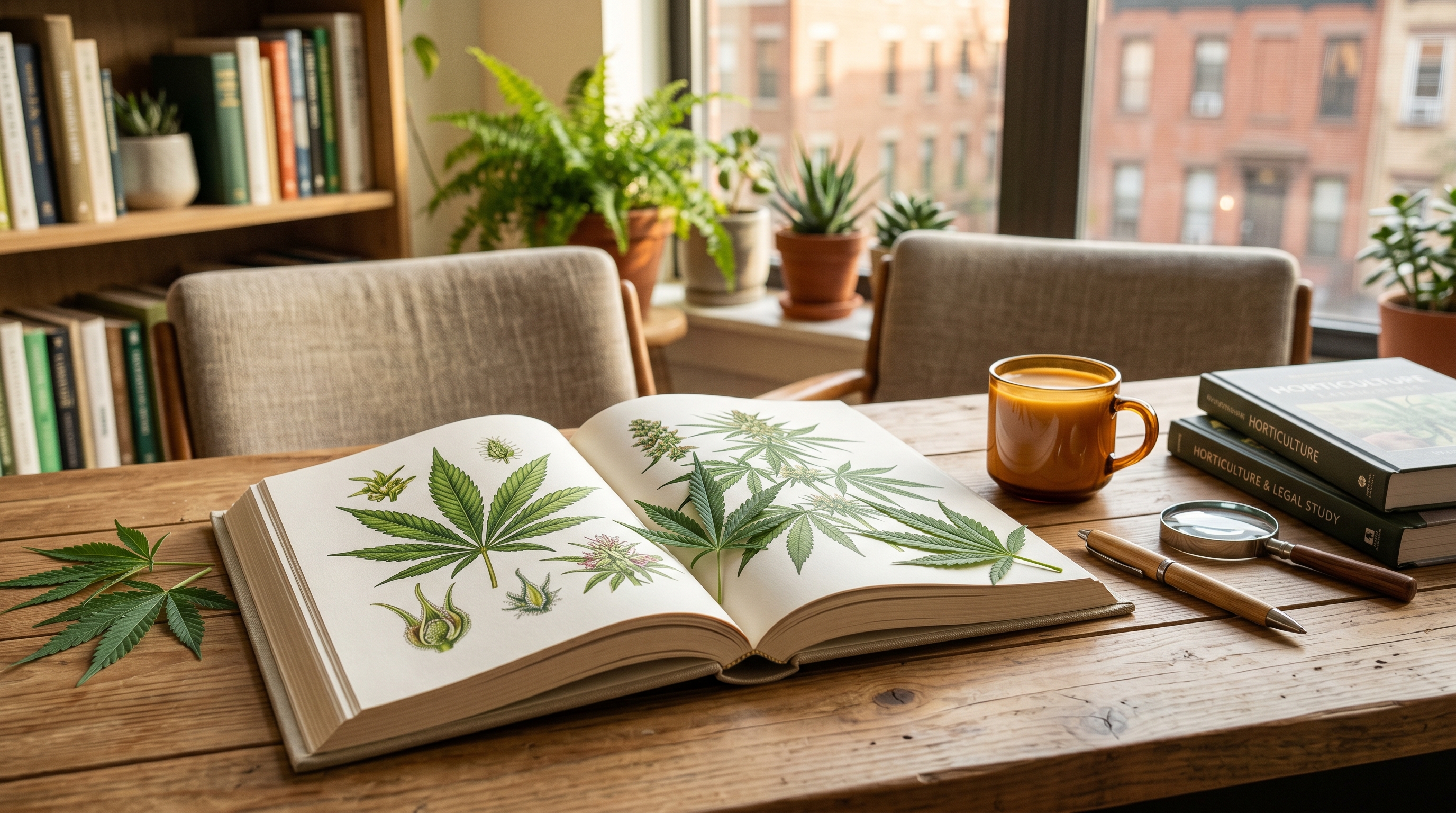
You can legally light up a joint on a New York City sidewalk, grow a few plants in your apartment, and carry three ounces in your bag. But for almost two years after legalization, you could barely find a licensed shop to buy from. New York’s cannabis story is one of the most ambitious and most chaotic rollouts in the country. Let me untangle it.
This is your plain-English guide to New York cannabis law in 2026. We will cover what you can carry, what you can grow, why legal stores took so long to open, where you can use it, and how the taxes work. New York set out to do legalization differently, putting equity first. The road there was bumpy.
The Quick Answer
New York is fully legal for adults 21 and older. Here is the short version before we dig in:
- Possession: Up to 3 ounces of cannabis and 24 grams of concentrate.
- Home grow: Yes. Up to 6 plants per adult (3 mature, 3 immature), capped at 12 per household.
- Where to buy: Licensed dispensaries only. Hundreds are now open after a rocky start.
- Where to use: Anywhere tobacco smoking is allowed, plus private property.
- Who runs it: The Office of Cannabis Management (OCM).
- Equity first: The state prioritized licenses for people harmed by prohibition.
New York legalized adult-use cannabis when Governor Cuomo signed the Marijuana Regulation and Taxation Act (MRTA) on March 31, 2021. Possession and home-use rights kicked in immediately. Building an actual retail market took a great deal longer, and that gap is where most of New York’s drama lives.
Possession Limits
The numbers are refreshingly simple. Adults 21 and older may legally possess:
- 3 ounces (about 85 grams) of cannabis flower, and
- 24 grams of concentrated cannabis (oils, wax, and similar products).
These limits come straight from the New York Office of Cannabis Management and apply both to what you carry in public and what you hold at any given moment. You can keep more at home if it comes from your own legal home grow, which we will get to next.
Go over those public limits and you move into civil or criminal territory depending on the amount. The MRTA also expunged hundreds of thousands of past low-level marijuana convictions automatically, one of the largest record-clearing efforts in the nation. If you are new to all of this, our first-time cannabis user’s guide and beginner’s dosing chart will keep that first purchase from turning into a long night.
Home Grow: Allowed, With a Household Cap
Here is where New York splits sharply from its neighbor. While New Jersey bans home cultivation entirely, New York lets adults grow their own.
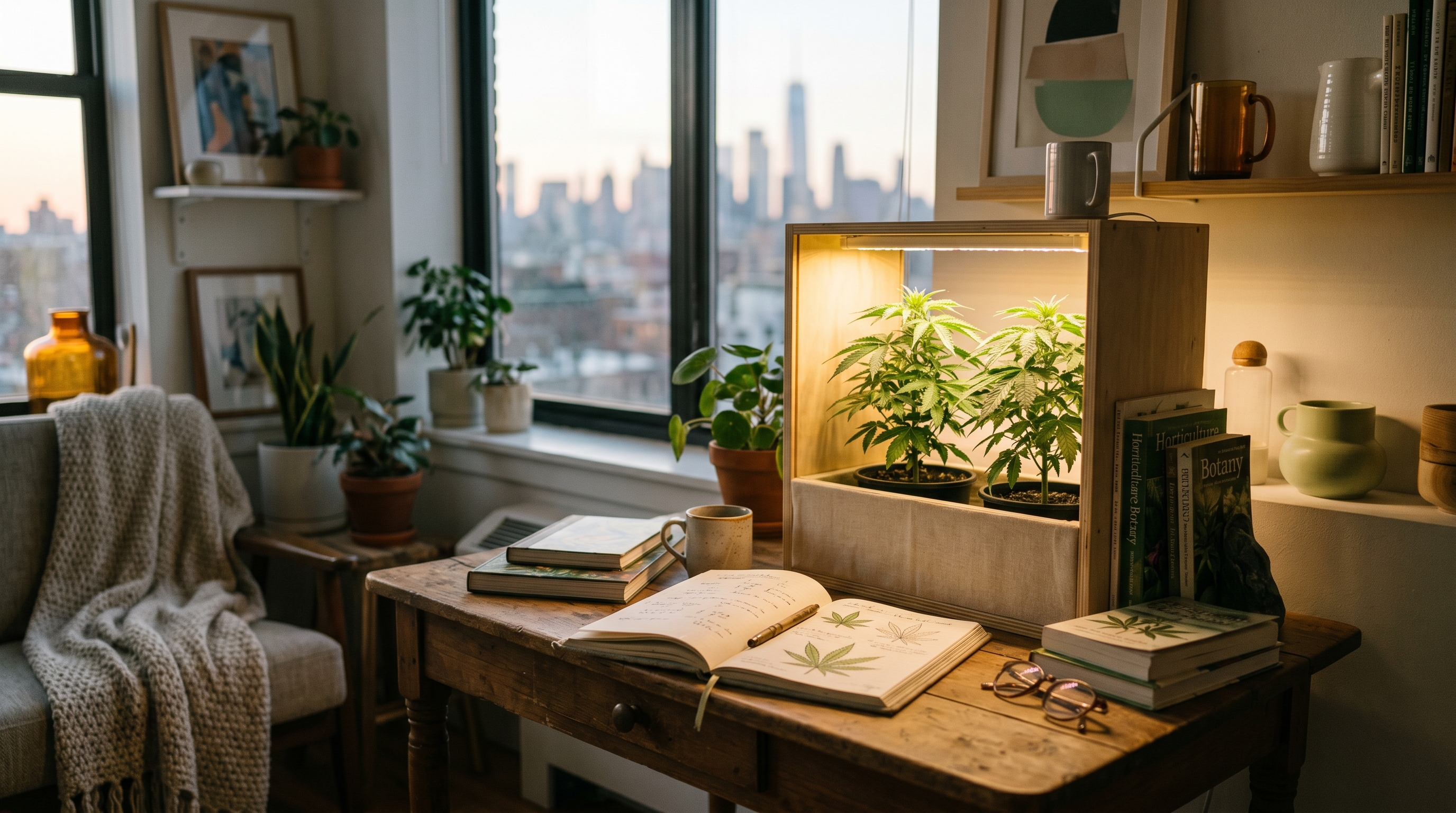
Under the MRTA, each adult 21 and older may grow up to 6 plants: 3 mature and 3 immature. The catch is the household cap of 12 plants total (6 mature, 6 immature), no matter how many adults live there. So two roommates can each grow their six, but a third grower in the same home would push the household over the line.
One wrinkle of timing matters here. The right to grow was written into the 2021 law. But it did not switch on the moment the ink dried. The MRTA tied recreational home growing to OCM regulations. The agency had to write and finalize those first. That rollout trailed the retail market by a wide margin. So for a long stretch after “legalization,” home growing for recreational users was still on hold. By 2026 the framework is in place. Personal cultivation is now a real, regulated option for adults.
If you are setting up your first grow, start with our beginner’s guide to growing cannabis at home. For the gear, our grow tent setup guide and LED grow light buyer’s guide cover the essentials, and indoor versus outdoor growing helps you pick an approach for a New York climate.
The Rocky Retail Rollout
If you remember one thing about New York cannabis, make it this: legalizing was the easy part. Standing up legal stores was a years-long mess.
The bold idea. New York wanted the first wave of legal retailers to be people the drug war had hurt. The Conditional Adult-Use Retail Dispensary (CAURD) program reserved early licenses for applicants with prior cannabis convictions (or a close family member with one) plus business experience. The first legal sale happened on December 29, 2022, at a Housing Works shop in Manhattan’s Greenwich Village.
Then the lawsuits hit. The equity-first design drew legal challenges almost immediately. In August 2023, a group of service-disabled veterans sued, arguing the CAURD program unlawfully excluded other groups the law was meant to include. A judge issued an injunction that froze most new store openings. At that point only a few dozen licensed shops had opened, against hundreds of approved licenses sitting in limbo.
The illicit market exploded. With legal supply throttled, unlicensed storefronts rushed in to meet demand. By some estimates, as many as 8,000 illegal shops were operating across the state, many in New York City, selling untested product with no age checks. The state had legalized cannabis but lost control of who was selling it.
The settlement and the recovery. A settlement in late November 2023 lifted the broad injunction. Licensing could move again. New York then pivoted hard to enforcement. The Fiscal Year 2025 state budget handed OCM and local governments stronger tools. Now they could issue an Order to Seal and padlock unlicensed shops that posed a public-safety threat. The results add up. By the OCM’s own count, enforcement teams have carried out roughly 2,000 inspections, issued nearly 500 sealing orders, and seized about $125 million in illicit cannabis.
The payoff is real. By 2024, New York had grown to hundreds of licensed dispensaries statewide and crossed $1 billion in legal sales, with the state issuing well over 5,000 licenses and permits. The lesson is one we come back to often: the storefront and the label tell you very little about what is actually inside. That is the same gap we wrote about in why dispensary recommendations are broken and why we lean on the High Families framework instead of trusting a shelf tag.
Public Consumption Rules
New York is unusually permissive here. Under the MRTA, cannabis smoking and vaping are allowed anywhere tobacco smoking is allowed. That means you can legally consume on many sidewalks and public spaces where lighting a cigarette is fine.
The big exceptions track tobacco rules:
- No use in schools, workplaces, on public transit, or inside a car.
- No use in parks, beaches, and other areas where local smoking bans apply.
- Private property rules still govern. Landlords and businesses can prohibit it.
So while New York gives more public-use freedom than almost any other legal state, “treated like tobacco” still means plenty of places are off-limits. And driving impaired is illegal everywhere. There is no clean blood-level standard for THC the way there is for alcohol, so the only safe move is to wait. Our guide on cannabis and driving walks through the timing science.
Social Equity at the Center
Equity was not an afterthought in New York. It was the whole design. The law set a goal of directing half of all licenses to social and economic equity (SEE) applicants, including people from communities hit hardest by prohibition, minority- and women-owned businesses, distressed farmers, and disabled veterans.

The state has largely hit that mark. The OCM reports that more than 54 percent of adult-use licenses have gone to SEE applicants. To help those operators actually open, New York launched support programs, including a 2025 initiative offering up to $30,000 per applicant for startup costs like rent, security, and equipment. The CAURD lawsuits showed how legally fragile an equity-first model can be, but the underlying commitment survived the turbulence.
Taxes and the NYC Picture
New York’s tax structure got a major overhaul in 2024. The original MRTA taxed cannabis based on THC potency. That approach was complicated. It frustrated everyone in the supply chain. It also made legal product cost more than the illicit competition. So the state scrapped the potency tax in 2024. In its place came a simpler 9% state excise tax on retail sales. That sits on top of an existing 4% local excise tax that goes to counties and cities.
A few practical notes:
- Total cannabis-specific excise: roughly 13% (9% state + 4% local), plus applicable sales tax.
- Medical patients pay far less, with a reduced state tax rate, making the medical route worthwhile for regular users.
- NYC specifics: The five boroughs see the most licensed shops and also bore the brunt of the illicit-market boom, which is why enforcement has been so visible in the city.
Cannabis still cannot legally cross state lines, even into another legal state. If you are heading to or from New York, read how to travel with cannabis and interstate cannabis commerce first. For the bigger map, our state-by-state cannabis laws guide and the state of US legalization in 2026 put New York in national context. Curious how a patient card still helps once recreational is legal? See how to get a medical marijuana card.
What’s Next for New York
The hard launch is behind us. Expect the licensed market to keep maturing, more dispensaries to open as the backlog clears, and continued pressure on the remaining illicit shops. The equity programs will keep evolving, and tax revenue will keep flowing into community reinvestment, education, and drug-treatment funds as the law intended. Federal reform, if it comes, would reshape banking and interstate commerce for New York operators overnight.
For now, the headline is stable: legal to possess within limits, legal to grow a few plants, legal to use roughly where you can smoke a cigarette, and finally backed by a real and growing network of licensed stores.
Key Takeaways
- Legal at 21+. Possess up to 3 ounces of flower and 24 grams of concentrate.
- Home grow is allowed. Up to 6 plants per adult, capped at 12 per household. The rule arrived later than the rest of the law.
- The rollout was rough. Equity-first licensing, lawsuits, an 8,000-shop illicit boom, then a hard enforcement pivot.
- Public use is permissive. Allowed wherever tobacco smoking is, with the usual exceptions.
- Taxes got simpler in 2024. The potency tax is gone, replaced by a 9% state plus 4% local excise.
When in doubt, buy from a licensed shop, keep your grow within the household cap, and verify current rules with the state.
Frequently Asked Questions
How much cannabis can I legally carry in New York? Adults 21 and older may possess up to 3 ounces of flower and 24 grams of concentrate in public.
Can I grow cannabis at home in New York? Yes. Each adult 21+ may grow up to 6 plants (3 mature, 3 immature), with a household cap of 12 plants. The home-grow rules took effect after the rest of the MRTA, once OCM finalized regulations.
Why were legal dispensaries so hard to find for so long? New York’s equity-first CAURD licensing drew lawsuits, including an August 2023 injunction that froze most new store openings. A late-2023 settlement restarted licensing, and the market has expanded steadily since.
Can I smoke cannabis in public in New York? Generally yes, anywhere tobacco smoking is allowed. The usual bans apply: no use in schools, workplaces, cars, public transit, or where local smoking bans are in effect.
How is cannabis taxed in New York? A 9% state excise tax plus a 4% local excise tax, after the original THC-potency tax was repealed in 2024. Medical patients pay a reduced rate.
Do I need to be a New York resident to buy? No. Any adult 21 or older with valid government ID can buy from a licensed dispensary.
Sources
- New York Office of Cannabis Management
- OCM, Adult-Use Cannabis Overview
- OCM, Enforcement and Order to Seal
- Marijuana Regulation and Taxation Act (MRTA), 2021
- Marijuana Policy Project, New York
- New York State Department of Taxation and Finance, Cannabis
This article is educational information, not legal advice. Cannabis laws change frequently and individual circumstances vary. For decisions about your specific situation, consult a licensed New York attorney and verify current rules with the New York Office of Cannabis Management.


