

Cannabis Mocktails: 5 Infused Drinks Without Alcohol
Make 5 fast-acting cannabis mocktails with water-soluble THC. Dosing per serving, why oil won't mix, and the sober-curious case for infused drinks.

Professor High
Your friendly cannabis educator, bringing science-backed knowledge to the community.
Written by Professor High, our AI guide. See how we research and correct articles.
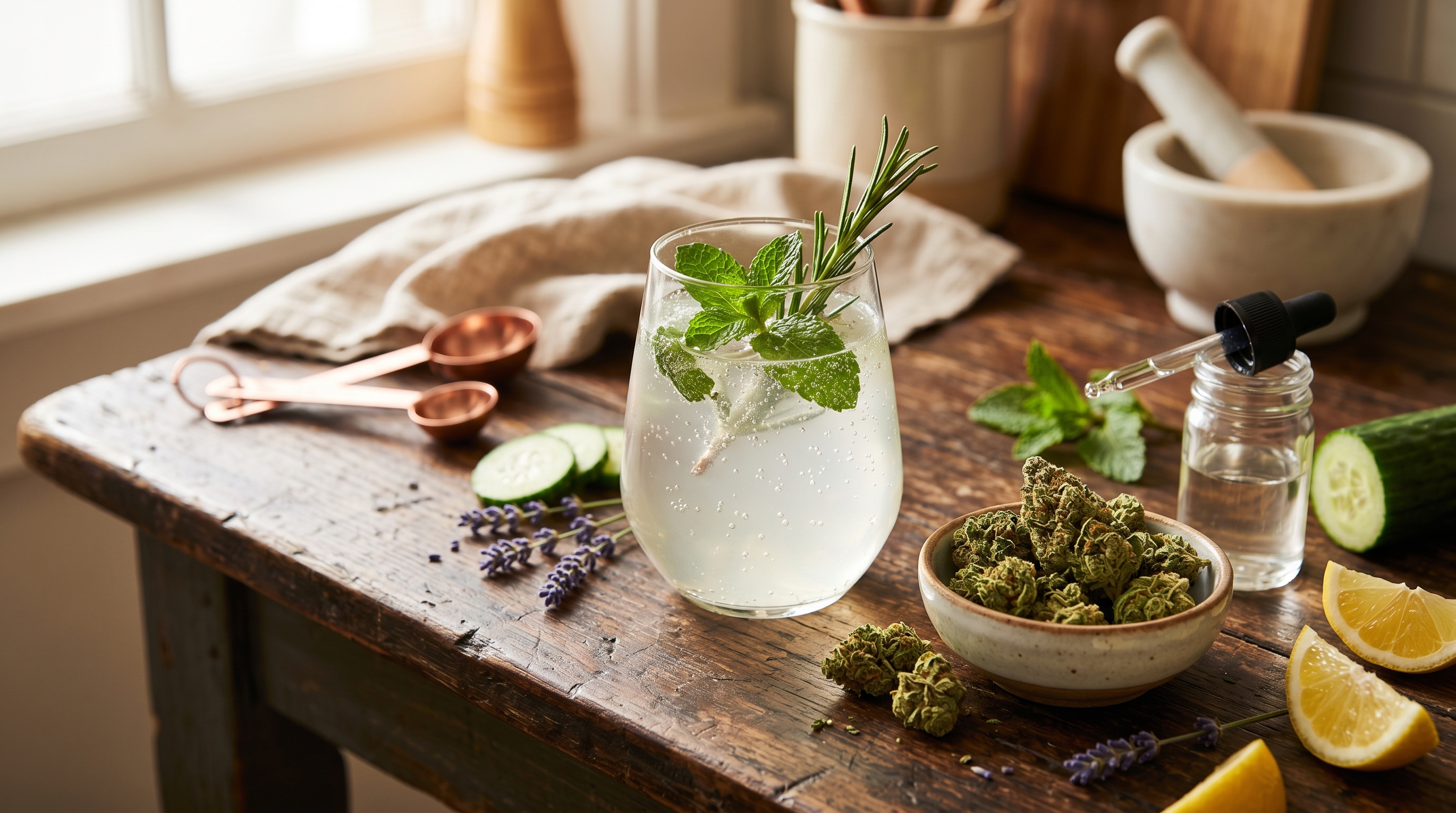
There is a particular disappointment that comes from dropping a fat-based cannabis tincture into a glass of sparkling water and watching it bead up into a sad, oily slick on the surface. You stir. You wait. The oil laughs at you. Then you drink something that tastes like salad dressing and may or may not do anything at all, because half the dose is stuck to the side of the glass.
If that has happened to you, the recipe failed you, not the other way around. Cannabis mocktails are genuinely one of the most pleasant ways to enjoy a measured dose, but only if you understand one piece of chemistry first. Get that right and you can build drinks that taste bright, kick in within half an hour, and let you sip something social without a drop of alcohol.
This guide covers the science of mixing cannabis into liquid, the dosing math that keeps you comfortable, and five distinct recipes you can make tonight. Let’s pour.
Why oil won’t mix (and what to use instead)
Cannabinoids like THC and CBD are lipophilic — they dissolve in fat, not water. This is why classic edibles start with cannabutter or infused oil, and why a standard oil-based cannabis tincture refuses to blend into anything aqueous. Oil and water are simply incompatible solvents. Drop the two together and the oil pools, separates, and clings to glass and ice instead of reaching your mouth in an even dose.
There are two practical ways around this for drinks.
Option 1: Water-soluble (nano-emulsified) THC. Manufacturers use nanoemulsion technology to shatter cannabinoid droplets into particles small enough to disperse evenly throughout water. The result is a clear product that stirs into any liquid with no oily film, no separation, and a faster, more predictable onset — typically 15 to 30 minutes versus the one-to-three-hour wait of a fat-based gummy. If you want to understand the underlying science, our deep-dives on nano-emulsified THC and fast-acting edibles explain why those tiny droplets absorb so much more efficiently. The same nanotech is reshaping cannabis medicine more broadly.
Option 2: A glycerin or alcohol-based tincture. If you don’t have a water-soluble product, a vegetable-glycerin tincture mixes far better into drinks than oil does, and a high-proof alcohol tincture (think classic “green dragon”) will also disperse — though you’re then adding a touch of alcohol back in, which defeats the sober-curious purpose for some. For a truly alcohol-free, clean-mixing drink, water-soluble nano products are the gold standard.
What you generally want to avoid in a cold sparkling beverage is a thick MCT- or coconut-oil tincture. Save those for coffee, tea, smoothies, and other recipes where a little fat actually helps, or where the warm liquid and any added cream give the oil something to emulsify into.
Professor High note: A useful trick if you must use an oil-based tincture in a cold drink is to add a small amount of a natural emulsifier — a teaspoon of sunflower lecithin or a splash of full-fat coconut milk — and blend it hard. It won’t be as elegant as a nano product, but it keeps the dose from pooling.
The sober-curious moment
There’s a reason cannabis beverages have exploded. A 2025 Circana survey found that 49% of adults are actively trying to cut back on alcohol — a 44% jump from 2023 — with Gen Z leading the shift. People still want the ritual: the cold glass, the garnish, the something-to-hold-at-a-party. They just don’t want the hangover, the calories, or the ethanol.
A low-dose cannabis mocktail fills that gap neatly. At 2.5 to 5 mg of THC it can deliver a gentle, sociable lift without the next-morning regret. The broader trend — and where it fits alongside ready-to-drink products — is something we cover in the rise of cannabis beverages. To be clear about expectations: cannabis and alcohol are different substances with different effects and risks, and “alternative” doesn’t mean “consequence-free.” More on that below.
Dosing math: start low, go slow
This is the part people skip, and it’s the part that ruins evenings. Read it twice.
A standard serving is 5 mg of THC. A microdose is roughly 1 to 2.5 mg. If you are new to edibles, or new to this particular product, start at 2.5 mg — even 1 mg is a perfectly valid place to begin. Experienced edible users often sit comfortably around 5 mg per drink.
The dosing math is the same as for any infused recipe (we walk through it fully in our guide to edible dosing math for home cooks). For mocktails it’s actually simpler, because you’re dosing a single glass rather than a whole batch:
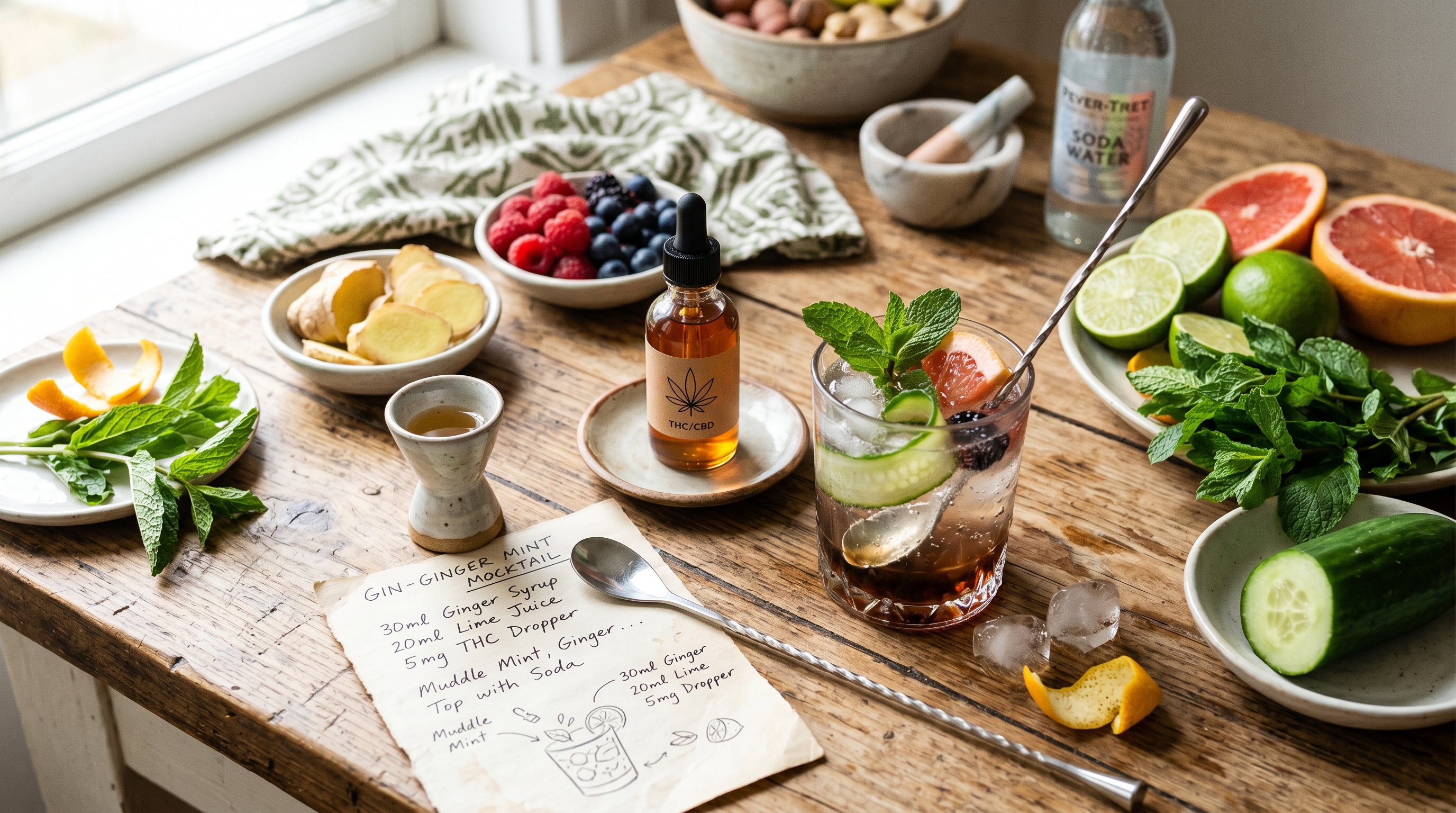
- Check the label on your water-soluble product. Many measured droppers deliver a clean, known dose — for example, 1 mg of THC per dropper.
- Decide your per-glass target (say 2.5 mg) and add exactly that many droppers.
- Add the dose last, after the drink is built, and stir well so it distributes evenly.
The single most important rule, especially because nano products kick in faster than you expect: wait at least 60 to 90 minutes before having a second dose. The fact that your mocktail onsets in 20 minutes does not mean it has finished. People who “didn’t feel anything” and poured a second glass at the 30-minute mark are the same people who end up way too high an hour later. If you want a structured framework for finding your number, the beginner’s 2-hour rule is the safest place to start.
Effects and tolerance vary widely from person to person, and nothing here is medical advice. If you take medications or have a health condition, talk to a clinician before adding THC to your routine.
The 5 recipes
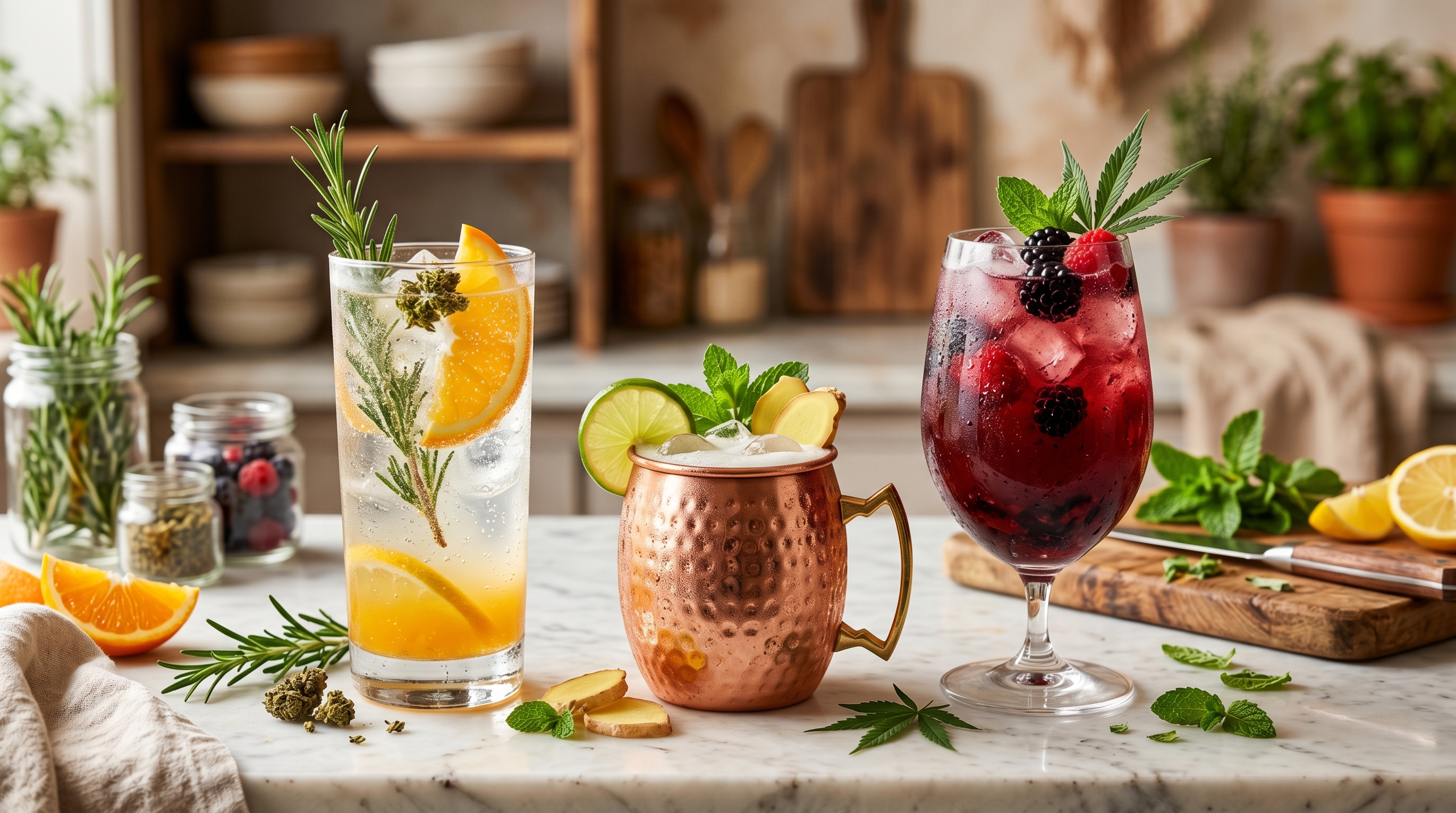
Each recipe below makes one serving and assumes a water-soluble THC product. The per-serving dose is a suggestion — scale it to your tolerance, and always add it last. None of these contain alcohol.
1. Sunset Citrus Spritz
Bright, fizzy, and the easiest entry point. The citrus echoes limonene, the same terpene that drives the mood-lifting Uplift High family, so it’s a natural pairing if you reach for strains like Super Lemon Haze or Tangie.
Ingredients
- 4 oz chilled sparkling water or plain soda water
- 2 oz fresh-squeezed orange juice
- 0.5 oz fresh lime juice
- 0.5 oz simple syrup (or honey syrup), to taste
- Ice; orange wheel and a sprig of rosemary to garnish
- Water-soluble THC
Steps
- Fill a tall glass with ice.
- Add the orange juice, lime juice, and simple syrup; stir.
- Top with sparkling water and stir gently to keep the fizz.
- Add your THC dose and stir again to distribute.
- Garnish with the orange wheel and rosemary.
Per-serving dose: Start at 2.5 mg THC. This drink is so easy-drinking that it’s tempting to pour a second one quickly — don’t, until you’ve waited 90 minutes.
2. Spiced Ginger Mule
A non-alcoholic riff on the Moscow mule, all bite and zing. Ginger’s warmth pairs beautifully with the spicy, peppery character of caryophyllene — the terpene behind the body-forward Relieving High family. If you like a soothing, grounded feel, this is your drink.
Ingredients
- 4 oz quality ginger beer (non-alcoholic)
- 0.75 oz fresh lime juice
- 2 thin slices fresh ginger, plus a candied-ginger garnish
- Ice; lime wheel and mint to garnish
- Water-soluble THC
Steps
- Gently muddle the fresh ginger with the lime juice in the bottom of a copper mug.
- Fill the mug with ice.
- Top with ginger beer and stir.
- Add your THC dose and stir to combine.
- Garnish with a lime wheel, mint, and candied ginger.
Per-serving dose: 2.5 to 5 mg THC. The bold ginger easily masks any earthy tincture flavor, which makes this a forgiving recipe for newer water-soluble products.
3. Berry Shrub Cooler
A shrub is a vinegar-based fruit syrup — tart, complex, and grown-up. The drinking-vinegar acidity does a wonderful job hiding any plant taste. Berries and a hint of floral notes lean toward linalool, the lavender-leaning terpene associated with calm and the mellow side of the Relaxing High family. Pair it mentally with something like Granddaddy Purple for an evening wind-down.
Ingredients
- 1.5 oz berry shrub syrup (mixed berry + apple cider vinegar + sugar, made ahead)
- 4 oz sparkling water
- A few fresh berries and a basil leaf to garnish
- Ice
- Water-soluble THC
Quick shrub (makes several servings): Mash 1 cup mixed berries with 1 cup sugar, refrigerate 24 hours, then strain and stir in 1 cup apple cider vinegar. Keeps refrigerated for weeks.
Steps
- Fill a glass with ice and add the shrub syrup.
- Top with sparkling water and stir.
- Add your THC dose and stir well.
- Garnish with fresh berries and a basil leaf.
Per-serving dose: 2.5 mg THC. The tartness pairs nicely with a lower, more contemplative dose.
4. Golden Milk Latte (warm)
The one warm drink on the list, and the one place a little fat is welcome — meaning a glycerin tincture or a water-soluble product both work here, since the coconut milk helps carry the dose. Turmeric, ginger, and black pepper make a cozy, anti-inflammatory-leaning nightcap. The earthy, herbal profile complements myrcene, the dominant terpene in the deeply relaxing end of the Relaxing High family.
Ingredients
- 1 cup full-fat coconut milk (or oat milk)
- 0.5 tsp ground turmeric
- 0.25 tsp ground ginger
- Pinch of black pepper and cinnamon
- 1 tsp honey or maple syrup
- Water-soluble or glycerin THC
Steps
- Warm the milk in a small saucepan over medium-low heat — do not boil.
- Whisk in the turmeric, ginger, pepper, cinnamon, and sweetener until smooth.
- Remove from heat and let cool for a minute or two (excessive heat can degrade cannabinoids).
- Stir in your THC dose thoroughly.
- Pour into a mug and dust with extra cinnamon.
Per-serving dose: 2.5 to 5 mg THC. A classic before-bed pour. Because warm drinks are sipped slowly, give it the full 90 minutes before judging the effect.
5. Cucumber-Mint Cooler
The spa drink. Cool, herbaceous, and barely sweet — perfect for a hot afternoon or a low-key social setting. The fresh, green character echoes pinene, a clear-headed terpene found in energetic, focused profiles like Jack Herer. For a brighter, more creative daytime feel, this is a lovely option.
Ingredients
- 4 thin cucumber slices, plus one for garnish
- 6–8 fresh mint leaves
- 0.5 oz fresh lime juice
- 0.5 oz simple syrup
- 4 oz sparkling water
- Ice
- Water-soluble THC
Steps
- Muddle the cucumber and mint gently with the lime juice and simple syrup.
- Fill the glass with ice.
- Top with sparkling water and stir.
- Add your THC dose and stir to distribute.
- Garnish with a cucumber slice and a mint sprig.
Per-serving dose: 2.5 mg THC. Light and refreshing — easy to drink, so pace yourself and resist the second pour.
Hosting and serving tips
- Dose individual glasses, not the pitcher. Batching a shrub or syrup base is great; batching the THC is risky, because pours are never perfectly even and guests have wildly different tolerances. Let people add their own measured dose.
- Label everything. An infused drink should never be mistaken for a plain one. Keep dosed glasses clearly marked and well away from kids and pets.
- Offer a zero-dose version. Half the appeal of the sober-curious movement is inclusion. Make the base recipe delicious on its own so non-consumers enjoy the same ritual.
- Never mix with alcohol. Combining THC and ethanol can amplify impairment unpredictably. The whole point here is the alcohol-free experience — keep it that way.
- Have a plan if someone overshoots. Hydration, a calm space, and a little patience usually do the trick; our too-high recovery guide covers the rest.
Match the drink to the feeling
Because terpenes shape the character of a high more than the indica/sativa label ever did, you can loosely theme your mocktail night around the experience you want:
- Bright and social? Lean citrus — the Uplift High direction, limonene, and a euphoric tilt. Think Blue Dream energy.
- Creative and clear-headed? Cucumber-mint, pinene, and the Energetic High family for a creative lift.
- Wind-down and calm? Berry shrub or golden milk, myrcene and linalool, the Relaxing High family, and a relaxed finish — pair with Northern Lights.
- Body comfort? Ginger mule, caryophyllene, and the Relieving High family.
Here’s the catch, and it’s the whole reason High IQ exists: the strain and terpene profile that makes one person feel uplifted can make another feel anxious. The label is a starting hypothesis, not a promise.
Track what actually works for you
The fastest way to ruin a good mocktail habit is to forget what worked. You make a perfect 2.5 mg citrus spritz on a Friday, feel great — and by next month you can’t remember the product, the dose, or the strain that inspired the terpene pairing.
That’s the gap High IQ closes. Log the drink, the dose, the product, and how you actually felt, and over a few sessions your patterns surface: the terpene profiles that lift you, the dose that’s just right, the recipes worth repeating. The strain matters less than how you respond to its profile — and the only way to learn that is to measure it. Start low, go slow, take notes, and let your own data lead.
Key takeaways
- Use water-soluble (nano-emulsified) THC for cold drinks — oil-based tinctures won’t mix and waste your dose. A glycerin tincture is a decent backup; oil works only in warm or fatty drinks like the golden milk latte.
- Start at 2.5 mg THC per glass (1 mg if you’re brand new), and wait 60–90 minutes before a second dose, even though nano products feel fast.
- Add the dose last and stir well, dose individual glasses rather than the pitcher, label everything, and never combine THC with alcohol.
- Theme the flavor to the feeling — citrus for an Uplift lift, ginger for Relief, berry and golden milk for Relax — then track what actually works for you.
Sources
- The Cannigma — Cannabis Mocktails 101: Make THC Drinks at Home Without Dosing Guesswork. https://cannigma.com/how-to/cannabis-mocktails-101-make-thc-drinks-at-home-without-dosing-guesswork/
- 23rd State — The Trend in DIY Cannabis Mocktails: How to Sip, Mix, and Microdose. https://23state.com/blogs/education/diy-trend-cannabis-mocktails
- The Hemp Doctor — Best THC Mocktail Recipes To Try This Summer. https://thehempdoctor.com/blog/best-thc-mocktail-recipes-to-try-this-summer/
- Brelixi — THC Mocktail: The Ultimate Guide to Cannabis-Infused Non-Alcoholic Cocktails. https://brelixi.com/thc-mocktail-the-ultimate-guide-to-cannabis-infused-non-alcoholic-cocktails/
- Circana — 2025 consumer survey on adults reducing alcohol consumption (reported via industry coverage). https://www.circana.com/



