Fast-Acting Edibles: The Science of Live Rosin and Nano THC
Why most edibles take an hour to kick in, and how nano THC and live-rosin gummies actually speed up onset to 15-30 minutes. Hype vs. real science.

Professor High
Your friendly cannabis educator, bringing science-backed knowledge to the community.
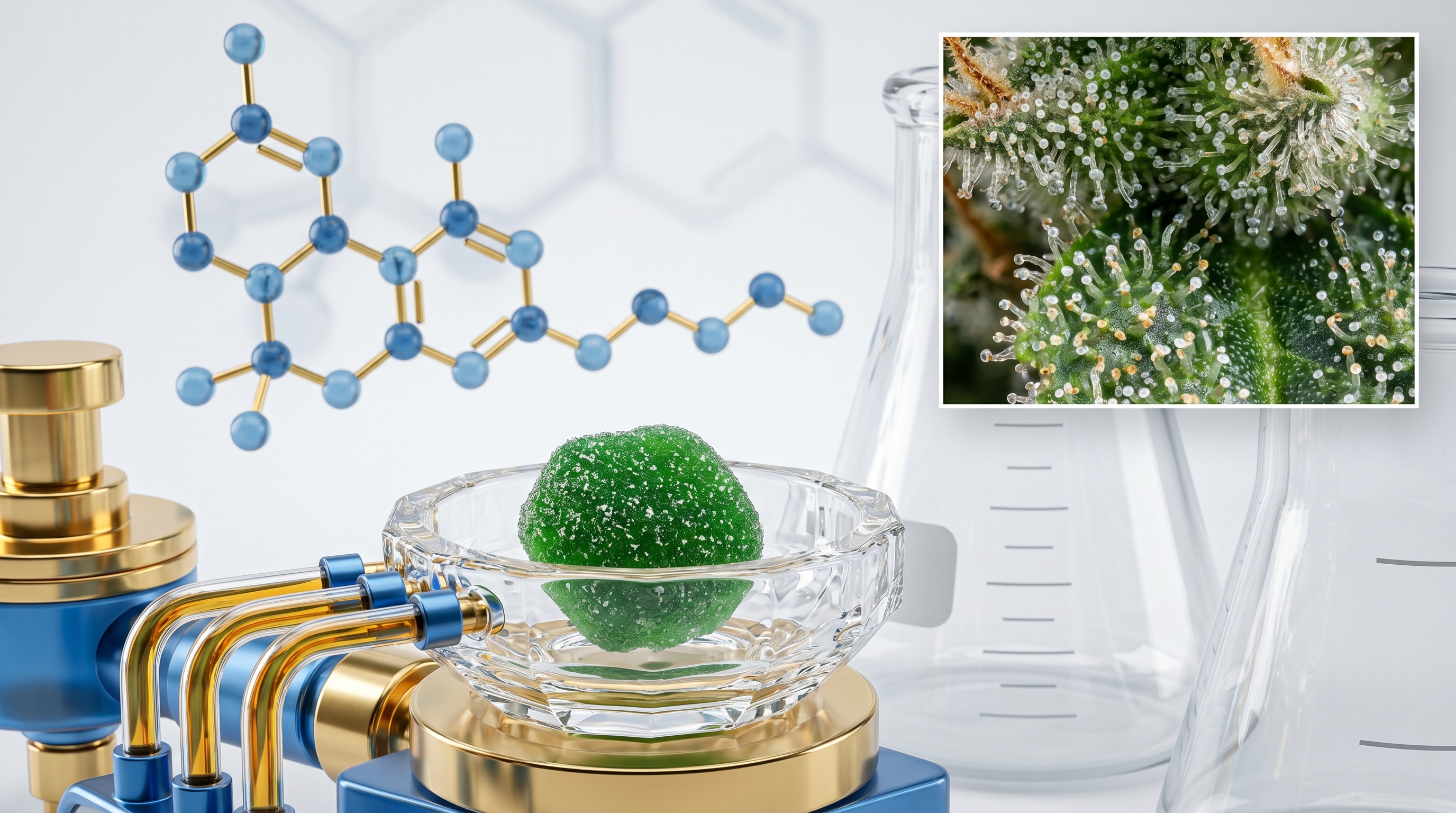
You ate the gummy. Then you waited. Twenty minutes, nothing. Forty minutes, still nothing. So you ate another one — and an hour later the floor turned into a waterbed and you spent the evening promising the universe you’d never do this again.
If that story sounds familiar, you’re not alone, and you didn’t do anything wrong. Traditional edibles are slow by design, and that slowness is the single biggest reason people overshoot their dose. Lately the market has answered with a wave of “fast-acting” products — nano THC drinks and live-rosin gummies that promise effects in 15 to 30 minutes instead of two hours.
Some of that promise is real chemistry. Some of it is clever marketing wearing a lab coat. Let’s pull them apart so you know which is which.
Why normal edibles are so slow
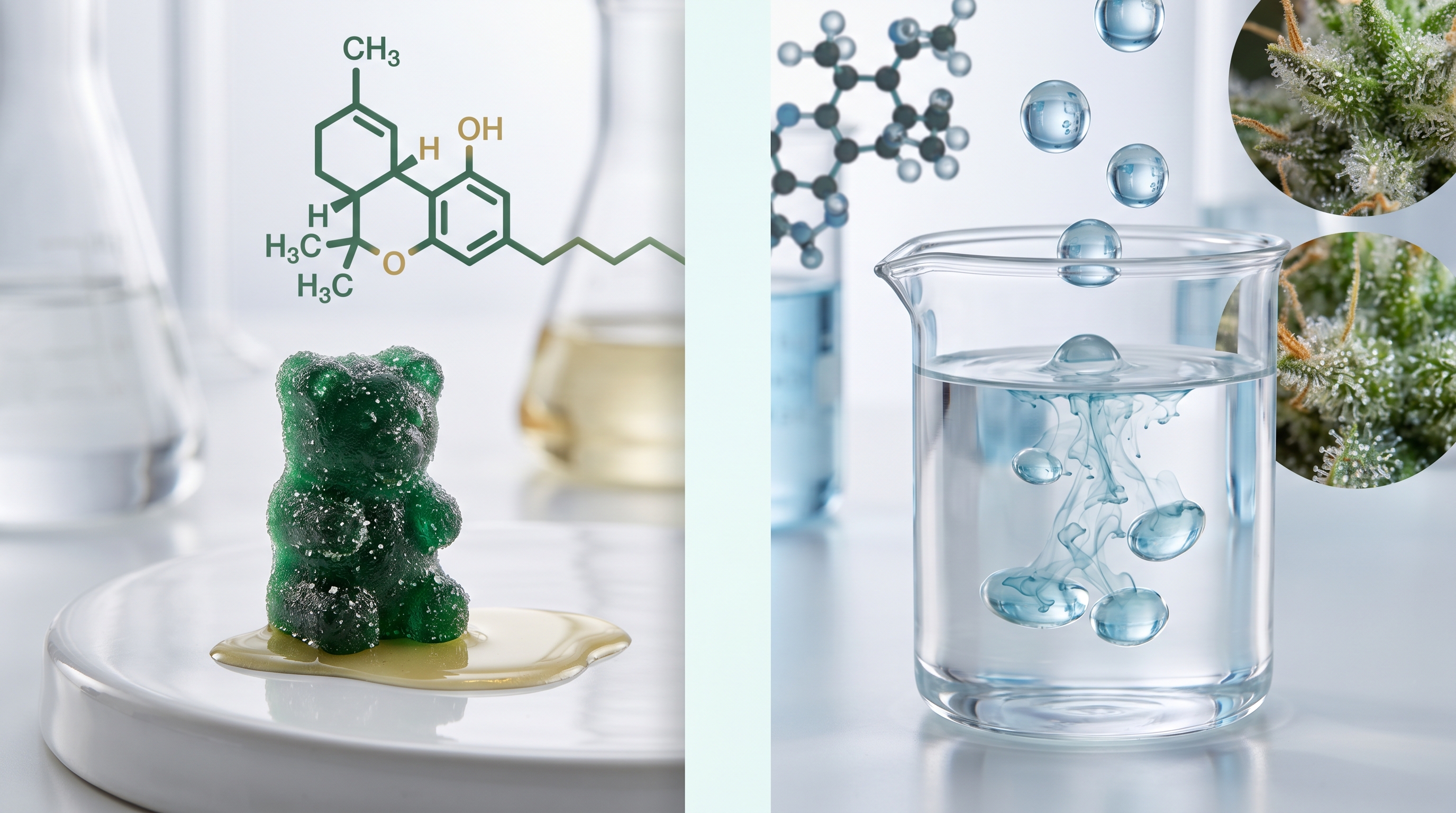
When you swallow a standard THC edible, the cannabinoid takes the scenic route. It travels down to your stomach, gets digested, and is absorbed through the wall of your small intestine. From there it doesn’t go straight to your brain — it goes to your liver first.
This detour is called the first-pass effect, and it’s the reason edibles behave so differently from a vape or a joint. A big chunk of the THC gets chemically processed before it ever reaches general circulation. The result is a slow build: oral onset typically lands somewhere between 30 and 120 minutes, with peak blood levels arriving around 1 to 2.5 hours after the dose [Lucas et al., 2018]. Inhaled cannabis, by contrast, peaks in just 3 to 10 minutes [Grotenhermen, 2003].
Two things drive the lag:
- Digestion takes time. Solid food has to break down before the cannabinoid is freed and absorbed.
- THC barely dissolves in water. THC is intensely fat-loving (lipophilic) and almost insoluble in water — roughly 0.0028 mg/mL. Your gut is a watery environment, so a greasy clump of THC oil is genuinely hard for your body to grab.
If you’ve ever wondered why edibles feel stronger and sneak up on you, the science of 11-OH-THC explains the second half of the story.
The 11-OH-THC recap: why the liver changes everything
That first-pass trip through the liver isn’t just a delay — it transforms the drug. Liver enzymes (mainly CYP2C9 and CYP3A4) convert a large portion of swallowed THC into a metabolite called 11-hydroxy-THC (11-OH-THC).
Here’s the wild part: 11-OH-THC is more active at the brain’s CB1 receptor than THC itself. Lab work has measured its binding affinity at roughly Ki = 0.37 nM versus 35 nM for delta-9-THC — meaning it latches onto the receptor far more tightly [Zagzoog et al., 2020]. It also crosses the blood-brain barrier readily.
Because eating THC routes nearly all of it through the liver, edibles generate far more 11-OH-THC than smoking does. That’s why a 10 mg edible can hit harder than 10 mg of inhaled THC — you’re effectively dosing a second, punchier compound your body manufactured for you. Low oral bioavailability (only about 6 to 20% of swallowed THC reaches circulation) plus this potent metabolite is the slow-but-strong signature every edible veteran knows.
So the goal of “fast-acting” formulations is simple: get THC into your blood sooner, and ideally bypass some of that slow gut-then-liver pipeline. There are two main routes manufacturers use to do it.
Route 1: Nanoemulsion and water-soluble THC
The first genuine fix is nanoemulsification — the technology behind most “water-soluble” and “fast-acting” THC drinks and tinctures.
Remember the problem: THC is oily and your digestive tract is watery, so the two don’t mix well. Nanoemulsion solves this by using emulsifiers (surfactants) to break THC oil into microscopic droplets suspended evenly in water. We’re talking droplets in the 20-500 nanometer range — thousands of times smaller than the oil globules in a normal infusion [Jaiswal et al., 2015].
Shrinking the droplets does two useful things:
- Massively more surface area. Smaller droplets expose far more THC to your absorptive surfaces, so it dissolves and gets absorbed much faster.
- Partly sublingual absorption. Because the THC is now dispersed in a water-friendly form, a portion can absorb directly through the tissues of your mouth (the sublingual route) before you ever swallow. Sublingual absorption skips the gut and the first-pass liver detour, sending THC more directly into the bloodstream — controlled oromucosal dosing studies show a meaningfully different absorption pattern than swallowed THC [Karschner et al., 2011].
The practical result is onset in roughly 15 to 30 minutes for many nano products — meaningfully faster than the 30-120 minute window of a conventional gummy. Our deep dive on nano-emulsified THC walks through the formulation details, and CBD nanoparticles shows the same principle applied to CBD.
A fair caveat: “faster onset” doesn’t automatically mean “more total THC absorbed,” and real-world numbers vary a lot between brands. Some emulsions are well-engineered; some are oily drinks with a marketing sticker. But the underlying mechanism — smaller droplets plus partial mouth absorption — is sound pharmacology, not a gimmick.
Route 2: Live-rosin gummies — the real mechanism vs. the marketing
This is where things get interesting, because “live-rosin fast-acting gummies” are one of the most misunderstood products on the shelf.
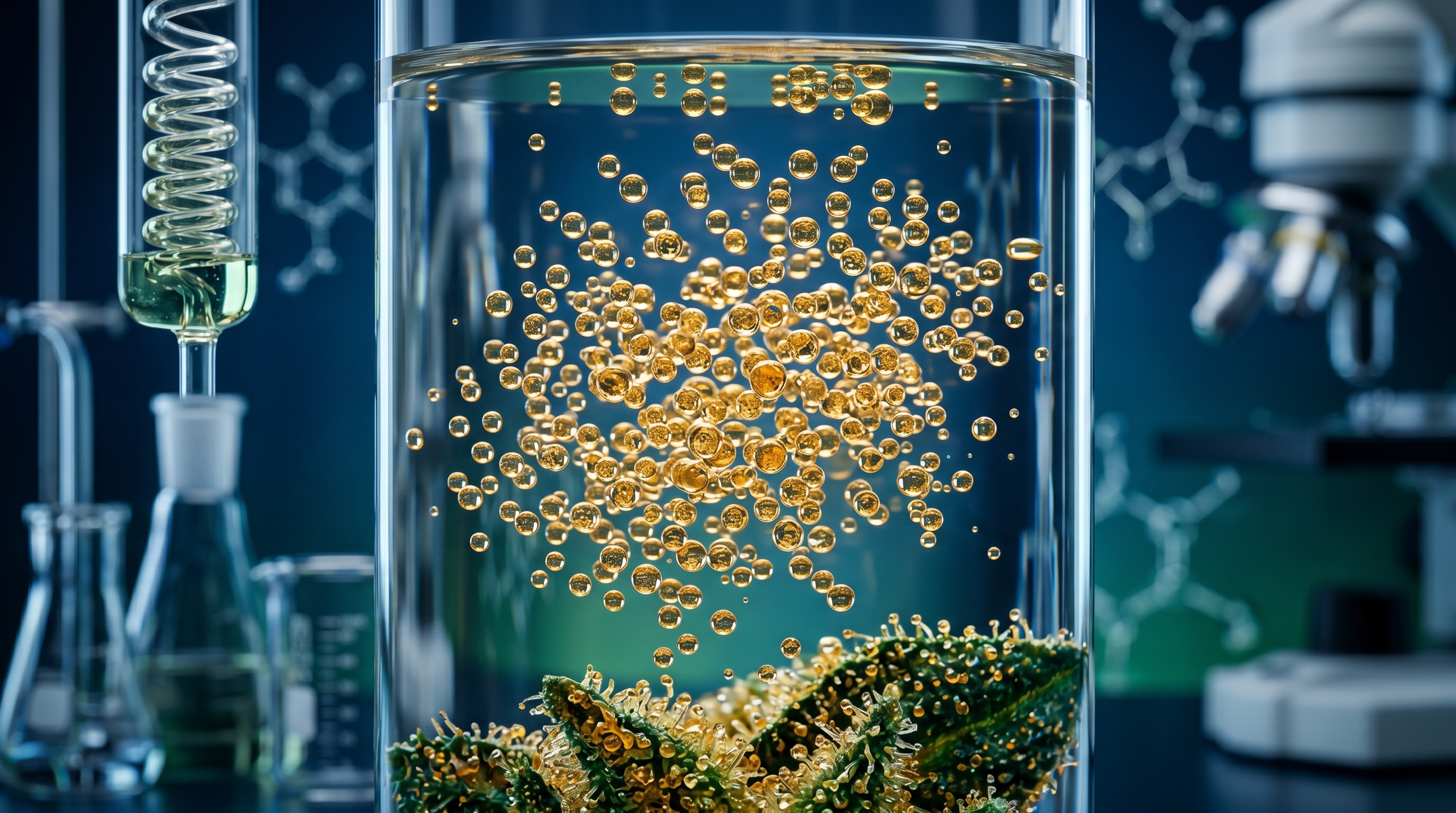
First, what live rosin actually is: a solventless concentrate made by pressing heat and pressure onto fresh-frozen cannabis to squeeze out the resin — no butane, no ethanol. It’s prized for preserving the plant’s full terpene profile and tasting like the living plant. If you want the full picture, see live resin vs. live rosin and cured resin vs. live resin.
Here’s the honest part: live rosin, by itself, does not make a gummy fast-acting. Once that rosin is decarboxylated and stirred into a gummy you chew and swallow, its THC still has to go through the exact same gut-then-liver pipeline as any other edible. The molecule doesn’t care that it came from a fancy press. The terpenes may shape the character of the high, but they don’t reroute THC around your liver.
So why do so many live-rosin gummies genuinely feel faster?
- They’re usually emulsified too. The fast-onset live-rosin gummies on the market typically pair the rosin with a nanoemulsion or water-soluble delivery system — the same Route 1 technology above. The speed comes from the emulsification, not the rosin.
- Sublingual contact while you chew. A well-formulated gummy that lingers and dissolves in your mouth lets some THC absorb through oral tissue before swallowing. Again — that’s the delivery method, not the rosin.
- Terpenes flavor the marketing. “Live rosin” is a premium quality signal, so it gets stamped on the front of the package while “nanoemulsified” hides in the fine print.
The takeaway: when a live-rosin gummy is fast-acting, the rosin is the flavor-and-quality story and the emulsification is the speed story. Both can be true at once — just don’t credit the wrong one. A live-rosin gummy made with plain, un-emulsified infusion will be exactly as slow as grandma’s brownies.
The bioavailability and onset science, simplified
Step back and the whole topic comes down to two separate questions that people constantly confuse:
| Question | What it measures | What changes it |
|---|---|---|
| Onset | How fast you feel it | Route of absorption (sublingual > gut), droplet size, digestion speed |
| Bioavailability | How much reaches your blood | First-pass liver loss, fat content, formulation |
Inhalation is the gold standard for both speed and efficiency, which is why it tops most bioavailability rankings. Edibles sit at the slow, low-bioavailability end. Fast-acting formulations are trying to nudge edibles up the speed axis by borrowing the sublingual route — and sometimes the bioavailability axis too. They don’t turn a gummy into a vape, but they do shrink the gap.
One subtle point worth keeping: the more THC that absorbs sublingually (bypassing the liver), the less of it gets converted into that potent 11-OH-THC metabolite. So a fast-acting product can feel quicker and sometimes a touch “cleaner” or more clear-headed than a slow edible at the same milligram count — because the metabolite mix shifts. Individual results vary, and this isn’t a medical guarantee, just the pharmacology pointing in a direction.
Hype vs. reality
Let’s score the claims honestly:
- ✅ “Nano THC absorbs faster.” Real. Smaller droplets and partial sublingual uptake genuinely speed onset.
- ⚠️ “Water-soluble THC is more bioavailable.” Often true, but highly brand-dependent. Some emulsions are excellent; some are barely better than oil.
- ❌ “Live rosin makes edibles fast-acting.” Misleading. The rosin is a quality/flavor feature. The emulsification is what creates the speed.
- ⚠️ “15-minute onset, guaranteed.” Optimistic. 15-30 minutes is a realistic range for good nano products; your metabolism, stomach contents, and the specific formula all move that number.
None of this is a reason to distrust fast-acting edibles — they’re a real and useful innovation. It’s just a reason to read the label and credit the right ingredient.
Dosing implications: faster onset is easier titration
Here’s the genuinely good news for your evenings. The two-hour lag is what causes the classic edible disaster: you don’t feel anything, you take more, and then two doses land at once. The whole reason for the 2-hour rule is to protect you from that delay.
Faster onset shortens the feedback loop. When you can feel a dose within 15-30 minutes, you can titrate — take a little, wait a manageable amount of time, and decide whether you want more, before you’ve blindly stacked doses. That’s a real harm-reduction win, especially for beginners working off the beginner’s dosing chart or anyone comparing microdose vs. high-dose edibles.
A few practical notes:
- Start low even with fast products. A quicker onset still isn’t instant, and 11-OH-THC can keep building. Begin with 2.5-5 mg and reassess.
- Empty-ish stomach speeds nano products; food slows them. Fat in a meal can actually boost total absorption of conventional edibles while slowing the feel.
- Match the format to the goal. Want predictable, quick check-ins? Nano. Want a long, slow, body-heavy ride? A classic fatty edible still has its place — see how to choose between flower, edibles, and concentrates.
- Track your response, not just the label. Two people can react completely differently to the same 10 mg. Logging what you took, the format, and how it felt is the fastest path to your personal sweet spot — and exactly what the High IQ approach is built around.
Whether you reach for a DIY gummy, a tincture, or a capsule, understanding why it hits when it hits puts you back in control of the session.
FAQ
Do fast-acting edibles get me higher, or just quicker? Mostly quicker. Faster onset changes when you feel effects and can shift how much THC bypasses the liver, but it doesn’t reliably mean a bigger total dose. Read milligrams, not marketing.
Is “water-soluble THC” the same as nano THC? Effectively yes for consumers — both rely on emulsifying THC oil into tiny droplets so it disperses in water and absorbs faster. “Nanoemulsion” just specifies the droplet size.
Are live-rosin gummies worth the premium? For flavor and full-spectrum terpenes, often yes. For speed, only if they’re also emulsified. Check the label for “nano,” “water-soluble,” or “fast-acting,” not just “live rosin.”
Why do my edibles still take forever even though they’re labeled fast-acting? Brand formulation varies enormously, and a full stomach, slow metabolism, or a poorly made emulsion can all stretch onset back toward the normal 30-120 minute window.
Can I still overdo it on a fast-acting edible? Absolutely. Faster doesn’t mean foolproof — 11-OH-THC can keep climbing for hours. Start with 2.5-5 mg and wait before redosing.

Key Takeaways
Traditional edibles are slow because THC has to be digested and dragged through your liver first — a process that’s both delayed and chemically transformative thanks to 11-OH-THC. Fast-acting products fix the speed problem mainly by shrinking THC into water-friendly nanodroplets that partly absorb under your tongue. Live rosin is a genuine mark of quality and flavor, but when a live-rosin gummy is fast, thank the emulsion, not the rosin. Either way, quicker onset hands you the one thing slow edibles always took away: the ability to feel your dose and adjust before it’s too late.
Sources
- Lucas CJ, Galettis P, Schneider J. The pharmacokinetics and the pharmacodynamics of cannabinoids. British Journal of Clinical Pharmacology. 2018;84(11):2477-2482. DOI: 10.1111/bcp.13710
- Grotenhermen F. Pharmacokinetics and pharmacodynamics of cannabinoids. Clinical Pharmacokinetics. 2003;42(4):327-360. DOI: 10.2165/00003088-200342040-00003
- Karschner EL, Darwin WD, Goodwin RS, et al. Plasma cannabinoid pharmacokinetics following controlled oral delta-9-tetrahydrocannabinol and oromucosal cannabis extract administration. Clinical Chemistry. 2011;57(1):66-75. DOI: 10.1373/clinchem.2010.152439
- Zagzoog A, Mohamed KA, Kim HJJ, et al. In vitro and in vivo pharmacological activity of minor cannabinoids isolated from Cannabis sativa. Scientific Reports. 2020;10:20405. DOI: 10.1038/s41598-020-77175-y
- Jaiswal Y, et al. Nanoemulsion: An advanced mode of drug delivery system. 3 Biotech. 2015;5(2):123-127. DOI: 10.1007/s13205-014-0214-0
This article is educational and not medical advice. Cannabis affects everyone differently; consult a healthcare professional about your situation, and follow your local laws.


