How to Make Cannabis-Infused Beverages at Home
Learn to make THC-infused drinks at home — teas, lemonades, cocktails, and more — with step-by-step dosing guidance and the science of water-soluble cannabis.

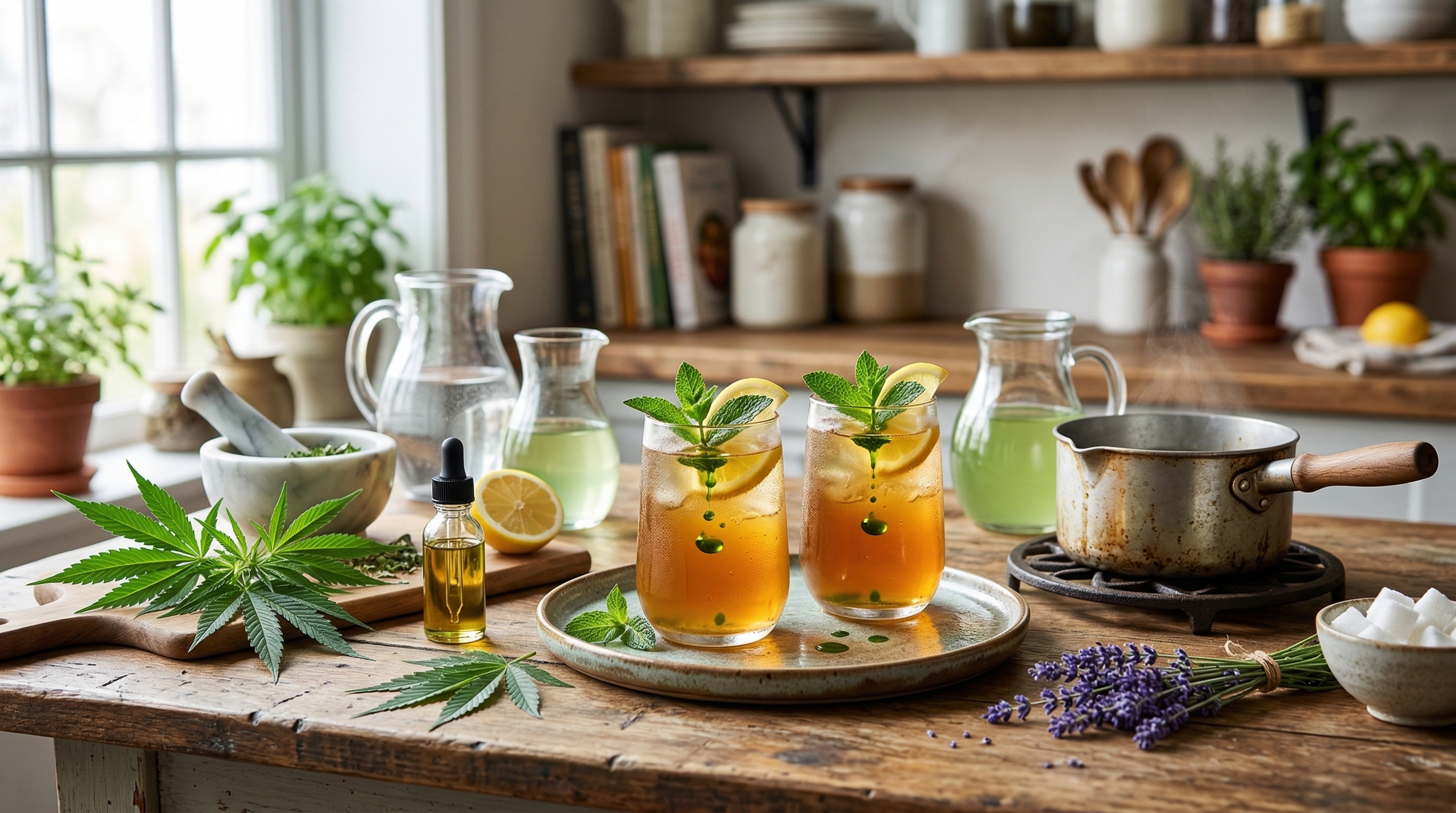
There’s a quiet revolution happening in the cannabis world, and it’s in your glass.
Cannabis-infused beverages — once novelty products confined to the fringes of the market — are now one of the fastest-growing segments in legal cannabis. Brands like Cann, WYNK, and Levia have proven there’s a massive appetite for a drinkable cannabis experience. But you don’t need to pay premium prices or live in a legal state with a robust beverage market to enjoy a well-crafted infused drink. With a bit of knowledge and the right technique, you can make compelling cannabis beverages at home.
The challenge? Cannabis and water don’t naturally mix. THC and CBD are fat-soluble (lipophilic) molecules — they bind to oils and fats, not water. Pour a cannabis tincture into a glass of lemonade and it will float on top, deliver inconsistent doses, and taste distinctly oily. Getting cannabinoids into a drink in a way that’s stable, evenly distributed, and bioavailable requires understanding a bit of chemistry.
This guide will teach you exactly that — along with four beginner-friendly recipes you can make today.
What You’ll Need
For All Methods
- Cannabis flower or concentrate — flower for tincture-based methods; distillate for emulsion methods
- Kitchen thermometer — critical for temperature control during decarboxylation and infusion
- Fine mesh strainer or cheesecloth
- Glass jars with lids — mason jars are ideal
- Labels and markers — all infused products must be clearly labeled
Method-Specific Equipment
For tinctures (simplest method):
- High-proof alcohol (Everclear 190-proof or food-grade grain alcohol) or food-grade vegetable glycerin
- Dropper bottles (1 oz amber glass works perfectly)
For fat-based infusions (hot drinks):
- Unsalted butter or coconut oil
- Double boiler or medium saucepan
For emulsified beverages (cold drinks — best experience):
- Sunflower or soy lecithin (the key emulsifier — find it at any health food store or online)
- Immersion blender or standard blender
- MCT oil or coconut oil (small amount as carrier)
Safety Essentials
- Childproof storage for all infused products
- Start low — 2.5 to 5 mg THC per serving is the universal recommendation for beginners
- Wait at least 2 hours before consuming more — beverages can feel faster-acting than other edibles, but individual variation is real
- Never serve to anyone without their full knowledge and consent
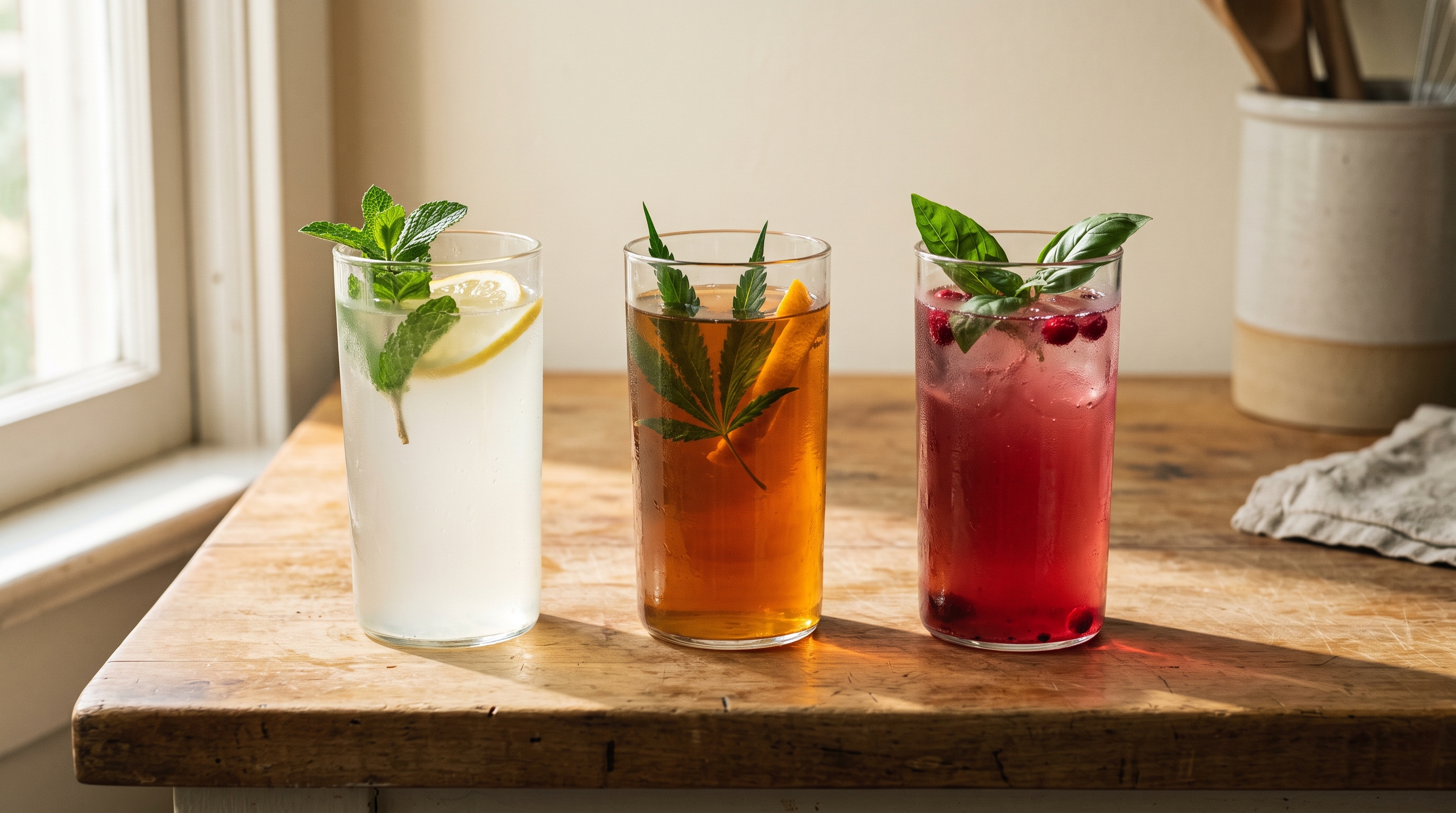
The Science: Why This Is Harder Than Cooking
Before jumping into recipes, it’s worth understanding the core challenge — because this knowledge will prevent a lot of frustration.
THC Is Hydrophobic
Hydrophobic means “water-fearing.” THC molecules literally repel water, which is why a cannabis tincture dropped into water separates into an oily layer. Even if you shake it vigorously, the cannabinoids won’t distribute evenly — you might get most of the THC in your first sip and almost none in the last.
The Solution: Emulsification
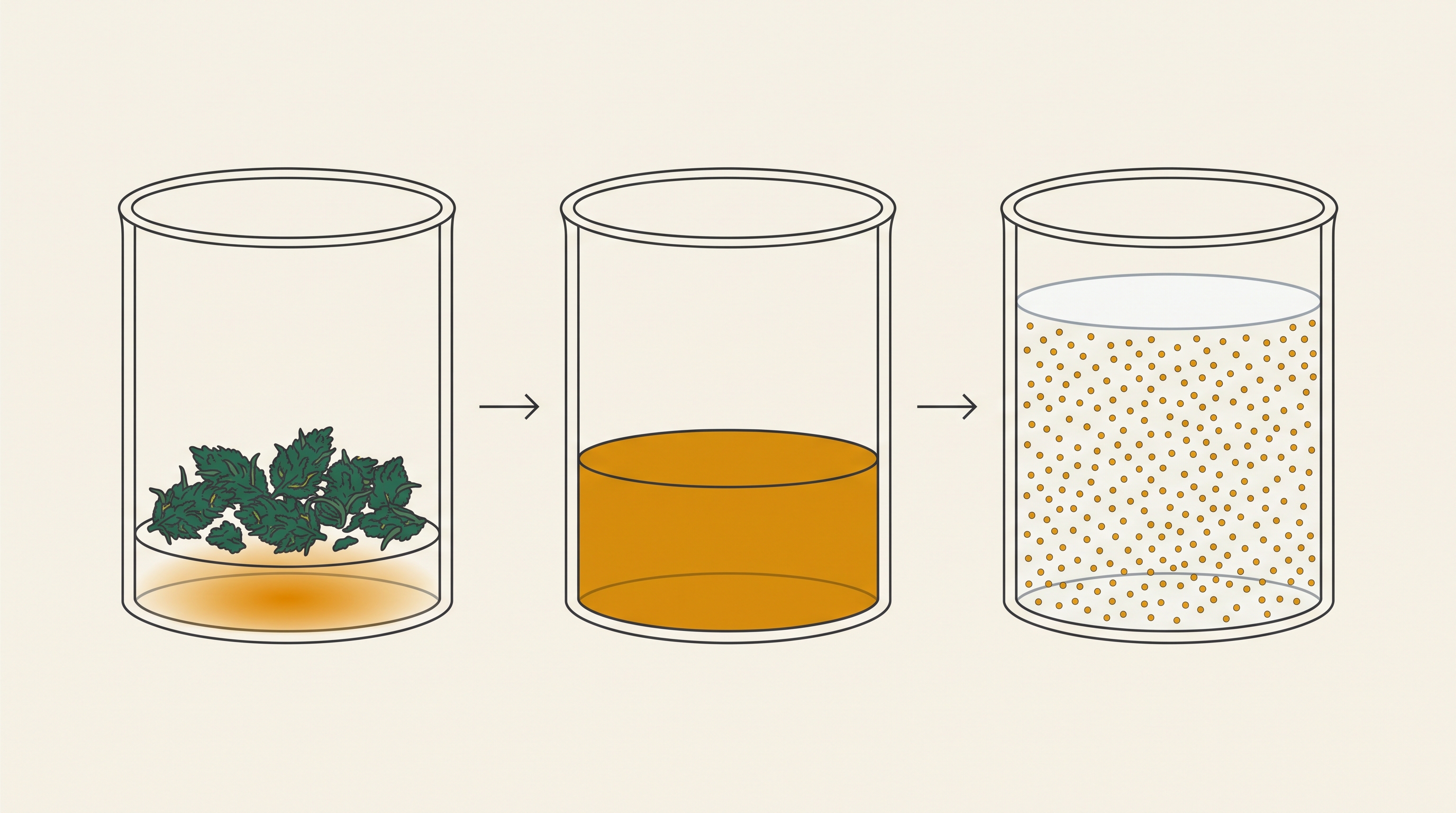
An emulsion is a stable mixture of two liquids that don’t normally combine — like oil and water. Salad dressing is an emulsion. Milk is an emulsion. The key is an emulsifier: a molecule with one end that binds to fat and one end that binds to water.
In cannabis beverages, the most accessible emulsifier is lecithin — a phospholipid found naturally in sunflower seeds and soy. When you blend THC-infused oil with lecithin and water, the lecithin molecules surround the tiny oil droplets and keep them suspended in the water. The result is a stable, evenly-dosed beverage.
Commercial cannabis beverages go further with nanoemulsification — using specialized equipment to break oil droplets down to 20–100 nanometers (compared to 1–5 micrometers for standard emulsions). Nano-sized particles are absorbed through the intestinal lining far more efficiently, which is why commercial beverages often kick in within 15–30 minutes rather than the 60–90 minutes typical of traditional edibles [Salama et al., 2020]. You can approximate this at home with a high-speed blender, though true nanoemulsification requires industrial equipment.
Step Zero: Decarboxylation
No matter which beverage method you use, your cannabis must be decarboxylated before it will produce psychoactive effects. Raw flower contains THCA — the acidic precursor to THC — which is non-intoxicating. Heat converts THCA to THC in a process called decarboxylation.
How to decarb:
- Preheat oven to 240°F (115°C)
- Break flower into pea-sized pieces and spread on a parchment-lined baking sheet
- Bake for 40 minutes, shaking the tray at the 20-minute mark
- Your cannabis should shift from bright green to golden-brown — dry and crumbly
For a deep dive into the chemistry, see our guide on decarboxylation explained.
Dosing: The Most Important Part
Beverages are deceivingly easy to over-consume — they don’t look like “edibles,” they’re refreshing, and they’re easy to sip quickly. Treat every infused drink with the same respect you’d give any other edible.
Calculating Potency
Use this formula to estimate THC content in your infusion:
- Total available THC (mg): Weight of flower in grams × 1,000 × THC percentage as decimal
- Example: 3.5g at 20% THC = 3,500 × 0.20 = 700 mg theoretical maximum
- Extraction efficiency: Home methods typically extract 40–60% of available THC. Apply a 50% efficiency factor: 700 × 0.50 = 350 mg in your batch
- Per-serving dose: If your batch makes 14 servings (e.g., 14 cups of tea): 350 ÷ 14 = 25 mg per cup
- Adjust to target dose: If 25 mg is too high for your tolerance, dilute with a larger batch or use less infusion per serving
Dosing Guidelines
| Experience Level | Recommended Starting Dose | Expected Effects |
|---|---|---|
| First-timer | 2.5 mg | Mild, subtle — a good test run |
| Occasional user | 5 mg | Light to moderate effects |
| Regular user | 10 mg | Standard recreational dose |
| Experienced | 15–25 mg | Strong effects — know your tolerance |
Always wait at least 90 minutes before deciding the drink “isn’t working.” Beverages made with lecithin emulsification may onset faster (30–60 min), but fat-based and tincture methods follow the standard edible timeline. For a full breakdown of why edibles can hit so differently, see our guide on why edibles hit harder.
Recipe 1: Cannabis Tincture (Your Infusion Base)
Before making beverages, you need a versatile, consistent base. A cannabis tincture is the most flexible option — a concentrated, alcohol- or glycerin-based extract you can add by the drop to almost any drink.
Why tinctures work for beverages: While alcohol-based tinctures still technically separate in water, the alcohol acts as a partial surfactant and the concentrations are small enough that distribution is reasonably even — especially in warm or hot drinks.
Ingredients
- 3.5 g (1/8 oz) decarboxylated cannabis flower
- 1 cup (240 ml) high-proof food-grade alcohol (Everclear 190-proof is ideal) OR vegetable glycerin for an alcohol-free version
Instructions
- Grind your decarbed cannabis to a medium consistency (not powder).
- Combine with alcohol or glycerin in a glass jar. Seal tightly.
- Cold-process method (recommended): Shake vigorously for 3–4 minutes, then place in the freezer for 24–48 hours, shaking once or twice daily. The cold temperature limits chlorophyll extraction, keeping the flavor cleaner.
- Warm-process alternative: Place the sealed jar in a pot of warm water (around 170°F / 76°C) for 30–60 minutes. This is faster but extracts more plant compounds.
- Strain through cheesecloth into dropper bottles. Squeeze gently but don’t wring.
- Label with date and estimated potency. Alcohol tinctures keep for years in a cool, dark place. Glycerin tinctures last 1–2 years.
Estimated potency (using the example above): approximately 25 mg THC per ml (1/4 teaspoon). Start with 0.5 ml (about 10 drops) per drink for a roughly 12 mg dose — adjust to your tolerance.
Recipe 2: Cannabis-Infused Tea
The simplest cannabis beverage you can make. The fat in milk or coconut cream helps dissolve some cannabinoids — this is a traditional preparation found in cultures around the world, most famously in the Indian drink bhang.
Ingredients (1 serving)
- 1 cup water
- 1 tea bag (any variety — chamomile and green tea pair especially well with cannabis terpenes)
- 1/4 teaspoon cannabis tincture (see Recipe 1) OR 1/2 teaspoon cannabutter (see our cannabis cooking guide)
- 2 tablespoons whole milk, oat milk, or coconut cream
- Honey or sweetener to taste
Instructions
- Brew your tea by steeping the bag in just-boiled water for 5 minutes.
- Remove the tea bag. Let cool slightly to around 160°F (71°C) — adding cannabutter to boiling water degrades THC.
- Add your tincture or cannabutter and stir vigorously for 30 seconds. If using cannabutter, the fat will melt into the hot tea.
- Add milk or cream. The fat content helps bind cannabinoids.
- Sweeten to taste and enjoy.
Pro tip: If using cannabutter, add a pinch of sunflower lecithin and blend briefly with an immersion blender for a latte-like texture and better cannabinoid distribution.
Recipe 3: Emulsified Cannabis Lemonade
This is the gold-standard home method for cold cannabis beverages — properly emulsified for even dosing and a clean, non-oily mouthfeel.
Ingredients (8 servings — 1 pitcher)
- 6 cups cold water
- 3/4 cup fresh lemon juice (about 6 lemons)
- 1/2 cup simple syrup (or honey to taste)
- 1 gram cannabis distillate OR 2 tablespoons cannabis-infused MCT oil
- 1 teaspoon sunflower lecithin
- 1 tablespoon MCT oil or fractionated coconut oil (if using distillate)
- Ice and lemon slices for serving
Instructions
- Prepare your cannabis oil base: If using distillate, combine it with the MCT oil and warm gently until fully incorporated. If using infused MCT oil, use directly.
- Create the emulsion: In a small bowl or cup, combine the cannabis oil with the sunflower lecithin. Let sit for 2 minutes.
- Add 1/4 cup of warm water to the oil-lecithin mixture and blend with an immersion blender for 60 seconds on high. You should see the mixture turn milky and opaque — that’s your emulsion forming.
- Blend in the remaining water gradually while continuing to blend.
- Stir in lemon juice and sweetener.
- Refrigerate for 30 minutes before serving to allow the emulsion to fully stabilize.
- Serve over ice. Stir or shake each glass before pouring, as some settling is normal.
Estimated potency per serving: Varies with your distillate’s THC content. A 1g distillate at 85% THC = ~850 mg THC total. Divided by 8 servings with 50% bioavailability = approximately 53 mg per glass. Adjust by using less distillate or making a larger batch.
Flavor variations: Add fresh mint, cucumber, ginger, or berry purée. The lemon masks cannabis flavor exceptionally well — one of its best uses.
Recipe 4: Cannabis-Infused Honey Simple Syrup
A versatile infused sweetener that you can add to any cold or hot drink — sparkling water, iced tea, cocktails, coffee. Make a batch and keep it in the fridge for weeks.
Ingredients
- 1 cup water
- 1 cup honey or white sugar
- 1/2 teaspoon sunflower lecithin
- 3–4 ml cannabis tincture (from Recipe 1) — adjust for desired potency
- Optional: fresh herbs (lavender, mint, rosemary) added during the cooking process
Instructions
- Combine water, honey/sugar, and lecithin in a small saucepan over medium heat.
- Stir until fully dissolved. If adding herbs, add them now and steep for 10 minutes on low heat before removing.
- Remove from heat and let cool to 140°F (60°C). Adding tincture to boiling syrup will evaporate the alcohol.
- Stir in your tincture thoroughly. The warm syrup with lecithin will help distribute the cannabinoids.
- Pour into a glass jar and refrigerate. Keeps for 3–4 weeks.
- Use 1–2 tablespoons per drink — adjust based on your tincture’s potency.
Potency control tip: Start with a lower tincture amount when first making this syrup. You can always add more; you can’t remove it.
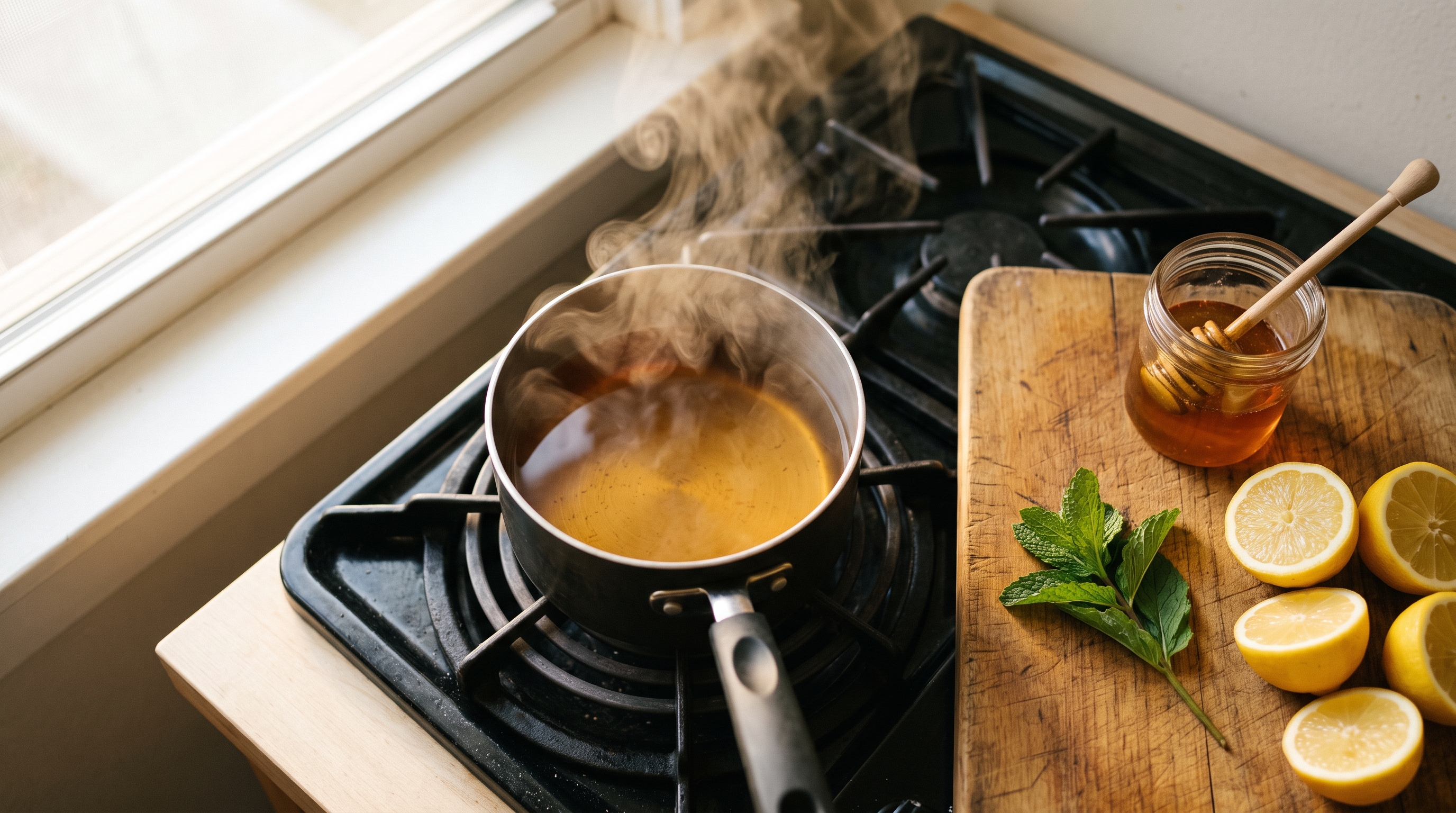
Choosing the Right Strain for Your Beverage
The strain you use will influence both the flavor character and the nature of your experience. At This Is Why I’m High, we use High Families — a terpene-based classification system — to match strains to specific experiences. Beverages are a social, situational format, so your strain choice really matters.
- For daytime sipping, socializing, or creative activities: Look for strains high in limonene and pinene — these terpenes contribute uplifting, clear-headed energy that suits a drink you’d have in the afternoon. Our daytime strains guide has solid options.
- For evening wind-down teas: Myrcene-dominant strains offer the relaxed, body-heavy effect that pairs beautifully with chamomile or valerian tea. See our evening wind-down guide for strain ideas.
- For microdosed social drinks: CBD-forward or balanced THC:CBD ratios (1:1 or 2:1) create a gentle, anxiety-reduced experience ideal for a party or dinner setting where you want mild effects. Our guide on finding your ideal THC:CBD ratio is a good starting point.
Troubleshooting
| Problem | Likely Cause | Solution |
|---|---|---|
| No effects | Skipped decarboxylation; oven temp too low | Verify oven with thermometer; full 40 min at 240°F |
| Oily film on surface | No emulsifier used | Add sunflower lecithin; blend before serving |
| Uneven potency within batch | Emulsion not stable; settling occurred | Stir or shake before serving; add more lecithin |
| Harsh, bitter taste | Chlorophyll in tincture; overheated infusion | Use cold-process tincture; lower infusion temperature |
| Effects onset too slow | Low bioavailability; eating on empty stomach | Eat a small fatty snack; try lecithin emulsification |
| Effects much stronger than expected | Underestimated potency; drank too fast | Wait 2 hours next time; dilute batch with more liquid |
Pro Tips
Fat matters for bioavailability. THC absorbs better when consumed with dietary fats. If you’re drinking a tincture-based tea or lemonade, pair it with a small fatty snack — a handful of nuts, an avocado, or even a glass of whole milk — to potentially enhance and speed up absorption.
Temperature control is everything. THC starts degrading meaningfully above 320°F (160°C), but prolonged heat above 160°F (71°C) also accelerates degradation over time. Keep your infusions warm, not hot, and add tinctures to beverages after they’ve cooled slightly.
The glycerin tincture advantage for cold drinks. Vegetable glycerin is slightly viscous and has natural emulsifying properties — it disperses in water better than alcohol-based tinctures. If you plan to primarily make cold beverages, glycerin tinctures are worth the slightly longer extraction time.
Label everything meticulously. Infused beverages look identical to non-infused ones. A pitcher of cannabis lemonade at a backyard gathering is a serious safety risk if not clearly labeled and kept away from anyone who hasn’t consented. Use labeled containers, keep infused drinks separate, and always tell people before they drink anything.
Start a beverage journal. Record your strain, extraction method, estimated potency, and how the finished drink affected you over time. This data is invaluable for dialing in your recipes and dosing.
Frequently Asked Questions
Can I just add a cannabis tincture to any drink? You can — and it will work to some degree. But without emulsification, you’ll see an oil layer, the dose will be uneven across the drink, and bioavailability will be lower than a properly emulsified beverage. For best results, use the lecithin emulsification method described in Recipe 3.
How long do cannabis beverages last? Tinctures keep for months to years (alcohol-based) or 1–2 years (glycerin-based). Infused simple syrups last 3–4 weeks in the fridge. Prepared beverages like the emulsified lemonade are best consumed within 3–5 days — the emulsion can break down over time, though shaking before serving helps.
Will cannabis beverages taste like weed? With tinctures made via cold-process, flavor is mild and manageable. Strong flavors like citrus, ginger, mint, and honey mask cannabis effectively. The glycerin tincture tends to have the mildest flavor. If flavor is a priority, look for solventless options like distillate-based infusions, which have almost no plant flavor.
Are cannabis beverages safer than smoking? They eliminate combustion-related respiratory concerns entirely. However, as an edible format, they carry the same risk of overconsumption common to all edibles — especially the delayed onset. Approach them with the same caution and patience you’d apply to any other edible. For a full comparison of consumption methods, see our vaping vs. smoking guide.
Cannabis-infused beverages reward the curious and the patient. The science is real — cannabinoids don’t want to be in water — but the solution (emulsification with lecithin) is accessible to any home cook with a blender and a bit of curiosity. Master the tincture and the emulsified lemonade, and you’ll have a foundation for hundreds of creative drinks.
Start low. Go slow. Enjoy the process.
Key Takeaways
- THC is fat-soluble, not water-soluble. You need either a fat-based carrier (butter, MCT oil) or an emulsifier (lecithin) to make a stable, evenly-dosed beverage.
- Decarboxylation is non-negotiable. Raw cannabis in a drink will not produce psychoactive effects. Always decarb at 240°F for 40 minutes first.
- Start with 2.5–5 mg THC per serving. Beverages are easy to sip quickly — dose conservatively until you know how the format affects you.
- Sunflower lecithin is the home cook’s best tool. A teaspoon blended with your cannabis oil and water creates a stable emulsion for cold drinks without specialized equipment.
- Wait at least 90 minutes before re-dosing. Lecithin-emulsified drinks may onset faster than oil-based edibles, but tincture-based drinks follow the standard 60–90 minute edible timeline.
- Label everything. An infused pitcher looks identical to a regular one. Clear labeling is a safety requirement, not a suggestion.
Sources
- Salama, A. H., et al. (2020). “Nano-emulsification as a novel approach for cannabinoid delivery.” Journal of Pharmaceutical Sciences, 109(2), 1094–1106.
- Wang, M., et al. (2016). “Decarboxylation study of acidic cannabinoids: a novel approach using ultra-high-performance supercritical fluid chromatography/photodiode array-mass spectrometry.” Cannabis and Cannabinoid Research, 1(1), 262–271.
- Russo, E. B. (2011). “Taming THC: potential cannabis synergy and phytocannabinoid-terpenoid entourage effects.” British Journal of Pharmacology, 163(7), 1344–1364.
- MacCallum, C. A., & Russo, E. B. (2018). “Practical considerations in medical cannabis administration and dosing.” European Journal of Internal Medicine, 49, 12–19.


