CBT: Cannabitriol, What Science Knows So Far
CBT (cannabitriol) is a rare oxidation product of THC with almost no human research. Here's the candid science, and why product claims outrun the data.

Professor High
Your friendly cannabis educator, bringing science-backed knowledge to the community.
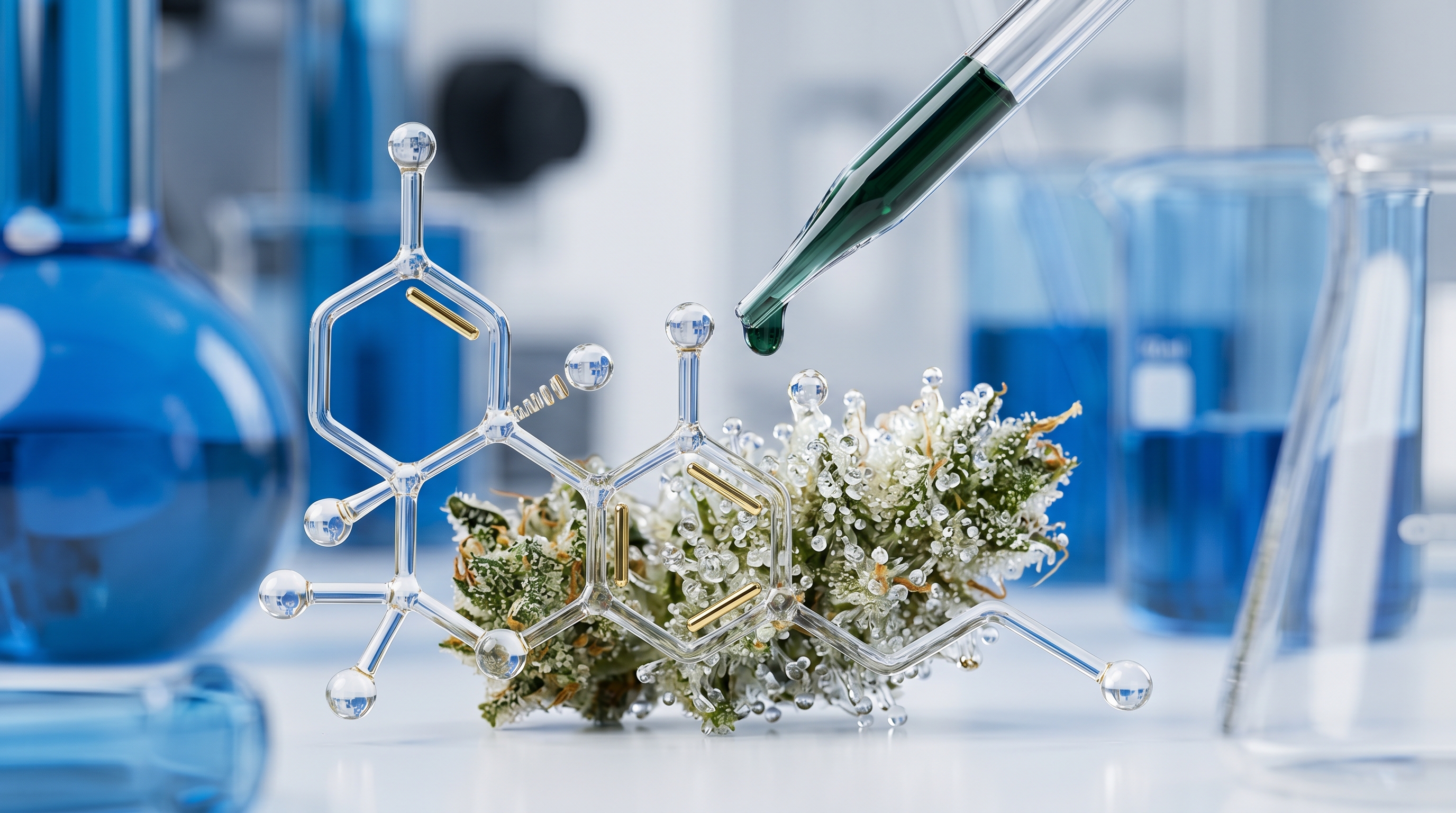
Walk into a well-stocked dispensary or scroll a hemp marketplace long enough and you will eventually meet a tincture or vape promising the benefits of “CBT.” The label is confident. The science behind it is, frankly, almost nonexistent.
Let me be the buzzkill up front. Cannabitriol (CBT) is one of the least-studied compounds in the whole cannabis plant. We have known it exists since 1966. We have a crystal structure, a molecular formula, and a small family of chemical cousins. What we do not have, after nearly sixty years, is a single published human study. Nobody has shown what it does in your body. So if a product claims CBT will help you sleep or relax, the honest scientific answer is simple: nobody actually knows yet.
That gap between marketing confidence and research reality is exactly why this compound is worth a careful, skeptical look. So let’s do it properly.
What CBT Actually Is
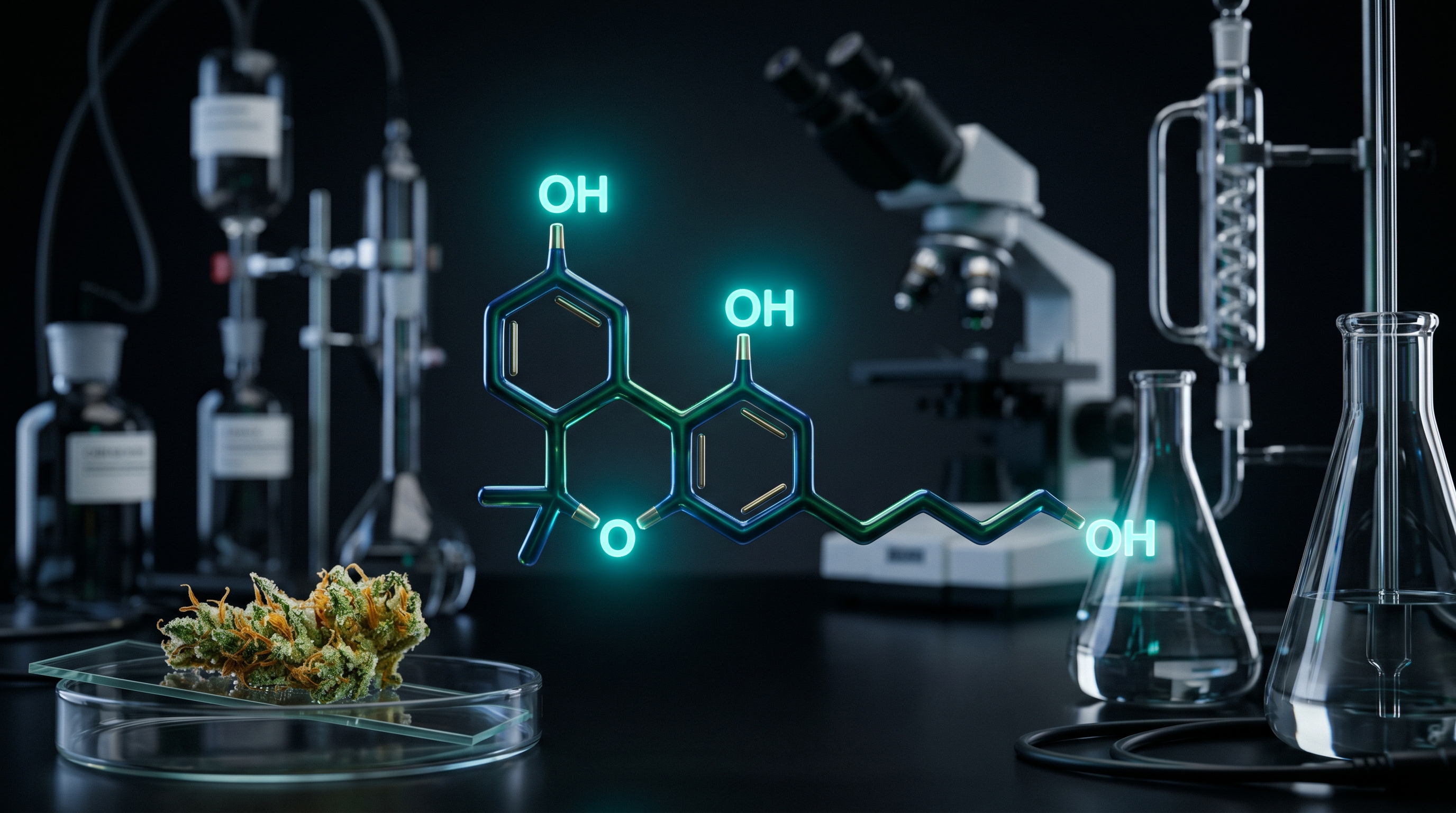
Cannabitriol is a phytocannabinoid, which simply means it is a cannabinoid that occurs in the cannabis plant rather than being made in your body or a lab. Its molecular formula is C₂₁H₃₀O₄, with a molecular weight of roughly 346.5 g/mol [Wikipedia, 2024]. The name “cannabitriol” comes from the three hydroxyl (–OH) groups hanging off its structure, which is what the “triol” part signals.
Structurally, CBT is a close relative of THC. In fact, the dominant scientific view is that CBT is not really a compound the plant sets out to build at all. Instead, it is best understood as an oxidation product of tetrahydrocannabinol (THC), identified both as a trace component of cannabis and as a metabolite found in cannabis users [Walsh et al., 2021]. In plain English: it appears to be largely what you get when THC reacts with oxygen over time, the same general family of chemistry that turns aging cannabis into the sedating-by-reputation CBN.
That origin story matters. If you have read our piece on CBL, cannabis’s rarest major cannabinoid, you will recognize the pattern: many of the rarest minor cannabinoids are not freshly synthesized by living plants but are degradation or conversion products that accumulate as the original cannabinoids break down. CBT belongs squarely in that club.
A Sixty-Year Research Trail That Goes Almost Nowhere
CBT has one of the longer histories of any minor cannabinoid, which makes the thinness of the data even more striking.
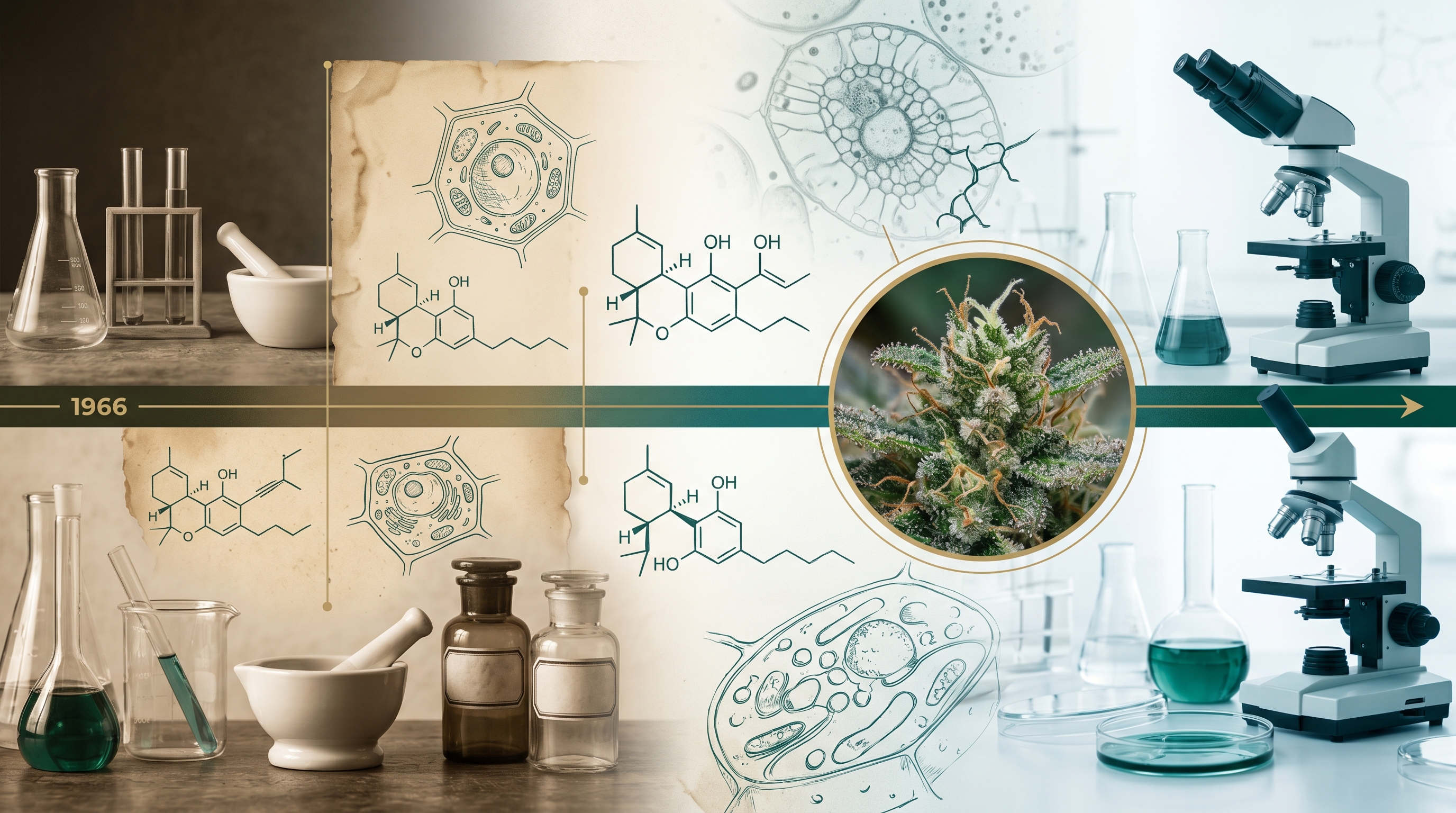
It was first isolated in 1966 by Japanese researchers Obata and Ishikawa, who pulled a “gibbs-positive compound” out of Japanese hemp [Obata & Ishikawa, 1966]. At that point nobody knew its structure. That took another decade: in 1976, Chan, Magnus, and Watson published the structure of cannabitriol in the journal Experientia [Chan et al., 1976]. The following year, ElSohly and colleagues characterized (+)-cannabitriol along with a related ethoxy compound from cannabis extract [ElSohly et al., 1977]. The absolute stereochemistry was nailed down by X-ray analysis in the mid-1980s.
So the timeline is: isolated in 1966, structurally pinned down by 1976–1977, stereochemistry confirmed in the 1980s, and then… a long quiet. The structural chemistry got solved early; the pharmacology never followed.
The Isomer Family: CBT Is Not One Thing
Part of what makes CBT confusing is that “CBT” is not a single molecule but a small cluster of closely related ones. Researchers have described at least nine isomers of cannabitriol over the years, each differing by small rearrangements in structure [CBD Oracle, 2024]. A 2022 analysis added a newly described form, a 2-α-hydroxy variant, pushing the count to roughly ten.
This is also where the abbreviations get genuinely messy. “CBT” sometimes refers to cannabitriol, and sometimes to cannabicitran, an entirely different cannabinoid that is also occasionally abbreviated “CBT-C” [Cannabis Tech, 2022]. When you see a product or article say “CBT,” it is worth asking which molecule they actually mean, because they may not know either.
If you want a clean contrast, compare this to the better-characterized minors. CBG, the so-called mother cannabinoid, has a clear biosynthetic role and a growing pile of preclinical studies. CBC, the overlooked cannabinoid, has documented receptor activity. Even the freshly-trendy CBDV and THCV have human-relevant research programs. CBT has none of that depth. It sits closer to CBL on the “we barely know anything” end of the spectrum.
What We Know About CBT in the Body: Almost Nothing
Here is the honest core of this article, and it is short.
There is no meaningful human pharmacology data for CBT. No clinical trials. No dosing studies. No well-characterized receptor profile in people. The most authoritative recent review of minor cannabinoids states plainly that “the pharmacology of CBT is largely unknown” [Walsh et al., 2021].
What little exists is almost entirely computational and preclinical. The most-cited thread comes from virtual-screening work. It suggests CBT might act as an antiestrogen and aromatase inhibitor. There is even speculation about a role against estrogen-receptor-positive breast cancer [Walsh et al., 2021]. That is interesting chemistry. But it is a prediction from a computer model. It is not a result from a living human, a mouse, or even a confirmed lab-dish test in most cases. The researchers themselves note these predictions “need to be followed up with in vivo studies” that have not been done [CBD Oracle, 2024].
On the question everyone actually asks, will it get me high, the limited signal is that CBT shows little interaction with the CB1 receptor, the site responsible for THC’s intoxication, which is consistent with it being non-intoxicating [CBD Oracle, 2024]. But even that is a low-confidence statement built on thin data, not a robust pharmacological characterization.
Why CBT Products Exist Anyway
If the research is this thin, why is CBT showing up on shelves at all?
A few reasons. First, novelty sells. The cannabis and hemp markets reward “new” cannabinoids, and a compound with a sixty-year pedigree but almost no consumer awareness is catnip for marketers looking for the next CBN or THCV. Second, because CBT occurs only in trace amounts in the plant, extracting it directly is inefficient, so commercial CBT is generally produced synthetically in a lab [Canatura, 2024]. That introduces the same buyer-beware concerns we have raised about other lab-made cannabinoids like HHC and acetylated cannabinoids: purity, byproducts, and consistency depend entirely on the manufacturer, and the regulatory oversight is patchy at best.
This is the part where my “buzzkill” reputation earns its keep. A confident health claim about CBT is, at the time of writing, not supported by evidence. Anyone telling you precisely what CBT “does” for sleep, anxiety, or recovery is extrapolating far beyond the data. Treat those claims the way you would treat any supplement marketing that runs ahead of the science: with polite skepticism and a request for sources.
How CBT Fits Into the Bigger Cannabis Picture
None of this means CBT is useless or that minor cannabinoids do not matter. The whole logic of the entourage effect, the idea that cannabis compounds work together rather than in isolation, suggests that even trace molecules like CBT could, in principle, contribute to a plant’s overall character. We explore that synergy more in our piece on why terpene combinations beat single compounds.
But “could in principle contribute” is a hypothesis, not a benefit. The compounds we can actually reason about with confidence are still the majors and the well-studied minors, plus the terpenes that shape so much of what a strain feels like, things like myrcene, limonene, linalool, and caryophyllene. Those, not trace oxidation products, are where the meaningful, repeatable differences in your experience tend to come from.
This is the same reason we organize strains by High Family rather than by chasing exotic cannabinoid percentages. Whether you gravitate toward the mellow Relax High, the body-focused Relief High, the bright Uplift High, or the full-spectrum Entourage High, the predictive signal lives in the dominant terpene and cannabinoid profile, not in whether a label name-drops CBT.
If you want to feel those differences for yourself, classic, well-documented strains are a far better teacher than a novel-cannabinoid tincture. THC-forward, terpene-rich cultivars like Blue Dream, Jack Herer, Sour Diesel, Durban Poison, Super Lemon Haze, Tangie, Green Crack, Pineapple Express, Granddaddy Purple, and Northern Lights will tell you more about how cannabis affects you, across energetic, focused, happy, and relaxed body-high territory, than any trace cannabinoid claim ever will.
Frequently Asked Questions
Is CBT psychoactive or will it get me high? The limited evidence suggests CBT interacts little with the CB1 receptor that drives THC’s intoxication, so it is generally described as non-intoxicating [CBD Oracle, 2024]. But this is based on thin data, not robust human studies, so treat it as a tentative answer.
Does CBT help with sleep like CBN supposedly does? There is no published human evidence that CBT helps with sleep. The sleep reputation belongs (controversially) to CBN, and even that is more nuanced than the marketing suggests. Any CBT-for-sleep claim is currently unsupported.
Is CBT the same as cannabicitran? No, but they are easy to confuse because cannabicitran is sometimes also abbreviated “CBT” or “CBT-C” [Cannabis Tech, 2022]. They are chemically distinct compounds. Always check which molecule a product actually means.
Is lab-made CBT safe? We do not have safety data to answer that confidently. Most commercial CBT is synthesized rather than extracted [Canatura, 2024], which raises the same purity and byproduct questions we discuss for other synthetic cannabinoids. Without third-party testing and human safety data, caution is warranted.
Why has CBT been studied so little if we have known about it since 1966? Its structure was solved early, but it occurs only in trace amounts and lacked an obvious therapeutic hook, so research funding and attention went to higher-yield, higher-interest cannabinoids like THC, CBD, and CBG [Walsh et al., 2021].
Key Takeaways
- CBT (cannabitriol) is a real cannabinoid. It is mostly an oxidation product of THC, found in trace amounts.
- We have known about it since 1966. Its structure was solved by 1977.
- There are at least nine or ten isomers. Do not confuse CBT with cannabicitran, which shares the same nickname.
- There is no human research on what CBT does. The pharmacology is, in the words of the best review, “largely unknown.”
- The estrogen-related findings come from computer models. No one has confirmed them in people.
- CBT looks non-intoxicating, but that is a low-confidence guess, not a fact.
- Most CBT on the market is made in a lab. Treat health claims with skepticism.
The Honest Bottom Line
CBT is a real cannabinoid with an interesting backstory. It is a trihydroxylated oxidation product of THC. It comes in a small family of isomers. And scientists solved its structure decades ago. But its biology is still close to a blank page. The best review available says its pharmacology is “largely unknown.” The most-cited findings are computer predictions that still await real-world confirmation.
So when a product promises CBT will do something specific for your body, the honest response is simple: show me the study. Right now, there isn’t one. Until that changes, your best guide is to pay attention to terpene profiles, cannabinoid ratios, and your own tracked responses. Chasing the alphabet’s least-documented cannabinoid is not the move.
This article is for educational purposes only and is not medical advice. Cannabis affects everyone differently, novel and synthetic cannabinoids carry extra uncertainty, and you should consult a qualified healthcare provider before using cannabis products, especially for any health condition.
Sources
- Obata, Y., & Ishikawa, Y. (1966). Studies on the constituents of hemp plant (Cannabis sativa L.) Part III. Isolation of a gibbs-positive compound from Japanese hemp. Agricultural and Biological Chemistry, 30(6), 619–620. DOI: 10.1080/00021369.1966.10858651
- Chan, W. R., Magnus, K. E., & Watson, H. A. (1976). The structure of cannabitriol. Experientia, 32(3), 283–284. DOI: 10.1007/BF01940803
- ElSohly, M. A., El-Feraly, F. S., & Turner, C. E. (1977). Isolation and characterization of (+)-cannabitriol and (-)-10-ethoxy-9-hydroxy-delta-6a[10a]-tetrahydrocannabinol: two new cannabinoids from Cannabis sativa L. extract. Lloydia, 40(3), 275–280. PMID: 895392
- Walsh, K. B., McKinney, A. E., & Holmes, A. E. (2021). Minor Cannabinoids: Biosynthesis, Molecular Pharmacology and Potential Therapeutic Uses. Frontiers in Pharmacology, 12, 777804. DOI: 10.3389/fphar.2021.777804
- Kikiowo, B., et al. (2021). Therapeutic potential of Cannabis sativa as an aromatase and estrogen receptor alpha inhibitor in breast cancer. Anti-Cancer Agents in Medicinal Chemistry. DOI: 10.2174/1574892816666210201115359
- CBD Oracle. (2024). What Is CBT? Benefits and Side Effects of Cannabitriol. https://cbdoracle.com/cannabinoids/cbt/
- Cannabis Tech. (2022). Cannabinoid Discoveries: Cannabicitran and Cannabitriol. https://cannabistech.com/articles/cannabinoid-discoveries-cannabicitran-and-cannabitriol/
- Canatura. (2024). Get to know CBT(C): a rare cannabinoid with exciting potential. https://www.canatura.com/a/get-to-know-cbt-c-a-rare-cannabinoid-with-exciting-potential


