How to Check Cannabis Recalls by Batch or Lot Number
Learn how to check a cannabis recall using the batch, lot, UID, or package number—and what to do if your product matches.

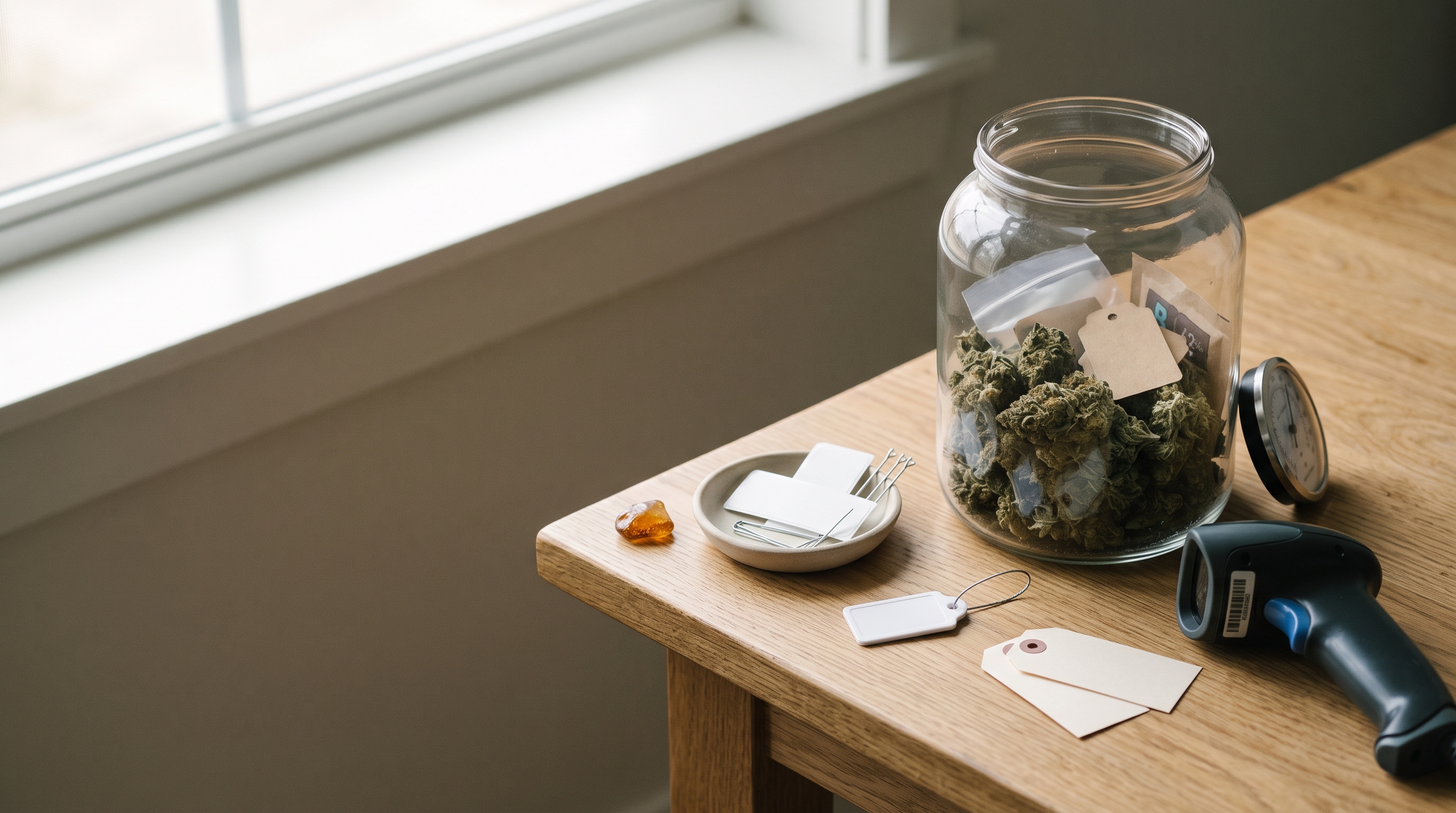
A cannabis recall rarely means that every product from a brand is affected. More often, the notice identifies a specific production run using a batch number, lot number, package ID, UID, label ID, or track-and-trace tag.
That is useful precision—but only if you compare the right fields.
This guide gives you an evergreen way to check a product. It does not reproduce a list of “current” recalls, because a copied list can become dangerously stale. Your state regulator’s live notice and the package in your hand are the sources that matter.
If you think your cannabis is recalled right now
Do these five things before investigating further:
- Stop using the product. Do not take another dose to see whether it feels normal.
- Keep the original package. The label may contain the only identifiers that can confirm a match.
- Separate it from products you still use. Close it, mark it “do not use,” and secure it away from children and pets.
- Photograph every label panel and your receipt. Include the batch, lot, UID, dates, product name, producer, and retailer.
- Open the official recall page for the state where you bought it. Follow that notice’s return, disposal, and reporting instructions.
If someone has severe or rapidly worsening symptoms, seek emergency medical help instead of waiting to finish a recall search. In the United States, Poison Help is available at 1-800-222-1222. Our guides to greening out and responding to an uncomfortable high can provide general context, but they do not replace urgent care.

The identifier matters more than the product name
A recall notice may mention a familiar brand or strain, but the name alone usually cannot confirm that your package is affected. Producers make the same product across multiple batches. One batch may fail while another does not.
Look for the strongest identifier available:
| Package field | It may also be called | Why it matters |
|---|---|---|
| Batch or lot. | Production batch, harvest lot, process lot. | Connects units made or harvested together. |
| UID or package ID. | Metrc UID, inventory ID, package tag. | Identifies tracked inventory in some state systems. |
| Label ID. | Product label ID. | Used by some regulators to define affected packages. |
| Testing tag. | Test sample tag, track-and-trace tag. | May connect a product to a testing event or licensee. |
A UPC, retail SKU, order number, or QR code is not automatically a recall identifier. Read the field label. If the package uses codes you do not understand, our COA-to-package matching guide explains how batch, UID, and laboratory sample IDs differ.
How to check a cannabis recall, step by step
1. Preserve the evidence before opening the product
Photograph the package front, back, bottom, cap, and any peel-back panel. Keep the receipt, order email, and dispensary text message. If you already opened the product, do not transfer it into another jar or bag.
Good records matter because packaging errors and broken traceability can themselves trigger recalls. They also help the retailer or regulator identify a product when one number is smudged. A quick cannabis journal entry can preserve when you used it, how much you used, and what happened.
2. Start with the state where the purchase occurred
Cannabis recall systems are primarily state-based. Search for the cannabis regulator in the state of purchase, followed by “product recalls.” Do not assume the state where the brand is headquartered controls your package.
Use a government domain or the regulator’s verified site. A retailer email, news story, brand post, or social screenshot may alert you, but follow its link back to the original notice. Cannabis rules differ sharply between jurisdictions, as our state-by-state law guide shows.
3. Search broadly, then match narrowly
Search the official portal or notice archive for the product name, producer, retailer, or approximate purchase date. Once you find a possible notice, narrow the comparison to the exact identifiers.
Match all fields the notice requires:
- Batch, lot, UID, label ID, or testing tag.
- Brand and licensed producer or manufacturer.
- Product name, form, size, flavor, or strain when listed.
- Manufacture, package, harvest, or test date when listed.
Treat every character as meaningful. LOT-24081 is not LOT-24018; a suffix can define a separate run. New Jersey’s official recall guidance tells consumers to compare the product, manufacturer, batch number, and manufacture date—and says all package information must match the notice.

4. Read the whole notice, including updates
Confirm the notice date, affected products, reason, status, and instructions. Then look for an expansion, correction, release, or closure notice. A recall can widen to additional lots, while a regulator may later close an action after affected inventory is accounted for.
The official page is the source of truth. New York’s current recall page, California’s searchable recall portal, and Washington’s current and closed notices all demonstrate why a static article should not pretend to be a live database.
No search result does not prove a product is safe. You may have mistyped the identifier, searched the wrong state, bought an unregulated product, or encountered a problem that has not produced a public notice. If the package looks altered, the QR code behaves strangely, or the retailer cannot establish provenance, use our counterfeit vape checklist and dispensary red-flag guide.
5. Isolate a matching product
If every required field matches, stop using it. Keep it in its original closed package, put that package inside a separate child-resistant container if available, and store it away from ordinary cannabis, food, medicine, children, and pets. Add a visible note so another adult does not use it by mistake.
This is a practical household quarantine, not permission to keep the product indefinitely. Follow the notice-specific return or disposal instructions. Do not open it to inspect, smell, taste, or photograph the contents. Do not mail it or carry it across state lines.
Vapes deserve extra care because batteries and electronic components may require local e-waste or hazardous-waste handling. Do not puncture, crush, burn, or casually throw a device into household trash. For ordinary product storage while you await instructions, see our complete cannabis storage guide.
6. Contact the retailer using the notice’s instructions
The state or producer may direct you to return the product, destroy it in a particular way, or contact a specific business. Do not improvise. Oregon’s official recall page, for example, emphasizes matching all identifying details and following the instructions in the individual notice.
Before calling, collect:
- Product and brand name.
- Exact batch, lot, UID, or label ID.
- Purchase date and retailer location.
- Receipt or order number.
- Photos of the package and notice match.
- Whether the product is opened and whether anyone used it.
Ask what happens next, where the product should go, whether proof of purchase is required, and how a refund or replacement is handled. Keep a record of whom you spoke with and when.
7. Report health effects and product problems separately
A return handles a transaction. It does not always create an adverse-event report. If someone had an unwanted reaction, use the reporting channel named by the regulator. Do the same if you found a problem with the package, label, product, or tracking data.
Record the timing, amount used, route of use, symptoms, medications or substances taken around the same time, and the exact product identifiers. Preserve photos and the package. New York’s incident reporting form accepts unwanted health reactions and product or packaging concerns; California has a separate cannabis complaint form. Your state may organize these channels differently.
Be factual rather than diagnostic. “Vomiting began about 45 minutes after one labeled serving” is more useful than declaring that a specific contaminant caused it without evidence. Edible dosing mistakes and inaccurate dispensary labels can complicate the story, which is another reason to preserve the package and timeline.
Why the process looks different from state to state
There is no single consumer-facing national cannabis recall database for state-regulated products. The terminology and lookup flow change by jurisdiction.
| State example | Official starting point | Common matching approach |
|---|---|---|
| California. | DCC recall portal. | Search notices. Compare the listed product and UID or batch details. |
| New York. | Current recalls. | Compare the product name and lot. Then follow the dispensary instructions. |
| New Jersey. | CRC recalls. | Match the product, maker, batch, and manufacture date. |
| Missouri. | Division recall guidance. | Find the testing licensee. Compare the exact track-and-trace tag. |
| Washington. | LCB recalls. | Open the notice. Compare its lot or inventory IDs. |
| New Mexico. | Cannabis recalls. | Read regulator notices and their product-specific steps. |
This table explains the workflow; it is not a current-recall list. Interfaces and terminology can change. If a link moves, navigate from the regulator’s home page rather than substituting a third-party aggregator.
Common recall-checking mistakes
- Matching only the brand. Recalls usually define narrower inventory.
- Matching only the product name. Names can repeat across many production runs.
- Ignoring leading zeroes or ending letters. Exact means exact.
- Trusting a screenshot. It may omit an expansion, correction, or closed status.
- Throwing away the package right away. That destroys tracking evidence. It may also conflict with the notice.
- Assuming a passing COA rules out recalls. Recalls can involve testing, packaging, labels, tracking, or problems found later. Learn what a report can and cannot show in our lab-results guide and review of cannabis testing standards.
- Using a scanner as the final authority. A scan can organize label text, but the official notice determines the match.
Use the This Is Why I’m High label scanner to capture crowded package text, then correct any transcription errors against the label itself. In High IQ, save your product and session notes so dates and effects are not reconstructed from memory later. Those tools help you preserve context; they do not replace the regulator.
Frequently asked questions
Is my product recalled if the brand name matches?
Not necessarily. Compare every field required by the official notice, especially the batch, lot, UID, label ID, or track-and-trace tag. A brand can have both affected and unaffected inventory.
What if the batch number is missing or unreadable?
Do not guess. Stop using the product, photograph what remains, preserve the package and receipt, and contact the licensed retailer or state regulator. Missing traceability information can itself be relevant to a complaint.
Can I return recalled cannabis to any dispensary?
Do not assume so. Follow the specific recall notice. It may name the original retailer, manufacturer, collection process, or disposal method. Call before traveling with the product.
Should I dispose of a matching product immediately?
Follow the notice first. Some regulators direct consumers to return products; others provide disposal instructions. Until you know, keep it closed, secured, and separate. Handle vape batteries under local e-waste guidance.
Does a missing recall result mean the product is safe?
No. It only means you did not find a matching public notice in the place and with the terms you searched. Verify the state, code, and official portal, then contact the retailer or regulator if the product remains suspicious.
Key takeaways
- Use the official regulator page for the state where you bought the product.
- Match every field named in the notice. Similar is not exact.
- Keep a suspected product closed, labeled, and away from normal supplies.
- Follow that notice’s return or disposal steps.
- Report health effects and product problems through the proper state channel.
The Professor High rule
Search broadly, match exactly, and act from the live notice.
The product name helps you find a possible recall. The batch, lot, UID, or tag confirms whether the notice applies. Preserve the package, stop using an exact match, follow the regulator’s instructions, and report health effects through the proper channel.
That habit turns an alarming headline into a controlled, evidence-based decision.
Sources
- New York Office of Cannabis Management: Product Recall FAQs.
- California Department of Cannabis Control: Cannabis Recalls and Safety Notices.
- New Jersey Cannabis Regulatory Commission: Recalls.
- Oregon Liquor and Cannabis Commission: Product Recalls.
- Washington State Liquor and Cannabis Board: Cannabis Recalls.
- Missouri Division of Cannabis Regulation: Product Recalls.

