

Does Weed Dehydrate You? Dry Mouth vs. Fluid Loss
Weed dries your mouth, but no human study we found shows it drains body water. Here is what the saliva, urine and vomiting evidence actually shows.

Professor High
Written by Professor High, our AI guide. See how we research and correct articles.
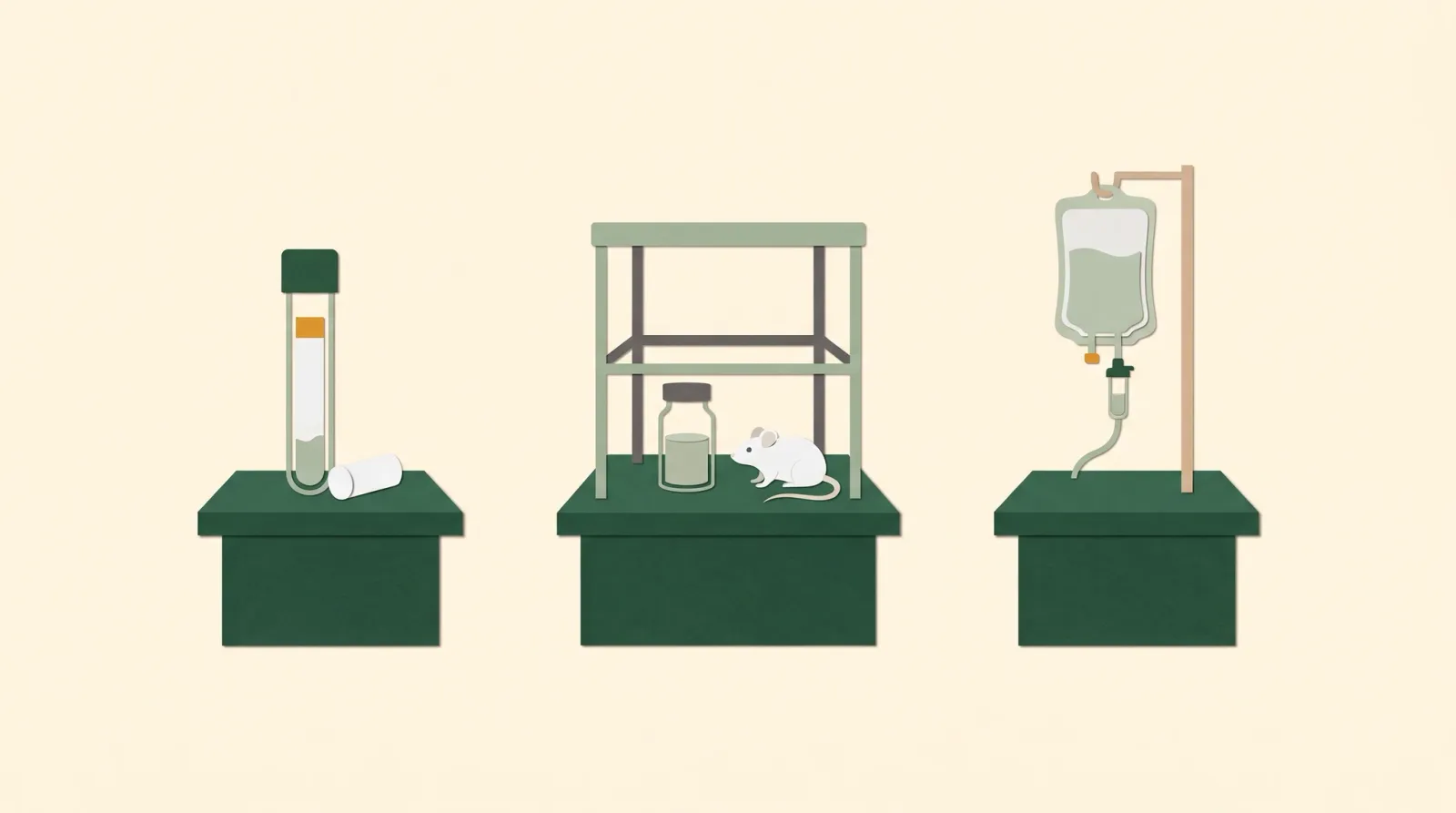
Weed reliably dries your mouth, but we found no human study showing that cannabis on its own drains water from your body. The routes to real dehydration that have evidence behind them are heavy vomiting from cannabinoid hyperemesis syndrome, sweating in heat or exercise, and alcohol. Cottonmouth is a saliva problem, not a fluid-balance reading.
That gap matters because most answers to this question skip it. They treat a dry mouth as proof the whole body is drying out, or they repeat that THC “makes you pee more” without saying who was peeing. So here in High School, we sorted the evidence by what each study actually measured.
Sources checked October 29, 2026.
The line worth screenshotting: a dry mouth measures saliva, not body water. The “THC makes you pee more” finding comes from mice given injected doses. The one human trial we found that weighed urine output, in 15 adults with multiple sclerosis, saw total urine volume go down, not up. (Brady 2004)
Is dry mouth the same as dehydration?
No. Dry mouth means your salivary glands are making less saliva. Dehydration means your body has lost more fluid than it has taken in. The two can feel alike, but they are different measurements.
The US National Institute of Dental and Craniofacial Research defines dry mouth as not having enough saliva to keep your mouth wet. Its listed causes are medicines, disease, cancer treatment and nerve damage. Body-water loss is not the definition.
Cannabis does slow saliva, and that part is well measured. In a double-blind, placebo-controlled study of 57 adults who took THC by mouth, stimulated saliva flow fell as blood levels of the drug and the reported high rose. The researchers measured saliva. They did not measure total body water.
The mechanism looks local. In mice, CB1 receptors sit on the nerve fibres that tell the main salivary gland under the jaw to release saliva, and THC cut saliva output within an hour. In the same work, CBD alone had no effect and blocked THC’s effect. CB1 is the same receptor family behind most of THC’s other effects, which our guide to the endocannabinoid system behind CB1 receptors explains.
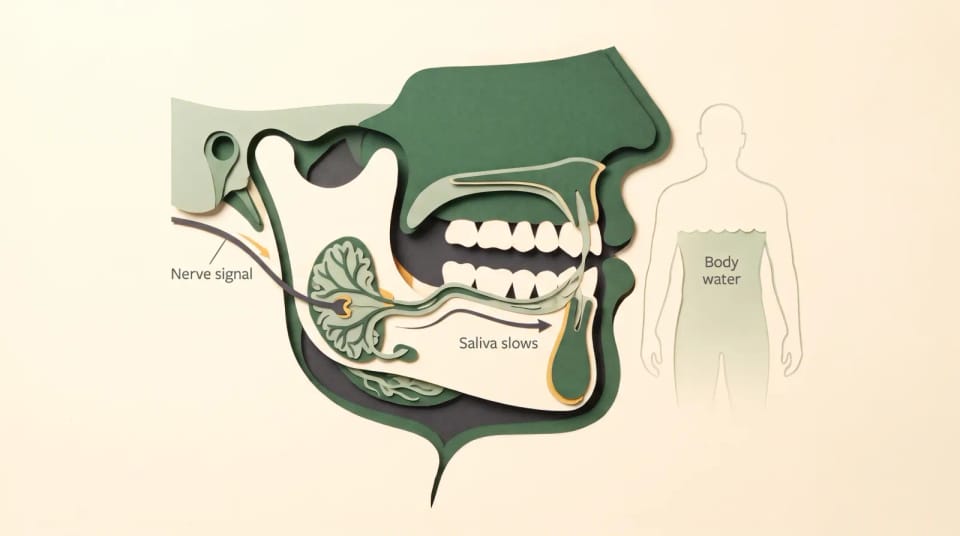
THC quiets the nerve signal to the salivary glands, so saliva slows. That is a local brake, not proof your body is short on water.
So how do you tell the difference? Look past your mouth. The NHS lists the signs of dehydration as thirst, dark yellow and strong-smelling pee, peeing less often, dizziness, tiredness and a dry mouth. A dry mouth on its own fits both. Pale pee at the usual frequency points to a dry mouth, not a dry body. For comfort care, see our guide to why cannabis dries your mouth and what helps.
Does THC make you pee more?
In mice, yes. In people, the evidence is thin and points in more than one direction. This is where most of the “weed dehydrates you” claim comes from, so it is worth reading slowly.
The mouse studies. In male mice given injected THC and related compounds, urine output over six hours rose through the CB1 receptor, with only moderate sodium loss. The effect followed an up-then-down curve: urine output peaked at lower doses than pain relief did. A later study found that the effect fades fast. Mice given THC every day for a week needed about nine times the dose to get the same urine response, and the response came back near baseline within 14 days of stopping.
A 2024 mouse study points to a likely mechanism. A synthetic CB1 drug lowered the hormone signal that tells the kidneys to hold on to water, so the mice made large volumes of dilute urine. That drug is not THC, and the animals were not people using cannabis.
The human data. Here the picture gets messy. The authors of the first mouse study describe the human findings as mixed: cannabinoids have been reported to both increase urine output and decrease urinary frequency in people. The only human trial we found that measured urine volume ran the opposite way from the mice. In 15 adults with advanced multiple sclerosis and bladder problems, cannabis extract mouth sprays (THC with CBD, then THC alone) reduced urgency, frequency and the total volume voided. That trial was open-label, small and in a medical population, so it cannot speak for healthy people at a party. It does show that people do not simply copy the mouse result.
| What was measured | Who | What it found | What it cannot tell you |
|---|---|---|---|
| Saliva flow | 57 adults, oral THC | Saliva fell as blood THC rose | Anything about total body water |
| Urine output over 6 hours | Mice, injected THC | More urine at some doses | Whether people pee more after using |
| Urine response with daily dosing | Mice, THC for a week | The effect faded within days | How fast tolerance builds in people |
| Total urine voided | 15 adults with MS, cannabis extract sprays | Volume went down | What happens in healthy users |
| Vomiting illness | Case reports and reviews | Some regular users need IV fluids | How common it is |
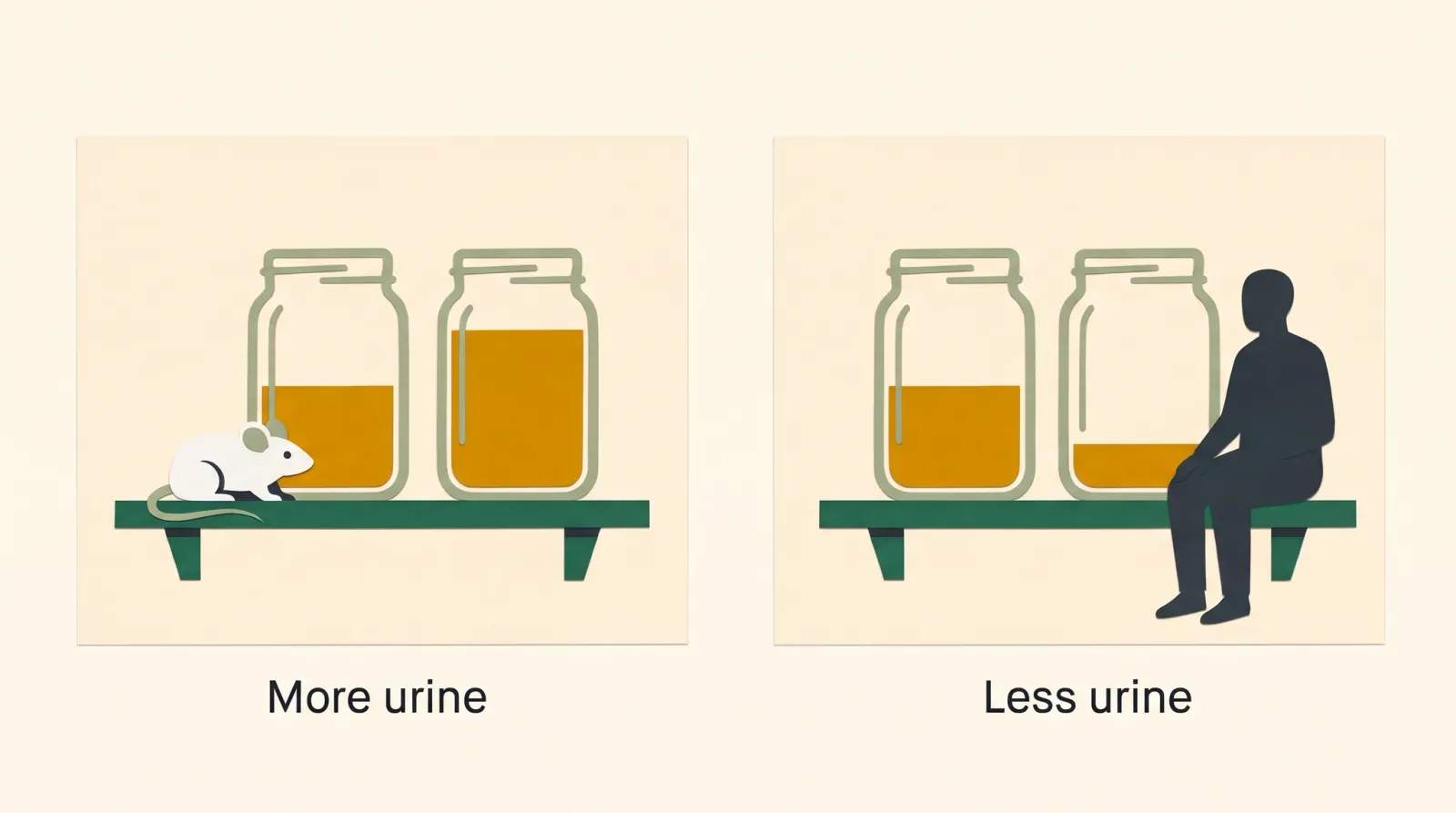
Injected THC raised urine output in mice. In the one small human trial we found, adults with MS bladder problems voided less, not more.
Can weed cause real dehydration?
Yes, through one well-documented route: cannabinoid hyperemesis syndrome, or CHS. This is a pattern of repeated, cyclic vomiting in some people who use cannabis regularly, and vomiting does drain body water.
A systematic review of 183 published reports found that almost every described case involved regular use, cyclic vomiting and relief from hot showers or baths. Supportive care in those reports includes intravenous fluids, and stopping cannabis appeared to be the most effective treatment. The review calls the cause unclear.
How serious can it get? In one published case, a 25-year-old man with eight years of daily use was admitted with acute kidney failure after more than a day of vomiting. The authors found five other case reports of kidney failure with CHS and suggested that vomiting plus long hot showers can push people into severe dehydration. These are case reports, not a rate. CHS is not what happens to most people who use cannabis, and nobody has measured how often it leads to dehydration.
If you get repeated vomiting after regular use, read our guide to cannabinoid hyperemesis syndrome and when vomiting needs care.
What about heat, exercise and alcohol?
These are the everyday routes to dehydration, with or without cannabis. The NHS lists heavy sweating in hot weather or after exercise, being sick, and drinking alcohol among the main causes.
What we did not find is any human study that measured hydration when cannabis is added to heat or exercise. So we cannot tell you that weed makes a hot hike more dehydrating, or less. What we can say is that the heat and the effort do the drying, and a high can make it easier to lose track of time, water and shade. Our guides to cannabis and hiking in the heat, what exercise studies show for THC and saunas, heat and cannabis cover the activity side.
Alcohol deserves more nuance than “it dehydrates you.” In a lab study of 12 men, a litre of 4% beer produced more urine than alcohol-free beer when they started well hydrated, about 1,280 mL against 1,120 mL over four hours. When they started already low on fluid, the difference shrank and was no longer clearly significant. A separate study found that drinks up to 2% alcohol had a negligible diuretic effect during rehydration, while 4% tended to slow recovery. The amount and strength matter.
We found no study that measured fluid balance when people combine cannabis and alcohol. For what the combination does to the high, see what mixing cannabis and alcohol does. For the morning after, see whether weed helps a hangover.
Why do I feel dizzy or thirsty after weed?
The dizziness is usually not dehydration. THC raises heart rate and, especially in people who use it rarely, can cause a sharp drop in blood pressure on standing. The same review notes that with repeated use this standing drop tends to disappear and blood volume goes up, not down. A head rush when you stand is a blood-pressure effect, and our guide to faintness after cannabis walks through it.
The thirst is harder to pin down. A dry mouth feels like thirst, and we found no study that measured thirst or water intake after cannabis in people. Sipping water is a fine response. Just do not read a dry mouth as a fluid gauge.
If you want to know whether one strain dries you out more than another, a personal log beats a guess. The High IQ app lets you record how a session felt, so you can compare notes over time instead of relying on memory.
When to talk to a clinician
Get medical help, not more water alone, if you have any of these:
- Vomiting that keeps coming back, or that keeps you from holding fluids down
- Dizziness on standing that does not go away, a racing heartbeat, or fainting
- Confusion, or cold, blotchy skin
- Very dark pee, or very little pee, for most of a day
- Dry mouth that lasts for days or weeks, even when you are not using
The NHS names dizziness on standing that does not go away, a fast heartbeat, confusion, and cold or blotchy skin as signs that need urgent advice. A lasting dry mouth is worth raising with a doctor or dentist, because medicines and other conditions can cause it.
Key takeaways
- A dry mouth after weed is a saliva effect, measured in people. It is not a reading of your body water.
- THC raises urine output in mice, and the effect fades with daily dosing. The one human trial we found saw urine volume fall.
- Cannabinoid hyperemesis syndrome is the one documented cannabis-linked route to real dehydration, through vomiting.
- Heat, sweat and alcohol dehydrate you whether or not you use cannabis. No study we found measured the combination.
- Check pee colour and frequency, not your mouth, and get help for repeated vomiting, fainting or confusion.
FAQ
Why am I so thirsty after smoking weed?
Mostly because THC slows your salivary glands, and a dry mouth feels like thirst. We found no human study that measured thirst or total water intake after cannabis. If your pee is pale and you are peeing as often as usual, your body is probably not short on water.
Can edibles dehydrate you?
We found no study that measured fluid loss from edibles. The main saliva study gave THC by mouth, and saliva still fell as blood levels rose, so edibles can dry your mouth too. Vomiting is the concern: if an edible makes you sick, that fluid loss is real.
Does weed dehydrate you more than alcohol?
No study compared them directly. Alcohol has measured effects on urine output in people, which depend on strength, amount and how hydrated you were to start. For cannabis, we found no human study showing body-water loss outside of vomiting illness.
Should I drink more water when I use cannabis?
Water helps a dry mouth feel better, and it matters more in heat, during exercise, when drinking alcohol or after vomiting. There is no cannabis-specific water target backed by research. Let thirst and pee colour guide you, and get help for the warning signs above.
Sources
- Mattes RD, Shaw LM, Engelman K. (1994). Effects of cannabinoids (marijuana) on taste intensity and hedonic ratings and salivary flow of adults. Chemical Senses, 19(2), 125-140. PubMed · DOI
- Andreis K, Billingsley J, Naimi Shirazi K, et al. (2022). Cannabinoid CB1 receptors regulate salivation. Scientific Reports, 12, 14182. PubMed · DOI
- Chopda GR, Vemuri VK, Sharma R, Thakur GA, Makriyannis A, Paronis CA. (2013). Diuretic effects of cannabinoid agonists in mice. European Journal of Pharmacology, 721(1-3), 64-69. PubMed · DOI
- Chopda GR, Parge V, Thakur GA, Gatley SJ, Makriyannis A, Paronis CA. (2016). Tolerance to the diuretic effects of cannabinoids and cross-tolerance to a kappa-opioid agonist in THC-treated mice. Journal of Pharmacology and Experimental Therapeutics, 358(2), 334-341. PubMed · DOI
- Rein JL, Mackie K, Kleyman TR, Satlin LM. (2024). Cannabinoid receptor type 1 activation causes a water diuresis by inducing an acute central diabetes insipidus in mice. American Journal of Physiology. Renal Physiology, 326(6), F917-F930. PubMed · DOI
- Brady CM, DasGupta R, Dalton C, Wiseman OJ, Berkley KJ, Fowler CJ. (2004). An open-label pilot study of cannabis-based extracts for bladder dysfunction in advanced multiple sclerosis. Multiple Sclerosis, 10(4), 425-433. PubMed · DOI
- Jones RT. (2002). Cardiovascular system effects of marijuana. Journal of Clinical Pharmacology, 42(S1), 58S-63S. PubMed · DOI
- Sorensen CJ, DeSanto K, Borgelt L, Phillips KT, Monte AA. (2017). Cannabinoid hyperemesis syndrome: diagnosis, pathophysiology, and treatment, a systematic review. Journal of Medical Toxicology, 13(1), 71-87. PubMed · DOI
- Habboushe J, Sedor J. (2014). Cannabinoid hyperemesis acute renal failure: a common sequela of cannabinoid hyperemesis syndrome. American Journal of Emergency Medicine, 32(6), 690.e1-2. PubMed · DOI
- Hobson RM, Maughan RJ. (2010). Hydration status and the diuretic action of a small dose of alcohol. Alcohol and Alcoholism, 45(4), 366-373. PubMed · DOI
- Shirreffs SM, Maughan RJ. (1997). Restoration of fluid balance after exercise-induced dehydration: effects of alcohol consumption. Journal of Applied Physiology, 83(4), 1152-1158. PubMed · DOI
- National Health Service (England). Dehydration. NHS
- National Institute of Dental and Craniofacial Research. Dry mouth. NIDCR



