Eucalyptol in Cannabis: The Cooling Terpene You've Never Heard Of
Discover eucalyptol (1,8-cineole): cannabis's rare cooling terpene with real respiratory and anti-inflammatory research behind it.


You Already Know This Terpene — You Just Don’t Know It’s in Cannabis
Here’s a fact that surprises almost everyone: the same compound responsible for the cooling, medicinal rush of eucalyptus cough drops also shows up in your cannabis flower. It’s called eucalyptol (also written as 1,8-cineole), and while it rarely appears alongside myrcene and limonene in terpene discussions, it may be shaping your high more than you realize.
Eucalyptol is one of the most widely studied terpenes in all of plant science. It appears in rosemary, sage, bay leaves, tea tree oil, and — of course — eucalyptus trees. It has centuries of traditional medicinal use and a growing body of peer-reviewed pharmacological research. Yet in the cannabis world, it remains almost completely invisible. Most lab reports don’t test for it. Most consumers have never heard its name.
That’s a mistake worth correcting.
If you’ve ever encountered a strain with a sharp, almost mentholated freshness — a coolness you couldn’t quite place — eucalyptol may have been part of the equation. And if you’re interested in terpenes beyond the handful everyone talks about, this one is worth knowing.
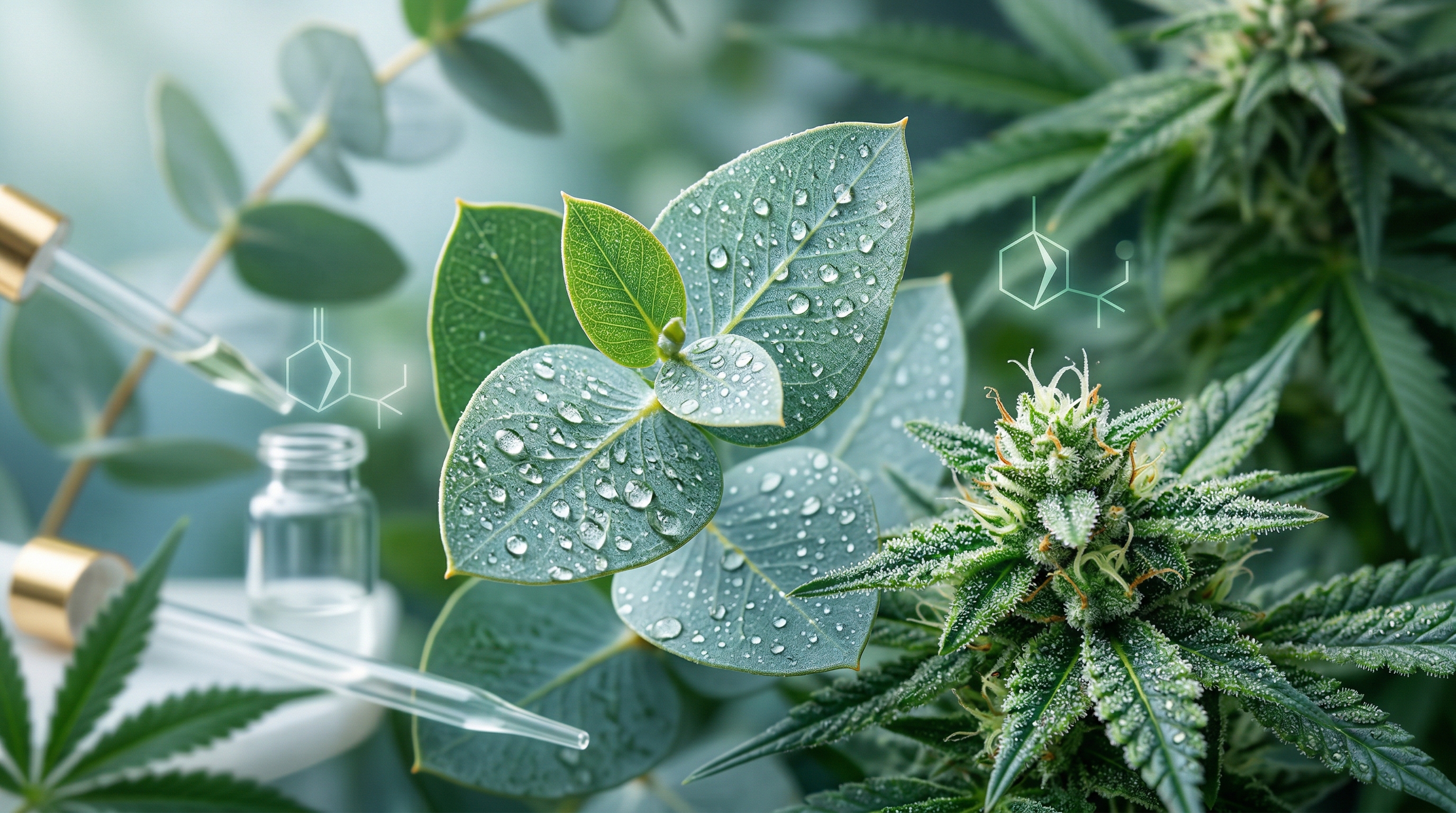
What Eucalyptol Actually Is
Eucalyptol is a monoterpenoid — a terpene with an oxygen atom built into its bicyclic (double-ring) molecular structure. Its chemical formula is C₁₀H₁₈O. That oxygen is important: it makes eucalyptol slightly different from pure hydrocarbon terpenes like myrcene or alpha-pinene, giving it unique chemical properties and a characteristic behavior in your body.
Think of it this way: most terpenes are oil paints — heavy, layered, slow to dry. Eucalyptol is a watercolor. It’s more volatile, evaporates quickly, and that’s exactly why its cool, sharp scent hits you immediately when you open a jar but fades faster than the deeper aromatic notes.
Where It Lives in the Plant Kingdom
| Source | Common Use | Signature Aroma |
|---|---|---|
| Eucalyptus trees | Chest rubs, cough drops | Intense medicinal cool |
| Rosemary | Culinary, aromatherapy | Herbal, sharp |
| Bay leaves | Cooking, teas | Spicy, slightly bitter |
| Sage | Culinary, traditional medicine | Earthy, pungent |
| Tea tree | Topical antiseptics | Clean, antiseptic |
| Cannabis | Whole-plant experience | Subtle cool freshness |
In cannabis, eucalyptol typically appears at trace concentrations — usually below 0.06% of total terpene content. That’s a fraction of what you’d find with dominant terpenes like myrcene. But trace doesn’t mean irrelevant. The entourage effect teaches us that minor compounds, working in concert, can meaningfully shape the whole-plant experience.
The Science: What Research Actually Shows
This is where eucalyptol gets genuinely interesting — and where we need to be careful about what we claim.
Respiratory Benefits: Surprisingly Well-Documented
The most researched application of eucalyptol is respiratory health. This shouldn’t be surprising: eucalyptol is literally found in products designed to open airways, from Vicks VapoRub to prescription mucolytics used in Europe.
Asthma: A clinical trial with actual humans. A 2003 double-blind, placebo-controlled trial published in Respiratory Medicine tested 200mg of oral eucalyptol three times daily in patients with steroid-dependent severe asthma. The result: patients in the eucalyptol group reduced their daily prednisolone (a corticosteroid) dose by an average of 36%, compared to just 7% in the placebo group. Twelve of sixteen eucalyptol patients achieved steroid reduction; only four of sixteen in the placebo group did (p=0.012). That’s a statistically significant, clinically meaningful difference.
COPD: Reducing exacerbations. A separate clinical trial found that eucalyptol supplementation reduced COPD exacerbations by approximately 38.5% during winter months when used as adjunctive therapy alongside standard treatment.
Mechanism — it’s more than just “opening airways.” For years, eucalyptol was assumed to work purely as a mucolytic (mucus-thinner). More recent research, including a 2020 review in Advances in Therapy, identified a richer mechanism: eucalyptol inhibits NF-κB signaling, suppresses pro-inflammatory cytokines (TNF-α, IL-1β, IL-6, IL-8), reduces mucin gene expression (MUC2, MUC19), and upregulates interferon regulatory factor 3 (IRF3). In other words, it’s acting as a genuine anti-inflammatory modifier, not just a decongestant.
Cognitive Effects: The TRPM8 and Acetylcholine Connection
Here’s where things get more speculative — but also more fascinating.
A 2012 study found that blood levels of 1,8-cineole (naturally absorbed from rosemary aroma exposure) correlated with cognitive performance on speed and accuracy tasks. Participants who absorbed more eucalyptol from the ambient rosemary scent performed better. The researchers proposed that eucalyptol may cross the blood-brain barrier and influence acetylcholine pathways — the same neurotransmitter system involved in memory and attention, and the target of several Alzheimer’s medications.
There’s also a potential connection to TRPM8 — a cold-sensitive ion channel that eucalyptol can activate. TRPM8 is the receptor that creates the “cooling” sensation when you eat menthol. When eucalyptol activates it, your body registers a cooling sensation that isn’t actually temperature-based. This may partly explain the refreshing, alert quality that some consumers report from eucalyptol-dominant strains.
Compare this to linalool’s GABA receptor activity or beta-caryophyllene’s CB2 binding — eucalyptol has its own distinct biological targets, adding another layer to the cannabis terpene picture.
Anti-Inflammatory Properties Beyond the Airways
The NF-κB inhibition mentioned above isn’t just relevant to respiratory conditions — it’s a core inflammatory pathway involved in everything from joint pain to neuroinflammation. A 2014 literature review concluded that eucalyptol has “anti-inflammatory and antioxidant actions beyond its mucolytic and spasmolytic effects,” positioning it as a multi-target anti-inflammatory compound.
This connects directly to what we discuss in cannabis and inflammation: multi-terpene profiles that include anti-inflammatory compounds like bisabolol, humulene, and eucalyptol may create broader anti-inflammatory coverage than any single compound alone.
Important caveat: Every study cited here involved isolated eucalyptol or eucalyptol from non-cannabis sources (essential oils, capsules, ambient aroma). We cannot directly extrapolate these findings to trace amounts of eucalyptol inhaled via cannabis vaporization or combustion. The doses, delivery methods, and chemical contexts are fundamentally different. More cannabis-specific research is needed.
Strains Where You Might Encounter Eucalyptol
Eucalyptol isn’t a defining terpene in most strains — you won’t find cultivars marketed as “high-eucalyptol” the way you might see “high-limonene.” But it appears consistently in a handful of well-known varieties:
- Super Silver Haze — A legendary sativa-dominant strain where eucalyptol contributes to its distinctly sharp, mentholated edge alongside dominant terpenes like myrcene and terpinolene
- Girl Scout Cookies (GSC) — One of the most eucalyptol-consistent strains in third-party testing; the cool note cuts through its earthy sweetness
- Headband — Known for a lemony-herbal profile with a mentholated quality that eucalyptol helps create
- AC/DC — A high-CBD cultivar where eucalyptol appears alongside a calming, focused profile
- Bubba Kush — An indica where eucalyptol adds a surprising freshness to its otherwise heavy, earthy character
One thing worth noting: terpene content varies significantly between grows, harvests, and curing conditions. Even the same strain from the same breeder can differ. Always check the lab report when available.
How to Find and Experience Eucalyptol
Use Your Nose
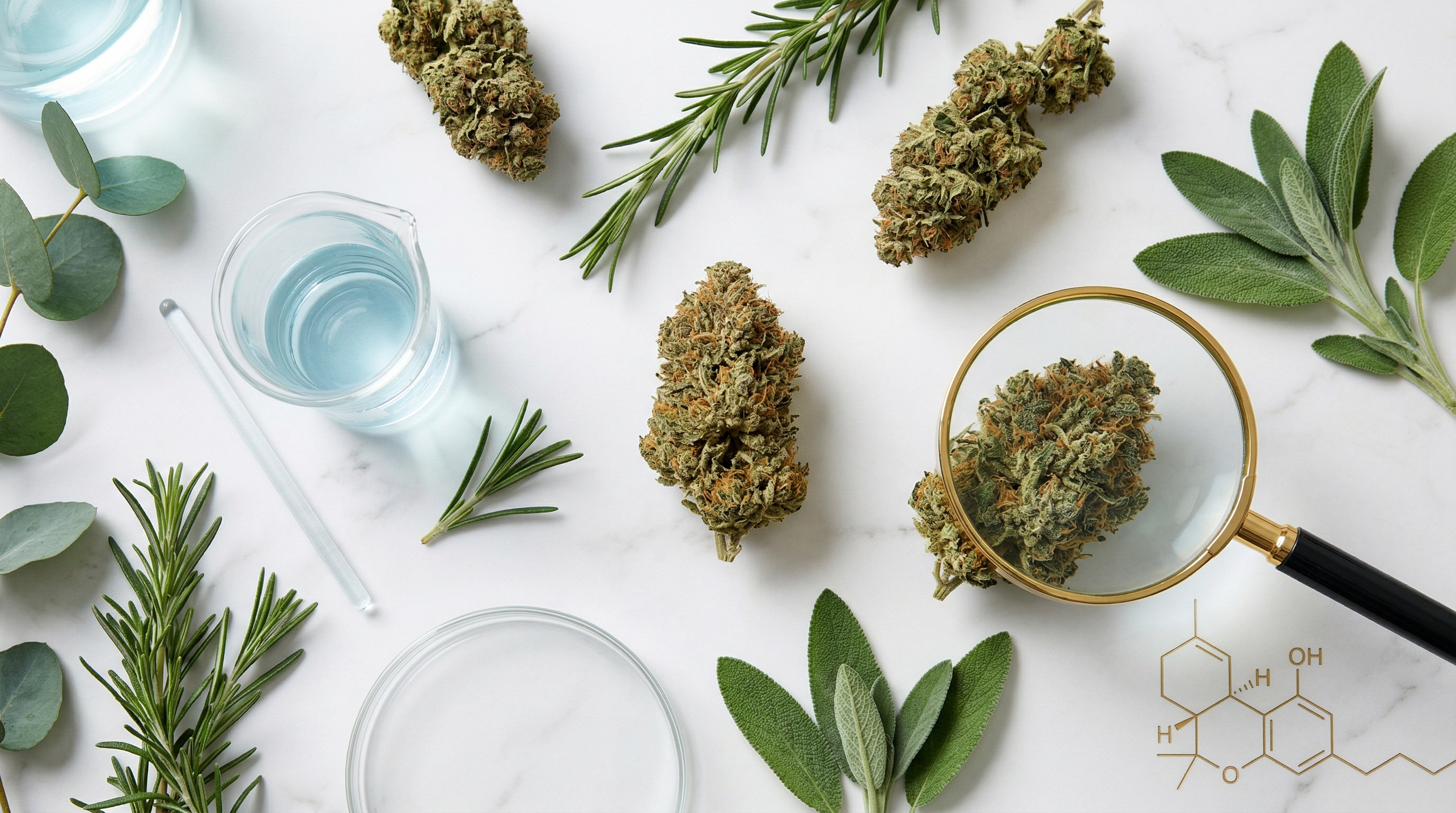
Eucalyptol is highly volatile — it’s one of the first aromas to reach you. If you detect these notes when you open a fresh container or break apart a bud, eucalyptol may be present:
- Cool, minty freshness (think eucalyptus chest rub or cough drops)
- Camphor-like sharpness (the medicinal quality of Vicks VapoRub)
- Herbal spiciness reminiscent of fresh rosemary or dried sage
That initial hit of freshness before the deeper, earthier notes come through? Often eucalyptol.
Request Extended Terpene Testing
Most dispensaries test for the top 8-12 most abundant terpenes. Eucalyptol is almost never among them because it occurs in such small amounts. If your dispensary or brand offers extended terpene panels, look specifically for “1,8-cineole” — eucalyptol’s technical name. As consumer demand for detailed terpene data grows, more labs are expanding their menus to include it.
Temperature Matters
Eucalyptol’s boiling point is approximately 176°C (349°F). If you’re using a vaporizer with temperature control, starting in the 170–185°C range may help you capture eucalyptol before it degrades. This is similar to terpene synergy strategies for other volatile minor terpenes — lower temperatures preserve more of the delicate aromatic chemistry.
Where Eucalyptol Fits in the Bigger Picture
Strains with detectable eucalyptol tend to have multi-terpene complexity — cultivars where no single compound dominates overwhelmingly, and where the layered chemical signature creates a whole-plant experience greater than the sum of its parts. This is the entourage effect in action.
In the High Families framework, strains with this kind of nuanced terpene profile often deliver experiences with a sharper, clearer quality — a focused alertness rather than heavy sedation. The cognitive and respiratory research on eucalyptol, however preliminary, is consistent with that observation.
Key Takeaways
- Eucalyptol (1,8-cineole) is a trace terpene in cannabis with a cool, minty, camphor-like aroma — the same compound found in eucalyptus, rosemary, and sage.
- Clinical research outside cannabis shows eucalyptol can reduce steroid dependence in asthma and COPD exacerbations, with a clear anti-inflammatory mechanism involving NF-κB inhibition.
- TRPM8 activation creates the actual “cooling” sensation — eucalyptol triggers cold receptors without any real temperature change.
- Trace amounts still matter. Even at under 0.06% concentration, eucalyptol may contribute to the entourage effect and shape how a strain feels.
- Strains like Super Silver Haze, Girl Scout Cookies, and Headband consistently show eucalyptol presence — look for “1,8-cineole” on extended terpene panels.
- Vaporize at 170–185°C to capture eucalyptol before it burns off.
FAQs
Is eucalyptol safe to inhale in cannabis?
Eucalyptol has been used in inhalation products (chest rubs, nasal sprays) for decades and holds FDA GRAS status as a food additive. Research on inhaling it via cannabis vaporization or combustion specifically is limited. As with all cannabis consumption, start low and pay attention to how your body responds.
Why don’t most lab reports include eucalyptol?
Standard cannabis testing panels focus on the 8-12 most abundant terpenes. Eucalyptol rarely makes that cut due to its trace concentrations. Look for “1,8-cineole” on extended terpene panels if your lab or brand offers them.
Can I just use eucalyptus essential oil for the same benefits?
No. Eucalyptus essential oil is extremely concentrated (up to 90% eucalyptol) and should never be ingested or directly inhaled without proper dilution — it can be toxic. The trace amounts in cannabis are orders of magnitude lower. If you’re interested in eucalyptol for therapeutic purposes, speak with a healthcare provider about appropriate forms and dosages.
Does eucalyptol actually make cannabis feel “cooling”?
Yes — and there’s a mechanism for it. Eucalyptol activates TRPM8, the same cold receptor triggered by menthol. Some consumers do report a cooling sensation from eucalyptol-present strains, especially when vaporized. But the full experience depends on the entire terpene and cannabinoid profile, not eucalyptol alone.
Sources
- Juergens, U.R. et al. (2003). “Anti-inflammatory activity of 1,8-cineol (eucalyptol) in bronchial asthma: a double-blind placebo-controlled trial.” Respiratory Medicine, 97(3), 250-256. PMID: 12645832
- Juergens, U.R. et al. (2014). “Anti-inflammatory properties of the monoterpene 1,8-cineole: current evidence for co-medication in inflammatory airway diseases.” Drug Research, 64(12), 638-646. PMID: 24831245
- Freitag, C.M. et al. (2020). “New perspectives for mucolytic, anti-inflammatory and adjunctive therapy with 1,8-cineole in COPD and asthma.” Advances in Therapy, 37, 1737-1753.
- Moss, M. & Oliver, L. (2012). “Plasma 1,8-cineole correlates with cognitive performance following exposure to rosemary essential oil aroma.” Therapeutic Advances in Psychopharmacology, 2(3), 103-113. PMID: 23983963
- Fischedick, J.T. et al. (2010). “Metabolic fingerprinting of Cannabis sativa L., cannabinoids and terpenoids for chemotaxonomic and drug standardization purposes.” Phytochemistry, 71(17-18), 2058-2073. PMID: 21044792
- Russo, E.B. (2011). “Taming THC: potential cannabis synergy and phytocannabinoid-terpenoid entourage effects.” British Journal of Pharmacology, 163(7), 1344-1364. PMID: 21749363


