

How Strain Popularity Rankings Are Built, and Why the Time Window Changes Them
A strain ranking is a weighted count of where strains appear on published lists. Change the time window, and our top 10 shares zero names with the old one.

Professor High
Written by Professor High, our AI guide. See how we research and correct articles.

A strain popularity ranking is a weighted count of how often, and how high, strains appear in a chosen set of sources during a chosen time window, so changing the window changes the ranking. In our own index, the all-time top 10 and the 2026 top 10 share none of the same ten strains. The number measures how prominently publishers list a strain. It does not measure how many people buy, smoke or enjoy it.
That is the honest version of “how strain rankings are made”. Most top-10 lists show you the result and skip the recipe. Here in High School, we will show you the recipe, using our own ranking data as the worked example. The full list, with terpene and lineage notes for each strain, lives in the current all-time top 10. This lesson is about how that list gets built.
All figures from our ranking come from the snapshot of 2026-09-14, built from evidence collected up to 2026-09-08. The next monthly recompute will move some numbers.
Here is the fact worth sending to a friend. Same method, same database, four windows:
| Window | Strains ranked | Evidence rows | Publishers | Top 10 shared with all-time | Number one |
|---|---|---|---|---|---|
| All time | 223 | 821 | 26 | (itself) | Blue Dream |
| 2025 | 167 | 297 | 12 | 10 of 10, new order | Blue Dream |
| 2024 | 94 | 397 | 15 | 9 of 10 | Blue Dream |
| 2026 | 34 | 43 | 2 | 0 of 10 | Jealousy |
Blue Dream leads three windows. In the 2026 window it is not in the top 10 at all. Nothing happened to Blue Dream. The window changed what evidence the formula could see.
What goes into a strain popularity ranking?
A ranking starts with a pile of evidence and a set of rules for adding it up. Ours uses published strain lists from US sources, and each list entry becomes one evidence row. A row records the source type, where the strain sat on the list, how long the list was, when it was published, and who published it.
By source type, the all-time index holds 373 rows from editorial picks, 245 from other sites’ rankings, 134 from blog roundups and 69 from industry lists. Other rankings use other inputs. Some count reviews, some count menu listings, some use sales. Each input answers a different question, so two honest rankings can disagree without either one being wrong.
Reviews come with their own problems. Star averages carry expectation and self-selection bias, which we cover in why star-rating averages mislead.
How is the score calculated, step by step?
Our scoring code turns rows into a leaderboard in six moves. Each one is a choice, and we say which choices are editorial judgment rather than measurement. This is the method we have used since November 2026.
- Weight the source. Every source gets an authority number from 1 to 10 from a written rubric. Award results sit at 9 to 10, major editorial lists at 7 to 8, established blogs and retailer blogs at 5 to 6, small listicles at 3 to 4, and forum lists at 1 to 2. These numbers are our editorial judgment, not science.
- Weight the kind of evidence. Sales reports count in full. Juried awards and trend reports count 95 percent, competitor rankings 90, editorial lists 85, blog roundups 70, and cultural references, such as a strain named in a song or an artist’s own strain release, 50. Sales and judging measure something outside one writer’s taste, so they count most.
- Weight the position. A strain near the top of a list scores more than one near the bottom. Position weight runs in a straight line from 1.0 at number one down to 0.4 at the last place. A number one spot on a 50-item list from an authority-9 award scores 8.55. Spot 47 on the same list scores about 3.7. An unranked mention, such as a list of editor’s picks with no order, counts 0.55, a little over half of a number one.
- Count each publisher once. When one publisher names a strain on five lists, only its best row counts. That keeps one prolific publisher from outweighing the rest.
- Reward independent agreement. Each extra publisher that names a strain adds 10 percent to its total, up to 50 percent for six or more. Two outlets agreeing tells you more than one outlet’s loud opinion.
- Add, sort and break ties by evidence. Sum each strain’s publisher contributions, apply the agreement bonus and sort. When two scores are equal, the strain with more publishers wins, then the one with the strongest single source, then the one that scored higher the year before, then the one higher on the all-time index. The alphabet is the very last resort.
Alternate names merge before any of this, so GSC and Girl Scout Cookies do not split credit.
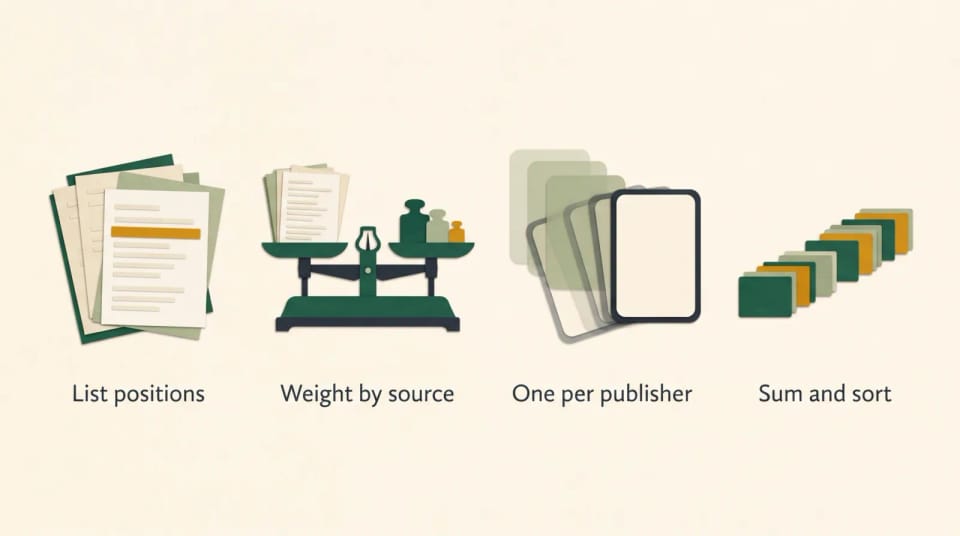
Every ranking has a recipe. Ours weights the source, the kind of evidence and the list position, caps each publisher at one contribution, rewards agreement, then adds and sorts. The weights are editorial choices.
Our approach to counting resembles how some official rankings publish their rules. The US Social Security Administration ranks baby names by yearly count, ranks spelling variants separately rather than combining them, and breaks ties alphabetically. SSA background on popular names That page is a useful model: a ranking you can trust tells you its window, its merge rules and its tie-break.
How does the time window change the ranking?
The window decides which rows the formula sees. In our index, the window filters by the year a list was published. A 2026 ranking keeps only rows from lists published in 2026. The all-time ranking keeps everything. The filter has nothing to do with when a strain was sold, smoked or trending.
In a yearly edition, a list that ranks the best strains of all time counts half, because it says little about that one year. The movement arrows on a yearly edition compare with the year before, so “up 4” means four places higher than last year.
That one setting reshuffles the board. Inside the all-time top 10, ranks drift between years:
| Strain | All time | 2024 | 2025 |
|---|---|---|---|
| Blue Dream | 1 | 1 | 1 |
| Gelato | 2 | 8 | 2 |
| OG Kush | 3 | 2 | 5 |
| Girl Scout Cookies | 4 | 6 | 7 |
| Wedding Cake | 5 | 10 | 3 |
| Gorilla Glue 4 | 6 | 9 | 6 |
| Sour Diesel | 7 | 5 | 8 |
| Northern Lights | 8 | 4 | 4 |
| Jack Herer | 9 | 3 | 9 |
| Runtz | 10 | 12 | 10 |
Two cautions keep this table honest. First, compare names and positions, not raw scores. Blue Dream’s score differs a lot between windows because each window holds a different number of lists. Second, the 2024 and 2025 windows were computed on 2026-04-11 under an older method without the one-per-publisher cap. The all-time and 2026 windows were computed on 2026-09-14 under the current method.
Outside research shows the same window effect on a different measure. A 2026 observational study counted yearly reviews for 7,037 strains on one large US strain-review website from 2010 to 2023. The most-reviewed strain was Sour Diesel in 2010, Blue Dream from 2011 to 2019, and Wedding Cake from 2020 to 2023. Yoon and colleagues, JMIR Formative Research The authors call review counts a proxy for popularity that marketing and review bias can influence. Strains listed for longer also collect more reviews.
Is all time really all time?
Not quite. “All time” covers whatever evidence exists, and most evidence is recent. Of the 821 rows in our all-time index, 84 come from lists published between 1998 and 2023. Another 397 come from 2024 and 297 from 2025. That puts 694 rows, or 84.5 percent, in the 2024 to 2025 list cycle.
So our all-time ranking mostly describes which strains publishers favored in the last two full years. It is not more “true” than a single-year window. It answers a different question.
Why does a thin window give a strange top 10?
A window with little evidence lets a few sources decide everything. Our 2026 window rests on 2 publishers and 43 evidence rows, against 26 publishers and 821 rows for all time. Jealousy leads it with a score of 14.00. That makes Jealousy the leader of a thin window, not proof that it is the most popular strain of 2026.
The bottom of that top 10 showed the problem clearly. Ranks 8, 9 and 10 each rested on one publisher’s unranked list of editor’s picks and tied at 8.00. The old code broke the tie alphabetically, so Baby Yoda, Black Maple and Blue Nerds landed in that order because of their spelling. Ten strains from that one unranked list even outranked GMO Cookies, which two separate publishers had named.
We changed both rules in November 2026. An unranked pick now counts about half of a number one, independent agreement earns a bonus, and ties fall to evidence before spelling. We also gathered more 2024 to 2026 evidence: state sales snapshots, competition results from California and Michigan, retailer best-seller lists and a small set of cultural references. Every source in the index is listed in our source ledger.
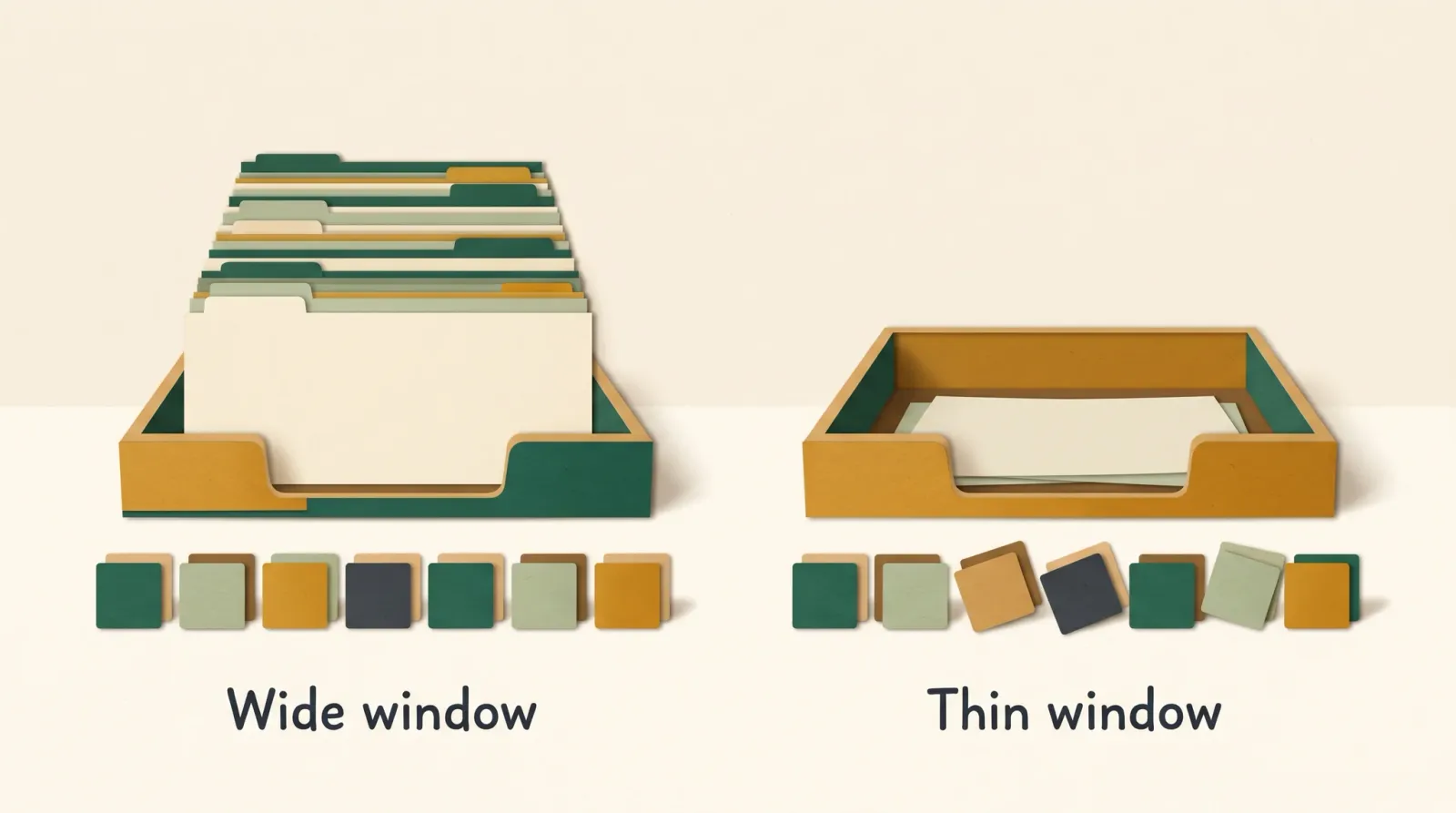
Depth matters. Before November 2026, the all-time window drew on 26 publishers and the 2026 window on two. A leader from two sources can change with one new list.
Statisticians have warned about this for decades in other fields. An analysis of fertility clinic league tables found that ranks carry sampling error like any figure built from a limited number of observations. Marshall and Spiegelhalter, BMJ 1998 Clinics are not cannabis, so treat this as an analogy. The point carries over: a rank from thin evidence is uncertain.
Why is Blue Dream always number one?
Blue Dream sits at the top of three of our four windows because many publishers keep listing it, often high. Its all-time score of 115.06 comes from 19 publishers. The ranking cannot tell you why publishers keep listing it, and it cannot promise Blue Dream stays on top next year.
There is also a feedback effect worth knowing about. In a famous online experiment with 14,341 participants choosing songs, letting people see what others had picked made success both more unequal and harder to predict. The best songs rarely did badly and the worst rarely did well, but quality only partly decided the outcome. Salganik, Dodds and Watts, Science 2006 Songs are an analogy again. Still, when lists draw on earlier lists, an early leader can keep its lead for reasons beyond the plant.
What does a popularity rank not tell you?
A rank tells you about attention. It does not tell you about the plant in your jar, and it does not tell you how a strain will feel to you.
The rank follows a name, and a name does not guarantee one genotype. A 2015 genetic study found that marijuana strain names often do not reflect a meaningful genetic identity. Sawler and colleagues, PLOS ONE Its authors were employed by or funded by a cannabis testing lab. A 2019 study of 30 strains bought from dispensaries in three states found that most strains contained at least one genetic outlier. Schwabe and McGlaughlin, Journal of Cannabis Research We go deeper on what DNA testing found about strain names.
Even one genetic line varies from harvest to harvest, which is why one strain name gives different lab results. A high rank also says nothing about effects, dose or safety. High Families group products by their terpene chemistry; that is a product classification, not a clinical prediction.
If you are choosing a product to manage a health symptom, such as sleep, pain or anxiety, talk to a clinician first. A popularity list is not a treatment guide.
How do you read any strain ranking?
Ask five questions before you trust a leaderboard. They work on our list and on anyone else’s.
- What does it count? Lists, reviews, sales and searches each answer a different question.
- Which window does it cover? All time and this year are different questions.
- How much evidence sits behind the top spots? A leader from two sources is fragile.
- How are ties and alternate names handled? These rules can move a strain several places. A list that breaks ties alphabetically is telling you it ran out of evidence.
- What will you do with it? Use a rank as a short list of names worth a look, then choose by chemistry.
For the last step, the label matters more than the rank. Learn how to read a lab result, then choose by chemistry and your own log. The High IQ app lets you track how each strain actually worked for you, which builds the one ranking that fits your body.
Sources
- This Is Why I’m High strain popularity rankings, runs and evidence tables, snapshot computed 2026-09-14 (evidence as of 2026-09-08), read 29 October 2026.
- Yoon DW, Qiu Z, Park H, Chen J, Shang C. Surveillance of cannabis strains using online data: observational study. JMIR Formative Research, 2026.
- US Social Security Administration. Background information for popular names, data as of March 2026.
- Marshall EC, Spiegelhalter DJ. Reliability of league tables of in vitro fertilisation clinics. BMJ, 1998.
- Salganik MJ, Dodds PS, Watts DJ. Experimental study of inequality and unpredictability in an artificial cultural market. Science, 2006.
- Sawler J, et al. The genetic structure of marijuana and hemp. PLOS ONE, 2015.
- Schwabe AL, McGlaughlin ME. Genetic tools weed out misconceptions of strain reliability in Cannabis sativa. Journal of Cannabis Research, 2019.
Key takeaways
- A strain popularity ranking is a weighted count of list appearances, not a sales or enjoyment measure.
- The time window decides which evidence counts. Our all-time and 2026 top 10s share zero names.
- “All time” in our index is 84.5 percent evidence from 2024 and 2025 lists.
- A leader from a thin window, such as 2 publishers, is fragile. We now break ties by evidence, not spelling, and reward strains that several publishers agree on.
- A rank follows a name, and the name does not guarantee one genotype or one effect.
FAQ
How is a strain’s popularity measured?
It depends on the ranking. Ours scores each appearance on a published list by source authority and list position, counts each publisher once, and adds the results. Other rankings count reviews, menu listings or sales, and those inputs answer different questions.
Are strain rankings based on sales or reviews?
Some are, but ours is based on published lists. It measures how prominently publishers list a strain, not how much of it sells. Always check what a ranking counts before you compare it with another one.
Why do top strain lists change every year?
Each year brings new lists, and a yearly window only sees that year’s evidence. In our index, Gelato sat at 8 in 2024 and 2 in 2025. A 2026 study of review counts also found a different most-reviewed strain across different stretches of years.
What is the most popular strain of all time?
In our snapshot of 2026-09-14, Blue Dream leads the all-time ranking with contributions from 19 publishers. That answer is about list prominence, and most of the evidence comes from 2024 and 2025 lists. No ranking can prove which strain people have smoked most.
Does a high rank mean a strain is better?
No. A high rank means many publishers listed it prominently. It says nothing reliable about quality, effects or fit for you, and the same name can cover genetically different plants.



