Outdoor Cannabis Growing Season 2026: A Starter Guide
Plan your 2026 outdoor cannabis grow: May planting window, plot selection, autoflower vs photoperiod, resilient strains, and a month-by-month schedule.

The sun is climbing, the frost is retreating, and if you live in one of the 27-ish U.S. states where home cultivation is legal, you are staring down the best planting window of the year. Outdoor cannabis is the oldest way to grow the plant — free light, natural soil biology, and yields that dwarf indoor tents. Respect three non-negotiables and it is one of the most forgiving starter projects in horticulture: your local laws, your climate, and your calendar.
Legal caveat, read this twice. Home cannabis cultivation legality varies dramatically by state, county, and even city ordinance. As of spring 2026, roughly 27 states plus Washington, D.C. permit some form of personal cultivation, but plant counts, enclosure requirements, visibility rules, and medical-only carve-outs differ everywhere. Check your state’s current statutes and your local municipal code before you germinate a single seed. Nothing in this guide overrides the law where you live. If home grow is not legal in your jurisdiction, treat this as educational reading only and consider our seed bank buyer’s guide and how to grow cannabis at home for future reference.
With that out of the way — let’s plan your 2026 season.
1. The Planting Window: Why May Matters
Cannabis is a photoperiod-sensitive annual. That means, for most classic strains, the plant uses daylight hours as its biological clock — it vegetates (grows leaves and stem) while days are long, then flowers once nights stretch past about 12 hours. In the Northern Hemisphere, that flowering trigger lands in late August or September, with harvest arriving in October.
To line up with that natural rhythm, you want seedlings or clones going outdoors after your last average frost date — typically May 1 through early June for most legal states. A few quick anchors:
- USDA Zones 9-10 (Southern California, parts of Arizona, Gulf Coast): transplant outdoors as early as mid-April. You can even squeeze two autoflower cycles into a season.
- USDA Zones 7-8 (Virginia, Missouri, Oklahoma, coastal Pacific Northwest): target late April to mid-May.
- USDA Zones 5-6 (Michigan, Illinois, New York, Colorado Front Range): wait until after Mother’s Day. Mid-May is your safe zone.
- USDA Zones 3-4 (northern Montana, northern Minnesota, Maine): late May to very early June, and choose fast-finishing genetics.
Your single most important piece of homework is to look up your local last-frost date and first-frost date. A 150-170 day outdoor season (mid-May to mid-October) is plenty for most strains. Anything shorter and you will be pushing finicky photoperiod genetics into dicey fall weather.
2. Choosing Your Plot
Outdoor cannabis has four non-negotiables: sun, soil, privacy, and water. If your chosen spot fails any of these, the plant will tell you — and not politely.
Sun. Cannabis is ravenous for direct sunlight. A minimum of six hours of unobstructed sun is the floor; eight to ten is ideal. South-facing or southwest-facing aspects are king. Dappled shade from an oak tree will stunt your yield and invite mold.
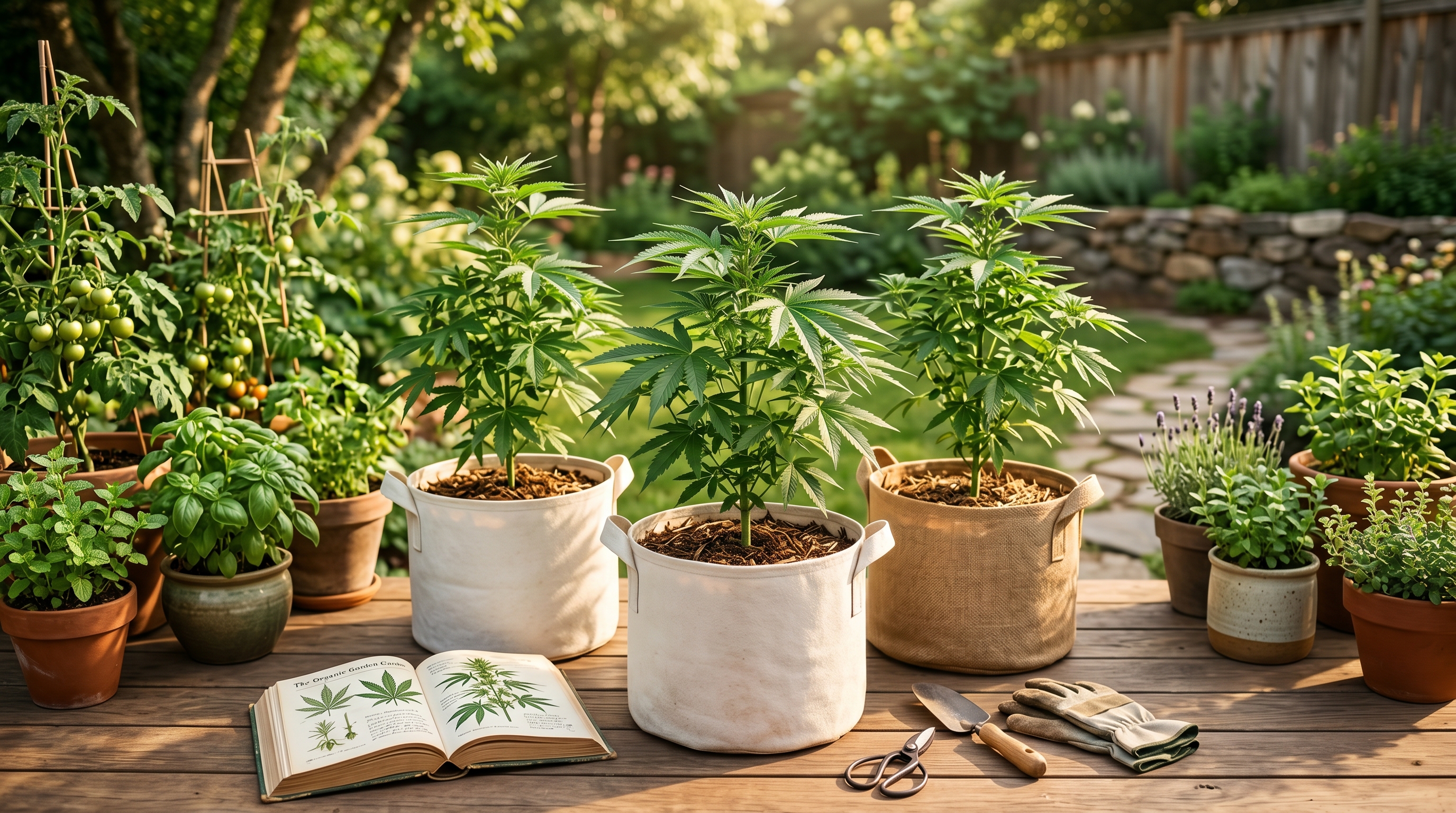
Soil. Healthy, well-draining, slightly acidic soil (pH 6.0-6.8) with living biology. If you are planting in native ground, amend with compost and worm castings. If your soil is heavy clay or sandy beach-fill, plant in fabric pots (15-25 gallons) with a quality organic soil mix. Living soil is forgiving for beginners because it buffers your mistakes.
Privacy. Most legal states require plants to be out of public view and enclosed in a locked area. Even if your state is permissive, discretion reduces theft risk and keeps the peace with neighbors. A 6-foot privacy fence, a backyard greenhouse, or a dedicated side yard all work. Cannabis smells profoundly by mid-flower; plan accordingly.
Water. You want convenient access to clean water, ideally rain barrels or filtered tap. A mature outdoor plant in July can drink 5-10 gallons per day in a heatwave. Drip irrigation pays for itself.
A quiet nod to sustainability: outdoor grows are dramatically less resource-intensive than indoor tents. If you are cultivation-curious for environmental reasons, read our piece on cannabis and sustainability — outdoor is the lowest-footprint path to the plant.
3. Photoperiod vs. Autoflower: The Outdoor Trade-Off
This is the single biggest genetic decision you will make, and it should be made before you buy seeds. Our companion article on cannabis seed types explained goes deeper, but here is the outdoor summary.
Photoperiod strains — the classics — flower based on day length. Plant them in May, let them vegetate through June and July, watch them flower August through September, harvest in October. Pros: massive plants (6-10 feet is normal), trophy yields, the full lineage of heritage genetics. Cons: you are married to the calendar. A rainy late September can torch your harvest. They also need to be sexed or purchased as feminized seeds — males will pollinate your females and ruin the crop.
Autoflower strains flower on an internal clock (~10-12 weeks from germination regardless of daylight). Pros: size stays modest (2-4 feet), you can run two cycles in a long season, and you dodge late-season weather. Cons: smaller yields per plant, less forgiving of transplant shock, and the genetic bench is narrower than photoperiod.
| Factor | Photoperiod | Autoflower |
|---|---|---|
| Time to harvest | 4-6 months outdoors | ~10-12 weeks |
| Plant size | Large (6-10 ft) | Small (2-4 ft) |
| Yield per plant | High (4-16 oz dried) | Moderate (1-4 oz dried) |
| Beginner-friendly | Medium | High |
| Two harvests per season | No | Yes (Zone 8+) |
| Late-season weather risk | High | Low |
Professor’s pick for first-timers: start with one autoflower and one photoperiod. The autoflower teaches you the full lifecycle fast, the photoperiod teaches you patience and scale. Diversification also hedges your weather risk.
4. Strain Selection: Resilience Beats Hype Outdoors
The instinct is to pick your favorite dispensary strain. Resist it. Outdoor genetics live or die on three traits: mold resistance, finish time, and pest tolerance. A famous strain with poor bud structure will rot in a humid August; a workhorse landrace with open buds and thin leaves will cruise through.
For mold resistance specifically, breeders select for open flower structure, good airflow between calyxes, and shorter flowering times. Overly humid conditions breed Botrytis (bud rot) and Pythium (root damping) — and once either sets in, your crop is cooked.
Outdoor-Friendly Starter Strains
- Northern Lights — A short, bushy, fast-flowering indica with legendary outdoor track record. Finishes early (late September in most zones), handles damp conditions, and hits mainly myrcene-forward relaxation. Very beginner-friendly. Pairs well with our Relax High profile.
- Durban Poison — A pure South African landrace sativa with naturally open bud structure and strong mold resistance. Grows tall, finishes reliably, and delivers terpinolene-dominant energetic effects. A favorite for humid climates. See also our landrace strains history piece.
- Blue Dream — A consistent, widely available hybrid with forgiving growth habits. Not the most mold-resistant of the bunch, but incredibly rewarding for new growers in drier zones. Balanced effects lean toward our Uplift High profile.
- Hindu Kush and Afghan genetics — Pure indicas bred in harsh mountain climates for centuries. Short, sturdy, fast-flowering, and tough as nails. The genetic bedrock of modern outdoor cultivation.
If you want to understand where these genetics come from, our deep-dive on cannabis genealogy traces the family tree back to landrace origins.
A note on autoflower strain picks: look for fast-finishing, compact indica-leaning autoflowers — Northern Lights Auto, Blueberry Auto, and modern Gorilla Glue autoflowers all perform well. Pair with 15-gallon fabric pots and organic soil.
5. Month-by-Month Schedule
Here is your 2026 outdoor calendar, tuned for a mid-latitude (Zone 6-7) grower. Shift earlier for southern zones, later for northern.
April: Prep Month
- Finalize your plot (sun check, privacy check, water plan).
- Order seeds from a reputable seed bank. Feminized if photoperiod; autoflower if you want fast results.
- Mix or source your soil. Fabric pots arrive. Drip line installed.
- Germinate indoors under a CFL or cheap LED on a heat mat. Your LED grow light guide covers seedling lighting.
- Legal check: re-read your state and local rules one more time.
May: Veg Begins
- Early May (Zones 8+): transplant seedlings outdoors once they have 4-5 true leaves and nighttime temps hold above 50°F.
- Mid- to late-May (Zones 5-7): transplant after Mother’s Day. Harden off gradually — a few hours of direct sun per day for the first week.
- Feed with a gentle organic nutrient (compost tea, fish emulsion). Less is more.
- Watch for early pest pressure: aphids, spider mites, caterpillars. Neem oil is your friend in veg.
June-July: Aggressive Veg
- Plants explode in height and girth. Water deeply, less frequently.
- Topping and LST (low-stress training): at week 4-5, top the main stem to encourage a bushy, multi-cola structure. LST lateral branches outward for maximum sun exposure.
- Pest scouting twice a week. A quick browse through common growing problems saves crops.
- By late July, photoperiod plants begin showing pre-flowers — you can finally sex them if you grew from regular seed.
August: Flower Prep & Onset
- Photoperiod plants transition into flowering as nights lengthen. Buds begin to form.
- Switch to a bloom-focused nutrient schedule (lower N, higher P and K).
- Defoliate lightly to expose bud sites to airflow and light. Mold prevention starts now.
- Stake and trellis tall plants before they lean and snap.
September: Peak Flower
- This is the prettiest month. Buds swell, trichomes develop, terpenes explode.
- Monitor weather obsessively. Multi-day rain forecasts are the enemy — consider building a simple PVC-and-plastic rain cover for critical stretches.
- Autoflowers planted in May are ready to harvest mid- to late-September.
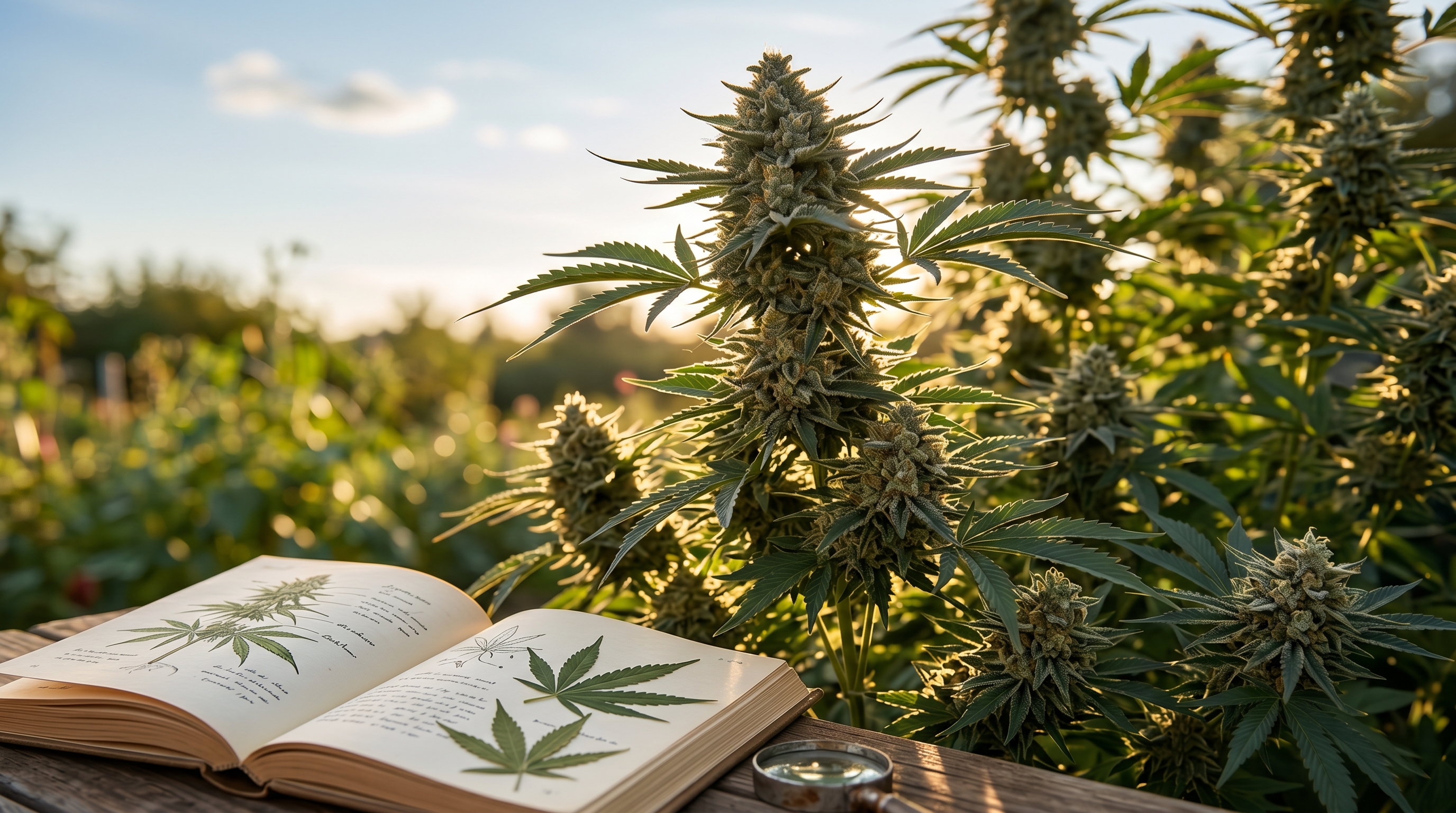
- Begin checking trichomes with a jeweler’s loupe. Clear = not ready. Milky = peak THC. Amber = more couch-lock.
October: Harvest
- Most photoperiod strains finish between October 1 and October 20 in mid-latitude zones.
- Harvest on a dry, sunny morning after several days without rain.
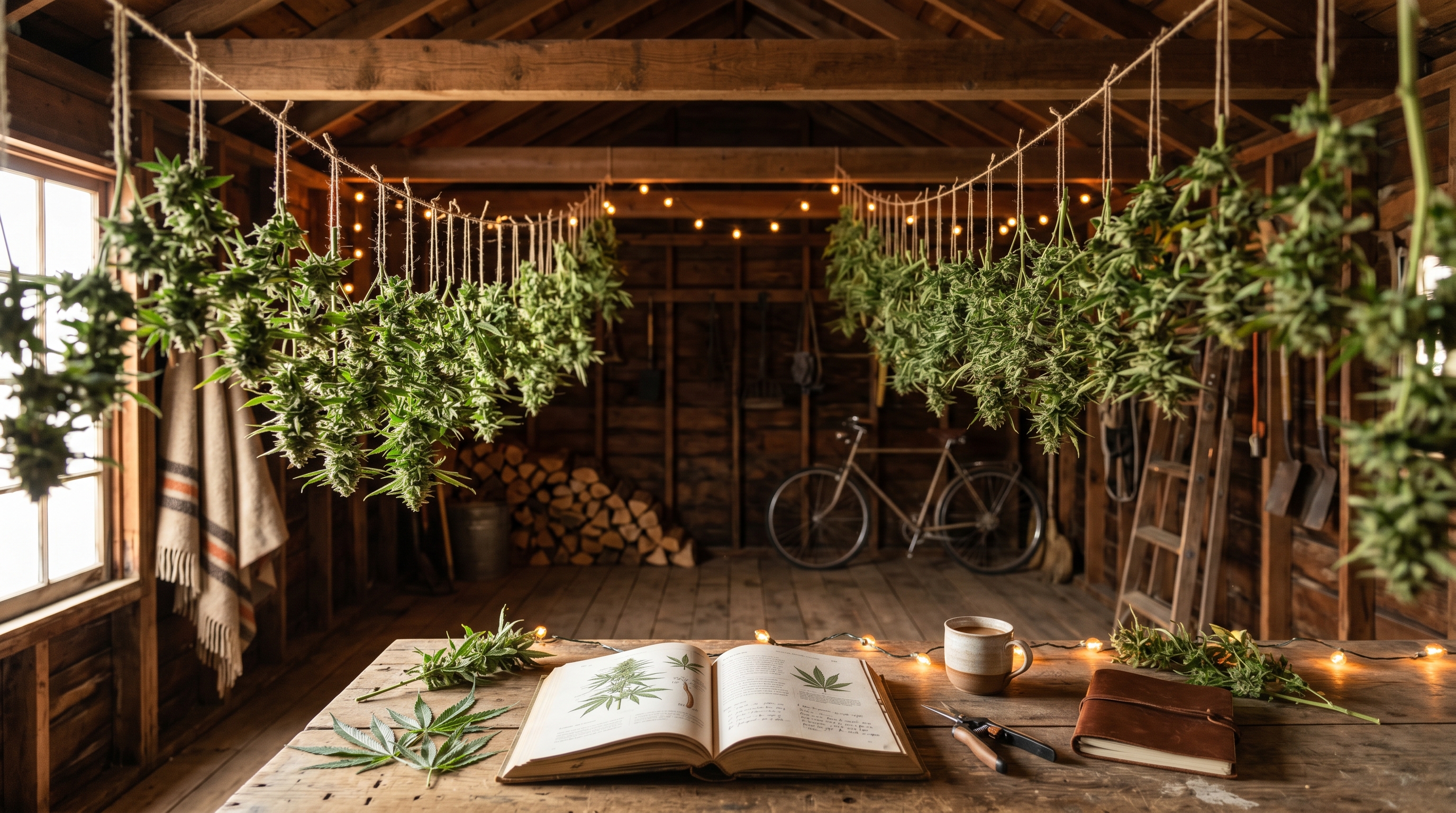
- Cut whole plants, hang in a dark, 60°F / 60% RH space for 10-14 days.
- Trim, cure in glass jars, and enjoy. Full details in our harvest guide.
For the full lifecycle context, our seed-to-harvest timeline walks through every stage with photos.
6. Common Beginner Mistakes
Every first-year grower makes at least three of these. Forewarned is forearmed.
- Overwatering. The number one killer of young cannabis plants. Lift the pot — if it’s heavy, wait. Water only when the top two inches of soil are dry. Drooping from overwatering looks identical to drooping from underwatering; weigh the pot to tell the difference.
- Underfeeding (or overfeeding). Start with half-strength nutrients. Yellow lower leaves in veg usually mean nitrogen deficiency; burnt leaf tips mean you overdid it.
- Ignoring pests until they bloom. Scout weekly. Aphids, spider mites, and caterpillars are easy to manage early, impossible to manage late. Caterpillar damage in flower invites bud rot.
- Harvesting too early. Almost every beginner harvests 7-14 days too soon because the plant “looks done.” Use a jeweler’s loupe. Wait for predominantly milky trichomes with some amber.
- Skipping the cure. Dry for 10-14 days, then cure in jars for at least two weeks (six weeks is better). Uncured bud tastes like hay and hits harshly.
- Ignoring mold until it spreads. Inspect dense buds daily in September. One spot of gray fuzz and you cut that cola off immediately.
- Forgetting the law. Plant counts, height limits, visibility requirements — know yours. Read our indoor vs outdoor comparison if your outdoor setup pushes your legal limits.
7. Where to Learn More — and Shop Smart
This guide gets you from seed to jar. To round out your setup:
- Seeds: Best cannabis seed banks 2026 — reputation, shipping discretion, germination guarantees.
- Seed types: Feminized vs autoflower vs regular.
- Lighting (for your indoor germination setup): LED grow lights 2026 buyer’s guide.
- Processing gear: once you harvest, you need a proper grinder and airtight storage to preserve terpenes. Long-term jar storage in cool dark conditions is non-negotiable.
- Indoor backup: if October weather is brutal in your zone, consider a supplemental indoor tent. Start with our home grow beginner’s guide.
- Tracking what works: once your harvest is curing, log which plants produced which effects on which terpene profile. The High IQ app makes that easy. Pair with a Balance strain for your first session to calibrate your tolerance.
Professor High’s Final Word
Outdoor cannabis is the humblest way to know this plant. You work with the sun, the soil, and a genetic lineage that traces back to landrace stock in the mountains of Central Asia and Africa. Your first season will not be perfect. It will teach you more in six months than a shelf full of dispensary purchases ever could.
Start small. One or two plants, in a legal state, within your legal plant count. Learn your microclimate. Respect your neighbors.
One last reminder: check your local laws before you germinate. The landscape is still shifting in 2026, and what’s legal in Michigan is a felony in the next state over. Know your ground.
Happy growing.
Sources
- a Pot for Pot — “When To Plant Cannabis Outside: A State By State Guide”
- Leafly — “Your Regional Guide to Growing Healthy Cannabis Plants Outdoors”
- I Love Growing Marijuana (ILGM) — “Outdoor Cannabis Grow Calendar: Month-by-Month Guide”
- Dutch Passion — “US Climates Guide for Outdoor Cannabis Growing”
- Cannabiz Media — “Which States Allow You to Grow Your Own Recreational or Medical Cannabis?”
- Marijuana Policy Project — “The Case for Allowing Home Cultivation”
- NuggMD — “How Many Plants Can You Grow in Your State?”
- Royal Queen Seeds — “Mold-Resistant Strains” overview
- Green Avenger Seeds — “Top 10 Mold-Resistant Cannabis Strains for Humid Summers”
- USDA — Plant Hardiness Zone Map (2023 revision, current through 2026)
- University of California Cooperative Extension — general horticultural guidance on frost dates and seasonal planting


