Ice Cream Cake: The Nighttime Default Budtenders Actually Trust
Ice Cream Cake sits at #12 on the popularity chart and quietly became America's default 'I just want to sleep' pick. A data-led breakdown.

Professor High
Professor High breaks down the science of cannabis so you can make smarter, more intentional decisions with your session.
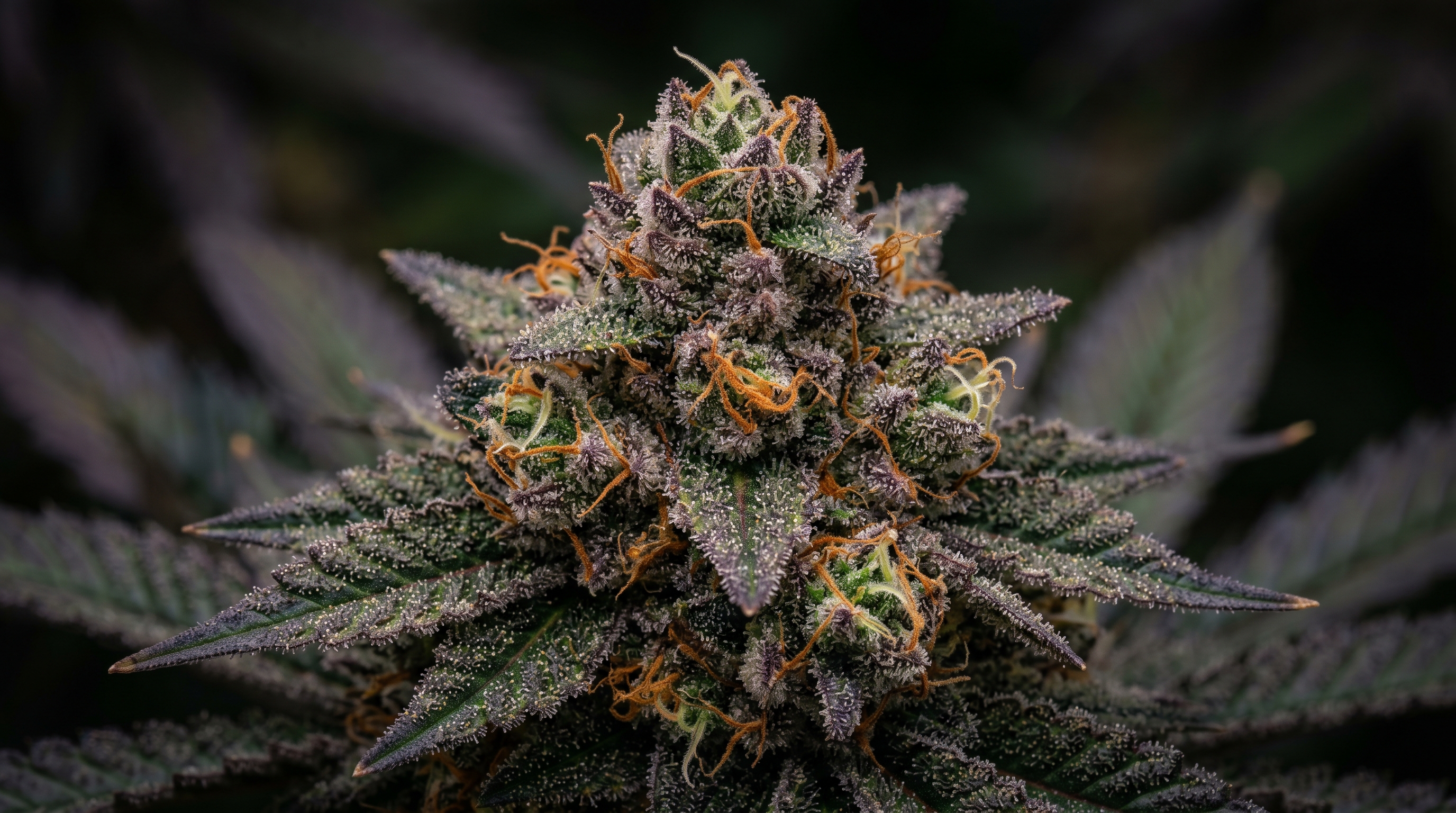
When the Customer Says “I Just Want to Sleep,” This Is What the Budtender Reaches For
Spend an hour behind a dispensary counter and you will hear the same sentence three times: “I just want something that actually puts me to sleep.” Watch which jar the experienced budtender reaches for. Nine times out of ten, it is Ice Cream Cake.
Not Granddaddy Purple — too heavy for first-timers and full of stems in most markets. Not Northern Lights — respected elder, but harder to source in premium flower. Not Bubba Kush — excellent, but a generation older than what most customers have heard of. Ice Cream Cake occupies a strange sweet spot: modern enough to carry bag appeal, sedating enough to actually deliver on “sleep,” and widely available enough that your local shop probably has a batch on shelf tonight.
It sits at popularity rank #12 across our 16,000-strain index — quietly higher than strains that get more press — and the mechanism behind its sedation is more interesting than the dessert marketing suggests.
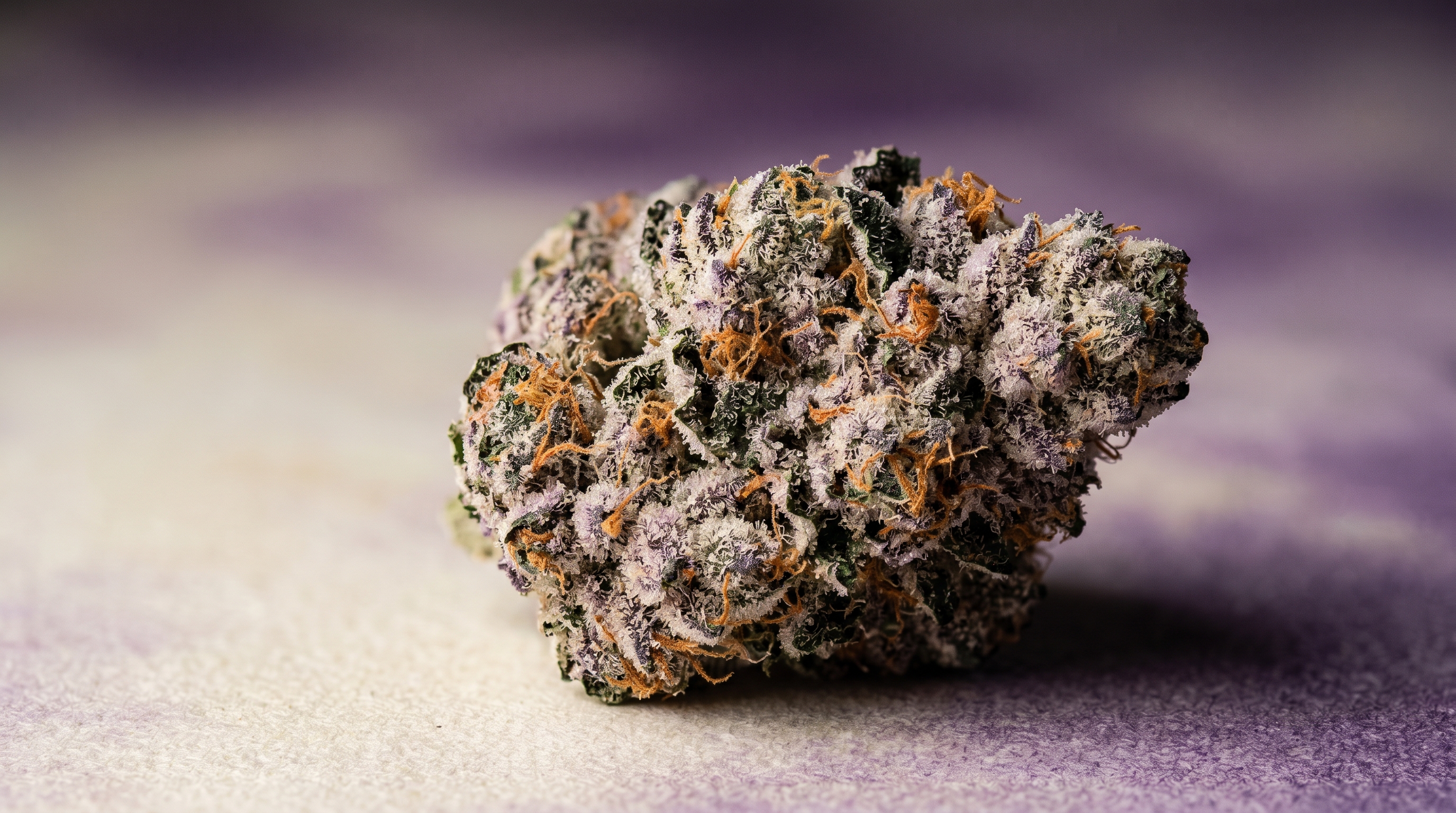
The Numbers Our Engine Sees
Before the story, the data. Here is the profile our strain intelligence pipeline scores when Ice Cream Cake runs through it, pulled from strains_v2:
- Popularity rank: #12 across the full strain universe
- THC range: 22–26% in most tested batches, occasional phenos touching 28%
- CBD: Trace (0.1%) — this is not a balanced chemotype
- Category: Indica-dominant hybrid (roughly 75/25)
- Flowering time: 60–63 days (why it is easy for modern growers to cycle)
The terpene stack
This is where the sedation story actually lives.
| Terpene | Typical share | Role |
|---|---|---|
| Caryophyllene | ~35% of terpene mass | Peppery; directly binds CB2 receptors |
| Linalool | ~15–20% | Floral; same molecule that gives lavender its calming effect |
| Limonene | ~10–15% | Citrus; mood softener |
| Humulene, myrcene, pinene | Trace to ~5% each | Supporting aromatics |
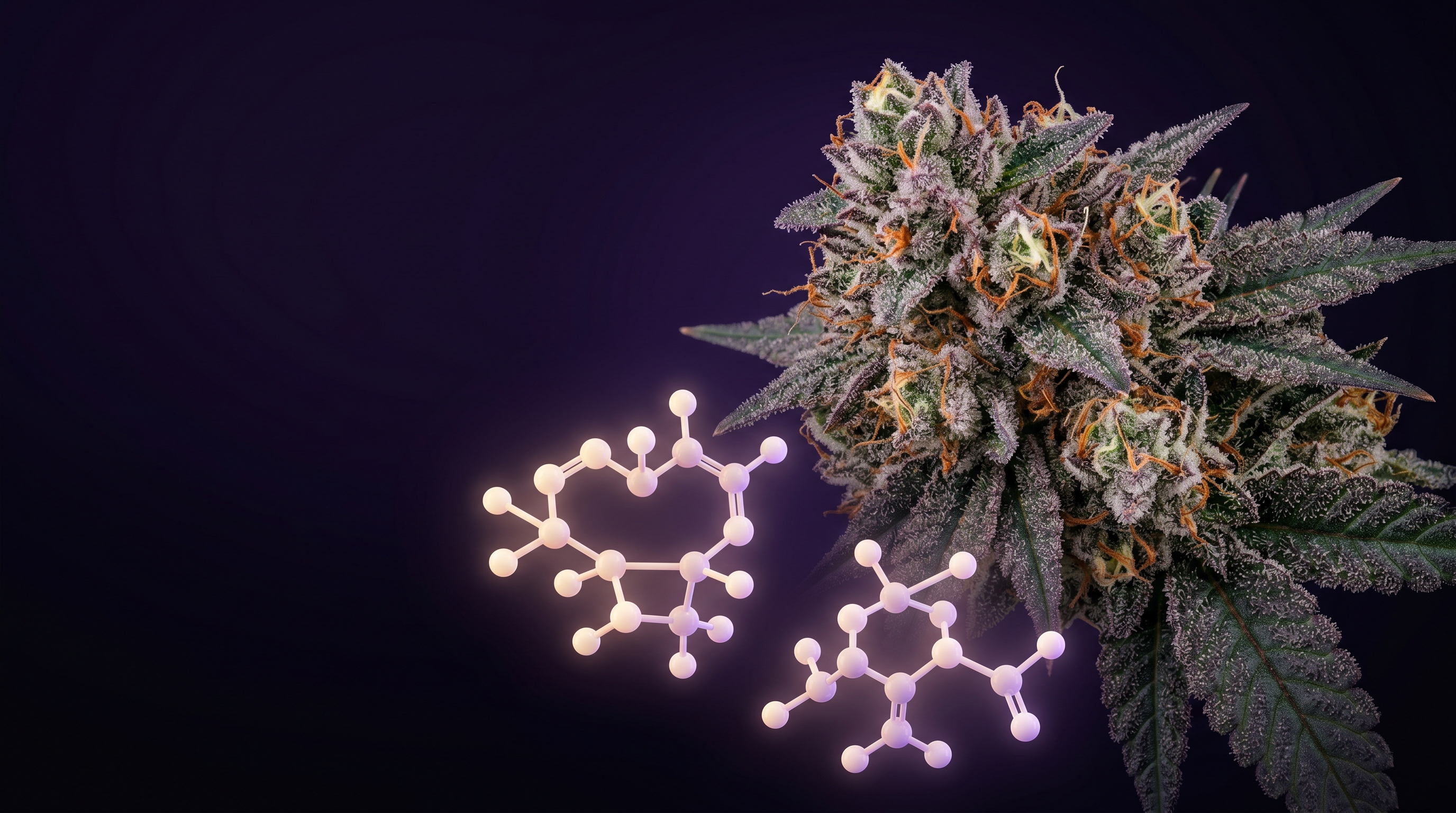
The combination that matters is the first two. Ice Cream Cake is one of the few top-20 strains where caryophyllene and linalool are both meaningfully present at the same time. Most caryophyllene-led strains are citrus or gassy; most linalool-led strains are floral and lighter. Ice Cream Cake stacks both.
Where it lands in our High Family system
Because caryophyllene sits at the top and linalool runs second, Ice Cream Cake classifies into the Relax family with a meaningful overlap into the Entourage family. The one-line summary: body-calming with a genuine floral-sedation layer on top.
If you have never used the High Families system to choose cannabis, our introduction to High Families explains why a terpene-based classification is a better predictor of how a strain will feel than indica/sativa ever was.
The Lineage: Wedding Cake x Gelato #33
Ice Cream Cake is a Seed Junky Genetics selection — JBeezy’s cross of Wedding Cake and Gelato #33, released around 2017 and becoming a clone-only favorite on the West Coast through 2018–2019 before spreading nationally.
That parentage puts it squarely in the “dessert era” genetic tree:
- Wedding Cake (Triangle Kush x Animal Mints) contributes the heavy body effect, the cream-and-vanilla aroma, and the dense resin production.
- Gelato #33 (Sunset Sherbet x Thin Mint GSC) contributes the caryophyllene dominance and the bag-appeal aesthetics.
Because Gelato #33 is a Girl Scout Cookies descendant on both sides, Ice Cream Cake is genetically part of the same Cookies-era refinement that produced Lemon Cherry Gelato, Jealousy, and Gary Payton. Our deeper dive on Gelato covers why this single phenotype hunt produced roughly 40 percent of modern top-shelf flower.
The relevant detail for sleep: Wedding Cake brings the heavy indica body load, Gelato #33 adds the caryophyllene-linalool stack that makes the sedation mechanistic rather than just vibe-based.
Why It Actually Sedates: The Two-Compound Mechanism
Most “best for sleep” posts hand-wave the science. Here is what the literature actually supports, with appropriate hedging where evidence is preclinical.
Caryophyllene: the terpene that is also a cannabinoid
In 2008, Gertsch and colleagues published a landmark paper in PNAS showing that β-caryophyllene selectively binds to the CB2 receptor with a binding affinity (Ki = 155 nM) comparable to some endogenous cannabinoids. That finding is important because it means caryophyllene is not just a smell — it is a functional CB2 agonist, the only common plant terpene known to do this.
CB2 receptors are concentrated in the peripheral immune system and play a role in inflammation, pain signaling, and — relevant here — the body-level “relaxation” sensation that precedes sleep onset. Our article on caryophyllene as the terpene that acts like a cannabinoid covers the full mechanism.
Practical read: the first wave of Ice Cream Cake’s body relief — the one you feel 5 to 15 minutes in — is likely CB2-mediated. Research suggests this is why caryophyllene-heavy strains feel different from myrcene-heavy strains even at matched THC.
Linalool: the lavender terpene, but on cannabis
Linalool is the compound responsible for lavender’s reputation as a sleep aid, and it shows up in cannabis at meaningful concentrations only in a minority of strains. A 2009 PubMed study (Buchbauer group) demonstrated that inhaled linalool induced sedation in mice without significant motor impairment. More recent reviews including a 2013 paper in Evidence-Based Complementary and Alternative Medicine link linalool to GABAergic modulation — the same neurotransmitter system targeted by benzodiazepines and most prescription sleep aids, though through a gentler mechanism.
The clinical evidence is strongest for lavender essential oil preparations. The cannabis translation is weaker — we do not have randomized trials of linalool-rich flower versus linalool-poor flower for sleep — but the pharmacology is plausible, and the subjective reports from Ice Cream Cake users align with what linalool-GABAergic theory would predict.
Our standalone article on linalool, the lavender terpene unpacks the evidence in more detail.
The stack effect
The interesting claim is not that caryophyllene sedates or that linalool sedates. It is that the two compounds targeting different systems (CB2 and GABAergic) in the same session may produce a smoother wind-down than either would alone. This is the core of the entourage effect hypothesis — the idea that cannabis is a multi-compound delivery vehicle, not a single-molecule drug. Ice Cream Cake is one of the cleaner real-world examples of the stack actually showing up in a commercial cultivar.
Who It Suits — and Who Should Try Something Else
Ice Cream Cake is the right pick if you…
- Want a modern, widely-available sleep strain rather than a heritage cultivar
- Respond well to caryophyllene-led body relief (you can check past sessions in your stash)
- Find pure-myrcene strains too heavy or too “couch-stuck”
- Want a cross-over strain that works for late-evening social wind-down and then bed
- Like dessert flavors — cream, vanilla, a touch of pepper on the exhale
Try a myrcene-heavy alternative if you…
If you have logged sessions and noticed that caryophyllene-dominant strains do not actually get you to sleep, the likely answer is that your body responds better to the classic myrcene-dominant indica archetype. In that case, consider:
- Granddaddy Purple — myrcene-led, heavier body load, the grandfather of modern purple indica
- Northern Lights — the heritage knockout strain; reliable, less flashy, deeper sedation for many users
- Bubba Kush — older, heavier, more pronounced couch-lock than Ice Cream Cake
Our myrcene, the sedating terpene behind couch-lock post explains why some people respond to myrcene-led strains and others feel almost nothing. It is real individual variation, not marketing.
For a full comparison of evening options, see our best cannabis strains for evening wind-down and best cannabis strains for deep relaxation and couch-lock.
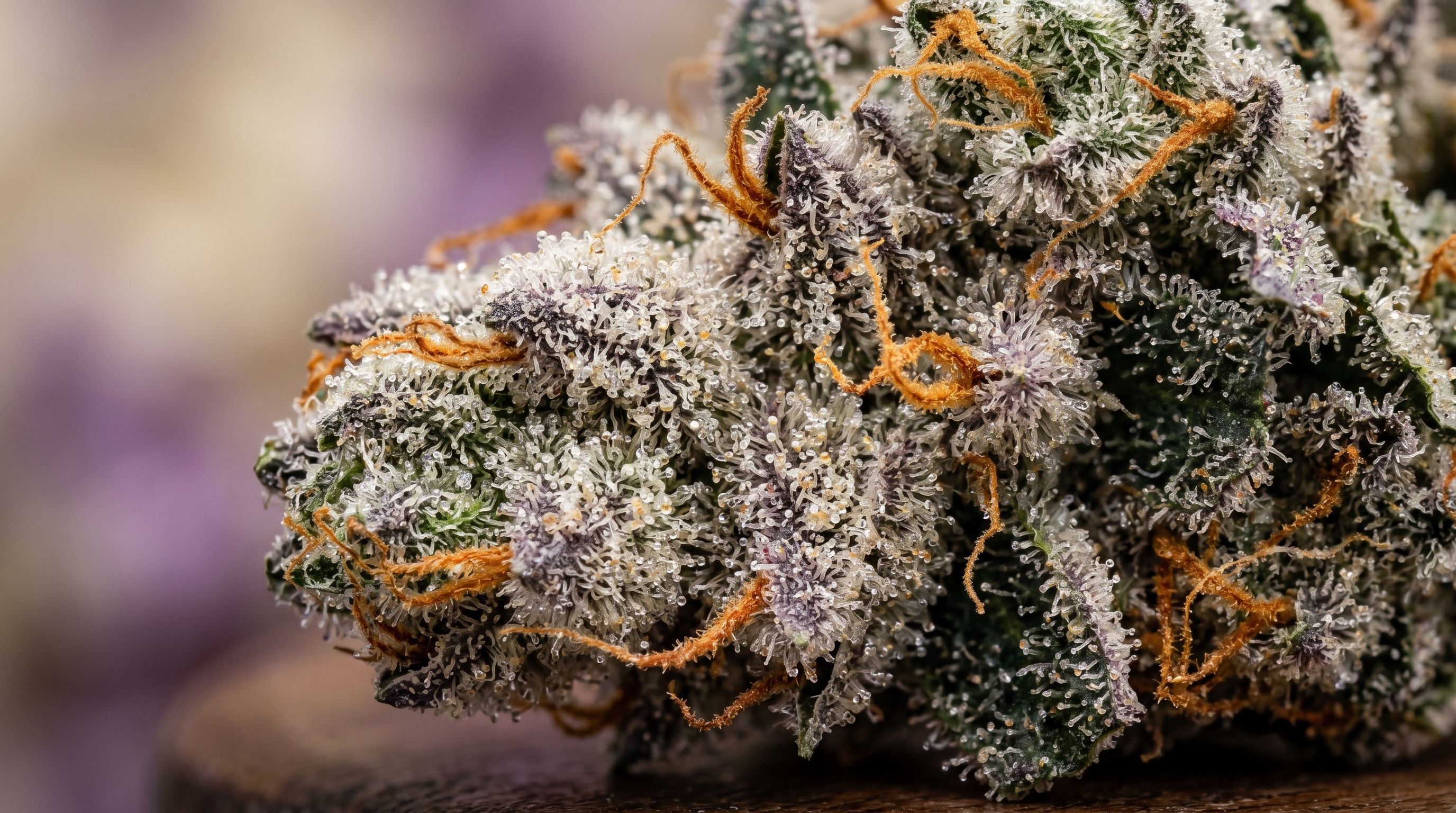
Dosing, Timing, and Honest Expectations
Two things to set straight before you try it.
This is not a sleep drug. It is cannabis flower with a favorable terpene profile. Research suggests linalool and caryophyllene may support relaxation and the wind-down phase that precedes sleep, but neither compound is a sedative in the clinical sense. If you have a diagnosed sleep disorder, talk to a clinician — this article is not a treatment plan.
Plan for a 60 to 90 minute arc. Ice Cream Cake is not a knock-you-out-in-ten-minutes strain. The typical curve is:
- 0–15 min: onset, cerebral softening, first wave of body relief (likely caryophyllene)
- 15–45 min: peak. Social wind-down zone. Many users report this as the “I could stay up and talk or I could go to bed” window
- 45–90 min: deepening body heaviness, floral-sedation layer builds (likely linalool)
- 90+ min: descent into sleep; most users report falling asleep within 15–30 minutes of the peak receding
Pair with food. Cannabis absorbs differently on a full stomach, and the wind-down arc is more predictable when you are not adding hunger to the mix. Our post on why cannabis hits differently on an empty stomach covers the lipid-solubility piece.
Dose low first. A single half-gram joint’s worth is usually enough for a naive user at 22–26% THC. If you are coming from lower-THC flower, cut that in half. The linalool-caryophyllene stack does not reward heavier dosing; it rewards matched dosing.
The Pivot: The Strain Matters Less Than How Your Body Responds to It
Here is the thing we keep saying because the data keeps proving it. Ice Cream Cake is popular because the average response to a caryophyllene-and-linalool-led, 24% THC indica-dominant hybrid is positive for sleep. Averages lie at the individual level.
Some people metabolize caryophyllene efficiently and feel CB2-mediated body relief within minutes. Others read it as mild and need myrcene to actually wind down. Some people are anxiolytic responders to linalool; others feel nothing from it and should probably be reaching for GABA-direct sleep support instead of cannabis. The only way to know which camp you belong to is to log your sessions, tag your strains with their terpene profiles, and watch your pattern emerge over 10–15 entries.
That is what the High IQ app does. When you log an Ice Cream Cake session, we record the full chemical profile from that batch, your reported effect, your context (time, activity, dose), and match it against every other session you have logged. After a handful of entries, you start to see whether you are a caryophyllene responder, a linalool responder, or someone who needs the myrcene-heavy path instead. That is a better recommendation engine than any generic “best for sleep” list, including the one you are reading.
Sources
- Gertsch J, et al. (2008). “Beta-caryophyllene is a dietary cannabinoid.” Proceedings of the National Academy of Sciences 105(26):9099–9104. PubMed
- Buchbauer G, et al. (2009). “Inhaled linalool-induced sedation in mice.” PubMed
- Koulivand PH, et al. (2013). “Lavender and the Nervous System.” Evidence-Based Complementary and Alternative Medicine. PMC3612440
- Russo EB. (2011). “Taming THC: potential cannabis synergy and phytocannabinoid-terpenoid entourage effects.” British Journal of Pharmacology 163(7):1344–1364.
- Seed Junky Genetics strain documentation and SeedFinder lineage records for Ice Cream Cake (Wedding Cake x Gelato #33).
- Internal:
strains_v2popularity index, terpene profile averages, High Family classifier (accessed 2026-04-16).


