Vegan Cannabutter: A Coconut-Cashew Butter Recipe
Make plant-based cannabutter with coconut oil and cashew butter. Decarb science, low-temp infusion, straining, and beginner-safe dosing math inside.

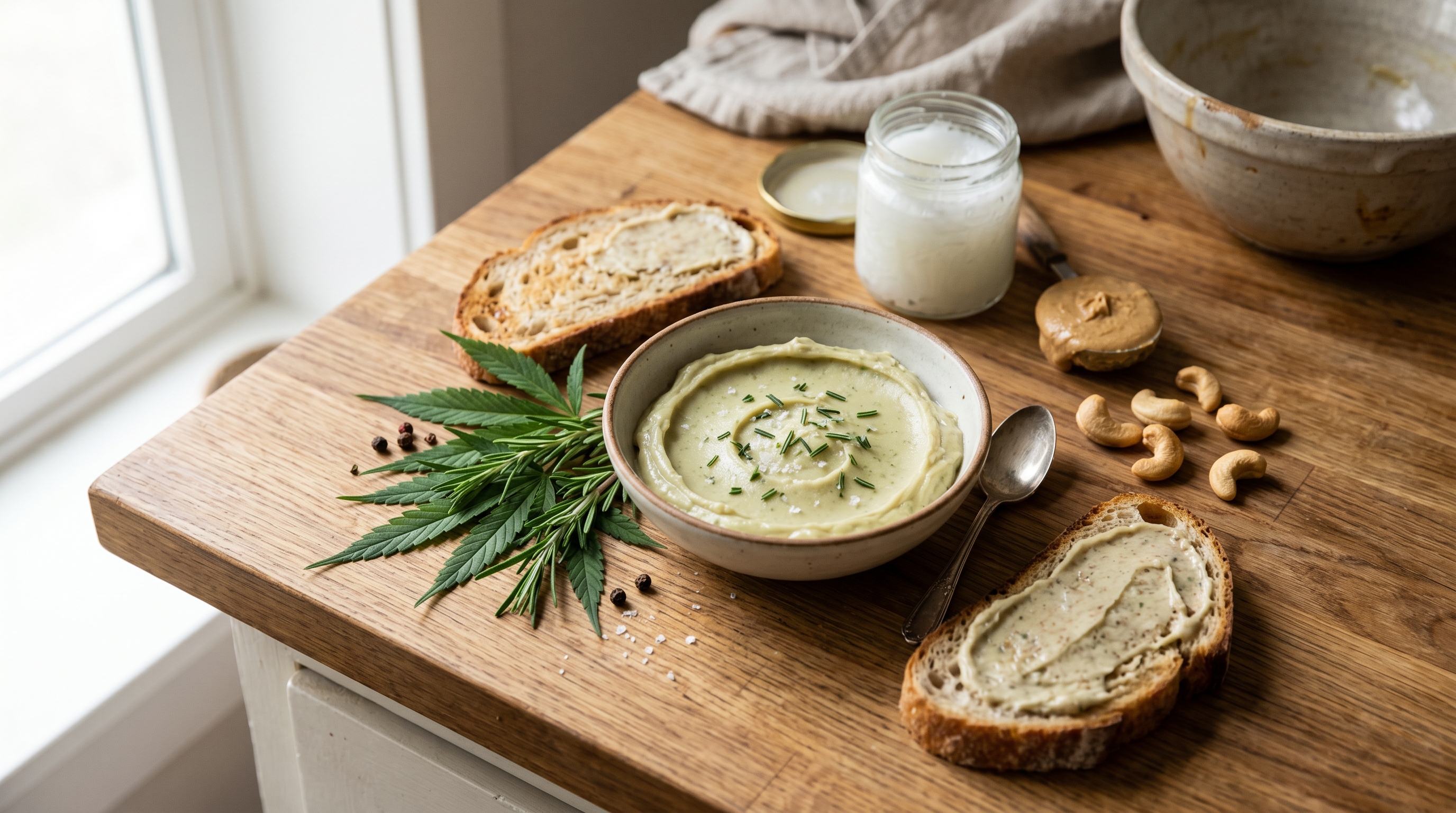
If you have ever stared at a stick of dairy butter and thought, “There has to be a plant-based way to do this,” welcome to the club. The good news is that the cannabis itself does not care whether your fat came from a cow or a coconut. Cannabinoids like THC and CBD are lipophilic — they bind to fat molecules, full stop. That single fact is the entire reason cannabutter works, and it is also the reason a thoughtfully built vegan version can match (or beat) the traditional one.
This recipe uses two carriers working as a team: refined coconut oil for raw extraction muscle, and roasted cashew butter for body, flavor, and a spreadable texture that behaves like real butter. The result is a rich, neutral-to-nutty spread you can fold into baking, smear on toast, or stir into a sauce. Let us build it the right way — starting with the chemistry, because skipping the science is exactly how people end up with weak, grassy, or unpredictable batches.
Why Coconut Oil and Cashew Butter Work So Well
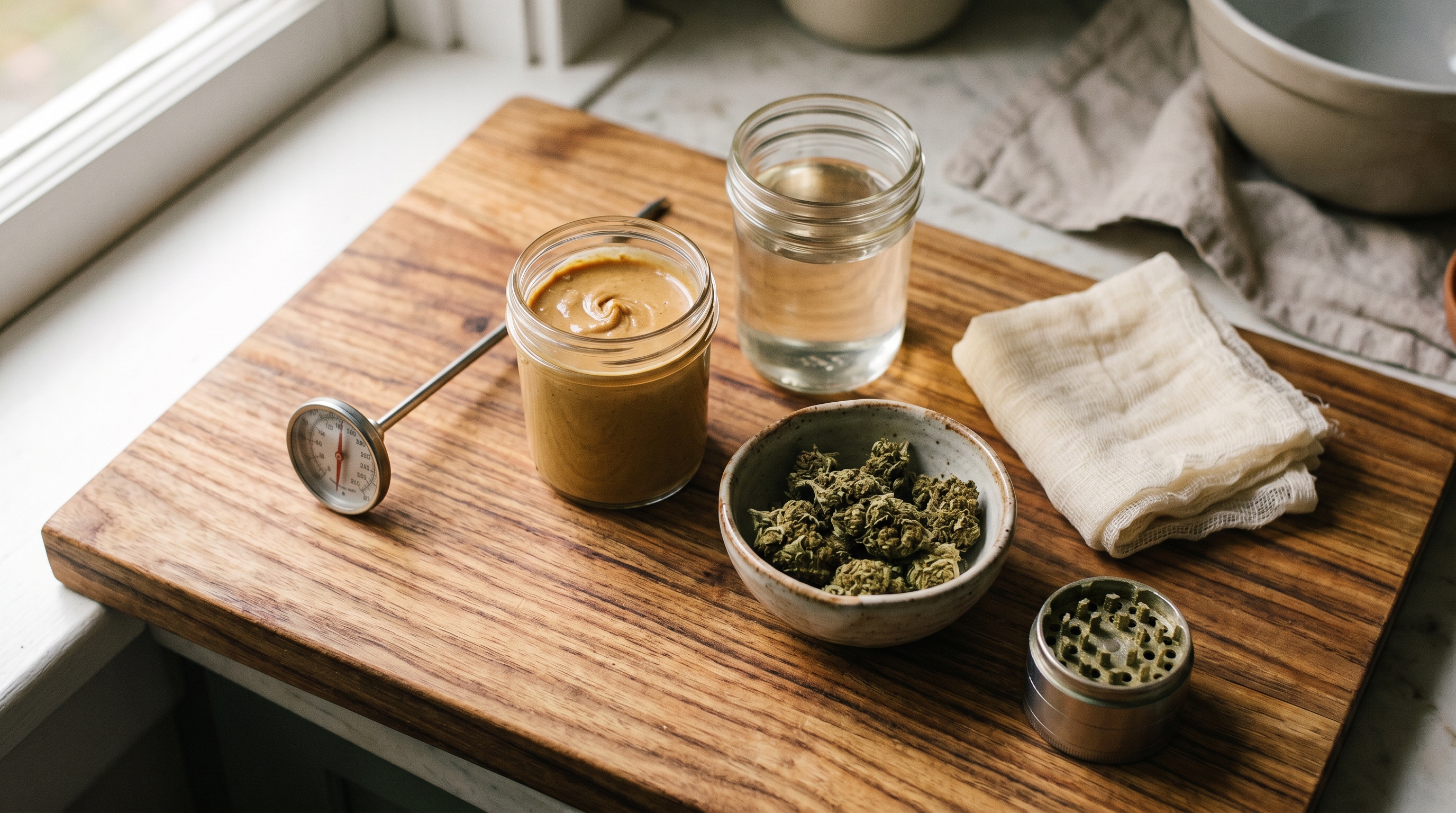
Fat-soluble compounds need fat to grab onto, and not all fats are created equal. The more saturated fat a carrier has, the more efficiently it tends to bind cannabinoids during infusion.
- Refined coconut oil is roughly 90% saturated fat — among the highest of any common cooking fat. That density gives it serious extraction power, which is why it shows up in so many edible recipes. (Choose refined if you want a neutral flavor; virgin adds a coconut note that can be lovely in sweets.)
- Cashew butter brings monounsaturated fats plus a creamy, slightly sweet body. On its own it is a weaker extractor than coconut oil, so we let coconut oil do the heavy lifting and use cashew butter to round out texture and taste.
Blended, you get a spread that is shelf-stable, allergen-friendlier than dairy (assuming no tree-nut allergy), and genuinely pleasant to eat. If you are nut-free, you can swap the cashew butter for a vegan butter stick or sunflower-seed butter — the method stays identical.
Curious which strains play nicely with food? Terpene-forward, flavorful cultivars tend to shine in edibles. A myrcene-heavy Granddaddy Purple or Northern Lights leans toward the deeply relaxing Relax High profile that many people want from a nighttime treat, while a brighter, citrusy Super Lemon Haze carries limonene that survives gentle heat and adds lift in the Uplift High direction.
Step 1: Decarboxylation (Do Not Skip This)
Raw cannabis is loaded with THCA and CBDA — the acidic precursors to THC and CBD. They are not very psychoactive in that form. To “activate” your flower, you heat it gently first, a process called decarboxylation. Skip it and your beautiful vegan butter will be mostly inert.
The sweet spot most home cooks rely on is 240°F (115°C) for 30 to 40 minutes. Lower and slower protects the volatile terpenes that give your edible its flavor and effect character; too hot and you start burning off potency and aroma.
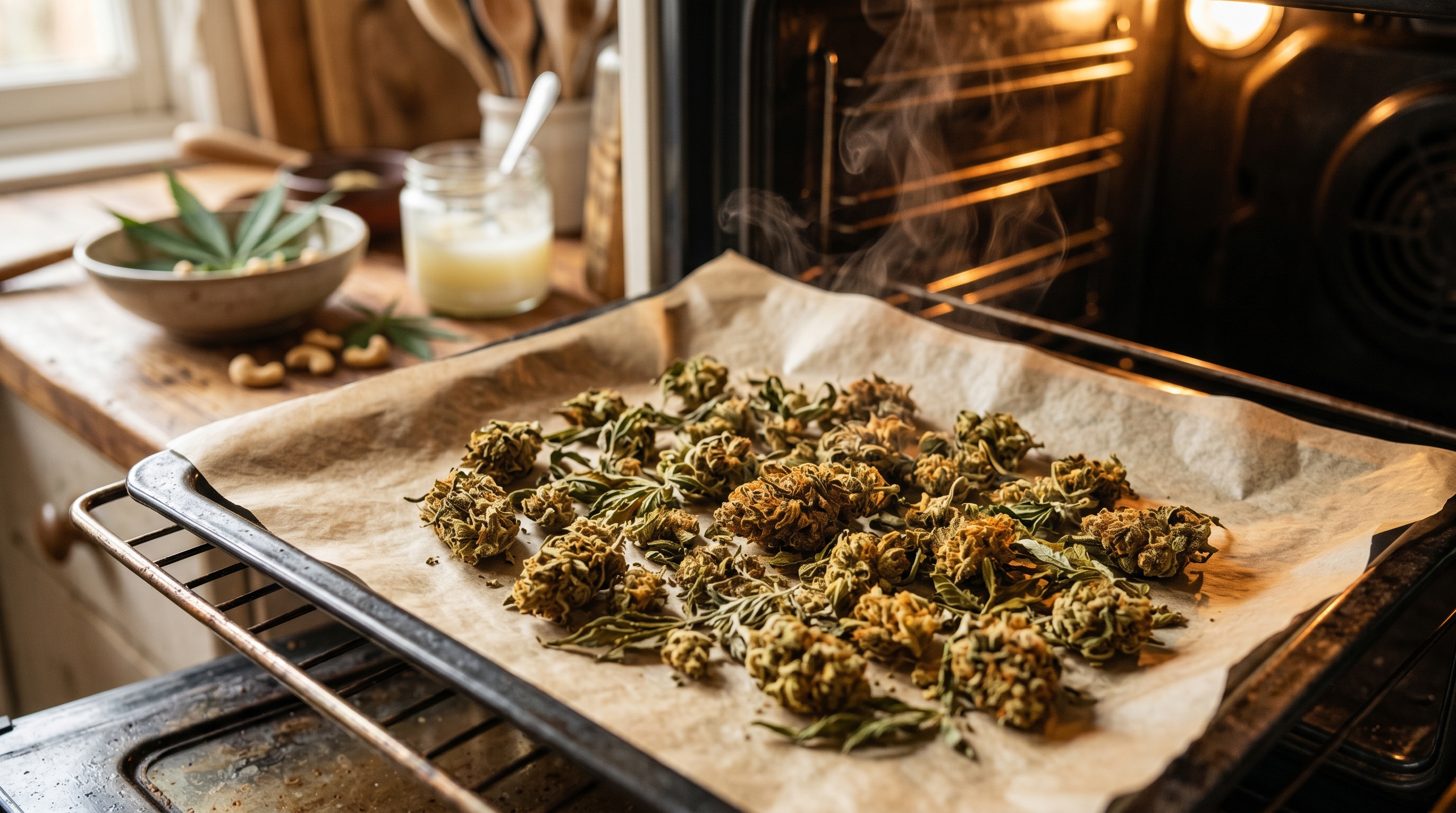
- Preheat your oven to 240°F (115°C).
- Break (do not finely grind) 7 grams of cannabis flower onto a parchment-lined baking sheet.
- Bake 30–40 minutes, gently stirring once around the halfway mark for even heating.
- Pull it when it has turned a toasty light-brown and smells fragrant. Let it cool, then break it down a bit more by hand or with a coarse grind.
A realistic decarb conversion is often cited around 85–90%, not 100%. We will factor that into the dosing math later so your expectations stay grounded.
Ingredients
- 1 cup (about 240 mL) refined coconut oil — your primary extractor
- 1/2 cup (about 120 g) creamy roasted cashew butter — for body and flavor (or vegan butter / sunflower-seed butter for nut-free)
- 7 grams decarboxylated cannabis flower (from Step 1)
- 1 cup water — buffers the heat and helps filter plant gunk (optional but recommended)
- A pinch of sunflower lecithin (optional) — may help with emulsification and even dosing
- Equipment: saucepan or double boiler, kitchen thermometer, cheesecloth or fine strainer, glass storage jar
Step 2: The Low-and-Slow Infusion
This is where patience pays off. Cannabinoids extract beautifully at low temperatures (160–200°F / 70–93°C), and they degrade when you let things scorch or boil. Never let the mixture bubble aggressively.
- In a saucepan or double boiler over low heat, melt the coconut oil and stir in the cashew butter until smooth. Add the water if using.
- Stir in your decarbed flower and the optional lecithin.
- Hold the temperature between 160°F and 200°F and let it infuse 2 to 4 hours, stirring every 20–30 minutes. Many experienced makers push to 4–6 hours for maximum extraction. Keep that thermometer honest — drifting above 200°F costs you terpenes and potency.
- Top up with a splash of water if the level drops; you want the plant material gently submerged, never frying.
The aim is a slow, steady transfer of cannabinoids into the fat — think gentle spa day, not deep fryer.
Step 3: Strain and Store
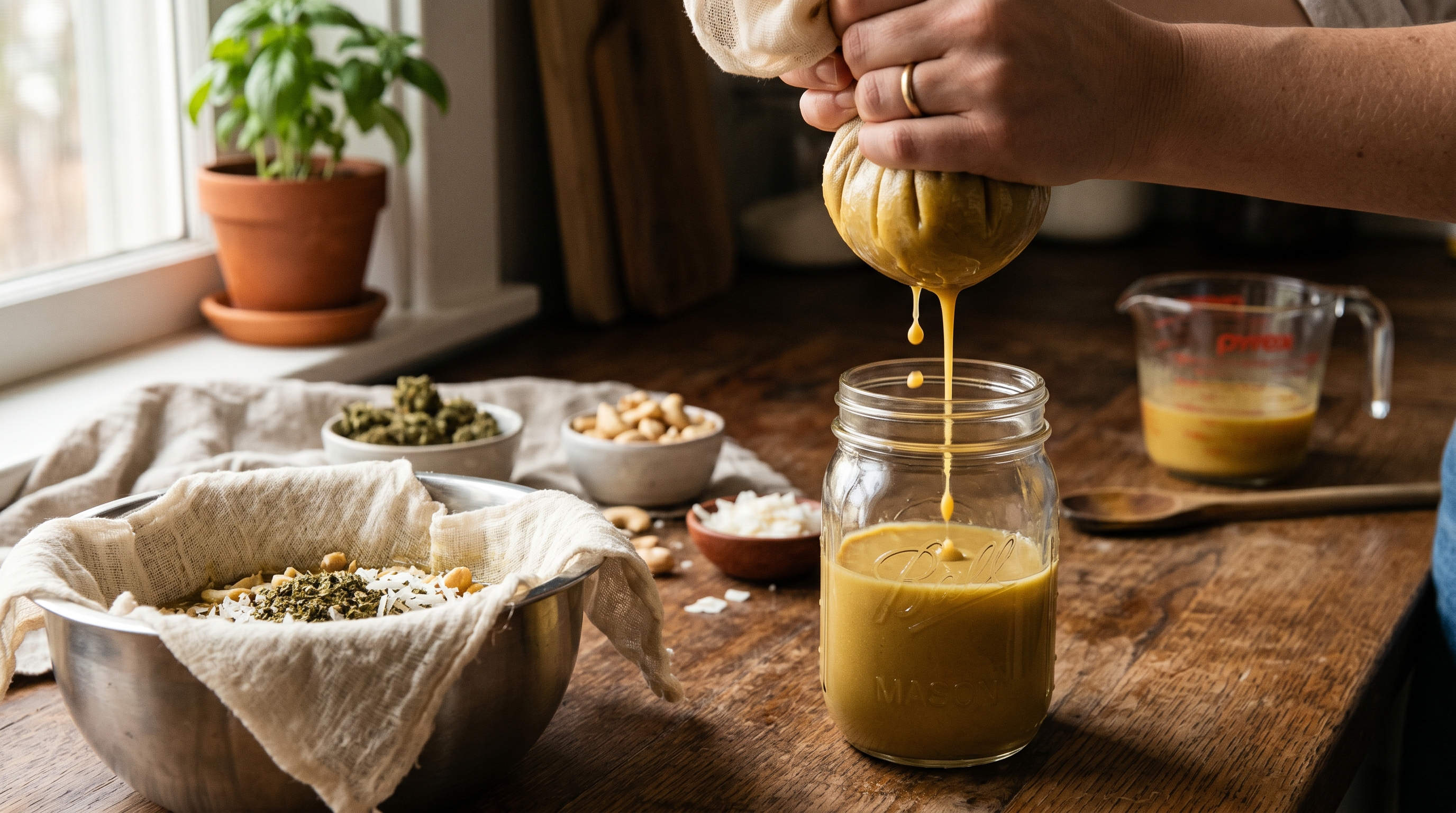
- Line a strainer with cheesecloth and set it over your storage jar.
- Carefully pour the warm mixture through. Let gravity do most of the work, then gently press or twist the cheesecloth to release the last of the infused fat. (Pressing hard squeezes in more chlorophyll and a greener taste — your call on the flavor-versus-yield tradeoff.)
- If you used water, refrigerate the jar. The infused fat will solidify on top and you can lift it off, leaving the water (and a lot of plant residue) behind.
- Store in an airtight container. Kept cool and dark, it generally holds well for several weeks in the fridge or longer in the freezer. For a deeper dive, see our edibles shelf-life and storage guide.
Dosing: The Math (and Why “Start Low, Go Slow” Is Non-Negotiable)
Here is the honest truth about home edibles: you are estimating, not measuring. Without lab testing you cannot know exact potency, so treat these numbers as a careful ballpark and always round your serving down.
A workable estimation looks like this:
- Start with your flower’s THC percentage. Say your 7 g flower tests at 20% THC. That is
7,000 mg × 0.20 = 1,400 mgof potential THC. - Apply a realistic decarb efficiency (~88%):
1,400 × 0.88 ≈ 1,232 mg. - Apply an infusion/extraction efficiency (a conservative 60–80%). At 70%:
1,232 × 0.70 ≈ 862 mgof THC across the whole batch. - Divide by servings. If this batch becomes 24 servings, that is roughly 36 mg per serving — strong. Many people would split each of those again.
A common shorthand formula is P = 10 × (G × S) ÷ N, where G is grams of flower, S is the THC percentage, and N is number of servings, giving P in mg per serving. Our deeper edible dosing math for home cooks walks through every step.
Dosing note — please read. Beginners are widely advised to start around 2.5–5 mg of THC (some start even lower, at 1–2.5 mg). Edibles are processed differently than smoking: your liver converts THC into 11-hydroxy-THC, which can feel stronger and last longer, and effects often take 30 minutes to 2 hours to arrive. Wait at least two full hours before considering more — the two-hour rule exists because impatience is how people overdo it. None of this is medical advice; tolerance, body chemistry, and what you have eaten all matter, and you should talk to a healthcare professional about your situation. If you want fast, even dosing instead, water-soluble and fast-acting formats behave differently from fat-based edibles.
Putting Your Vegan Cannabutter to Work
Because it is fat at its core, this spread slots into almost anything dairy butter would. Use it in cannabis-infused banana bread, fold it into a batch of no-box-mix brownies, swirl it into chewy caramels, or stir a small amount into your morning routine with these coffee and tea microdose ideas. For savory cooking, it is a natural in a marinara sauce or melted over warm bread.
Strain choice shapes the experience as much as dose. A caryophyllene-rich cultivar like GMO Cookies leans toward the body-focused Relief High, while a balanced, easygoing pick like Blue Dream or Wedding Cake tends to suit people who want something even-keeled. If you are chasing a specific feeling — say relaxed, sleepy, or happy — match your flower’s terpene profile to that goal. A linalool-forward strain like Do-Si-Dos or a pinene-bright Jack Herer will steer the final edible in noticeably different directions.
This is exactly the kind of thing the High IQ app is built to help you notice. Two people can eat the same dose of the same batch and feel completely different — not because anyone did the recipe wrong, but because your body responds to its own terpene-and-cannabinoid math. Logging what you made, what you took, and how it actually landed turns a fuzzy guess into a personal pattern you can trust. Track what works, and your next batch gets smarter.
Key Takeaways
Vegan cannabutter is not a compromise. It is a chemistry-honest swap. Coconut oil’s saturated-fat density does the extracting. Cashew butter makes it delicious. Decarb at 240°F unlocks the good stuff, and a patient 160–200°F infusion preserves it. Then you respect the dose: estimate carefully, start low, go slow, and wait the two hours.
Do that, and your plant-based kitchen can produce edibles every bit as good as the dairy version. Arguably better — because this time, you understood every step.
Sources
- HowToEdibles — Vegan Cannabis Edibles: A Complete Guide to Plant-Based Infusions
- Emily Kyle Nutrition — Easy Cannabis Coconut Oil Recipe
- Veriheal — Infuse Anything With This Simple Cannabis Coconut Oil Recipe
- Green Rush — Cannabis Cooking Temperature Guide: The Science of Decarboxylation and Infusion
- Leafly — Edible Dosing for Beginners (with dosage chart by milligrams)
- HowToEdibles — Edible Dosage Calculator — Calculate THC mg Per Serving


