Cannabis Marinara Sauce: Infused Italian Classic
Make cannabis-infused marinara at home. Learn decarbing, infusing olive oil, low-simmer technique, and start-low-go-slow per-serving dosing math.

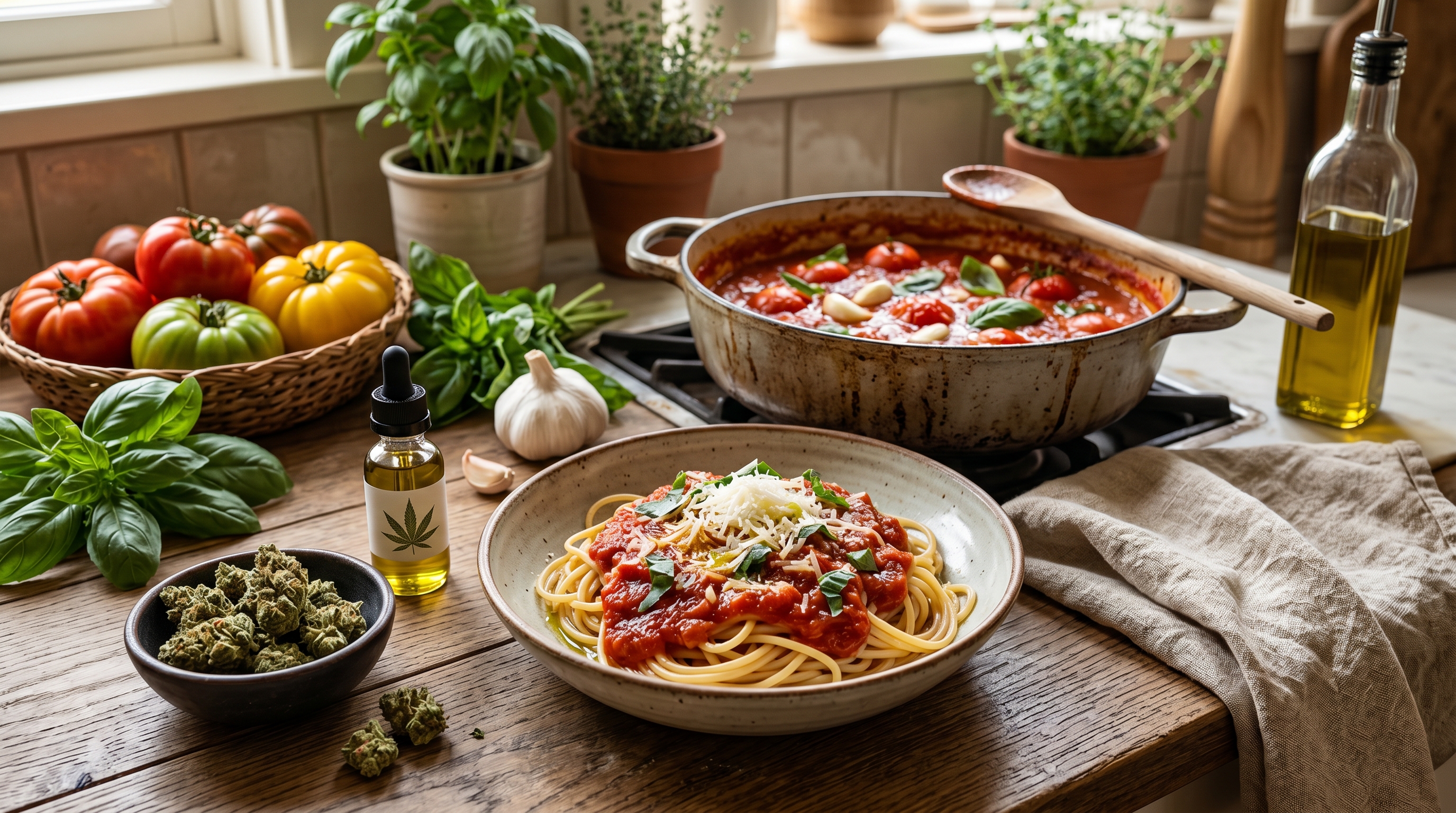
There is a reason your nose perks up when a pot of marinara hits a low simmer. Garlic, sweet tomato, and good olive oil are some of the loudest, most welcoming smells in any kitchen. It turns out those same big flavors make marinara one of the friendliest places to put a cannabis infusion. The sauce does the heavy lifting of hiding the grassy, herbal notes that scare people off other edibles.
In this guide I will walk you through making a real, slow-simmered cannabis marinara that tastes like dinner first and an edible second. We will cover why savory sauces hide cannabis so well, the gentle temperatures that protect your potency, and the per-serving dosing math that keeps a fun pasta night from turning into a long, regrettable one. As always with edibles, the rule is start low and go slow.
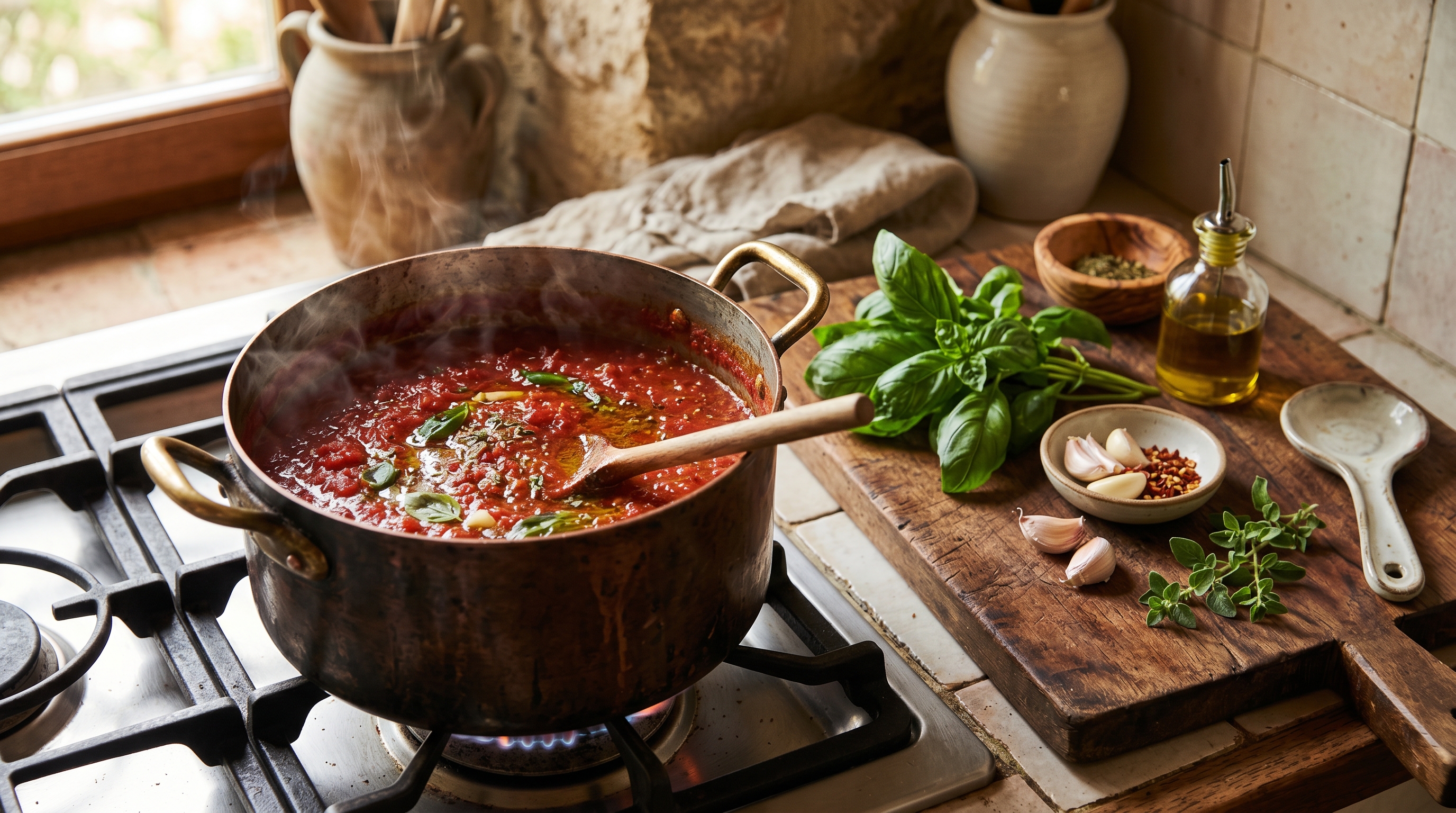
Why Savory Infusions Hide Cannabis So Well
If your first homemade edible was a “weedy” brownie, you already know cannabis has a strong, vegetal flavor that can dominate sweet recipes. Marinara solves this in two ways.
First, tomatoes are loaded with glutamates, the same savory umami compounds that make parmesan and aged meats taste so satisfying. Layer in caramelized onion, plenty of garlic, and aromatic herbs like oregano and basil, and you have a flavor profile that is loud enough to absorb the herbal edge of cannabis-infused olive oil. The infusion reads as “another green note” rather than a distraction.
Second, marinara already wants fat. A good sauce gets its silky body from olive oil, so swapping in some cannabis-infused olive oil feels completely natural. You are not forcing cannabis into a recipe where it does not belong. For the full flavor-masking playbook, see our guide on how to make cannabis edibles without the weedy taste.
The same idea is why savory dishes are quietly taking over the infused-cooking world. Restaurant chefs lean on bold, fatty, umami-rich plates for exactly this reason, as we cover in how top chefs are elevating edibles. And if you want to pick flower that actually tastes good in food, start with our roundup of the best strains for cooking and culinary creativity.
This is the same logic that makes savory cooking the entry point so many home cooks prefer. If you are brand new to the kitchen side of cannabis, start with the fundamentals in Cannabis Cooking 101 before you scale up a big batch.
Fat Is the Whole Point: Why Cannabinoids Need Oil
THC and CBD are fat-soluble, not water-soluble. That single fact explains almost every choice in this recipe. Cannabinoids will not meaningfully dissolve into plain water or broth, but they bind readily to fats like olive oil. That is why we infuse the oil first and build the sauce around it, rather than tossing ground flower into the pot and hoping for the best.
Fat also matters on the eating side. Research suggests that taking edibles with a meal that contains fat can increase how much THC your body absorbs compared to taking it on an empty stomach. A pasta dinner with olive oil, and maybe a little parmesan, is a naturally fat-friendly delivery vehicle. That is a feature, but it is also a reminder that a generous, oily plate may hit a touch harder than the same dose eaten dry, and quite different from eating on an empty stomach. If you want a primer on choosing an oil versus working from raw flower, our explainer on cannabis oil vs flower is a good companion read.
Decarb First: Activating Your Cannabis
Raw cannabis flower is full of THCA, the non-intoxicating acid form of THC. To feel anything, you have to convert THCA into THC through gentle heat, a process called decarboxylation. Skip this step and you will end up with very mild sauce no matter how much flower you use. We break down the chemistry in detail in decarboxylation explained.
The widely tested sweet spot is 240°F (115°C) for 30 to 40 minutes. At that range you convert roughly 85 to 90 percent of THCA to THC while keeping degradation low. Go much hotter, above 300°F, and you start burning off THC and the terpenes that give each strain its character.
To decarb:
- Preheat your oven to 240°F (115°C).
- Break up 7 grams of flower by hand. Avoid grinding it to powder, which can scorch.
- Spread it on a parchment-lined baking sheet.
- Bake 30 to 40 minutes until it is golden-brown, dry, and crumbly.
- Let it cool before infusing.
Infusing the Olive Oil
With your flower activated, infuse it into olive oil at a low temperature. The goal is to coax cannabinoids into the fat without cooking them off.
To make canna-oil:
- Combine your decarbed flower with 1 cup of olive oil in a small saucepan or double boiler.
- Hold the oil at 160°F to 200°F (71°C to 93°C) for 2 to 3 hours. Never let it boil. A clip-on thermometer is your best friend here.
- Stir occasionally.
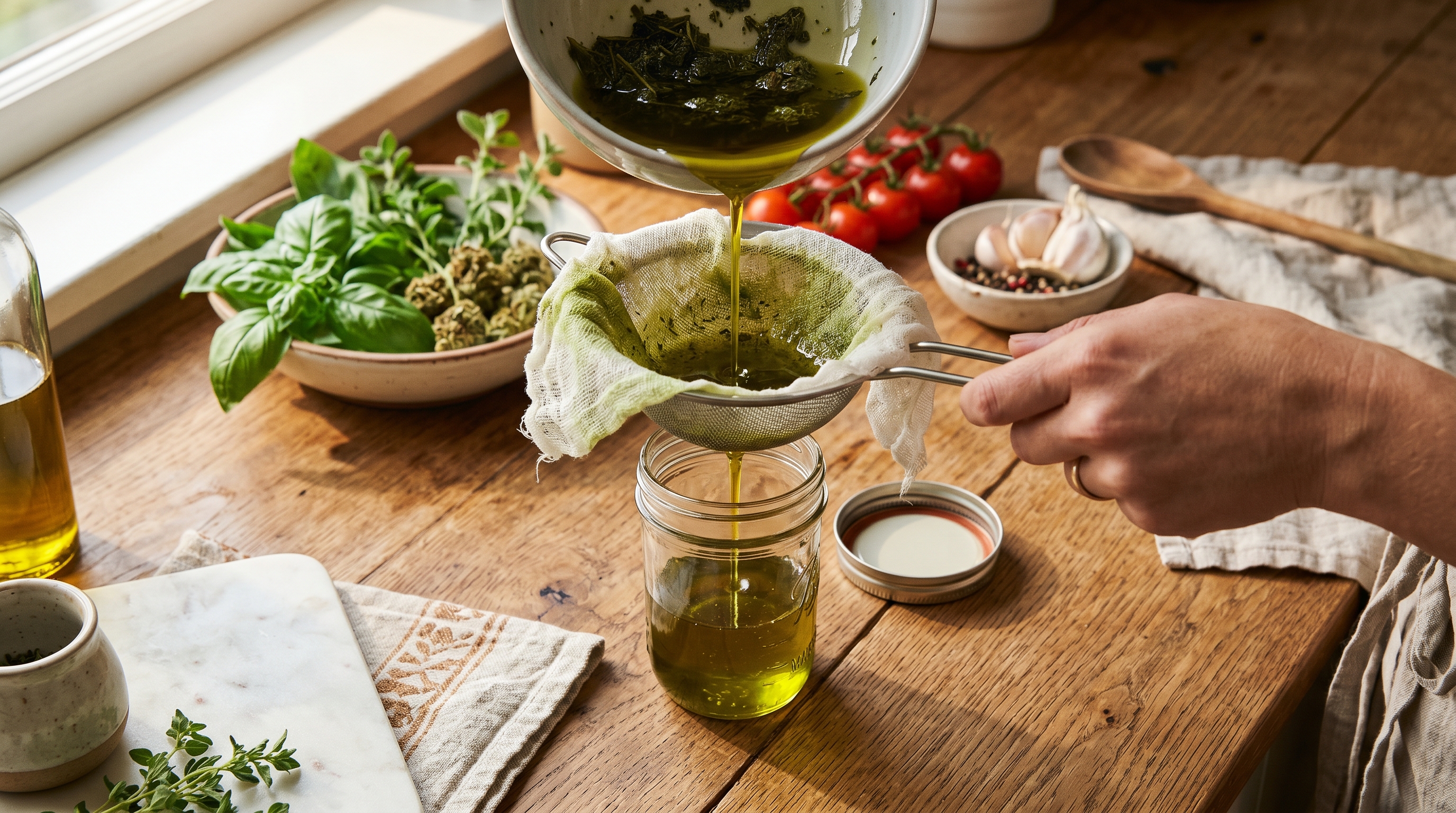
- Strain through cheesecloth into a clean jar. Squeeze gently, then discard the spent plant material.
Most extraction happens in the first two hours, so longer is not necessarily stronger. If you would rather use butter as your fat, the technique is nearly identical and covered in our cannabutter foundation guide. Both work beautifully in marinara, though olive oil keeps it more authentically Italian.
Ingredients and Equipment
Equipment
- Heavy-bottomed pot or Dutch oven
- Wooden spoon
- A clip-on kitchen thermometer (for decarb and infusion)
- Cheesecloth and a fine strainer
Sauce ingredients (makes about 4 cups, 8 half-cup servings)
- 2 to 3 tablespoons cannabis-infused olive oil (your dose lever; more on this below)
- 2 tablespoons regular olive oil for sautéing
- 1 medium onion, finely diced
- 4 cloves garlic, minced
- 1 (28 oz) can crushed or whole San Marzano tomatoes
- 2 tablespoons tomato paste
- 1 teaspoon dried oregano
- 1 teaspoon sugar (balances acidity)
- 1 bay leaf
- Fresh basil, salt, and black pepper to taste
Step by Step: Building a Low-Simmer Marinara
The single most important rule for cannabis marinara is low and slow. THC begins to degrade meaningfully above roughly 300°F to 320°F, and your terpenes evaporate even sooner. A gentle simmer keeps your sauce well under that line and protects the potency you worked to build.
- Sauté the aromatics. Warm the regular (non-infused) olive oil in your pot over medium-low heat. Add the onion and sweat it until soft and translucent, about 5 to 7 minutes. Add the garlic and cook one more minute until fragrant. Do not let the garlic brown.
- Bloom the paste. Stir in the tomato paste and cook 2 minutes to deepen the flavor.
- Add tomatoes and seasoning. Pour in the crushed tomatoes, then add oregano, sugar, bay leaf, salt, and pepper. Stir to combine.
- Simmer gently. Bring the sauce to a bare simmer, then drop the heat to low. You want lazy bubbles, never a rolling boil. Partially cover and let it reduce for 45 minutes to 3 hours, stirring occasionally. Longer simmering deepens flavor.
- Infuse off the heat. This is the key move. Remove the pot from the burner, fish out the bay leaf, and let the sauce stop boiling for a moment. Stir in your cannabis-infused olive oil and mix thoroughly. Adding the infused oil at the very end keeps the THC away from peak heat and protects your dose.
- Finish. Tear in fresh basil and adjust the salt. Stir well one more time so the cannabinoids distribute evenly.
That last point matters more than people expect. Uneven stirring is one of the most common reasons one plate of pasta hits like a truck and the next barely registers. Mix like you mean it.
The Dosing Math (Start Low, Go Slow)
This is the part to read twice. Edibles are notoriously easy to overdo because the effects can take 30 minutes to 2 hours to arrive, and they hit harder than smoking thanks to a liver metabolite called 11-hydroxy-THC. We explain that effect in why edibles hit harder, and the patience strategy in the 2-hour rule for beginners.
Here is a realistic, conservative estimate using 7 grams of 20 percent THC flower infused into 1 cup of olive oil:
- Raw THC potential: 7 g × 20% × 1000 = 7,000 mg × 0.20 = roughly 1,400 mg
- After decarb (about 88% conversion): 1,400 × 0.88 = about 1,232 mg
- After infusion (about 60 to 70% transfers into the oil): 1,232 × 0.65 = about 800 mg in your full cup of canna-oil
That cup holds 16 tablespoons, so each tablespoon carries roughly 50 mg THC.
Now the recipe part. If you use 2 tablespoons of that canna-oil in a sauce that yields 8 servings:
- 2 tbsp × 50 mg = 100 mg total in the batch
- 100 mg ÷ 8 servings = about 12.5 mg THC per half-cup serving
That is a moderate-to-strong dose. For beginners or mixed company, aim much lower. Cut the infused oil to 1 tablespoon (about 6 mg per serving), or replace some of the canna-oil with regular olive oil to dial it down further. A common, sensible target is 2.5 to 5 mg per serving for newcomers.
Treat every number here as an estimate, not a lab result. Starting flower potency, your decarb, infusion efficiency, and serving size all swing the math. The honest move on a first batch is to eat one modest serving, then wait two full hours before deciding whether to have more. For a deeper walkthrough of these calculations, see our edible dosing math for home cooks and the beginner’s dosing chart. Once you know your baseline, our guide on when to increase your dose (and when not to) helps you scale up safely on the next batch.
Serving and Pairings
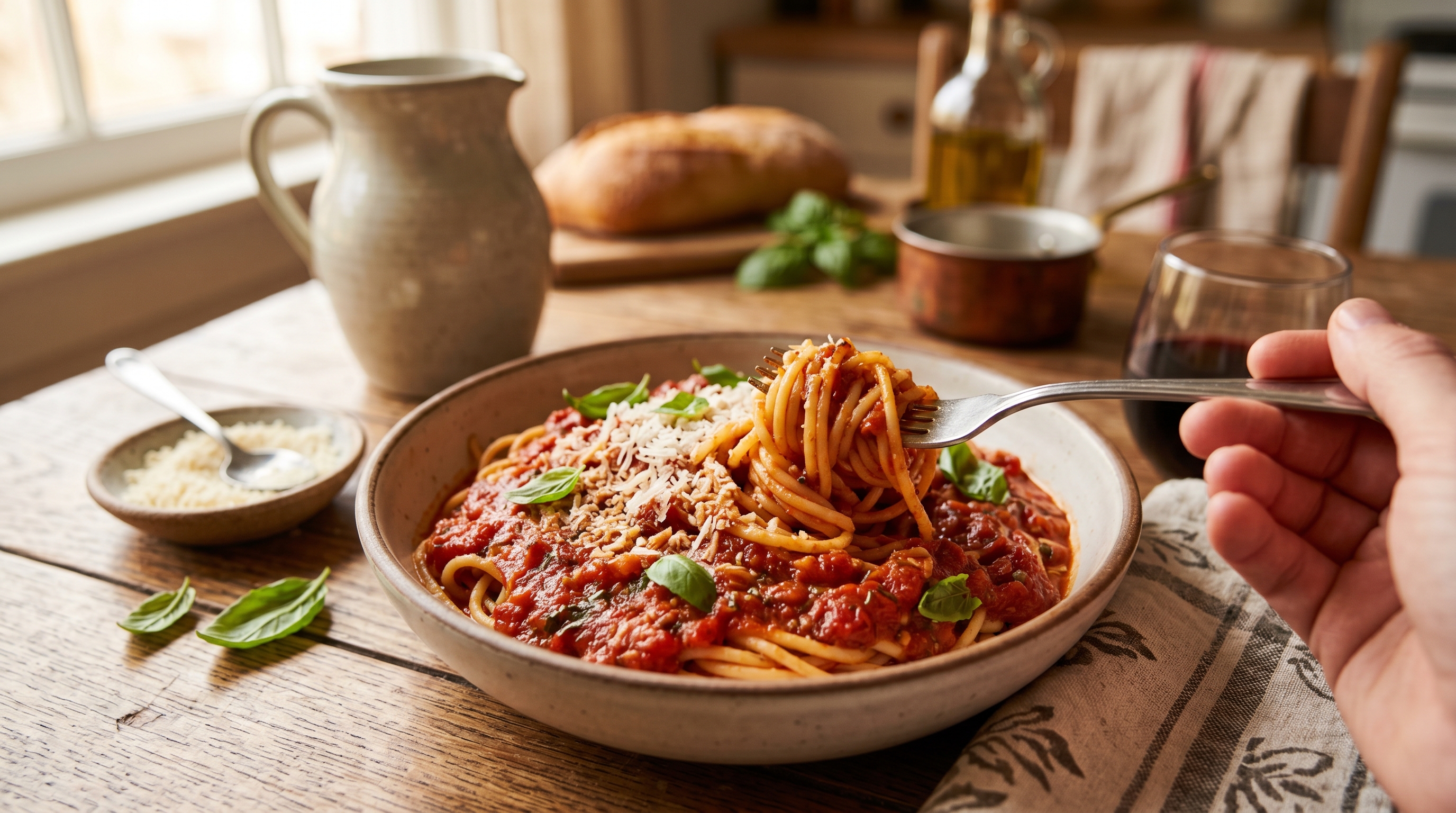
This sauce is endlessly flexible. Toss it with spaghetti or penne, layer it into lasagna, spoon it over baked ziti, or use it as a pizza base or a dip for garlic bread. Garnish with fresh basil and, if you like, a little parmesan, which adds both flavor and a touch more fat for absorption.
A relaxed pasta night also pairs naturally with other homemade infusions. Round out the menu with infused honey drizzled on dessert, or a low-dose infused beverage to sip while the sauce simmers. If you would rather keep precise control over portions, pre-dosed gummies are an easy way to top up without re-dosing the whole table. An infused dinner for two also makes a memorable cannabis date night.
A few serving notes for an infused dinner:
- Portion deliberately. Pre-measure servings so nobody accidentally ladles a double dose.
- Tell your guests. Always disclose that a dish is infused, and share the estimated per-serving milligrams.
- Keep non-infused sauce on hand. Make a regular batch too so seconds do not mean a second dose.
- Pair it down, not up. If you are tracking what works for you, a calm strain from a relaxing High Family often suits a heavy pasta dinner. The High IQ app can help you log how a given strain and dose actually felt afterward. And expect the munchies to make a second helping awfully tempting, so portion before, not during, dinner.
Storage
Treat infused marinara like any other fresh tomato sauce, with one extra reminder: label it clearly so it never gets mistaken for the regular jar.
- Refrigerator: Store in an airtight container for 4 to 5 days.
- Freezer: Freeze in portioned containers for up to 6 months. Pre-portioning by serving makes dosing effortless later.
- Label everything. Write the date and the estimated milligrams per serving directly on the container.
- Trust your nose. If it ever smells off or sour, throw it out. Good cannabis storage habits start with your flower and carry right through to the finished sauce.
Pro Tips
- Use a thermometer twice: once at the 240°F decarb and again to hold your oil at 160 to 200°F. Guessing is how potency gets lost.
- Add infused oil last, off the heat. This protects THC from the hottest part of cooking.
- Stir thoroughly so the dose is even across every serving.
- First batch? Underdose on purpose. Use half canna-oil and half regular oil, then adjust up next time.
- Quality flower makes quality sauce. Cheap, harsh material can carry more of that vegetal taste into the pot.
Frequently Asked Questions
Can I just put ground weed straight into the sauce? Not effectively. THC needs heat to activate (decarb) and fat to dissolve into. Raw flower in watery tomato sauce gives you grassy texture and very little effect. Infuse oil first.
Why add the cannabis oil at the end instead of cooking with it? Heat above roughly 300°F degrades THC and boils off terpenes. A long, hot simmer with the infused oil in it can quietly weaken your sauce. Stirring it in off the heat preserves potency and flavor.
How long until I feel it? Edibles typically take 30 minutes to 2 hours to kick in and can last 6 to 8 hours. That delay is exactly why you wait before eating more.
Can I use CBD oil instead of THC for a non-intoxicating version? Yes. An infusion made with high-CBD, low-THC flower lets you enjoy the ritual and flavor without a strong head change. The cooking technique is identical.
Does the sauce smell like cannabis while it cooks? A little, especially right when you add the oil. The garlic, onion, and tomato mostly cover it, which is the whole reason marinara is such a forgiving recipe.
Sources
- Green Rush News. “Cooking With Cannabis: The Complete Science of Decarboxylation, Infusion, and Dosing.” https://greenrushnews.com/articles/cannabis-cooking-recipes-basics/
- Green Rush News. “Cannabis Cooking Temperature Guide: The Science of Decarboxylation and Infusion.” https://greenrushnews.com/articles/cannabis-cooking-temperature-guide/
- Herb. “How to Make Easy Cannabis-Infused Edibles at Home.” https://herb.co/guides/make-cannabis-infused-edibles-at-home
- The HighWay. “Edible Potency & Dosage Calculator.” https://thehighway.co/cannabis-edible-potency-and-dosage-calculator/
- Nieto Ramirez et al. “Cannabinoids: Characteristics and Potential for Use in Food Production.” Molecules / PMC. https://pmc.ncbi.nlm.nih.gov/articles/PMC8588477/
Cannabis affects everyone differently, and nothing here is medical advice. Know your local laws, keep infused food away from kids and pets, and always start low and go slow.


