Cannabis Edible Shelf Life and Storage Guide
How long do edibles last? A science-backed guide to gummies, chocolate, and baked goods — plus storage, freezing, and spoilage signs.

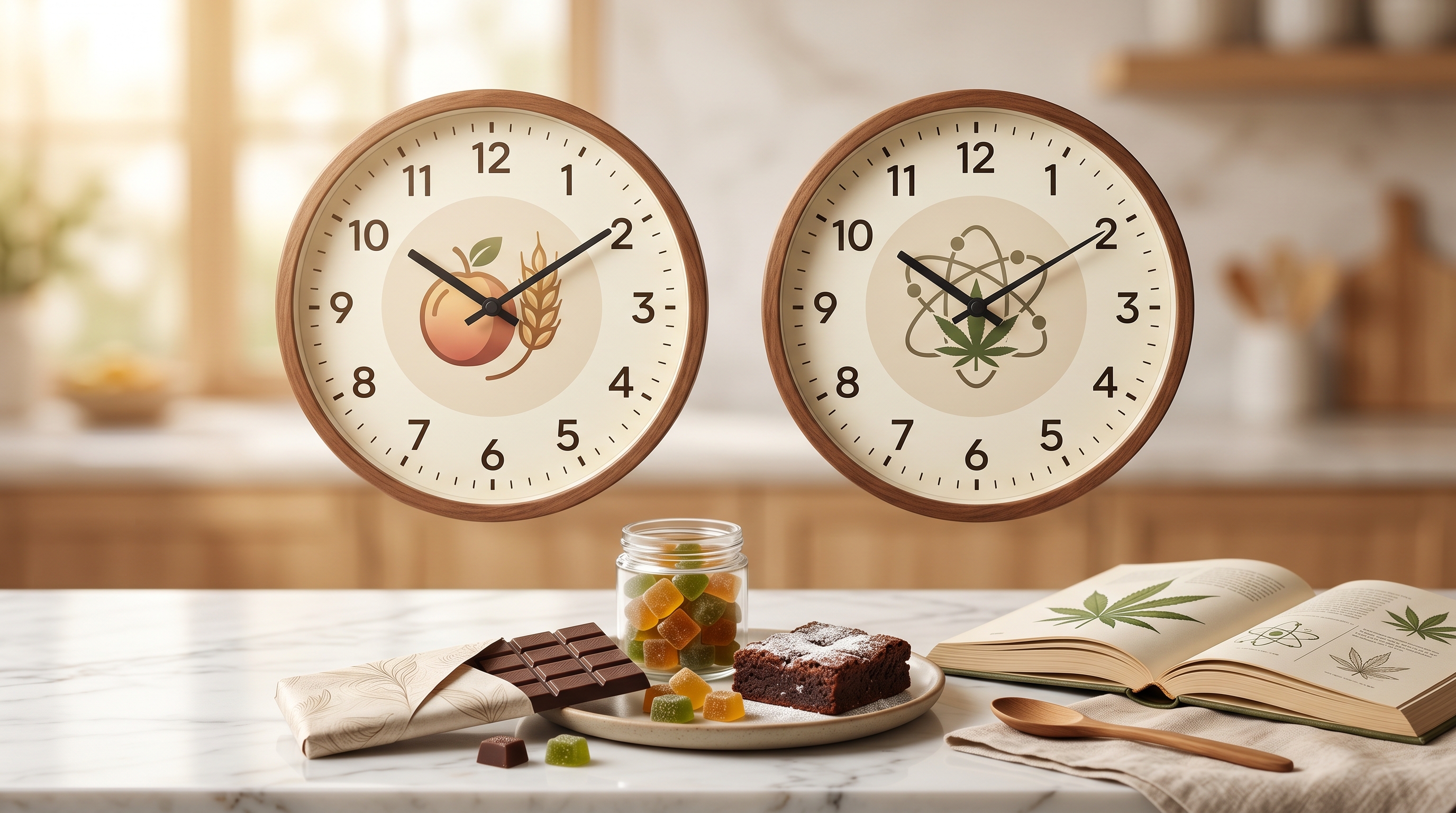
Here’s the question I get most about that forgotten edible at the back of the drawer: “Is this still good?” The honest answer depends on which question you’re really asking. Every edible runs two clocks at once. They tick at completely different speeds.
The first clock is food spoilage: the brownie or gummy is, before anything else, a food. It can grow mold, go rancid, or harbor bacteria just like any snack. The second clock is potency decay: the THC inside slowly breaks down into a different, weaker molecule over time. A brownie can spoil while its THC is still intact. A gummy can lose a chunk of its punch while remaining perfectly safe to eat.
Most “do edibles expire?” guides only watch one clock. To answer the question — and to store your stash so neither clock runs out early — you need both. Let’s break down the chemistry, then get practical.
Clock one: how the THC inside degrades
The THC in an edible has already been heat-activated through decarboxylation, so it’s the neutral, active form ready to work. That’s good for getting you high, but it also means the molecule is now exposed and slowly oxidizing.
Over time — and faster with heat, light, and air — THC converts into CBN (cannabinol). CBN is a mildly sedating cannabinoid that lacks most of THC’s euphoric kick. This is the same aging pathway that affects flower. It’s the chemistry behind our complete guide to storing cannabis, and you can read more about the end product in our deep-dive on CBN, the sleepy cannabinoid. The takeaway for edibles: as THC drifts toward CBN, your edible doesn’t become dangerous. It just gets weaker and a little drowsier. (Edibles hit differently in the first place because your liver converts THC into the more potent 11-OH-THC. We cover that in why edibles hit harder, which also shapes how long the high lasts.)
How fast does this happen? The research on cannabinoid stability is surprisingly consistent:
- A landmark four-year study found that THC degradation to CBN follows first-order kinetics, and that storage conditions matter enormously [Zamengo, 2019]. Samples kept at room temperature in light or darkness lost nearly 100% of their THC over four years, while samples frozen at −20°C in the dark barely changed.
- That same body of work showed temperature and light play different roles. Temperature changes the speed of conversion. Light changes both the speed and how completely THC turns into CBN.
- Classic data put the room-temperature loss at roughly 16.6% of THC after one year and 41.4% after four years [Ross, 2005]. Earlier work found a loss rate of about 3–5% per month at room temperature [Lerner, 1969].
That ~10% per year figure is well established. Nevada’s cannabis regulator even caps edible shelf-life claims at one year because of it. The rule cites “the THC molecule’s known ability to degrade by 10% in a year’s time” — which mirrors the FDA’s pharmaceutical standard of marking shelf life when 10% of the active ingredient is gone.
Two extra wrinkles specific to edibles:
- Acidity speeds things up. In strongly acidic, warm conditions, THC can also shift toward delta-8, a quieter cousin of delta-9. Think the coating on a sour gummy, below about pH 4. So very sour, very warm storage is a double whammy.
- Fats can go rancid. Chocolates, cannabutter, and infused oils carry fats that oxidize independently of the THC — and the fat you choose for an infusion affects how quickly it turns. The cannabinoid can be fine while the carrier turns stale.
Clock two: how the food spoils
The food-safety clock is governed mostly by water activity — how much free moisture is available for microbes to grow. This is why ingredients matter more than cannabinoids here.
- Low-moisture, high-sugar foods (gummies, hard candies) starve out bacteria and mold, so they last for months.
- High-moisture, perishable foods (baked goods made with eggs, milk, and butter) are an open invitation for mold and bacteria, so they last days.
A Colorado food-safety review flagged an extra hazard worth knowing. Oil-, glycerol-, or glycol-based infusions can in theory support anaerobic pathogens like C. botulinum if prepared and stored badly [Friedman, 2020]. It’s rare. But it’s why homemade infused oils deserve refrigeration and real care, not a warm shelf. The same goes for concentrated formats like RSO and the capsules and pills some people make at home.
Shelf life by edible type
Here’s the practical reference, drawn from commercial shelf-life data, state regulatory bulletins, and the stability research above. “Commercial” assumes a sealed, properly packaged product; homemade versions without preservatives run shorter.
| Edible type | Room temp | Refrigerated | Frozen | Limiting factor |
|---|---|---|---|---|
| Gummies & chews | 6–12 months | Up to 1 year+ | Possible, texture risk | Potency, not spoilage |
| Hard candies / lozenges | 12 months+ | 12 months+ | Not needed | Very stable; moisture only |
| Chocolates | 6–12 months (under ~65°F) | 6–12 months | 6+ months (double-wrap) | Heat, bloom, fat rancidity |
| Baked goods (brownies, cookies) | 5–7 days | 2–3 weeks | 3–6 months | Mold / spoilage |
| Infused beverages | Weeks (opened) | Up to 6–12 months sealed | Not ideal | Separation, microbial growth |
| Tinctures (alcohol) | 1–2 years | 1–2 years | Not needed | Very stable |
| Infused oils / cannabutter | Weeks | 2–4 weeks | Up to 6 months | Rancidity, microbial growth |
A few honest caveats. Nevada’s 2024 shelf-life bulletin assigns commercial baked goods longer windows than the homemade numbers above. It lists chocolate bars at one year, brownies and soft cookies at two months, gummies at six months, and hard candies and beverages at one year. Licensed producers can do this because they control water activity, pH, and packaging in ways your kitchen can’t. If you bake your own, treat them like the perishable food they are. And remember the dose math behind each piece, since uneven distribution is a real homemade hazard (edible dosing math for home cooks walks through it). Our guide to homemade gummies and tips for cannabis cooking both lean toward shorter, safer windows for exactly this reason.
The best ways to store edibles
The storage rules fall out of the two clocks: keep things cool, dark, and sealed to protect potency, and cold to protect perishable food. Here’s how that plays out by location.
Pantry or cabinet (cool, dark, dry). Best for gummies, hard candies, chocolates, and tinctures. Aim for 55–70°F. Avoid spots near a stove, oven, window, or sunny counter — research found measurable potency loss in products kept above 77°F [Pacifici, 2016]. Heat is the single biggest enemy of THC, so a dark interior cabinet beats a glass jar on the counter every time.
Refrigerator. The single best default for anything perishable or fat-based: baked goods you’ll finish within a few weeks, opened beverages, cannabutter, infused oils, and chocolates in a warm home. The fridge slows both microbial growth and cannabinoid degradation at once. One caveat — refrigeration can introduce condensation, so keep items sealed, and let chocolate return to room temperature before eating for the best texture.
Freezer. The gold standard for long-term storage. At 0°F, both microbial growth and cannabinoid degradation slow to a crawl. More on freezing specifics below.
Two principles apply everywhere:
- Airtight beats everything. Oxygen drives oxidation, which both degrades THC and turns fats rancid. Reseal original packaging, use airtight containers with minimal headspace, or vacuum-seal for the longest life. A food-safe desiccant pack helps keep gummies from going sticky. If you’re stocking a stash to share, our cannabis tasting party guide covers keeping multiple formats fresh and clearly labeled at once.
- Dark beats light. Light accelerates THC-to-CBN conversion. Opaque containers and original packaging both help.
Why packaging matters more than you think
Reputable commercial edibles ship in packaging that’s already doing three jobs: opaque (blocks light), airtight and resealable (blocks oxygen and moisture), and child-resistant (a non-negotiable safety feature). That’s not just compliance theater — it’s genuinely good storage engineering.
The simplest move is to keep edibles in their original packaging and reseal it after every use. The label also carries your dose-per-piece and batch date, which matters more than you’d think once products sit for a while. If the original packaging gives out, transfer to an airtight glass or food-grade container — and copy the dose onto the new container so you don’t lose track. Knowing your milligrams is the whole point of an edible; see our beginner dosing guide and the dosing chart for why.
Signs an edible has gone bad
Trust your senses, and remember: cannabis cannot override basic food safety. A potent edible that’s grown mold is still an edible that’s grown mold. When in doubt, throw it out.
- Visible mold or fuzzy growth — white, green, or dark spots, especially on baked goods. Discard immediately, no exceptions.
- Off or sour smell — rancid, fermented, or “wrong” odors signal spoiled fats or microbial growth.
- Texture changes — gummies that have turned rock-hard, crystallized, or melted-and-restuck; baked goods gone slimy or unusually crumbly.
- Separation or oiliness — beverages or oils that have split and won’t recombine, or chocolate weeping fat.
- Rancidity — a stale, bitter, “old nuts” taste in anything containing butter, oil, or dairy.
One non-issue worth flagging: chocolate bloom — that whitish, chalky film on aged chocolate — is just fat or sugar migrating to the surface. It looks unappealing but is completely harmless and doesn’t affect potency.
Freezing and potency: does it actually work?
Yes — and this is the part people get wrong most often. Freezing does not harm THC. By removing the product from heat, light, and (with proper sealing) oxygen, the freezer protects the cannabinoid better than any other method. A forensic study found minimal THC degradation in cannabis-infused butter stored at freezer temperatures over six months [Mensch, 2020]. The four-year stability research agrees: −20°C in darkness was the clear winner for preserving cannabinoid content [Zamengo, 2019].
So why doesn’t everything just live in the freezer? Because texture, not potency, is the limiting factor.
- Baked goods freeze beautifully. Cool them completely first (warm food creates condensation and freezer burn), wrap each piece individually, then bag or vacuum-seal. Thaw slowly in the fridge — 2 to 4 hours — to preserve texture.
- Gummies can be frozen but may suffer. Cold can crystallize the sugar and toughen the chew; thaw them gently at room temperature for 30–60 minutes. Many people prefer to just refrigerate gummies instead.
- Chocolate needs double-wrapping to prevent condensation bloom on thaw.
- Cannabutter and infused oils freeze well in pre-measured portions — ice-cube trays or silicone molds are ideal, then transfer to an airtight bag. This is also the easiest way to bank a base for future cooking.
Two rules for freezing: always seal against air (vacuum-sealing or airtight bags prevent freezer burn and oxidation), and avoid repeated freeze-thaw cycles — each one degrades texture and reintroduces moisture. Pull out only what you’ll eat. And whatever you freeze, label it with the date and the dose per piece — after a few weeks, a frozen brownie and a frozen plain brownie look identical, and that’s exactly the kind of mix-up that ruins a session.
The honest bottom line
Edibles don’t really expire. They slowly fade and, eventually, spoil. The food clock is set by ingredients — gummies and candies for months, baked goods for days. The potency clock is set by your storage — roughly 10% THC loss per year under good conditions, much faster in heat and light. Cool, dark, sealed, and (for perishables) cold covers both. When the two clocks disagree, the food clock always wins. Safety first, potency second.
If you want to stop guessing whether last month’s brownie still hits the same, the real fix is tracking. Logging what you took, when you bought it, and how it felt turns “is this still good?” into something you actually know. That’s the whole idea behind building a cannabis journal — and it’s exactly what the High IQ app is built to make effortless.
Key takeaways
- Two clocks, not one. Food spoilage (mold, rancidity) and potency decay (THC oxidizing to CBN) run on separate timelines. The food clock always wins on safety.
- Ingredients set the spoilage clock. Low-moisture gummies and hard candies last 6–12 months; perishable baked goods last days.
- Storage sets the potency clock. Expect roughly 10% THC loss per year in good conditions — faster with heat, light, and air.
- Cool, dark, sealed, and cold covers both clocks. The fridge is the best default for anything perishable.
- Freezing protects potency and only risks texture. Seal against air, label the dose, and skip freeze-thaw cycles.
- When in doubt, throw it out — visible mold or an off smell means discard, no matter how potent.
Frequently asked questions
Do edibles expire? Yes, in two ways. The food can spoil (mold, rancidity), and the THC slowly degrades into CBN, losing potency over months to years. An edible past its date may still be safe but weaker — unless it shows spoilage signs, in which case discard it.
How long do gummies last? Commercially packaged gummies typically stay good for 6–12 months sealed in a cool, dark place, thanks to their low moisture and high sugar. They lose potency before they spoil. Homemade gummies without preservatives run shorter — a few weeks to a couple of months.
Can old edibles make you sick? Candy-based edibles rarely cause illness because they don’t support microbial growth. But baked goods and dairy- or oil-based edibles can grow mold or go rancid and may cause nausea or GI distress. Never eat anything with visible mold or an off smell.
Does freezing reduce edible potency? No. THC is chemically stable at freezer temperatures and is actually better protected from the heat, light, and air that cause degradation. Freezing’s only downside is texture, especially for gummies. Seal against air and avoid freeze-thaw cycles.
Why does my edible feel weaker than it used to? Most likely THC has oxidized into CBN over time, especially if stored warm or in light. The dose on the label reflects the day it was made — older, poorly stored edibles can deliver noticeably less than that number. If you want to confirm a homemade batch, see testing edible potency at home.
Should I refrigerate all edibles? For most edibles you won’t finish quickly, the fridge is the single best default — it slows both spoilage and potency loss. The exceptions are gummies (cold can toughen them) and anything you’ll eat within its window. Keep everything sealed to avoid condensation.
Sources
- Zamengo, L., et al. (2019). “The role of time and storage conditions on the composition of hashish and marijuana samples: A four-year study.” Forensic Science International. Link
- Ross, S.A. & ElSohly, M.A., as discussed in: “Chemometric and predictive modeling of long term cannabinoid transformation in stored Cannabis sativa resin.” Scientific Reports (2025). Link
- “Kinetics of CBD, Δ9-THC Degradation and Cannabinol Formation in Cannabis Resin at Various Temperature and pH Conditions.” PMC. Link
- “Metabolic Profiling of Cannabis Secondary Metabolites for Evaluation of Optimal Postharvest Storage Conditions.” Frontiers in Plant Science (2020). Link
- “Cannabis-Infused Edible Products in Colorado: Food Safety and Public Health.” PMC. Link
- Nevada Cannabis Compliance Board. “Updated Shelf-Life Bulletin for Cannabis Establishments” (2024). Link
Educational content only. Cannabis affects everyone differently, and nothing here is medical advice — talk to a healthcare professional about your situation. Follow your local laws, store edibles securely away from children and pets, and start low and go slow.


