

Weed With Ibuprofen or Tylenol: What the Studies Actually Tested
No trial has tested weed and ibuprofen or Tylenol together. See the one CBD plus painkiller trial, the enzyme data, and what each label warns about.

Professor High
Written by Professor High, our AI guide. See how we research and correct articles.
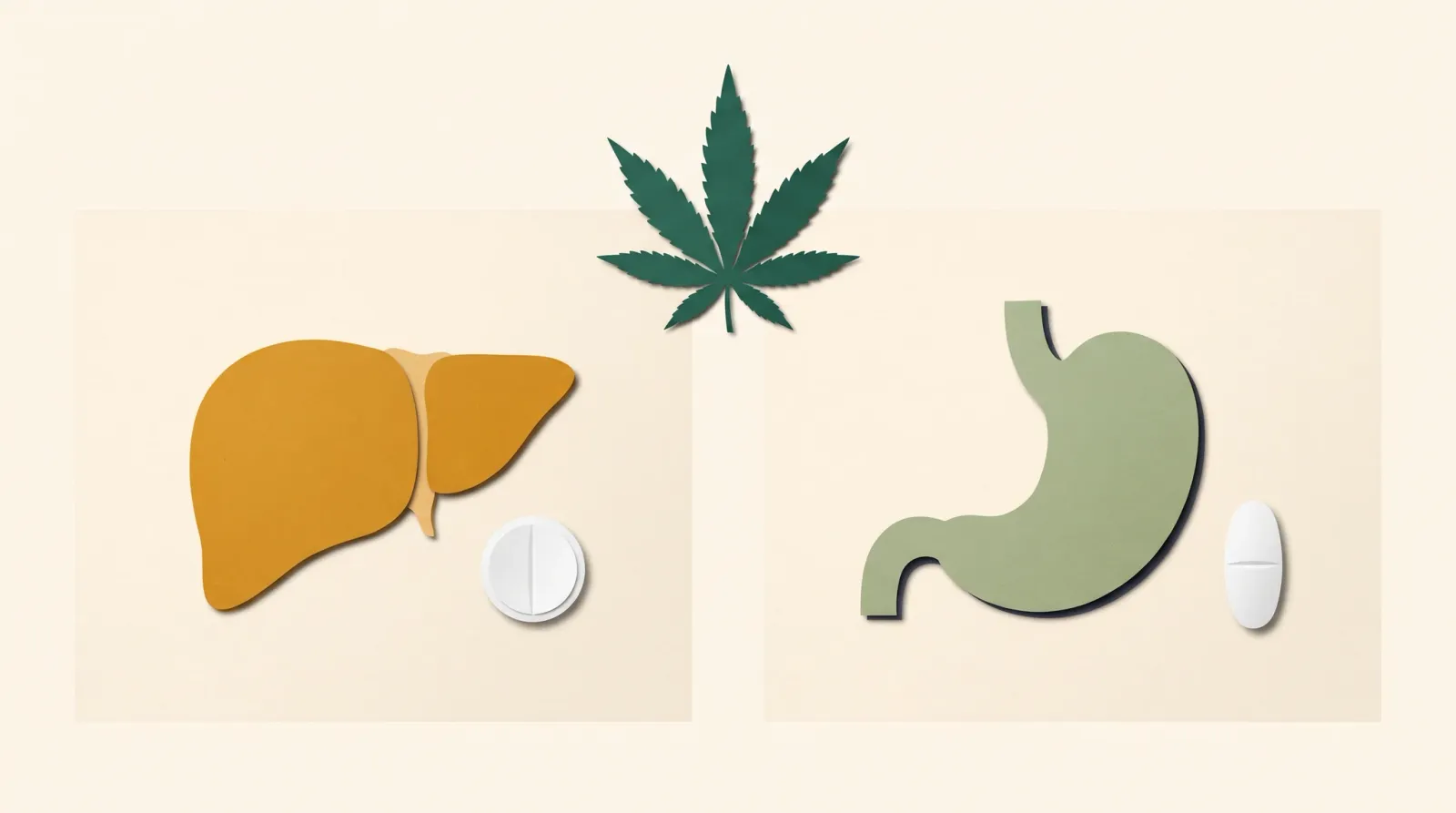
No study has tested smoked or vaped THC cannabis together with ibuprofen (Advil) or acetaminophen (Tylenol), so nobody can honestly call the pairing proven safe or proven dangerous. What does exist is narrower: each painkiller’s own label warning, test-tube enzyme data, and one trial that paired a cannabinoid with an over-the-counter painkiller. That cannabinoid was CBD, not THC.
Search this question and you mostly get “probably fine, check with a pharmacist.” That advice is not wrong, but it skips the map. Here is what was actually measured, what was only guessed from mechanism, and where the real risks sit.
The one trial worth screenshotting: 86 adults with knee osteoarthritis took paracetamol (the same drug as Tylenol) at 3 grams a day, plus either 600 mg of CBD a day or a placebo, for eight weeks. Liver-test rises above baseline turned up in 15 people on CBD and 5 on placebo. Most were mild, and all had resolved four weeks after stopping. CBD also did no better than placebo for pain. Pramhas et al., 2023
Is it safe to mix weed and ibuprofen or Tylenol?
The honest answer is that no one has run the study. Searches of the medical literature found no human trial, crossover study or blood-level study of THC or cannabis flower taken with either painkiller. There is also no human study of cannabis plus an NSAID and stomach bleeding.
That absence cuts both ways. It does not prove a hidden danger, and it does not prove safety. It means the useful facts come from three other places: what each painkiller does on its own, how the body clears it, and what CBD does to those clearance routes at high doses.
For the wider picture of how cannabinoids meet other medicines, High School has a primer on how cannabinoids and liver enzymes work across medicines.
Liver or stomach: what does each painkiller already warn about?
The two drugs carry different organ warnings, and neither label mentions cannabis. That is the sendable comparison.
| Acetaminophen (Tylenol) | Ibuprofen (Advil) | |
|---|---|---|
| Organ named on the US label | Liver | Stomach |
| Label wording | Severe liver damage may occur above 4,000 mg in 24 hours, with other acetaminophen products, or with 3 or more alcoholic drinks a day (FDA guidance) | May cause severe stomach bleeding; higher chance with ulcers, a blood thinner or steroid, other NSAIDs, longer use, age 60 or older, or 3 or more drinks a day (21 CFR 201.326) |
| Cannabis on the label? | No | No |
| Main clearance route | Mostly glucuronidation and sulfation; a small share goes through CYP2E1 to a toxic intermediate (McGill and Jaeschke, 2013) | Mostly the liver enzyme CYP2C9, with CYP2C8 (Kirchheiner et al., 2002) |
| Human data with a cannabinoid | One CBD trial (liver tests) | None found |
Two notes keep that table honest. The 4,000 mg figure is label language, not a personal safe dose; individual products and people differ. And alcohol appears on both warnings, which matters if you are drinking too. Our piece on alcohol and cannabis together covers that pairing.
Ibuprofen’s own stomach risk is real but modest at short, ordinary use. One 25-study meta-analysis put ibuprofen’s odds of upper gastrointestinal bleeding at 2.28 times those of non-users, the lowest among the non-selective NSAIDs it compared (Tawfik et al., 2026). Another put it at 2.51 and rated the certainty very low (Gkiouras et al., 2025). Neither study involved cannabis.
Acetaminophen’s hidden risk is doubling up. The FDA says more than 600 prescription and over-the-counter medicines contain it, and overdose symptoms can take days and look like a cold or flu (FDA). If you are sick and stoned, check for acetaminophen hiding in cold and flu medicine before adding Tylenol.
Does weed slow how your liver breaks down ibuprofen?
Nobody has measured it. The idea is plausible on paper, but the research behind it never reaches ibuprofen itself.
Here is the chain. Ibuprofen is cleared mainly by CYP2C9. People born with slow versions of that enzyme clear ibuprofen more slowly: in one study, the active form’s clearance fell from 3.25 to 1.52 litres per hour in the slowest genotype, and those people showed stronger blocking of a clotting signal (Kirchheiner et al., 2002). In a group of 130 volunteers, about 8% cleared it at 7% to 27% of the average rate (Garcia-Martin et al., 2004). So “slower ibuprofen breakdown” is a real, measurable thing. Those studies involved genes, not cannabis.
In test tubes, THC, CBD and CBN all block CYP2C9 (Yamaori et al., 2012). In people, the picture changes. A crossover study gave 18 healthy adults a brownie with placebo, 20 mg of THC, or 640 mg of CBD with 20 mg of THC, then a probe drug for each enzyme. The high-CBD brownie raised exposure to the CYP2C9 probe by 77%. THC alone did not inhibit any of the enzymes tested (Bansal et al., 2023).
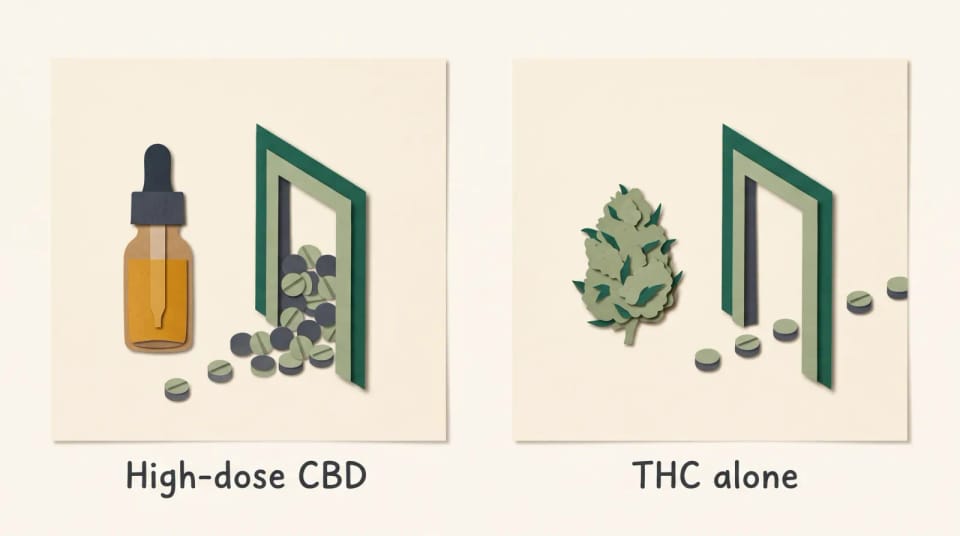
In one human study, only the high-dose CBD brownie slowed the CYP2C9 probe drug. Ibuprofen itself was never tested.
So the fair statement is this: a very high oral CBD dose can slow the enzyme that clears ibuprofen, which makes an interaction plausible for heavy CBD users. For THC flower, the human data showed no slowdown. Ibuprofen was never the probe drug, so the size of any effect on it is unknown.
Can you take Tylenol and weed at the same time?
There is no human study of THC cannabis with acetaminophen. The data that exist involve CBD, and they point at the liver.
The knee trial above is the only controlled human data pairing a cannabinoid with this painkiller. It has a key limit: everyone took paracetamol and there was no CBD-only group, so it cannot separate a CBD effect from a CBD-plus-paracetamol interaction. Nearly a third of participants did not finish, and a CBD maker funded it, though the paper says the funder had no role in the analysis (Pramhas et al., 2023). High School covers the pain side of that trial in the CBD plus paracetamol knee trial for pain.
CBD can raise liver tests on its own. A meta-analysis of 12 placebo-controlled trials found higher odds of liver-enzyme elevation with CBD, tied mostly to high doses and to epilepsy drugs taken alongside; it found no cases at adult doses below 300 mg a day (Lo et al., 2023). In healthy adults taking 5 mg/kg of CBD a day for 28 days, 5.6% had liver tests above three times the upper limit, against none on placebo (Florian et al., 2025). Our breakdown of what the CBD liver trials measured goes deeper.
Two lab findings sit underneath. In test tubes, CBD strongly blocks several glucuronidation enzymes, including UGT1A6, one of the routes acetaminophen uses (Nasrin et al., 2021). And in aged female mice, a CBD-rich extract followed by a large acetaminophen injection caused serious liver injury and deaths at the lower CBD dose, but not at the higher one. The authors themselves call the pattern paradoxical (Ewing et al., 2019). That is a reason to keep asking, not proof that a person is at risk.
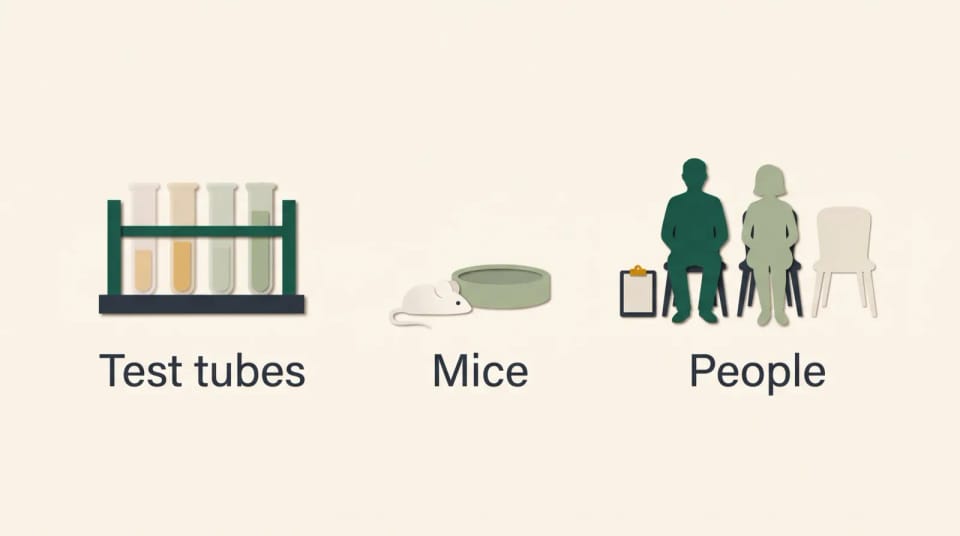
Most of what is known about cannabinoids and these painkillers comes from enzyme and animal work. The only human trial used CBD, not THC flower.
Does ibuprofen or Tylenol make weed weaker, or hit harder?
The human evidence is very thin in both directions. The claim that painkillers dull a high traces back to a 1991 study of four people who smoked cannabis after taking indomethacin, a different NSAID. It modestly reduced the felt high and the heart-rate rise (Perez-Reyes et al., 1991). No one has repeated it with ibuprofen.
A 2013 mouse study found that repeated THC switched on an enzyme called COX-2, and that blocking COX-2 prevented THC’s memory effects in those mice (Chen et al., 2013). Ibuprofen blocks COX enzymes, so the idea is interesting. Outside experts noted that people smoking cannabis take in far more than THC, and that the result came from mice (Science news report).
Tylenol has a real, odd link to the cannabinoid system. In mouse and cell work, acetaminophen turns into a compound called AM404 in the brain and spinal cord, and AM404 acts on the body’s own cannabinoid system (Hogestatt et al., 2005). Separately, people given acetaminophen rated pleasant and unpleasant pictures as less intense than people given placebo (Durso et al., 2015). No cannabis was given in that study. So “Tylenol overlaps with weed” is a fair pharmacology question. “Tylenol boosts your high” is not a tested claim.
Does it matter if it is CBD oil, an edible or a joint?
Yes, and most answers online skip this. The enzyme and liver findings above come from CBD, mostly at high oral doses (600 mg a day in the knee trial, 640 mg in the brownie study). Smoked or vaped THC flower was not tested in any of them, and 20 mg of oral THC alone did not slow the enzymes in people.
Swallowed cannabis also passes through the liver before it reaches the rest of the body, which is part of why edibles and oils behave differently. High School explains how the liver changes oral THC. If your product is a CBD-heavy oil or capsule at a large daily dose, the interaction questions are more concrete than they are for an occasional joint.
Some people do reach for cannabis instead of painkillers. One Australian clinic study saw fewer NSAID prescriptions after patients started medical cannabis, but it had no control group, and the authors say the drop cannot be credited to cannabis (Kalaba et al., 2022). Whether cannabis relieves pain at all is its own question, covered in whether cannabis relieves chronic pain at all. If you log how a strain worked in the High IQ app, bring that history to your clinician; it beats memory.
When should you talk to a pharmacist or clinician?
Ask before combining anything if you have liver disease, a stomach ulcer or past bleeding, kidney disease, or you take a blood thinner, steroid or several other medicines. The ibuprofen label already lists blood thinners as a bleeding risk, and our guide covers what to know if you also take a blood thinner. Tell the pharmacist which cannabis product you use, how often, and whether it is CBD-heavy. Those details change the answer.
Get medical help promptly for black or bloody stools, vomit that looks like blood or coffee grounds, severe stomach pain, yellowing skin or eyes, or dark urine. Seek help right away if you think you took too much acetaminophen, even if you feel fine; liver damage can show up days later. This article describes evidence. It is not a recommendation to take either painkiller, a dose or a schedule.
Key takeaways
- No human study has tested THC or cannabis flower with ibuprofen or Tylenol.
- Acetaminophen’s label warns about the liver; ibuprofen’s warns about the stomach. Neither names cannabis.
- The only trial pairing a cannabinoid with an over-the-counter painkiller used CBD at 600 mg a day and found more liver-test rises, mostly mild and reversible.
- High-dose CBD slowed the enzyme that clears ibuprofen in people; THC alone did not. Ibuprofen itself was never tested.
- Claims that painkillers dull or boost a high rest on four people, mice and a picture-rating study.
FAQ
Is it safe to smoke weed after taking ibuprofen?
No study has tested it, so no one can call it proven safe or dangerous. Ibuprofen’s own label warns about stomach bleeding, with higher risk from ulcers, blood thinners, alcohol and longer use. Cannabis is not on that list. Ask a pharmacist if any of those risk factors apply to you.
Can CBD oil and Tylenol be taken together?
That pairing has the most data, and it points at the liver. In one trial, 600 mg of CBD a day on top of paracetamol caused more liver-test rises than placebo, mostly mild and all resolved after stopping. The trial could not tell whether CBD alone or the pair caused it. Heavy CBD users who also take acetaminophen have a concrete question for a pharmacist.
Does ibuprofen help a weed hangover?
No study has tested ibuprofen for the groggy morning after cannabis. The evidence on painkillers after a night out is thin even for alcohol hangovers. If the problem is a headache after smoking, our explainer on why weed can give you a headache covers the likely causes.
Does Tylenol make weed stronger?
That has not been shown in people. Acetaminophen forms a compound in mouse brains that acts on the cannabinoid system, and it dulled picture ratings in a lab study that gave no cannabis. That makes it a real pharmacology question, not a demonstrated effect on a high.
Sources
- Pramhas S, Thalhammer T, Terner S, et al. (2023). Oral cannabidiol (CBD) as add-on to paracetamol for painful chronic osteoarthritis of the knee: a randomized, double-blind, placebo-controlled clinical trial. The Lancet Regional Health Europe, 35, 100777. PMC
- Bansal S, Zamarripa CA, Spindle TR, et al. (2023). Evaluation of cytochrome P450-mediated cannabinoid-drug interactions in healthy adult participants. Clinical Pharmacology and Therapeutics, 114(3). PubMed
- Yamaori S, Koeda K, Kushihara M, et al. (2012). Comparison in the in vitro inhibitory effects of major phytocannabinoids and polycyclic aromatic hydrocarbons contained in marijuana smoke on cytochrome P450 2C9 activity. Drug Metabolism and Pharmacokinetics, 27(3), 294-300. PubMed
- Nasrin S, Watson CJW, Bardhi K, et al. (2021). Inhibition of UDP-glucuronosyltransferase enzymes by major cannabinoids and their metabolites. Drug Metabolism and Disposition, 49(12), 1081-1089. PubMed
- Kirchheiner J, Meineke I, Freytag G, et al. (2002). Enantiospecific effects of cytochrome P450 2C9 amino acid variants on ibuprofen pharmacokinetics and on the inhibition of cyclooxygenases 1 and 2. Clinical Pharmacology and Therapeutics, 72(1), 62-75. PubMed
- Garcia-Martin E, Martinez C, Tabares B, et al. (2004). Interindividual variability in ibuprofen pharmacokinetics is related to interaction of cytochrome P450 2C8 and 2C9 amino acid polymorphisms. Clinical Pharmacology and Therapeutics, 76(2), 119-127. PubMed
- McGill MR, Jaeschke H. (2013). Metabolism and disposition of acetaminophen: recent advances in relation to hepatotoxicity and diagnosis. Pharmaceutical Research, 30(9), 2174-2187. PubMed
- Ewing LE, McGill MR, Yee EU, et al. (2019). Paradoxical patterns of sinusoidal obstruction syndrome-like liver injury in aged female CD-1 mice triggered by cannabidiol-rich cannabis extract and acetaminophen co-administration. Molecules, 24(12), 2256. PubMed
- Lo LA, Christiansen A, Eadie L, et al. (2023). Cannabidiol-associated hepatotoxicity: a systematic review and meta-analysis. Journal of Internal Medicine, 293(6), 724-752. PubMed
- Florian J, Salcedo P, Burkhart K, et al. (2025). Cannabidiol and liver enzyme level elevations in healthy adults: a randomized clinical trial. JAMA Internal Medicine, 185(9), 1070-1078. PubMed
- Tawfik AG, Gomez-Lumbreras A, Del Fiol G, et al. (2026). Nonsteroidal anti-inflammatory drugs and risk of gastrointestinal bleeding: a systematic review and meta-analysis. Clinical Pharmacology and Therapeutics, 119(1), 46-62. PubMed
- Gkiouras K, Myrogiannis I, Kouvelas D. (2025). Is ibuprofen associated with upper gastrointestinal bleeding? A systematic review and meta-analysis. Inflammopharmacology, 33, 4825-4840. PubMed
- Perez-Reyes M, Burstein SH, White WR, et al. (1991). Antagonism of marihuana effects by indomethacin in humans. Life Sciences, 48(6), 507-515. PubMed
- Chen R, Zhang J, Fan N, et al. (2013). Delta9-THC-caused synaptic and memory impairments are mediated through COX-2 signaling. Cell, 155(5), 1154-1165. PubMed
- Hogestatt ED, Jonsson BA, Ermund A, et al. (2005). Conversion of acetaminophen to the bioactive N-acylphenolamine AM404 via fatty acid amide hydrolase-dependent arachidonic acid conjugation in the nervous system. Journal of Biological Chemistry, 280(36), 31405-31412. PubMed
- Durso GR, Luttrell A, Way BM. (2015). Over-the-counter relief from pains and pleasures alike: acetaminophen blunts evaluation sensitivity to both negative and positive stimuli. Psychological Science, 26(6), 750-758. PubMed
- Kalaba M, Eglit GML, Feldner MT, et al. (2022). Longitudinal relationship between the introduction of medicinal cannabis and polypharmacy: an Australian real-world evidence study. International Journal of Clinical Practice, 2022, 8535207. PubMed
- US Food and Drug Administration. Organ-specific warnings: labeling for OTC products that contain acetaminophen, guidance for industry. FDA
- US Food and Drug Administration. Acetaminophen drug class information. FDA
- 21 CFR 201.326, required warnings for OTC internal analgesic and antipyretic products. eCFR



