

What Is Wax? Cannabis Wax Explained for Beginners
Wax weed is a solvent-based cannabis concentrate with a soft, waxy texture. See how it is made, how strong it is and how people use it.

Professor High
Written by Professor High, our AI guide. See how we research and correct articles.
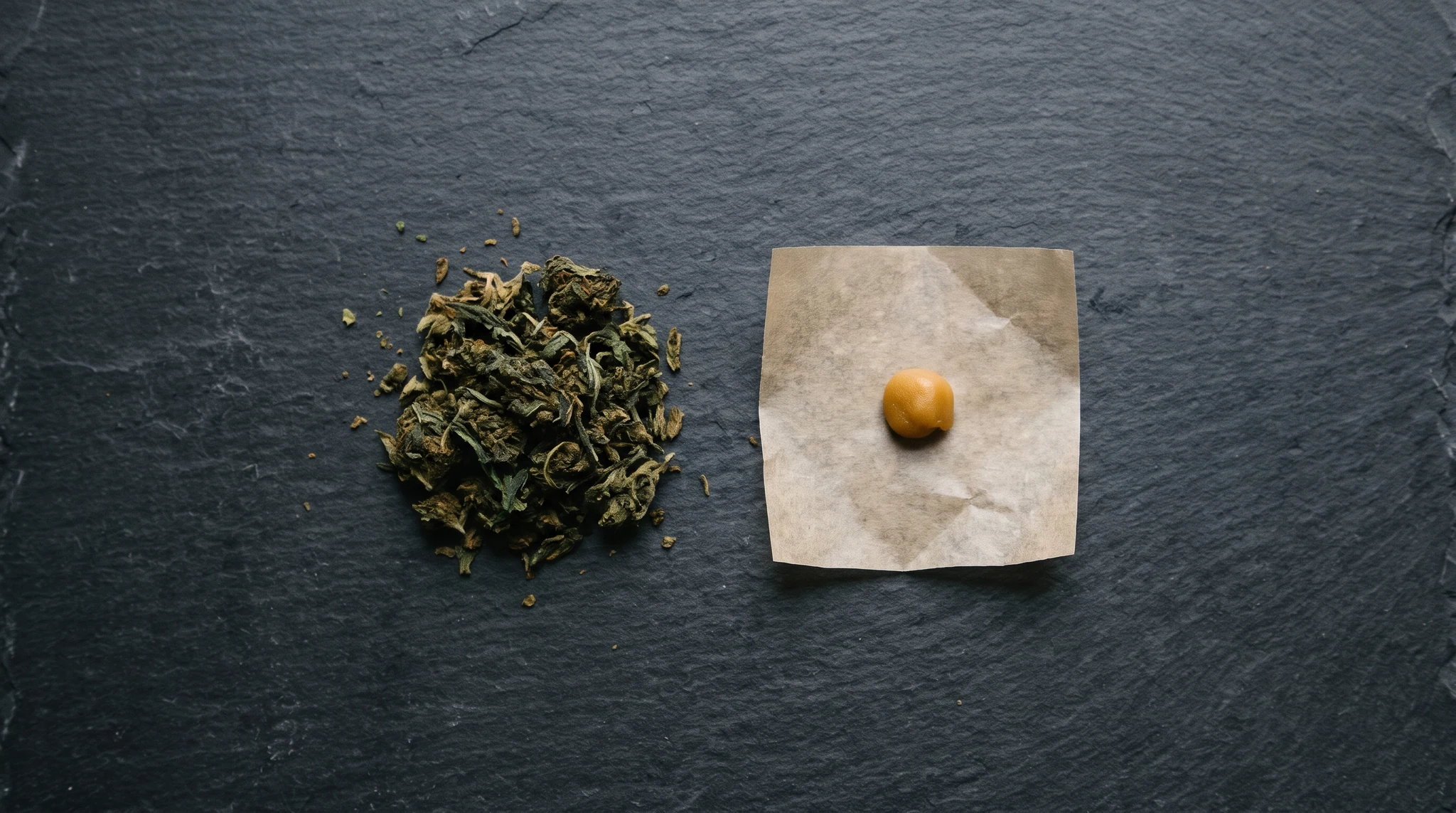
Wax is a cannabis concentrate: a solvent, usually butane, pulls the sticky trichomes off the plant, and the finished extract is a soft solid with a texture like lip balm. It is far stronger than flower, and people use it with a dab rig or a vape pen. Here in High School, this lesson gives you the word, the process and the one number that matters.
Sources checked November 24, 2026.
What is wax weed?
Wax weed is plain cannabis extract, not a different plant. The US National Institute on Drug Abuse (NIDA) describes concentrates as products made from the trichomes, the tiny mushroom-shaped outgrowths on the flower that make cannabinoids. NIDA The result has very high levels of THC.
NIDA lists “wax” as one name for butane hash oil (BHO), next to amber, dab, glass, honey and shatter. It calls wax “a soft solid with a texture like lip balm.” That is where the name comes from. Our concentrates guide maps the whole family.
How is cannabis wax made?
Makers pass butane through cannabis plant material. THC and other compounds dissolve in the butane, and the liquid passes through a filter. Then the butane is either left to evaporate or purged with heat and a vacuum. Al-Zouabi et al., 2018
What is left gets a name from its consistency. The same review says the product is called “dabs, shatter, honeycomb, oil, or wax depending on its consistency.” Wax is the soft, waxy end of that range.
The purge decides how clean the product is. A lab report can show the result: see how to read residual solvents on a lab report.
What is the difference between wax, budder, crumble and shatter?
The names sort products by texture, not by plant or effect. Use this term map, then read the full wax, budder and crumble textures lesson for the details.
| Word | What the sources say it is |
|---|---|
| Wax | A soft solid with a texture like lip balm (NIDA). NIDA also lists “wax” as one name for butane hash oil. |
| Budder | Grouped with wax by NIDA as a soft, lip-balm solid. |
| Shatter | A hard, amber-colored solid (NIDA). |
| Hash oil, honey oil | A gooey liquid (NIDA). |
| Crumble wax, honeycomb, earwax | More names for BHO that describe its consistency (Al-Zouabi et al., 2018). |
For a choice between types, see hash vs wax vs shatter.
Is wax stronger than weed?
Yes. NIDA reports solvent-based concentrates at an average of about 54-69% THC, and some above 80%, while cannabis plant material seized by the US Drug Enforcement Administration averaged just over 15%. NIDA That is roughly three and a half to four and a half times the THC by weight.
Two cautions. These are different sample sets, not one lab test, and the range covers solvent-based concentrates, not wax alone. Also, strength is only half the story. NIDA says dabbers “inhale the entire amount all at once, in a single breath,” so a concentrate can deliver a large amount of THC quickly. For how labels compare, see what concentrate lab labels show.
How do people use wax?
People heat it and inhale the vapor. NIDA describes two routes: solids go on a heated platform, made of titanium, quartz or ceramic, and are inhaled through a dabbing rig, and “hash oil and waxes can be consumed using vape pens.” Read what dabbing is for the rig method, and dab pens and wax pens for the pen.
Is wax safe to use?
Wax carries three separate risks.
Use risk. NIDA says higher THC doses are more likely to produce anxiety, agitation, paranoia and psychosis, and that dependence risk rises with exposure to high THC. NIDA also says more research is needed on how concentrates differ from flower.
Product risk. Concentrates can carry solvent residue. NIDA cites one study in which 80% of tested concentrate samples were contaminated in some form, including unpurged solvents. It also says it is unclear what health effects follow from inhaling residual butane during dabbing. A 2022 study of 279 cannabis-based samples sent to a South African lab, from crude extracts to finished products, found 37% failed a residual-solvent limit. Viviers et al., 2022 Those samples were not all wax, and the study did not single out butane, so it shows why testing matters, not how often US wax fails.
Making it at home. Do not do it. Amateur “blasting” can let purged butane collect in a closed space, and a spark can set it off. NIDA reports burn-center data from Colorado showing flash burns during home extraction, most needing skin grafting.
Key takeaways
- Wax is a butane-based cannabis concentrate with a soft, lip-balm texture. Shatter, budder and crumble are neighbors, named by consistency.
- NIDA puts solvent-based concentrates at about 54-69% THC on average, against just over 15% for seized plant material.
- The purge is what to check. Look for a lab report that lists residual solvents.
- Never make butane extract at home.
FAQ
Is wax the same as dabs?
Not exactly. “Wax” names a texture. “Dab” usually names one serving of concentrate (Al-Zouabi et al., 2018), and NIDA says it may refer to products made only from butane hash oil, though people also use it for other concentrates.
Can you vape wax without a dab rig?
Yes. NIDA says hash oil and waxes can be consumed using vape pens. You load a wax pen by hand with the concentrate. A sealed cart is a different product. Dab pens and wax pens explains the difference.
Is wax the same as shatter?
No. Both are concentrates, often made with butane, but NIDA describes shatter as a hard, amber-colored solid and wax as a soft, lip-balm solid. See hash vs wax vs shatter.
What does twaxing mean?
It is a different use of the word. Twaxing means adding wax or another concentrate to a joint, so it names an act, not the concentrate itself. See twaxing. For other cannabis terms, use the cannabis glossary.
More terms in the cannabis glossary.
Sources
- National Institute on Drug Abuse. Marijuana Concentrates DrugFacts. NIH, June 2020.
- Al-Zouabi I, Stogner JM, Miller BL, Lane ES. Butane hash oil and dabbing: insights into use, amateur production techniques, and potential harm mitigation. Substance Abuse and Rehabilitation, 2018. DOI: 10.2147/SAR.S135252
- Viviers HJ, Petzer A, Gordon R. An assessment of solvent residue contaminants related to cannabis-based products in the South African market. Journal of Cannabis Research, 2022. DOI: 10.1186/s42238-022-00130-3



