Flower Labels Overstate THC. Concentrate Labels Don't.
A 277-product Colorado study found 96% of concentrate labels accurate but only 57% of flower labels. Both skewed lower than printed. Here's why.

Professor High
You Paid for 28%. You Probably Got Less.
You have had this experience even if you never put words to it. You bought the eighth with the biggest number on the jar — 28%, maybe 31% — and it hit like the 22% jar you bought the month before. You assumed it was tolerance. Or a bad night. Or that you had built up a resistance and needed a tolerance break.
Here is a less flattering possibility: the number on the jar was wrong.
We now have a decent measurement of how wrong, and it comes with a twist almost nobody in cannabis retail talks about. In 2025, a research team led by Giordano bought 277 cannabis products off the shelf at 52 Colorado dispensaries and independently tested every one of them. They split the sample into 178 flower products and 99 concentrates, then asked a simple question: does the observed THC match the labelled THC?
The answer depended almost entirely on which shelf you were standing at.
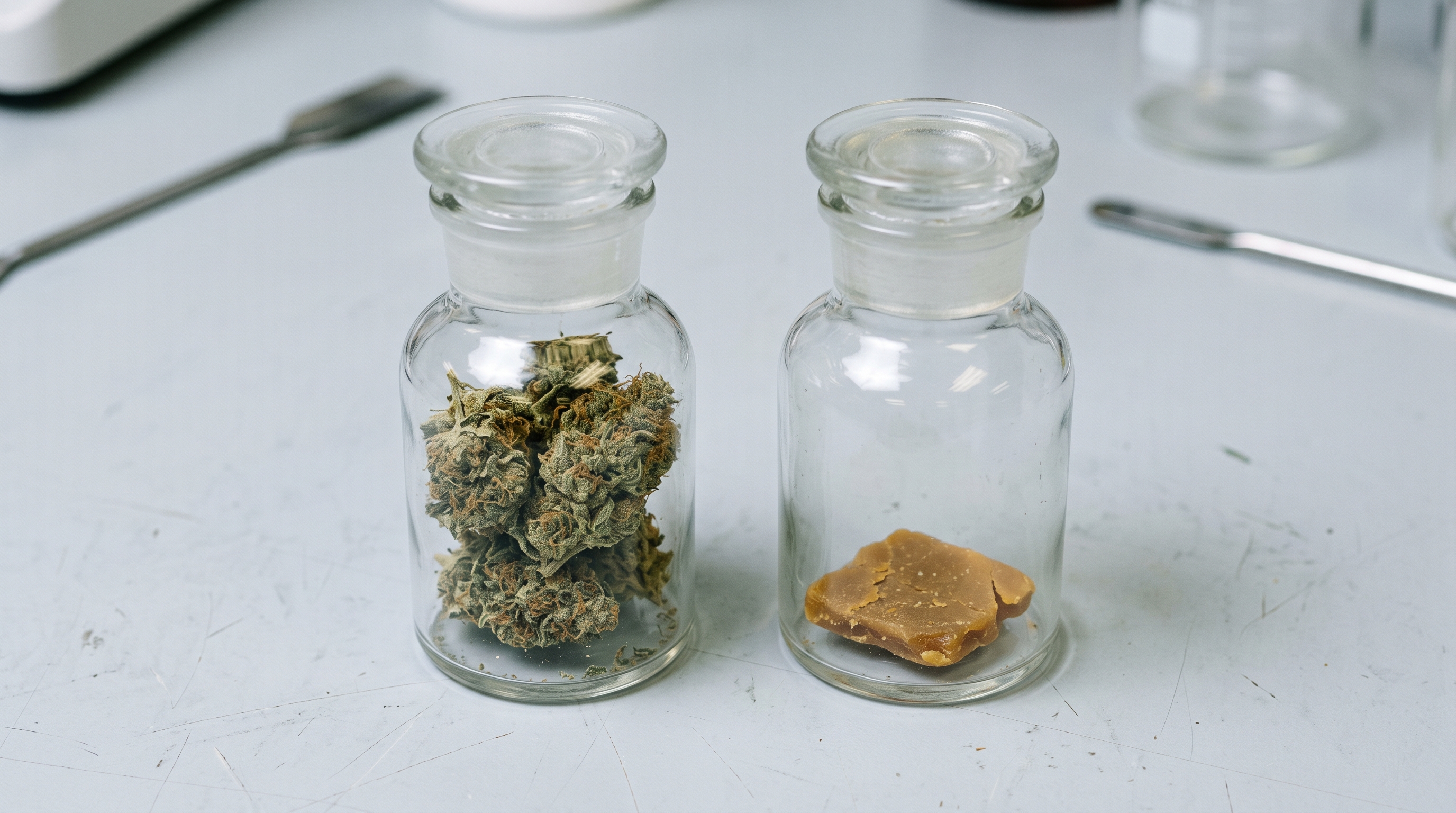
The Finding: 96.0% Versus 56.7%
The study set an accuracy threshold of ±15% of the labelled THC value. That is a generous window. A product labelled 25% THC passes if it tests anywhere between 21.25% and 28.75%. Nobody is being nitpicked here.
Against that generous bar:
| Product type | Sample | Within ±15% of label |
|---|---|---|
| Concentrate | 99 | 96.0% |
| Flower | 178 | 56.7% |
The difference was not a fluke of sampling. Labelling accuracy depended on product type at χ²(2, n = 277) = 47.44, p<0.001 — a large, unambiguous effect.
Read that flower number again. Roughly two in five flower products missed a ±15% window. Not a 1% window. Not a 5% window. Fifteen percent in either direction, and flower still failed 43% of the time.
Concentrates, meanwhile, were nearly perfect. Ninety-six out of a hundred landed inside the window.
And the misses lean one direction
This is the part that matters for your wallet. The study also compared observed potency against labelled potency directly, and observed THC came in significantly lower than labelled in both categories — flower at U = 18,971, p = 0.001 and concentrate at U = 6,095, p = 0.003.
So the errors are not random noise scattered evenly around the true value. On average, across both shelves, the product in the jar was weaker than the sticker said. Flower was simply far less consistent about it.
If you want the plain-English version: flower labels are both unreliable and biased upward. Concentrate labels are reliable and only slightly biased upward.
Why the Two Shelves Diverge
The study measured the gap. It did not test the causes — that is a different experiment. But the mechanisms are not mysterious, and three of them are enough to explain most of it.
1. Flower is heterogeneous. Concentrate is a batch.
A cannabis plant does not distribute THC evenly. Trichome density — the resin glands where cannabinoids actually live — varies from bud to bud on the same plant, and it varies along a single cola, top to bottom. The dense apical bud that got the most direct light is not chemically identical to the airy larf near the base. Anyone who has looked through a loupe at harvest timing has seen this with their own eyes; the trichome guide covers the anatomy in more depth.
Then that plant gets pooled with dozens of others into a harvest batch. A lab receives a few grams representing several kilos. Whatever those few grams say becomes the number printed on every jar in the batch — including the jar of small, shaded, less resinous buds that ends up in your bag.
A concentrate has no such problem. Extraction takes plant material, strips the resin, and homogenises it. Whether it is live rosin, live resin, distillate, or wax and shatter, the finished product is a single blended mass. Take a sample from anywhere in it and you get the same answer. Add to that a much narrower plausible range — most concentrates land in a fairly tight high band — and hitting ±15% becomes almost automatic. Our concentrates guide walks through how each process gets there.
That single structural difference — heterogeneous versus homogenised — probably accounts for most of the 40-point gap on its own.
2. Flower keeps changing after it is tested
A concentrate sitting in a sealed jar is comparatively stable. Flower is not. THCA converts and THC degrades over time, accelerated by heat, light, and oxygen. The lab tested that batch on a particular day. Your jar was packaged later, shipped, sat on a shelf, and then sat in your drawer.
The conversion itself is worth understanding: labs report total THC, calculated as THCA × 0.877 plus any delta-9-THC already present, because THCA becomes THC when you heat it. That 0.877 factor is molecular-weight bookkeeping, not marketing. But the THCA reservoir it is calculated from shrinks with time and mishandling. Poor drying and curing at the producer end and poor storage at every point after it compound each other.
This mechanism specifically predicts errors that skew low — which is exactly the direction the study found.
3. The number is the price, so the incentive runs one way
Here is the uncomfortable part. In most legal markets, THC percentage is a major driver of what flower sells for. Menus sort by it. Shelves are tiered by it. Crossing from 19.8% to 20.1% can move a product into a different price bracket and a different position on the board.
That means every actor upstream of you has a financial interest in a higher number and no financial interest in a lower one. When a measurement carries money and the error bars are wide — as they inherently are for a heterogeneous plant — you should expect drift, and you should expect it in the profitable direction. This is the engine behind the whole THC potency arms race.
Concentrates are priced by number too. But when the product is homogenised, there is far less honest ambiguity to drift within.
Lab Shopping: The Structural Version of the Problem
Individual sampling variance explains a lot. It does not explain everything, and the study’s authors were direct about what they think is missing. Their own stated conclusion is that independent and blinded verification of product labels and testing procedures is needed to protect consumers and patients.
The word doing the work there is blinded.
In most regulated markets, the producer chooses and pays the lab that tests its product. The lab knows whose sample it is. If Lab A tends to return numbers two points higher than Lab B, producers notice, and business flows toward Lab A. No individual actor has to commit fraud for the whole system to inflate. That is lab shopping, and it is a structural failure, not a criminal one — which is precisely why it is hard to fix and why we wrote a whole piece on why lab testing standards are failing consumers.
The Giordano study is a partial antidote in itself: the researchers bought products off the shelf as ordinary customers and tested them independently. That is what the producer-pays model cannot do for itself.
In the interest of the same transparency the study asks for: two of its eight co-authors were, at the time, employees of a Colorado-licensed cannabis manufacturer, which the paper discloses. The paper states that company had no stake in any product tested. Worth knowing; not a reason to discount a result that mostly makes the industry look bad.
What This Study Does Not Say
Boundaries matter, so let us draw them clearly.
- This is Colorado. 52 dispensaries in one state, one regulatory regime, one testing-lab ecosystem. Colorado is a large, mature market, which makes it informative — but these figures are not measured evidence about California, Michigan, Oklahoma, or any other market. The mechanisms above are general. The percentages are Colorado’s.
- It is a snapshot. Products purchased and tested for a 2025 publication. Rules and lab practices change.
- It measured THC, not experience. Nobody in this study got high. It compares two numbers, nothing more.
- ±15% is the threshold the researchers chose. A tighter bar would make both categories look worse; a looser one, better. The flower-versus-concentrate gap is the durable finding, not any single percentage.
What To Actually Do At The Counter
Practical translation, in rough order of usefulness.
Treat a flower THC number as a range, not a value. If the jar says 26%, hold it in your head as “somewhere in the low-to-high twenties, probably a bit under 26.” That is closer to the truth than the printed figure.
Stop paying a premium for two or three percentage points. Given a roughly 43% chance the flower number misses a ±15% window, the difference between a 24% jar and a 27% jar is well inside the noise. You are paying real money for a distinction the measurement cannot reliably support.
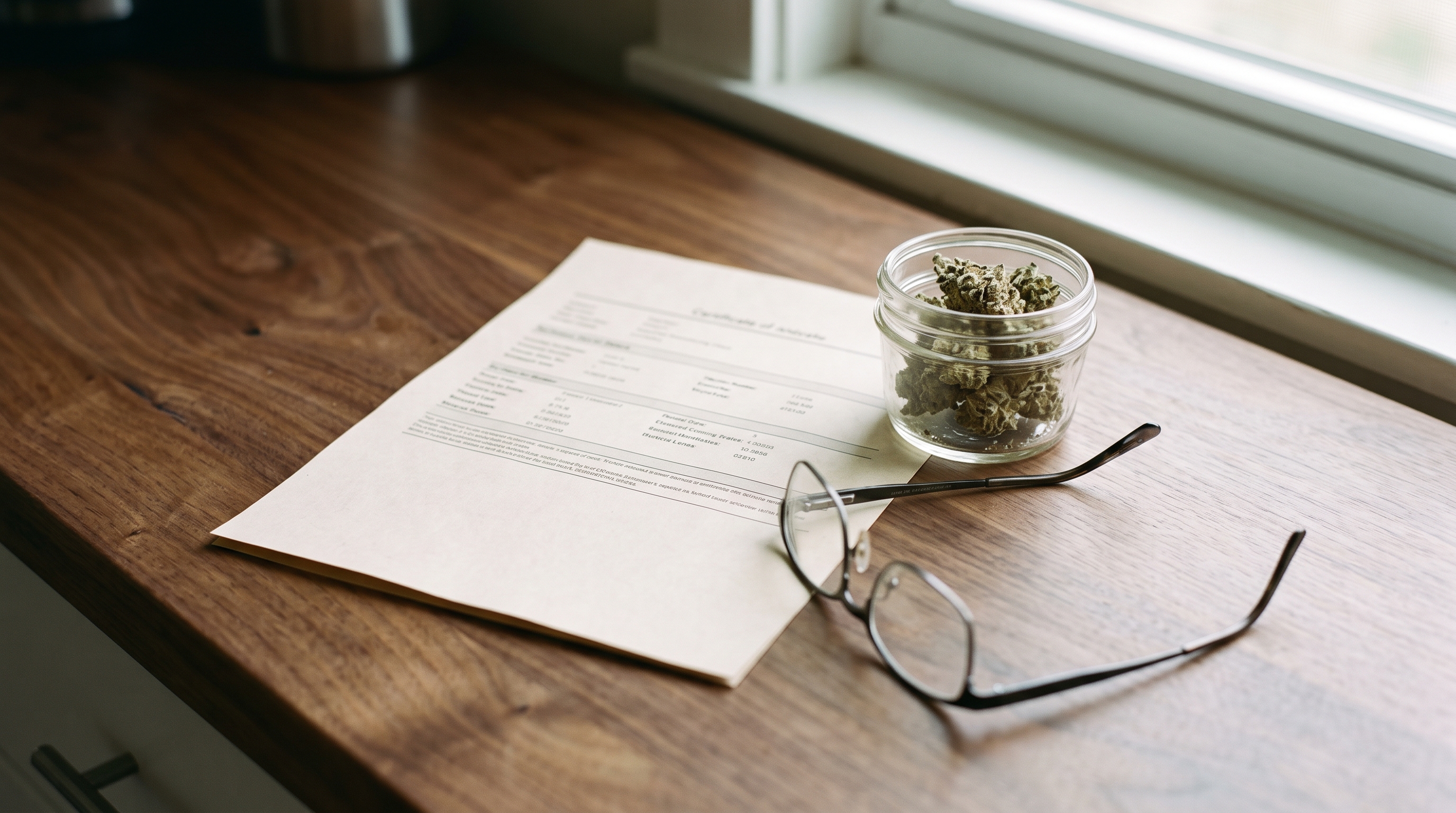
Ask to see the actual COA, not the shelf tag. The certificate of analysis carries the test date, the lab, and the full cannabinoid breakdown. Our guide to reading cannabis lab results shows what to look for. A batch tested eight months ago is telling you about a different product than the one in your hand.
Buy concentrate when you need the dose to be predictable. This is the genuinely actionable asymmetry. If precision matters — medically, or because you are dialling in a routine — a concentrate label is simply better information than a flower label. That has to be weighed against everything else in the flower versus edibles versus concentrates tradeoff, and against the fact that different consumption methods deliver very different fractions of what you started with. Dabbing is not a beginner’s format, and starting too high is the fastest route to greening out.
Use your nose. Terpene content is not what is being mislabelled here, and aroma is information a sticker cannot fake. The terpene smell test is not folklore — it is the one input at the counter you can verify yourself.
Do not expect the budtender to fix this. They are reading the same tag you are, and turnover behind the counter is high enough that we wrote a whole piece on why dispensary recommendations are broken. Picking the right dispensary does more for you than picking the right budtender.
The Part That Should Bother You Most
Here is where we land, and it is not where most coverage of this study will land.
Everyone’s instinct is to demand better labels. Fair enough — the researchers ask for exactly that, and blinded independent verification would be a real improvement.
But notice what the demand assumes: that if the THC number were accurate, it would tell you what you need to know.
It would not. THC percentage is a weak predictor of how cannabis will actually feel. Two flowers at identical THC can produce completely different experiences depending on their terpene profile, their minor cannabinoids, and how those compounds interact — the entourage effect in practice. A myrcene-dominant flower and a limonene-dominant flower at the same 24% are not the same drug. Blue Dream and Granddaddy Purple can overlap on THC and land nowhere near each other. So can Sour Diesel and Wedding Cake, or Durban Poison and Gelato. And the same jar of Gorilla Glue #4 will hit you differently on different days depending on sleep, food, and tolerance.
The chemistry that actually predicts your experience is the stuff in smaller type: myrcene and its association with heavier, more relaxed effects, limonene and brighter euphoric ones, caryophyllene and its unusual receptor behaviour. That is the reasoning behind grouping strains into High Families — Relax High, Uplift High, Balance High — by chemistry rather than by a single headline number. The German chemovar research is the clearest published support for sorting cannabis this way, and it is also why THC percentage is a terrible way to choose cannabis even when it is correct.
So the Giordano findings are not a story about a good metric being corrupted. They are a story about a bad proxy being made worse. The industry picked the number that was easiest to measure and easiest to price, built the entire retail experience on it, and then — on the flower shelf at least — could not even measure that reliably.
The honest conclusion is that you cannot buy your way out of this with a better label. You get out of it by paying attention to what a specific product actually does to you, and remembering it. That is unglamorous and it takes a few weeks. It is also the only method that survives contact with a mislabelled jar.
If you want a structure for it rather than a mental note you will lose, the High IQ app exists to log what you took, what was in it, and how it landed — so your own history becomes the reference you shop against.
FAQ
Does this mean flower labels are fraudulent? No, and the study makes no such claim. It measured discrepancies, not intent. Most of the flower gap is plausibly explained by genuine plant heterogeneity, sampling, and degradation after testing. That said, the pooled skew runs in the profitable direction, which is worth noticing.
Are concentrate labels trustworthy everywhere, then? In this Colorado sample, 96.0% of concentrates fell within ±15% of label. That is a strong result, but it is one state and one point in time. The underlying reason — concentrates are homogenised and flower is not — should generalise. The exact percentage should not be assumed to.
Why is the observed THC lower than labelled rather than higher? The study reports the direction but does not establish the cause. Degradation between the lab test and your purchase is the most obvious candidate, since THC declines with heat, light, and time. Sampling that favours the most resinous material is another.
Is this true in my state? Unknown from this study. The measurement is Colorado-specific. The mechanisms driving it — sampling variance, producer-pays labs, price tracking potency — exist in most legal markets, so the pattern is likely directional elsewhere. The numbers are not transferable.
What is lab shopping? When producers choose and pay the lab that tests their product, business tends to flow toward labs returning favourable numbers. No single act of fraud is required for the system to drift upward. It is the reason the study’s authors call for independent, blinded verification.
If the number is unreliable, what should I use instead? Terpene profile where it is published, aroma where it is not, format when you need dose precision, and your own tracked history above all of it. Chemistry and individual response predict experience. A single percentage never did.
Sources
- Giordano G, Brook CP, Ortiz Torres M, MacDonald G, Skrzynski CJ, Lisano JK, Mackie DI, Bidwell LC. Accuracy of labeled THC potency across flower and concentrate cannabis products. Scientific Reports, 2025. DOI: 10.1038/s41598-025-03854-3 · PubMed 40592871
This article is educational and is not medical advice. Cannabis laws and product regulations vary by state.
