Sugar Wax vs Badder vs Crumble: Texture Matters
Sugar wax, badder, and crumble look wildly different — but texture reveals terpene and moisture state, not potency. Here's what each tells you.


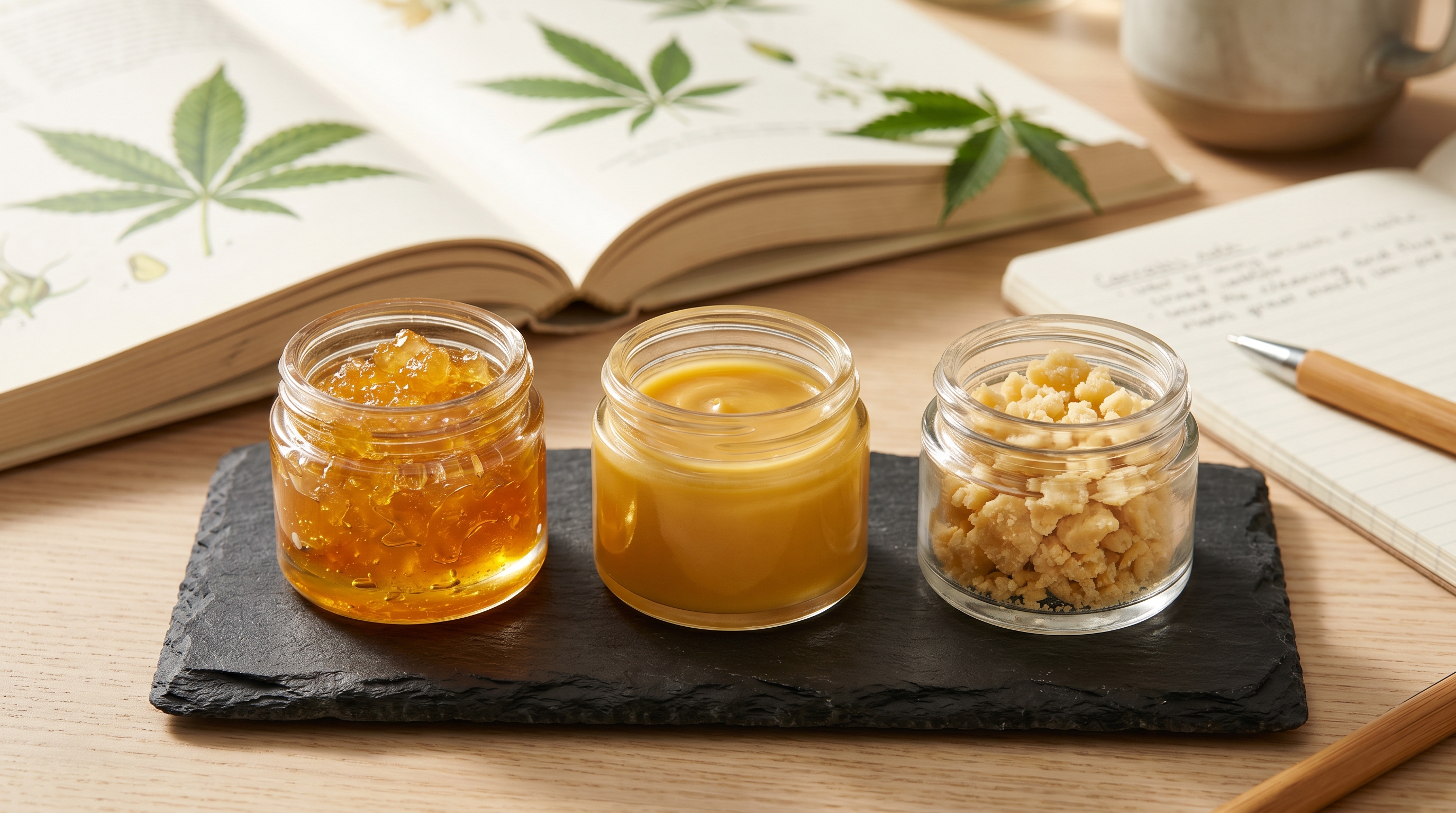
Walk up to any dispensary concentrate case and you’ll see jars that look like they belong in three different stores. One holds glistening wet crystals that resemble raw honey or coarse sugar. Another holds something smooth and golden, like cake frosting whipped to a peak. A third holds a dry, pale chunk that looks like it would shatter into dust if you breathed on it.
Same plant. Often the same starting extract. Wildly different textures.
Here’s the thing most budtenders won’t tell you. That texture is not telling you which one is “stronger.” It tells a story about what happened after extraction. How much the extract got stirred. How warm the room was. How much moisture and terpene stuck around. How the crystals organized themselves. Once you can read that story, you stop buying by looks. You start buying by what fits how you consume.
Let’s decode sugar wax, badder (and its cousin budder), and crumble — three textures from the same family that behave very differently on your dab tool.
Why Texture Varies in the First Place
Most extracts start life the same way. Whether a processor uses light hydrocarbons (butane and propane in a closed-loop system) or solventless rosin pressing, the early steps pull cannabinoids and terpenes out of the trichomes into a raw, gooey oil. If you want the full extraction picture, our complete guide to cannabis concentrates lays out the whole map, and hash vs wax vs shatter covers how the big categories relate.
What turns that raw oil into sugar, badder, or crumble is post-processing — and four levers do almost all the work:
- Agitation (whipping/stirring). Mechanically working the extract introduces air and nudges cannabinoids to crystallize. A gentle whip gives you a smooth, creamy result. Aggressive, extended agitation dries it out and breaks it apart.
- Heat. Purge temperature controls how the extract sets up. Warmer, faster purges tend to keep things fluid and whippable; cooler, slower purges drive toward dry, brittle structures.
- Moisture and residual solvent. As volatile solvent and trapped moisture leave the slab, the extract firms up. Hold onto more, and it stays soft and wet; drive most of it off, and it goes dry and chalky.
- Terpene content. Terpenes are the oily, fragrant compounds that keep an extract loose and sticky. High-terpene material resists going fully dry. Strains with leaner terpene loads crumble more easily.
So a processor doesn’t really “pick a texture” out of thin air — they steer those four levers. Cured resin and live resin behave differently here too, because freezing the plant preserves more terpenes; our breakdown of cured resin vs live resin and live resin vs live rosin explains why that input matters before any whipping ever happens.
Sugar Wax: The Wet, Grainy One
Sugar wax (sometimes called terp sugar or “sugaring”) looks exactly like its name — wet sand, raw honey, or coarse crystallized sugar. It happens when the extract separates during or after processing: tiny cannabinoid crystals (mostly THCA) form and settle into a bath of liquid terpenes around them.
That separation is partly a temperature game. Cool room temperatures — roughly the low-to-mid 60s Fahrenheit — push small, gritty crystals to form while the terpenes stay liquid around them. The result is that grainy, wet look. Strains rich in certain terpenes or fattier compounds “sugar up” more readily. That is why some cultivars almost always show up as sugar on the shelf.
What the texture tells you: sugar wax usually means a high, well-preserved terpene fraction sitting in liquid form. That’s why it tends to be loud and flavorful. It does not mean it’s weaker — many sugars still test in a similar cannabinoid range to their drier cousins.
Dab ease: a little fiddly. Because it’s wet and loose, sugar can be messy to scoop and tends to run when heated. A dab tool with a small scoop helps, and it loves a proper dab rig with a carb cap to corral the vapor. It’s also a favorite for dab pens.
Badder and Budder: The Creamy, Whipped One
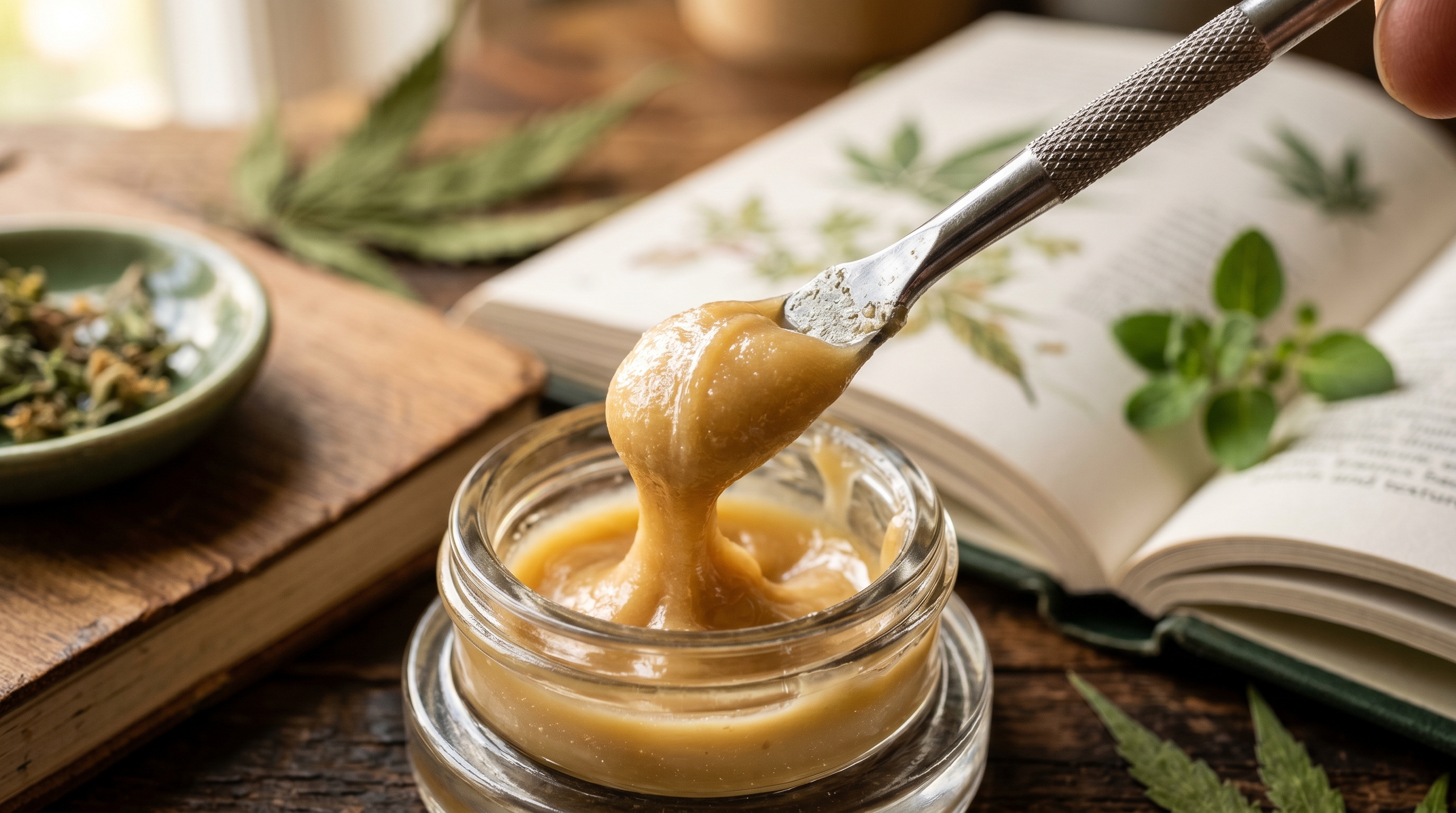
Badder, budder, and the closely related “batter” are the soft, aerated textures that look like cake frosting or smooth peanut butter. They’re made by whipping the extract at low heat during or after the purge.
That whipping does two jobs at once. It folds air into the oil, and it nudges cannabinoids to crystallize into a fine, even structure rather than big distinct crystals. A gentle, controlled whipping cycle keeps it smooth and creamy — that’s budder. A touch more texture, and you’ve got badder. In the solventless world, the same magic happens when fresh-pressed rosin is cold-cured in a sealed jar and lightly agitated until it whips into rosin badder.
What the texture tells you: a clean, blond, glossy badder usually signals good starting material and careful handling. High-quality badder should never look green (that means plant matter got in) and shouldn’t look chalky (which can hint at terpene loss or oxidation). The creamy body also tells you a healthy terpene level is still present — terpenes are part of what keeps it spreadable instead of dry.
Dab ease: the easiest of the three. Badder scoops cleanly, doesn’t run everywhere, and loads onto a nail or vaporizer without drama. If you’re newer to dabbing, this is the friendly one — start with our dabbing 101 guide and you’ll be comfortable fast.
Crumble: The Dry, Honeycomb One
Crumble (also called honeycomb wax) is the opaque, pale-yellow chunk that breaks apart into a dry, cheese-like or honeycomb structure. You get there by purging the extract at lower temperatures for longer than usual — a low-and-slow approach that drives off more moisture and residual solvent than other methods.
The extended, gentle purge produces a much drier final product. With less terpene oil and moisture holding everything together, the structure becomes porous and brittle. Crush a piece between your fingers and it falls apart into crumbs you can sprinkle.
What the texture tells you: crumble’s dryness points to a lower retained-moisture, often lower-terpene state than a wet sugar. That’s not automatically a downside — many people love crumble precisely because it’s so easy to portion and sprinkle. But if a crumble looks dark or smells flat, age and oxidation may have cost it some flavor.
Dab ease: easy to break, but slightly fiddly to keep contained because it can crumble into dust. It’s fantastic for topping a bowl or boosting a joint, and it dabs fine on a standard rig. If you’re deciding between formats entirely, our guide on choosing between flower, edibles, and concentrates is a good gut check.
Side-by-Side: How the Three Compare
| Sugar Wax | Badder / Budder | Crumble | |
|---|---|---|---|
| Texture | Wet, grainy crystals (honey/wet sand) | Smooth, whipped, creamy frosting | Dry, brittle, honeycomb |
| Terpene / moisture state | High terpenes in liquid form, wettest | Healthy terpenes, soft and spreadable | Lower moisture and terpenes, driest |
| How it’s made | Crystals separate during cool crystallization | Whipped at low heat to fold in air | Long, low-temp purge drives off moisture |
| Dab ease | A little messy; can run; loves a carb cap | Easiest to scoop and load | Easy to break; can crumble into dust |
| Storage | Airtight, cool/cold, dark | Fridge short-term, freezer long-term | Airtight, cool, dark; handle gently |
A note on storage that applies to all three: heat, oxygen, light, and moisture are the enemies of terpenes and cannabinoids. Keep concentrates in an airtight, opaque (UV-protected) container somewhere cool and dark. Glass and silicone are the go-to materials. For longer holds, the fridge or freezer slows terpene evaporation — just avoid repeatedly bouncing the jar between warm and cold, which encourages texture changes and condensation.
Does Texture Equal Quality? (No — Let’s Bust This)
Here’s the myth worth killing: texture does not predict potency. A glossy badder and a dry crumble can land within a few points of each other on total cannabinoids. Most concentrates fall somewhere in the mid-60s to high-80s percent range. The texture has little to do with it.
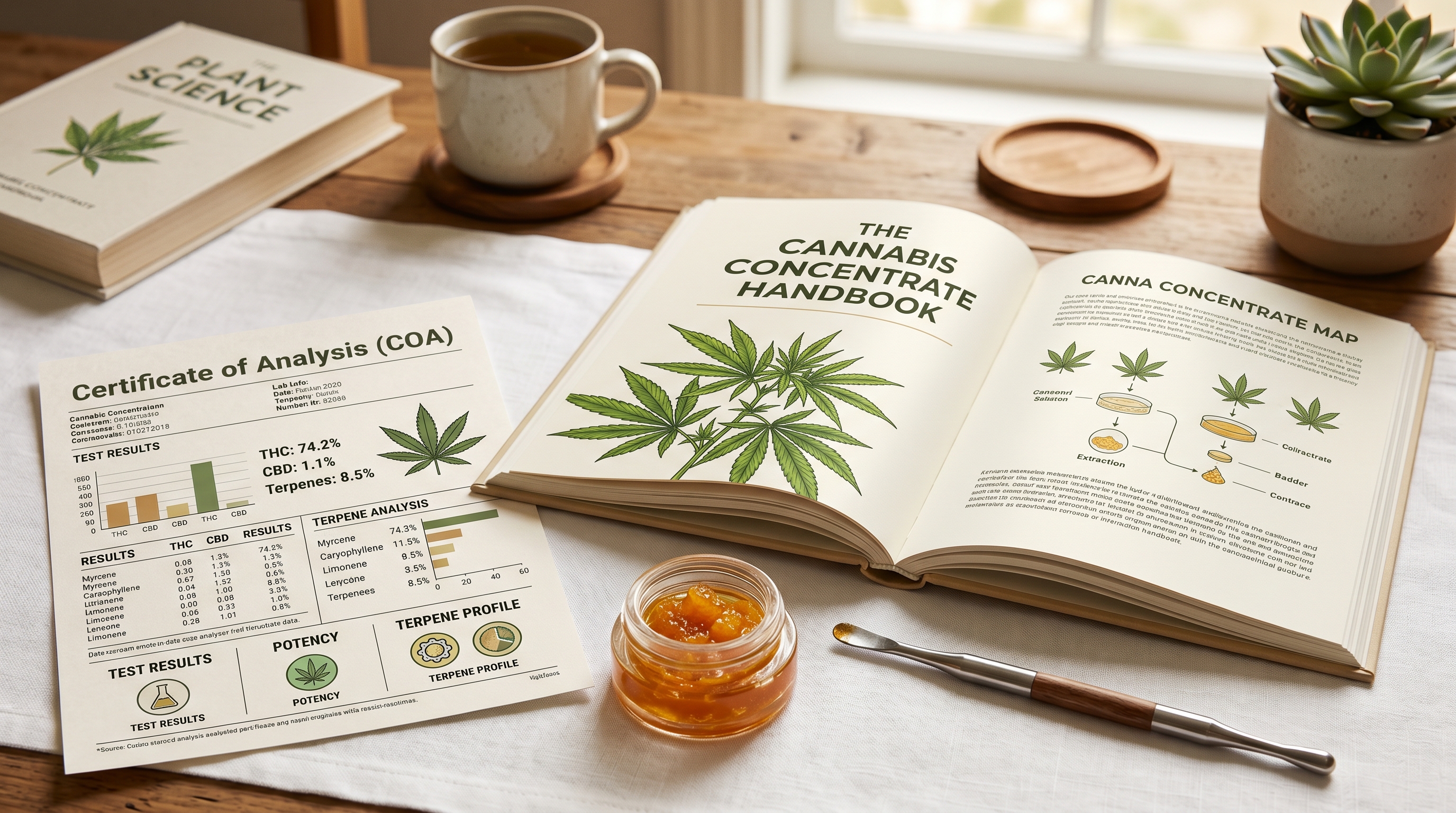
What texture does tell you is the extract’s terpene and moisture state and how it was finished. That is useful. But it is a different question than “how strong is it.” If you want to know potency, the answer is on the label. The certificate of analysis (COA) lists total THC, total cannabinoids, and often a terpene breakdown. That is the number to trust, not the jiggle of the jar.
A clean look can hint at care in extraction. Bright, blond-to-gold color and a smooth surface usually point to good material and good handling. Green tones mean plant matter slipped in. A chalky or dark cast can suggest oxidation and terpene loss. So use your eyes for cleanliness, and use the COA for strength.
And the consistency you enjoy says more about you than about the product’s quality. That is a pattern worth tracking. The High IQ app lets you log what you reach for and how each one tends to suit you. Over time, you may notice you prefer the loud terpenes of a sugar, or the easy handling of a badder. The texture matters less than how you respond to what is inside it.
Which One Is Right for You?
- You chase flavor above all. Go sugar wax (or a sauce). Those liquid terpenes are where the loudest aroma lives. Pair it with low-temperature dabbing to taste the full profile — many of the most fragrant terpenes vaporize roughly between 350–400°F, so cooler dabs preserve them.
- You’re newer to dabbing or want zero fuss. Badder or budder. It scoops clean, behaves predictably, and won’t run all over your station. Start here.
- You like to sprinkle and top bowls or joints. Crumble. Its dry, breakable structure is purpose-built for boosting flower, and it portions easily.
- You want maximum potency. None of these win by texture alone — check the COA. If isolated potency is the goal, distillate climbs higher; see rosin vs distillate for that trade-off.
If you’re brand new to the whole category, the gentlest on-ramp is reading dabbing 101 first, grabbing a forgiving badder, and using a temperature-controlled setup. When you’re ready to go deeper into solventless options, bubble hash, kief, and dry sift and our home rosin press guide are the next steps. And if you want a fun way to put new gear to work, 710 dab day is the concentrate community’s holiday.
Key Takeaways
Sugar wax, badder, and crumble are not a ranking. They are a spectrum of post-processing choices:
- Sugar is wet and terpene-rich because crystals separated out into a liquid bath.
- Badder is creamy because it got gently whipped with air.
- Crumble is dry because it got purged long and low.
None of those facts tells you which jar hits hardest. The COA does that. So read the texture for what it really communicates — flavor potential, moisture state, and how easy it is to handle. Then read the label for potency. The best concentrate is not the prettiest jar in the case. It is the one that matches how you like to dab and how your body responds to what is inside.
FAQ
Is sugar wax stronger than badder or crumble? Not inherently. Texture reflects terpene and moisture state and finishing method, not potency. All three commonly test in a similar cannabinoid range. Check the certificate of analysis for the real number.
Why did my badder turn grainy or “sugar up”? Cannabinoids naturally crystallize over time, especially with temperature swings. Budder can develop small THCA crystals and drift toward a sugary texture. It’s normal — keeping it at a stable, cool temperature slows it down.
Which texture is easiest for a beginner to dab? Badder or budder. They scoop cleanly, don’t run, and load onto a nail or vaporizer with the least mess. Sugar can be drippy and crumble can scatter.
Does a “wetter” concentrate mean it has more flavor? Often, yes — wet, grainy sugar usually carries a high liquid-terpene fraction, which is where loud aroma lives. But always confirm with the terpene panel on the COA rather than judging by sight alone.
How should I store concentrates to keep them fresh? Airtight, opaque container in a cool, dark place. Refrigerate for short-term storage and freeze for the long term, but avoid repeatedly moving the jar between warm and cold to prevent condensation and texture changes.
Can I tell quality just by looking? You can spot cleanliness: bright blond-to-gold color and a smooth surface suggest good material and handling, while green tones mean plant matter got in and chalky/dark casts can indicate oxidation. But quality of effect still comes down to the lab numbers and how it suits you.
Sources
- Weedmaps — Badder, Batter, and Budder. weedmaps.com/learn/dictionary/badder-budder-batter
- Luna Technologies — Difference Between Shatter, Budder, and Crumble. lunatechequipment.com/blogs/blog/difference-between-shatter-budder-and-crumble
- ACS Laboratory — Cannabis Concentrates 101: A Guide to Terms, Usage, Potency, and Testing. acslab.com/retail/cannabis-concentrates-guide
- Ethos Cannabis — Sugar vs. Sand vs. Sauce: What’s the Difference Between These Cannabis Extracts? ethoscannabis.com/sugar-sand-sauce-concentrates
- Terpene Belt Farms — What Is Terp Sugar: Production & Formulation Guide. terpenebeltfarms.com/blogs/what-is-terp-sugar
Cannabis affects everyone differently. This article is educational and not medical advice. Concentrates are high-potency products — start low, go slow, and follow your local laws.


