Cannabis and HIV/AIDS: What Patients Should Know
How cannabis fits into HIV/AIDS care — wasting, neuropathic pain, nausea, immune effects, and the antiretroviral drug-interaction caution.


Few stories in medicine are as tangled with cannabis as HIV/AIDS. In the late 1980s, an AIDS diagnosis was often a death sentence. Patients who were wasting away did something bold. They used cannabis to eat again. That grassroots effort helped push one of the first cannabis-based medicines to FDA approval. It still shapes how we talk about cannabis today.
But the science is more nuanced than the legend. Today, HIV is a chronic condition you can manage with effective antiretroviral therapy (ART). The questions about cannabis have shifted too. Does it still help with the symptoms people face? Could it quietly clash with the drugs keeping someone alive? And what does cannabis do to an immune system that is already under attack?
Let’s walk through what the research really shows — honestly, including where the evidence is thin.
This is education, not medical advice. HIV care is complex. Cannabis can clash with antiretroviral drugs. Nothing here replaces a talk with your HIV provider or pharmacist. Please talk to your doctor before you change how you use cannabis or your medications.

HIV/AIDS Today — and Why Cannabis Keeps Coming Up
HIV (human immunodeficiency virus) attacks the immune system. It targets a key cell called the CD4+ T cell. Left untreated, HIV can progress to AIDS (acquired immunodeficiency syndrome). The change since the 1990s has been huge. With steady ART, many people living with HIV (PWH) now have a near-normal life span. Their viral load can become undetectable, which means the virus is also untransmittable.
So why does cannabis keep coming up? Because chronic HIV still leaves people managing daily symptoms. So do the medications. Common ones include nerve pain, low appetite, nausea, poor sleep, anxiety, and low-grade inflammation that lingers even when the virus is suppressed. Surveys find that cannabis use is more common among PWH than in the general public. Often the goal is symptom relief, not recreation.
That makes this a topic worth getting right. New to how cannabis works in the body? Our endocannabinoid system guide is a good place to start. The difference between the two headline compounds is covered in THC vs CBD.
The Historical Role: AIDS Wasting and the Birth of Marinol
The biggest chapter is HIV wasting syndrome, also called cachexia. Doctors define it as losing more than 10% of your body weight over a year (or 7.5% over six months) once other causes are ruled out. In the pre-ART era it was devastating. Even today, estimates of how common it is range from about 14% to 38%. It is far rarer now that most patients are virally suppressed.
Patients reported that cannabis brought their appetite back when nothing else did. That real-world evidence, plus formal trials, moved the FDA to act. In 1992 it approved dronabinol (synthetic THC, brand name Marinol) for AIDS-related anorexia with weight loss. That made it one of the earliest cannabis-based prescription medicines in the United States.
The key trial behind that approval was [Beal, 1995] in the Journal of Pain and Symptom Management. It randomized 139 patients with AIDS-related anorexia to either dronabinol 2.5 mg twice a day or placebo for six weeks. Dronabinol led to a clear, statistically significant gain in appetite. It also showed trends toward better mood and less nausea. It is a foundational study. But note the small size and short length — themes that come up again and again in this field.

Appetite and Cachexia: What the Evidence Really Says
Here’s where honesty matters. The appetite effect of THC is real and well documented. It’s the same mechanism behind the munchies. THC acts on CB1 receptors in brain regions that control hunger.
But helping someone eat more is not the same as undoing serious weight loss. Across the trials, weight results with dronabinol have been mixed. Total body weight changes ranged from about −2.0 kg to +3.2 kg. In one head-to-head study (DATRI 004), the drug megestrol acetate produced larger weight gains than dronabinol did. And a [Lutge, 2013] Cochrane review of cannabis in HIV/AIDS found the evidence base is limited. The studies were small and short, and long-term survival data is missing.
The takeaway: cannabis or dronabinol may help someone with HIV eat more comfortably and feel less symptom distress. It should not be framed as a fix for wasting. For a broader look at appetite-friendly profiles, see best cannabis strains for appetite stimulation. It also helps to know that some compounds do the opposite. THCV and the terpene humulene can actually curb appetite, which is why product choice matters.
Neuropathic Pain: The Strongest Evidence
If there’s one area with the most credible HIV-related evidence, it’s painful HIV-associated sensory neuropathy. This is burning, tingling, stabbing pain in the feet. It can affect up to a third of patients. Sometimes the virus causes it, and sometimes older antiretrovirals do.
Two rigorous trials stand out. Both came from Dr. Donald Abrams’ group.
-
[Abrams, 2007] in Neurology (68:515-521) was a randomized, double-blind, placebo-controlled inpatient trial. Patients smoked cannabis (3.56% THC) three times a day for five days. It cut daily pain by a median 34%, versus 17% with placebo (p = 0.03). In the cannabis group, 52% got more than 30% pain relief. Only 24% did on placebo. The team called the effect “comparable to oral drugs used for chronic neuropathic pain.” DOI: 10.1212/01.wnl.0000253187.66183.9c.
-
[Ellis, 2009] was a separate double-blind crossover trial. These HIV patients had pain that other treatments had failed to control. Cannabis again beat placebo (median DDS difference 3.3 points, effect size 0.60, p = 0.016). About 46% got meaningful relief, versus 18% on placebo.
These are small but well-run studies. They are why neuropathic pain is often called cannabis’s most defensible HIV use. For how this applies beyond HIV, see our pieces on cannabis vs opioids for chronic pain and how cannabis terpenes relieve pain through adenosine receptors. The compound most linked to physical comfort, caryophyllene-rich Relief profiles, is worth knowing too.
Nausea and Overlapping Symptoms
THC’s anti-nausea (antiemetic) effect is well established. Dronabinol is also FDA-approved for chemotherapy nausea. That effect can carry over to HIV care, where nausea may come from medications or the illness itself. Much of what we know overlaps with cancer supportive care. We cover that in cannabis for cancer-related symptoms and a science-backed guide to nausea relief.
Sleep and mood matter here too. Chronic illness often disrupts rest. Many PWH say they use cannabis for sleep, though the link is complicated, as we explain in cannabis and sleep. As always, more is not better. Finding a low, comfortable dose tends to matter more than chasing potency.
The Endocannabinoid System and Immune Modulation: A Double-Edged Sword
This is the part that deserves real caution. The endocannabinoid system isn’t just about the brain. CB2 receptors sit densely on immune cells. So cannabinoids can directly shape how the immune system acts. We dig into this in cannabis and the immune system.
In HIV, this cuts both ways. A 2025 review in Current HIV/AIDS Reports [Costiniuk, 2025] (DOI: 10.1007/s11904-025-00729-0) listed some intriguing possible benefits. In PWH, cannabis use has been linked with lower inflammatory markers (such as MCP-1 and IP-10), less immune activation, a stronger gut barrier, and a distinct gut microbiome. Chronic inflammation drives much of the long-term harm in treated HIV. So an anti-inflammatory effect could, in theory, help. The same review notes early, unclear signals around the HIV reservoir.
But “immunomodulatory” does not automatically mean “good.” Cannabinoids can also be immunosuppressive. In a person whose immune system is already weakened, dampening immune responses is not a benefit to shrug off. The evidence here is early and mostly observational. It is not strong enough to recommend cannabis as an immune therapy. On the reassuring side, controlled studies help. The [Costiniuk, 2022] CTNPT 028 pilot tested oral cannabinoids in PWH on stable ART. It found no drop in CD4 counts or viral load over 12 weeks. Still, that trial was tiny (10 people), and one patient on high-dose CBD developed severe hepatitis. The honest summary: cannabis appears not to harm viral control in people who are virally suppressed, but the immune story is far from settled.
Antiretroviral Interactions and Route Considerations
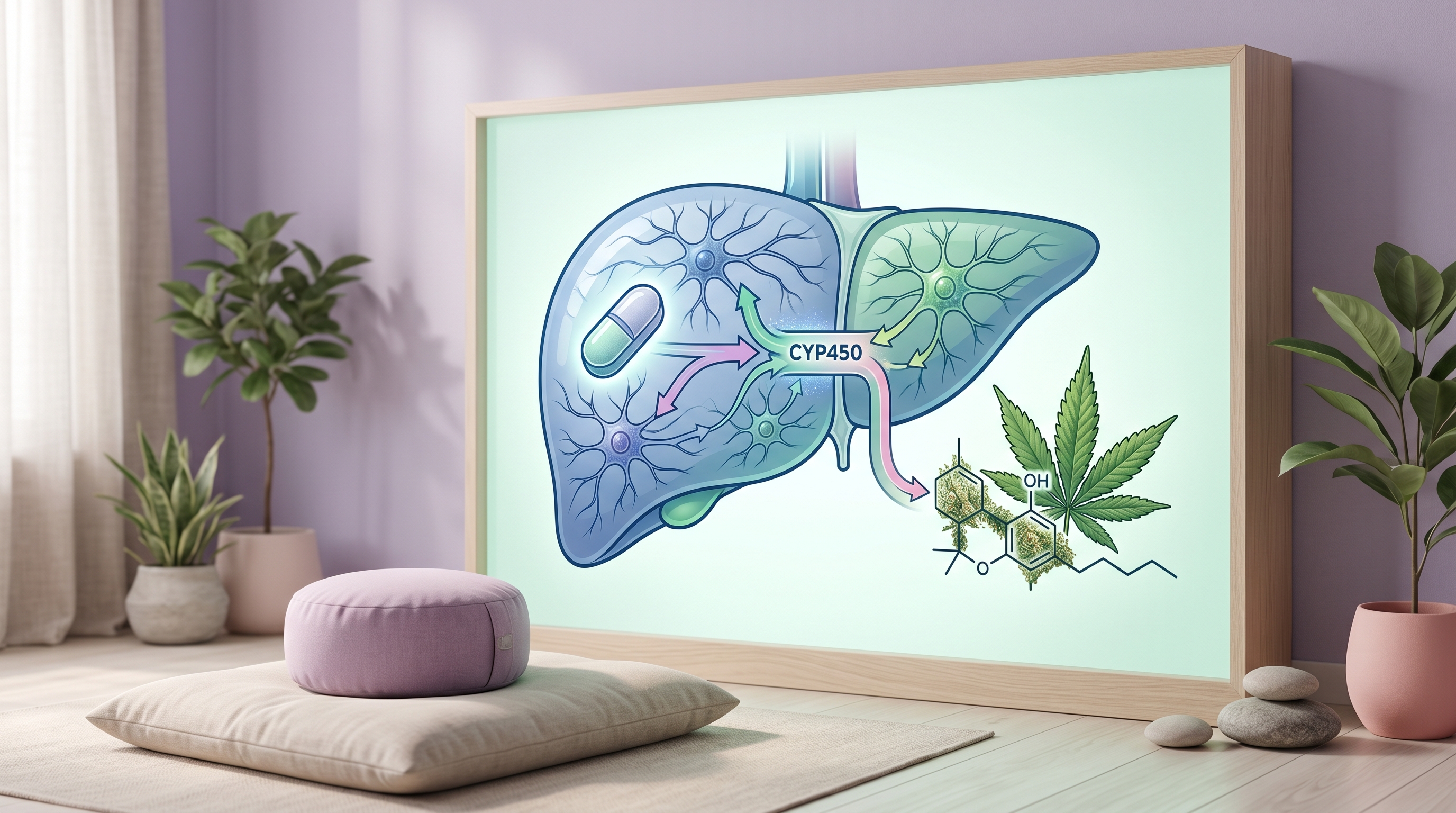
Here’s the caution that matters most day to day. The liver breaks down both THC and CBD using cytochrome P450 enzymes — mainly CYP3A4, CYP2C9, and CYP2C19. Those are the same pathways that handle many antiretrovirals. That overlap creates room for drug-drug interactions.
What does the evidence actually show? Mostly modest, not catastrophic effects. But they are worth respecting:
- Smoked cannabis has been linked with small drops in protease-inhibitor levels. One study saw roughly a 17.4% drop in indinavir Cmax and 14.1% in nelfinavir.
- One observational analysis found cannabis users had lower atazanavir trough levels. About half fell below the therapeutic range. That is a concern, because low levels can risk weaker viral control and resistance.
- On the reassuring side, the controlled [Abrams, 2003] trial in Annals of Internal Medicine ran for 21 days. Smoked and oral cannabinoids did not meaningfully change HIV RNA, CD4/CD8 counts, or protease-inhibitor levels.
The direction of the interaction depends on the drug. Some antiretrovirals, like ritonavir (a strong CYP3A4 inhibitor), could possibly raise THC levels and side effects. The practical point is simple. This is exactly why a pharmacist needs to review your full regimen. Research suggests the broader pattern matters here, which we cover in cannabis and medication interactions and in how your body processes THC.
Route matters too, especially for immunocompromised patients. Smoking carries infection and lung risks. Those risks grow when immunity is low. Burnt plant material can also carry mold, which is a real danger for someone immunosuppressed. For this reason, many clinicians prefer pharmaceutical dronabinol, well-tested oral products, or vaporizing over smoking. Steady dosing helps too, because anything that complicates ART adherence works against the whole point of treatment. Products from unregulated sources add even more risk, since potency and contamination are hard to predict.
Talk to Your Doctor — Really
Are you living with HIV and thinking about cannabis, or already using it? The single most useful step is an open, judgment-free talk with your HIV provider and pharmacist. They can:
- Check your exact antiretroviral regimen against cannabis interactions
- Help you pick a route and dose that lowers risk
- Track your viral load, CD4 count, and liver function
- Make sure cannabis isn’t quietly hurting how well you stick to your medications
Many providers today are genuinely open to this talk. Telling them about your use isn’t a confession. It’s the only way they can keep you safe.
How High IQ Fits In
Individual responses to cannabis vary a lot. That is even more true when other medications are in the mix. So tracking what you actually feel beats chasing a strain name. The High IQ app lets you log products, doses, and effects. Over time you can spot your own patterns — what eases nausea, what helps you sleep, what makes you anxious. Then you can bring real data to your next appointment. The strain matters less than how your body responds to its specific profile.
Key Takeaways
- Cannabis is not a cure for HIV and never replaces ART. It is about easing symptoms.
- Dronabinol (Marinol) was FDA-approved for AIDS-related anorexia in 1992, but its effect on weight has been mixed.
- The strongest HIV evidence is for neuropathic pain, where smoked cannabis beat placebo in two controlled trials.
- THC and CBD share liver enzymes with many antiretrovirals, so a pharmacist should review your regimen.
- Smoking adds infection risk for immunocompromised people; oral products or vaporizing are often safer.
- Track your own response and share it with your provider. Honesty keeps you safe.
Frequently Asked Questions
Is cannabis a therapy for HIV itself? No. Cannabis is not a cure for HIV, and it is not a replacement for antiretroviral therapy. The research is about easing symptoms — pain, appetite, nausea — not the virus.
Will cannabis interfere with my HIV medications? It can. THC and CBD share liver enzymes (CYP3A4, CYP2C9, CYP2C19) with many antiretrovirals. The interactions seen so far are mostly modest, but some matter clinically. Always have a pharmacist review your regimen.
Is smoking safe if I’m immunocompromised? Smoking carries lung and infection risks. Those risks rise when your immune system is weak, including exposure to mold in plant material. For this reason, many clinicians prefer dronabinol, oral products, or vaporizing. Talk through the safest route with your provider.
Does cannabis weaken the immune system in people with HIV? Cannabinoids are immunomodulatory and may be immunosuppressive, which is a theoretical worry. So far, controlled studies in virally suppressed patients have not shown lower CD4 counts or higher viral load over the short term. The long-term immune picture is still unclear.
Is dronabinol the same as cannabis? Dronabinol (Marinol) is synthetic THC in a standard capsule. There is no CBD, no terpenes, and no inhaling. It gives steady dosing but lacks the whole plant’s other compounds.
Sources
- Beal JE, et al. “Dronabinol as a treatment for anorexia associated with weight loss in patients with AIDS.” J Pain Symptom Manage. 1995;10:89-97. PMID: 7730690
- Abrams DI, et al. “Cannabis in painful HIV-associated sensory neuropathy: a randomized placebo-controlled trial.” Neurology. 2007;68(7):515-521. DOI: 10.1212/01.wnl.0000253187.66183.9c
- Ellis RJ, et al. “Smoked medicinal cannabis for neuropathic pain in HIV: a randomized, crossover clinical trial.” Neuropsychopharmacology. 2009. PMID: 18688212
- Abrams DI, et al. “Short-Term Effects of Cannabinoids in Patients with HIV-1 Infection: A Randomized, Placebo-Controlled Clinical Trial.” Ann Intern Med. 2003;139(4):258-266.
- Lutge EE, Gray A, Siegfried N. “The medical use of cannabis for reducing morbidity and mortality in patients with HIV/AIDS.” Cochrane Database Syst Rev. 2013. DOI: 10.1002/14651858.CD005175.pub3
- Review: “Cannabis Use in HIV: Impact on Inflammation, Immunity and the Microbiome.” Current HIV/AIDS Reports. 2025. DOI: 10.1007/s11904-025-00729-0
- Costiniuk CT, et al. “Safety and Tolerability of Oral Cannabinoids in People Living with HIV on Long-Term ART (CTNPT 028).” Biomedicines. 2022;10(12):3168. DOI: 10.3390/biomedicines10123168
- “An Overview of the Potential for Pharmacokinetic Interactions Between Drugs and Cannabis Products in Humans.” PMC11945156.
- Badowski ME, Perez SE. “Clinical utility of dronabinol in the treatment of weight loss associated with HIV and AIDS.” HIV AIDS (Auckl). 2016;8:37-45. DOI: 10.2147/HIV.S81420
- Liverpool HIV Drug Interactions database (atazanavir–cannabis). University of Liverpool.


