Cannabis for Cancer Symptoms: Pain, Nausea, and Appetite
Evidence-based guide to cannabis for cancer symptom relief covering pain, chemo-induced nausea, and appetite loss with 2025 clinical data.


Medical Disclaimer: This article is for educational purposes only and does not constitute medical advice. Cannabis is not a replacement for conventional cancer treatment. Never start, stop, or modify any medication — including cannabis — without direct guidance from your oncology team. If you are currently undergoing cancer treatment, speak with your oncologist before using any cannabis product. Drug interactions, immunotherapy concerns, and individual treatment protocols require professional medical judgment.
Why This Conversation Matters
A cancer diagnosis changes everything. Beyond the disease itself, treatment — chemo, radiation, surgery, immunotherapy — can bring crushing side effects: constant pain, nausea so bad you cannot eat, and a loss of appetite that drains both weight and energy.
More than 65% of cancer patients say they have used or thought about using cannabis during treatment, per surveys in the Journal of Clinical Oncology. Yet many oncologists feel unprepared to guide these talks. A 2024 report from the National Cancer Institute found that oncologists consistently struggle with patients’ cannabis questions. They point to a lack of good clinical data and a mess of conflicting state and federal laws.
This creates a risky gap. Patients try cannabis on their own. Doctors dodge the topic. And a tool that might help with supportive care goes unused — or gets used carelessly.
This article closes that gap. We pull together the best evidence out there — the landmark 2024 ASCO (American Society of Clinical Oncology) guideline on cannabis in cancer care, a 2025 Frontiers in Oncology meta-analysis, and several systematic reviews — to give you an honest look at what cannabis can and cannot do for the three most common cancer symptoms: pain, nausea, and appetite loss.
The Endocannabinoid System in Cancer
Before diving into specific symptoms, it helps to understand why cannabis interacts with cancer-related suffering at all.
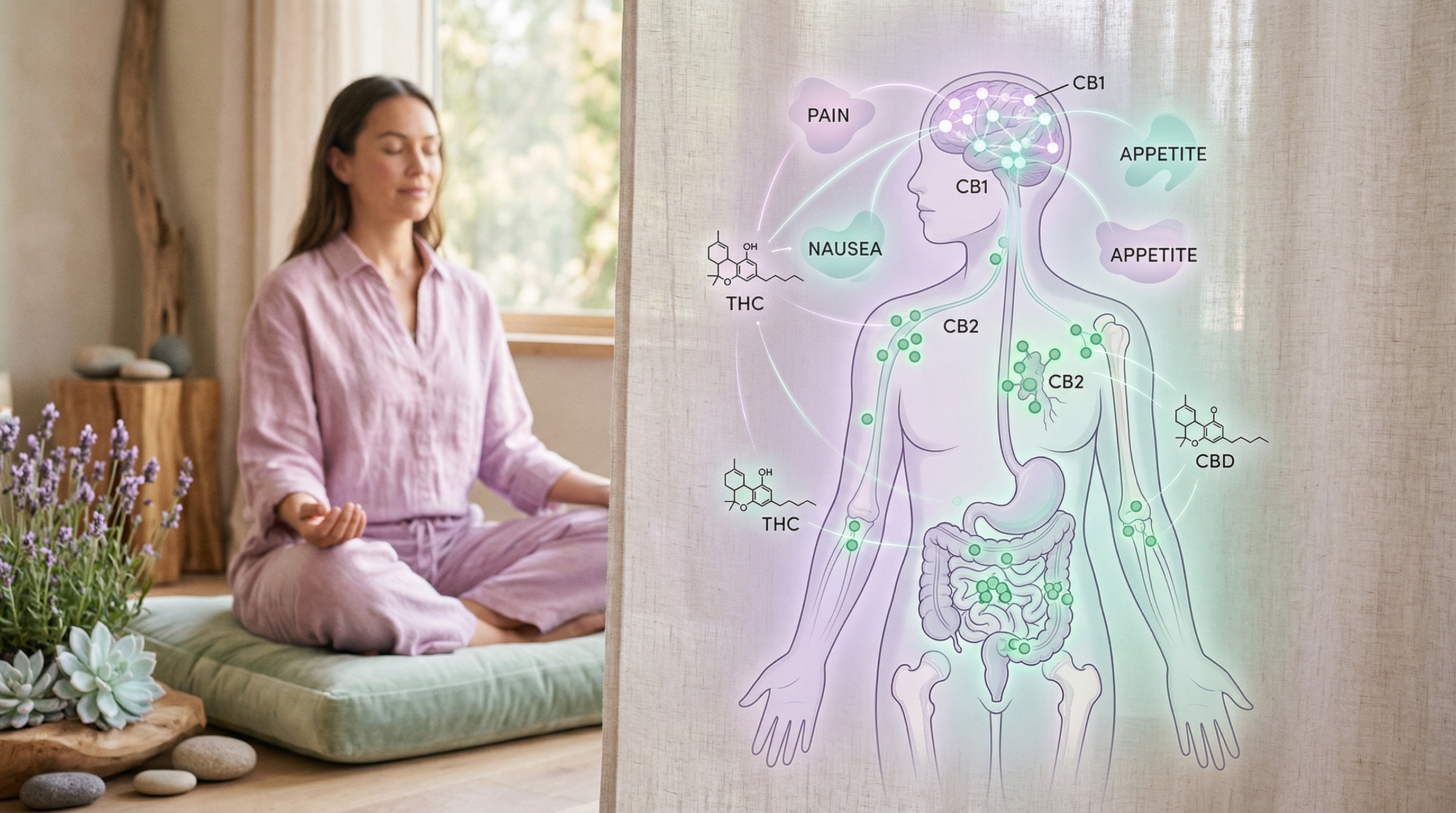
Your body runs an internal regulatory network called the endocannabinoid system (ECS). It has four main parts:
- CB1 receptors — found mainly in the brain and spinal cord, where they help control pain signals, nausea, and mood
- CB2 receptors — found mainly in immune cells, where they help control inflammation
- Endocannabinoids — your body’s own cannabis-like molecules (anandamide and 2-AG) that activate these receptors
- Enzymes — FAAH and MAGL, which break down endocannabinoids after they do their job
Cancer and its treatments can throw this system out of balance. Chemo-related nerve damage, tumor-driven inflammation, and the metabolic chaos of cachexia all involve pathways the ECS helps regulate. This is not just theory — it is the biological reason cannabinoids interact with cancer symptoms at all.
The two primary plant cannabinoids relevant to cancer symptom management are:
- THC (tetrahydrocannabinol) — binds CB1 receptors to dial down pain signals, suppress nausea through the brainstem’s vomiting center, and trigger appetite via the hypothalamus
- CBD (cannabidiol) — works on serotonin receptors (anti-nausea), TRPV1 receptors (pain), and inflammatory pathways without causing a high
Part 1: Cannabis for Cancer-Related Pain
The Pain Landscape in Cancer
Pain is one of the most feared parts of a cancer diagnosis. Between 55% and 66% of cancer patients deal with pain during treatment. Up to 70% of advanced cancer patients say pain gets in the way of daily life (van den Beuken-van Everdingen et al., 2016).
Cancer pain is not one thing. It comes in several forms:
- Tissue pain — from the tumor pressing on bones, organs, or other structures
- Nerve pain — from nerve damage caused by chemo (called CIPN), surgery, or the tumor itself
- Inflammatory pain — driven by the immune response around the tumor
- Mixed pain — a blend of the above, which is the most common type in practice
This matters because different pain types respond to different treatments. Cannabis looks most promising for neuropathic and inflammatory pain — precisely the types that respond least well to standard opioids.
What the Evidence Shows
The 2024 ASCO Guideline
The best current guidance comes from the 2024 ASCO Guideline on Cannabis in Adults with Cancer, published in the Journal of Clinical Oncology. It reviewed 13 systematic reviews and 5 other studies. Here is what it found:
- For cancer pain on its own: There is not enough evidence to say yes or no to using cannabinoids as a main painkiller
- As an add-on: There is low-quality evidence that cannabinoids may offer modest extra pain relief on top of existing meds
- For most outcomes, the evidence quality is low or very low
This is an honest take. It reflects gaps in the research, not a rejection of cannabis as a tool.
The 2025 Frontiers in Oncology Meta-Analysis
A 2025 meta-analysis in Frontiers in Oncology looked at cannabis outcomes across several cancer-related areas. It found a growing consensus that cannabis offers real benefits, especially as a palliative add-on (comfort care). The data showed consistent effects for pain relief, though the authors stress that standard dosing guidelines still do not exist.
Neuropathic Pain — The Strongest Evidence
The strongest data for cannabis in cancer pain comes from chemo-induced nerve damage (CIPN), which affects up to 70% of chemo patients:
- 79% of trials studying cannabis for nerve pain hit statistical significance — the best response rate of any chronic pain type
- A large review found cannabinoids cut pain by 30% or more compared to placebo in nerve pain studies
- CIPN does not respond well to opioids, so cannabis fills a real gap
The Opioid-Sparing Question
One of the most discussed topics is whether cannabis can reduce opioid requirements in cancer patients. The evidence is mixed:
Animal studies: Very promising. A meta-analysis found that adding THC let researchers cut the effective morphine dose by 3.5 times (95% CI: 2.04-6.03).
Human studies: Less clear. A review of four trials in cancer pain patients found no real change in opioid dose when cannabinoids were added (mean difference: -3.8 mg). Five studies also found slightly more side effects with cannabinoids vs placebo.
What patients say: Many people see cannabis as a safer option that helps them use fewer opioids. But what patients feel and what shows up in controlled trials do not always match.
What This Means in Practice
If you have cancer and are thinking about cannabis for pain:
- Do not swap out your current pain meds without your oncologist’s OK
- Nerve pain (burning, tingling, numbness from chemo) has the best evidence behind it
- Adding cannabis to existing meds has more support than using cannabis alone
- Start low, go slow — cancer patients are often more sensitive to THC because treatment changes how the body handles drugs
- Ask about drug interactions — cannabis can change how your body breaks down chemo drugs
Part 2: Cannabis for Chemotherapy-Induced Nausea and Vomiting (CINV)
Why CINV Is So Devastating
Chemo-induced nausea and vomiting is one of the most dreaded side effects of cancer treatment. Even with modern anti-nausea drugs, up to 40% of patients on strong chemo regimens still get breakthrough nausea and vomiting.
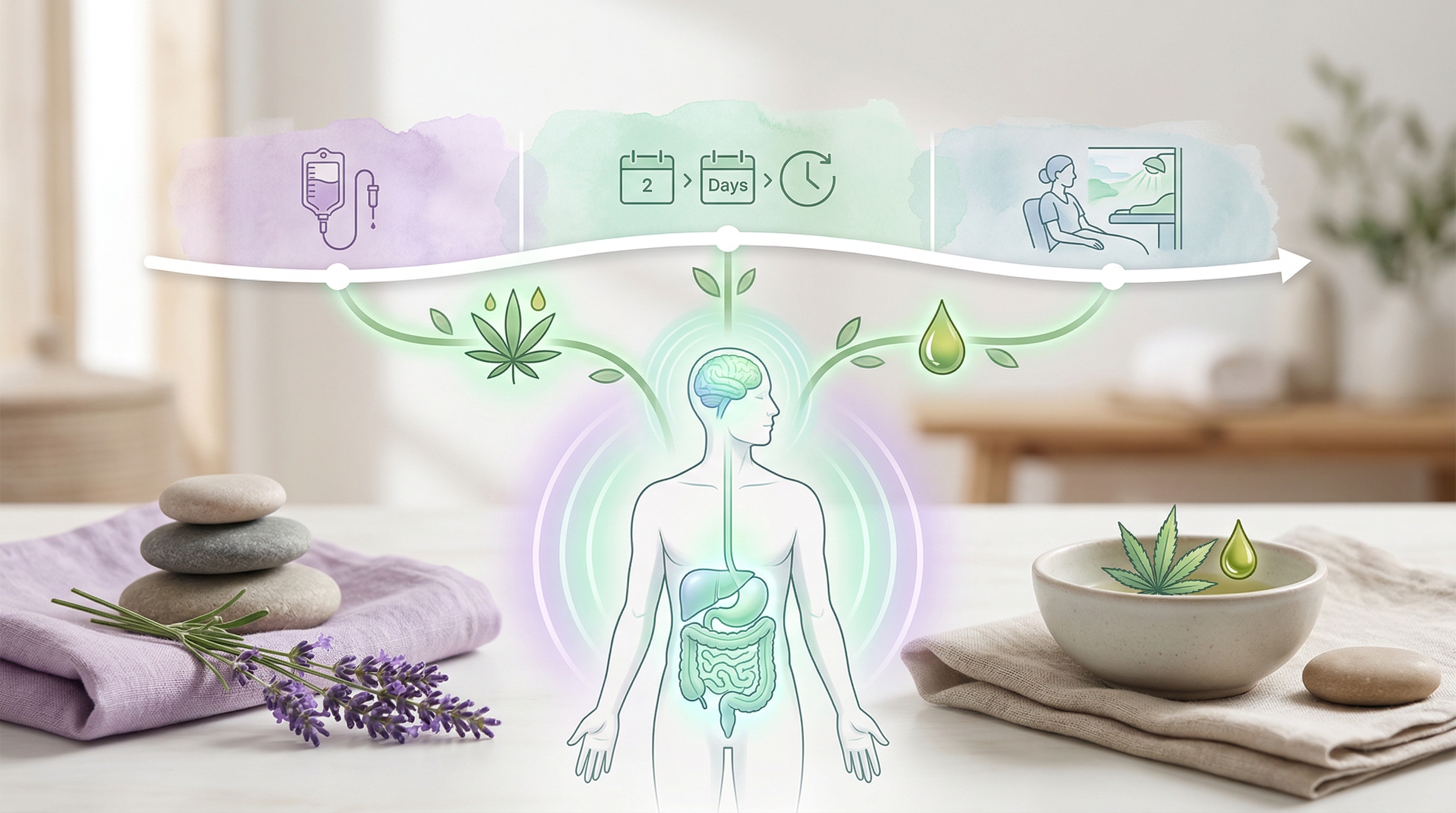
CINV shows up in three phases:
- Acute CINV — hits within 24 hours of a chemo session
- Delayed CINV — strikes 1 to 5 days after treatment (often harder to control)
- Anticipatory CINV — nausea that starts before treatment, triggered by learned cues like the smell of the clinic or the sight of an IV pole
When CINV goes unchecked, the fallout builds fast: dehydration, electrolyte problems, poor nutrition, treatment delays, lower doses, and — worst of all — patients quitting treatment they need because the side effects are unbearable.
The FDA-Approved Cannabinoids
Cannabis has the longest track record in cancer care for nausea control. Two lab-made cannabinoids have been FDA-approved for CINV since the 1980s:
- Dronabinol (Marinol) — synthetic THC in pill form, approved in 1985 for nausea that other drugs cannot control
- Nabilone (Cesamet) — a synthetic cousin of THC, also approved in 1985 for the same purpose
These are still the only FDA-approved cannabinoid drugs for any cancer symptom.
What the Evidence Shows
Systematic Reviews and Meta-Analyses
The CINV evidence is the strongest of any cancer-related use for cannabinoids:
-
A 2025 review in Journal of Cancer Survivorship looked at 32 studies with 1,889 patients. Out of 22 studies that compared cannabinoids to older nausea drugs, 12 found cannabinoids worked better.
-
A 2025 meta-analysis in Supportive Care in Cancer found cannabinoids were 2.65 times more likely to control CINV than placebo. But they were not clearly better than modern anti-nausea drugs already in use.
-
The number needed to treat (NNT): You need to treat 8 patients with cannabinoids (vs placebo) for one to get full nausea control. Against active drugs, the NNT was 6.4 for nausea and 3.3 for vomiting.
The 2024 ASCO Guideline on CINV
This is where the ASCO guideline gets most specific. It says:
Cancer patients on moderate-to-strong chemo who still get nausea or vomiting after standard anti-nausea drugs may add dronabinol, nabilone, or a quality-controlled 1:1 THC:CBD extract to their regimen.
Key details:
- This is a conditional recommendation (not strong) because the evidence quality is low
- It only applies to stubborn nausea — standard drugs (like Zofran, Emend, dexamethasone) must be tried first
- The mention of 1:1 THC:CBD is notable — that is the ratio in nabiximols (Sativex), already approved in Canada for cancer symptoms
- Quality-controlled is stressed — products with shaky labeling are a real worry
Mechanism: How Cannabinoids Fight Nausea
Cannabinoids fight nausea through several pathways at once:
- Activating CB1 receptors in the area postrema — the brainstem’s “vomiting center” that detects toxins in the blood
- Blocking 5-HT3 (serotonin) receptors — the same target as ondansetron (Zofran), one of the best anti-nausea drugs available
- Calming gut-brain signaling — reducing the nerve signals between your gut and brain that trigger nausea
- Reducing anxiety — especially useful for anticipatory nausea, which is driven by learned fear responses
Because cannabinoids hit multiple pathways at once, they sometimes work when single-target drugs fail.
Practical Considerations for CINV
- Timing matters: Pills take 30-90 minutes to kick in. Inhaled cannabis works in minutes. For sudden breakthrough nausea, inhaling may be more practical.
- Side effects are real: Feeling spaced out, overly happy, or drowsy happens more often with cannabinoids than with placebo. Dizziness is the most common complaint.
- Delayed nausea may respond better to cannabinoids, because the standard drugs (5-HT3 blockers) are weaker against nausea that shows up days later.
- Pre-treatment anxiety nausea is a promising target for cannabis, since it helps with anxiety — though trial data here is thin.
Part 3: Cannabis for Cancer-Related Appetite Loss and Cachexia
The Wasting Problem
Cancer-related appetite loss falls on a spectrum:
- Anorexia — eating less because you have no desire for food
- Cancer cachexia — a more serious syndrome where you lose weight, muscle, and energy even if you try to eat more, because the body’s metabolism has been hijacked by the disease
Cachexia affects 50–80% of advanced cancer patients and directly causes an estimated 20–30% of cancer deaths. It is not just “not eating enough.” The body’s metabolism gets rewired by signals from the tumor and widespread inflammation, making weight loss hard to reverse with food alone.
What the Evidence Shows
This is the area where the evidence for cannabis is most limited and most contested.
The Appetite Paradox
Cannabis is famous for stimulating appetite — the “munchies” are one of the most well-known effects of THC. The mechanism is well-understood: THC activates CB1 receptors in the hypothalamus, boosting the release of hunger hormones (ghrelin) and making food taste and smell better.
However, cancer cachexia is not just a lack of hunger. It involves:
- High levels of inflammatory molecules (TNF-alpha, IL-6) that shut down appetite signals in the brain
- Broken protein metabolism that causes muscle to waste away even when you eat enough calories
- Messed-up hunger hormones (leptin, ghrelin, insulin)
- Chemicals released by the tumor itself that block the body from using nutrients properly
This is a key distinction. A drug that makes food taste better (THC) does not necessarily fix the broken metabolic engine behind cachexia.
Clinical Trial Evidence
-
The biggest trial (the Cannabis-In-Cachexia-Study-Group) tested cannabis extract, THC alone, and placebo in cachectic cancer patients. Neither cannabis nor THC beat placebo for appetite or quality of life.
-
A 2022 review of three trials found that cannabinoids did not clearly help with appetite — though the studies were small and rated very low quality.
-
A small pilot study of cannabis capsules showed some improvement in how much patients ate and how food tasted, but the sample was too small to draw firm conclusions.
-
A 2024 expert panel from the U.S., Canada, and Australia said cannabis experts do not recommend it for cachexia outside of clinical trials, though one Canadian expert would consider it case by case.
The Disconnect with Patient Experience
Despite the weak trial data, many cancer patients and caregivers say cannabis truly helps with eating. This gap between studies and lived experience likely comes down to:
- Enjoying food again — patients find meals more pleasant, even if total calories do not change enough to show up in trial stats
- Less nausea — when you are not fighting nausea, eating gets easier on its own
- Better mood — depression and anxiety crush appetite; cannabis may help with both
- What trials measure — most cachexia studies track weight gain or muscle mass, not whether the patient actually enjoyed dinner for the first time in weeks
Practical Considerations for Appetite
- THC is the key cannabinoid for making you hungry — CBD does not boost appetite and may even dampen it at high doses
- Less can be more — low THC doses may help appetite better than high doses, which can cause drowsiness and actually make nausea worse
- Dronabinol is FDA-approved for appetite loss in AIDS wasting and sometimes prescribed off-label for cancer cachexia, though the evidence is weaker here
- Cannabis is not a substitute for working with a dietitian, high-protein eating plans, or exercise programs designed for cachexia
Cannabinoid Profiles: What to Discuss with Your Oncologist
If your cancer team is open to trying cannabis, here are the cannabinoids and terpenes most relevant to each symptom:
For Pain
| Component | Role | Evidence Level |
|---|---|---|
| THC | Primary analgesic via CB1 pain modulation | Moderate (neuropathic) |
| CBD | Anti-inflammatory, TRPV1 modulation, reduces THC side effects | Low–Moderate |
| Caryophyllene | CB2 agonist terpene, anti-inflammatory | Preclinical |
| Myrcene | Muscle relaxant, sedative | Preclinical |
| 1:1 THC:CBD ratio | Balanced efficacy and tolerability | ASCO-referenced |
For Nausea
| Component | Role | Evidence Level |
|---|---|---|
| THC | Primary anti-emetic via CB1 in area postrema | Moderate–High |
| CBD | 5-HT1A serotonin receptor modulation | Low–Moderate |
| 1:1 THC:CBD extract | ASCO-recommended formulation for refractory CINV | Guideline-level |
| Limonene | Preclinical anti-nausea, anxiolytic | Preclinical |
| Ginger terpenes | Traditional anti-emetic synergy | Emerging |
For Appetite
| Component | Role | Evidence Level |
|---|---|---|
| THC | Hypothalamic appetite stimulation, ghrelin release | Low (for cachexia) |
| CBG | Emerging appetite stimulant without psychoactivity | Preclinical |
| Myrcene | Sedation may support eating before rest | Preclinical |
| THCV | Caution — may suppress appetite at low doses | Low |

Drug Interactions: The Critical Safety Concern
This is not optional reading. Cannabis interacts with the cytochrome P450 enzyme system — the same system your liver uses to break down most chemotherapy drugs. For a deeper look at this topic, see our guide on cannabis and medication interactions. Here are the specific concerns:
CYP450 Interactions
- THC and CBD slow down CYP3A4 and CYP2C9 — liver enzymes that break down common chemo drugs like cyclophosphamide, tamoxifen, irinotecan, and docetaxel
- CBD strongly blocks CYP2D6 — which can change how your body handles ondansetron (Zofran), tamoxifen, and codeine
- These interactions can go both ways: they might increase chemo toxicity (by letting drugs build up) or reduce chemo effectiveness (by blocking drug activation)
Immunotherapy Concerns
Early data suggests that using cannabis during immune checkpoint therapy (pembrolizumab, nivolumab, etc.) may be linked to lower response rates. The 2024 ASCO guideline flagged this as a reason to advise against cannabis as a cancer-fighting treatment:
Clinicians should recommend against using cannabis or cannabinoids as a cancer-directed treatment unless within the context of a clinical trial.
This is the only strong recommendation in the entire ASCO guideline, reflecting both the lack of evidence for anti-tumor effects and the potential harm to immunotherapy outcomes.
Blood Thinning
Cannabis may enhance the effects of anticoagulants (warfarin, heparin), which are commonly prescribed to cancer patients at risk for blood clots.
Bottom line: Always tell your cancer team about cannabis use. The risks of keeping it secret — changed drug levels, surprise toxicity, weaker treatment — far outweigh any awkwardness.
What the 2024 ASCO Guideline Actually Recommends
Here are the key takeaways from the ASCO guideline — the most trusted medical guidance available right now:
-
Do not use cannabis to fight the cancer itself — only in clinical trials (Strong recommendation)
-
For stubborn nausea/vomiting: Dronabinol, nabilone, or a lab-tested 1:1 THC:CBD extract can be added to standard anti-nausea drugs (Conditional recommendation)
-
For pain, appetite, sleep, anxiety: Not enough data to say yes or no
-
Doctors should bring up the topic in a judgment-free way
-
Warn patients about drug interactions, especially with chemo and immunotherapy
-
Pharma-grade products are safer — dronabinol and nabilone give you more consistent doses than most dispensary products
State of the Science: Honest Assessment
Let’s be clear about where the evidence stands for each symptom:
| Symptom | Evidence Quality | Recommendation | Best Supported Use |
|---|---|---|---|
| Cancer pain | Low | Neither for nor against | Adjunctive for neuropathic components |
| CINV | Low–Moderate | Conditional for refractory cases | Second-line after standard anti-emetics fail |
| Appetite/Cachexia | Very Low | Not recommended off-trial | Possible subjective improvement |
| Quality of life | Very Low | Uncertain | May improve via symptom composite |
| Anti-tumor effects | Very Low | Strongly against (outside trials) | No clinical evidence of benefit |
The pattern is clear: low or very low evidence quality across the board. That does not mean cannabis does not work. It means we do not have enough good trials to be sure. For decades, federal drug scheduling blocked researchers from studying cannabis in cancer patients. The field is now playing catch-up.
Practical Guidance for Cancer Patients
If you and your oncology team decide cannabis is worth exploring, here is a pragmatic framework:
Step 1: Timing in Your Treatment Journey
- During chemo: Nausea control is the best-supported use. Talk to your oncologist before your next cycle.
- During radiation: Limited data. Nausea and appetite help may still apply.
- During immunotherapy: Be extra careful. Tell your team and watch your response closely.
- In palliative care: The math changes. Comfort becomes the top goal, and cannabis for quality of life has the widest acceptance.
Step 2: Product Selection
- Pharma-grade first: If you can get them, dronabinol or nabilone give you consistent dosing and may be covered by insurance
- Lab-tested extracts: If using dispensary products, look for COA (Certificate of Analysis) verified items with a clear THC:CBD ratio
- 1:1 THC:CBD is the ratio most often cited in cancer research
- Skip unregulated products — heavy metals, pesticides, and wildly inconsistent potency are serious risks for patients with weakened immune systems
Step 3: Dosing Philosophy
- Start low: 2.5 mg THC is a common starting dose for cancer patients
- Go slow: Increase by 2.5 mg every 2–3 days
- Monitor: Track symptoms, side effects, and any changes in treatment response
- Document: Keep a log that you can share with your care team
Step 4: Route of Administration
| Route | Onset | Duration | Best For |
|---|---|---|---|
| Oral (capsules, oils) | 30–90 min | 4–8 hours | Sustained symptom control |
| Sublingual (tinctures) | 15–30 min | 3–6 hours | Moderate-speed relief |
| Inhaled (vaporizer) | 1–5 min | 1–3 hours | Acute breakthrough nausea |
| Edibles | 60–120 min | 6–10 hours | Overnight appetite/sleep |
Note for cancer patients: Talk to your oncologist before inhaling anything, especially if cancer involves your lungs, your immune system is weak, or you are getting chest radiation. If you do inhale, vaping is safer than smoking.
The Bigger Picture: Cannabis in Supportive Oncology
Cannabis will not cure cancer. The evidence does not back that claim, and the ASCO guideline flatly recommends against using it as a cancer-fighting treatment.
But cancer treatment is not only about killing tumor cells. It is about keeping the whole person going through one of the hardest things a body can endure. If cannabis can make chemo bearable enough to finish all planned cycles, dial down pain enough to stay active, or bring back enough appetite to maintain strength — those are real, meaningful wins, even if the research has not fully caught up to what patients already feel.
The field is changing fast. More trials are running right now. The 2024 ASCO guideline — the first ever from a major oncology society — was a turning point: organized medicine engaging with cannabis instead of ignoring it. The next version will almost certainly have more data behind it.
In the meantime, the best thing you can do is talk to your oncology team. Bring this article if it helps start the conversation. Ask specific questions. Tell them what you are already using. The days of “don’t ask, don’t tell” around cannabis in cancer care help no one — least of all the patient.
Medical Disclaimer (repeated): This article is strictly educational. It does not replace the judgment of your oncology team, who understand your specific cancer type, treatment protocol, comorbidities, and medication interactions. Cannabis use during cancer treatment carries real risks that must be evaluated on an individual basis. Always consult your healthcare provider.
Key Takeaways
- Nausea/vomiting has the best evidence and the only ASCO recommendation — dronabinol, nabilone, or 1:1 THC:CBD for stubborn cases after standard drugs fail
- Cancer pain evidence is weak but most promising for nerve damage from chemo; cannabis works best as an add-on, not a replacement for your pain meds
- Appetite/cachexia evidence is the weakest — many patients say it helps, but trials have not shown clear gains in weight or calories
- Drug interactions with chemo and immunotherapy are real risks that demand open talks with your cancer team
- The 2024 ASCO guideline is the first from any major oncology group — a milestone that makes the conversation legit while being honest about what we do not know yet
- Product quality matters more for cancer patients than for anyone else — pharma-grade products give the safest, most consistent doses
References
- American Society of Clinical Oncology (ASCO). “Cannabis and Cannabinoids in Adults With Cancer: ASCO Guideline.” Journal of Clinical Oncology 42, no. 16 (2024). DOI: 10.1200/JCO.23.02596
- Frontiers in Oncology. “Meta-analysis of medical cannabis outcomes and associations with cancer.” Frontiers in Oncology (2025). DOI: 10.3389/fonc.2025.1490621
- National Cancer Institute. “Oncologists Struggle with Patients’ Questions About Cannabis.” Cancer Currents Blog (2024).
- Journal of Cancer Survivorship. “Cannabinoids for the prevention of chemotherapy-induced nausea and vomiting in oncological therapy: a systematic review.” Springer Nature (2025). DOI: 10.1007/s11764-025-01876-4
- Supportive Care in Cancer. “Efficacy of cannabinoids for the prophylaxis of chemotherapy-induced nausea and vomiting — a systematic review and meta-analysis.” Springer Nature (2025). DOI: 10.1007/s00520-025-09251-w
- Nielsen et al. “Opioid-sparing effect of cannabinoids for analgesia: an updated systematic review and meta-analysis of preclinical and clinical studies.” Neuropsychopharmacology (2022). DOI: 10.1038/s41386-022-01322-4
- Cannabis-In-Cachexia-Study-Group. “Comparison of orally administered cannabis extract and delta-9-tetrahydrocannabinol in treating patients with cancer-related anorexia-cachexia syndrome.” Annals of Oncology (2006). DOI: 10.1093/annonc/mdl127
- American Cancer Society. “Possible Benefits of Cannabis for People With Cancer.” (2024).
- National Academies of Sciences, Engineering, and Medicine. The Health Effects of Cannabis and Cannabinoids. Washington, DC: The National Academies Press (2017).


