Cannabis Laws in Montana 2026: I-190 and the Rural Rollout
Montana cannabis laws in 2026: 1 oz possession, 2/2 home grow, the green vs red county patchwork, 20% tax, public use rules, and the 2025 revenue fight.


Montana legalized adult-use cannabis the way Montana does most things. There was a statewide vote, a deep distrust of central planning, and a result that looks different depending on which county line you are standing on. Drive across the state in 2026 and you will pass through towns with three dispensaries. You will also pass through towns where buying a legal gram is still impossible. That patchwork is the whole story here. It is what makes Big Sky Country one of the more interesting legal markets in the country.
I am Professor High, and I read the rules so you do not have to squint at statute numbers. Let me walk you through what is actually legal in Montana right now, where the lines blur, and why the politics of cannabis money got loud in 2025.
Quick disclaimer: This is education, not legal advice. Laws change, local rules vary, and your situation is your own. When the stakes are real, talk to a Montana attorney.
The Quick Answer
If you are 21 or older in Montana in 2026, here is the short version:
- Possession: Up to 1 ounce of cannabis flower. Limits also apply to concentrates (8 grams) and edibles (800 mg THC).
- Home grow: 2 mature plants and 2 seedlings per adult, capped at 4 mature and 4 seedlings per household.
- Buying: From a state-licensed dispensary, but only in counties that allow adult-use sales.
- Tax: A 20% state excise tax on adult-use products, plus an optional local tax of up to 3%.
- Public use: Not allowed. Keep consumption private.
- Driving: Illegal while impaired, with no safe “wait this long” number.
Now the details, because in Montana the details are where the action is.
How Montana Got Here: I-190
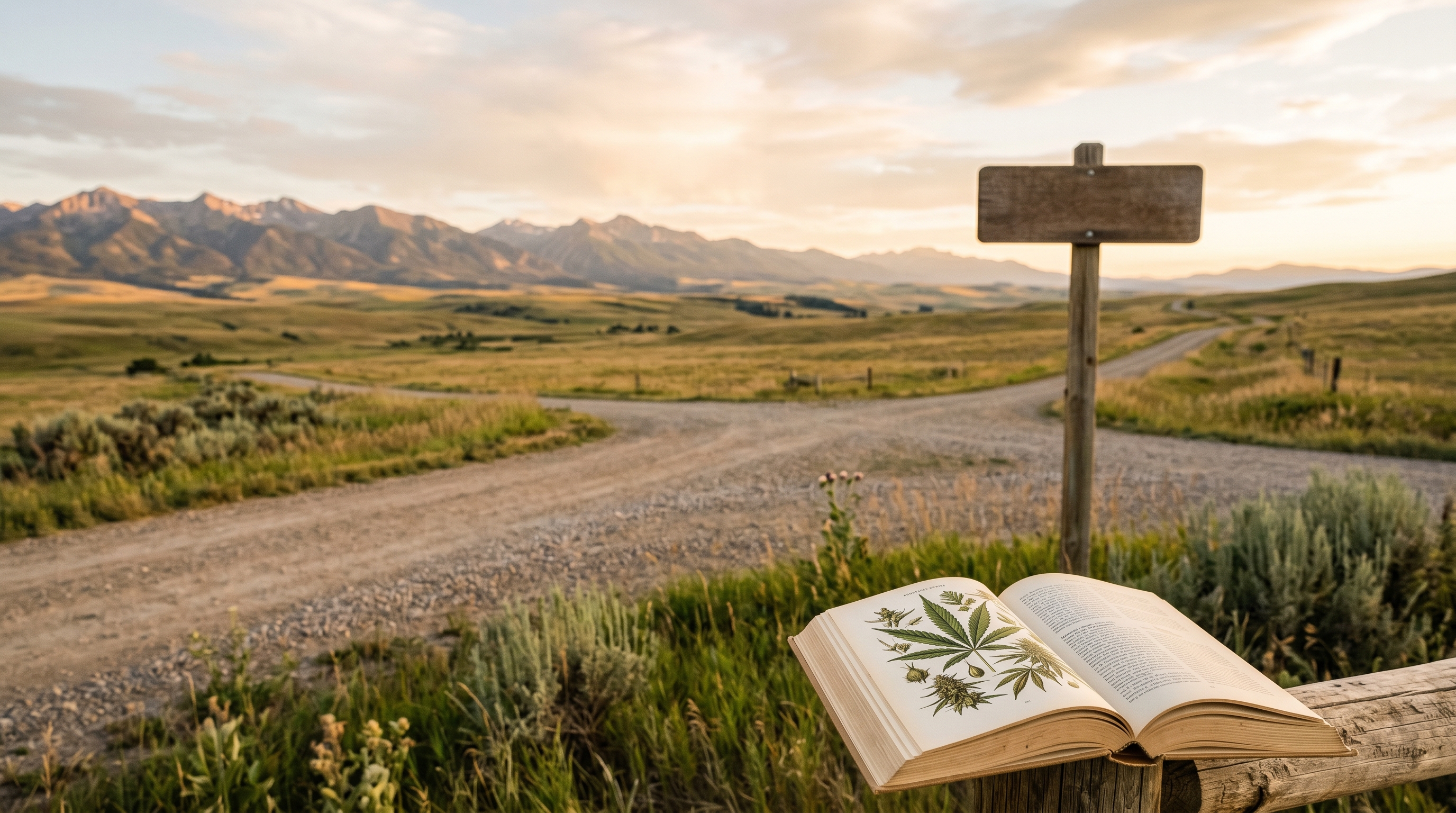
Montana voters approved Initiative 190 (I-190) on November 3, 2020. The measure legalized recreational cannabis for adults 21 and over [Ballotpedia, 2020]. It took effect January 1, 2021. The first legal adult-use sales rang up on January 1, 2022 [Marijuana Policy Project, 2022].
In 2021, the Legislature passed House Bill 701 to implement the voter-approved law. The bill ironed out licensing, taxes, and the rules around home cultivation. HB 701 is the reason home-grow limits sit at 2 mature plants rather than the 4 some early drafts floated. Want the national context? Our cannabis legalization in the United States guide zooms out. The state-by-state cannabis laws overview puts Montana next to its neighbors.
Possession: What You Can Legally Carry
For adults 21 and older, Montana sets clear ceilings:
- 1 ounce of usable cannabis flower
- 8 grams of cannabis concentrate
- 800 milligrams of THC in edible form
That ounce is generous by everyday standards. Not sure what an ounce looks like in your hand? Our visual guide to cannabis quantities breaks down grams, eighths, and ounces so you can eyeball it.
Montana’s medical program still exists alongside adult use. Registered patients may purchase up to 5 ounces per 30 days under their card [Norml, 2026]. The line between medical and recreational is more bureaucratic than biological. We explore that idea in why the medical vs recreational divide is mostly artificial.
Home Grow: The 2-and-2 Rule
Home cultivation is legal in Montana, but the math is specific. Each adult 21+ may grow:
- 2 mature plants
- 2 seedlings
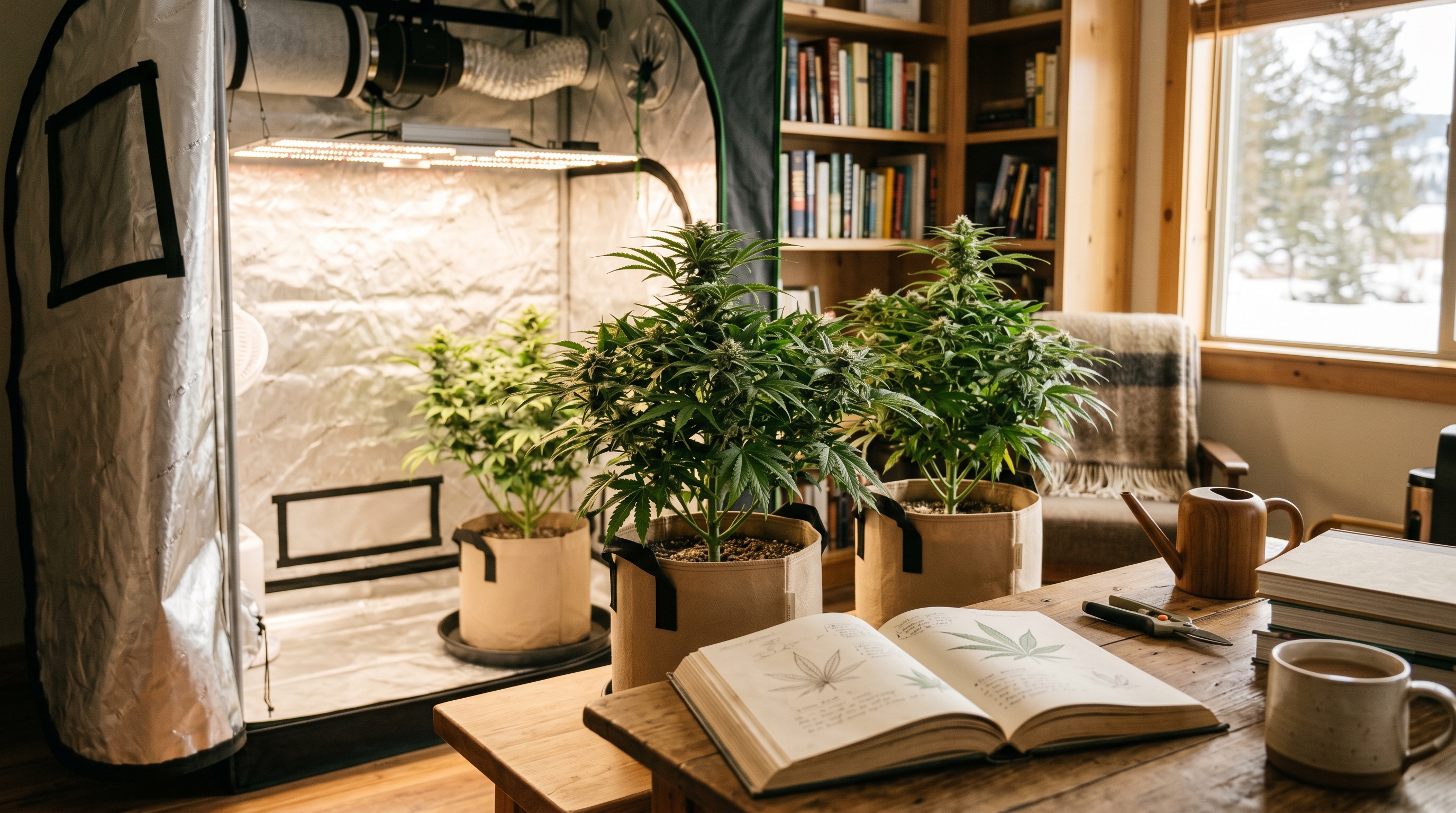
When more than one adult lives in a home, the household still caps out at 4 mature plants and 4 seedlings total, no matter how many grown-ups are under the roof. Plants must be kept in a private, enclosed, locked space out of public view, and you cannot sell what you grow.
Two plants is a modest setup. That actually makes Montana a good place to learn the craft without drowning in flower. Starting from seed? Our beginner’s guide to growing cannabis at home covers the basics. The seed-to-harvest timeline shows what to expect at each stage. Going outdoor in Montana’s short, intense summer? The outdoor growing season starter guide is built for that climate. And knowing when and how to harvest keeps those two precious plants from going to waste.
The Green vs Red County Patchwork
Here is the part that trips up newcomers and even longtime residents. Montana did not flip a switch statewide. Instead, I-190 created a county-by-county opt-in and opt-out system, and the default depends on how each county voted.
- “Green” counties are those where a majority of voters supported I-190. In these counties, adult-use dispensaries were allowed automatically when sales began.
- “Red” counties are those where a majority voted against I-190. In these counties, adult-use sales are prohibited by default unless local voters later approve them.
That single design choice is why access in Montana is uneven. A red county can choose to opt in through a local ballot referendum. A green county can theoretically opt out the same way. The result is a living map that shifts election to election. The Montana Department of Revenue keeps a county map and local-option tax list precisely because the lines keep moving [Montana Revenue, 2026].
In practice, this matters a lot. A Montanan in a prohibited county may be perfectly legal to possess, use, and grow cannabis at home. They may still have to drive to the next county to buy any. Possession rights are statewide. Retail availability is local. Carrying product across those county lines? The rules of moving cannabis still apply, and our guide to traveling with cannabis covers them. You will also want to know how to pick a good dispensary once you find one that is open.
A Note on Tribal Lands
Montana is home to several sovereign tribal nations. Reservations set their own cannabis policy. State legalization does not automatically extend onto tribal land. Tribal governments may regulate, permit, or prohibit cannabis on their own terms. If you are on or near a reservation, do not assume state rules apply. Treat tribal jurisdiction as its own legal world. Check local tribal law before you assume anything.
Where to Buy and the 20% Tax
In counties that allow it, adult-use cannabis is sold through state-licensed dispensaries regulated by the Cannabis Control Division within the Department of Revenue. You will need valid ID proving you are 21 or older.
The price at the register reflects Montana’s tax structure:
- 20% state excise tax on adult-use cannabis [Montana Revenue, 2026]
- An optional local-option tax of up to 3% that individual counties may add on top
- Medical cannabis is taxed far lower, at 4%
That 20% is a big markup compared to many legal states. So it pays to understand what you are buying rather than chasing the cheapest shelf. If THC percentage is your only filter, you are probably overpaying for the wrong thing. We make the case in why THC percentage is a terrible way to choose cannabis and in how to find your ideal high. Learning to read a cannabis lab result will stretch every taxed dollar further.
Public Use and Driving
Two rules keep people out of trouble more than any other.
Public consumption is not allowed. Montana legalized private adult use, not public use. Smoking, vaping, or otherwise consuming in public spaces remains prohibited, and that includes most places you would think to light up on a road trip. Keep it private, keep it indoors or on private property, and you avoid the most common citation.
Driving impaired is illegal, full stop. Montana enforces driving-under-the-influence laws that cover cannabis. There is no magic number of minutes that makes you legally safe to drive after consuming. THC impairment does not track a breathalyzer-style reading the way alcohol does. That makes “how long should I wait” a genuinely hard question. We dig into the science in cannabis and driving: how long to wait after consuming. The honest answer is longer than you think, and never if you are unsure. For broader stay-out-of-trouble tips, 100 cannabis tips every consumer should know is a solid companion.

The 2025 Money Fight
Cannabis turned out to be a serious revenue engine for Montana. The state generated over $150 million in cannabis tax revenue by late 2024. Total cannabis sales surpassed $1 billion in early 2025 [Marijuana Policy Project, 2025]. That kind of money attracts attention. The 2025 legislative session is where the fight over it played out.
When I-190 passed, voters baked in a specific spending plan. A meaningful share of cannabis tax revenue went toward conservation. That means state parks, trails, and wildlife habitat programs. Another big slice went to the HEART fund, which supports substance-abuse prevention and treatment. The rest was split among veterans’ services and local government.
In the 2025 session, lawmakers eyed that pot of money to plug budget holes and fund priorities like property-tax relief. They proposed to redirect cannabis revenue away from the conservation and HEART allocations toward the general fund. Conservation groups, hunters and anglers, and treatment advocates pushed back hard. They argued that the voter-approved formula was a promise, not a piggy bank. It is a clean case study in a national pattern. Once legal cannabis becomes a reliable revenue stream, the real question is no longer whether to tax it. It is who gets to spend the money. For the bigger picture on cannabis economics and policy, see the 280E tax burden and cannabis banking reform. You can also zoom out with where weed is legal across the US.
Key Takeaways
If you live in or are visiting Montana, the takeaways are simple:
- Know your county. Possession is statewide, but a dispensary may not be.
- Budget for the 20% tax (plus up to 3% local) and shop for fit, not just potency.
- Keep consumption private and never drive impaired.
- If you grow, respect the 2-and-2 limit and the 4-per-household cap.
- On tribal land, the state rules do not necessarily apply.
Montana proves a point we make often. Legal does not mean uniform. The smartest consumers understand both their local reality and their own response to cannabis. Want to learn what works for you rather than guessing from a shelf label? That is exactly what the High IQ app is built for. Start by understanding High Families, then track your sessions to find your patterns.
FAQ
Is recreational cannabis legal in Montana in 2026? Yes. Adults 21 and older may legally possess up to 1 ounce of flower. I-190 legalized adult use in 2020, and sales began January 1, 2022.
Can I buy cannabis anywhere in Montana? No. Adult-use sales are only allowed in counties that voted for I-190 (“green” counties) or that have since opted in by local vote. “Red” counties prohibit sales unless local voters approve them.
How many plants can I grow at home? Each adult may grow 2 mature plants and 2 seedlings, with a household cap of 4 mature and 4 seedlings regardless of how many adults live there.
How much is cannabis taxed in Montana? Adult-use cannabis carries a 20% state excise tax, plus an optional local tax of up to 3%. Medical cannabis is taxed at 4%.
Can I use cannabis in public? No. Montana only legalized private adult use. Public consumption remains prohibited.
Do Montana’s cannabis laws apply on tribal land? Not automatically. Tribal nations set their own cannabis policy, so check local tribal law.
Sources
- NORML — Montana Laws & Penalties
- Montana Department of Revenue — Cannabis Control Division
- Marijuana Policy Project — Montana
- Montana Code Annotated, Title 16, Chapter 12 — Marijuana Regulation and Taxation
- Wikipedia — Cannabis in Montana
This article is for educational purposes only and is not legal advice. Cannabis laws change frequently and local rules vary by county and on tribal land. Consult a licensed Montana attorney for guidance on your specific situation.


