Gluten-Free Cannabis Cookies: Almond Flour Recipe
Bake soft gluten-free cannabis cookies with almond flour and cannabutter, plus the binding tricks and per-cookie dosing math that keep every bite honest.

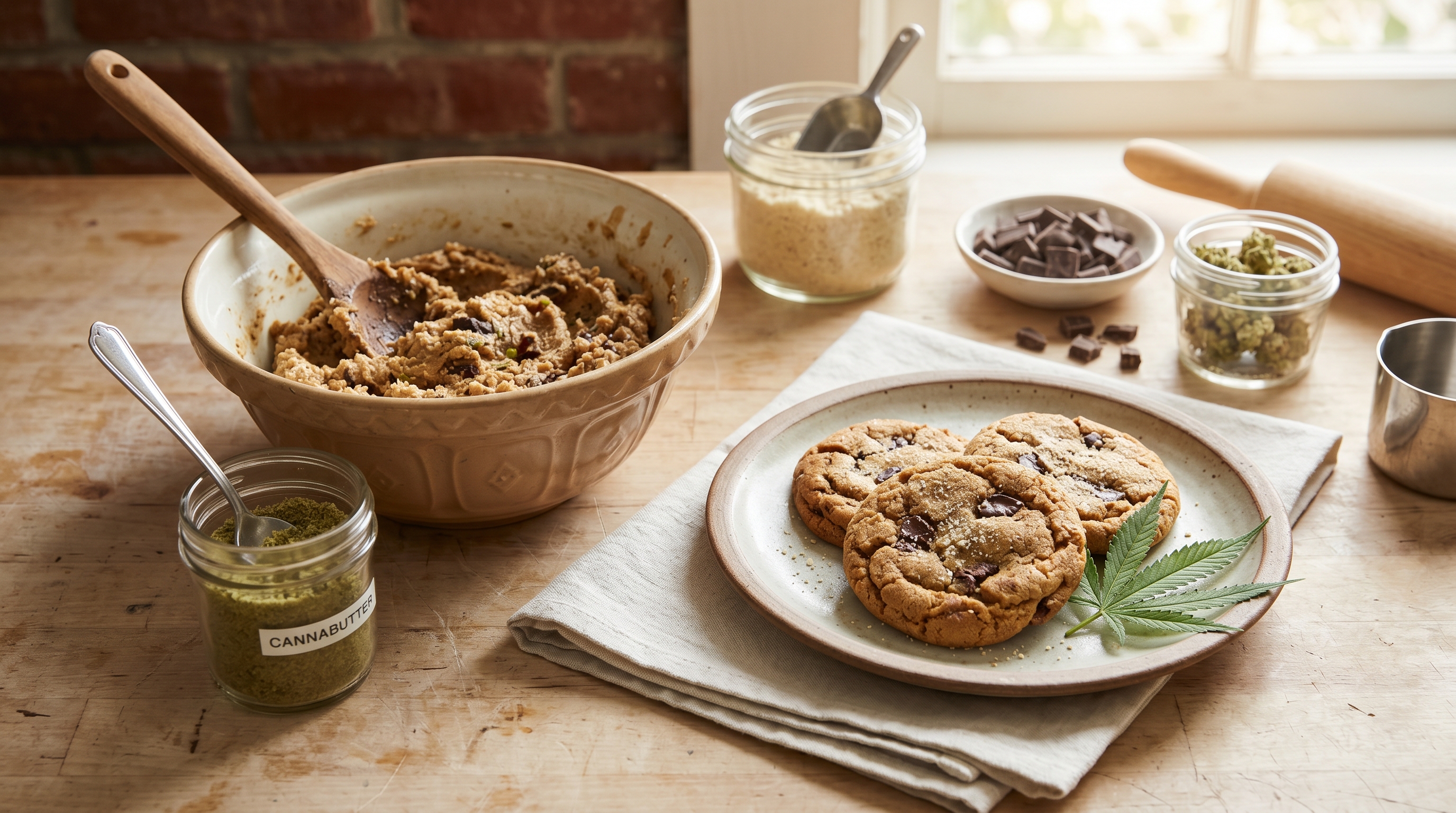
Most “gluten-free cannabis cookie” recipes are two recipes badly stapled together: a generic gluten-free cookie, and a vague “add some cannabutter” at the end. That’s how you get a flat, greasy puddle that may or may not get you high — with no idea how strong each cookie actually is.
This guide does it properly. We’ll cover how almond flour and gluten-free blends behave differently from wheat flour, why your cookies spread more and need help holding their shape, how to choose between cannabutter and coconut oil, and — the part nearly everyone skips — how to do the math so one cookie is a known, repeatable dose. Grab a bowl.
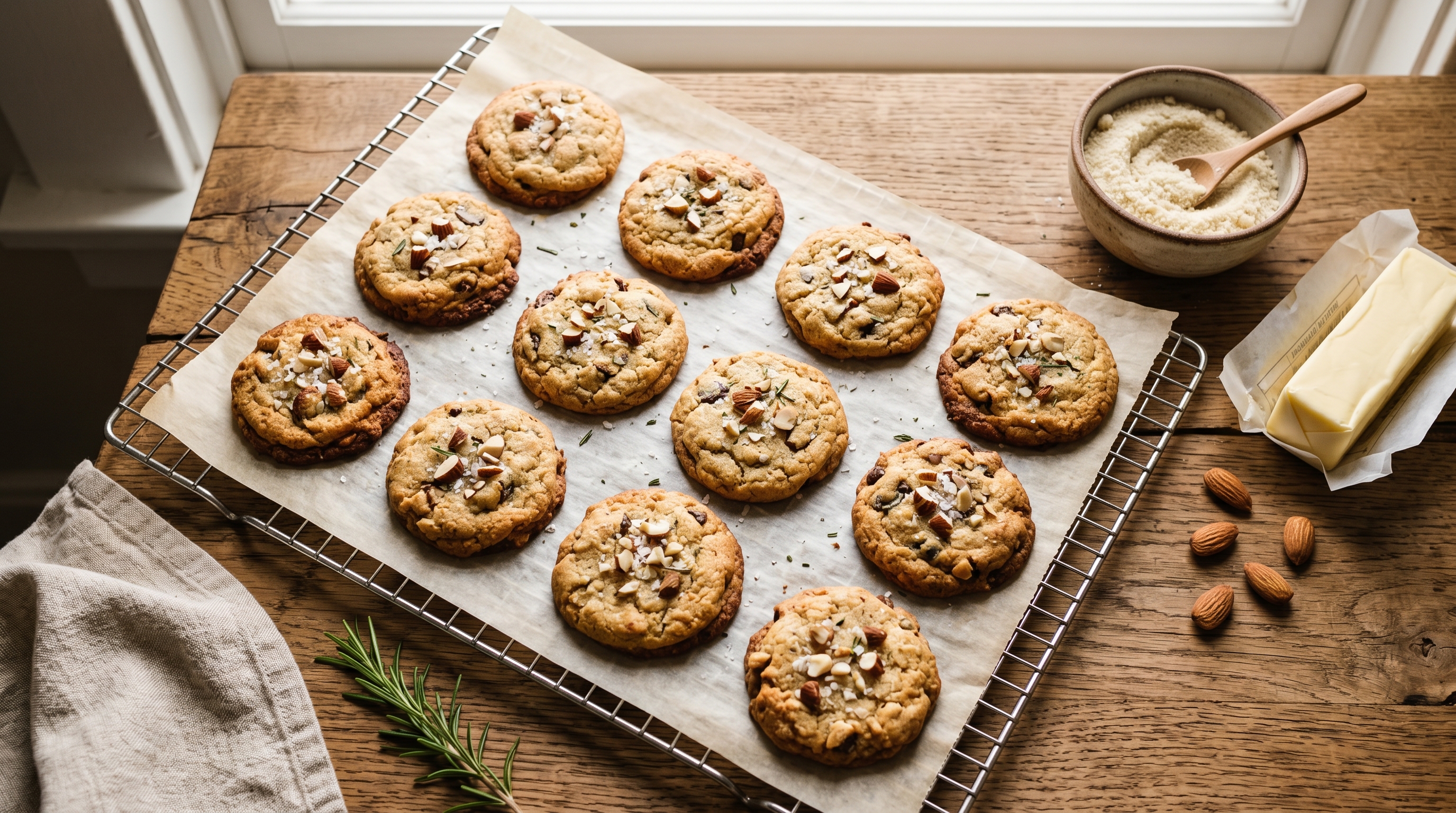
How Gluten-Free Flour Actually Bakes
Here’s what wheat-flour recipes never have to think about: gluten. When you mix wheat flour with liquid, two of its proteins link into gluten — a stretchy, elastic web that traps gas and gives baked goods their structure and chew. It’s the scaffolding that holds a cookie together and keeps it from melting into a flat sheet.
Almond flour and gluten-free blends have no gluten, so they have no scaffolding. That one fact explains almost everything that goes “wrong” the first time you bake gluten-free.
Almond flour isn’t really a flour — it’s finely ground blanched almonds. It’s high in fat and moisture and low in starch, so it behaves more like a rich paste than a dry powder. Cookies made with it spread more and stay soft and tender rather than crisp [Detoxinista, 2024]. The practical upshot: almond flour cookies want a binder and want to be kept cold.
Gluten-free flour blends (rice flour, potato starch, tapioca) are the opposite problem — dry and a little gritty, with no protein to hold things together. That’s why almost every blend includes, or tells you to add, xanthan gum: a tiny amount mimics gluten’s binding and elasticity so the dough doesn’t crumble. The rule of thumb for cookies is about 1/4 teaspoon of xanthan gum per cup of flour (more for bread, less for cookies) [Arthur, 2024]. Many “1-to-1” blends already include it, so check the bag first.
This recipe leans on almond flour because it’s the most forgiving and the most delicious, with an optional spoonful of gluten-free blend to firm up the structure.
Binding Without Gluten: Egg Is Your Friend
If gluten isn’t holding the cookie together, something else has to. In a gluten-free cookie, that job falls mostly to the egg. Its proteins set when heated to create a replacement scaffold, and it adds the moisture and richness that pulls almond flour’s loose, sandy texture into a dough you can actually scoop. As gluten-free bakers put it: eggs help bind and lift.
A few binding notes worth knowing:
- One large egg is plenty for a single-batch almond-flour cookie. Two can make the dough cakey and loose.
- Skip the flax “egg” here. Flax eggs work in some bakes, but in almond-flour cookies they tend to make things too gooey and the cookies won’t hold their shape.
- Xanthan gum is your backup binder if you’re using a gluten-free blend instead of (or alongside) almond flour. A scant 1/4 teaspoon does the work.
The takeaway: gluten-free dough is structurally weaker than wheat dough, so you compensate with egg, a touch of binder, and — coming up next — temperature.
Choosing Your Fat: Cannabutter vs. Coconut Oil
Now the cannabis part, which is really a fat decision. THC and CBD are lipophilic — fat-loving and water-hating. They dissolve into fats, not watery liquids, which is why you infuse a fat and bake with it rather than stirring ground flower into the dough. In a cookie, the fat carries both the flavor and every milligram of cannabinoid into your body. You have two good options:
- Cannabutter. Butter is roughly 80% fat, with a rich flavor that suits a soft, bakery-style cookie. It’s the classic choice and pairs beautifully with the natural sweetness of almond flour. Our complete cannabutter guide walks through the whole infusion.
- Coconut oil. Coconut oil is even higher in saturated fat (close to 90%), which makes it a slightly more efficient cannabinoid carrier and a natural fit if you want a dairy-free cookie to go with your gluten-free one. It firms up when cold, which actually helps gluten-free dough hold its shape. If you’d rather a non-intoxicating cookie, you can infuse a CBD-rich fat instead — see cooking with CBD-only strains.
Either way, the non-negotiable first step is decarboxylation. Raw cannabis contains THCA, which won’t get you high. Gentle heat — roughly 240°F for 30–40 minutes — removes a carboxyl group and converts THCA into active THC. Skip it and your cookies will taste weedy and do nothing. (Speaking of which: if grassy flavor bothers you, here’s how to make edibles without the weedy taste.) Then you infuse the decarbed flower into your warm fat at a low temperature for an hour or more. If you’ve never infused anything before, start with cannabis cooking 101, and our guide to choosing the right fat for cannabis infusions goes deeper on extraction and flavor.
One more reason the fat matters so much: oral cannabis is processed by your liver into 11-hydroxy-THC, a more potent and longer-lasting metabolite. That’s why edibles hit harder than the same dose smoked, and it’s the science behind the classic 2-hour rule for edibles — wait before you redose, because what’s already in the cookie can keep building.
What You’ll Need
This recipe makes 12 cookies — a deliberate number, because 12 even cookies makes the dosing math clean.
Ingredients:
- 1/2 cup (about 113 g) cannabutter or infused coconut oil, softened (see the dosing math before you decide how much is infused)
- 2 1/2 cups (240 g) blanched almond flour
- 1/4 cup (30 g) gluten-free 1-to-1 flour blend (optional, for a sturdier cookie)
- 1/2 cup (100 g) granulated sugar, or a mix of granulated and brown for chew
- 1 large egg, room temperature
- 1 teaspoon vanilla extract
- 1/2 teaspoon baking soda
- 1/4 teaspoon salt
- 1/4 teaspoon xanthan gum (skip if your blend already includes it)
- Optional: 1/2 cup dairy-free or regular chocolate chips
Equipment:
- Mixing bowls and a sturdy spoon or hand mixer
- A kitchen scale (strongly recommended — gluten-free measuring by volume is unreliable)
- Baking sheet and parchment paper
- A cookie scoop or tablespoon for even portions
- An oven thermometer (home ovens routinely run 25°F off)
Step-by-Step: Chill the Dough
The single most important technique with gluten-free cookies is chilling the dough. Without gluten holding things in place, almond flour cookies spread aggressively in a hot oven; 30 minutes in the fridge firms up the fat so they hold their shape instead of running into one flat sheet [Fenster, 2023]. Do not skip it.
- Cream the fat and sugar. Beat your softened cannabutter (or coconut oil) with the sugar until fluffy, about 2 minutes.
- Add the wet. Beat in the egg and vanilla until combined.
- Whisk the dry separately. Combine almond flour, optional blend, baking soda, salt, and xanthan gum in another bowl so the leavening distributes evenly.
- Combine gently. Stir the dry into the wet just until a dough forms, then fold in chocolate chips. The dough will look softer and stickier than wheat dough — that’s normal.
- Chill at least 30 minutes. This is your anti-spread insurance.
- Preheat to 350°F and line a sheet with parchment.
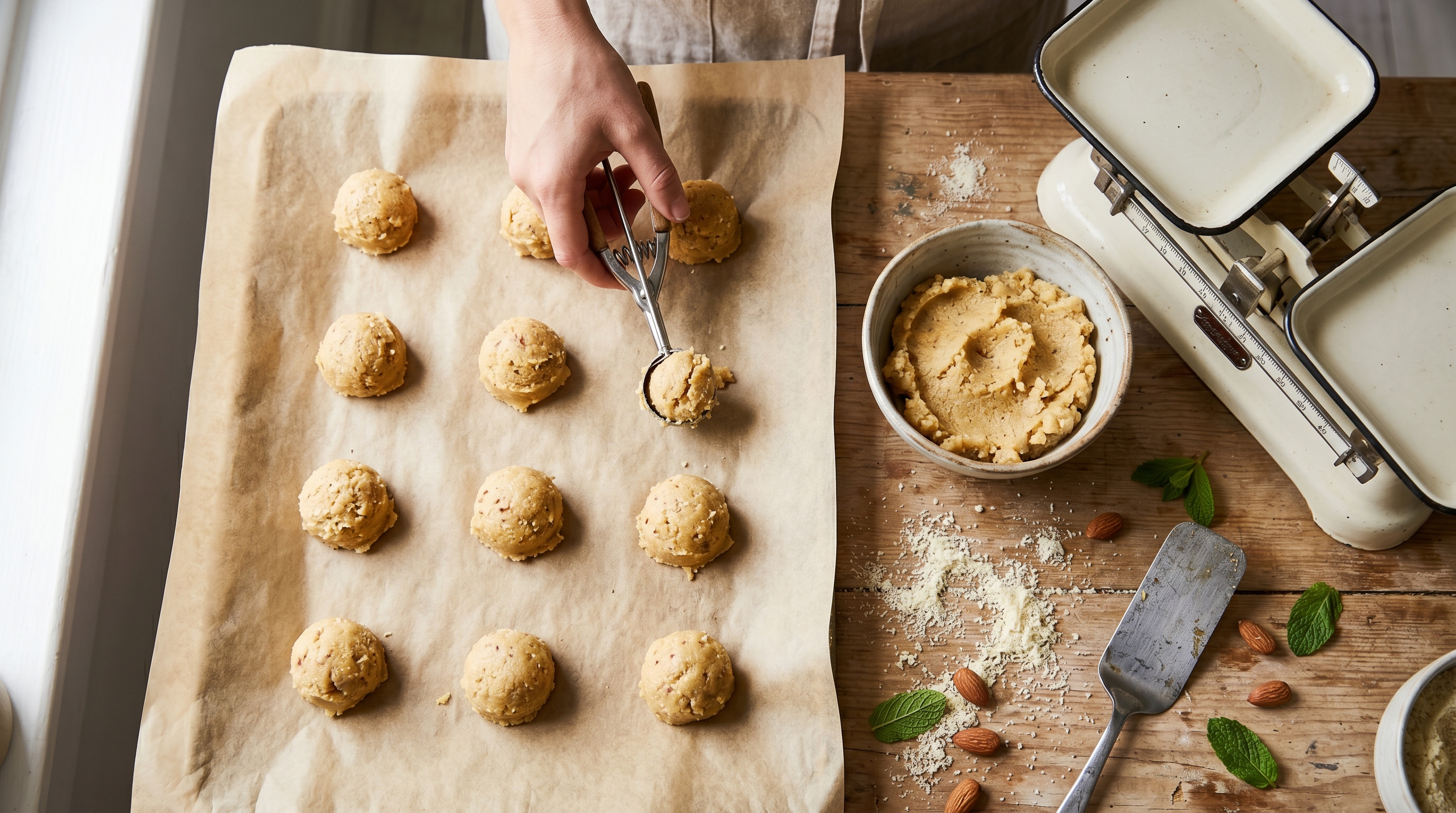
- Scoop evenly into 12 equal cookies with a scoop or level tablespoon. Even portions are the foundation of even dosing.
- Bake 10–13 minutes, until edges are golden but centers still look slightly soft. Almond flour browns fast.
- Cool on the pan 10 minutes before moving them — gluten-free cookies are fragile until the structure sets as they cool.
A note on heat and potency: baking at 350°F will not “burn off” your high. The cannabinoids were already activated during decarb and locked into the fat, and THC only degrades meaningfully above roughly 315°F — well above what the moist interior of a baking cookie ever reaches.
Per-Cookie Dosing: The Math That Matters
This is what separates a recipe from a responsible one. You can’t dose a cookie by feel — you do arithmetic, and it’s simple.
Step 1: Estimate the total THC in your fat. Multiply the flower’s THC percentage by its weight, then apply a realistic loss.
- Say you used 3.5 g (3,500 mg) of flower at 20% THC: 3,500 × 0.20 = 700 mg in theory.
- Home decarb and infusion aren’t perfect. Conservatively assume you captured about 50% — roughly 350 mg of usable THC in the batch of fat.
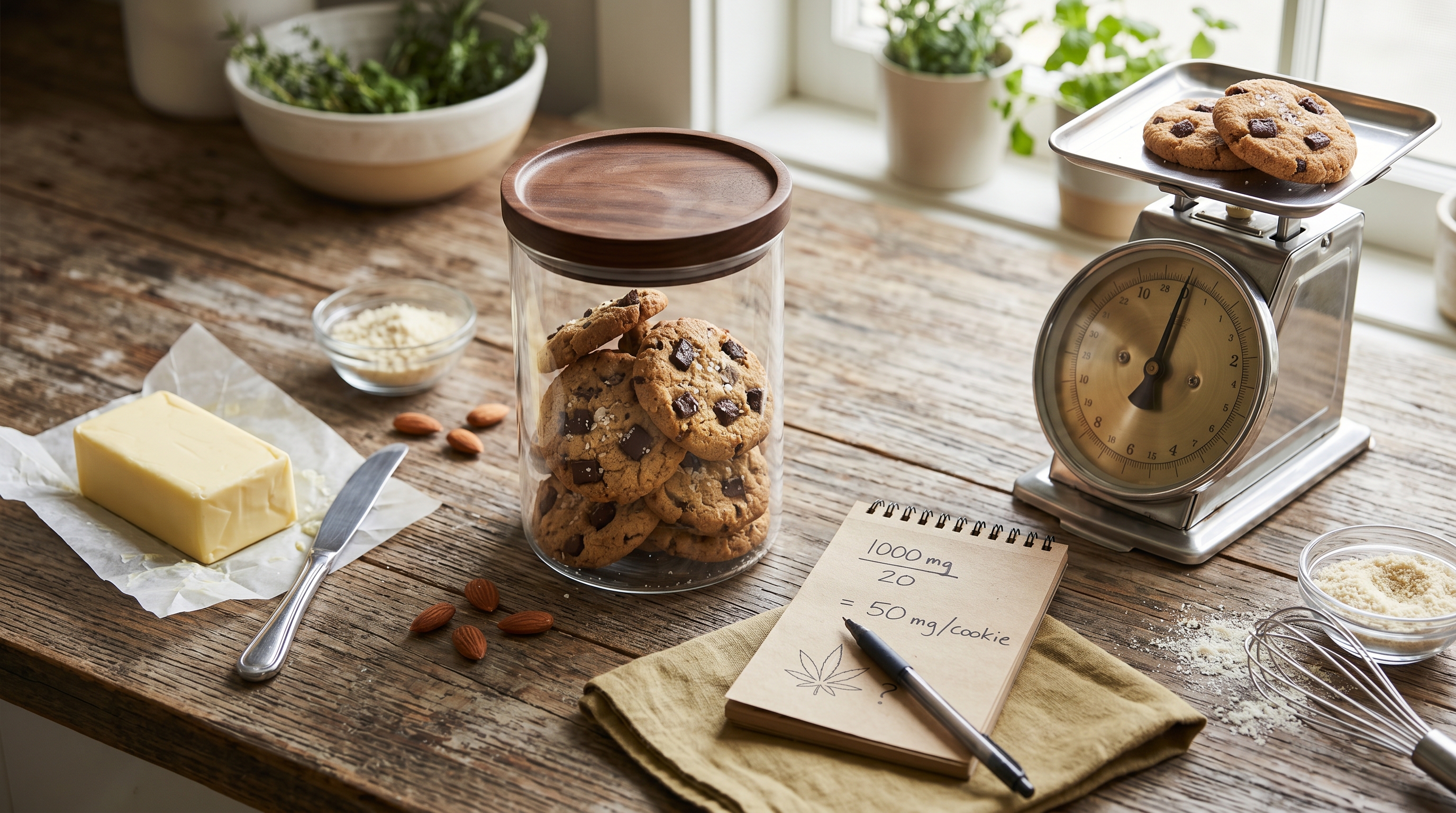
Step 2: Divide by the number of cookies. 350 mg ÷ 12 = about 29 mg per cookie — a strong dose, well above a beginner serving (and squarely in the territory covered by high-dose vs. microdose edibles). Which brings us to the most useful trick in edible baking:
Dilute your infused fat. You rarely want every gram of fat infused. Blend infused and plain fat to hit your target: for a gentle 5 mg per cookie, use only about 1/6 of your fat as infused cannabutter and make up the rest with plain butter or oil. The cookies bake identically; only the dose changes. If you want to verify your batch landed where the math says, see how to test homemade edible potency at home, and for more worked examples, edible dosing math for home cooks goes step by step.
If you’re new to edibles, anchor to the beginner dosing guidance: start low (think 2.5–5 mg), wait a full two hours before deciding whether to have more, and label your container with the milligrams-per-cookie so future-you isn’t guessing. None of this is medical advice, and individual responses to THC vary a lot — but honest math is the best harm-reduction tool a home baker has.
Texture Tips
- Don’t overbake. Pull them when the centers still look slightly underdone — almond flour cookies firm up dramatically as they cool, and the line between soft-and-perfect and dry-and-crumbly is about 90 seconds.
- Chill twice in a hot kitchen. If the dough warms while you scoop, pop the loaded sheet back in the fridge for 10 minutes before baking.
- Want chewier? Swap part of the sugar for brown sugar — the molasses adds moisture and chew. But sugar is also what helps these spread, so don’t cut it too far or they’ll stay dome-shaped.
- Want sturdier? The optional spoonful of gluten-free blend (with xanthan gum) gives more backbone for stacking.
Storage
Almond flour absorbs moisture, so storage differs from wheat cookies:
- Room temperature: airtight, 2–3 days. They soften over time.
- Refrigerator: up to one week — many bakers prefer the firmer, chewier cold texture.
- Freezer: up to three months. You can also freeze unbaked dough balls and bake from frozen, adding 2–4 minutes.
For the full breakdown of how long different infused baked goods stay fresh, see our cannabis edibles shelf-life and storage guide. Whatever you do, label the container with the date and milligrams per cookie, and keep edibles locked away from kids and pets. A homemade cookie looks exactly like a normal cookie — that’s precisely the problem.
FAQ
Can I make these vegan and gluten-free? You can make them dairy-free with coconut oil, but the egg is doing real structural work here. A flax egg tends to leave almond-flour cookies too gooey to hold shape. If you need fully vegan, look for a recipe built around that constraint rather than swapping into this one.
Do I need xanthan gum? Not if you’re using only almond flour plus egg — the egg binds it. You’d add a scant 1/4 teaspoon mainly if you’re leaning on a gluten-free starch blend, which needs help mimicking gluten.
Why did my cookies spread into one big sheet? Almost always skipped or too-short chilling, or too-warm dough. Gluten-free dough has no elastic scaffold to hold its shape, so cold fat is what keeps the cookie tight. Chill longer.
Will 350°F destroy the THC? No. The THC was activated during decarb and lives in the fat. The moist interior of the cookie stays well below the ~315°F where THC starts to degrade. Normal baking is safe.
How strong is each cookie? Only as strong as your math says. Estimate total THC in your fat, divide by 12, and dilute with plain fat to hit your target. Never dose by taste.
Key Takeaways
- No gluten means no scaffold. Almond flour spreads more and stays soft; compensate with egg, an optional pinch of xanthan gum, and a cold rest.
- Chill the dough at least 30 minutes — it’s the single best fix for cookies that melt into one flat sheet.
- Fat is the dose. Infuse decarbed flower into cannabutter or coconut oil; THC is fat-soluble and survives a normal 350°F bake.
- Do the math. Estimate total THC, divide by 12, then dilute with plain fat to hit your target — and label the jar.
If you catch the baking bug, the same dosing logic carries over to a from-scratch brownie, infused banana bread, or a whole holiday cookie assortment — and if low-carb matters too, see keto cannabis edibles.
Gluten-free baking and honest edible dosing are the same skill: respecting the structure you can’t see. There’s no gluten, so you compensate with egg, xanthan, and a cold rest. You can’t see milligrams, so you compensate with arithmetic and a labeled jar. Do both and almond-flour cannabis cookies become one of the most controllable edibles you can make at home — soft, golden, and exactly as strong as you intended.
Sources
- [Detoxinista, 2024] Adams, Megan. “Almond Flour Cookies.” Detoxinista. Behavior of almond flour in cookies, role of sugar in spread, egg as binder, 350°F baking, chilled-storage texture. https://detoxinista.com/almond-flour-cookies/
- [Fenster, 2023] “Almond Flour Chocolate Chip Cookies.” Meaningful Eats. Chilling dough to prevent spread, egg binding without gluten, blanched almond flour, 350°F bake, storage. https://meaningfuleats.com/almond-flour-chocolate-chip-cookies/
- [Arthur, 2024] King Arthur Baking. Gluten-free baking guidance — gluten structure, almond flour moisture/fat behavior, and xanthan gum as a gluten substitute (~1/4 tsp per cup for cookies). https://www.kingarthurbaking.com/learn/guides/gluten-free-baking


