Choosing the Right Fat for Cannabis Infusions
Coconut, butter, olive, avocado, MCT, or ghee? A science-backed guide to picking the best fat for cannabis infusions based on absorption, heat, and flavor.

Here is a question I get more than almost any other in the kitchen. “Professor, does it really matter which fat I use to make my infusion?” The short answer is yes. The fat you choose quietly decides three things at once. It sets how much cannabinoid ends up in your finished product. It shapes how much your body can absorb. And it decides whether your edible tastes like a treat or like a lawn clipping.
Cannabis and fat are old friends. Knowing why they get along, and which fat suits your recipe, is the line between an infusion that works and one that flops. Let me walk you through the science, then the practical picks.
Why fat matters: the lipophilic science
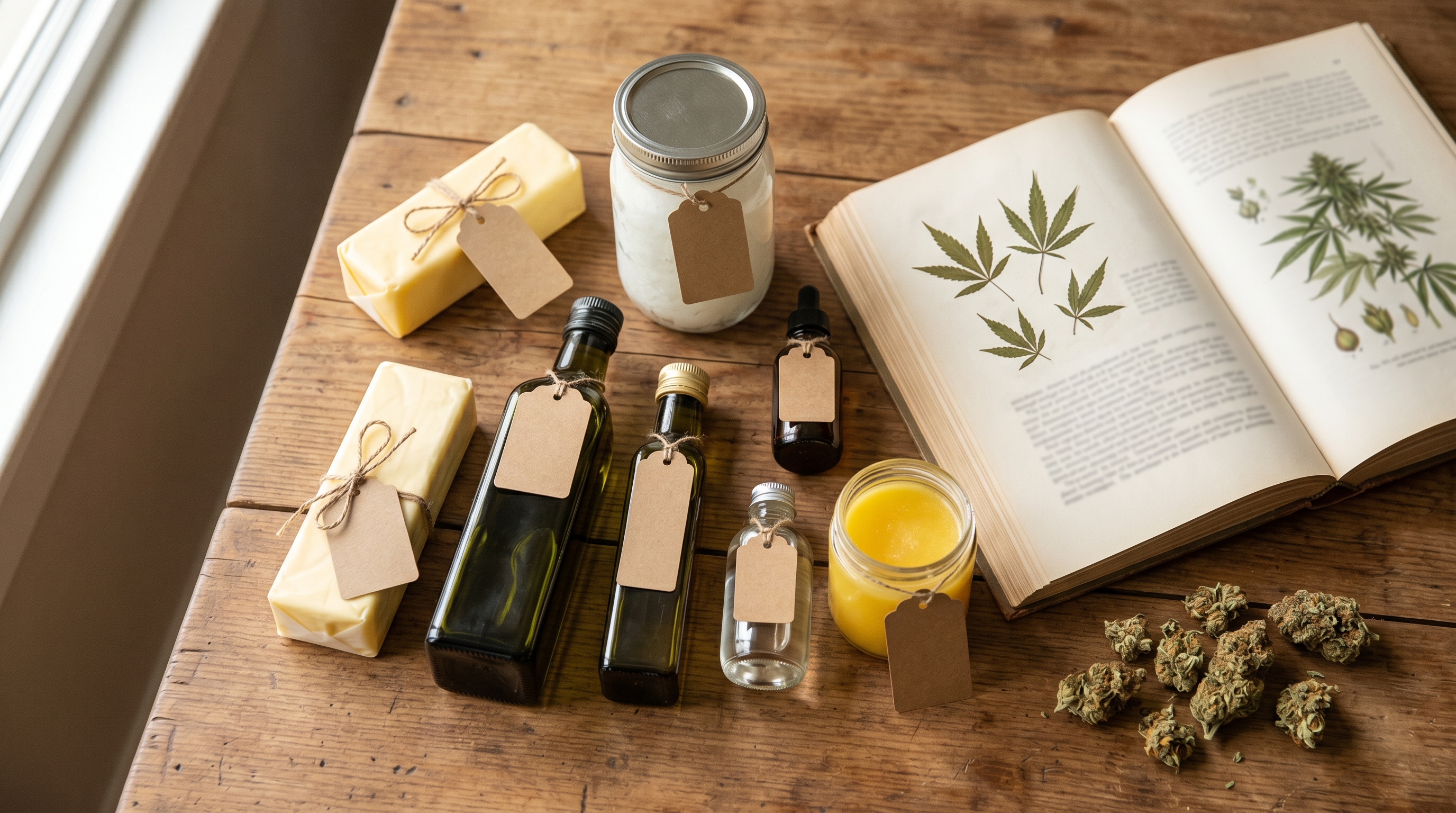
THC, CBD, and their cannabinoid cousins are lipophilic. That is a fancy way of saying “fat-loving.” More precisely, they are hydrophobic. They barely dissolve in water but slip easily into oils and fats. This is why you cannot just steep ground flower in hot water and get a strong drink. The cannabinoids have nowhere to go. Give them a pot of melted fat, though, and they dissolve right in.
That solubility drives the whole infusion process. When you gently heat decarboxylated cannabis in fat, the cannabinoids leave the plant and move into the oil. (Is “decarboxylated” a new word? My decarboxylation explainer covers why raw flower must be heated first to become active.) No fat, no meaningful transfer.
The benefit does not stop at extraction. Fat also shapes how much cannabinoid your body can use once you eat it. One frequently cited rat study [Zgair, 2016] found that pairing cannabinoids with dietary fat raised THC exposure by more than 2.5-fold and CBD by almost 3-fold versus fat-free doses. A 2025 human study in Scientific Reports echoed the theme [Birnbaum, 2025]. A high-fat meal dramatically raised CBD bioavailability versus fasting.
The proposed mechanism is elegant. Roughly a third of the cannabinoid dose gets packaged into tiny fat-transport particles called chylomicrons. These route through the intestinal lymphatic system and partly sidestep the liver’s first-pass metabolism. So fat is not just a solvent. It may be a delivery vehicle.
For more on how your gut and liver transform what you eat, my piece on why edibles hit harder and the cannabis consumption methods ranked by bioavailability guide both go deeper than I can here.
Saturated vs. unsaturated fat and cannabinoid binding
This is where the popular internet wisdom and the actual pharmacology start to diverge, so stay with me.
The common claim is that high-saturated-fat oils like coconut “bind” the most cannabinoids. There is a kernel of truth: saturated fats are chemically stable and make for efficient, shelf-stable extractions. But “binds best” and “absorbs best” are not the same thing.
Fats are built from fatty-acid chains, and chain length matters most for absorption. Medium-chain triglycerides (MCTs), abundant in coconut and MCT oil, are absorbed fast. They travel mostly through the portal vein straight to the liver. Long-chain triglycerides (LCTs) are found in olive oil, avocado oil, and butter. These build chylomicrons and trigger lymphatic transport, the route linked to higher cannabinoid exposure. One major review [McClements, 2020] put it plainly: foods with enough digestible long-chain fat “may be advantageous for increasing their potency.” A 2022 rat study even found olive oil gave the highest CBD levels in both the lymph and the blood among several vegetable oils.
So the honest takeaway is nuanced. Saturated, medium-chain fats (coconut, MCT) extract cannabinoids efficiently and store well. Unsaturated, long-chain fats (olive, avocado) may absorb better through the lymphatic route. Most of this evidence comes from animal models and lab digestion tests. Treat it as a strong lead, not a settled verdict. The good news is simple. Any real dietary fat beats no fat by a wide margin, so you will not “ruin” an infusion by picking the wrong one.
The fat-by-fat comparison
Here is how the common kitchen fats stack up. Smoke points are approximate and vary by refinement; saturated-fat percentages are rounded.
| Fat | Saturated fat | Smoke point | Flavor | Best use |
|---|---|---|---|---|
| Butter | ~63% | ~302°F (350°F clarified) | Rich, creamy | Baked goods, classic cannabutter |
| Coconut oil | ~90% | ~350°F unrefined / 400°F refined | Sweet, tropical (refined: mild) | Capsules, gummies, no-cook edibles |
| Olive oil (EVOO) | ~14% | ~375–405°F | Earthy, peppery | Dressings, drizzles, savory dishes |
| Avocado oil | ~12% | ~375°F unrefined / 520°F refined | Buttery, neutral (refined) | High-heat cooking, sauteing, searing |
| MCT oil | ~95% (fractionated) | ~320°F | Neutral, nearly tasteless | Tinctures, beverages, fast capsules |
| Ghee | ~62% | ~485°F | Nutty, caramelized | High-heat cooking, Indian dishes, baking |
A few notes the table cannot capture:
- Butter is the cultural default for a reason. It bakes beautifully and tastes like home, but its milk solids burn easily, so keep the heat low. My full cannabutter walkthrough covers the technique end to end.
- Coconut oil is the workhorse of the gummy and capsule world because it solidifies at room temperature and tolerates being molded. Refined coconut oil strips out the tropical flavor if you do not want it.
- MCT oil stays liquid and tasteless. That makes it the favorite for homemade tinctures and infused beverages. Lab work on medical cannabis oils found MCT also preserved terpenes better than olive oil over months of storage. That matters if aroma and the entourage effect are priorities.
- Ghee is clarified butter with the milk solids removed, so it carries butter’s flavor with a far higher smoke point. It is an underrated infusion fat.
Matching the fat to your recipe
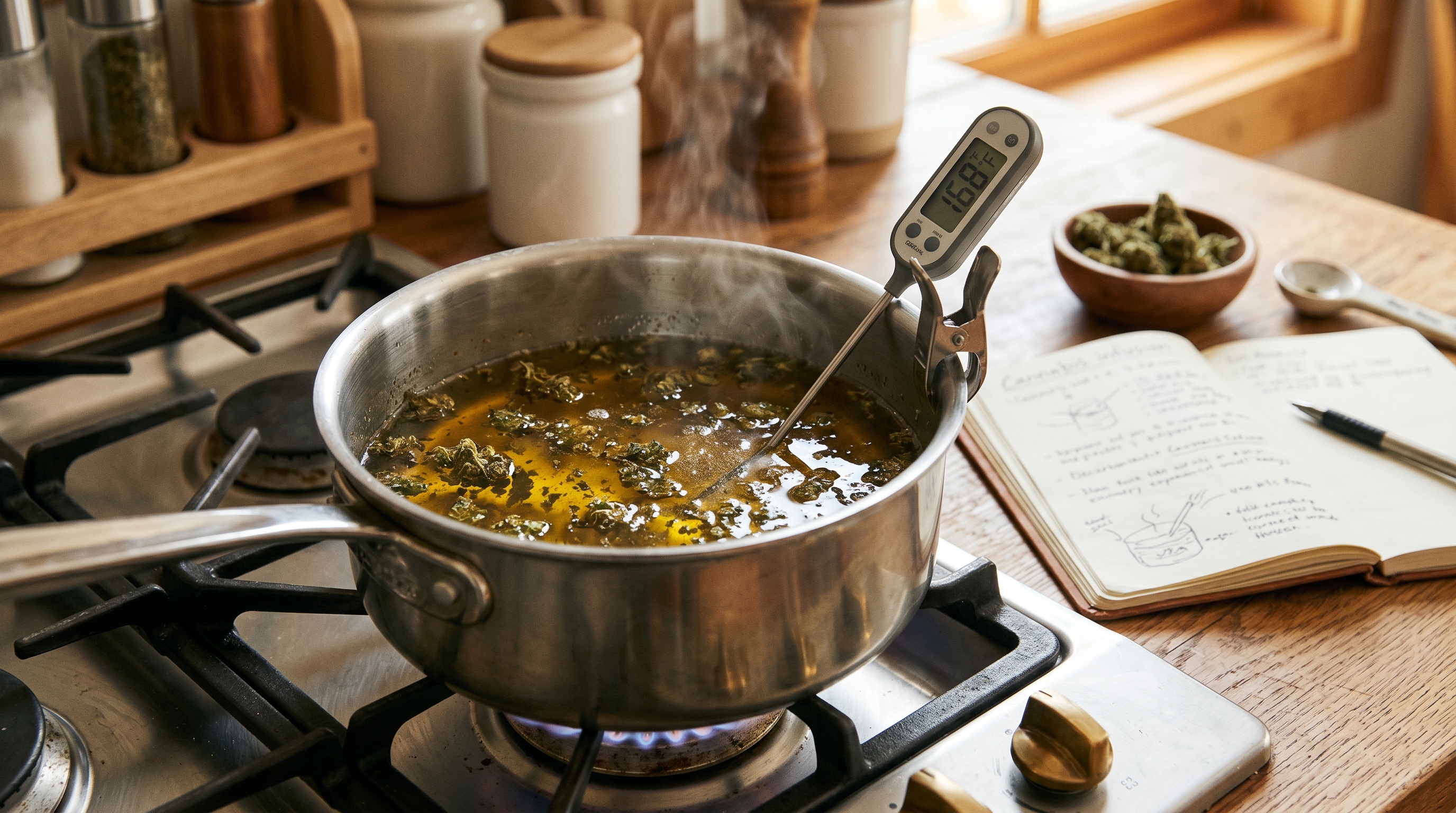
Forget about finding one “best” fat. The right answer depends on what you are making.
- Baking cookies, brownies, or cakes? Reach for butter or coconut oil. They behave the way recipes expect, and their solid-at-room-temperature texture helps with structure. The cannabis cooking 101 guide is a good launchpad, and if you want to dodge the grassy taste, see how to make edibles without the weedy taste.
- Savory cooking, salad dressings, pasta? Olive oil is your friend, both for flavor and for that long-chain lymphatic absorption angle. It shines in dishes like an infused marinara.
- High-heat searing or roasting? Use refined avocado oil or ghee. Their smoke points are high enough to handle the pan without scorching, which protects both flavor and cannabinoids.
- Capsules, gummies, or anything that needs to set? Coconut oil and MCT oil dominate here. Coconut firms up; MCT stays liquid and tasteless. See the DIY gummies guide and the capsules and pills primer.
- Drinks, tinctures, or fast-acting microdoses? MCT oil wins on neutrality and quick absorption. It pairs naturally with infused coffee and tea, infused honey, and microdosing routines.
- Topical salves, not edibles? Coconut oil and shea-style fats are standard. Topicals work differently from anything you eat, as I explain in how topicals work and the DIY salve recipes.
Whatever fat you choose, dosing math does not change with the medium. Run your numbers using the edible dosing math for home cooks and lean on the 2-hour rule for beginners or the beginner’s dosing chart before you eat a thing.
Smoke points and the degradation problem
Here is the caution that trips up the most home infusers: heat is both your friend and your enemy.
You need some heat to decarboxylate and to drive cannabinoids into the fat. But push too hard and you start losing the goods. THC begins degrading well before fats start smoking. Terpenes, the aromatic compounds behind a strain’s character, are even more fragile and evaporate at low temperatures. Once a fat reaches its smoke point, it produces off-flavors and harsh compounds. It is also a clear sign you have blown past the gentle range cannabinoids prefer.
The practical rules:
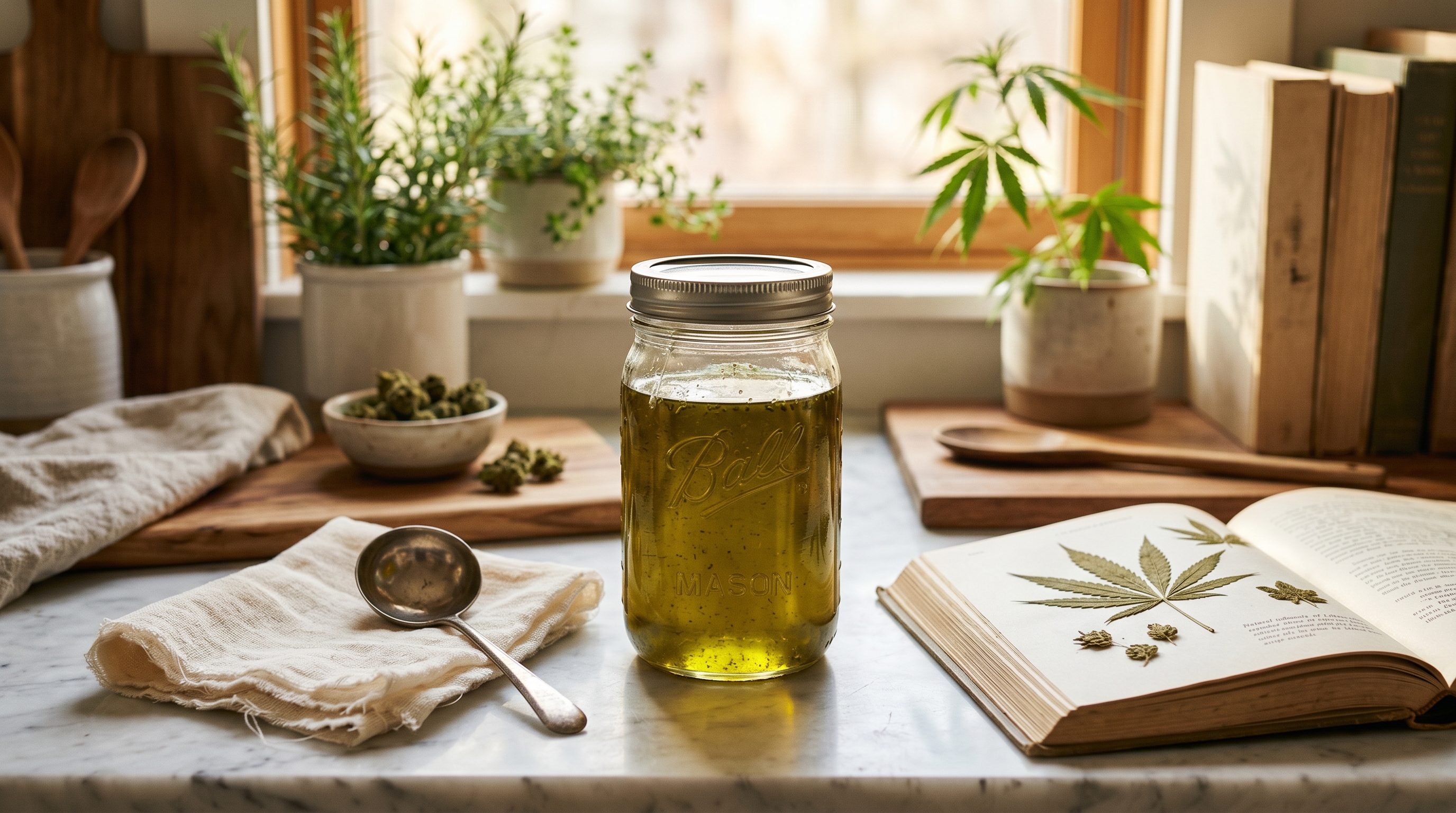
- Infuse low and slow. Keep your infusion well below the fat’s smoke point. A gentle simmer in the range of 160–200°F for a couple of hours extracts efficiently without cooking off your cannabinoids.
- Mind the cooking step, not just the infusion. If you fry or sear with an already-infused fat, you can degrade potency in the pan. This is exactly why a high-smoke-point fat like refined avocado oil or ghee is smart for hot dishes, and why delicate extra virgin olive oil is better finished cold or used at moderate heat.
- Watch the milk solids. Plain butter smokes around 302°F because the milk solids scorch first. Clarify it (or use ghee) when you need more headroom.
- Never use indigestible oils. Mineral oil and most “essential” oils do not get broken down by your digestive enzymes, so cannabinoids dissolved in them are poorly absorbed. Stick to real, edible dietary fats.
If you would rather skip the heat entirely, comparing formats in how to choose between flower, edibles, and concentrates or reading up on cannabis oil versus flower and high-potency RSO can point you elsewhere.
Frequently asked questions
Is coconut oil really the strongest fat for infusions? It is excellent for extraction and storage thanks to its high saturated-fat content. That is where the “strongest” reputation comes from. But for absorption in your body, long-chain fats like olive and avocado oil may have an edge through lymphatic transport. For most home cooks the difference is modest. Choose based on your recipe and flavor goals first.
Does using more fat make my edible stronger? Not exactly. The amount of cannabinoid is fixed by how much flower you started with. Extra fat can help absorption up to a point and makes the cannabinoid easier to mix in. But it will not magically multiply potency. Calculate your dose from your starting material, not your oil volume.
Can I use vegetable or seed oil? You can. Any digestible dietary fat will carry cannabinoids. Seed oils tend to be high in polyunsaturated fats that oxidize and go rancid faster, so they store less well and bring little flavor benefit. They work in a pinch but are rarely my first pick.
Should I worry about smoke points if I am only baking? Less so. Most baking happens around 350°F, and the cannabinoids are protected inside the batter. The bigger risk is the infusion step itself and any stovetop cooking, where direct, prolonged heat can degrade potency.
Do these absorption findings apply to humans? The strongest absorption data come from animal models and lab digestion studies. There is also growing human evidence that high-fat meals raise cannabinoid bioavailability [Birnbaum, 2025]. Research suggests the effect is real, but individual results vary. Start low and observe how you respond.
Key Takeaways
There is no single champion fat. Pick coconut or butter when you bake. Use olive or avocado for savory and high-heat dishes. Reach for MCT for drinks and tinctures. Choose ghee when you need flavor plus heat tolerance. Then respect the heat. Infuse gently, stay below the smoke point, and protect those fragile terpenes.
Get the fat right and you are most of the way to an edible that is consistent, tasty, and effective. The rest is dosing and patience. Stay curious, cook low and slow, and as always, consume responsibly.
Sources
- Zgair, A., et al. (2016). Dietary fats and pharmaceutical lipid excipients increase systemic exposure to orally administered cannabis and cannabis-based medicines. American Journal of Translational Research. PMC5009397
- McClements, D. J. (2020). Enhancing Efficacy, Performance, and Reliability of Cannabis Edibles: Insights from Lipid Bioavailability Studies. Annual Review of Food Science and Technology. annualreviews.org
- Birnbaum, A. K., et al. (2025). A high-fat meal significantly impacts the bioavailability and biphasic absorption of cannabidiol (CBD) from a CBD-rich extract in men and women. Scientific Reports. PubMed 39880884
- Vegetable oils composition affects the intestinal lymphatic transport and systemic bioavailability of co-administered lipophilic drug cannabidiol (2022). PubMed 35753538
- Impact of Lipid Sources on Quality Traits of Medical Cannabis-Based Olive Oil and MCT Oil Preparations. PMC7412533
- Oral Administration of Cannabis and Δ-9-tetrahydrocannabinol (THC) Preparations: A Systematic Review (2020). Medicina. MDPI
- Smoke point reference data. Wikipedia. Smoke point


